A kitchen outfitted with equipment and tools tailored to your cooking style makes working in the kitchen, it is practical, efficient, and a pleasure.
Cooking Knives
Choose your knives carefully and give them regular care.
Selecting the Right Knives
Pick knives that feel balanced and comfortable in your hand. Opt for ones made of high-carbon stainless steel with blades that extend through the handles and are riveted securely. High-carbon stainless steel resists corrosion like regular stainless steel but is softer, making it easier to sharpen.
Caring for Your Knives
Always use a cutting board when chopping. Clean knives right after use with hot, soapy water, then rinse and dry them either by hand or air-drying. Avoid soaking them in water or washing them in the dishwasher. Store knives safely in a knife block or protective case. For sharpening, use a professional grind wheel, a whetstone, or take them to a professional service. Once sharpened, maintain the edge and fix nicks with a sharpening steel, a ridged rod made of diamond-coated steel or ceramic. To use it, stand the steel vertically on a stable surface, like a cutting board, with its tip pressed down. Hold the knife at a 20-degree angle to the steel near the handle. In one smooth motion, draw the blade down the steel’s length while pulling it toward you. The tip of the blade should finish near the steel’s tip, still at the same angle. Repeat this process on the other side of the blade.
Useful Knives for the Home Cook
These knives should meet most of your needs.
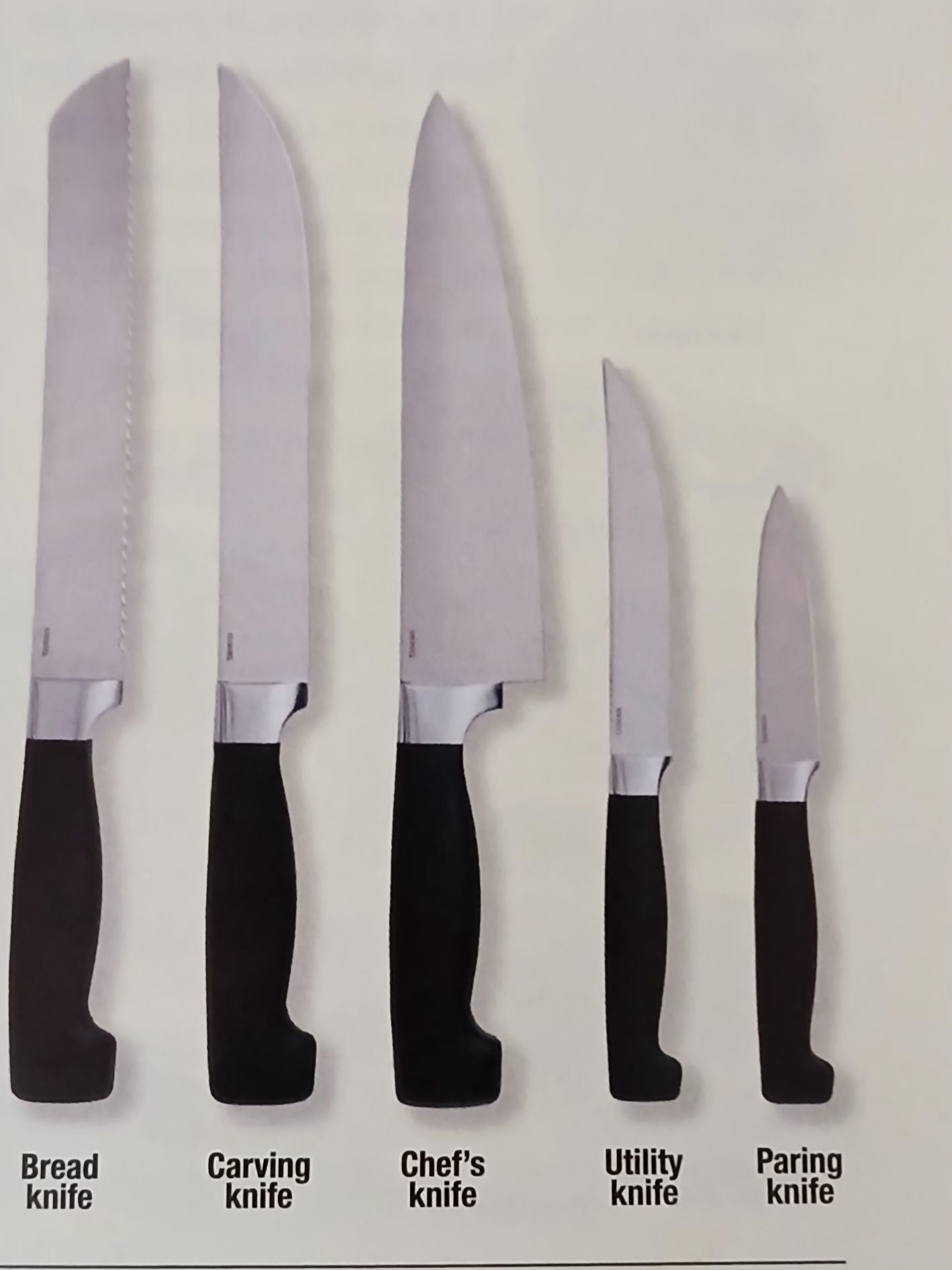
- Bread knife: The serrated blade easily cuts through breads, bagels, tomatoes, cakes, or other foods with tough exteriors and soft interiors.
- Chef’s or cook’s knife: Chop, dice, and mince foods with the wedge-shape blade.
- Paring knife: The short blade comfortably peels and cuts fruits and vegetables.
- Utility knife: The thin blade makes it easy to smoothly slice sandwiches and other soft foods, such as fruit and cheese.
Nonessential Knives
These knives are useful for specific tasks.
- Boning knife: The narrow blade works well for cutting meat off bones.
- Carving knife/slicer: This long, thin blade makes it easy to slice cooked meats.
- Fillet knife: The long, thin, flexible blade is useful for efficiently filleting fish.

 articlesforchristians
Comments on: "Tooling Up: Cooking Knives" (1)
[…] Tooling Up: Cooking Knives: A well-equipped kitchen enhances cooking enjoyment and efficiency. Proper knife selection and maintenance, including cleaning and sharpening techniques, are essential for optimal kitchen performance. […]