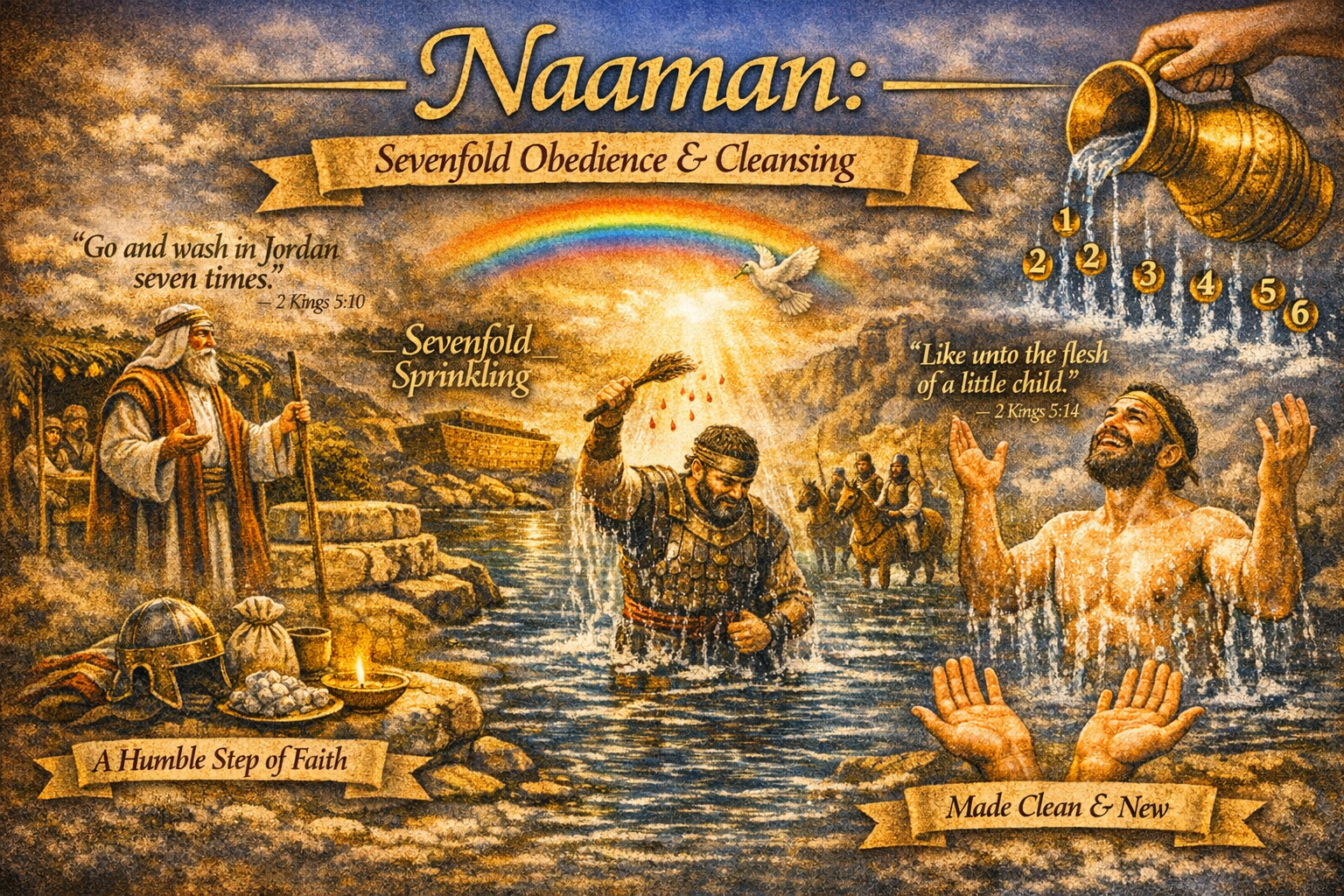
🟫 Naaman: Sevenfold Obedience and Cleansing
Scripture: 2 Kings 5:1–14
Naaman, a commander of the Syrian army, was powerful, respected — and a leper. When he sought healing from the prophet Elisha, he was told:
“Go and wash in Jordan seven times, and thy flesh shall come again to thee, and thou shalt be clean.” (2 Kings 5:10)
At first, Naaman was offended. The command seemed too simple, too undignified, too ordinary. But when he humbled himself and obeyed, he was healed completely.
1. Seven Washings in the Jordan
- Not one, not three — but seven times.
- The number was not random — it was God’s pattern of completeness.
- Each dip was a step of obedience, humility, and faith.
Teaching Point:
Sevenfold obedience brings complete cleansing, not partial relief.
2. A Gentile’s Participation in Sacred Pattern
- Naaman was not an Israelite.
- Yet he was invited into a ritual pattern that mirrored Israel’s worship.
- His healing became a testimony to God’s mercy beyond borders.
Teaching Point:
God’s sacred patterns are not limited to one people — they are open to all who obey in faith.
3. Echoes of Levitical Cleansing
- Leviticus 14:7 — the priest shall sprinkle the leper seven times for cleansing.
- Naaman’s sevenfold washing mirrors this priestly ritual.
- Though no priest was present, God Himself performed the cleansing.
Teaching Point:
Naaman’s story shows that ritual obedience, even outside the temple, can lead to divine healing.
4. The Heart of the Ritual: Humility
- Naaman expected grandeur — Elisha didn’t even come out to meet him.
- The healing came through submission, not spectacle.
- His servants urged him: “If the prophet had bid thee do some great thing…” (2 Kings 5:13)
Teaching Point:
Sevenfold rituals are not about magic — they are about humble obedience to God’s word.
5. The Result: Flesh Like a Child
- After the seventh dip, Naaman’s skin was restored — “like unto the flesh of a little child.”
- This echoes new birth, purity, and spiritual renewal.
Teaching Point:
God’s sevenfold patterns don’t just cleanse — they transform.
