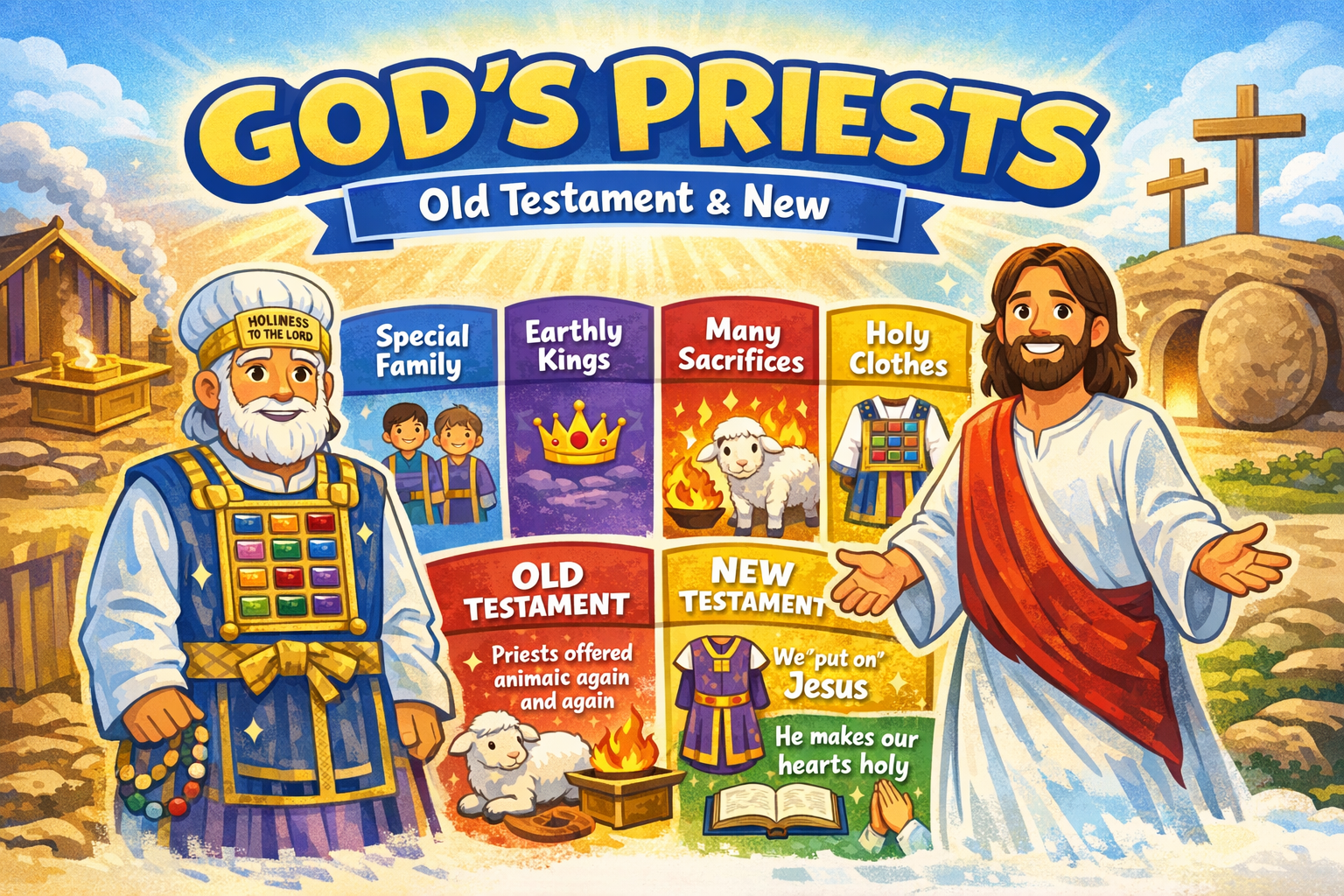
✨ Old Testament Priestly Garments vs. New Testament Teaching
Exodus 28 in comparison with the New Covenant
🟦 1. Purpose of the Garments
Old Testament (Exodus 28)
- Garments were made “for glory and for beauty” (v. 2).
- They consecrated Aaron for priestly service (v. 3).
- They were visible symbols of holiness, dignity, and God’s chosen order.
- Without them, Aaron could not minister or he would “die” (v. 35, 43).
New Testament
- Believers are clothed not with physical garments but with Christ Himself:
- “Put ye on the Lord Jesus Christ” (Romans 13:14).
- “Put on the new man” (Ephesians 4:24).
- Glory and beauty are now spiritual, not textile:
- “The hidden man of the heart… the ornament of a meek and quiet spirit” (1 Peter 3:4).
- Holiness is internal, produced by the Spirit (Hebrews 10:10, 14).
Contrast:
OT garments were external symbols of holiness; NT holiness is internal, produced by Christ’s righteousness.
🟦 2. The High Priest as Representative
Old Testament
- Aaron bore the names of the tribes on:
- Shoulders (strength) — v. 12
- Breastplate (love) — v. 29
- He carried Israel before the Lord continually.
- He bore the judgment of the people (v. 30).
New Testament
- Jesus is the Great High Priest (Hebrews 4:14).
- He carries His people not on stones but in His own body (1 Peter 2:24).
- He intercedes continually (Hebrews 7:25).
- Believers are engraved on His hands (Isaiah 49:16 — echoed in NT theology).
Contrast:
Aaron carried Israel symbolically; Jesus carries His people literally, fully, and eternally.
🟦 3. Materials and Colors
Old Testament
- Gold, blue, purple, scarlet, fine linen (vv. 5–6).
- These symbolized:
- Gold — deity
- Blue — heaven
- Purple — royalty
- Scarlet — sacrifice
- Linen — purity
New Testament
These themes are fulfilled in Christ:
- Deity — “The Word was God” (John 1:1).
- Heaven — “The Lord from heaven” (1 Cor. 15:47).
- Royalty — “King of kings” (Rev. 19:16).
- Sacrifice — “The Lamb of God” (John 1:29).
- Purity — “Who knew no sin” (2 Cor. 5:21).
Contrast:
OT colors pointed forward; NT reveals the Person they pointed to.
🟦 4. The Breastplate of Judgment
Old Testament
- Contained 12 stones with tribal names (vv. 17–21).
- Held the Urim and Thummim for discerning God’s will (v. 30).
- Worn over the heart — symbol of love and responsibility.
New Testament
- God’s will is now revealed through:
- The Holy Spirit (John 16:13)
- The Word (2 Timothy 3:16–17)
- The mind of Christ given to believers (1 Cor. 2:16)
- The church is built on “living stones” (1 Peter 2:5).
Contrast:
OT discernment required sacred objects; NT discernment comes through the Spirit and Scripture.
🟦 5. The Golden Plate: “Holiness to the Lord”
Old Testament
- A gold plate on Aaron’s forehead (vv. 36–38).
- Signified that he bore the iniquity of the holy things.
- Ensured Israel’s offerings were accepted.
New Testament
- Jesus is our holiness (1 Cor. 1:30).
- He makes our worship acceptable (Hebrews 13:15).
- Believers are called to holiness in life (1 Peter 1:15–16).
Contrast:
OT holiness was symbolically displayed; NT holiness is spiritually imparted through Christ.
🟦 6. Linen Breeches and Covering Nakedness
Old Testament
- Linen breeches covered the priests’ nakedness (vv. 42–43).
- Symbolized modesty, purity, and reverence before God.
New Testament
- Believers are to “walk decently” (Romans 13:13).
- Modesty is tied to godliness, not garments alone (1 Timothy 2:9–10).
- Nakedness is a symbol of spiritual shame (Revelation 3:17–18).
Contrast:
OT modesty was regulated by specific garments; NT modesty flows from a renewed heart.
🟦 7. Consecration and Anointing
Old Testament
- Aaron and his sons were:
- Anointed
- Consecrated
- Sanctified
(v. 41)
New Testament
- Believers are:
- Anointed by the Spirit (1 John 2:20)
- Consecrated by Christ’s blood (Hebrews 10:10)
- Made priests unto God (Revelation 1:6)
Contrast:
OT priesthood was limited to Aaron’s line; NT priesthood includes all believers in Christ.
🌟 Summary Table
| Theme | Old Testament (Exodus 28) | New Testament Fulfillment |
|---|---|---|
| Garments | Physical, ornate, required | Spiritual clothing in Christ |
| Priesthood | Aaronic, hereditary | Christ as High Priest; believers as priests |
| Representation | Names on stones | Names on Christ’s heart and hands |
| Holiness | External symbols | Internal transformation |
| Discernment | Urim & Thummim | Holy Spirit & Scripture |
| Acceptance before God | Through Aaron’s garments | Through Christ’s righteousness |
| Modesty | Regulated garments | Heart-driven modesty |
