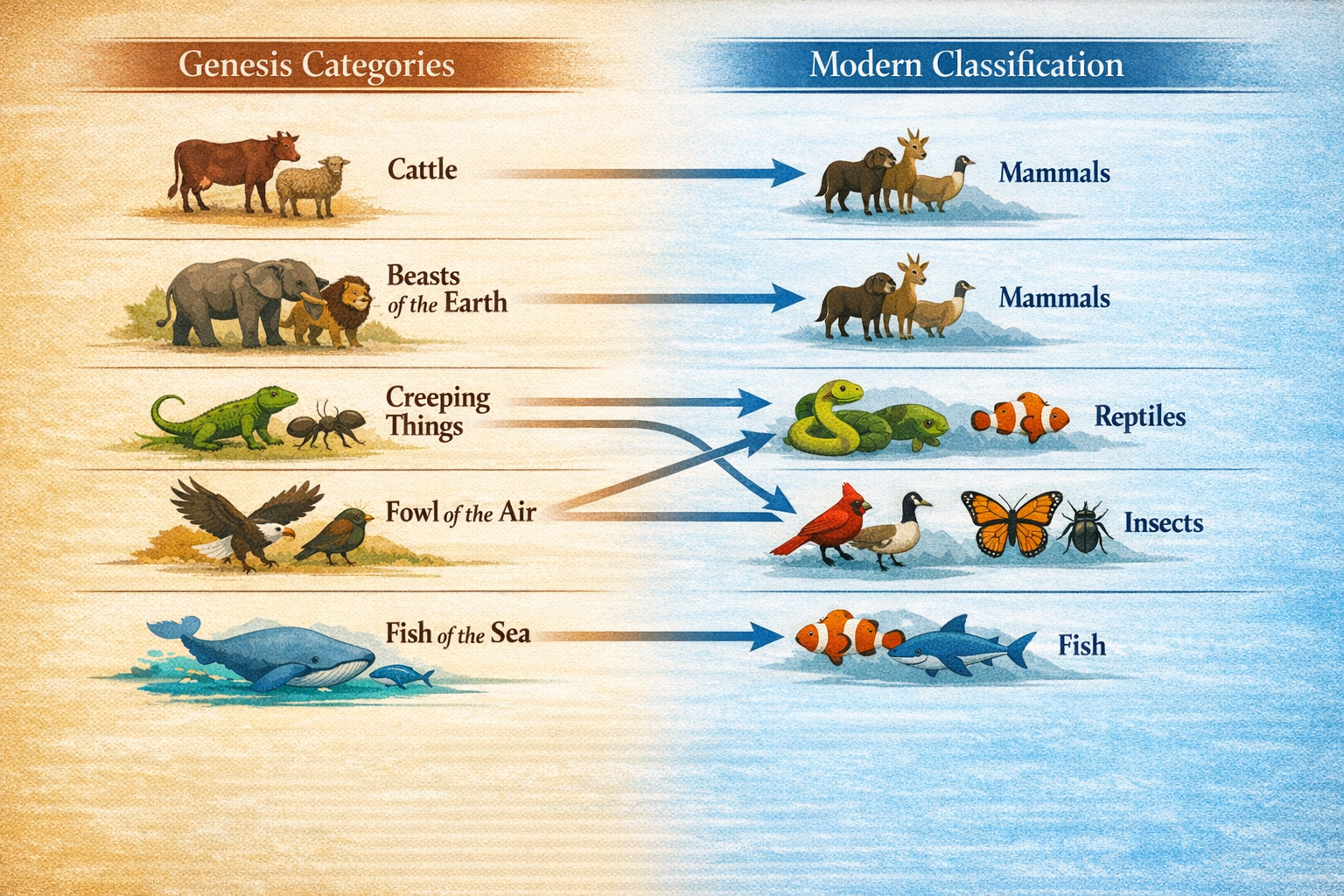
📘 Comparing Genesis Categories to Modern Animal Classification
The creation account in Genesis uses broad, functional categories based on how creatures live, move, and relate to humans.
Modern biology uses taxonomic classification (kingdom, phylum, class, order, family, genus, species) based on anatomy, and genetics.
1. “Cattle” (Behemah) — Domesticated Land Animals
Genesis meaning
- Large, tame, useful animals
- Herd animals used for food, labor, or companionship
- Examples: oxen, sheep, goats, camels
Modern classification
These fall into several families and genera:
- Bovidae — cattle, sheep, goats, antelope
- Camelidae — camels, llamas
- Equidae — horses, donkeys
Genesis groups them by function, not by genetic relationship.
2. “Beasts of the Earth” (Chayyat Ha’aretz) — Wild Land Animals
Genesis meaning
- Non‑domesticated land animals
- Includes predators, large mammals, and wild herbivores
Modern classification
This category spans many classes and orders:
- Carnivora — lions, bears, wolves
- Ungulates — deer, giraffes, elephants
- Primates — monkeys, apes
- Rodentia — mice, squirrels
- Dinosaurs – t-rex, Triceratops
Genesis groups them by habitat and lifestyle, not by anatomy.
3. “Creeping Things” (Remes) — Small Ground‑Movers
Genesis meaning
- Small animals that move close to the ground
- Includes reptiles, insects, small mammals, and other crawlers
Modern classification
This spans multiple phyla and classes:
- Reptilia — lizards, snakes
- Amphibia — frogs, salamanders
- Arthropoda — insects, spiders
- Small mammals — mice, shrews
Genesis groups them by movement, not by biological lineage.
4. “Fish of the Sea” — Aquatic Creatures
Genesis meaning
- All creatures that live in water
- Includes fish, large sea creatures (“great whales”), and other swimmers
Modern classification
This includes:
- Fish — bony fish, sharks, rays
- Marine mammals — whales, dolphins
- Invertebrates — jellyfish, squid, crustaceans
Genesis groups them by environment, not by anatomy or genetics.
5. “Fowl of the Air” — Flying Creatures
Genesis meaning
- All winged or flying creatures
- Birds primarily, but also bats and possibly insects
Modern classification
This includes:
- Aves — all birds
- Mammalia (Chiroptera) — bats
- Arthropoda (Insecta) — flying insects
Genesis groups them by ability to fly, not by class.
📘 Summary Table
| Genesis Category | Basis of Grouping | Modern Equivalent | Notes |
|---|---|---|---|
| Cattle | Domestication & use | Bovidae, Camelidae, Equidae | Function‑based |
| Beasts of the Earth | Wild land animals | Many mammal orders | Habitat‑based |
| Creeping Things | Movement (crawling) | Reptiles, insects, small mammals | Movement‑based |
| Fish of the Sea | Habitat (water) | Fish, marine mammals, invertebrates | Environment‑based |
| Fowl of the Air | Ability to fly | Birds, bats, insects | Ability‑based |
🌿 Key Insight
Genesis uses phenomenological categories — how creatures appear and function in human experience.
Modern science uses taxonomic categories — anatomical and genetic relationships.
Both systems are orderly, but they organize creation from different perspectives.
