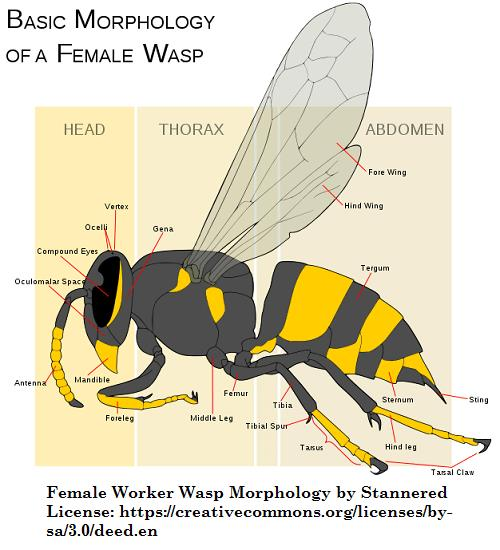
Facts about wasps
- Wasp Facts Overview
- Habitat: All terrestrial habitats except Antarctic
- Location: All continents except Antarctic
- Lifespan: From 2 months to 2 years
- Size: From less than 1mm to 12.5 centimeters (5 in) long
- Weight: Up to 28 g (1oz)
- Color: Usually dark, reddish or black, sometimes blue or yellow-black
- Diet: Nectar, insects, fruit,
- Predators: Birds, bats, predatory insects, spiders,
- Top Speed: 40 kph (25 mph)
- No. of Species: Likely around 1 million
- Wasps aren’t just one kind; there are over 30,000 species around the world. Each has its own unique behaviors and important roles in nature.
- Insects like wasps can be grouped into two main types: social and solitary. Social wasps create nests and live together in colonies, while solitary wasps prefer to live alone and don’t build shared nests.
- Many wasp species prey on other insects, helping to manage pest populations. This natural form of pest control is crucial for maintaining healthy gardens and supporting agriculture.
- Wasps play a vital role in keeping insect populations in check, which helps agriculture and cuts down on the use of chemical pesticides.
- Although not as effective as bees, some wasps also help pollinate plants. As they collect nectar from flowers, they unintentionally carry pollen between them.
- Wasp nests come in a variety of designs depending on the species, with some building complex, multi-chambered structures that dangle from trees, while others prefer to dig their nests underground.
- These nests can accommodate thousands of wasps and are commonly constructed in sheltered areas, such as beneath eaves or within dense vegetation.


2 responses to “Facts about Wasps for kids”
[…] Facts about Wasps for kids (coming 8-28-25) […]
[…] Facts about Wasps for kids […]