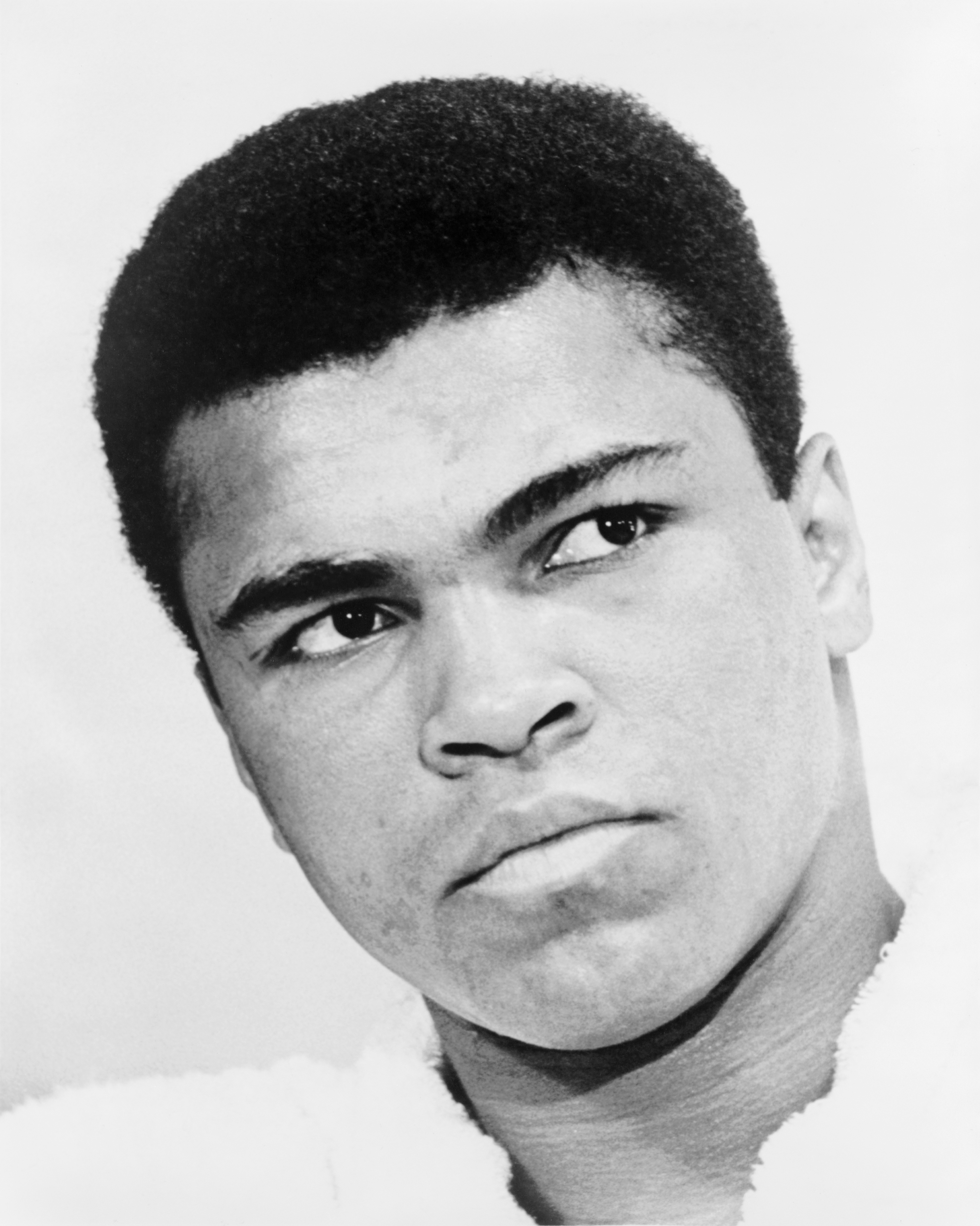
Muhammad Ali: A Champion in the Ring and a Voice for Justice

Black History Month invites us to honor individuals whose courage, conviction, and brilliance reshaped the world. Among these towering figures stands Muhammad Ali—a man whose impact reached far beyond boxing. Known for his unmatched athletic skill, sharp wit, and unwavering moral stance, Ali became a global symbol of strength, dignity, and resilience.
Early Life: The Making of a Fighter
Muhammad Ali was born Cassius Marcellus Clay Jr. on January 17, 1942, in Louisville, Kentucky. Growing up in the segregated South, he experienced firsthand the injustices of racism. At age 12, after his bicycle was stolen, he told a police officer he wanted to “whup” the thief. The officer, who also coached boxing, encouraged him to learn how to fight—and that moment changed the course of his life.
Ali quickly rose through the amateur ranks, winning:
- Six Kentucky Golden Gloves titles
- Two national Golden Gloves titles
- A gold medal in the 1960 Rome Olympics
His speed, footwork, and charisma made him stand out long before he became a professional.
Middle Life: Champion, Conscience, and Cultural Icon
Ali turned professional after the Olympics and shocked the world in 1964 when he defeated Sonny Liston to become heavyweight champion of the world. Shortly after, he announced his conversion to Islam and changed his name to Muhammad Ali—a declaration of identity and faith that challenged societal expectations.
A Stand for Principle
In 1967, at the height of his career, Ali refused induction into the U.S. military during the Vietnam War, citing his religious beliefs and moral convictions. His famous words echoed around the world:
“I ain’t got no quarrel with them Viet Cong.”
For this stance:
- His boxing license was suspended
- His heavyweight title was stripped
- He faced a possible five‑year prison sentence
Though he eventually won his case in the Supreme Court, Ali lost more than three years of his prime fighting years. Yet his courage transformed him into a global symbol of conscience and civil rights.
Return to Greatness
When he returned to the ring, Ali delivered some of the most iconic fights in boxing history:
- The Fight of the Century (vs. Joe Frazier, 1971)
- The Rumble in the Jungle (vs. George Foreman, 1974)
- The Thrilla in Manila (vs. Joe Frazier, 1975)
His blend of speed, strategy, and showmanship—“float like a butterfly, sting like a bee”—made him one of the most celebrated athletes of all time.
Later Life: Global Humanitarian and Enduring Legacy
After retiring from boxing in 1981, Ali dedicated his life to humanitarian work. He traveled the world promoting peace, supporting charitable causes, and advocating for those in need. In 1984, he was diagnosed with Parkinson’s disease, a condition he faced with remarkable grace and courage.
Death and Burial
Muhammad Ali died on June 3, 2016, in Scottsdale, Arizona, at the age of 74.
He is buried in Cave Hill Cemetery in Louisville, Kentucky, returning to the city where his journey began. His gravesite has become a place of reflection and inspiration for visitors from around the world.
A Legacy That Continues to Inspire
Muhammad Ali was more than a boxer. He was:
- A champion of justice
- A voice for the oppressed
- A man of deep conviction
- A global ambassador for peace
- A cultural icon whose influence transcended sports
His life reminds us that greatness is not only measured by victories in the ring but by the courage to stand for what is right, even when the cost is high.
During Black History Month, remembering Muhammad Ali invites us to reflect on the power of conviction, the beauty of resilience, and the enduring impact of a life lived boldly.


Leave a Reply