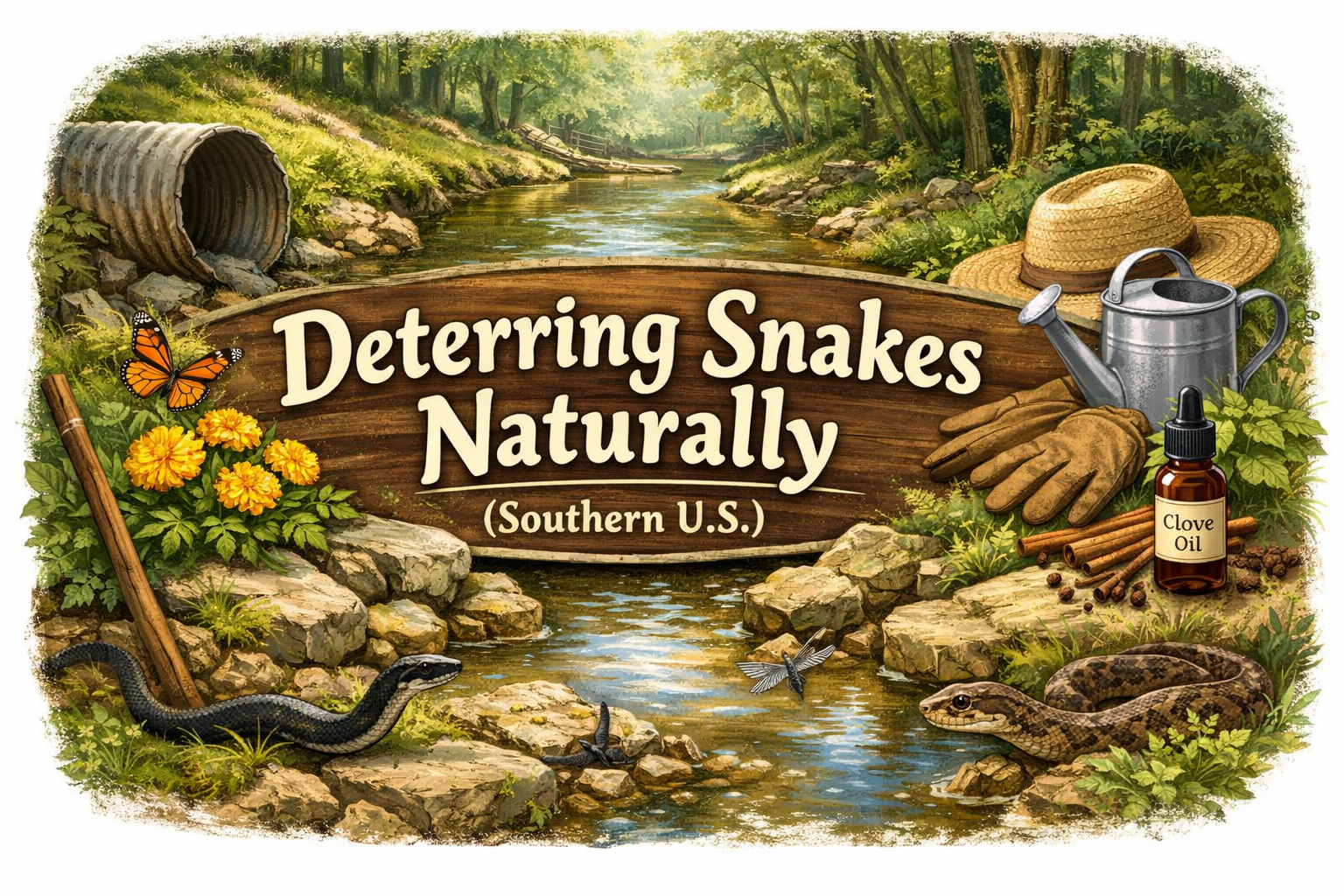
This guide is written specifically for the Southern U.S., where warm weather, high humidity, and abundant waterways create ideal habitat for many snake species. Most snakes in the South are non‑venomous and play an important role in the ecosystem. The goal of these methods is not to harm snakes, but to gently encourage them to move away from high‑traffic areas around homes, gardens, and walking paths.
🌿 1. Reduce the things that attract snakes
Snakes follow food, water, and shelter.
Removing or reducing these makes your yard less appealing.
✔ Remove clutter
- Pull back leaf piles
- Clear sticks and debris
- Keep grass trimmed
- Remove boards, buckets, and unused pots
Snakes love tight, shaded hiding spots.
✔ Reduce standing water
- Fix leaky hoses
- Empty buckets
- Keep ditches flowing
Water attracts frogs, which attract snakes.
✔ Manage rodent activity
Snakes go where the food is.
Reducing mice and rats naturally reduces snake traffic.
🧪 2. Use scent deterrents that snakes dislike
Southern wildlife experts note that snakes avoid strong, irritating scents.
These do not harm snakes — they simply make the area unpleasant.
✔ Cinnamon oil
✔ Clove oil
✔ Eugenol (clove derivative)
These oils overwhelm a snake’s chemical‑sensing system (Jacobson’s organ).
Simple mixture:
- 1 teaspoon cinnamon oil
- 1 teaspoon clove oil
- 1 cup water
Shake before each use.
Apply lightly to:
- stepping stones
- cracks in concrete
- around drain pipes
- along fence lines
- around porches
Reapply after rain or heavy dew.
Printable instructions:
🦶 3. Use vibration and foot traffic to your advantage
Snakes “hear” through vibration.
In the South’s soft soil and concrete edges, vibration travels far.
✔ Regular walking
✔ Dogs moving around
✔ Tapping a walking stick
✔ Lawn equipment noise
These signals tell snakes:
“This area is too active — move somewhere quieter.”
Most Southern snakes (racers, ribbon snakes, water snakes, kingsnakes) avoid disturbance and will relocate on their own.
🌞 4. Increase sunlight and airflow
Snakes prefer:
- shade
- cool surfaces
- still air
You can make an area less appealing by:
- trimming low branches
- opening up shaded corners
- letting sunlight hit rocks or concrete
- removing thick groundcover near walkways
Sunlight warms surfaces and removes the cool hiding spots snakes love.
🚶♀️ 5. Create predictable human activity zones
Snakes avoid places where humans move regularly.
Good places to maintain high activity:
- stepping‑stone paths
- garden walkways
- around porches
- near dog play areas
If you walk the same path daily, snakes learn to avoid it.
🪨 6. Treat high‑risk structures
In the South, snakes love:
- drain pipes
- culverts
- broken concrete
- canal edges
- rock piles
These areas stay cool and moist.
To deter snakes safely:
- clear leaves 12–18 inches around the structure
- apply scent deterrent around the entrance
- tap the structure before approaching
- keep the area dry when possible
This encourages snakes to move farther down the canal or into natural cover.
🐍 7. Understand which snakes you’re deterring
Most snakes you’ll encounter in the South are:
- non‑venomous
- shy
- quick to flee
- beneficial for pest control
These include:
- black racers
- ribbon snakes
- water snakes (Nerodia species)
- kingsnakes
- garter snakes
They respond very well to scent, vibration, and foot traffic.
Venomous species (cottonmouths, copperheads, coral snakes) are far less common and generally avoid people unless surprised.
🧭 8. The goal is relocation, not removal
Snakes are part of the Southern ecosystem.
They help control:
- rodents
- frogs
- insects
- other snakes
These methods simply encourage them to move away from your walking paths, porches, and high‑traffic areas — not out of the ecosystem entirely.


Leave a Reply