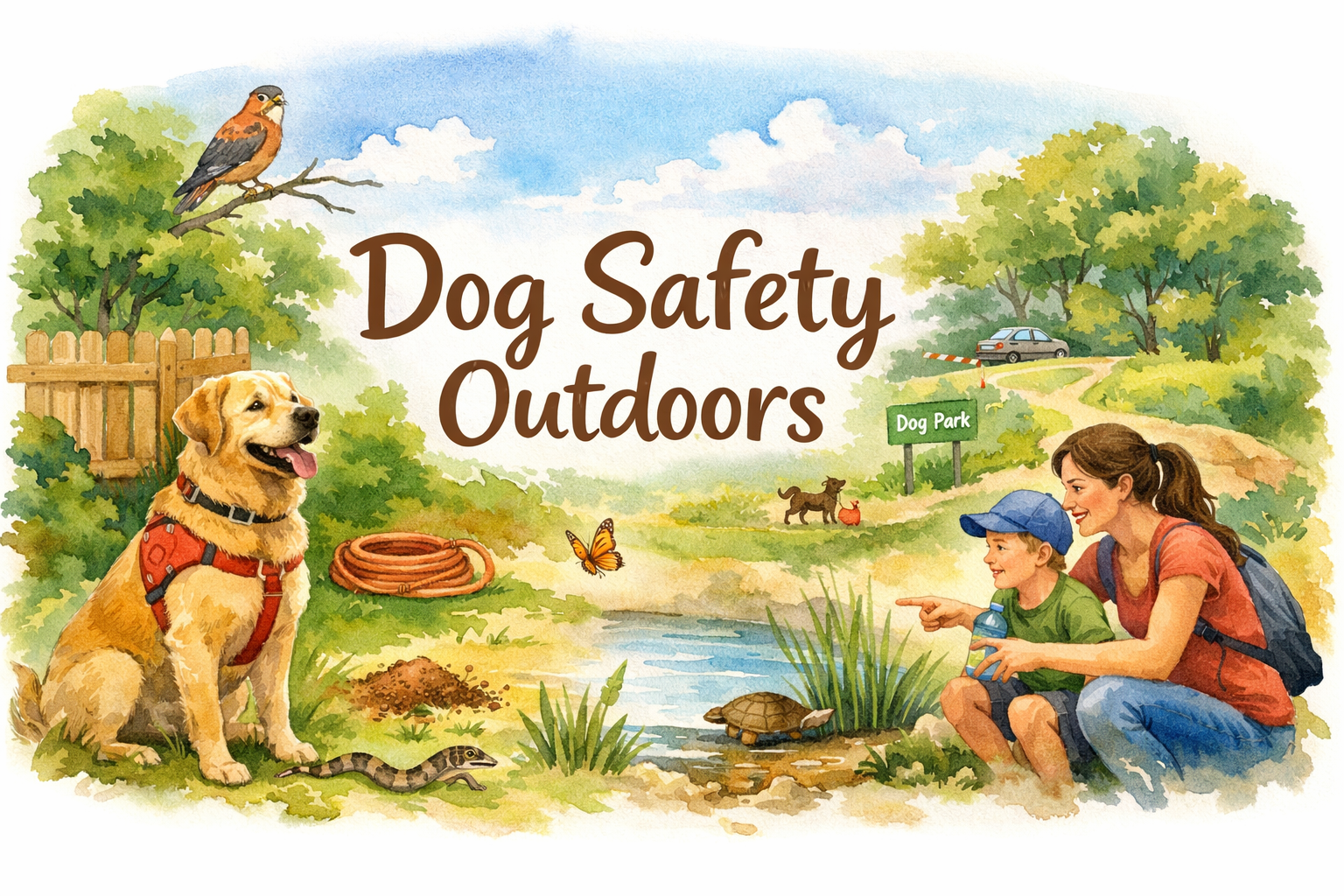
🐕 Dog Safety Outside the Home
Loving our dogs well as we explore God’s world together
Our dogs experience the outdoors with all their senses — smells, sounds, movement, and instinct. When we guide them wisely, we protect them, our children, and the people around us. This section covers the most important areas of outdoor safety for families.
🌳 Yard Safety
A secure, predictable space helps dogs relax and play with confidence
- Check fences regularly for loose boards, gaps, or digging spots
- Keep gates latched and teach children not to open them without an adult
- Remove toxic plants (sago palm, azalea, oleander)
- Store lawn chemicals, tools, and hoses out of reach
- Provide shade and fresh water during hot Louisiana afternoons
- Watch for snakes, fire ants, and bees — especially after rain
Family practice: Walk the yard together once a week. Let children help “inspect” the fence and look for anything unsafe.
🚶♀️ Walking Safety
Calm, predictable walks build trust and confidence
- Use a well‑fitted harness to prevent slipping out
- Keep the leash short near traffic and long in open areas
- Avoid walking during peak heat (10 AM–4 PM in summer)
- Teach children to walk on the opposite side of the dog from the road
- Bring water for both dog and family
- Watch for fear signals: tail tucked, ears back, pulling away, freezing
A simple phrase for kids: “Dog on the inside, cars on the outside.”
🐾 Park & Public Space Safety
Not every dog — or every day — is right for the park
- Start with quiet parks before busy ones
- Keep your dog leashed unless in a designated off‑leash area
- Avoid crowded dog parks if your dog is anxious or easily startled
- Watch body language of other dogs before approaching
- Teach children to ask, “May I pet your dog?” before touching any animal
- Bring poop bags and clean up promptly
Stewardship reminder: We honor others by keeping our dogs under control and our spaces clean.
🐍 Wildlife Awareness
- Keep dogs away from tall grass, wood piles, and water edges
- Teach children to freeze if they see a snake and call an adult
- Avoid letting dogs sniff holes, logs, or burrows
- Watch for hawks if you have small pets
- After storms, be extra cautious — wildlife moves into yards
🚗 Car & Travel Safety
Safe travel protects both the dog and the driver
- Use a seat‑belt harness or secured crate
- Never let a dog ride in the driver’s lap
- Keep windows cracked, not fully open
- Never leave a dog in a parked car — even for a minute
- Bring water, a leash, and a towel for muddy paws
Teaching moment: Explain to children that dogs need “seat belts” too because we love them.
🧒 Children & Dogs Outside
Helping kids understand outdoor boundaries
- Teach children to stay calm when other dogs pass
- Practice “stand like a tree” if an unfamiliar dog approaches
- Show them how to give the dog space when sniffing or exploring
- Remind them not to run with food in their hands
- Encourage them to let the dog rest when showing signs of stress
Phrase for little ones: “Slow feet, soft voice, safe space.”
🧭 When Your Dog Refuses to Go Somewhere
Trust your dog — they sense things we don’t
If the dog doesn’t like someone, there’s a reason. If the dog refuses to go to a familiar area, there’s usually a reason.
Outdoors, this matters even more. Dogs may detect:
- Wildlife
- Strange scents
- People who make them uneasy
- Sounds we can’t hear
- Environmental hazards
When a dog hesitates, pause and observe. It’s wisdom, not stubbornness.
