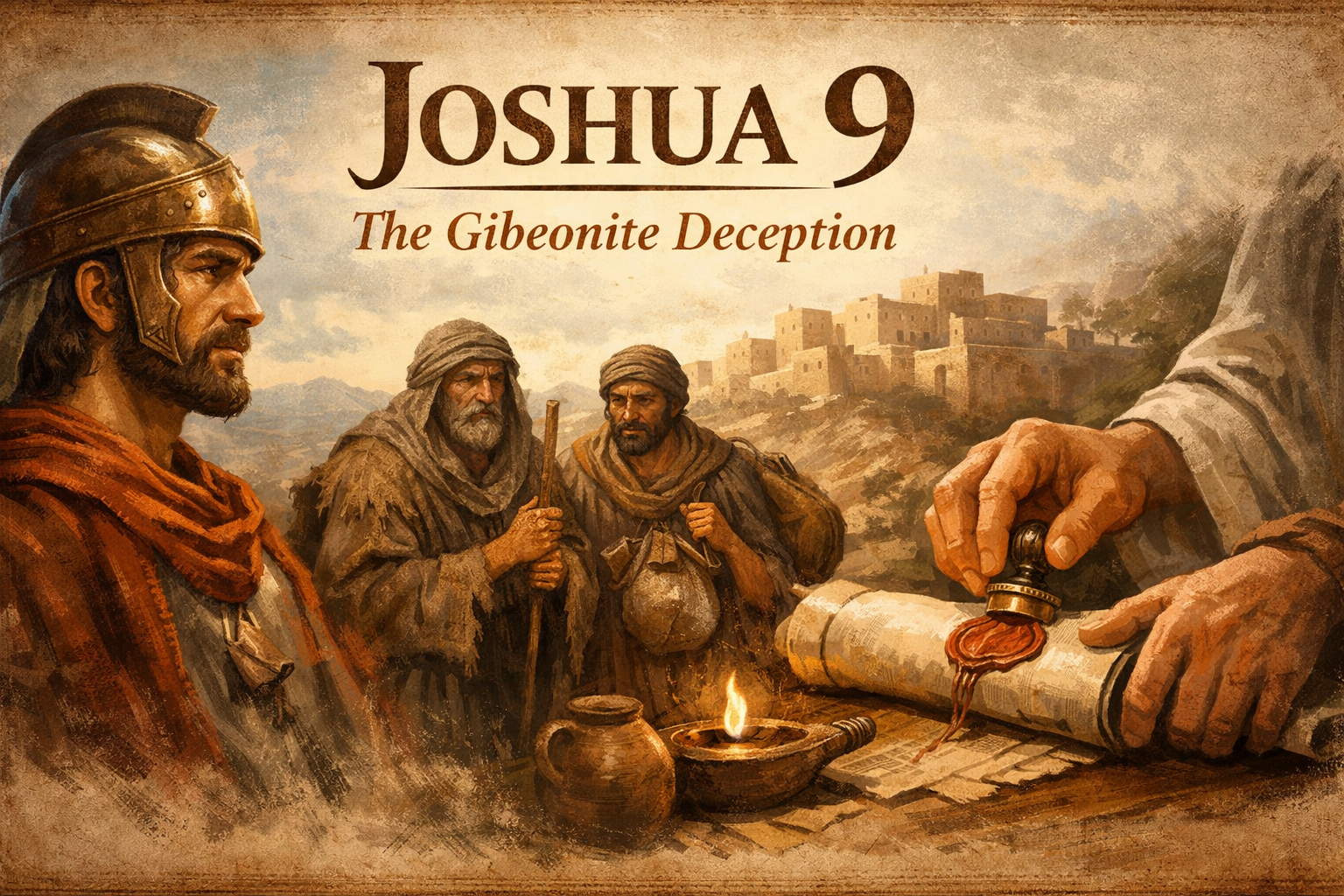
In Joshua 9, the story unfolds after Israel’s stunning victories at Jericho and Ai. Word of God’s power spreads across Canaan, stirring fear among its kings. While most prepare for war, one group—the Gibeonites—chooses a different path. They cloak themselves in deception, pretending to come from a distant land to secure peace with Israel.
This chapter is more than a tale of trickery; it’s a mirror for the believer’s walk. It reveals how appearances can mislead, how prayerlessness can open doors to error, and how God’s mercy can redeem even flawed decisions. Joshua’s experience reminds us that spiritual discernment must guide every alliance and that integrity—once pledged before God—must be honored, even when inconvenient.
As you teach or study this passage, focus on three threads woven through the narrative:
- Deception and discernment — the need for spiritual vigilance.
- Covenant and consequence — the weight of promises made before God.
- Grace and redemption — how God transforms human failure into service for His glory.
Joshua 9 invites us to slow down, seek counsel from the Lord, and trust that His wisdom guards us from subtle compromise.
1. Context and Setting
- Israel has just experienced two major victories: Jericho and Ai.
- News spreads quickly across Canaan.
- The surrounding nations respond in two opposite ways:
- United resistance (vv. 1–2)
- Clever deception (vv. 3–6)
Teaching Insight:
God’s work always provokes a response—either opposition or submission, sometimes sincere, sometimes manipulative.
2. The Canaanite Alliance (vv. 1–2)
- Six nations unite “with one accord” to fight Israel.
- This is the first major coalition Israel faces in the land.
- Their unity is based on fear, not righteousness.
Key Point:
The enemy often unites when God’s people advance.
3. The Gibeonite Strategy (vv. 3–6)
- Gibeon chooses subtlety over battle.
- They disguise themselves with:
- Old sacks
- Torn wineskins
- Worn-out shoes
- Patched garments
- Moldy bread
- They pretend to be from a far country to secure a treaty.
Teaching Insight:
Deception often looks humble, needy, and harmless. Discernment is required.
4. Israel’s Suspicion and the Gibeonites’ Story (vv. 7–13)
- Israel questions them: “Who are you? Where do you come from?”
- The Gibeonites appeal to:
- God’s fame
- Israel’s history
- Their own “long journey”
- They present physical “evidence” to support their lie.
Key Observation:
The Gibeonites speak truth about God—but use it for manipulation.
5. Israel’s Critical Failure (v. 14)
- Israel examines the evidence.
- But they do not seek the Lord.
- This is the turning point of the entire chapter.
Teaching Application:
The most dangerous decisions are the ones that seem obvious and harmless—because we don’t pray.
6. The Covenant is Made (v. 15)
- Joshua makes peace with them.
- The leaders swear an oath before the Lord.
- This oath becomes binding—even after the deception is revealed.
Key Point:
God takes covenants seriously—even when made in error.
7. The Deception Exposed (vv. 16–18)
- Three days later, Israel discovers the truth.
- They reach the Gibeonite cities.
- The people want to attack, but the leaders refuse because of the oath.
Leadership Lesson:
Leaders must sometimes uphold what is right, even when it is unpopular.
8. The Leaders’ Decision (vv. 19–21)
- The princes insist:
- “We have sworn unto them by the Lord… we may not touch them.”
- They choose a middle path:
- Spare their lives
- Assign them to servitude
Teaching Insight:
Integrity means honoring commitments—even when it costs us.
9. Joshua’s Confrontation (vv. 22–23)
- Joshua confronts them for their deception.
- He pronounces a curse:
- They will be perpetual servants
- Specifically for the house of God
Spiritual Insight:
Even in judgment, God redirects consequences toward His purposes.
10. The Gibeonites’ Confession (vv. 24–25)
- They confess:
- They knew God gave Israel the land
- They feared for their lives
- They acted out of desperation
- They submit to Joshua’s judgment.
Key Point:
Fear can lead people to God—or to manipulation.
11. Final Outcome (vv. 26–27)
- Joshua spares them.
- They become:
- Hewers of wood
- Drawers of water
- For the congregation and the altar of the Lord
- This role continues “unto this day.”
Redemptive Insight:
God can turn even deception into service for His glory.
✨ Key Themes for Teaching
- The danger of prayerlessness
- The weight of covenant and integrity
- Discernment in leadership
- God’s sovereignty over human failure
- Fear vs. faith
- How God redeems flawed decisions
