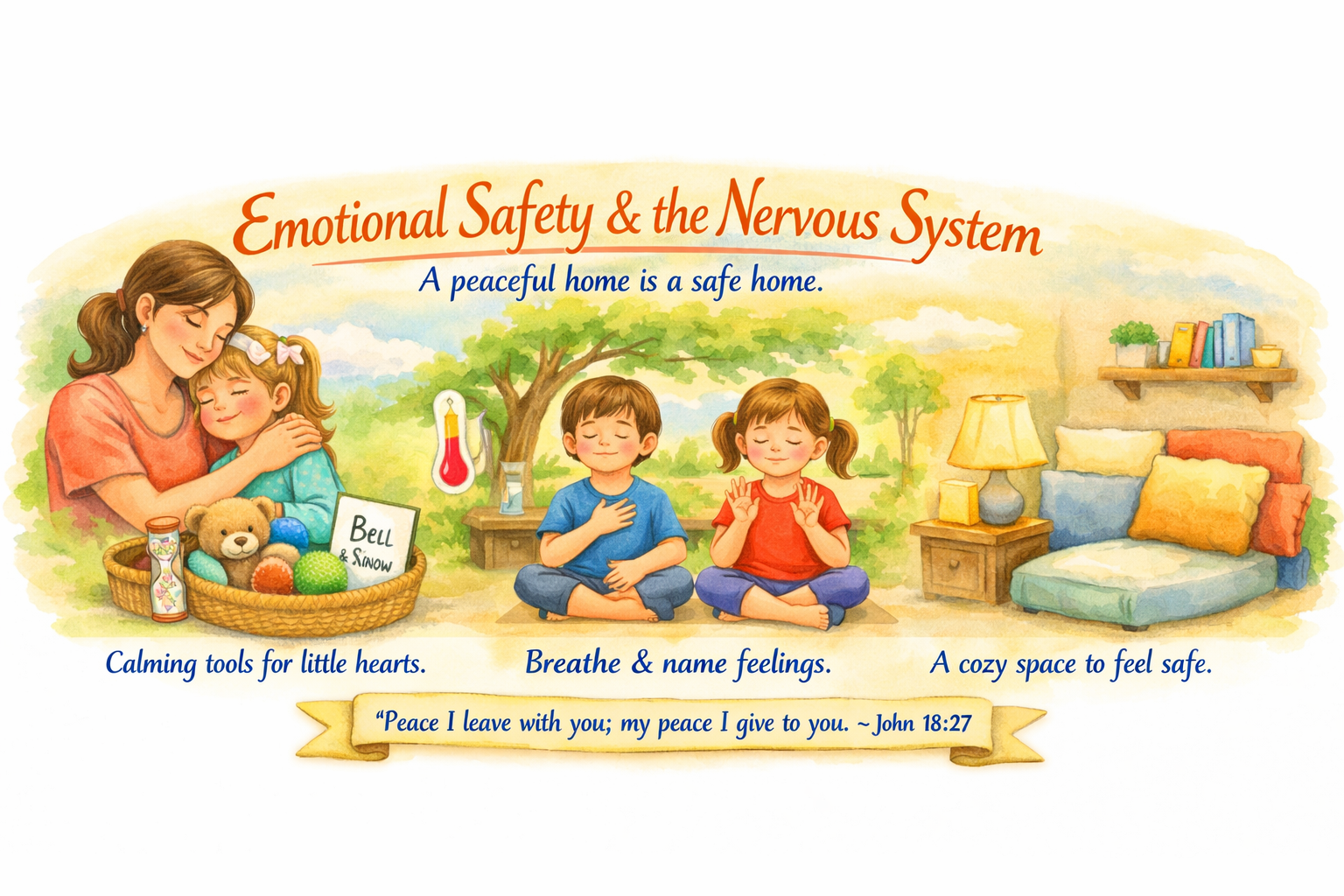
💛 A peaceful home is a safe home 💛
Emotional safety is the quiet foundation beneath every other kind of protection. When hearts feel secure, bodies rest, and minds learn.
🕊️ Why Emotional Safety Matters
Children’s nervous systems mirror the tone of their environment.
- Calm voices and predictable routines help regulate stress.
- Harsh tones or sudden changes can trigger fight‑or‑flight responses.
- Emotional safety builds trust, empathy, and resilience.
- A peaceful home teaches the body that it is safe to rest.
🌿 Gentle Grounding Strategies for Children
Grounding helps children reconnect when emotions feel big.
- Deep breathing together (“Smell the flower, blow the candle”).
- Naming five things they can see, four they can touch, three they can hear.
- Gentle movement — rocking, stretching, or walking outside.
- Soft music or humming to calm the vagus nerve.
🎶 Sensory‑Friendly Worship & Home Environments
Faith and peace can coexist with sensory awareness.
- Use soft lighting and gentle sounds during prayer or worship.
- Offer quiet corners for children who need space.
- Keep textures comfortable — soft fabrics, natural materials.
- Encourage participation through movement or art.
More information: 💙Embracing Every Piece of God’s Design
💬 Teaching Children to Name Feelings
Naming emotions helps children understand and manage them.
- Use simple words: happy, sad, scared, tired, excited.
- Model emotional honesty: “I feel frustrated, so I’ll take a breath.”
- Read stories that show characters expressing feelings.
- Praise children for sharing emotions respectfully.
🪶 Creating Calm‑Down Spaces
A calm‑down space is a sanctuary for emotional reset.
- Soft pillows, blankets, and gentle colors.
- A small basket with sensory tools — stress ball, soft toy, scripture card.
- Quiet corner lighting or a small lamp.
- Teach: “This is where we breathe and feel safe again.”
Family Reflection
“Peace I leave with you; my peace I give to you.” — John 14:27 A peaceful home nurtures both body and spirit.
