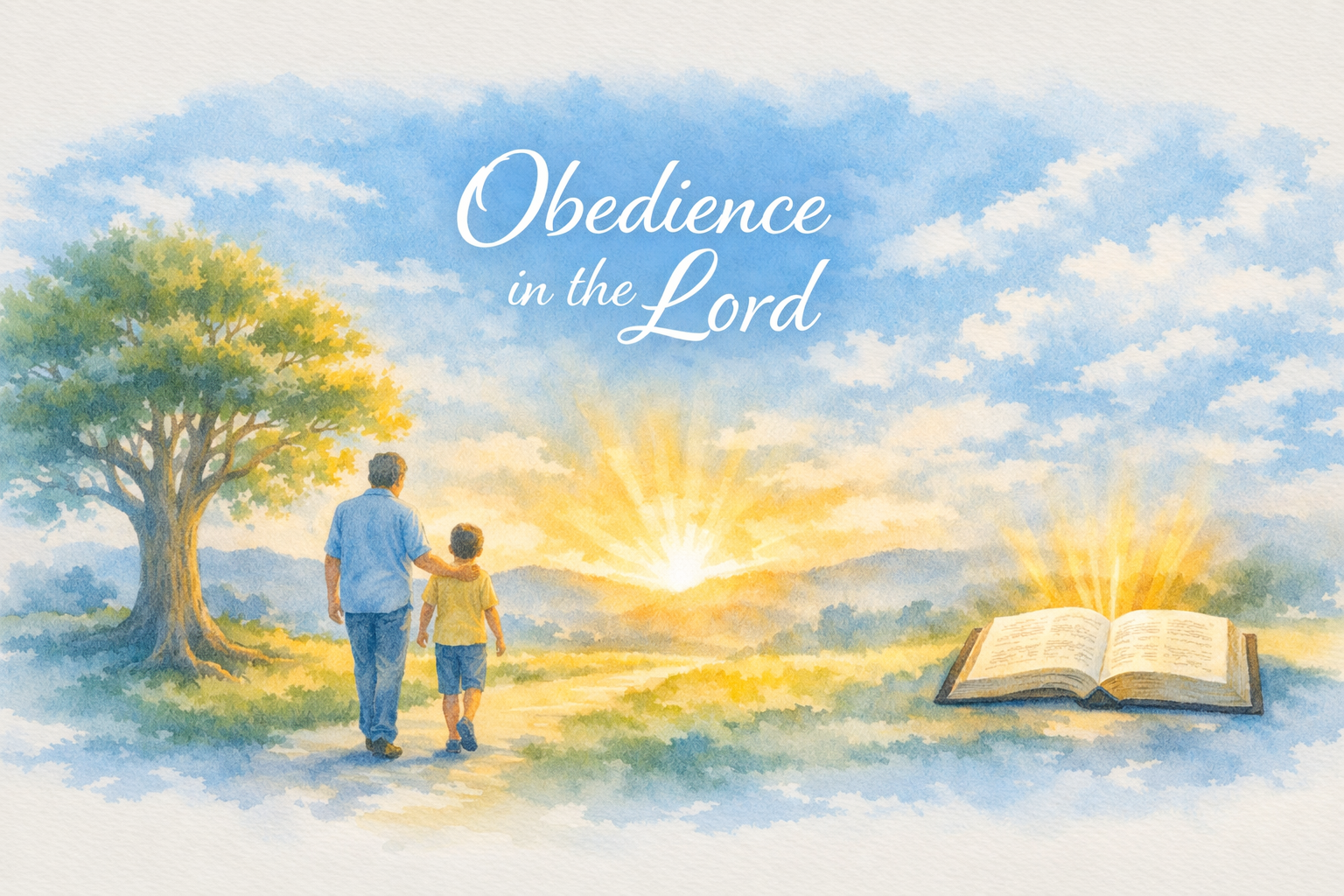
Obedience in the Lord is one of the most important biblical principles for shaping children, guiding families, and forming a godly legacy. It’s not blind obedience — it’s discipled obedience, rooted in Christ, shaped by Scripture, and anchored in righteousness.
🌿 1. What “Obedience in the Lord” Means
Obedience in the Lord is obedience shaped by God’s character, God’s Word, and God’s boundaries.
It means:
- Children obey parents as an act of honoring God
- Parents lead in ways that reflect Christ’s heart
- Obedience is never demanded in ways that violate Scripture
📖 2. The Foundational Passage
Ephesians 6:1 — “Children, obey your parents in the Lord, for this is right.”
That phrase in the Lord is the key.
It means:
- Obedience is connected to discipleship
- Obedience is guided by righteousness
- Obedience is shaped by God’s will, not human whims
Learn more with Ephesians 6:1 explained. (coming soon)
🌱 3. Obedience Is Not Blind Submission
Scripture never teaches:
- obedience to sin
- obedience to abuse
- obedience to ungodly demands
Instead, obedience is:
- moral
- biblical
- Christ‑centered
- rooted in love and truth
Explore Biblical Boundaries in Obedience.
🌾 4. Parents Must Lead “In the Lord” Too
Ephesians 6:4 commands parents to:
- nurture
- instruct
- guide
- disciple
Parents are called to lead in ways that reflect Christ’s gentleness, wisdom, and righteousness.
Learn more with Ephesians 6:4 parental call. (coming soon)
🌅 5. Obedience Builds Generational Strength
When families practice obedience in the Lord:
- children learn trust
- parents model righteousness
- homes become peaceful
- generational blessing grows
🕊️ 6. Obedience Is Ultimately About Christ
Colossians 3:20 — “Children, obey your parents in all things, for this is well‑pleasing to the Lord.”
Obedience is an act of worship.
It teaches children:
- humility
- respect
- submission to God
- love for His ways
Reflect on Obedience as Worship. (coming soon)
🌳 7. A Healthy, Biblical Model
A home practicing obedience in the Lord looks like:
- parents leading with Scripture
- children responding with respect
- discipline that is loving, not harsh
- teaching that is consistent, not unpredictable
- Christ at the center of every relationship
