A place to grow your relationship with God

Archive for the ‘General Bible Study’ Category

Nimrod: Mighty Hunter of Ancient Babylon

Nimrod lived in ancient Babylon. He was the grandson of Ham. Remember that Ham was the father of Cush and Cush was the father of Nimrod.

Genesis 10:6-8

  • And the sons of Ham; Cush, and Mizraim, and Phut, and Canaan.
  • And the sons of Cush; Seba, and Havilah, and Sabtah, and Raamah, and Sabtechah: and the sons of Raamah; Sheba, and Dedan.
  • And Cush begat Nimrod: he began to be a mighty one in the earth.
  • He was a mighty hunter before the Lord: wherefore it is said, Even as Nimrod the mighty hunter before the Lord.

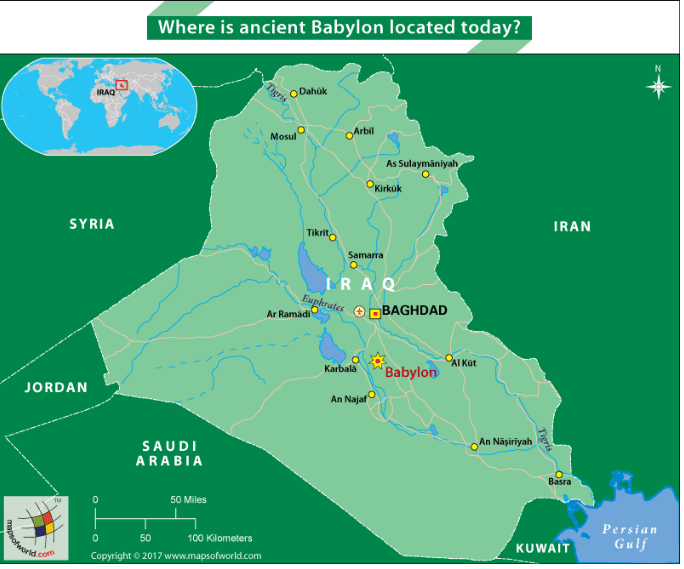
He lived after the flood. The cities that he created are Akkad, Babylon, and Uruk. All are in present day Iraq. The biblical cities of Babylon, Akkad, and Uruk are not pinpointed with modern-day coordinates. However, they are generally believed to be located in the modern-day region of Iraq, specifically in the Mesopotamian area.

  • Babylon: Often associated with the modern city of Kuşteşh, Iraq, which is part of the ancient city complex of Babylon.
  • Akkad: The exact location of Akkad is debated among historians, but it is commonly believed to be in the modern-day region of Iraq, possibly between the cities of Babylon and Sippar.
  • Uruk: Uruk, also known as Tall al Warka, is located in present-day S Iraq.

These cities played significant roles in ancient Mesopotamia, contributing to the development of trade, administration, and culture. Their historical significance continues to be studied and referenced in biblical texts and archaeological findings.
Babylon

  • Strong’s H894 – bāḇel
    • בָּבֶל Bâbel, baw-bel’; from H1101; confusion; Babel (i.e. Babylon), including Babylonia and the Babylonian empire:—Babel, Babylon.
  • Outline of Biblical Usage 
    • Babel or Babylon = “confusion (by mixing)”
    • Babel or Babylon, the ancient site and/or capital of Babylonia (modern Hillah) situated on the Euphrates
  • Brown-Driver-Briggs Lexicon
    • (in Assyrian written Bab-ilu, gate of god)

The principal cities of Nimrod’s Mesopotamian kingdom were Babel, Erech, Accad, and Calneh in the land of Shinar.

Genesis 10:10

  • And the beginning of his kingdom was Babel, and Erech, and Accad, and Calneh, in the land of Shinar.

From the land of Babylon Nimrod went and built Nineveh. This is referenced to in the book of Micah.

Micah 5:6

  • And they shall waste the land of Assyria with the sword, and the land of Nimrod in the entrances thereof: thus shall he deliver us from the Assyrian, when he cometh into our land, and when he treadeth within our borders.

Ninevah in what is now present-day Northern Iraq.

The name of Nimrod is probably not of Hebrew origin. The meaning and origin is uncertain. It may be Mesopotamian originating from Akkadian (Northern Babylon) god of war and hunting, Ninurta, who was called “the arrow, the mighty hunter”.

Some scholars believe that Nimrod was Sargon the Great, a powerful ruler over Accad who lived about 2300 BC.

In 1 Chronicles 1:10 (ESV) it refers to Nimrod as the 1st warrior of the land. In other translations it says “He began to be a mighty man on the earth“.

  • Cush fathered Nimrod. He was the first on earth to be a mighty man.
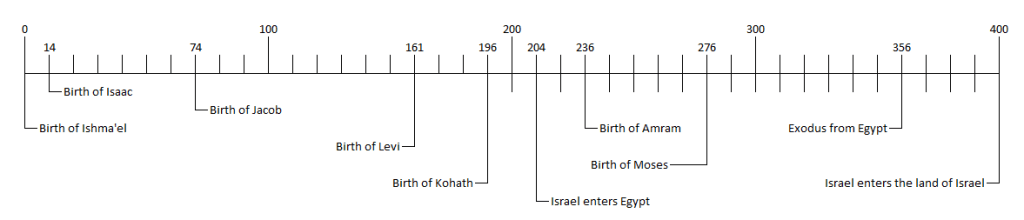
The 400-Year Prophecy and Israel’s Journey

Exodus 12:40 Now the sojourning of the children of Israel, who dwelt in Egypt, was four hundred and thirty years.

This seems like a contradiction because the children of Israel only lived in Egypt for about 3 generations. However, it is helpful to look at the original prophecy of the 400 Years prediction.

And he said unto Abram, Know of a surety that thy seed shall be a stranger in a land that is not theirs, and shall serve them; and they shall afflict them four hundred years. (KJV, Genesis 15:13)

It basically says that the seed (descendants) of Abraham would be a stranger in a land that is not theirs and shall server them and afflicted them 400 years.

If we call the year of Ishma’el’s birth “0,” as he is Abram’s first seed, we can then use various passages to calculate how many years from then until Israel entered the land of Canaan.

Birth of Isaac: 

  • Abraham is 100 (Gen 17:17; 21:5)
  • Ishmael is 13 the year before Isaac’s birth (Gen 17:25)

Birth of Jacob: 

  • Isaac is 60 (Gen 25:26)

Birth of Joseph: 

  • Jacob is 91 – Jacob was 130 when entering Egypt (Gen 47:9)
    • Joseph was 30 when entering Pharoahs service (Gen 41:46)
    • 7 years of plenty (Gen 41:53,54)
    • 2 years of famine when Jacob came to Egypt (Gen 45:6)
    • Joseph was 39 (30+7+2) when Jacob entered Egypt
    • Jacob was 91 at birth of Joseph (130-39)
  • Birth of Levi: Jacob is 87
    • Jacob is 91 at birth of Joseph who was born in the 14 year of service to Laban (Gen 30:25,26)
    • Jacob is 77 when arrives at Labans (91-14)
    • Jacob serves 7 years and recieves Leah (Gen 29:27) who bears Levi, her third son approximately 3 years after being with Jacob.
    • Jacob is approximately 87 at birth of Levi (77+7+3).
  • The Children of Israel enter the land of Egypt 17 years before the death of Jacob (Gen 47:28) and when Levi is 87 years old.

Birth of Kohath: 

  • Levi is ~35 – Levi was younger than 40 when Kohath was born as Levi was 43 when he went to Egypt with his 3 sons (Gen 46:8,11)
    • if this is correct Kohath would be 8 when entering Egypt.
    • Birth of Amram: Kohath is ~40 (an average generaton)
    • Birth of Moses: Amram is ~40 (an average generaton)
    • Israel leaves Egypt when Moses is 80 years old.

The children of Israel enter the land of Israel after the 40 years of wandering, which is 400 years after the birth of Ishmael.

These numbers are approximate calculations. The other 30 years can be time getting to the promise land and how much time that it should have taken to take the land. Instead, they are wandering in the wilderness for 40 Years. They still were journeying in a land that was not their own.

Shamgar a minor Judge of Israel

Shamgar was the third judge of Israel. Shamgar was one of the “minor” judges. But the distinction between “major” and “minor” is due more to the lack of information about the “minor” judges than to the lesser importance of the individuals themselves.

Judges 3:31

  • He was succeeded by Shamgar, the son of Anath. He killed six hundred Philistines with an oxgoad, and he delivered Israel.

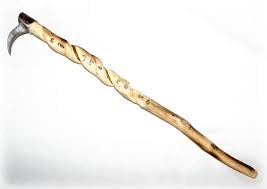
Shamgar killed more than 600 Philistines with an oxgoad. These Philistines were terrorizing the main travel routes. He did this with an oxgoad.

An oxgoad means an instrument of learning. It was used to teach the oxen where to go. It was long and pointed. Sometimes it had a metal tip. It was used to drive animals.

Shamgar is mentioned in the song of Deborah.

Judges 5:6-7

In the days of Shamgar, the son of Anath,
    in the days of Jael,
the highways were deserted,
    travelers took winding paths.
Village life ceased in Israel,
    it ceased until I, Deborah,
    until I rose up as mother in Israel.

Shamgar

  • Strong’s H8044 – šamgar
    • Outline of Biblical Usage 
      • Shamgar = “sword”
      • son of Anath and a judge of Israel; with an ox-goad he slew 600 Philistines and delivered Israel
    • Strong’s Definitions
      • שַׁמְגַּר Shamgar, sham-gar’; of uncertain derivation; Shamgar, an Israelite judge:—Shamgar.

Anath

  • Strong’s H6067 – ʿănāṯ
    • Outline of Biblical Usage
      • Anath = “answer”
      • father of Shamgar
    • Strong’s Definitions
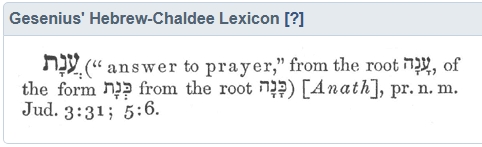
      • עֲנָת ʻĂnâth, an-awth’; from H6030; answer; Anath, an Israelite:—Anath.
    • Gesenius’ Hebrew-Chaldee Lexicon

Discovering Naphtali: Leadership and Legacy in the Bible

Naphtali was born to Rachel’s handmaid, Bilhah.

  • Genesis 30:8
    • And Bilhah Rachel’s maid conceived again, and bare Jacob a second son. And Rachel said, With great wrestlings have I wrestled with my sister, and I have prevailed: and she called his name Naphtali.

Naphtali had four sons:

  • Jahzeel
  • Guni
  • Jezer
  • Shillem

When the census was taken in Numbers 26:48-49, the descendants of Naphtali was great.

  • Of the sons of Naphtali after their families:
    • of Jahzeel, the family of the Jahzeelites:
    • of Guni, the family of the Gunites:
    • Of Jezer, the family of the Jezerites:
    • of Shillem, the family of the Shillemites.
  • These are the families of Naphtali according to their families: and they that were numbered of them were forty and five thousand and four hundred.

Jacob gave a prophecy of Naphtali’s descendants in Genesis 49:21.

  • Naphtali is a hind let loose: he giveth goodly words.

He Giveth goodly words is an interesting prophecy.

Goodly

  • שֶׁפֶר shepher, sheh’-fer; from H8231; beauty:—× goodly.

Words

  • אֵמֶר ʼêmer, ay’-mer; from H559; something said:—answer, × appointed unto him, saying, speech, word.

Naphtali was the northern most tribe of Israel occupying a long, narrow piece of land about 80 kil. (50 miles) north to south and 16 to 24 Kil (10 to 15 miles) from east to west. The land of Naphtali was mountainous and very fertile.

Isaiah 9:1-7

  • Nevertheless the dimness shall not be such as was in her vexation, when at the first he lightly afflicted the land of Zebulun and the land of Naphtali, and afterward did more grievously afflict her by the way of the sea, beyond Jordan, in Galilee of the nations.
  • The people that walked in darkness have seen a great light: they that dwell in the land of the shadow of death, upon them hath the light shined.
  • Thou hast multiplied the nation, and not increased the joy: they joy before thee according to the joy in harvest, and as men rejoice when they divide the spoil.
  • For thou hast broken the yoke of his burden, and the staff of his shoulder, the rod of his oppressor, as in the day of Midian.
  • For every battle of the warrior is with confused noise, and garments rolled in blood; but this shall be with burning and fuel of fire.
  • For unto us a child is born, unto us a son is given: and the government shall be upon his shoulder: and his name shall be called Wonderful, Counsellor, The mighty God, The everlasting Father, The Prince of Peace.
  • Of the increase of his government and peace there shall be no end, upon the throne of David, and upon his kingdom, to order it, and to establish it with judgment and with justice from henceforth even for ever. The zeal of the Lord of hosts will perform this.

Jesus fulfilled this prophecy about Nathali seeing a great light when Jesus spent most of his ministry in the land that Nathali was given after the Exodus.

Matthew 4:12-6

  • When Jesus learned that John had been arrested, he withdrew to Galilee. 
  • Departing from Nazareth, he settled in Capernaum by the sea, in the region of Zebulun and Naphtali
  • in order that what had been spoken through the prophet Isaiah might be fulfilled:
    • “Land of Zebulun and land of Naphtali, the passageway to the sea, beyond the Jordan, Galilee of the Gentiles:
    • The people who lived in darkness have seen a great light, and for those who dwell in a land darkened by the shadow of death light has dawned.”

Naphtali was a tribe of brave warriors people.

  • Members of the tribe fought bravely under Deborah.
    • Judges 4:4-6
      • Now Deborah, the wife of Lappidoth, a prophetess, was then a judge in Israel.  
      • She used to sit underneath the palm tree of Deborah between Ramah and Bethel in the hill country of Ephraim. The Israelites would come up to her for judgment there. 
      • She summoned Barak, the son of Ahinoam, from Kadesh of Naphtali, and she said to him, “The Lord, the God of Israel, commands you, ‘Go, take ten thousand men from Naphtali and Zebulun with yourself and march toward Mount Tabor.
    • Judges 4:10
      • Barak had summoned Zebulun and Naphtali to Kedesh. Ten thousand men were under his command, and Deborah went up with him.
    • Judges 5:18
      • The people of Zebulun risked their lives, as did Naphtali on the heights of the field.
  • They responded to Gideon’s Call
    • Judges 6:35
      • He sent messengers all throughout Manasseh, summoning them to follow him. He also sent messengers to Asher, Zebulun, and Naphtali, so that they too gathered around him.
    • Judges 7:23
      •  The men of Israel from out of Naphtali, from out of Asher, and from out of Manasseh gathered together and pursued the Midianites. 
  • When Saul’s son Ishbosheth challenged David for the throne 37,000 fighting men who were led by 1,000 captains joined David.
    • Chronicles 12:34
      •  From Naphtali there were one thousand captains along with thirty-seven thousand men armed with shield and spear. 

When the tribes divided into 2 kingdoms, it was part of the 10 Northern Tribes.

Descendants

The speculative descendants of Naphtali include:

  • Ethiopian Jews, or Beta Israel, trace their ancestry to the Tribe of Dan, whose members, along with those from the tribes of Gad, Asher, and Naphtali, migrated south to the Kingdom of Kush—present-day Ethiopia and Sudan—during the destruction of the First Temple.
  • The Mountain Jews of the Caucasus.
  • The Bukharian Jews of Central Asia.
  • Nordisk Israel identify the Tribe of Naphtali with Norway.
  • Pacific Islanders (Cook Islands, Samoans, Hawaiians, Tongans, Fijians, etc.).

Understanding Daniel’s Stand: Purity Amidst Adversity

When Babylon captured Judah it took trophies – treasures from the house of God and Children (youth). The treasures from the house of God was placed in the treasure house of their god.

  • Daniel 1:1-5
    • In the third year of the reign of Jehoiakim king of Judah came Nebuchadnezzar king of Babylon unto Jerusalem, and besieged it.
    • And the Lord gave Jehoiakim king of Judah into his hand, with part of the vessels of the house of God: which he carried into the land of Shinar to the house of his god; and he brought the vessels into the treasure house of his god.
    • And the king spake unto Ashpenaz the master of his eunuchs, that he should bring certain of the children of Israel, and of the king’s seed, and of the princes;
    • Children in whom was no blemish, but well favoured, and skilful in all wisdom, and cunning in knowledge, and understanding science, and such as had ability in them to stand in the king’s palace, and whom they might teach the learning and the tongue of the Chaldeans.
    • 5And the king appointed them a daily provision of the king’s meat, and of the wine which he drank: so nourishing them three years, that at the end thereof they might stand before the king.

Daniel and three of his friends were among the children taken.

  • Daniel 1:6
    • Now among these were of the children of Judah, Daniel, Hananiah, Mishael, and Azariah:

The goal of taken the children was to indoctrinate them into the belief of the Babylonians. They did this by:

  • Isolation
    • took the children away from everyone and everything that they knew.
  • Inculturation
    • Education
      • whom they might teach the learning and the tongue of the Chaldeans.
  • Integration
    • that at the end thereof they might stand before the king.
  • Identity changing
    • name changes: gave them new names that pointed away from who they were to who the Babylonians wanted them to be.
Old NameOld Name MeaningNew NameNew Name Meaning
DanielGod is my judgeBelteshazzar“Bel protects the king” or “Bel’s prince”. ‘Bel’ referring to the Babylonian god Marduk and ‘Shazar’ meaning ‘treasurer’ or ‘steward’.
HananiahYahweh is graciousShadrachservant of Aku” Aku was the Babylonian moon god.
Mishael“Who belongs to God?” Meshach“guest of a king”
AzariahYahweh has helpedAbednego “servant of Nego or Nebo

Names in those days had major meaning. Your name told you who you were. Your name was your identity. Therefore, the Babylonians gave them a new identity (a new name).

Daniel was respectful. This is evident with the prince of the eunuchs showing Daniel favor. However, Daniel stayed true to God.

  • Daniel 1:8-9
    • But Daniel purposed in his heart that he would not defile himself with the portion of the king’s meat, nor with the wine which he drank: therefore he requested of the prince of the eunuchs that he might not defile himself.
    • Now God had brought Daniel into favour and tender love with the prince of the eunuchs.

Defile

  • גָּאַל gâʼal, gaw-al’; a primitive root, to soil or (figuratively) desecrate:—defile, pollute, stain.

Daniel chooses to stay pure and Holy before God. He does this by following God’s laws. The laws concerning food are linked to purity, holiness, and being clean.

  • Leviticus 11:46-47
    • This is the law of the beasts, and of the fowl, and of every living creature that moveth in the waters, and of every creature that creepeth upon the earth:
    • To make a difference between the unclean and the clean, and between the beast that may be eaten and the beast that may not be eaten.
  • Leviticus 10:9-10
    • And that ye may put difference between holy and unholy, and between unclean and clean;
  • Deuteronomy 14:2-3
    • For thou art an holy people unto the Lord thy God, and the Lord hath chosen thee to be a peculiar people unto himself, above all the nations that are upon the earth.
    •  Thou shalt not eat any abominable thing.
  • Deuteronomy 14:21
    • Ye shall not eat of anything that dieth of itself: thou shalt give it unto the stranger that is in thy gates, that he may eat it; or thou mayest sell it unto an alien: for thou art an holy people unto the Lord thy God. Thou shalt not seethe a kid in his mother’s milk.

For more information read: The Significance of Clean and Unclean Foods in the Bible.

Today we are called to be in the world but not of the world. This is similar to the situation that Daniel found himself in. He was in the world (Babylon), but he refused to be of the world. He refused to defile himself by letting the world in him.

Here is a potation of a prayer that Jesus prayed before going to the cross. Notice how Jesus prays for us.

John 17:14-21

  • I have given them thy word; and the world hath hated them, because they are not of the world, even as I am not of the world.
  • I pray not that thou shouldest take them out of the world, but that thou shouldest keep them from the evil.
  • They are not of the world, even as I am not of the world.
  • Sanctify them through thy truth: thy word is truth.
  • As thou hast sent me into the world, even so have I also sent them into the world.
  • And for their sakes I sanctify myself, that they also might be sanctified through the truth.
  • Neither pray I for these alone, but for them also which shall believe on me through their word;
  • That they all may be one; as thou, Father, art in me, and I in thee, that they also may be one in us: that the world may believe that thou hast sent me.

A 10-day test period was granted to Daniel and his three friends. At the end of the test period, Daniel and his friends did better than the others.

Daniel 1:15-16

  •  And at the end of ten days their countenances appeared fairer and fatter in flesh than all the children which did eat the portion of the king’s meat.
  • 16 Thus Melzar took away the portion of their meat, and the wine that they should drink; and gave them pulse.

At the end of the three years, Daniel and his friends were still better than the rest.

Daniel 1:17-20

  • As for these four children, God gave them knowledge and skill in all learning and wisdom: and Daniel had understanding in all visions and dreams.
  • Now at the end of the days that the king had said he should bring them in, then the prince of the eunuchs brought them in before Nebuchadnezzar.
  • And the king communed with them; and among them all was found none like Daniel, Hananiah, Mishael, and Azariah: therefore stood they before the king.
  • And in all matters of wisdom and understanding, that the king enquired of them, he found them ten times better than all the magicians and astrologers that were in all his realm.

It is always better to be Holy and not defile yourself with the world than to fit in with the world.

The Cleansing of the Temple at Passover

 Jeremiah 7:8-12

“Behold, you are trusting in deceptive and useless words that bring no benefit. Will you steal, murder, commit adultery, swear [oaths] falsely, offer sacrifices or burn incense to Baal, and follow after other gods that you have not known, 10 and [then dare to] come and stand before Me in this house, which is called by My Name, and say, ‘We are protected and set free [by this act of religious ritual]!’—only to go on with this wickedness and these disgusting and loathsome things? 11 Has this house, which is called by My Name, become a den of robbers in your eyes [a place of retreat for you between acts of violence]? Behold, I Myself have seen it,” says the Lord.

12 “But go now to My place which was in Shiloh [in Ephraim], where I first set My Name, and see what I did to it because of the wickedness of My people Israel. 

Jeremiah 7:11

11 Has this house, which is called by My name, become a den of robbers in your sight? Behold, I Myself have seen it,” declares the Lord.

Isaiah 56:7

Even those I will bring to My holy mountain,
And make them joyful in My house of prayer.
Their burnt offerings and their sacrifices will be acceptable on My altar;
For My house will be called a house of prayer for all the peoples.”

Matthew 21:10-17

When He entered Jerusalem, all the city was trembling [with excitement], saying, “Who is this?” 11 And the crowds were saying, “This is the prophet Jesus, from Nazareth in Galilee.”

Cleansing the Temple

12 And Jesus entered the temple [grounds] and drove out [with force] all who were buying and selling [birds and animals for sacrifice] in the temple area, and He turned over the tables of the moneychangers [who made a profit exchanging foreign money for temple coinage] and the chairs of those who were selling doves [for sacrifice]. 13 Jesus said to them, “It is written [in Scripture], ‘My house shall be called a house of prayer’; but you are making it a robbers’ den.”

14 And the blind and the lame came to Him in [the porticoes and courts of] the temple area, and He healed them. 15 But when the chief priests and the scribes saw the wonderful and miraculous things that Jesus had done, and heard the boys who were shouting in [the porticoes and courts of] the temple [in praise and adoration], “Hosanna to the Son of David (the Messiah),” they became indignant 16 and they said to Him, “Do You hear what these children are saying?” And Jesus replied to them, “Yes; have you never read [in the Scripture], ‘Out of the mouths of infants and nursing babies You have prepared and provided praise for Yourself’?” 17 Then He left them and went out of the city to Bethany and spent the night there.

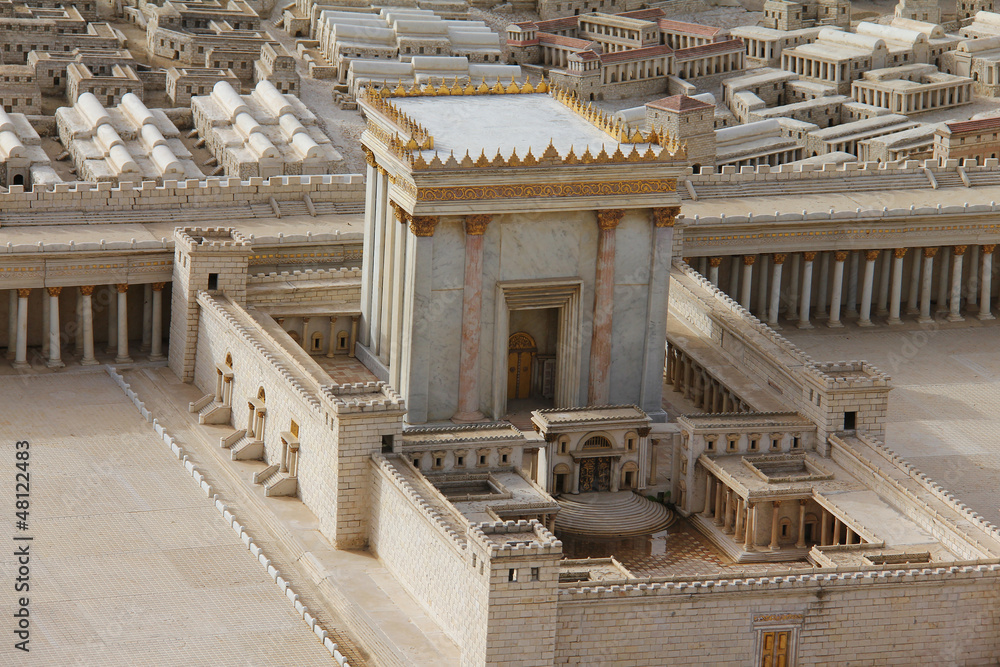
Jesus had just entered into the city. He went to the temple. He found that they had turned what should have been a Holy place of prayer and worship into a den of thieves (Jer. 7:11 and Mat. 21:13). This was the second time that he cleaned the temple. At the 1st Passover that Jesus attended after beginning his earthly ministry he cleaned the temple for the same reason. The people thought that they were good (Jer. 7:10) when in fact they were heading for destruction (Jer. 7:12). Jesus had come to earth to live and die in order to save the world from sin so that they could have eternal life. However, that involves the removal of some things. Even today we must allow Jesus to clean the temple (our body).

  • 1 Corinthians 6:19-20
    • What? know ye not that your body is the temple of the Holy Ghost which is in you, which ye have of God, and ye are not your own?
    • For ye are bought with a price: therefore, glorify God in your body, and in your spirit, which are God’s.

First Passover—Cleansing the Temple

13 Now the Passover of the Jews was approaching, so Jesus went up to Jerusalem. 14 And in the temple [enclosure], He found the people who were selling oxen and sheep and doves, and the money changers sitting at their tables15 He made a whip of cords, and drove them all out of the temple, with the sheep and the oxen; and He scattered the coins of the money changers and overturned their tables; 16 then to those who sold the doves He said, “Take these things away! Stop making My Father’s house a place of commerce!” 17 His disciples remembered that it is written [in the Scriptures], “Zeal (love, concern) for Your house [and its honor] will consume Me.” 18 Then the Jews retorted, “What sign (attesting miracle) can You show us as [proof of] your authority for doing these things?” 19 Jesus answered them, “Destroy this temple, and in three days I will raise it up.” 20 Then the Jews replied, “It took forty-six years to build this temple, and You will raise it up in three days?” 21 But He was speaking of the temple which was His body. 22 So when He had risen from the dead, His disciples remembered what He had said. And they believed and trusted in and relied on the Scripture and the words that Jesus had spoken.

It was after cleaning the temple for the 1st time that he explained that His body was the temple. It is interesting to note that both cleaning were at the time of Passover.

Jesus is referred to as the Passover Lamb in the Bible, symbolizing his sacrifice for humanity

  • 1 Corinthians 5:7: “For Christ, our Passover lamb, has been sacrificed.”
    • This verse emphasizes that Jesus’ sacrifice fulfills the role of the Passover lamb, which was central to the Passover celebration.
  • John 1:29: “The next day he saw Jesus coming toward him, and said, ‘Behold, the Lamb of God, who takes away the sin of the world!'”
    • This declaration by John the Baptist identifies Jesus as the sacrificial lamb, linking him to the Passover tradition.
  • Matthew 26:17: “Now on the first day of the Feast of the Unleavened Bread, the disciples came to Jesus, saying, ‘Where do You want us to prepare for You to eat the Passover?'”
    • This verse sets the context for the Last Supper, which was a Passover meal.
  • Exodus 12:13: “The blood shall be a sign for you on the houses where you live; and when I see the blood, I will pass over you, and no plague will befall you to destroy you when I strike the land of Egypt.”
    • This Old Testament verse establishes the significance of the Passover lamb’s blood, which is echoed in the New Testament through Jesus’ sacrifice.
  • Luke 22:15: “And He said to them, ‘I have eagerly desired to eat this Passover with you before I suffer.'”
    • This verse highlights Jesus’ intention to celebrate Passover with his disciples before his crucifixion, linking his impending sacrifice to the Passover celebration.

The Significance of Clean and Unclean Foods in the Bible

Food is considered clean or unclean for eating. Food that is kosher is considered clean (fitting for eating).

God gave these food laws as a means of separating His people from the pagans. This obedience to these laws was a matter of Holiness.

  • Leviticus 11:46-47
    • This is the law of the beasts, and of the fowl, and of every living creature that moveth in the waters, and of every creature that creepeth upon the earth:
    • To make a difference between the unclean and the clean, and between the beast that may be eaten and the beast that may not be eaten.
  • Leviticus 10:9-10
    • And that ye may put difference between holy and unholy, and between unclean and clean;
  • Deuteronomy 14:2-3
    • For thou art an holy people unto the Lord thy God, and the Lord hath chosen thee to be a peculiar people unto himself, above all the nations that are upon the earth.
    •  Thou shalt not eat any abominable thing.
  • Deuteronomy 14:21
    • Ye shall not eat of anything that dieth of itself: thou shalt give it unto the stranger that is in thy gates, that he may eat it; or thou mayest sell it unto an alien: for thou art an holy people unto the Lord thy God. Thou shalt not seethe a kid in his mother’s milk.

Here is a summary of the Laws.

Of the “beasts of the earth” (which basically refers to land mammals with the exception of swarming rodents), you may eat any animal that has cloven hooves and chews its cud. Lev. 11:3; Deut. 14:6. Any land mammal that does not have both of these qualities is forbidden.

  Not Allowed  Allowed
  Camel  Cattle
  Rabbit/ Hare  Sheep
  Pig  Goats
  Dog  Deer
 cat  Bison

Of the things that are in the waters, you may eat anything that has fins and scales. Lev. 11:9; Deut. 14:9.

  Not Allowed  Allowed
  lobsters  tuna
  shrimp  carp
  clams  salmon
  crabs  herring

For birds, the criteria are less clear. The Torah provides a list of forbidden birds (Lev. 11:13‑19; Deut. 14:11‑18) but does not specify why these particular birds are forbidden. All of the birds on the list are birds of prey or scavengers, thus the rabbis inferred that this was the basis for the distinction. Other birds are permitted, such as chicken, geese, ducks and turkeys. However, some people avoid turkey, because it is was unknown at the time of the giving of the Torah, leaving room for doubt.

Of the “winged swarming things” (winged insects), a few are specifically permitted (Lev. 11:22), but the Sages are no longer certain which ones they are, so all have been forbidden. There are communities that have a tradition about what species are permitted, and in those communities some insects are eaten.

Rodents, reptiles, amphibians, and insects (except as mentioned above) are all forbidden. Lev. 11:29‑30, 42‑43.

Any product derived from these forbidden animals, such as their milk, eggs, fat, or organs, also cannot be eaten. Rennet, an enzyme used to harden cheese, is often obtained from non‑kosher animals, thus kosher hard cheese can be difficult to find.

Today we are still called to be Holy.

  • 1 Peter 1:15-16
    • But as he which hath called you is holy, so be ye holy in all manner of conversation;
    • Because it is written, Be ye holy; for I am holy.

“Manner of conversation” is a phrase:

  • STRONGS G391:ἀναστροφή-ῆς, (from the passive ἀναστρέφομαι, see the preceding word), properly, ‘walk,’ i. e. manner of life, behavior, conduct

Understanding Zechariah 9:9 and Its Fulfillment in Jesus

Zechariah 9:9 Rejoice greatly, O daughter of Zion; shout, O daughter of Jerusalem: behold, thy King cometh unto thee: he is just, and having salvation; lowly, and riding upon an ass, and upon a colt the foal of an ass.

This was fulfilled when Jesus entered the city of Jerusalem riding on a young donkey.

Matthew 21:1-9

  • And when they drew nigh unto Jerusalem, and were come to Bethphage, unto the mount of Olives, then sent Jesus two disciples,
  • Saying unto them, Go into the village over against you, and straightway ye shall find an ass tied, and a colt with her: loose them, and bring them unto me.
  • And if any man say ought unto you, ye shall say, The Lord hath need of them; and straightway he will send them.
  • All this was done, that it might be fulfilled which was spoken by the prophet, saying,
  • Tell ye the daughter of Sion, Behold, thy King cometh unto thee, meek, and sitting upon an ass, and a colt the foal of an ass.
  • And the disciples went, and did as Jesus commanded them,
  • And brought the ass, and the colt, and put on them their clothes, and they set him thereon.
  • And a very great multitude spread their garments in the way; others cut down branches from the trees, and strawed them in the way.
  • And the multitudes that went before, and that followed, cried, saying, Hosanna to the son of David: Blessed is he that cometh in the name of the Lord; Hosanna in the highest.

On that day, the people cried out, “Hosanna to the son of David” (21:9). By calling Christ the “son of David,” the people were speaking truth that He was their savior and the fulfillment of the Davidic prophecy; however, they turned against Him when He did not prove to their satisfaction that He was their King. Note that Zachariah said the King would have salvation. “Hosanna” means “save us.”

The Davidic prophecy encompasses biblical predictions regarding King David and his lineage, particularly the expectation of a Messiah who would come from David’s line, fulfilling God’s covenant promises.

  • The Davidic Covenant
    • The Davidic Covenant is a key part of the prophecy about David, found in 2 Samuel 7:12-16. In it, God promises David that his throne will last forever, saying He’ll raise up a descendant from David’s own family to build a house in His name. This covenant is unconditional, depending entirely on God’s faithfulness rather than on David’s or Israel’s actions.
  • Messianic Expectations
    • The prophecies about the Davidic line play a key role in both Jewish and Christian end-times beliefs. In Jewish tradition, there’s an expectation of a future Davidic king who will restore Israel and bring back God’s kingdom on earth. This figure, often called the Messiah (Hebrew: Mashiach), is believed to gather the twelve tribes of Israel and rebuild the Temple in Jerusalem.

Several key passages highlight the significance of the Davidic prophecy:

  • 2 Samuel 7:12-16:
    • And when thy days be fulfilled, and thou shalt sleep with thy fathers, I will set up thy seed after thee, which shall proceed out of thy bowels, and I will establish his kingdom.
    • He shall build an house for my name, and I will stablish the throne of his kingdom for ever.
    • I will be his father, and he shall be my son. If he commit iniquity, I will chasten him with the rod of men, and with the stripes of the children of men:
    • But my mercy shall not depart away from him, as I took it from Saul, whom I put away before thee.
    • And thine house and thy kingdom shall be established for ever before thee: thy throne shall be established for ever.
      • Establishes the Davidic Covenant and God’s promise of an everlasting throne.
  • Psalm 2:6:
    • Yet have I set my king upon my holy hill of Zion.
      • Speaks of God’s anointed king, interpreted as a reference to the Messiah.
  • Jeremiah 33:17:
    • For thus saith the Lord; David shall never want a man to sit upon the throne of the house of Israel;
      • Declares that David will never lack a man to sit on the throne of Israel, reinforcing the enduring nature of the Davidic line.

Later, Christ was arrested and crucified (see Matt. 26:47-68; 15), but He rose the third day, conquering death and hell (see 1 Cor. 15:4; Rev. 1:18).

Biblical Insights on Weather and Seasons

Weather has been around since God created weather.

Genesis 1:14-15

  • And God said, “Let there be lights in the expanse of the heavens to separate the day from the night. And let them be for signs and for seasons, and for days and years, and let them be lights in the expanse of the heavens to give light upon the earth.” And it was so.

Notice that God created the lights in the expanse of the heavens for a few reasons:

  • separation of day and night
  • signs
  • seasons
  • to be used as a calendar (for days and years)
  • to give light upon the earth

In the book of Genesis after Noah, Noah’s family, and the animals leave the ark, God reiterates the order and idea of a natural cycle of seasons.

Genesis 8:22

  • While the earth remains, seedtime and harvest, cold and heat, summer and winter, day and night, shall not cease.”

God used the weather to demonstrate His power, for reward to those who obey, and for punishment to those who disobey. Below are sone scriptures illustrating the various demonstrations.

Psalms 148:7-8 ESV

  • Praise the Lord from the earth,
        you great sea creatures and all deeps,
  • fire and hail, snow and mist,
        stormy wind fulfilling his word!

Jeremiah 10:12-13 ESV

  • It is he who made the earth by his power, who established the world by his wisdom, and by his understanding stretched out the heavens. When he utters his voice, there is a tumult of waters in the heavens, and he makes the mist rise from the ends of the earth. He makes lightning for the rain, and he brings forth the wind from his storehouses.

Leviticus 26:4 ESV

  • Then I will give you your rains in their season, and the land shall yield its increase, and the trees of the field shall yield their fruit.

Nahum 1:3 ESV

  • The Lord is slow to anger and great in power, and the Lord will by no means clear the guilty. His way is in whirlwind and storm, and the clouds are the dust of his feet.

Job 37:9 ESV

  • From its chamber comes the whirlwind, and cold from the scattering winds.

Luke 21:11 ESV

  • There will be great earthquakes, and in various places famines and pestilences. And there will be terrors and great signs from heaven.

Jonah 1:4 ESV

  • But the Lord hurled a great wind upon the sea, and there was a mighty tempest on the sea, so that the ship threatened to break up.

James 5:17-18 ESV

  • Elijah was a man with a nature like ours, and he prayed fervently that it might not rain, and for three years and six months it did not rain on the earth. Then he prayed again, and heaven gave rain, and the earth bore its fruit.

Isaiah 29:6 ESV

  • You will be visited by the Lord of hosts with thunder and with earthquake and great noise, with whirlwind and tempest, and the flame of a devouring fire.

Amos 4:7 ESV

  • “I also withheld the rain from you when there were yet three months to the harvest; I would send rain on one city, and send no rain on another city; one field would have rain, and the field on which it did not rain would wither;

Deuteronomy 28:24 ESV

  • The Lord will make the rain of your land powder. From heaven dust shall come down on you until you are destroyed.

1 Samuel 12:18 ESV

  • So, Samuel called upon the Lord, and the Lord sent thunder and rain that day, and all the people greatly feared the Lord and Samuel.

Haggai 1:11 ESV

  • And I have called for a drought on the land and the hills, on the grain, the new wine, the oil, on what the ground brings forth, on man and beast, and on all their labors.”

1 Kings 8:35-36 ESV

  • “When heaven is shut up and there is no rain because they have sinned against you, if they pray toward this place and acknowledge your name and turn from their sin, when you afflict them, then hear in heaven and forgive the sin of your servants, your people Israel, when you teach them the good way in which they should walk, and grant rain upon your land, which you have given to your people as an inheritance.

Luke 21:25 ESV

  • “And there will be signs in sun and moon and stars, and on the earth distress of nations in perplexity because of the roaring of the sea and the waves,

Mark 4:39-41 ESV

  • And he awoke and rebuked the wind and said to the sea, “Peace! Be still!” And the wind ceased, and there was a great calm. He said to them, “Why are you so afraid? Have you still no faith?” And they were filled with great fear and said to one another, “Who then is this, that even the wind and the sea obey him?”

Luke 8:23-25 ESV

  • And as they sailed he fell asleep. And a windstorm came down on the lake, and they were filling with water and were in danger. And they went and woke him, saying, “Master, Master, we are perishing!” And he awoke and rebuked the wind and the raging waves, and they ceased, and there was a calm. He said to them, “Where is your faith?” And they were afraid, and they marveled, saying to one another, “Who then is this, that he commands even winds and water, and they obey him?

Matthew 8:26 ESV

  • And he said to them, “Why are you afraid, O you of little faith?” Then he rose and rebuked the winds and the sea, and there was a great calm.

Psalm 107:29 ESV

  • He made the storm be still, and the waves of the sea were hushed.

Job 36:27-28 ESV

  • For he draws up the drops of water; they distill his mist in rain, which the skies pour down and drop on mankind abundantly.

It does not matter how good scientist think they are. They can try to control the weather. That will not happen. Instead, it will do what God commands and allows.

Evidence of the Ice Age in the Bible: Key Verses

Is there evidence of a possible ice age in the bible? Yes! Look at these verses. Job lived in a desert yet he is talking about ice.

  • Job 37:10
    • By the breath of God frost is given: and the breadth of the waters is straitened.
  • Job 6:16
    • Which are blackish by reason of the ice, and wherein the snow is hid:
  • Job 38:29
    • Out of whose womb came the ice? and the hoary frost of heaven, who hath gendered it?

Even in the book of Psalm it makes reference to ice.

  • Psalm 147:17
    • He casteth forth his ice like morsels: who can stand before his cold?

During the flood the waters covered the highest part of the earth.

  • Genesis 7:10-12 And it came to pass after seven days, that the waters of the flood were upon the earth.
    •  In the six hundredth year of Noah’s life, in the second month, the seventeenth day of the month, the same day were all the fountains of the great deep broken up, and the windows of heaven were opened.
    • And the rain was upon the earth forty days and forty nights.
  • Genesis 7:17-20
    • And the flood was forty days upon the earth; and the waters increased, and bare up the ark, and it was lift up above the earth.
    • And the waters prevailed, and were increased greatly upon the earth; and the ark went upon the face of the waters.
    • And the waters prevailed exceedingly upon the earth; and all the high hills, that were under the whole heaven, were covered.
    • Fifteen cubits upward did the waters prevail; and the mountains were covered.
      • A cubit is about 18 inches.
      • 15 cubits would be equal to about 270 inches or 22.5 feet.

All that water had to go somewhere. It makes sense that God would have simply cooled the earth and caused ice to form in many places such as the north and the south poles.