The Cleansing of the Temple at Passover
Jeremiah 7:8-12
“Behold, you are trusting in deceptive and useless words that bring no benefit. 9 Will you steal, murder, commit adultery, swear [oaths] falsely, offer sacrifices or burn incense to Baal, and follow after other gods that you have not known, 10 and [then dare to] come and stand before Me in this house, which is called by My Name, and say, ‘We are protected and set free [by this act of religious ritual]!’—only to go on with this wickedness and these disgusting and loathsome things? 11 Has this house, which is called by My Name, become a den of robbers in your eyes [a place of retreat for you between acts of violence]? Behold, I Myself have seen it,” says the Lord.
12 “But go now to My place which was in Shiloh [in Ephraim], where I first set My Name, and see what I did to it because of the wickedness of My people Israel.
Jeremiah 7:11
11 Has this house, which is called by My name, become a den of robbers in your sight? Behold, I Myself have seen it,” declares the Lord.
Isaiah 56:7
Even those I will bring to My holy mountain,
And make them joyful in My house of prayer.
Their burnt offerings and their sacrifices will be acceptable on My altar;
For My house will be called a house of prayer for all the peoples.”
Matthew 21:10-17
When He entered Jerusalem, all the city was trembling [with excitement], saying, “Who is this?” 11 And the crowds were saying, “This is the prophet Jesus, from Nazareth in Galilee.”
Cleansing the Temple
12 And Jesus entered the temple [grounds] and drove out [with force] all who were buying and selling [birds and animals for sacrifice] in the temple area, and He turned over the tables of the moneychangers [who made a profit exchanging foreign money for temple coinage] and the chairs of those who were selling doves [for sacrifice]. 13 Jesus said to them, “It is written [in Scripture], ‘My house shall be called a house of prayer’; but you are making it a robbers’ den.”
14 And the blind and the lame came to Him in [the porticoes and courts of] the temple area, and He healed them. 15 But when the chief priests and the scribes saw the wonderful and miraculous things that Jesus had done, and heard the boys who were shouting in [the porticoes and courts of] the temple [in praise and adoration], “Hosanna to the Son of David (the Messiah),” they became indignant 16 and they said to Him, “Do You hear what these children are saying?” And Jesus replied to them, “Yes; have you never read [in the Scripture], ‘Out of the mouths of infants and nursing babies You have prepared and provided praise for Yourself’?” 17 Then He left them and went out of the city to Bethany and spent the night there.
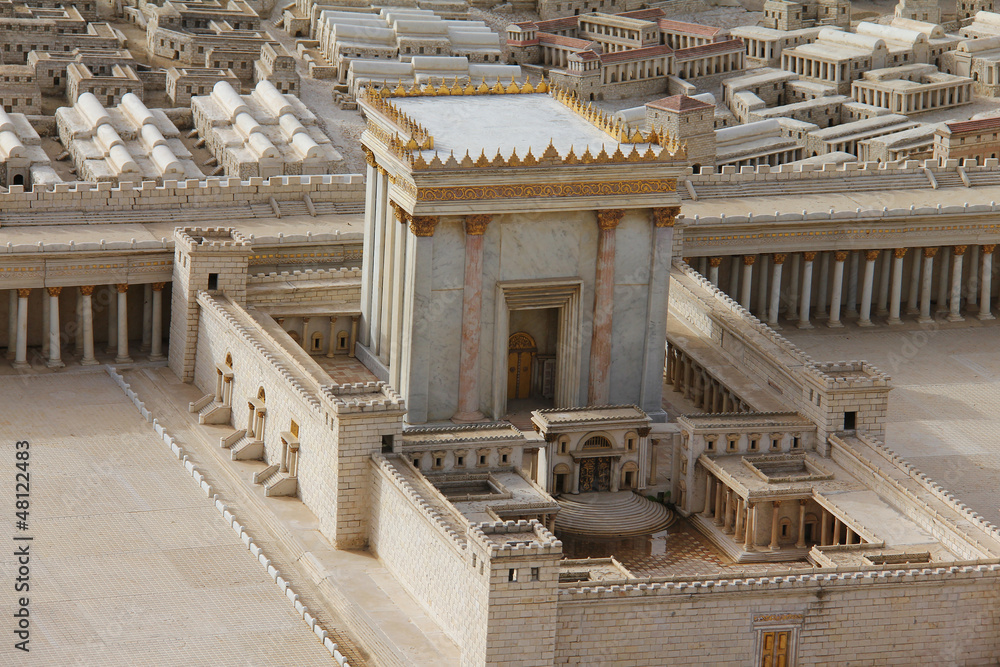
Jesus had just entered into the city. He went to the temple. He found that they had turned what should have been a Holy place of prayer and worship into a den of thieves (Jer. 7:11 and Mat. 21:13). This was the second time that he cleaned the temple. At the 1st Passover that Jesus attended after beginning his earthly ministry he cleaned the temple for the same reason. The people thought that they were good (Jer. 7:10) when in fact they were heading for destruction (Jer. 7:12). Jesus had come to earth to live and die in order to save the world from sin so that they could have eternal life. However, that involves the removal of some things. Even today we must allow Jesus to clean the temple (our body).
- 1 Corinthians 6:19-20
- What? know ye not that your body is the temple of the Holy Ghost which is in you, which ye have of God, and ye are not your own?
- For ye are bought with a price: therefore, glorify God in your body, and in your spirit, which are God’s.
First Passover—Cleansing the Temple
13 Now the Passover of the Jews was approaching, so Jesus went up to Jerusalem. 14 And in the temple [enclosure], He found the people who were selling oxen and sheep and doves, and the money changers sitting at their tables. 15 He made a whip of cords, and drove them all out of the temple, with the sheep and the oxen; and He scattered the coins of the money changers and overturned their tables; 16 then to those who sold the doves He said, “Take these things away! Stop making My Father’s house a place of commerce!” 17 His disciples remembered that it is written [in the Scriptures], “Zeal (love, concern) for Your house [and its honor] will consume Me.” 18 Then the Jews retorted, “What sign (attesting miracle) can You show us as [proof of] your authority for doing these things?” 19 Jesus answered them, “Destroy this temple, and in three days I will raise it up.” 20 Then the Jews replied, “It took forty-six years to build this temple, and You will raise it up in three days?” 21 But He was speaking of the temple which was His body. 22 So when He had risen from the dead, His disciples remembered what He had said. And they believed and trusted in and relied on the Scripture and the words that Jesus had spoken.
It was after cleaning the temple for the 1st time that he explained that His body was the temple. It is interesting to note that both cleaning were at the time of Passover.
Jesus is referred to as the Passover Lamb in the Bible, symbolizing his sacrifice for humanity
- 1 Corinthians 5:7: “For Christ, our Passover lamb, has been sacrificed.”
- This verse emphasizes that Jesus’ sacrifice fulfills the role of the Passover lamb, which was central to the Passover celebration.
- John 1:29: “The next day he saw Jesus coming toward him, and said, ‘Behold, the Lamb of God, who takes away the sin of the world!'”
- This declaration by John the Baptist identifies Jesus as the sacrificial lamb, linking him to the Passover tradition.
- Matthew 26:17: “Now on the first day of the Feast of the Unleavened Bread, the disciples came to Jesus, saying, ‘Where do You want us to prepare for You to eat the Passover?'”
- This verse sets the context for the Last Supper, which was a Passover meal.
- Exodus 12:13: “The blood shall be a sign for you on the houses where you live; and when I see the blood, I will pass over you, and no plague will befall you to destroy you when I strike the land of Egypt.”
- This Old Testament verse establishes the significance of the Passover lamb’s blood, which is echoed in the New Testament through Jesus’ sacrifice.
- Luke 22:15: “And He said to them, ‘I have eagerly desired to eat this Passover with you before I suffer.'”
- This verse highlights Jesus’ intention to celebrate Passover with his disciples before his crucifixion, linking his impending sacrifice to the Passover celebration.

 articlesforchristians