A place to grow your relationship with God

Archive for the ‘Bible Study’ Category

A Psalm to Thank the Lord

 Then on that day David delivered first this psalm to thank the Lord into the hand of Asaph and his brethren.

Give thanks unto the Lord, call upon his name, make known his deeds among the people.

Sing unto him, sing psalms unto him, talk ye of all his wondrous works.

Glory ye in his holy name: let the heart of them rejoice that seek the Lord.

Seek the Lord and his strength, seek his face continually.

Remember his marvellous works that he hath done, his wonders, and the judgments of his mouth;

O ye seed of Israel his servant, ye children of Jacob, his chosen ones.

He is the Lord our God; his judgments are in all the earth.

Be ye mindful always of his covenant; the word which he commanded to a thousand generations;

Even of the covenant which he made with Abraham, and of his oath unto Isaac;

And hath confirmed the same to Jacob for a law, and to Israel for an everlasting covenant,

Saying, Unto thee will I give the land of Canaan, the lot of your inheritance;

When ye were but few, even a few, and strangers in it.

And when they went from nation to nation, and from one kingdom to another people;

He suffered no man to do them wrong: yea, he reproved kings for their sakes,

Saying, Touch not mine anointed, and do my prophets no harm.

Sing unto the Lord, all the earth; shew forth from day to day his salvation.

Declare his glory among the heathen; his marvellous works among all nations.

For great is the Lord, and greatly to be praised: he also is to be feared above all gods.

For all the gods of the people are idols: but the Lord made the heavens.

Glory and honour are in his presence; strength and gladness are in his place.

Give unto the Lord, ye kindreds of the people, give unto the Lord glory and strength.

Give unto the Lord the glory due unto his name: bring an offering, and come before him: worship the Lord in the beauty of holiness.

Fear before him, all the earth: the world also shall be stable, that it be not moved.

Let the heavens be glad, and let the earth rejoice: and let men say among the nations, The Lord reigneth.

Let the sea roar, and the fulness thereof: let the fields rejoice, and all that is therein.

Then shall the trees of the wood sing out at the presence of the Lord, because he cometh to judge the earth.

O give thanks unto the Lord; for he is good; for his mercy endureth for ever.

And say ye, Save us, O God of our salvation, and gather us together, and deliver us from the heathen, that we may give thanks to thy holy name, and glory in thy praise.

Blessed be the Lord God of Israel for ever and ever. And all the people said, Amen, and praised the Lord.
The Faithful Life of Mary: Lessons in Humility and Praise

Who was Mary? Mary was a young virgin. The daughter of the son of Heli (Luke 3:23). She must have been a righteous woman. Just look at the Greeting given to her by the angel Gabriel.

“…Hail, thou that art highly favoured, the Lord is with thee: blessed art thou among women.” Luke 1:28

And when she saw him, she was troubled at his saying, and cast in her mind what manner of salutation this should be. And the angel said unto her, “Fear not, Mary: for thou hast found favour with God.”

After being informed that she was to have a child, she humbly asked a question

Then said Mary unto the angel, How shall this be, seeing I know not a man?

After the answer was given, she was quick to believe.

And Mary said, Behold the handmaid of the Lord; be it unto me according to thy word. And the angel departed from her. (Luke 1:38)

Later when Mary arrived at Elisabeth’s house:

And it came to pass, that, when Elisabeth heard the salutation of Mary, the babe leaped in her womb; and Elisabeth was filled with the Holy Ghost:

And she spake out with a loud voice, and said, Blessed art thou among women, and blessed is the fruit of thy womb. And whence is this to me, that the mother of my Lord should come to me? For, lo, as soon as the voice of thy salutation sounded in mine ears, the babe leaped in my womb for joy. And blessed is she that believed: for there shall be a performance of those things which were told her from the Lord. (Luke 1:41-45).

Mary responds by Praising God.

“My soul doth magnify the Lord, And my spirit hath rejoiced in God my Saviour. For he hath regarded the low estate of his handmaiden: for, behold, from henceforth all generations shall call me blessed. For he that is mighty hath done to me great things; and holy is his name. And his mercy is on them that fear him from generation to generation. He hath shewed strength with his arm; he hath scattered the proud in the imagination of their hearts. He hath put down the mighty from their seats, and exalted them of low degree. He hath filled the hungry with good things; and the rich he hath sent empty away. He hath helped his servant Israel, in remembrance of his mercy; As he spake to our fathers, to Abraham, and to his seed for ever.

From all of this, it is clear that Mary was a devout woman of faith. She was quick to praise God and quick to be obedient to His Word.

We should all follow her example by being:

  • quick of Praise God
  • quick to be obedient
  • humble
  • a servant (handmaid) of the Lord

The Righteous vs. The Ungodly: Insights from Psalm 1

Psalms 1

Blessed is the man that walketh not in the counsel of the ungodly, nor standeth in the way of sinners, nor sitteth in the seat of the scornful.

But his delight is in the law of the Lord; and in his law doth he meditate day and night.

And he shall be like a tree planted by the rivers of water, that bringeth forth his fruit in his season; his leaf also shall not wither; and whatsoever he doeth shall prosper.

The ungodly are not so: but are like the chaff which the wind driveth away.

Therefore the ungodly shall not stand in the judgment, nor sinners in the congregation of the righteous.

For the Lord knoweth the way of the righteous: but the way of the ungodly shall perish.

The key word in the psalm is “blessed,” used here as a declaration about a certain kind of man. Essentially, the psalm teaches that the blessed, happy man is the righteous man. He avoids evil influences, deeds, and attitudes, and delights in God’s Word; as a result, God causes him to prosper. In contrast, the ungodly are like chaff, worthless and destined for judgment. The Lord’s evaluation is clear in verse 6: He knows the way of the righteous (and it will be blessed), but He also knows the way of the ungodly, and it will perish. This psalm serves as a fitting introduction to the Psalter, presenting the three main figures who appear throughout: the righteous, the ungodly, and God.

A Prayer to go with the Psalm:

Lord our God, source of blessing and justice, your Son, Jesus, lived the only true life. Through him, we can know, love, and rejoice in you. Keep us nourished by your grace and grounded in your Spirit, so our ears hear your voice, and our feet walk in your ways, giving all glory to you alone. Amen.

The Lord’s Prayer

When Jesus’ Disciples asked, Jesus taught them to pray like this. See Matthew 6:9-13

Our Father which art in heaven, Hallowed be thy name.

Thy kingdom come, Thy will be done in earth, as it is in heaven.

Give us this day our daily bread.

And forgive us our debts, as we forgive our debtors.

And lead us not into temptation, but deliver us from evil:

For thine is the kingdom, and the power, and the glory, for ever.

Amen.

The Apostles Creed

I believe in God, the Father Almighty, Creator of Heaven and earth; and in Jesus
Christ, His only Son, Our Lord, Who was conceived by the Holy Spirit, born of
the Virgin Mary, suffered under Pontius Pilate, was crucified, died, and was
buried; He descended into hell; on the third day He rose again from the dead;
He ascended into heaven, and is seated at the right hand of God, the Father
Almighty; from there He will come to judge the living and the dead. I believe in
the Holy Spirit, the holy Church, the communion of saints, the
forgiveness of sins, the resurrection of the body, and life everlasting. Amen.

Wake Up Sardis: A Call to Spiritual Awareness

Message to Sardis: Revelations 3:1-6

“To the angel (divine messenger) of the church in Sardis write:

“These are the words of Him who has the seven Spirits of God and the seven stars:

  • ‘I know your deeds; you have a name (reputation) that you are alive, but [in reality] you are dead. 
  • Wake up, and strengthen and reaffirm what remains [of your faithful commitment to Me], which is about to die;
    • for I have not found [any of] your deeds completed in the sight of My God or meeting His requirements. 
  • So, remember and take to heart the lessons you have received and heard. Keep and obey them, and repent [change your sinful way of thinking, and demonstrate your repentance with new behavior that proves a conscious decision to turn away from sin]. 
  • So then, if you do not wake up, I will come like a thief, and you will not know at what hour I will come to you. 
  • But you [still] have a few people in Sardis who have not soiled their clothes [that is, contaminated their character and personal integrity with sin]; and they will walk with Me [dressed] in white,
    • because they are worthy (righteous). 
  • He who overcomes [the world through believing that Jesus is the Son of God] will accordingly be dressed in white clothing; and I will never blot out his name from the Book of Life, and I will confess and openly acknowledge his name before My Father and before His angels [saying that he is one of Mine]. 
  • He who has an ear, let him hear and heed what the Spirit says to the churches.’

Some History about Sardis

  • It is in modern Sart, Turkey.
  • In Roman times, was a wealthy city known for the manufacture and dyeing of woolen fabric and carpets.
  • Originally, it was the capital of the ancient Lydian Empire and was the first city to mint coinage (600 b.c.).
  • A stream that flowed through its marketplace carried gold dust from a nearby mountain.
  • King Croesus of Lydia (560-546 b.c.) financed the building of the great Temple of Artemis in Ephesus (550 b.c.).
  • The city was conquered twice, under Cyrus the Great and under Antiochus, due to lack of adequate watchfulness.
  • The chief idol deity was the goddess Artemis.
    • Artemis was worshipped as the mother goddess.
  • Sardis was destroyed by an earthquake in 17 AD. It was later rebuilt.

This city was known for its lack of watchfulness. It was conquered not once, but twice for the same reason. In the letter sent to the church, Jesus is telling them to wake up and pay attention. They think that they are good, but destruction is just around the corner, spiritually speaking. Most are already dead spiritually, some are just before dying spiritually, and a few are righteous. However, according to their reputation they are alive and doing well. This is similar what Jesus was trying to say to the pharisees.

  • Matthew 23:27
    • “Woe to you, [self-righteous] scribes and Pharisees, hypocrites! For you are like whitewashed tombs which look beautiful on the outside, but inside are full of dead men’s bones and everything unclean.

Don’t be self-righteous. Instead, remember and take to heart the lessons you have received and heard. Keep and obey them, and repent [change your sinful way of thinking, and demonstrate your repentance with new behavior that proves a conscious decision to turn away from sin]. 

Remember that spiritual deadness is the same as if you are not saved. To be saved means to be alive spiritually. Take a good hard look at yourself. Remember that if you judge yourself, God doesn’t have to.

  • 1 Corinthians 11:31-32 amp
    • But if we evaluated and judged ourselves honestly [recognizing our shortcomings and correcting our behavior], we would not be judged. 
    • But when we [fall short and] are judged by the Lord, we are disciplined [by undergoing His correction] so that we will not be condemned [to eternal punishment] along with the world.

From Creation to the Fall of Man

In the Beginning- the creation 4004 BC

 Genesis 1:1

In the beginning God created the heaven and the earth.

John 1:1

In the beginning was the Word, and the Word was with God, and the Word was God. The same was in the beginning with God. All things were made by him; and without him was not any thing made that was made.

Adam & Eve and the Fall 4004 BC

Unlocking the Wisdom of Psalms for Bible Study

The book of Psalms is a great resource for learning the Bible. We are commanded to read and use it for teaching.

Ephesians 5:19
Speaking to yourselves in psalms and hymns and spiritual songs, singing and making melody in your heart to the Lord;
Colossians 3:16
Let the word of Christ dwell in you richly in all wisdom; teaching and admonishing one another in psalms and hymns and spiritual songs, singing with grace in your hearts to the Lord.

The Hebrew name for the book of Psalms is Tehillim, meaning “songs of praise,” with individual psalms called Mizmorim, such as Mizmor Aleph (Psalm 1), Mizmor Bet (Psalm 2), and so forth. The Psalms have long served as the Bible’s prayer book. Traditionally, Tehillim is divided into five books, mirroring the five books of the Torah. Just as Moses gave Israel the Torah, David gave the Psalms—“Moses gave the path, but David gave directions.” In the Hebrew Bible, the Psalms are part of the wisdom literature within the Ketuvim (“Writings”). Each of the first four books concludes with a doxology (a usually liturgical expression of praise to God). Psalm 150 serves as a doxology for the fifth book and an appropriate conclusion to the entire Psalter.

Here is some Bible Studies from the book of Psalms.

  • The Significance of Psalms: Themes and Lessons: This outlines the major themes from the book of Psalms.
  • Unveiling the Armor of God in the Old Testament: The Armor of God, detailed in Ephesians 6:11-18, is also referenced in the Old Testament, emphasizing truth, righteousness, peace, faith, and salvation as spiritual protections against evil.
  • The Lord’s Prayer from Psalms: The Lord’s Prayer concepts resonate throughout Psalms, emphasizing God’s glory, kingdom, provision, forgiveness, and salvation. Key verses reflect these themes, illustrating the spiritual connection between the texts.
  • Essential Elements for Meaningful Worship: Worship requires preparation and order, emphasizing sincerity and truth. Key elements include gathering, praise, confession, and prayer, with guidance from Psalms to facilitate a meaningful experience.

The 5 Books of Psalms

  • The Genesis Book concerning man: Psalms 1-41
    • All 41 of these psalms are ascribed to King David.
    • Psalms 9, 10, 25, 34, and 37 have acrostic elements.
    • The Righteous vs. The Ungodly: Insights from Psalm 1 (coming soon)
    • The Prophecy of the Anointed One in Psalm 2 (coming soon)
  • The Exodus Book Concerning Israel as a Nation: Psalms 42-72
    • Of the 31 psalms in this section,
      • David wrote 18
      • Solomon wrote 1 (Psalm 72)
      • The rest were written by Korach (or anonymously):
  • The Leviticus Book Concerning the Sanctuary: Psalms 73-89
    • Of the 17 psalms in this section
      • Asaph appears to have written most of them
      • David wrote Psalm 86
      • Heman the Ezraite wrote Psalm 88
      • Ethan the Ezraite wrote the 89th:
  • The Numbers Book concerning Israel and the Nation: Psalms 90-106
    • Of the 17 psalms in this section
      • Psalm 90 is ascribed to Moses
      • Psalms 101 and 103 are ascribed to David:
  • The Deutronomy Book concerning God and His Word: Psalms 107-150
    • Of the 44 psalms in this section
      • 15 are ascribed to David
      • one (Psalm 127) to Solomon
      • the rest are anonymous.
    • The Hallel: (Hebrew: הַלֵּל, ‘Praise’) is a Jewish prayer, a verbatim recitation from Psalms 113–118 which is recited by observant Jews on Jewish holidays as an act of praise and thanksgiving.
      • It is recited during the three festivals of Pesach (Passover), Shavu’ot (Pentecost), and Sukkot (Tabernacles).
      • The Hallel is also recited at Rosh Chodesh (the new moon) and during the eight days of Hanukkah.
      • Psalm 136 is generally called “the great Hallel.”
  • Psalms 120-134 are referred to as “Songs of Degrees” or the Psalms of Ascent.
    • Exploring the Four Meanings of the Psalms of Ascent: The Psalms of Ascent (120-134), also called Pilgrim Psalms, reflect different themes such as distress, security, and unity, sung during journeys to Jerusalem, highlighting both physical and spiritual ascent.
  • Acrostic Psalms:
    • Psalm 119 is the longest Psalm, with each set of 8 pesukim (verses) beginning with one of the 22 Hebrew letters.
      • Other psalms that have alphabetical arrangements are Psalm 9, 10, 25, 34, 37, 111, 112, and 145.

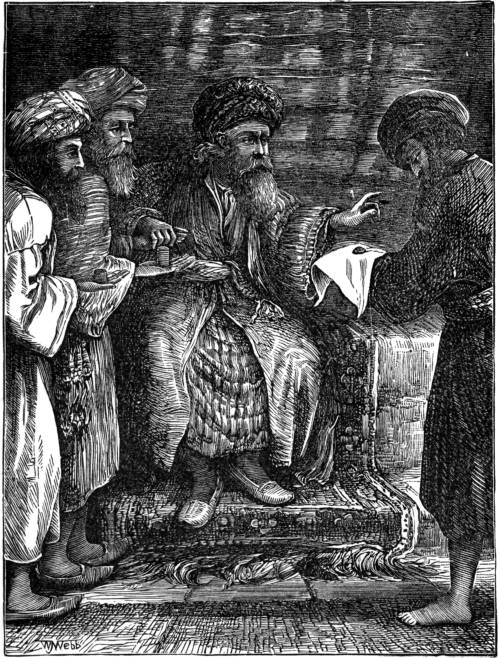
The Parable of the Talents

THE PARABLE OF THE TALENTS

One day Jesus told His disciples this parable or story.

A certain nobleman was called away to a far country to be appointed king of it, and to return after a time. And he called his servants unto him, and charged them with the care of his goods and treasure, giving to each man according to his ability to use the same. To one servant he gave five talents, to another two, and to another only one. And straightway he left them, and departed upon his journey. Then the man that had five talents went and traded with them, and did so well that in time the profits amounted to five talents more, making ten altogether. And he that had received two talents, also traded with his, and added two other talents to them by way of profit. But he that had had but one talent went away and covered it up in a cloth and hid it away.

After a long time the nobleman came back and called his servants to him, and asked them for the treasure he had entrusted to their keeping. And he that had received five talents, brought ten, and said, “Lord, behold, I have gained five other talents beside them.” And his lord said, “Well done, good and faithful servant; thou hast been faithful over a few things, I will make thee ruler over many things. Enter thou into the joy of thy lord.” And to him that had two talents, and brought back four, the lord said the same words. Then came he that had received but one talent and had hid it; and he said, “Lord, I knew thee that thou art a hard man, reaping where thou hast not sown, and I was afraid, and went and hid thy talent, and lo, here thou hast that which is thine.” His lord said unto him, “Thou wicked and slothful servant. Thou knewest that I reaped where I had not sown; thou oughtest therefore to have put my money in the bank, that I might have received mine own with interest for its use. Take therefore the talent from him, and give it unto him that hath ten; and take the unprofitable servant and cast him into the outer darkness.”

Now the talent here mentioned was an eastern sum of money (nearly one thousand dollars), but it really means the powers and opportunities for doing good that God has given to all of us. One day we shall all be called upon to give an account of the talents entrusted to our keeping, and woe be to those who have abused their stewardship by hiding their talent away. But those who have done good, according to the power and opportunity given to them, shall be received into everlasting joy by Christ the Lord.

The Lord’s Prayer from Psalms

All parts of The Lord’s Prayer can be found in the book of Psalms. Most are not written according to exactly how it is written in Matthew, but the ideas are there.

Matthew 6:9-13

  • After this manner therefore pray ye: Our Father which art in heaven, Hallowed be thy name.
  • Thy kingdom come, Thy will be done in earth, as it is in heaven.
  • Give us this day our daily bread.
  • And forgive us our debts, as we forgive our debtors.
  • And lead us not into temptation, but deliver us from evil: For thine is the kingdom, and the power, and the glory, for ever. Amen.

Now from the Book of Psalms

  • Hallowed be your Name.
    • Psalms 115:1 Not unto us, O Lord, not unto us, but unto thy name give glory, for thy mercy, and for thy truth’s sake.
    • Psalms 145:1 I will extol thee, my God, O king; and I will bless thy name for ever and ever.
  • Your Kingdom come
    • Psalms 47
      • O clap your hands, all ye people; shout unto God with the voice of triumph.
      • For the Lord most high is terrible; he is a great King over all the earth.
      • He shall subdue the people under us, and the nations under our feet.
      • He shall choose our inheritance for us, the excellency of Jacob whom he loved. Selah.
      • God is gone up with a shout, the Lord with the sound of a trumpet.
      • Sing praises to God, sing praises: sing praises unto our King, sing praises.
      • For God is the King of all the earth: sing ye praises with understanding.
      • God reigneth over the heathen: God sitteth upon the throne of his holiness.
      • The princes of the people are gathered together, even the people of the God of Abraham: for the shields of the earth belong unto God: he is greatly exalted.
    • Your will be done on Earth as it is in Heaven.
      • Psalms 103:19-22
        •  The Lord hath prepared his throne in the heavens; and his kingdom ruleth over all.
        • Bless the Lord, ye his angels, that excel in strength, that do his commandments, hearkening unto the voice of his word.
        • Bless ye the Lord, all ye his hosts; ye ministers of his, that do his pleasure.
        • Bless the Lord, all his works in all places of his dominion: bless the Lord, O my soul.
    • Give us this day our Daily Bread
      • Psalms 34:10
        • The young lions do lack, and suffer hunger: but they that seek the Lord shall not want any good thing.
      • Psalms 10413:15
        • He watereth the hills from his chambers: the earth is satisfied with the fruit of thy works.
        • He causeth the grass to grow for the cattle, and herb for the service of man: that he may bring forth food out of the earth;
        • And wine that maketh glad the heart of man, and oil to make his face to shine, and bread which strengtheneth man’s heart.
      • Psalms 146
        • Happy is he that hath the God of Jacob for his help, whose hope is in the Lord his God:
        • Which made heaven, and earth, the sea, and all that therein is: which keepeth truth for ever:
        • Which executeth judgment for the oppressed: which giveth food to the hungry. The Lord looseth the prisoners:
      • Psalm 37:25-26
        • I have been young, and now am old; yet have I not seen the righteous forsaken, nor his seed begging bread.
        • He is ever merciful, and lendeth; and his seed is blessed.
    • forgive us our Sins as we forgive others
      • Psalms 51:7-14
        • Purge me with hyssop, and I shall be clean: wash me, and I shall be whiter than snow.
        • Make me to hear joy and gladness; that the bones which thou hast broken may rejoice.
        • Hide thy face from my sins, and blot out all mine iniquities.
        • Create in me a clean heart, O God; and renew a right spirit within me.
        • Cast me not away from thy presence; and take not thy holy spirit from me.
        • Restore unto me the joy of thy salvation; and uphold me with thy free spirit.
        • Then will I teach transgressors thy ways; and sinners shall be converted unto thee.
        • Deliver me from bloodguiltiness, O God, thou God of my salvation: and my tongue shall sing aloud of thy righteousness.
    • Save us from our time of trial (deliver us from evil)
      • Psalms 62:5-8
        • My soul, wait thou only upon God; for my expectation is from him.
        • He only is my rock and my salvation: he is my defence; I shall not be moved.
        • In God is my salvation and my glory: the rock of my strength, and my refuge, is in God.
        • Trust in him at all times; ye people, pour out your heart before him: God is a refuge for us. Selah.
    • The Kingdom, the power, and the glory are yours
      • Psalms 145:11
        • They shall speak of the glory of thy kingdom, and talk of thy power;
      • Psalms 103:19
        • The Lord hath prepared his throne in the heavens; and his kingdom ruleth over all.
      • Psalms 145:13
        • Thy kingdom is an everlasting kingdom, and thy dominion endureth throughout all generations.