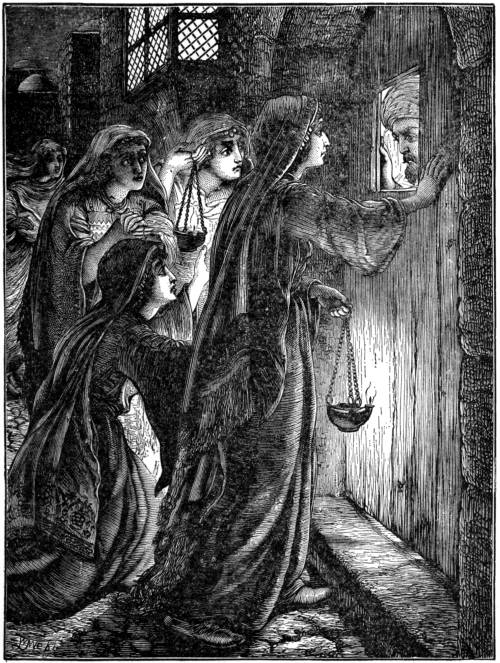
In certain parts of the East it is the custom for a man when he is married to bring home his bride at night, and for his relatives and friends to go out with lamps and torches and music to meet him.
Ten young women had been invited to meet the bridegroom with their lamps burning and to sit down with him at the wedding-feast. Five of them were wise and five were foolish. The wise ones took a supply of oil in case their lamps should burn out before the bridegroom arrived; the foolish five took no oil but what was in their lamps. But before the bridegroom came they all fell asleep.
At midnight there was a cry, “Behold, the bridegroom cometh; go ye out to meet him.” But five lamps had almost burnt out, and the foolish virgins said unto the wise, “Give us of your oil, for our lamps are gone out.” But the wise ones answered, “Not so; lest there be not enough for us and for you. Go ye, rather, to them that sell, and buy for yourselves.” And while they went to buy, the bridegroom came, and they that were ready went in with him to the marriage-feast, and the door was shut.
Afterwards, came also the other virgins, saying, “Lord, Lord, open the door to us.” But he answered and said, “Verily I say unto you, I know you not,” and would not open the door to them.
In this parable the bridegroom means Jesus returning to earth, on the Day of Judgment. The ten virgins are the people of this world, some of whom have their hearts full of the love of God and keep their lamps burning with a steady and bright light; that is, they fulfil God’s commandments and obey the teachings of Christ. The others have not this love in their hearts and are not prepared for Christ’s coming. Their lamps give out a feeble light and soon will go out.
When you want to worship you need to have certain elements or parts to the worship service. There should order to worship. Remember that God said that everything should be done in decency and in order. Worship can occur anywhere. Jesus made this clear when he answered the woman at the well.
John 4:21-24
Jesus saith unto her, Woman, believe me, the hour cometh, when ye shall neither in this mountain, nor yet at Jerusalem, worship the Father.
Ye worship ye know not what: we know what we worship: for salvation is of the Jews.
But the hour cometh, and now is, when the true worshippers shall worship the Father in spirit and in truth: for the Father seeketh such to worship him.
God is a Spirit: and they that worship him must worship him in spirit and in truth.
The following is just a guide taken from various scriptures in the book of Psalms. Remember that Psalms was written for use in the temple of God. Also, the New Testament says:
Ephesians 5:19
Speaking to yourselves in psalms and hymns and spiritual songs, singing and making melody in your heart to the Lord;
Colossians 3:16
Let the word of Christ dwell in you richly in all wisdom; teaching and admonishing one another in psalms and hymns and spiritual songs, singing with grace in your hearts to the Lord.
The Worship Elements
Preparation for Worship: prepare your heart and mind for worship
Psalms 15
Lord, who shall abide in thy tabernacle? who shall dwell in thy holy hill?
He that walketh uprightly, and worketh righteousness, and speaketh the truth in his heart.
He that backbiteth not with his tongue, nor doeth evil to his neighbour, nor taketh up a reproach against his neighbour.
In whose eyes a vile person is contemned; but he honoureth them that fear the Lord. He that sweareth to his own hurt, and changeth not.
He that putteth not out his money to usury, nor taketh reward against the innocent. He that doeth these things shall never be moved.
Psalms 24:3-5
Who shall ascend into the hill of the Lord? or who shall stand in his holy place?
He that hath clean hands, and a pure heart; who hath not lifted up his soul unto vanity, nor sworn deceitfully.
He shall receive the blessing from the Lord, and righteousness from the God of his salvation.
This two Psalms are talking about the presence of God. Those who are not right with God, must repent before they can come fully into the presence of God.
Gathering – Coming together
Psalms 43:3-4
O send out thy light and thy truth: let them lead me; let them bring me unto thy holy hill, and to thy tabernacles.
Then will I go unto the altar of God, unto God my exceeding joy: yea, upon the harp will I praise thee, O God my God.
Psalms 100:4
Enter into his gates with thanksgiving, and into his courts with praise: be thankful unto him, and bless his name.
Call to Worship
Psalms 150:1-6
Praise ye the Lord. Praise God in his sanctuary: praise him in the firmament of his power.
Praise him for his mighty acts: praise him according to his excellent greatness.
Praise him with the sound of the trumpet: praise him with the psaltery and harp.
Praise him with the timbrel and dance: praise him with stringed instruments and organs.
Praise him upon the loud cymbals: praise him upon the high sounding cymbals.
Let every thing that hath breath praise the Lord. Praise ye the Lord.
Praise & Adoration
Psalms 146:1-2
Praise ye the Lord. Praise the Lord, O my soul.
While I live will I praise the Lord: I will sing praises unto my God while I have any being.
Ps 149:1
Praise ye the Lord. Sing unto the Lord a new song, and his praise in the congregation of saints.
Call to Confession
Psalms 32:5-6
I acknowledge my sin unto thee, and mine iniquity have I not hid. I said, I will confess my transgressions unto the Lord; and thou forgavest the iniquity of my sin. Selah.
For this shall every one that is godly pray unto thee in a time when thou mayest be found: surely in the floods of great waters they shall not come nigh unto him.
Psalms 79:8-9
O remember not against us former iniquities: let thy tender mercies speedily prevent us: for we are brought very low.
Help us, O God of our salvation, for the glory of thy name: and deliver us, and purge away our sins, for thy name’s sake.
Psalms 27:7-9
Hear, O Lord, when I cry with my voice: have mercy also upon me, and answer me.
When thou saidst, Seek ye my face; my heart said unto thee, Thy face, Lord, will I seek.
Hide not thy face far from me; put not thy servant away in anger: thou hast been my help; leave me not, neither forsake me, O God of my salvation.
Psalms 51:9-12
Hide thy face from my sins, and blot out all mine iniquities.
Create in me a clean heart, O God; and renew a right spirit within me.
Cast me not away from thy presence; and take not thy holy spirit from me.
Restore unto me the joy of thy salvation; and uphold me with thy free spirit.
Assurance of forgiveness
Psalms 86:4-7
Rejoice the soul of thy servant: for unto thee, O Lord, do I lift up my soul.
For thou, Lord, art good, and ready to forgive; and plenteous in mercy unto all them that call upon thee.
Give ear, O Lord, unto my prayer; and attend to the voice of my supplications.
In the day of my trouble I will call upon thee: for thou wilt answer me.
Psalms 103:1-4
Bless the Lord, O my soul: and all that is within me, bless his holy name.
Bless the Lord, O my soul, and forget not all his benefits:
Who forgiveth all thine iniquities; who healeth all thy diseases;
Who redeemeth thy life from destruction; who crowneth thee with lovingkindness and tender mercies;
Testimony
Psalms 30:11-12
Thou hast turned for me my mourning into dancing: thou hast put off my sackcloth, and girded me with gladness;
To the end that my glory may sing praise to thee, and not be silent. O Lord my God, I will give thanks unto thee forever.
Psalms 107:1-2
O give thanks unto the Lord, for he is good: for his mercy endureth for ever.
Let the redeemed of the Lord say so, whom he hath redeemed from the hand of the enemy;
Prayer for illumination / Guidance
Psalms 25:4-5
Shew me thy ways, O Lord; teach me thy paths.
Lead me in thy truth, and teach me: for thou art the God of my salvation; on thee do I wait all the day.
Psalms 43:3-4
O send out thy light and thy truth: let them lead me; let them bring me unto thy holy hill, and to thy tabernacles.
Then will I go unto the altar of God, unto God my exceeding joy: yea, upon the harp will I praise thee, O God my God.
Psalms 95:6-7
O come, let us worship and bow down: let us kneel before the Lord our maker.
For he is our God; and we are the people of his pasture, and the sheep of his hand. To day if ye will hear his voice,
Psalms 119:105
Thy word is a lamp unto my feet, and a light unto my path.
Everything must be looked at in light of Word of God.
Offering
Psalms 50:14
Offer unto God thanksgiving; and pay thy vows unto the most High:
Psalms 51:16:17
For thou desirest not sacrifice; else would I give it: thou delightest not in burnt offering.
The sacrifices of God are a broken spirit: a broken and a contrite heart, O God, thou wilt not despise.
Lord’s Supper
Table prepared
Psalms 23:5
Thou preparest a table before me in the presence of mine enemies: thou anointest my head with oil; my cup runneth over.
Cup
Psalms 116:13
I will take the cup of salvation, and call upon the name of the Lord.
Thanksgiving after the Lord’s Supper
PS 103:1-5
Bless the Lord, O my soul: and all that is within me, bless his holy name.
Bless the Lord, O my soul, and forget not all his benefits:
Who forgiveth all thine iniquities; who healeth all thy diseases;
Who redeemeth thy life from destruction; who crowneth thee with lovingkindness and tender mercies;
Who satisfieth thy mouth with good things; so that thy youth is renewed like the eagle’s.
Baptism (there may not be a Baptism every time)
Psalms 51:2
Wash me throughly from mine iniquity, and cleanse me from my sin.
Psalms 51:7
Purge me with hyssop, and I shall be clean: wash me, and I shall be whiter than snow.
There was a certain King who gave a great feast upon the occasion of his son’s wedding. And he sent out his servants to bring in those that had been invited, but they would not come. Then he sent forth other servants, saying, “Tell them which were bidden, ‘Behold, I have prepared my dinner; my oxen and my fatlings are killed, and all things are ready. Come unto the feast.'” But they made light of the message and went their ways, one to his farm, another to his warehouse; others took the servants and slew them.
When the King heard what had been done, he was very angry, and sent out his army to destroy the murderers, and burn up their city. Then said he to the servants, “The wedding is ready, but they which were bidden were not worthy. Go ye therefore into the highways, and all ye shall find, bid them come to the marriage.” So they gathered together as many as they could find. And upon each one, as he entered the house, was put a beautiful marriage garment, which the King had prepared. But when the people were all seated, and the King had entered the house, he saw there a man that had not on a wedding garment, and he said unto him, “Friend, how camest thou in hither without a wedding garment?” And the man was speechless, for the garment had been offered to him at first, but he had refused it. Then said the King to the servants, “Bind him hand and foot, and take him away and cast him into outer darkness.”
In this parable, the King means God, who gave the feast for His Son, Jesus Christ. Those who were first asked were the Jews, who refused to believe in Christ. Those who were afterwards brought in, signify the people who have since listened to His Word, and believed in Him. The one without the wedding garment is anyone that pretends to accept the invitation to be one of God’s people, but in his heart does not believe in Christ.
Ehud was born around 1318 BC and around died 1217 BC. He was the second judge of Israel. He rose after Israel had fallen into sin.
Judges 3:12-14
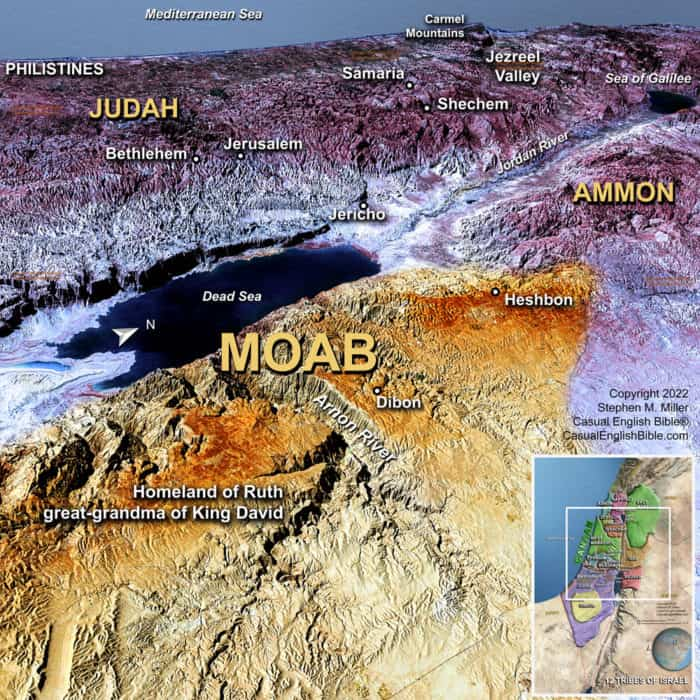
Now the Israelites again did evil in the sight of the Lord, and the Lord strengthened Eglon king of Moab against Israel, since they had done what was evil in the sight of the Lord.
And Eglon gathered to him the sons of Ammon and Amalek, and went and struck down Israel [in defeat], and they took possession of the City of Palm Trees (Jericho).
And the Israelites served Eglon king of Moab eighteen years.
Ehud Rescues Israel from Moab Judges 3:15
But when the Israelites cried out to the Lord [for help], the Lord raised up a man to rescue them, Ehud the son of Gera, a Benjamite, a left-handed man. And the Israelites sent a gift of tribute by him to Eglon king of Moab.
From this verse we learn a few things about Ehud.
Ehud was the son of Gera.
Ehud was from the tribe of Benjamin.
Ehud was left-handed.
What Ehud didas recorded in Judges 3:16-30
Ehud made himself a double-edged sword eighteen inches long.
He strapped it to his right thigh under his clothes and brought the tribute to King Eglon of Moab, who was an extremely fat man.
When Ehud had finished presenting the tribute, he dismissed the people who had carried it.
At the carved images near Gilgal he returned and said, “King Eglon, I have a secret message for you.”
The king said, “Silence!” and all his attendants left him.
Then Ehud approached him while he was sitting alone in his upstairs room where it was cool. Ehud said, “I have a message from God for you,” and the king stood up from his throne.
Ehud reached with his left hand, took the sword from his right thigh, and plunged it into Eglon’s belly.
Even the handle went in after the blade, and Eglon’s fat closed in over it, so that Ehud did not withdraw the sword from his belly. And the waste came out.
Ehud escaped by way of the porch, closing and locking the doors of the upstairs room behind him.
Ehud was gone when Eglon’s servants came in. They looked and found the doors of the upstairs room locked and thought he was relieving himself in the cool room. The servants waited until they became embarrassed and saw that he had still not opened the doors of the upstairs room. So, they took the key and opened the doors—and there was their lord lying dead on the floor!
Ehud escaped while the servants waited. He passed the Jordan near the carved images and reached Seirah.
After he arrived, he sounded the ram’s horn throughout the hill country of Ephraim. The Israelites came down with him from the hill country, and he became their leader.
He told them, “Follow me, because the Lord has handed over your enemies, the Moabites, to you.” So, they followed him, captured the fords of the Jordan leading to Moab, and did not allow anyone to cross over.
At that time, they struck down about ten thousand Moabites, all stout and able-bodied men. Not one of them escaped. Moab became subject to Israel that day, and the land had peace for eighty years.
According to Jewish tradition (not all Jewish tradition is good) remember what Jesus said about Jewish traditions:
Mark 7:13 You nullify the word of God by your tradition that you have handed down. And you do many other similar things.
However, some of the traditions has more to do with history than the Law of God. This is the tradition that they have about family linage. Also, some parts of this tradition can be proven with scripture. I am adding all of it here because it brings up an interesting thought.
Zippor was the father of Balak
Numbers 22:2 Now Balak son of Zippor saw all that Israel had done to the Amorites.
Balak was the father of Eglon
Eglon was the father of Orpah & Ruth
Ruth & Orpah was the daughter-n-law of Naomi
Orpah stayed in Moab
Ruth went with Naomi
Orpah married again and had children
Goliath
Saph
Lahmi
Ishbibenob
Ruth married Boaz and had a child Obed
Ruth 4:21-22
Salmon fathered Boaz,
Boaz fathered Obed,
Obed fathered Jesse,
and Jesse fathered David.
David killed Goliath
1 Samuel 17: 49-51
David put his hand in the bag, took out a stone, slung it, and hit the Philistine on his forehead. The stone sank into his forehead, and he fell facedown to the ground.
David defeated the Philistine with a sling and a stone. David overpowered the Philistine and killed him without having a sword.
David ran and stood over him. He grabbed the Philistine’s sword, pulled it from its sheath, and used it to kill him. Then he cut off his head. When the Philistines saw that their hero was dead, they fled.
1 Samuel 17:54
David took Goliath’s head and brought it to Jerusalem, but he put Goliath’s weapons in his own tent.
Notes: If this Goliath was the same Goliath as Orpah’s son, then Goliath had to be at least 120 years old. If the tradition about Orpah having a son named Goliath is true, then 1 of 3 possibilities happened:
The Goliah that David killed was really a descendant of Orpah’s son who was named after Orpah’s son.
Goliah had superhuman abilities because of his father being a fallen angel that allowed him to have incredibly long life.
This Goliath was a totally different Goliath with no direct connection to Orpah.
It is important to know what you believe and why you believe it. If you don’t know why you believe what you believe, it is impossible to give an answer about what you believe.
2 Timothy 4:2 (amp)
preach the word [as an official messenger]; be ready when the time is right and even when it is not [keep your sense of urgency, whether the opportunity seems favorable or unfavorable, whether convenient or inconvenient, whether welcome or unwelcome]; correct [those who err in doctrine or behavior], warn [those who sin], exhort and encourage [those who are growing toward spiritual maturity], with inexhaustible patience and [faithful] teaching.
1 Peter 3:15
But in your hearts set Christ apart [as holy—acknowledging Him, giving Him first place in your lives] as Lord. Always be ready to give a [logical] defense to anyone who asks you to account for the hope and confident assurance [elicited by faith] that is within you, yet [do it] with gentleness and respect.
Here are some important Christian Beliefs with an explanation for the belief. More will be added soon. If you have a genuine question about a Christian Belief, leave the question in the comments. I will write an answer and post it as soon as possible.
Why Did Jesus have to died? Why is the blood of Jesus so important?
In the beginning God created the Heavens and the Earth. He created the animals and the plants. He then created man.
Genesis 2:15-17
So the Lord God took the man [He had made] and settled him in the Garden of Eden to cultivate and keep it.
And the Lord God commanded the man, saying, “You may freely (unconditionally) eat [the fruit] from every tree of the garden;
but [only] from the tree of the knowledge (recognition) of good and evil you shall not eat, otherwise on the day that you eat from it, you shall most certainly die [because of your disobedience].”
Later Adam and Eve disobeyed.
Genesis 3:6-7
And when the woman saw that the tree was good for food, and that it was delightful to look at, and a tree to be desired in order to make one wise and insightful, she took some of its fruit and ate it; and she also gave some to her husband with her, and he ate.
Then the eyes of the two of them were opened [that is, their awareness increased], and they knew that they were naked; and they fastened fig leaves together and made themselves coverings.
The wages or consequences of sin is death.
Romans 6:23 For the wages of sin is death, but the free gift of God [that is, His remarkable, overwhelming gift of grace to believers] is eternal life in Christ Jesus our Lord.
The life is in the blood.
Genesis 9:3-5
Every moving thing that lives shall be food for you; I give you everything, as I gave you the green plants and vegetables.
But you shall not eat meat along with its life, that is, its blood.
For your lifeblood I will most certainly require an accounting; from every animal [that kills a person] I will require it. And from man, from every man’s brother [that is, anyone who murders] I will require the life of man.
Our blood started dying when Adam sinned. Look back at Genesis 2:17. The phrase “certainly die” refers to both spiritually and physically, physical death in the sense of becoming mortal; they were created immortal. Jesus’ blood is still pure. We needed a blood transfusion. Our blood was corrupted.
The blood of animals was only a temporary solution.
Hebrews 9:12-14
He went once for all into the Holy Place [the Holy of Holies of heaven, into the presence of God], and not through the blood of goats and calves, but through His own blood, having obtained and secured eternal redemption [that is, the salvation of all who personally believe in Him as Savior].
For if the sprinkling of [ceremonially] defiled persons with the blood of goats and bulls and the ashes of a [burnt] heifer is sufficient for the cleansing of the body,
how much more will the blood of Christ, who through the eternal [Holy] Spirit willingly offered Himself unblemished [that is, without moral or spiritual imperfection as a sacrifice] to God, cleanse your conscience from dead works and lifeless observances to serve the ever living God?
Without the shedding of blood there is no remission of sin.
Hebrews 9:22
In fact under the Law almost everything is cleansed with blood, and without the shedding of blood there is no forgiveness [neither release from sin and its guilt, nor cancellation of the merited punishment].
Jesus died and shed His blood once for all.
Romans 5:12-14
Therefore, just as sin came into the world through one man, and death through sin, so death spread to all people [no one being able to stop it or escape its power], because they all sinned.
Sin was [committed] in the world before the Law [was given], but sin is not charged [against anyone] when there is no law [against it]. Yet death ruled [over mankind] from Adam to Moses [the Lawgiver], even over those who had not sinned as Adam did. Adam is a type of Him (Christ) who was to come [but in reverse—Adam brought destruction, Christ brought salvation].
Jesus died in our place. His blood now covers us so that we can have forgiveness of sin. That forgiveness is our cancellation of the punishment that would be our wages or just reward.
Who was Ishtar and What does She have to do with Cross Dressing?: Ishtar was an ancient pagan goddess associated with Venus, embodying both love and war, thus representing duality. She was depicted as both a seductive woman and a fierce warrior. Her worship was accompanied by figures like the Assinnu, Kurgarru, Kalu, and Gala, who personified gender complexities (homosexuality) and roles in ancient Mesopotamian society.
One day when the priests and elders of the Temple were asking questions of Jesus, He told them this parable.
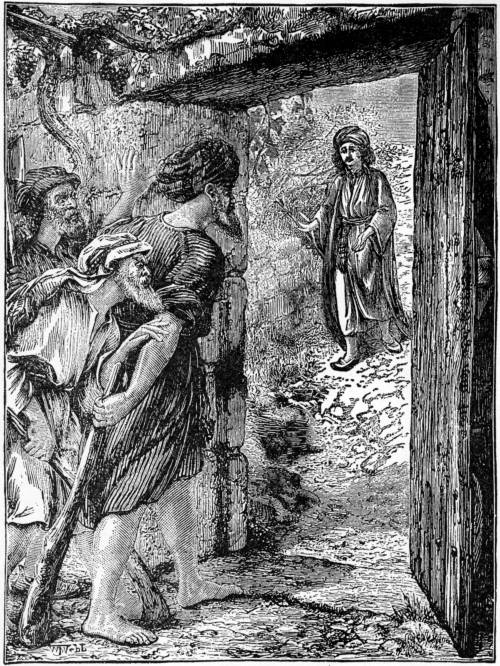
There was a certain man who had a vineyard which was hedged or walled round, and had a tower. But he was going away into a country far off, so he let the vineyard to a number of husbandmen, or labourers, who were to give him part of the fruit of the vines. When the time had come that the fruit was ripe, he sent his servants to the husbandmen that he might receive his share. But the wicked husbandmen took his servants, and slew one, and beat another, and stoned the third. Then he sent other servants, more than before, but the husbandmen served them as they had done the others. Last of all he sent his own son, saying, “They will reverence my son.” But when those wicked men saw him coming, they said among themselves, “This is the heir to all the vineyard; come, let us kill him and seize on his inheritance.” So they caught him, and cast him out of the vineyard, and slew him.
Then Jesus said to the priests and elders, “When the Lord of the vineyard cometh, what will he do unto these husbandmen?” And they answered, “He will miserably destroy those wicked men, and will let out his vineyard to others, who shall render him the fruits in their season.”
In this parable the owner of the vineyard means God; the vineyard Canaan, and the husbandmen are the Jews, who had promised to obey Him, but had not done so. He had sent His prophets among them, to warn them, but these had been killed. At last, He sent His only Son, but they would not own Him as such, and soon they would kill Him. When the priests heard this, they knew it referred to them, and they were very angry and would have taken Him and killed Him, but they were afraid of the people, who took Jesus to be a prophet.
When most people think of the Armor of God, they think of Ephesians 6:11-18 where Paul tells us to put on the armor of God. Did you know that the Old Testament speaks about the armor of God? It is not as laid out as Paul puts it in Ephesians, but it is there.
Here are the different pieces of armor found throughout the Old Testament:
Belt of Truth
Ephesians 6:14 Stand therefore, having your loins girt about with truth, and having on the breastplate of righteousness;
Psalms 18:32 It is God that girdeth me with strength, and maketh my way perfect.
Psalms 18:39 For thou hast girded me with strength unto the battle: thou hast subdued under me those that rose up against me.
Breastplate of Righteousness
Ephesians 6:14 Stand therefore, having your loins girt about with truth, and having on the breastplate of righteousness;
Psalms 132:9 Let thy priests be clothed with righteousness; and let thy saints shout for joy.
Isaiah 59:17 For he put on righteousness as a breastplate, and an helmet of salvation upon his head; and he put on the garments of vengeance for clothing, and was clad with zeal as a cloak.
Shoes of Peace
Remember the function of shoes is to protection the feet and to help keep your feet from slipping.
Ephesians 6:15 And your feet shod with the preparation of the gospel of peace;
Psalms 18:36 Thou hast enlarged my steps under me, that my feet did not slip.
Psalms 40:2 He brought me up also out of an horrible pit, out of the miry clay, and set my feet upon a rock, and established my goings.
Psalms 56:13 For thou hast delivered my soul from death: wilt not thou deliver my feet from falling, that I may walk before God in the light of the living?
Psalms 119:59 I thought on my ways, and turned my feet unto thy testimonies.
Psalms 119:105 Thy word is a lamp unto my feet, and a light unto my path.
Shield of Faith
Ephesians 6:16 Above all, taking the shield of faith, wherewith ye shall be able to quench all the fiery darts of the wicked.
Psalms 3:3 But thou, O Lord, art a shield for me; my glory, and the lifter up of mine head.
Proverbs 30:5 Every word of God is pure: he is a shield unto them that put their trust in him.
Helmet of Salvation
Ephesians 6:17 And take the helmet of salvation, and the sword of the Spirit, which is the word of God:
Isaiah 59:17 For he put on righteousness as a breastplate, and an helmet of salvation upon his head; and he put on the garments of vengeance for clothing, and was clad with zeal as a cloak.
Remember to take the Whole Armor of God.
Ephesians 6:12-13 Put on the whole armour of God, that ye may be able to stand against the wiles of the devil. For we wrestle not against flesh and blood, but against principalities, against powers, against the rulers of the darkness of this world, against spiritual wickedness in high places. Wherefore take unto you the whole armour of God, that ye may be able to withstand in the evil day, and having done all, to stand.
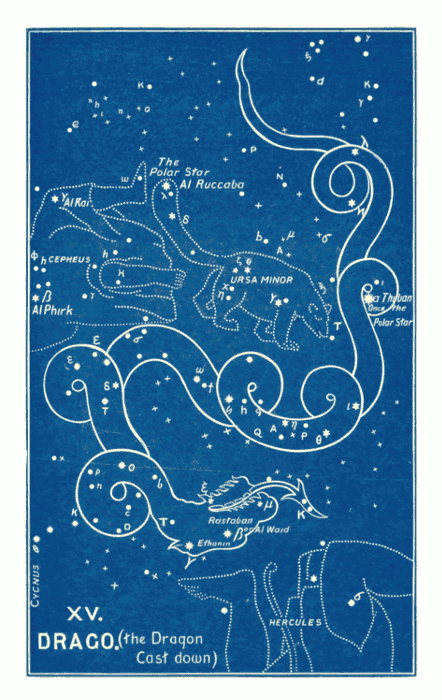
The Old Serpent, or the Devil, cast down from Heaven.
Each of the three great books concludes with this same foreshowing of Apocalyptic truth. The same great enemy is referred to in all these pictures. He is the Serpent; he is the Dragon; “the great dragon, that old serpent, called the Devil and Satan” (Rev. xii. 9). The Serpent represents him as the Deceiver; the Dragon, as the Destroyer.
This First Book concludes with the Dragon being cast down from heaven.
The Second Book concludes with Cetus, the Sea Monster, Leviathan, bound.
The Third Book concludes with Hydra, the Old Serpent, destroyed.
Here, at the close of the First Book, we see not merely a dragon, but the Dragon cast down! That is the point of this great star-picture.
No one has ever seen a dragon; but among all nations (especially in China and Japan), and in all ages, we find it described and depicted in legend and in art. Both Old and New Testaments refer to it, and all unite in connecting with it one and the same great enemy of God and man.
It is against him that the God-Man— “the Son of God—goes forth to war.” It is for him that the eternal fires are prepared. It is he who shall shortly be cast down from the heavens preparatory to his completed judgment. It is of him we read, “The great dragon was cast out, that old serpent, called the Devil, and Satan, which deceiveth the whole world: he was cast out and his angels with him. And I heard a loud voice saying in heaven, Now is come salvation, and strength, and the kingdom of our God, and the power of His Christ; for the accuser of our brethren is cast down” (Rev. xii. 9, 10).
It is of him that David sings: —
“God is my king of old,
Working salvation in the midst of the earth …
Thou brakest the heads of the dragons in the waters.
Thou brakest the heads of leviathan in pieces.”
(Ps. lxxiv. 12-14.)
Of him also the Spirit causes Isaiah to say, “In that day, shall this song be sung in the land of Judah”; —
“In that day the Lord, with his sore, and great, and strong sword,
Shall punish leviathan the piercing (r.v. swift) serpent,
Even leviathan that crooked serpent;
And he shall slay the dragon that is in the sea.”
(Isa. xxvi. 1; xxvii. 1.)
This is exactly what is foreshadowed by this constellation of Draco. Its name is from the Greek, and means trodden on, as in the Septuagint of Ps. xci. 13: “The dragon shalt thou trample under feet,” from the Hebrew דָּרַךְ, Dahrach, to tread.
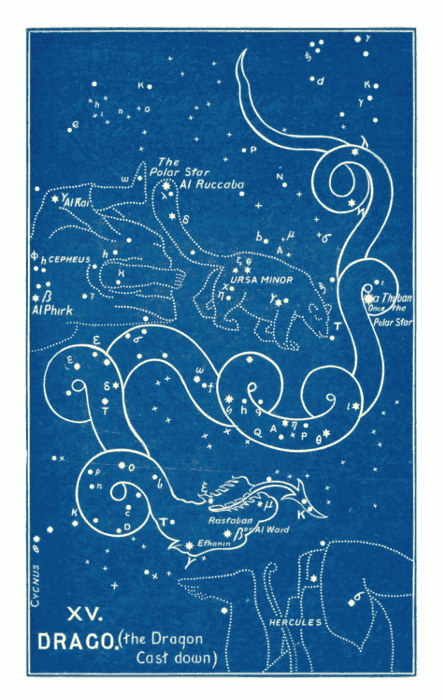
Plate 15: DRACO (the Dragon Cast down)
In the Zodiac of Denderah it is shown as a serpent under the fore-feet of Sagittarius, and is named Her-fent, which means the serpent accursed!
There are 80 stars in the constellation; four of the 2nd magnitude, seven of the 3rd magnitude, ten of the 4th, etc.
The brightest star, α (in one of the latter coils), is named Thuban (Heb.), the subtle. Some 4,620 years ago it was the Polar Star. It is manifest, therefore, that the Greeks could not have invented this constellation, as is confessed by all modern astronomers. It is still a very important star in nautical reckonings, guiding the commerce of the seas, and thus “the god of this world” is represented as winding in his contortions round the pole of the world, as if to indicate his subtle influence in all worldly affairs.
The next star, β (in the head), is called by the Hebrew name Rastaban, and means the head of the subtle (serpent). In the Arabic it is still called Al Waid, which means who is to be destroyed.
The next star, γ (also in the head), is called Ethanin, i.e., the long serpent, or dragon.
The Hebrew names of other stars, not identified, are Grumian, the subtle; Giansar, the punished enemy. Other (Arabic) names are Al Dib, the reptile; El Athik, the fraudful; El Asieh, the bowed down.
And thus the combined testimony of every star (without a single exception) of each constellation, and the constellations of each sign, accords with the testimony of the Word of God concerning the coming Seed of the woman, the bruising of His heel, the crushing of the serpent’s head, “the sufferings of Christ, and the glory which should follow.”

 articlesforchristians