A place to grow your relationship with God

Archive for the ‘Scriptural Articles’ Category

The Lukewarm Church: A Warning

To the Church at Laodicea

Revelation 3:14-11

  • And unto the angel of the church of the Laodiceans write; These things saith the Amen, the faithful and true witness, the beginning of the creation of God;
  • I know thy works, that thou art neither cold nor hot: I would thou wert cold or hot.
  • So then because thou art lukewarm, and neither cold nor hot, I will spue thee out of my mouth.
  • Because thou sayest, I am rich, and increased with goods, and have need of nothing; and knowest not that thou art wretched, and miserable, and poor, and blind, and naked:
  • I counsel thee to buy of me gold tried in the fire, that thou mayest be rich; and white raiment, that thou mayest be clothed, and that the shame of thy nakedness do not appear; and anoint thine eyes with eyesalve, that thou mayest see.
  • As many as I love, I rebuke and chasten: be zealous therefore, and repent.
  • Behold, I stand at the door, and knock: if any man hear my voice, and open the door, I will come in to him, and will sup with him, and he with me.
  • To him that overcometh will I grant to sit with me in my throne, even as I also overcame, and am set down with my Father in his throne.
  • He that hath an ear, let him hear what the Spirit saith unto the churches.

History

Laodicea was located about 50 miles southeast of Philadelphia, in the Lycus River
valley near Colossae and Hierapolis (cf. Col. 4:13-16). It was also located forty miles from Ephesus and was steeped in Greek culture. The city (and region) had experienced many earthquakes over the years.

The city was a cultural center with schools, libraries, and a banking center that brought strong economic and financial resources.
Two widely used eye and ear salves were produced in the city, as it was also a well-known medical center of its day. Its name means “People Ruling,” and represents the unbelieving, materialistic church of all ages.

Notes

  • Christ is the beginning of the creation of God in the sense that He is the origin and source of God’s creation
    • Col. 1:15-18
      •  Who is the image of the invisible God, the firstborn of every creature:
      • For by him were all things created, that are in heaven, and that are in earth, visible and invisible, whether they be thrones, or dominions, or principalities, or powers: all things were created by him, and for him:
      • And he is before all things, and by him all things consist.
      • And he is the head of the body, the church: who is the beginning, the firstborn from the dead; that in all things he might have the preeminence.
  • Christ is the head of the new creation
    • 2 Cor. 5:17
      • Therefore if any man be in Christ, he is a new creature: old things are passed away; behold, all things are become new.
  • The church is likened to lukewarm water, or as being virtually worthless, Christ says He will “spew them out,” or eject them from His company.
    • The hot waters of nearby Hierapolis were known for their medicinal qualities
    • Colossae was known for its cold, pure water.
    • Laodicea was forced to receive water by aqueduct from other areas. By the time it arrived at Laodicea it was lukewarm and provoked nausea.
      • The works of the Laodicean church were as worthless as the city’s lukewarm water.
        • The description does not refer to a backslidden condition, but rather to their lack of genuine faith.
  • Laodicea was famous for its wealth, its bankers, its medical school, its popular eye salve, and its textile industry.
    • Christ says that spiritually the people of the church are poor, blind, and naked.
    • True wealth is found only in God’s grace. This church had no spiritual value (gold), virtue (white raiment), or vision (eye salve).
      • He urges the Laodiceans to repent of their lack of genuine faith and of spiritual understanding.
  • In light of the spiritual condition of the Laodiceans described in verses 17, 18, the invitation of verse 20 seems to be evangelistically addressed to individual members of an apostate church, so they might receive Christ genuinely as Savior and Lord.
    • To sup (dine) means to have fellowship (cf. ; ) and to enjoy Christ’s blessings.
      • Luke 22:30
        • That ye may eat and drink at my table in my kingdom, and sit on thrones judging the twelve tribes of Israel.
      • John 14:23
        • Jesus answered and said unto him, If a man love me, he will keep my words: and my Father will love him, and we will come unto him, and make our abode with him.
    • The promise to sit with Christ in His throne refers to reigning with Christ in His kingdom.
      • Matt. 19:28
        • And Jesus said unto them, Verily I say unto you, That ye which have followed me, in the regeneration when the Son of man shall sit in the throne of his glory, ye also shall sit upon twelve thrones, judging the twelve tribes of Israel.
      • Rev. 20:4
        • And I saw thrones, and they sat upon them, and judgment was given unto them: and I saw the souls of them that were beheaded for the witness of Jesus, and for the word of God, and which had not worshipped the beast, neither his image, neither had received his mark upon their foreheads, or in their hands; and they lived and reigned with Christ a thousand years.

The 400-Year Prophecy and Israel’s Journey

Exodus 12:40 Now the sojourning of the children of Israel, who dwelt in Egypt, was four hundred and thirty years.

This seems like a contradiction because the children of Israel only lived in Egypt for about 3 generations. However, it is helpful to look at the original prophecy of the 400 Years prediction.

And he said unto Abram, Know of a surety that thy seed shall be a stranger in a land that is not theirs, and shall serve them; and they shall afflict them four hundred years. (KJV, Genesis 15:13)

It basically says that the seed (descendants) of Abraham would be a stranger in a land that is not theirs and shall server them and afflicted them 400 years.

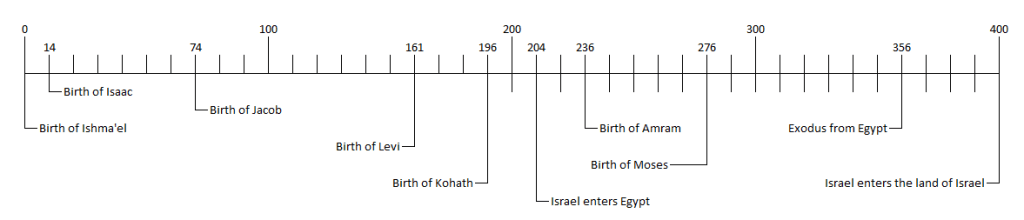
If we call the year of Ishma’el’s birth “0,” as he is Abram’s first seed, we can then use various passages to calculate how many years from then until Israel entered the land of Canaan.

Birth of Isaac: 

  • Abraham is 100 (Gen 17:17; 21:5)
  • Ishmael is 13 the year before Isaac’s birth (Gen 17:25)

Birth of Jacob: 

  • Isaac is 60 (Gen 25:26)

Birth of Joseph: 

  • Jacob is 91 – Jacob was 130 when entering Egypt (Gen 47:9)
    • Joseph was 30 when entering Pharoahs service (Gen 41:46)
    • 7 years of plenty (Gen 41:53,54)
    • 2 years of famine when Jacob came to Egypt (Gen 45:6)
    • Joseph was 39 (30+7+2) when Jacob entered Egypt
    • Jacob was 91 at birth of Joseph (130-39)
  • Birth of Levi: Jacob is 87
    • Jacob is 91 at birth of Joseph who was born in the 14 year of service to Laban (Gen 30:25,26)
    • Jacob is 77 when arrives at Labans (91-14)
    • Jacob serves 7 years and recieves Leah (Gen 29:27) who bears Levi, her third son approximately 3 years after being with Jacob.
    • Jacob is approximately 87 at birth of Levi (77+7+3).
  • The Children of Israel enter the land of Egypt 17 years before the death of Jacob (Gen 47:28) and when Levi is 87 years old.

Birth of Kohath: 

  • Levi is ~35 – Levi was younger than 40 when Kohath was born as Levi was 43 when he went to Egypt with his 3 sons (Gen 46:8,11)
    • if this is correct Kohath would be 8 when entering Egypt.
    • Birth of Amram: Kohath is ~40 (an average generaton)
    • Birth of Moses: Amram is ~40 (an average generaton)
    • Israel leaves Egypt when Moses is 80 years old.

The children of Israel enter the land of Israel after the 40 years of wandering, which is 400 years after the birth of Ishmael.

These numbers are approximate calculations. The other 30 years can be time getting to the promise land and how much time that it should have taken to take the land. Instead, they are wandering in the wilderness for 40 Years. They still were journeying in a land that was not their own.

Shamgar a minor Judge of Israel

Shamgar was the third judge of Israel. Shamgar was one of the “minor” judges. But the distinction between “major” and “minor” is due more to the lack of information about the “minor” judges than to the lesser importance of the individuals themselves.

Judges 3:31

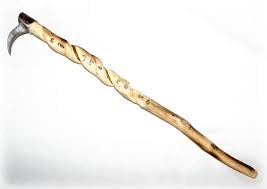
  • He was succeeded by Shamgar, the son of Anath. He killed six hundred Philistines with an oxgoad, and he delivered Israel.

Shamgar killed more than 600 Philistines with an oxgoad. These Philistines were terrorizing the main travel routes. He did this with an oxgoad.

An oxgoad means an instrument of learning. It was used to teach the oxen where to go. It was long and pointed. Sometimes it had a metal tip. It was used to drive animals.

Shamgar is mentioned in the song of Deborah.

Judges 5:6-7

In the days of Shamgar, the son of Anath,
    in the days of Jael,
the highways were deserted,
    travelers took winding paths.
Village life ceased in Israel,
    it ceased until I, Deborah,
    until I rose up as mother in Israel.

Shamgar

  • Strong’s H8044 – šamgar
    • Outline of Biblical Usage 
      • Shamgar = “sword”
      • son of Anath and a judge of Israel; with an ox-goad he slew 600 Philistines and delivered Israel
    • Strong’s Definitions
      • שַׁמְגַּר Shamgar, sham-gar’; of uncertain derivation; Shamgar, an Israelite judge:—Shamgar.

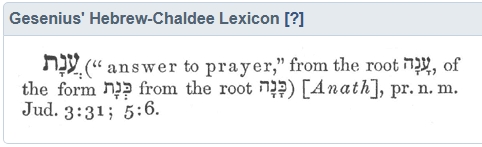
Anath

  • Strong’s H6067 – ʿănāṯ
    • Outline of Biblical Usage
      • Anath = “answer”
      • father of Shamgar
    • Strong’s Definitions
      • עֲנָת ʻĂnâth, an-awth’; from H6030; answer; Anath, an Israelite:—Anath.
    • Gesenius’ Hebrew-Chaldee Lexicon

Discovering Naphtali: Leadership and Legacy in the Bible

Naphtali was born to Rachel’s handmaid, Bilhah.

  • Genesis 30:8
    • And Bilhah Rachel’s maid conceived again, and bare Jacob a second son. And Rachel said, With great wrestlings have I wrestled with my sister, and I have prevailed: and she called his name Naphtali.

Naphtali had four sons:

  • Jahzeel
  • Guni
  • Jezer
  • Shillem

When the census was taken in Numbers 26:48-49, the descendants of Naphtali was great.

  • Of the sons of Naphtali after their families:
    • of Jahzeel, the family of the Jahzeelites:
    • of Guni, the family of the Gunites:
    • Of Jezer, the family of the Jezerites:
    • of Shillem, the family of the Shillemites.
  • These are the families of Naphtali according to their families: and they that were numbered of them were forty and five thousand and four hundred.

Jacob gave a prophecy of Naphtali’s descendants in Genesis 49:21.

  • Naphtali is a hind let loose: he giveth goodly words.

He Giveth goodly words is an interesting prophecy.

Goodly

  • שֶׁפֶר shepher, sheh’-fer; from H8231; beauty:—× goodly.

Words

  • אֵמֶר ʼêmer, ay’-mer; from H559; something said:—answer, × appointed unto him, saying, speech, word.

Naphtali was the northern most tribe of Israel occupying a long, narrow piece of land about 80 kil. (50 miles) north to south and 16 to 24 Kil (10 to 15 miles) from east to west. The land of Naphtali was mountainous and very fertile.

Isaiah 9:1-7

  • Nevertheless the dimness shall not be such as was in her vexation, when at the first he lightly afflicted the land of Zebulun and the land of Naphtali, and afterward did more grievously afflict her by the way of the sea, beyond Jordan, in Galilee of the nations.
  • The people that walked in darkness have seen a great light: they that dwell in the land of the shadow of death, upon them hath the light shined.
  • Thou hast multiplied the nation, and not increased the joy: they joy before thee according to the joy in harvest, and as men rejoice when they divide the spoil.
  • For thou hast broken the yoke of his burden, and the staff of his shoulder, the rod of his oppressor, as in the day of Midian.
  • For every battle of the warrior is with confused noise, and garments rolled in blood; but this shall be with burning and fuel of fire.
  • For unto us a child is born, unto us a son is given: and the government shall be upon his shoulder: and his name shall be called Wonderful, Counsellor, The mighty God, The everlasting Father, The Prince of Peace.
  • Of the increase of his government and peace there shall be no end, upon the throne of David, and upon his kingdom, to order it, and to establish it with judgment and with justice from henceforth even for ever. The zeal of the Lord of hosts will perform this.

Jesus fulfilled this prophecy about Nathali seeing a great light when Jesus spent most of his ministry in the land that Nathali was given after the Exodus.

Matthew 4:12-6

  • When Jesus learned that John had been arrested, he withdrew to Galilee. 
  • Departing from Nazareth, he settled in Capernaum by the sea, in the region of Zebulun and Naphtali
  • in order that what had been spoken through the prophet Isaiah might be fulfilled:
    • “Land of Zebulun and land of Naphtali, the passageway to the sea, beyond the Jordan, Galilee of the Gentiles:
    • The people who lived in darkness have seen a great light, and for those who dwell in a land darkened by the shadow of death light has dawned.”

Naphtali was a tribe of brave warriors people.

  • Members of the tribe fought bravely under Deborah.
    • Judges 4:4-6
      • Now Deborah, the wife of Lappidoth, a prophetess, was then a judge in Israel.  
      • She used to sit underneath the palm tree of Deborah between Ramah and Bethel in the hill country of Ephraim. The Israelites would come up to her for judgment there. 
      • She summoned Barak, the son of Ahinoam, from Kadesh of Naphtali, and she said to him, “The Lord, the God of Israel, commands you, ‘Go, take ten thousand men from Naphtali and Zebulun with yourself and march toward Mount Tabor.
    • Judges 4:10
      • Barak had summoned Zebulun and Naphtali to Kedesh. Ten thousand men were under his command, and Deborah went up with him.
    • Judges 5:18
      • The people of Zebulun risked their lives, as did Naphtali on the heights of the field.
  • They responded to Gideon’s Call
    • Judges 6:35
      • He sent messengers all throughout Manasseh, summoning them to follow him. He also sent messengers to Asher, Zebulun, and Naphtali, so that they too gathered around him.
    • Judges 7:23
      •  The men of Israel from out of Naphtali, from out of Asher, and from out of Manasseh gathered together and pursued the Midianites. 
  • When Saul’s son Ishbosheth challenged David for the throne 37,000 fighting men who were led by 1,000 captains joined David.
    • Chronicles 12:34
      •  From Naphtali there were one thousand captains along with thirty-seven thousand men armed with shield and spear. 

When the tribes divided into 2 kingdoms, it was part of the 10 Northern Tribes.

Idolatry in the Bible: Old vs New Testament part 3

What does the Bible say about Idolatry and paganism in the Old Testament? How does that compare to what the New Testament Says? Read on to find out. This is part 3 of a multiple part series.

Laws of Idolatry and Paganism

  • Not to prophesize in the name of idolatry, Not to listen to a false Prophet, Not to prophesize falsely in the name of God, and Not to be afraid of killing the false prophet
    • Deut. 18:20 (ESV)
      • But the prophet who presumes to speak a word in my name that I have not commanded him to speak, or who speaks in the name of other gods, that same prophet shall die.’
    • Deuteronomy 18:20-22 ESV
      • But the prophet who presumes to speak a word in my name that I have not commanded him to speak, or who speaks in the name of other gods, that same prophet shall die.’ And if you say in your heart, ‘How may we know the word that the Lord has not spoken?’— when a prophet speaks in the name of the Lord, if the word does not come to pass or come true, that is a word that the Lord has not spoken; the prophet has spoken it presumptuously. You need not be afraid of him.
    • Matthew 7:15 ESV
      • “Beware of false prophets, who come to you in sheep’s clothing but inwardly are ravenous wolves.
    • 2 Peter 2:1 ESV
      • But false prophets also arose among the people, just as there will be false teachers among you, who will secretly bring in destructive heresies, even denying the Master who bought them, bringing upon themselves swift destruction.
    • 1 John 4:1 ESV
      • Beloved, do not believe every spirit, but test the spirits to see whether they are from God, for many false prophets have gone out into the world.
    • Acts 20:29-30 ESV
      • I know that after my departure fierce wolves will come in among you, not sparing the flock; and from among your own selves will arise men speaking twisted things, to draw away the disciples after them.
    • 1 Timothy 4:1 ESV
      • Now the Spirit expressly says that in later times some will depart from the faith by devoting themselves to deceitful spirits and teachings of demons,
    • 2 Corinthians 11:13-15 ESV
      • For such men are false apostles, deceitful workmen, disguising themselves as apostles of Christ. And no wonder, for even Satan disguises himself as an angel of light. So it is no surprise if his servants, also, disguise themselves as servants of righteousness. Their end will correspond to their deeds.
    • Galatians 1:8-9 ESV
      • But even if we or an angel from heaven should preach to you a gospel contrary to the one we preached to you, let him be accursed. As we have said before, so now I say again: If anyone is preaching to you a gospel contrary to the one you received, let him be accursed.
  • Not to swear in the name of an idol
    • Exodus 23:13 ESV
      • “Pay attention to all that I have said to you, and make no mention of the names of other gods, nor let it be heard on your lips.
    • Matthew 5:34-37 ESV
      • But I say to you, Do not take an oath at all, either by heaven, for it is the throne of God, or by the earth, for it is his footstool, or by Jerusalem, for it is the city of the great King. And do not take an oath by your head, for you cannot make one hair white or black. Let what you say be simply ‘Yes’ or ‘No’; anything more than this comes from evil.
    • James 5:12 ESV
      • But above all, my brothers, do not swear, either by heaven or by earth or by any other oath, but let your “yes” be yes and your “no” be no, so that you may not fall under condemnation.
    • 1 Corinthians 10:14 ESV
      • Therefore, my beloved, flee from idolatry.
    • 2 Corinthians 6:16 ESV
      • What agreement has the temple of God with idols? For we are the temple of the living God; as God said, “I will make my dwelling among them and walk among them, and I will be their God, and they shall be my people.
    • 1 John 5:21 ESV
      • Little children, keep yourselves from idols.
  • Not to perform ov (medium)
    • Leviticus 19:31 ESV
      • “Do not turn to mediums or necromancers; do not seek them out, and so make yourselves unclean by them: I am the Lord your God.
    • Leviticus 20:6 ESV
      • “If a person turns to mediums and necromancers, whoring after them, I will set my face against that person and will cut him off from among his people.
    • Deuteronomy 18:10-12 ESV
      • There shall not be found among you anyone who burns his son or his daughter as an offering, anyone who practices divination or tells fortunes or interprets omens, or a sorcerer or a charmer or a medium or a necromancer or one who inquires of the dead, for whoever does these things is an abomination to the Lord. And because of these abominations the Lord your God is driving them out before you.
    • Acts 16:16-18 ESV
      • As we were going to the place of prayer, we were met by a slave girl who had a spirit of divination and brought her owners much gain by fortune-telling. She followed Paul and us, crying out, “These men are servants of the Most High God, who proclaim to you the way of salvation.” And this she kept doing for many days. Paul, having become greatly annoyed, turned and said to the spirit, “I command you in the name of Jesus Christ to come out of her.” And it came out that very hour.
  • Not to perform yidoni (magical seer)
    • Leviticus 19:31 ESV
      • “Do not turn to mediums or necromancers; do not seek them out, and so make yourselves unclean by them: I am the Lord your God.
    • Acts 19:19 ESV
      • And a number of those who had practiced magic arts brought their books together and burned them in the sight of all. And they counted the value of them and found it came to fifty thousand pieces of silver.
    • Galatians 5:19-21 ESV
      • Now the works of the flesh are evident: sexual immorality, impurity, sensuality, idolatry, sorcery, enmity, strife, jealousy, fits of anger, rivalries, dissensions, divisions, envy, drunkenness, orgies, and things like these. I warn you, as I warned you before, that those who do such things will not inherit the kingdom of God.
  • Not to pass your children through the fire to Molech
    • Leviticus 18:21 ESV
      • You shall not give any of your children to offer them to Molech, and so profane the name of your God: I am the Lord.
    • Leviticus 20:2-5 ESV
      • “Say to the people of Israel, Any one of the people of Israel or of the strangers who sojourn in Israel who gives any of his children to Molech shall surely be put to death. The people of the land shall stone him with stones. I myself will set my face against that man and will cut him off from among his people, because he has given one of his children to Molech, to make my sanctuary unclean and to profane my holy name. And if the people of the land do at all close their eyes to that man when he gives one of his children to Molech, and do not put him to death, then I will set my face against that man and against his clan and will cut them off from among their people, him and all who follow him in whoring after Molech.
    • For information on this topic please read: The Truth About Abortion.
  • Not to erect a column in a public place of worship and not to plant a tree in the Temple courtyard
    • Deut. 16:21-22
      • “You shall not plant for yourself an Asherah of any kind of tree or wood beside the altar of the Lord your God, which you shall make. You shall not set up for yourself a sacred pillar which the Lord your God hates.
    • Deuteronomy 12:3 ESV
      • You shall tear down their altars and dash in pieces their pillars and burn their Asherim with fire. You shall chop down the carved images of their gods and destroy their name out of that place.
    • Leviticus 26:1 ESV
      • “You shall not make idols for yourselves or erect an image or pillar, and you shall not set up a figured stone in your land to bow down to it, for I am the Lord your God.
    • For more information please read: Understanding Deuteronomy 16:21-22: A Message for Worship
  • Not to bow down on smooth stone
    • Lev. 26:1
      • You shall not make idols for yourselves, nor shall you erect an image, a sacred pillar or an obelisk, nor shall you place any figured stone in your land so that you may bow down to it; for I am the Lord your God.
    • Acts 17:29 ESV
      • Being then God’s offspring, we ought not to think that the divine being is like gold or silver or stone, an image formed by the art and imagination of man.
    • 1 Corinthians 10:14 ESV
      • Therefore, my beloved, flee from idolatry.

Idolatry in the Bible: Old vs New Testament part 2

What does the Bible say about Idolatry and paganism in the Old Testament? How does that compare to what the New Testament Says? Read on to find out. This is part 2 of a multiple part series.

Laws of Idolatry and Paganism

  • Not to turn a city to idolatry
    • Ex. 23:13 Now concerning everything which I have said to you, be on your guard; do not mention the name of other gods [either in a blessing or in a curse]; do not let such speech be heard [coming] from your mouth.
    • 1 Corinthians 10:14 ESV
      • Therefore, my beloved, flee from idolatry.
    • 1 John 5:21 ESV
      • Little children, keep yourselves from idols.
  • To burn a city that has turned to idol worship, not to rebuild it as a city, not to derive benefit from it
    • Deut. 13:12-18 amp
      • “If you hear [it said] in one of your cities, which the Lord your God gives you to live in, 
      • that some worthless and evil men have gone out from among you and have tempted the inhabitants of their city [to sin], saying, ‘Let us go and serve other gods’ (whom you have not known)
      • then you shall investigate and search out [witnesses] and ask thorough questions. If it is true and the matter is established that this loathsome thing has been done among you, 
      • you shall most certainly strike the inhabitants of that city with the edge of the sword, utterly destroying it and all that is in it, even its livestock with the edge of the sword. 
      • Then you shall collect all its spoil (plunder) into the middle of its open square and burn the city and set fire to the spoil as a whole burnt offering to the Lord your God. It shall be a ruin forever. It shall not be built again. 
      • Nothing from that which is put under the ban (designated for destruction) shall cling to your hand, so that the Lord may turn away from His burning anger and show mercy to you, and have compassion on you and make you increase, just as He swore to your fathers, 
      • because you have listened to and obeyed the voice of the Lord your God, keeping all His commandments which I am commanding you today, and doing what is right in the eyes of the Lord your God.
    • Acts 19:18-20
      • Many of those who had become believers were coming, confessing and disclosing their [former sinful] practices. 
      • And many of those who had practiced magical arts collected their books and [throwing book after book on the pile] began burning them in front of everyone. They calculated their value and found it to be 50,000 pieces of silver. 
      • So, the word of the Lord [concerning eternal salvation through faith in Christ] was growing greatly and prevailing.
    • Today we can’t burn cities for sinful practices, however, as you learn that something that you own is wrong, it is a great idea to destroy it.
  • Not to missionize an individual to idol worship
    • Deut. 13:1-3
      • “If a prophet arises among you, or a dreamer of dreams, and gives you a sign or a wonder, 
      • and the sign or the wonder which he spoke (foretold) to you comes to pass, and if he says, ‘Let us follow after other gods (whom you have not known) and let us serve and worship them,’ 
      • you shall not listen to the words of that prophet or that dreamer of dreams; for the Lord your God is testing you to know whether you love the Lord your God with all your heart and mind and all your soul [your entire being]. 
  • Not to love the missionary (one who teaches idol worship), Not to cease hating the missionary, not to save the missionary, not to say anything in his defense, Not to refrain from incriminating him
    • Deut. 13:5-11
      • But that prophet or that dreamer of dreams shall be put to death, because he has counseled rebellion against the Lord your God who brought you from the land of Egypt and redeemed you from the house of slavery, to draw you away from the way in which the Lord your God has commanded you to walk. So, you shall remove the evil from among you.
      • “If your brother, the son of your mother, or your son or daughter, or [a]the wife you cherish, or your friend who is as [precious to you as] your own life (soul), entices you secretly, saying, ‘Let us go and serve other gods’ (gods whom neither you nor your fathers have known,
      • of the gods of the peoples who are around you, near you or far from you, from one end of the earth to the other),
      • you shall not consent to him or listen to him; and your eye shall not pity him, nor shall you spare him or conceal him.
      • Instead, you shall most certainly execute him; your hand shall be first [to be raised] against him to put him to death, and afterwards the hand of all the people.
      • So, you shall stone him to death with stones, because he has tried to draw you away from the Lord your God who brought you from the land of Egypt, from the house of slavery.
      • Then all Israel will hear and be afraid, and will never again do such a wicked thing among you.
    • Today will are not to destroy the people. God will do that. Instead, we are to be aware of the false prophets and stay away from them.
      • Matthew 7:15 ESV
        • “Beware of false prophets, who come to you in sheep’s clothing but inwardly are ravenous wolves.
      • 1 John 4:1 ESV
        • Beloved, do not believe every spirit, but test the spirits to see whether they are from God, for many false prophets have gone out into the world.
      • Galatians 1:9 amp
        • As we have said before, so I now say again, if anyone is preaching to you a gospel different from that which you received [from us], let him be condemned to destruction!
          • This is the destruction that God will bring.

Understanding Daniel’s Stand: Purity Amidst Adversity

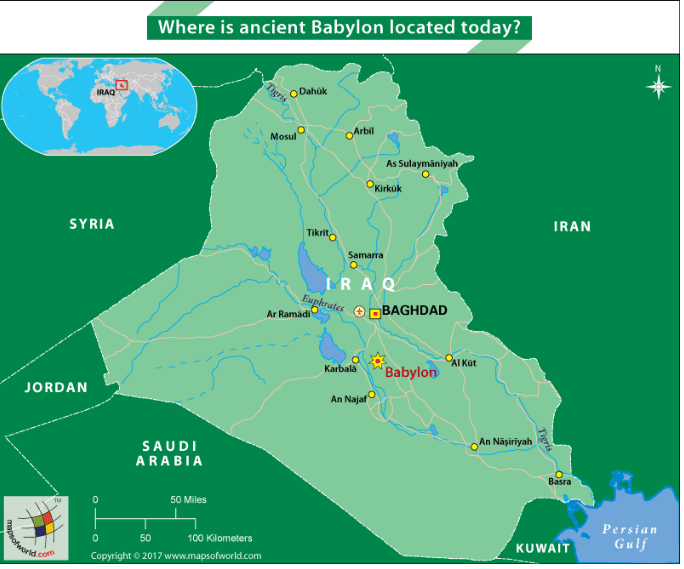
When Babylon captured Judah it took trophies – treasures from the house of God and Children (youth). The treasures from the house of God was placed in the treasure house of their god.

  • Daniel 1:1-5
    • In the third year of the reign of Jehoiakim king of Judah came Nebuchadnezzar king of Babylon unto Jerusalem, and besieged it.
    • And the Lord gave Jehoiakim king of Judah into his hand, with part of the vessels of the house of God: which he carried into the land of Shinar to the house of his god; and he brought the vessels into the treasure house of his god.
    • And the king spake unto Ashpenaz the master of his eunuchs, that he should bring certain of the children of Israel, and of the king’s seed, and of the princes;
    • Children in whom was no blemish, but well favoured, and skilful in all wisdom, and cunning in knowledge, and understanding science, and such as had ability in them to stand in the king’s palace, and whom they might teach the learning and the tongue of the Chaldeans.
    • 5And the king appointed them a daily provision of the king’s meat, and of the wine which he drank: so nourishing them three years, that at the end thereof they might stand before the king.

Daniel and three of his friends were among the children taken.

  • Daniel 1:6
    • Now among these were of the children of Judah, Daniel, Hananiah, Mishael, and Azariah:

The goal of taken the children was to indoctrinate them into the belief of the Babylonians. They did this by:

  • Isolation
    • took the children away from everyone and everything that they knew.
  • Inculturation
    • Education
      • whom they might teach the learning and the tongue of the Chaldeans.
  • Integration
    • that at the end thereof they might stand before the king.
  • Identity changing
    • name changes: gave them new names that pointed away from who they were to who the Babylonians wanted them to be.
Old NameOld Name MeaningNew NameNew Name Meaning
DanielGod is my judgeBelteshazzar“Bel protects the king” or “Bel’s prince”. ‘Bel’ referring to the Babylonian god Marduk and ‘Shazar’ meaning ‘treasurer’ or ‘steward’.
HananiahYahweh is graciousShadrachservant of Aku” Aku was the Babylonian moon god.
Mishael“Who belongs to God?” Meshach“guest of a king”
AzariahYahweh has helpedAbednego “servant of Nego or Nebo

Names in those days had major meaning. Your name told you who you were. Your name was your identity. Therefore, the Babylonians gave them a new identity (a new name).

Daniel was respectful. This is evident with the prince of the eunuchs showing Daniel favor. However, Daniel stayed true to God.

  • Daniel 1:8-9
    • But Daniel purposed in his heart that he would not defile himself with the portion of the king’s meat, nor with the wine which he drank: therefore he requested of the prince of the eunuchs that he might not defile himself.
    • Now God had brought Daniel into favour and tender love with the prince of the eunuchs.

Defile

  • גָּאַל gâʼal, gaw-al’; a primitive root, to soil or (figuratively) desecrate:—defile, pollute, stain.

Daniel chooses to stay pure and Holy before God. He does this by following God’s laws. The laws concerning food are linked to purity, holiness, and being clean.

  • Leviticus 11:46-47
    • This is the law of the beasts, and of the fowl, and of every living creature that moveth in the waters, and of every creature that creepeth upon the earth:
    • To make a difference between the unclean and the clean, and between the beast that may be eaten and the beast that may not be eaten.
  • Leviticus 10:9-10
    • And that ye may put difference between holy and unholy, and between unclean and clean;
  • Deuteronomy 14:2-3
    • For thou art an holy people unto the Lord thy God, and the Lord hath chosen thee to be a peculiar people unto himself, above all the nations that are upon the earth.
    •  Thou shalt not eat any abominable thing.
  • Deuteronomy 14:21
    • Ye shall not eat of anything that dieth of itself: thou shalt give it unto the stranger that is in thy gates, that he may eat it; or thou mayest sell it unto an alien: for thou art an holy people unto the Lord thy God. Thou shalt not seethe a kid in his mother’s milk.

For more information read: The Significance of Clean and Unclean Foods in the Bible.

Today we are called to be in the world but not of the world. This is similar to the situation that Daniel found himself in. He was in the world (Babylon), but he refused to be of the world. He refused to defile himself by letting the world in him.

Here is a potation of a prayer that Jesus prayed before going to the cross. Notice how Jesus prays for us.

John 17:14-21

  • I have given them thy word; and the world hath hated them, because they are not of the world, even as I am not of the world.
  • I pray not that thou shouldest take them out of the world, but that thou shouldest keep them from the evil.
  • They are not of the world, even as I am not of the world.
  • Sanctify them through thy truth: thy word is truth.
  • As thou hast sent me into the world, even so have I also sent them into the world.
  • And for their sakes I sanctify myself, that they also might be sanctified through the truth.
  • Neither pray I for these alone, but for them also which shall believe on me through their word;
  • That they all may be one; as thou, Father, art in me, and I in thee, that they also may be one in us: that the world may believe that thou hast sent me.

A 10-day test period was granted to Daniel and his three friends. At the end of the test period, Daniel and his friends did better than the others.

Daniel 1:15-16

  •  And at the end of ten days their countenances appeared fairer and fatter in flesh than all the children which did eat the portion of the king’s meat.
  • 16 Thus Melzar took away the portion of their meat, and the wine that they should drink; and gave them pulse.

At the end of the three years, Daniel and his friends were still better than the rest.

Daniel 1:17-20

  • As for these four children, God gave them knowledge and skill in all learning and wisdom: and Daniel had understanding in all visions and dreams.
  • Now at the end of the days that the king had said he should bring them in, then the prince of the eunuchs brought them in before Nebuchadnezzar.
  • And the king communed with them; and among them all was found none like Daniel, Hananiah, Mishael, and Azariah: therefore stood they before the king.
  • And in all matters of wisdom and understanding, that the king enquired of them, he found them ten times better than all the magicians and astrologers that were in all his realm.

It is always better to be Holy and not defile yourself with the world than to fit in with the world.

The Cleansing of the Temple at Passover

 Jeremiah 7:8-12

“Behold, you are trusting in deceptive and useless words that bring no benefit. Will you steal, murder, commit adultery, swear [oaths] falsely, offer sacrifices or burn incense to Baal, and follow after other gods that you have not known, 10 and [then dare to] come and stand before Me in this house, which is called by My Name, and say, ‘We are protected and set free [by this act of religious ritual]!’—only to go on with this wickedness and these disgusting and loathsome things? 11 Has this house, which is called by My Name, become a den of robbers in your eyes [a place of retreat for you between acts of violence]? Behold, I Myself have seen it,” says the Lord.

12 “But go now to My place which was in Shiloh [in Ephraim], where I first set My Name, and see what I did to it because of the wickedness of My people Israel. 

Jeremiah 7:11

11 Has this house, which is called by My name, become a den of robbers in your sight? Behold, I Myself have seen it,” declares the Lord.

Isaiah 56:7

Even those I will bring to My holy mountain,
And make them joyful in My house of prayer.
Their burnt offerings and their sacrifices will be acceptable on My altar;
For My house will be called a house of prayer for all the peoples.”

Matthew 21:10-17

When He entered Jerusalem, all the city was trembling [with excitement], saying, “Who is this?” 11 And the crowds were saying, “This is the prophet Jesus, from Nazareth in Galilee.”

Cleansing the Temple

12 And Jesus entered the temple [grounds] and drove out [with force] all who were buying and selling [birds and animals for sacrifice] in the temple area, and He turned over the tables of the moneychangers [who made a profit exchanging foreign money for temple coinage] and the chairs of those who were selling doves [for sacrifice]. 13 Jesus said to them, “It is written [in Scripture], ‘My house shall be called a house of prayer’; but you are making it a robbers’ den.”

14 And the blind and the lame came to Him in [the porticoes and courts of] the temple area, and He healed them. 15 But when the chief priests and the scribes saw the wonderful and miraculous things that Jesus had done, and heard the boys who were shouting in [the porticoes and courts of] the temple [in praise and adoration], “Hosanna to the Son of David (the Messiah),” they became indignant 16 and they said to Him, “Do You hear what these children are saying?” And Jesus replied to them, “Yes; have you never read [in the Scripture], ‘Out of the mouths of infants and nursing babies You have prepared and provided praise for Yourself’?” 17 Then He left them and went out of the city to Bethany and spent the night there.

Jesus had just entered into the city. He went to the temple. He found that they had turned what should have been a Holy place of prayer and worship into a den of thieves (Jer. 7:11 and Mat. 21:13). This was the second time that he cleaned the temple. At the 1st Passover that Jesus attended after beginning his earthly ministry he cleaned the temple for the same reason. The people thought that they were good (Jer. 7:10) when in fact they were heading for destruction (Jer. 7:12). Jesus had come to earth to live and die in order to save the world from sin so that they could have eternal life. However, that involves the removal of some things. Even today we must allow Jesus to clean the temple (our body).

  • 1 Corinthians 6:19-20
    • What? know ye not that your body is the temple of the Holy Ghost which is in you, which ye have of God, and ye are not your own?
    • For ye are bought with a price: therefore, glorify God in your body, and in your spirit, which are God’s.

First Passover—Cleansing the Temple

13 Now the Passover of the Jews was approaching, so Jesus went up to Jerusalem. 14 And in the temple [enclosure], He found the people who were selling oxen and sheep and doves, and the money changers sitting at their tables15 He made a whip of cords, and drove them all out of the temple, with the sheep and the oxen; and He scattered the coins of the money changers and overturned their tables; 16 then to those who sold the doves He said, “Take these things away! Stop making My Father’s house a place of commerce!” 17 His disciples remembered that it is written [in the Scriptures], “Zeal (love, concern) for Your house [and its honor] will consume Me.” 18 Then the Jews retorted, “What sign (attesting miracle) can You show us as [proof of] your authority for doing these things?” 19 Jesus answered them, “Destroy this temple, and in three days I will raise it up.” 20 Then the Jews replied, “It took forty-six years to build this temple, and You will raise it up in three days?” 21 But He was speaking of the temple which was His body. 22 So when He had risen from the dead, His disciples remembered what He had said. And they believed and trusted in and relied on the Scripture and the words that Jesus had spoken.

It was after cleaning the temple for the 1st time that he explained that His body was the temple. It is interesting to note that both cleaning were at the time of Passover.

Jesus is referred to as the Passover Lamb in the Bible, symbolizing his sacrifice for humanity

  • 1 Corinthians 5:7: “For Christ, our Passover lamb, has been sacrificed.”
    • This verse emphasizes that Jesus’ sacrifice fulfills the role of the Passover lamb, which was central to the Passover celebration.
  • John 1:29: “The next day he saw Jesus coming toward him, and said, ‘Behold, the Lamb of God, who takes away the sin of the world!'”
    • This declaration by John the Baptist identifies Jesus as the sacrificial lamb, linking him to the Passover tradition.
  • Matthew 26:17: “Now on the first day of the Feast of the Unleavened Bread, the disciples came to Jesus, saying, ‘Where do You want us to prepare for You to eat the Passover?'”
    • This verse sets the context for the Last Supper, which was a Passover meal.
  • Exodus 12:13: “The blood shall be a sign for you on the houses where you live; and when I see the blood, I will pass over you, and no plague will befall you to destroy you when I strike the land of Egypt.”
    • This Old Testament verse establishes the significance of the Passover lamb’s blood, which is echoed in the New Testament through Jesus’ sacrifice.
  • Luke 22:15: “And He said to them, ‘I have eagerly desired to eat this Passover with you before I suffer.'”
    • This verse highlights Jesus’ intention to celebrate Passover with his disciples before his crucifixion, linking his impending sacrifice to the Passover celebration.

The Significance of Clean and Unclean Foods in the Bible

Food is considered clean or unclean for eating. Food that is kosher is considered clean (fitting for eating).

God gave these food laws as a means of separating His people from the pagans. This obedience to these laws was a matter of Holiness.

  • Leviticus 11:46-47
    • This is the law of the beasts, and of the fowl, and of every living creature that moveth in the waters, and of every creature that creepeth upon the earth:
    • To make a difference between the unclean and the clean, and between the beast that may be eaten and the beast that may not be eaten.
  • Leviticus 10:9-10
    • And that ye may put difference between holy and unholy, and between unclean and clean;
  • Deuteronomy 14:2-3
    • For thou art an holy people unto the Lord thy God, and the Lord hath chosen thee to be a peculiar people unto himself, above all the nations that are upon the earth.
    •  Thou shalt not eat any abominable thing.
  • Deuteronomy 14:21
    • Ye shall not eat of anything that dieth of itself: thou shalt give it unto the stranger that is in thy gates, that he may eat it; or thou mayest sell it unto an alien: for thou art an holy people unto the Lord thy God. Thou shalt not seethe a kid in his mother’s milk.

Here is a summary of the Laws.

Of the “beasts of the earth” (which basically refers to land mammals with the exception of swarming rodents), you may eat any animal that has cloven hooves and chews its cud. Lev. 11:3; Deut. 14:6. Any land mammal that does not have both of these qualities is forbidden.

  Not Allowed  Allowed
  Camel  Cattle
  Rabbit/ Hare  Sheep
  Pig  Goats
  Dog  Deer
 cat  Bison

Of the things that are in the waters, you may eat anything that has fins and scales. Lev. 11:9; Deut. 14:9.

  Not Allowed  Allowed
  lobsters  tuna
  shrimp  carp
  clams  salmon
  crabs  herring

For birds, the criteria are less clear. The Torah provides a list of forbidden birds (Lev. 11:13‑19; Deut. 14:11‑18) but does not specify why these particular birds are forbidden. All of the birds on the list are birds of prey or scavengers, thus the rabbis inferred that this was the basis for the distinction. Other birds are permitted, such as chicken, geese, ducks and turkeys. However, some people avoid turkey, because it is was unknown at the time of the giving of the Torah, leaving room for doubt.

Of the “winged swarming things” (winged insects), a few are specifically permitted (Lev. 11:22), but the Sages are no longer certain which ones they are, so all have been forbidden. There are communities that have a tradition about what species are permitted, and in those communities some insects are eaten.

Rodents, reptiles, amphibians, and insects (except as mentioned above) are all forbidden. Lev. 11:29‑30, 42‑43.

Any product derived from these forbidden animals, such as their milk, eggs, fat, or organs, also cannot be eaten. Rennet, an enzyme used to harden cheese, is often obtained from non‑kosher animals, thus kosher hard cheese can be difficult to find.

Today we are still called to be Holy.

  • 1 Peter 1:15-16
    • But as he which hath called you is holy, so be ye holy in all manner of conversation;
    • Because it is written, Be ye holy; for I am holy.

“Manner of conversation” is a phrase:

  • STRONGS G391:ἀναστροφή-ῆς, (from the passive ἀναστρέφομαι, see the preceding word), properly, ‘walk,’ i. e. manner of life, behavior, conduct

Jesus’ Final Prayer: Insights from John 17

Jesus spent the night in Prayer before he was crucified. Here are three of the things that He prayed about before being betrayed.

The High Priestly Prayer

found in John 17:12

When Jesus had spoken these things, He raised His eyes to heaven [in prayer] and said, “Father, the hour has come. Glorify Your Son, so that Your Son may glorify You. Just as You have given Him power and authority over all mankind, [now glorify Him] so that He may give eternal life to all whom You have given Him [to be His—permanently and forever]. Now this is eternal life: that they may know You, the only true [supreme and sovereign] God, and [in the same manner know] Jesus [as the] Christ whom You have sent. I have glorified You [down here] on the earth by completing the work that You gave Me to do. Now, Father, glorify Me together with Yourself, with the glory and majesty that I had with You before the world existed.

“I have manifested Your name [and revealed Your very self, Your real self] to the people whom You have given Me out of the world; they were Yours and You gave them to Me, and they have kept and obeyed Your word. Now [at last] they know [with confident assurance] that all You have given Me is from You [it is really and truly Yours]. For the words which You gave Me I have given them; and they received and accepted them and truly understood [with confident assurance] that I came from You [from Your presence], and they believed [without any doubt] that You sent Me. I pray for them; I do not pray for the world, but for those You have given Me, because they belong to You; and all things that are Mine are Yours, and [all things that are] Yours are Mine; and I am glorified in them. I am no longer in the world; yet they are still in the world, and I am coming to You. Holy Father, keep them in Your name, the name which You have given Me, so that they may be one just as We are. While I was with them, I was keeping them in Your name which You have given Me; and I guarded them and protected them, and not one of them was lost except the son of destruction, so that the Scripture would be fulfilled.

The Disciples in the World

found in John 17:13-21

But now I am coming to You; and I say these things [while I am still] in the world so that they may experience My joy made full and complete and perfect within them [filling their hearts with My delight].  I have given to them Your word [the message You gave Me]; and the world has hated them because they are not of the world and do not belong to the world, just as I am not of the world and do not belong to it. I do not ask You to take them out of the world, but that You keep them and protect them from the evil one. They are not of the world, just as I am not of the world. Sanctify them in the truth [set them apart for Your purposes, make them holy]; Your word is truth.  Just as You commissioned and sent Me into the world, I also have commissioned and sent them (believers) into the world. For their sake I sanctify Myself [to do Your will], so that they also may be sanctified [set apart, dedicated, made holy] in [Your] truth.

“I do not pray for these alone [it is not for their sake only that I make this request], but also for [all] those who [will ever] believe and trust in Me through their message, that they all may be one; just as You, Father, are in Me and I in You, that they also may be one in Us, so that the world may believe [without any doubt] that You sent Me.

Their Future Glory

John 17:22-26

I have given to them the glory and honor which You have given Me, that they may be one, just as We are one; I in them and You in Me, that they may be perfected and completed into one, so that the world may know [without any doubt] that You sent Me, and [that You] have loved them, just as You have loved Me. Father, I desire that they also, whom You have given to Me [as Your gift to Me], may be with Me where I am, so that they may see My glory which You have given Me, because You loved Me before the foundation of the world.

“O just and righteous Father, although the world has not known You and has never acknowledged You [and the revelation of Your mercy], yet I have always known You; and these [believers] know [without any doubt] that You sent Me; and I have made Your name known to them, and will continue to make it known, so that the love with which You have loved Me may be in them [overwhelming their heart], and I [may be] in them.”