A place to grow your relationship with God

Archive for the ‘Tribes of Israel’ Category

The Tribe of Dan: Origins, Challenges, and Prophecy

DAN [dan] was the fifth son of Jacob and the first born to Rachel’s handmaid Bilhah.

  • Gen. 30:1-6
    • And when Rachel saw that she bare Jacob no children, Rachel envied her sister; and said unto Jacob, Give me children, or else I die.
    • And Jacob’s anger was kindled against Rachel: and he said, Am I in God’s stead, who hath withheld from thee the fruit of the womb?
    • And she said, Behold my maid Bilhah, go in unto her; and she shall bear upon my knees, that I may also have children by her.
    • And she gave him Bilhah her handmaid to wife: and Jacob went in unto her.
    • And Bilhah conceived, and bare Jacob a son.
    • And Rachel said, God hath judged me, and hath also heard my voice, and hath given me a son: therefore, called she his name Dan.

The meaning of the name Dan:
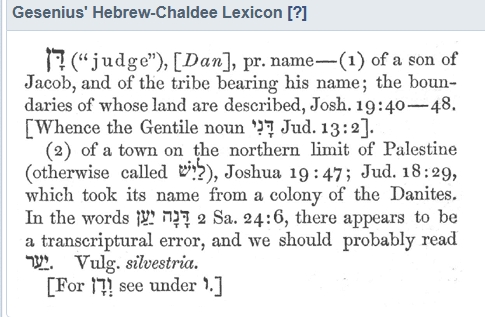
Dan had one son called Hushim or Shuham.

  • Gen. 46:23
    • And the sons of Dan; Hushim.
  • Num. 26:42
    • These are the sons of Dan after their families:
      • of Shuham, the family of the Shuhamites.
    • These are the families of Dan after their families.

Jacob’s blessing of Dan predicted:(Gen. 49:16-18).

  • Dan shall judge his people as one of the tribes of Israel.
  • Dan shall be a serpent by the way,
  • A viper by the path,
    • That bites the horse’s heels,
    • So that its rider shall fall backward
  • I have waited for thy salvation, O Lord.

Genesis 49:17 Dan shall be a serpent by the way, an adder in the path, that biteth the horse heels, so that his rider shall fall backward.

HEB: יְהִי־ דָן֙ נָחָ֣שׁ עֲלֵי־ דֶ֔רֶךְ

KJV: Dan shall be a serpent by the way,

  • The tribe of Dan was the first to significantly engage in idolatry and witchcraft, influencing the other tribes to follow suit. It is conceivable that the term ‘snake’ was employed to foretell their future actions of leading others into idolatry and witchcraft.

Moses prophesied about Dan.

  • Deuteronomy 33:22 And of Dan he said, Dan is a lion’s whelp: he shall leap from Bashan.

Appointed to Build

  • Exodus 31:5-11
    • And I, behold, I have given with him Aholiab, the son of Ahisamach, of the tribe of Dan: and in the hearts of all that are wise hearted I have put wisdom, that they may make all that I have commanded thee;
      • The tabernacle of the congregation, and the ark of the testimony, and the mercy seat that is thereupon, and all the furniture of the tabernacle,
      • And the table and his furniture, and the pure candlestick with all his furniture, and the altar of incense,
      • And the altar of burnt offering with all his furniture, and the laver and his foot,
      • And the cloths of service, and the holy garments for Aaron the priest, and the garments of his sons, to minister in the priest’s office,
      • And the anointing oil, and sweet incense for the holy place: according to all that I have commanded thee shall they do.
  • Exodus 38:22-23
    •  And Bezaleel the son Uri, the son of Hur, of the tribe of Judah, made all that the Lord commanded Moses.
    • And with him was Aholiab, son of Ahisamach, of the tribe of Dan, an engraver, and a cunning workman, and an embroiderer in blue, and in purple, and in scarlet, and fine linen.

The tribe of Dan descended from Dan, the son of Jacob. This tribe is known as the Danites. The tribe has yet to live up to its promise. The area allotted to Dan included the towns of Aijalon, Ekron, Eltekeh, and Zorah in the west central part of Canaan and stretched to Joppa on the Mediterranean Sea.

  • Joshua 19:40-46
    • And the seventh lot came out for the tribe of the children of Dan according to their families.
      • And the coast of their inheritance was Zorah, and Eshtaol, and Irshemesh,
      • And Shaalabbin, and Ajalon, and Jethlah,
      • And Elon, and Thimnathah, and Ekron,
      • And Eltekeh, and Gibbethon, and Baalath,
      • And Jehud, and Beneberak, and Gathrimmon,
      • And Mejarkon, and Rakkon, with the border before Japho.

The Danites, however were unable to conquer much of the territory assigned to them. The original inhabitants, the Amorites, kept the Danites confined to the hill country of Ephraim and Benjamin. Unable the conquer their allotted territory, some members of the tribe of Dan migrated far to the northernmost area of the Promised Land and conquered the isolated city of LAISH, which they named Dan.

An important moment from the Tribe of Dan occurred when the mighty Danite SAMSON judged Israel. This is told about in Judges chapters 13-16.

Apparently, Dan was among the tribes that were the least supportive of the Israelite tribes. The Song of Deborah, which celebrates the Israelite victory over the Canaanite king Jabin and his mighty general Sisera, reproves the tribes of Gilead, Dan, and Asher. (Judg. 5:17) Of Dan, Deborah asked: “And why did Dan remain on ships?”
Dan’s apparent lack of interest in assisting the other tribes suggests that Dan, situated on Israel’s northernmost border, had
more in common with its foreign neighbors to the north than with Israel’s other tribes.

The exclusion of the tribe of Dan from the sealing of the twelve tribes should not be overlooked. It appears that Dan had been cut off from the other tribes of Israel.

  • Rev. 7:5-8
    • Of the tribe of Juda were sealed twelve thousand. Of the tribe of Reuben were sealed twelve thousand. Of the tribe of Gad were sealed twelve thousand.
    • Of the tribe of Aser were sealed twelve thousand. Of the tribe of Nephthalim were sealed twelve thousand. Of the tribe of Manasses were sealed twelve thousand.
    • Of the tribe of Simeon were sealed twelve thousand. Of the tribe of Levi were sealed twelve thousand. Of the tribe of Issachar were sealed twelve thousand.
    • Of the tribe of Zabulon were sealed twelve thousand. Of the tribe of Joseph were sealed twelve thousand. Of the tribe of Benjamin were sealed twelve thousand.

Many people draw various conclusions from this. However, I feel many of the conclusions could be wrong if what Ezekiel prophesied is not factored into the equation. Ezekiel prophesied a “portion for Dan”. That means that God has not completely counted the tribe of Dan out. Ezekiel chapter 48 is a prophecy where God is given the layout for a city that will be renamed. The New Name of Jerusalem will be “The Lord is There”.

  • Ezekiel 48:1
    • Now these are the names of the tribes. From the north end to the coast of the way of Hethlon, as one goeth to Hamath, Hazarenan, the border of Damascus northward, to the coast of Hamath; for these are his sides east and west; a portion for Dan.
  • Ezekiel 48:31-35
    •  And the gates of the city shall be after the names of the tribes of Israel: three gates northward; one gate of Reuben, one gate of Judah, one gate of Levi.
    • And at the east side four thousand and five hundred: and three gates; and one gate of Joseph, one gate of Benjamin, one gate of Dan.
    • And at the south side four thousand and five hundred measures: and three gates; one gate of Simeon, one gate of Issachar, one gate of Zebulun.
    • At the west side four thousand and five hundred, with their three gates; one gate of Gad, one gate of Asher, one gate of Naphtali.
    • It was round about eighteen thousand measures: and the name of the city from that day shall be, The Lord is there.

If you look back at Jacob’s prediction for Dan, only one of the predictions has somewhat come to pass. Samson was a judge that came from the tribe of Dan. However, there were judges from other tribes as well. I don’t believe that Samson was all that Jacob meant. There is still more to come from the tribe of Dan.

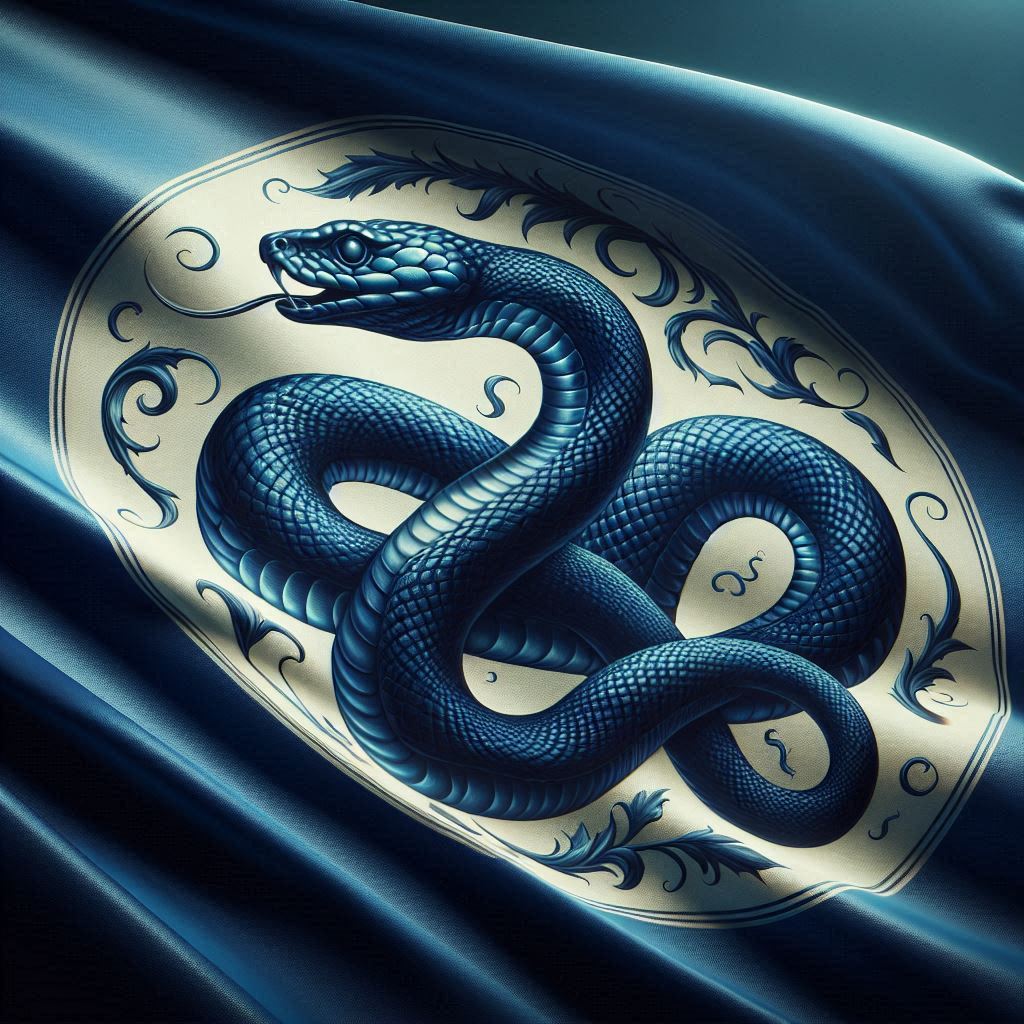
All of the tribes had flags (banners) when they were in the wilderness. Dan: His stone was Leshem, and his flag was like sapphire, with a depiction of a snake, referencing the verse: “Dan shall be a serpent … 

Claims of descent from Dan

A 15th-century Latin chronicle, “Chronicon Holsatiae vetus”, included in Gottfried Leibniz’s *Accessiones historicae* (1698), claims that the Danes were descended from the Tribe of Dan. In 1620, antiquarian Henry Spelman made a similar assertion, linking the Danes to the Israelite Tribe of Dan based on the similarity in their names. Supporters of Nordic and British Israelism have echoed this idea, arguing for descent from the tribe of Dan. British Israelite writers like John Cox Gawler and J. H. Allen equated the Tribe of Dan with Denmark, while another, Edward Hine, believed the tribe had settled in both Denmark and Ulster in Ireland.

Some Ethiopian Jews, known as Beta Israel, believe they descend from the Tribe of Dan, whose members, along with those from the tribes of Gad, Asher, and Naphtali, migrated south into the Kingdom of Kush—modern-day Ethiopia and Sudan—during the destruction of the First Temple. This view is supported by former Sephardic Chief Rabbi Ovadia Yosef, and they are said to have clashed with the local inhabitants.
The Twelve Tribes of Israel: Origins and Significance

The Twelve Tribes of Israel are important because they are the foundation of the Nation of Israel.

  1. Origin and History
  2. Exodus
  3. Growth into a Nation
  4. More information about the various Tribes
    1. Prophecy
    2. The Tribes

Origin and History

Israel was an association of twelve tribes, designated by the names of the ancestors from
Whom they were descended.

  • Deut. 27:12-13
    • “These [tribes] shall stand on Mount Gerizim to bless the people when you have crossed the Jordan: Simeon, Levi, Judah, Issachar, Joseph, and Benjamin. 
    • These [tribes] shall stand on Mount Ebal to pronounce the curse [for disobedience]: Reuben, Gad, Asher, Zebulun, Dan, and Naphtali.

The historical origins of the tribal units may be traced to the Book of Genesis. Jacob, whose name was later changed to Israel (Gen. 32:28), was the father of 12 sons (Gen. 29:31-30:24; 35:18, 22-26).

  • Gen. 32:27-29
    • So, He asked him, “What is your name?” And he said, “Jacob.” And He said, “Your name shall no longer be Jacob, but Israel; for you have struggled with God and with men and have prevailed.” Then Jacob asked Him, “Please tell me Your name.” But He said, “Why is it that you ask My name?” And He declared a blessing [of the covenant promises] on Jacob there. 

The sons of Jacob, excluding Levi and Joseph but including Joseph’s sons, Manasseh and Ephraim, were the ancestors of the later tribal units in the nation’s history. The development of the tribes begins with the events described in the Book of Exodus.

The sons of Jacob, together with their father and families, migrated to Egypt to join their brother Joseph and to escape the famine in Canaan.

They grew significantly in number.

  • Exodus 1:1-7
    • Now these are the names of the sons of Israel who came to Egypt with Jacob; each came with his household: 
      • Reuben, Simeon, Levi, and Judah; Issachar, Zebulun, and Benjamin; Dan and Naphtali, Gad, and Asher. 5
    • All the descendants of Jacob were seventy people; Joseph was [already] in Egypt. 
    • Then Joseph died, and all his brothers and all that generation, but the Israelites were prolific and increased greatly; they multiplied and became extremely strong, so that the land was filled with them.

Exodus

Then the descendants of Jacob’s sons left Egypt in the EXODUS under the leadership of Moses. They were joined by many who were not descendants of Jacob. The Exodus people are thus characterized as a “mixed multitude”.

  • Exodus 12:37-39
    • Now the Israelites journeyed from Rameses to Succoth, about six hundred thousand men on foot, besides [the women and] the children.  A mixed multitude [of non-Israelites from foreign nations] also went with them, along with both flocks and herds, a very large number of livestock. And they baked unleavened cakes of the dough which they brought from Egypt; it was not leavened, since they were driven [quickly] from Egypt and could not delay, nor had they prepared any food for themselves.
  • Numbers 11:4
    • The rabble among them [who followed Israel from Egypt] had greedy desires [for familiar and delicious food], and the Israelites wept again and said, “Who will give us meat to eat?
      • rabble: A unique word found only here in the OT. It refers to the mixed multitude of non-Israelites who joined the exodus.


The number of dependents, those not of blood kinship, continued to increase as the tribal units developed.

  • Moses’ father-in-law, whose clan joined Israel in the wilderness, was a Midianite.
    • Num. 10:29
      • Then Moses said to Hobab the son of Reuel the Midianite, Moses’ father-in-law, “We are going to the place of which the Lord said, ‘I will give it to you.’ Come with us, and we will be good to you, for the Lord has promised good [things] concerning Israel.” 
      • But Hobab [Moses’ brother-in-law] said to him, “I will not go; I will return to my own land and to my family.” 31 Then Moses said, “Please do not leave us, for you know how we are to camp in the wilderness, and you will serve as eyes for us [as we make our trek through the desert]. 
      • So, if you will go with us, it shall be that whatever good the Lord does for us, we will do the same for you.”
      • So they set out from the mountain of the Lord (Sinai) three days’ journey; and the ark of the covenant of the Lord went in front of them during the three days’ journey to seek out a resting place for them. 
  • Caleb, who figured prominently in the conquest of the land of Canaan, was called a Kenizzite.
    • Josh. 14:13-15
      •  So, Joshua blessed him and gave Hebron to Caleb the son of Jephunneh as an inheritance. 
      • Therefore, Hebron became the inheritance of Caleb the son of Jephunneh the Kenizzite to this day, because he followed the Lord, the God of Israel, completely. 
      • The name of Hebron was formerly Kiriath-arba [city of Arba]; for Arba was the greatest man among the [giant-like] Anakim. Then the land had rest from war.
    • The Heritage of Caleb: A Deep Dive into His Ancestry
  • Later the Calebites were given an inheritance among the tribe of Judah.
    • Josh. 15:13
      • Now to Caleb the son of Jephunneh Joshua gave a portion among the sons of Judah, as the Lord commanded him, namely, Kiriath-arba, Arba being the father of Anak (that is, Hebron).

Growth into a Nation


The tribal confederation with its institutions reached its highest form during the period recorded in the books of Joshua and Judges. The rigidity of Israel’s tribal structure did weaken somewhat with the establishment of the United Kingdom under David and Solomon. But tribal organization and association was maintained throughout later biblical history.

  • Luke 2:36
    • There was a prophetess, Anna, the daughter of Phanuel, of the tribe of Asher. She was very old, and had lived with her husband for seven years after her marriage,
  • Acts 4:36
    • Now Joseph, a Levite and native of Cyprus, who was surnamed [g]Barnabas by the apostles (which translated means Son of Encouragement),
  • Rom. 11:1
    • I say then, has God rejected and disowned His people? Certainly not! For I too am an Israelite, a descendant of Abraham, of the tribe of Benjamin. 
      • This is Paul talking about his family linage.
  • Heb. 7:14
    • For it is evident that our Lord descended from [the tribe of] Judah, and Moses mentioned nothing about priests in connection with that tribe. 

More information about the various Tribes

Prophecy

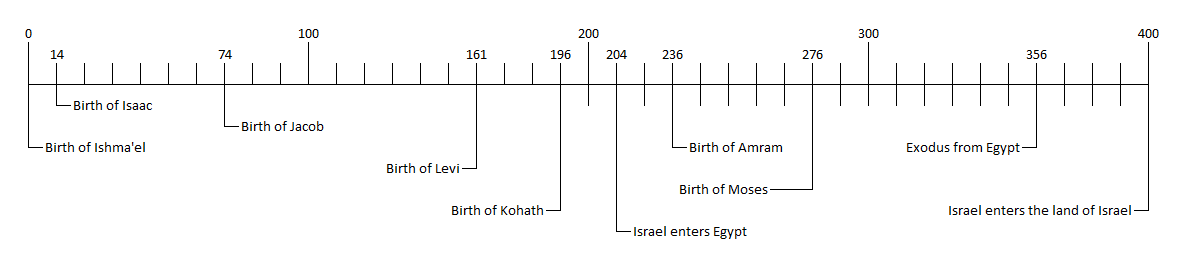
The 400-Year Prophecy and Israel’s Journey

The Tribes

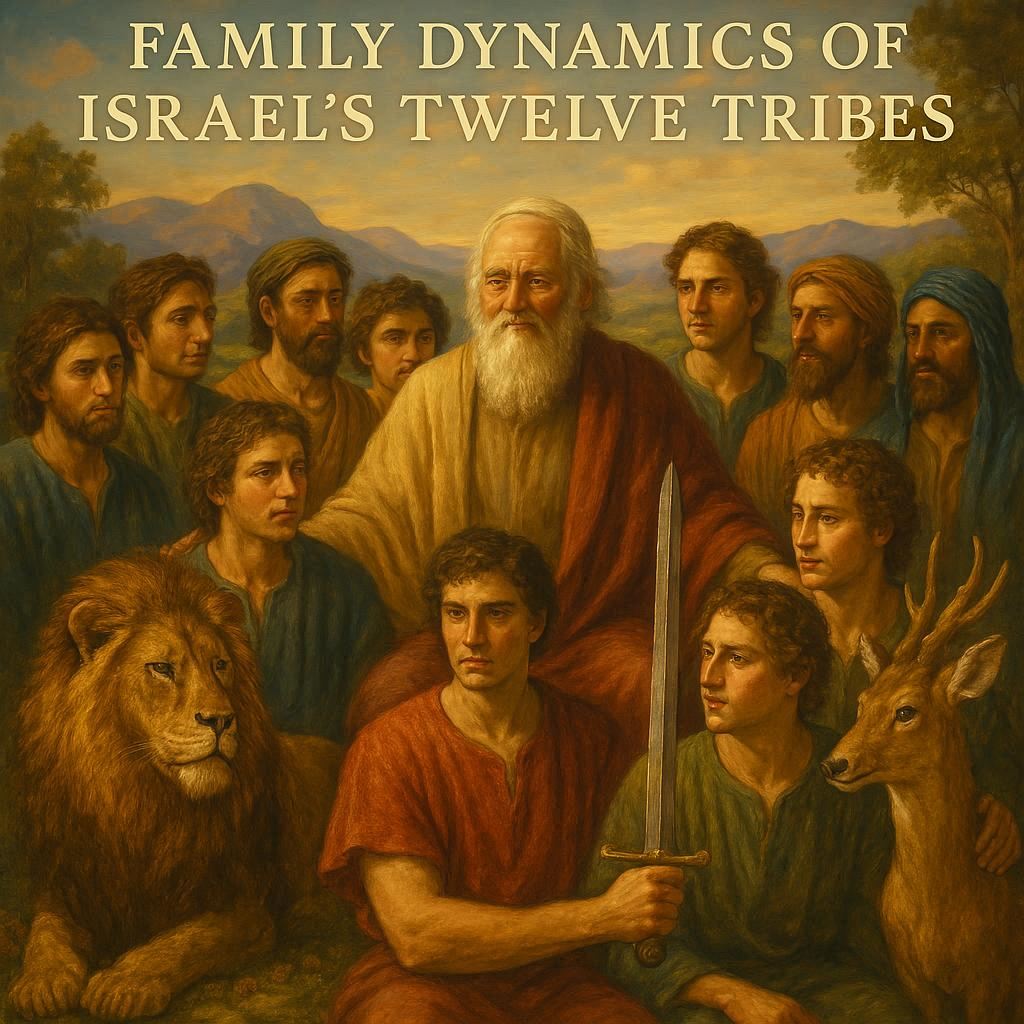
Family Dynamics of Israel’s Twelve Tribes
The Legacy of Issachar: History and Insights
Discovering Naphtali: Leadership and Legacy in the Bible
The Tribe of Dan: Origins, Challenges, and Prophecy

The Legacy of Issachar: History and Insights


Issachar

Issachar is one of those Old Testament figures whose story quietly threads through Scripture yet leaves a meaningful mark on history as God’s people. As the ninth son of Jacob and the fifth born to Leah, Issachar became the father of a tribe known for its strength, steady work, and remarkable insight. His descendants settled in some of the most fertile land in Israel, raised families, tended cattle, and played important roles in battles, leadership, and national decisions.

Though Issachar himself was described as strong yet inclined toward comfort, his tribe grew into a people known for wisdom—especially the ability to understand the times and know what Israel should do. From the days of the patriarchs to the reign of King David, the tribe of Issachar contributed leaders, warriors, and faithful worshipers who sought to honor God.

The following sections explore Issachar, the tribe that’s life, his sons came from him, and carried throughout the legacy they Israel’s history.


  1. Issachar
    1. Character and History of Issachar
      1. Birth
      2. Descendants
    2. Prophecies Concerning Issachar
    3. Fighting
    4. Population Counts
    5. Notable Leaders
      1. Nethaneel
      2. Paltiel
      3. Judge Tola
      4. King Baasha
      5. Omri
    6. Political Insight

Character and History of Issachar

Birth

Issachar was the ninth son of Jacob; the fifth by his Leah.

  • Genesis 30:17-18
    • And God hearkened unto Leah, and she conceived, and bare Jacob the fifth son.
    • And Leah said, God hath given me my hire, because I have given my maiden to my husband: and she called his name Issachar.

Issachar means there is hire of reward.

Descendants

Issachar had four sons.

  • Genesis 46:13
    • And the sons of Issachar; Tola, and Phuvah, and Job, and Shimron.
  • Numbers 26:23-24
    • Of the sons of Issachar after their families:
      • of Tola, the family of the Tolaites:
      • of Pua, the family of the Punites:
      • Of Jashub, the family of the Jashubites:
      • of Shimron, the family of the Shimronites.
    •  These are the families of Issachar according to those that were numbered of them, threescore and four thousand and three hundred.

The 4 Sons of Issachar

  • Tola
  • Puvah or Puah
  • Job or Jashub
  • Shimron

Prophecies Concerning Issachar

Issachar and his children went with Jacob (Israel) to Egypt to escape the famine. Before Jacob died, he blessed his children.

  • Genesis 49:14-15
    • Issachar is a strong ass couching down between two burdens:
    • And he saw that rest was good, and the land that it was pleasant; and bowed his shoulder to bear, and became a servant unto tribute.

Moses prophesied a quiet and happy life for the tribe.

  • Deuteronomy 33:18-19
    • And of Zebulun he said, Rejoice, Zebulun, in thy going out; and, Issachar, in thy tents.
    • They shall call the people unto the mountain; there they shall offer sacrifices of righteousness: for they shall suck of the abundance of the seas, and of treasures hid in the sand.

Fighting

Although Issachar was sometimes associated with comfort-seeking, the tribe fought bravely in the battle against Sisera

  • Judges. 5:15
    • And the princes of Issachar were with Deborah; even Issachar, and also Barak: he was sent on foot into the valley. For the divisions of Reuben there were great thoughts of heart.

Population Counts

First census: 54,400 fighting men

  • Numbers 1:28–29
    •  Of the children of Issachar, by their generations, after their families, by the house of their fathers, according to the number of the names, from twenty years old and upward, all that were able to go forth to war;
    • 29 Those that were numbered of them, even of the tribe of Issachar, were fifty and four thousand and four hundred.

Second census: 64,300

  • Numbers 26:25
    • These are the families of Issachar according to those that were numbered of them, threescore and four thousand and three hundred.


Time of David 87,000

  • 1 Chronicles 7:5
    • And their brethren among all the families of Issachar were valiant men of might, reckoned in all by their genealogies fourscore and seven thousand.

Notable Leaders

Nethaneel

  • Numbers 1:5 & 8
    • And these are the names of the men that shall stand with you: of the tribe of Reuben; Elizur the son of Shedeur.
    • Of Issachar; Nethaneel the son of Zuar.
  • Numbers 7:18
    • On the second day Nethaneel the son of Zuar, prince of Issachar, did offer:
    • He offered for his offering one silver charger, the weight whereof was an hundred and thirty shekels, one silver bowl of seventy shekels, after the shekel of the sanctuary; both of them full of fine flour mingled with oil for a meat offering:
    • One spoon of gold of ten shekels, full of incense:
    • One young bullock, one ram, one lamb of the first year, for a burnt offering:
    • One kid of the goats for a sin offering:
    • And for a sacrifice of peace offerings, two oxen, five rams, five he goats, five lambs of the first year: this was the offering of Nethaneel the son of Zuar.
  • Numbers 10:15
    • In the first place went the standard of the camp of the children of Judah according to their armies: and over his host was Nahshon the son of Amminadab.
    • And over the host of the tribe of the children of Issachar was Nethaneel the son of Zuar.

Paltiel

  • Num. 34:17-18 &
    • hese are the names of the men which shall divide the land unto you: Eleazar the priest, and Joshua the son of Nun.
    • And ye shall take one prince of every tribe, to divide the land by inheritance.
    • And the prince of the tribe of the children of Issachar, Paltiel the son of Azzan.

Judge Tola

  • Judges 10:1
    • And after Abimelech there arose to defend Israel Tola the son of Puah, the son of Dodo, a man of Issachar; and he dwelt in Shamir in mount Ephraim.
    • And he judged Israel twenty and three years, and died, and was buried in Shamir.

King Baasha

  • 1 Kings 15:27
    • And Baasha the son of Ahijah, of the house of Issachar, conspired against him; and Baasha smote him at Gibbethon, which belonged to the Philistines; for Nadab and all Israel laid siege to Gibbethon.

Omri

  • 1 Chronicles 27:1 & 18
    • Now the children of Israel after their number, to wit, the chief fathers and captains of thousands and hundreds, and their officers that served the king in any matter of the courses, which came in and went out month by month throughout all the months of the year, of every course were twenty and four thousand.
    • Of Judah, Elihu, one of the brethren of David: of Issachar, Omri the son of Michael:

Political Insight

In keeping with Jacob’s blessing, the tribe showed remarkable discernment in political matters. They shifted allegiance from Saul to David,

  • 1 Chr. 12:32
    • And of the children of Issachar, which were men that had understanding of the times, to know what Israel ought to do; the heads of them were two hundred; and all their brethren were at their commandment.

Though part of the Northern Kingdom, many from Issachar still attended Hezekiah’s Passover in Judah.

  • 2 Chronicle 30:18-19
    • For a multitude of the people, even many of Ephraim, and Manasseh, Issachar, and Zebulun, had not cleansed themselves, yet did they eat the passover otherwise than it was written.
    • But Hezekiah prayed for them, saying, The good Lord pardon every one That prepareth his heart to seek God, the Lord God of his fathers, though he be not cleansed according to the purification of the sanctuary.


Discovering Naphtali: Leadership and Legacy in the Bible

Naphtali was born to Rachel’s handmaid, Bilhah.

  • Genesis 30:8
    • And Bilhah Rachel’s maid conceived again, and bare Jacob a second son. And Rachel said, With great wrestlings have I wrestled with my sister, and I have prevailed: and she called his name Naphtali.

Naphtali had four sons:

  • Jahzeel
  • Guni
  • Jezer
  • Shillem

When the census was taken in Numbers 26:48-49, the descendants of Naphtali was great.

  • Of the sons of Naphtali after their families:
    • of Jahzeel, the family of the Jahzeelites:
    • of Guni, the family of the Gunites:
    • Of Jezer, the family of the Jezerites:
    • of Shillem, the family of the Shillemites.
  • These are the families of Naphtali according to their families: and they that were numbered of them were forty and five thousand and four hundred.

Jacob gave a prophecy of Naphtali’s descendants in Genesis 49:21.

  • Naphtali is a hind let loose: he giveth goodly words.

He Giveth goodly words is an interesting prophecy.

Goodly

  • שֶׁפֶר shepher, sheh’-fer; from H8231; beauty:—× goodly.

Words

  • אֵמֶר ʼêmer, ay’-mer; from H559; something said:—answer, × appointed unto him, saying, speech, word.

Naphtali was the northern most tribe of Israel occupying a long, narrow piece of land about 80 kil. (50 miles) north to south and 16 to 24 Kil (10 to 15 miles) from east to west. The land of Naphtali was mountainous and very fertile.

Isaiah 9:1-7

  • Nevertheless the dimness shall not be such as was in her vexation, when at the first he lightly afflicted the land of Zebulun and the land of Naphtali, and afterward did more grievously afflict her by the way of the sea, beyond Jordan, in Galilee of the nations.
  • The people that walked in darkness have seen a great light: they that dwell in the land of the shadow of death, upon them hath the light shined.
  • Thou hast multiplied the nation, and not increased the joy: they joy before thee according to the joy in harvest, and as men rejoice when they divide the spoil.
  • For thou hast broken the yoke of his burden, and the staff of his shoulder, the rod of his oppressor, as in the day of Midian.
  • For every battle of the warrior is with confused noise, and garments rolled in blood; but this shall be with burning and fuel of fire.
  • For unto us a child is born, unto us a son is given: and the government shall be upon his shoulder: and his name shall be called Wonderful, Counsellor, The mighty God, The everlasting Father, The Prince of Peace.
  • Of the increase of his government and peace there shall be no end, upon the throne of David, and upon his kingdom, to order it, and to establish it with judgment and with justice from henceforth even for ever. The zeal of the Lord of hosts will perform this.

Jesus fulfilled this prophecy about Nathali seeing a great light when Jesus spent most of his ministry in the land that Nathali was given after the Exodus.

Matthew 4:12-6

  • When Jesus learned that John had been arrested, he withdrew to Galilee. 
  • Departing from Nazareth, he settled in Capernaum by the sea, in the region of Zebulun and Naphtali
  • in order that what had been spoken through the prophet Isaiah might be fulfilled:
    • “Land of Zebulun and land of Naphtali, the passageway to the sea, beyond the Jordan, Galilee of the Gentiles:
    • The people who lived in darkness have seen a great light, and for those who dwell in a land darkened by the shadow of death light has dawned.”

Naphtali was a tribe of brave warriors people.

  • Members of the tribe fought bravely under Deborah.
    • Judges 4:4-6
      • Now Deborah, the wife of Lappidoth, a prophetess, was then a judge in Israel.  
      • She used to sit underneath the palm tree of Deborah between Ramah and Bethel in the hill country of Ephraim. The Israelites would come up to her for judgment there. 
      • She summoned Barak, the son of Ahinoam, from Kadesh of Naphtali, and she said to him, “The Lord, the God of Israel, commands you, ‘Go, take ten thousand men from Naphtali and Zebulun with yourself and march toward Mount Tabor.
    • Judges 4:10
      • Barak had summoned Zebulun and Naphtali to Kedesh. Ten thousand men were under his command, and Deborah went up with him.
    • Judges 5:18
      • The people of Zebulun risked their lives, as did Naphtali on the heights of the field.
  • They responded to Gideon’s Call
    • Judges 6:35
      • He sent messengers all throughout Manasseh, summoning them to follow him. He also sent messengers to Asher, Zebulun, and Naphtali, so that they too gathered around him.
    • Judges 7:23
      •  The men of Israel from out of Naphtali, from out of Asher, and from out of Manasseh gathered together and pursued the Midianites. 
  • When Saul’s son Ishbosheth challenged David for the throne 37,000 fighting men who were led by 1,000 captains joined David.
    • Chronicles 12:34
      •  From Naphtali there were one thousand captains along with thirty-seven thousand men armed with shield and spear. 

When the tribes divided into 2 kingdoms, it was part of the 10 Northern Tribes.

Descendants

The speculative descendants of Naphtali include:

  • Ethiopian Jews, or Beta Israel, trace their ancestry to the Tribe of Dan, whose members, along with those from the tribes of Gad, Asher, and Naphtali, migrated south to the Kingdom of Kush—present-day Ethiopia and Sudan—during the destruction of the First Temple.
  • The Mountain Jews of the Caucasus.
  • The Bukharian Jews of Central Asia.
  • Nordisk Israel identify the Tribe of Naphtali with Norway.
  • Pacific Islanders (Cook Islands, Samoans, Hawaiians, Tongans, Fijians, etc.).

Family Dynamics of Israel’s Twelve Tribes

Israel is Twelve groups of families in Israel who were descendants of the twelve tribes of Israel’s sons of Jacob. Jacob’s name was changed to Israel. His twelve sons and their descendants made up the nation of Israel, sometimes called “the children of Israel.” The family of Jacob began when Jacob stayed at Haran with his uncle Laban. Because his brother Esau was mad that he got the birth right that he was to get and not his brother Jacob.

The birth of the sons came through Jacob’s wives, Leah and Rachel, and their maids, Zilpah and Bilhah. The sons were Reuben, Simeon, Levi, Judah, Dan, Naphtali, Gad, Asher, Issachar, Zebulun, Joseph, and Benjamin.

Joseph’s sons were Ephraim and Manasseh. They were adopted by Jacob, and each one became the father of one of the tribes of Israel. Each tribe except Levi received a portion of the land in Canaan. The tribe of Levi was the priesthood, and in Bible time, priests led people to worship God through sacrifices.

  1. Children of Israel
    1. Children of Leah (6 boys and 1 girl) with name meanings
    2. Sons of Leah’s hand maid (Zilpah)
    3. Sons of Rachel
    4. Son of Rachel’s hand maid (Bilhah)
    5. Jacob’s children in order of birth
  2. Symbols of the Tribes

Children of Israel

Children of Leah (6 boys and 1 girl) with name meanings

  • Reuben
    • Behold, a son
  • Simeon
    • God has heard
  • Levi
    • Joined
  • Judah
    • Praise
  • Issachar
    • Reward
  • Zebulun
    • Honor
  • Dinah (she is only girl)
    • Justice or Judgement

Sons of Leah’s hand maid (Zilpah)

  • Gad
    • Good fortune
  • Asher
    • Happy

Sons of Rachel

  • Joseph
    • May He add
  • Benjamin (Rachel called his name Benoni but his father called him Benjamin)
    • Benoni
      • Son of my Sorrow
    • Benjamin
      • Son of my right hand

Son of Rachel’s hand maid (Bilhah)

  • Dan
    • Judge
  • Naphtali
    • My struggle

Jacob’s children in order of birth

  1. Reuben [Leah]
  2. Simeon[Leah]
  3. Levi [Leah]
  4. Judah [Leah]
  5. Dan [Rachel hand maid Bilhah]
  6. Naphtali [Rachel hand maid Bilhah]
  7. Gad [Leah hand maid Zilpah]
  8. Asher [Leah hand maid Zilpah]
  9. Issachar [Leah]
  10. Zebulun [Leah]
  11. Dinah [Leah] she is a girl
  12. Joseph [Rachel]
  13. Benjamin [Rachel]

Symbols of the Tribes

Reuben is Jacob’s oldest son the one that has the most power. Their symbol is the Mandrake Flower.

Simeon is a fighting tribe. Their symbol is the mighty sword.

Judah is brave and strong, so their symbol is the lion brave and strong.

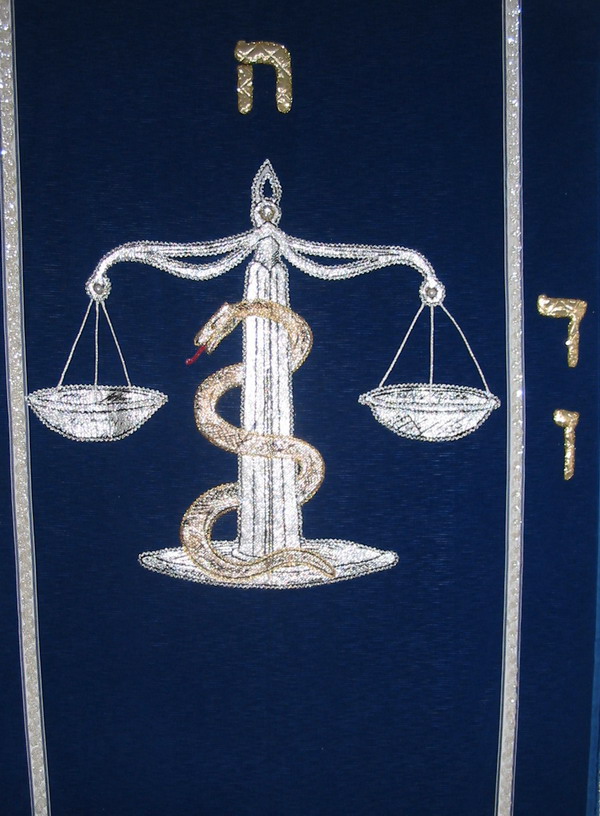
Dan’s name means God has judged me, so their symbol is the snake and the Justice scale.

Naphtali’s name means I have Wrestled. Their symbol is the deer.

Gad’s name means good fortune. Their symbol is the tent.

Asher’s name means happy. Their symbol is the olive tree.

Issachar’s name means God has Repaid me. Their Symbol is the Donkey.

Zebulun’s name means God will dwell with me. Their symbol is a sailing ship.

Manasseh’s name means God hath made me forget all my toil. Their symbol is the unicorn.

Ephraim’s name means God has Caused me to be Fruitful. Their symbol is the bull.

Bejamin’s name means son of my right hand. Their Symbol is the big brave wolf.

Levi’s name means Joined. Note: because Levi is of the priesthood, they do not have a tribal banner.