Category: Vocabulary
-

Chapter 12 discusses Ulysses’ return, introducing vocabulary like valor, ancestral, and unction, highlighting themes of courage and emotion.
-
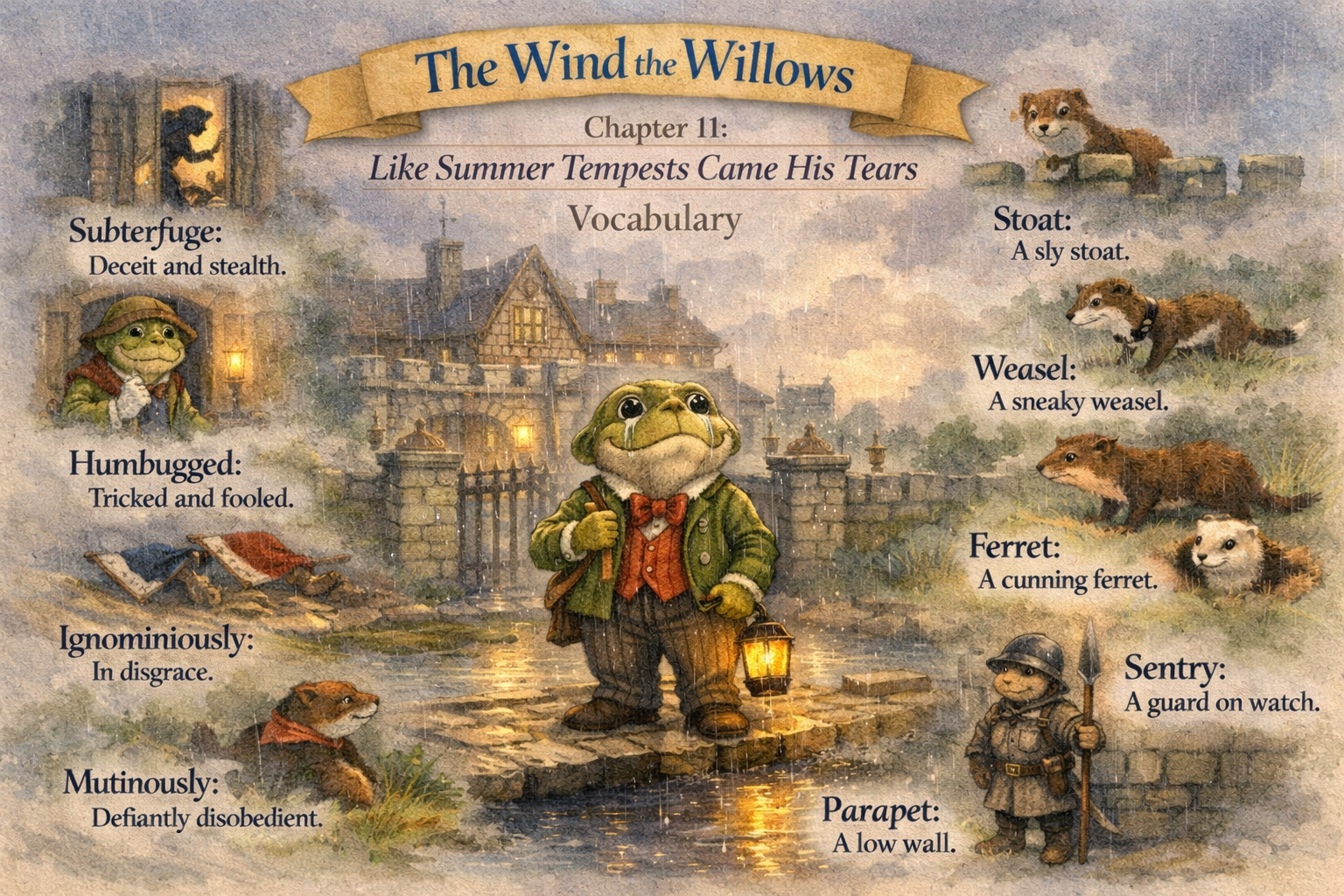
Chapter 11 explores themes of deceit, shame, and disobedience through vivid vocabulary related to animals and military terminology.
-
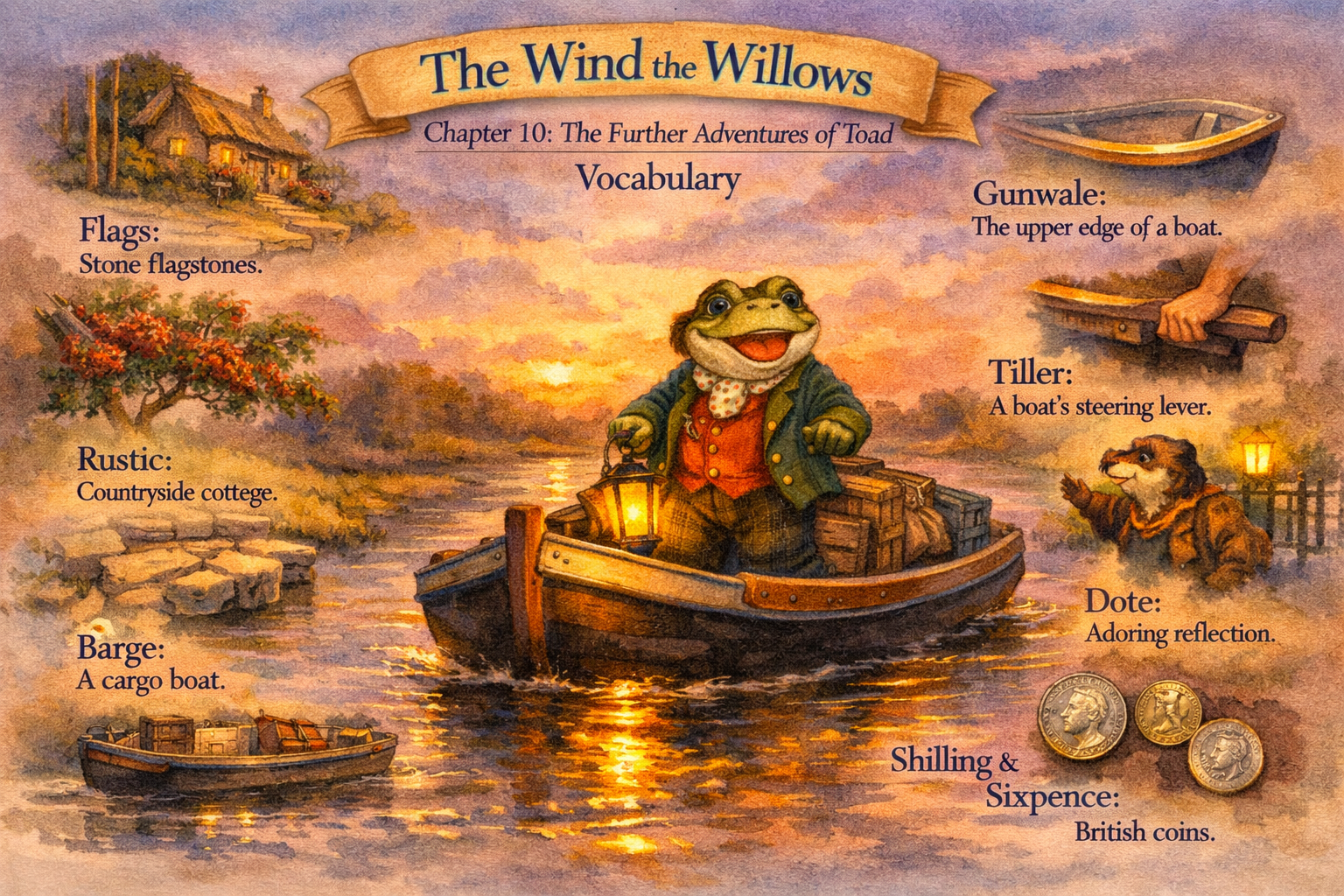
Chapter 10 explores Toad’s adventures, introducing vocabulary related to boats, money, and countryside living.
-

Chapter 9 introduces vocabulary, including terms like “pomp,” “premonition,” and “pinion,” emphasizing their meanings and contexts.
-

Chapter 8 explores Toad’s adventures, featuring vocabulary like immured, noisome, and sanguine, enhancing the story’s richness.
-

Chapter 7 discusses vocabulary related to weaving and mythology, including terms like selvedge, weir, ford, faun, and Pan.
-

“The Wind in the Willows” is a classic children’s novel about friendship and adventures, focusing on Mole, Ratty, Badger, and Mr. Toad.
-
Chapter 6 focuses on Mr. Toad and introduces key vocabulary terms such as “wonted,” “habiliments,” “gaiters,” “countenance,” “panoply,” “gaoler,” and “murrain.” These terms encompass themes of habitual behavior, clothing, expressions, displays, jail management, and afflictions, contributing to the chapter’s overall narrative development.
-

Chapter 5, titled “Dulce Domum,” introduces key vocabulary related to nature and holiday traditions. Terms include tributary, casement, appurtenance, filament, Yule-time, carol, and mulled ale, each reflecting concepts tied to home, celebration, and seasonal activities. This chapter highlights the interplay of language and lifestyle.
-

Chapter 4 focuses on Mr. Badger, introducing key vocabulary including ‘draught,’ ‘trestle,’ ‘repast,’ ‘injunction,’ ‘tunnel,’ and ‘Grand Hall.’ Each term relates to aspects of environment and structure, highlighting elements relevant to social and culinary settings within the narrative’s context.