A place to grow your relationship with God

Archive for the ‘A History of the United States and its People’ Category

Engaging Children’s Books, Fun Facts and Delicious Recipes

Children’s Bible books

  • For older kids
    • THE CHILDREN’S SIX MINUTES by Bruce S. Wright: The Children’s Six Minutes by Bruce S. Wright features a collection of themes exploring growth, kindness, faith, and life’s lessons through various engaging stories and reflections.
    • The Wonder Book of Bible Stories: “The Wonder Book of Bible Stories” by Logan Marshall shares simplified biblical narratives for children, conveying essential moral lessons through engaging tales from the Bible.

Children’s books

  • For younger kids
    • McGuffey Eclectic Primer: textbook focused on early literacy, teaching reading and writing through simple lessons and moral stories for young children.
    • McGuffey’s First Eclectic Reader: educational textbook for young readers, combining phonics, sight words, moral lessons, and simple narratives to enhance literacy skills.
    • MCGUFFEY’S SECOND ECLECTIC READER: educational book for children, promoting literacy and moral values through engaging prose, poetry, and vocabulary exercises.
    • The Real Mother Goose: a collection of nursery rhymes, reflecting childhood’s whimsical essence through well-known verses and engaging illustrations.
    • THE GREAT BIG TREASURY OF BEATRIX POTTER: The Great Big Treasury of Beatrix Potter features beloved stories like The Tale of Peter Rabbit and The Tale of Jemima Puddle-Duck, celebrating whimsical animal adventures.
    • The Tale of Solomon Owl is a whimsical children’s book by Arthur Scott Bailey, exploring themes of friendship and adventure through Solomon Owl’s humorous encounters with forest animals.
    • THE TALE OF JOLLY ROBIN: follows a young bird’s adventures as he learns life skills, values friendship, and explores youthful curiosity through humorous encounters in the wild.
    • Peter and Polly Series: The content describes a series of stories for 1st graders featuring Peter and Polly, exploring seasonal adventures, imaginative play, nature, family, and interactions with pets and animals.
    • The Adventures of Old Mr. Toad: recounts Old Mr. Toad’s humorous nature-filled journeys, emphasizing lessons on friendship, humility, and personal growth amidst various animal encounters.
    • The Wonderful Wizard of Oz: follows Dorothy’s adventures in Oz as she seeks to return home, meeting memorable friends while exploring themes of courage, friendship, and self-discovery.
  • For older kids
    • Stories of Don Quixote Written Anew for Children retells key adventures from Cervantes’ novel, preserving its spirit while engagingly presenting them for young readers in a cohesive narrative.
    • Heidi by Johanna Spyri follows a young girl adapting to life in the Swiss Alps with her grandfather, highlighting themes of family, love, and the power of nature.
    • Swiss Family Robinson by Johann David Wyss: is a beloved adventure novel by Johann David Wyss about a Swiss family stranded on a deserted island, relying on their creativity and teamwork to survive and build a new life.
    • Rebecca Of Sunnybrook Farm: follows the spirited Rebecca Randall as she navigates life with her aunts in Riverboro, experiencing adventure, growth, and identity exploration.

Children’s history book

  • For younger kids
    • Great Stories for Little Americans: introduces young readers to American history through engaging tales, fostering national pride and knowledge of heritage via accessible storytelling.
    • The Bird-woman of the Lewis and Clark Expedition: A Supplementary Reader for First and Second Grades- tells Sacajawea’s vital role in guiding the explorers, emphasizing her contributions and experiences during this historic journey.
    • The Story of Mankind: chronicles human history from prehistory to the modern era, highlighting key events, cultures, and figures that shaped civilization.
    • A First Book in American History: A first book in American history: with special reference to the lives and deeds of great Americans. This book chronicles pivotal figures in American history, from Columbus and John Smith to Franklin and Lincoln, highlighting their contributions and the nation’s expansion.
  • For older kids

Poem and stories

  • THE PLYMOUTH HARVEST by Governor Bradford
  • The Real Mother Goose Poems Book: a collection of nursery rhymes, reflecting childhood’s whimsical essence through well-known verses and engaging illustrations.
  • Top Poems for Children by Famous Authors: A list of children’s poems organized by author, with future additions anticipated, includes works by notable poets and authors. [Coming soon]
  • Poems and stories by Bell: Bell, a young poet, shares her love for God through inspiring poems and stories centered on nature, love, and faith, aiming to bless and bring joy to readers.
  • Explore Heartfelt Poems and Stories for Inspiration: Poems and stories to warm your heart.
  • Heartfelt Tales of My Beloved Pets: The author shares stories of various animals that have impacted their life, encouraging love for pets and providing comforting Bible verses for grieving pet owners.

Children bible study

The Coming of the Quakers and Others to the Jerseys and Pennsylvania


Before the Dutch colony of New Netherland was conquered by the English, in 1664, it was given by Charles II to his brother, the Duke of York, who afterward became King of England as James II. James kept that portion of it that is now called New York to himself. What we call New Jersey he gave to Lord John Berkeley and Sir George Carteret, who, after a few years, sold their interest to others. The colony already contained several settlements of Dutch and Swedes. In 1674 New Jersey was divided into East Jersey and West Jersey.

It was a time of religious persecution. Many people emigrated to the colonies in order to get a chance to be religious in their own way, and the proprietors of the New Jersey colonies promised to all who came liberty to worship in their own way. The people of Scotland, who were Presbyterians, suffered horribly from persecutions after the restoration of Charles II, and East Jersey received many Scotch emigrants, driven out of their own country by the cruelty of the government. Some people from New England also moved into East Jersey.

The religious sect most severely persecuted in England after the restoration of the king was the Society of Friends, whose members are sometimes called Quakers. Some of these came to East Jersey. West Jersey was bought by certain leading Friends, and a great many members of that society flocked to this province, where they established a popular form of government.

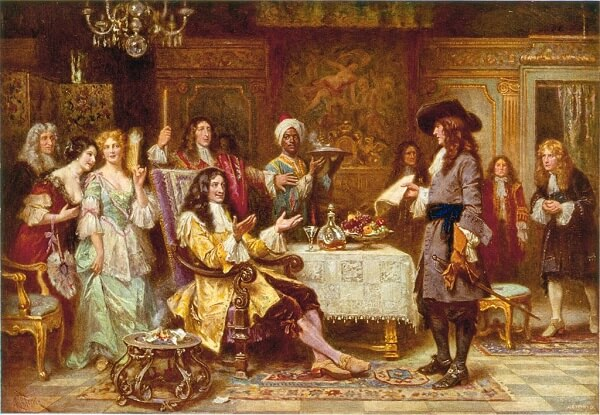
Just across the Delaware River from West Jersey was a territory not then occupied except by a few Swedes, who had come over long before to the old colony of New Sweden. Among those who had to do with the management of the West Jersey colony was a famous Quaker minister named William Penn. His father had been a great sea-commander, and William Penn had a claim against the King of England for a considerable sum of money due to his father. The king was in debt, and found it hard to pay what he owed. William Penn therefore persuaded Charles II to settle the debt by granting him a territory on the west side of the river Delaware. This the king called Pennsylvania, which means something like Penn’s Forest. The name was given in honor of Penn’s father, the admiral.

What is now the State of Delaware was also put under Penn’s government by the Duke of York. Everything was done with ceremony in those days. When Penn got to Newcastle, in Delaware, its government was transferred to him in the following way: The key to the fort at Newcastle was delivered to him. With this he locked himself into the fort and then let himself out in sign that the government was his. To show that the land with the trees on it belonged to him, a piece of sod with a twig in it was given to him. Then a porringer filled with water from the river was given to him, that he might be lord of the rivers as well as of the land.

Penn sent his first emigrants to Pennsylvania in 1681. Philadelphia, where they landed, was yet a woods, and the people had to dig holes in the river-banks to live in through the winter. Nearly thirty vessels came to the new colony during the first year.

Although Pennsylvania was the last colony settled except Georgia, it soon became one of the most populous and one of the richest. Before the Revolution, Philadelphia had become the largest town in the thirteen colonies. This was chiefly owing to the very free government that William Penn founded in his colony. Not only English, but Welsh and Irish people, and many thousands of industrious Germans, came to Pennsylvania. People were also attracted by the care that Penn took to maintain friendly relations with the American Indians, and to satisfy them for their lands. Another thing which drew people both to Pennsylvania and New Jersey was the fact that the land was not taken up in large bodies, as it was in New York and Virginia, for instance. In Pennsylvania and New Jersey, the poor man could get a farm of his own.

By the sale and division of shares, the proprietaries of both East and West Jersey became too numerous to manage their governments well, and at length disorders arose which they were not able to suppress. In 1702 the government of both provinces was transferred to Queen Anne, and East and West Jersey were again united into the one province of New Jersey. But even to this day, in common speech, one sometimes hears the State of New Jersey spoken of as “The Jerseys” by people who do not know that two hundred years ago there were two colonies of that name. Pennsylvania remained in the hands of the Penn family, who appointed its governors till the American Revolution.


WILLIAM PENN

William Penn was born in London in 1644, so that he was thirty-seven years old when Pennsylvania was settled. He was the son of Admiral William Penn, who was celebrated for the part he took in the wars between the English and Dutch. Penn first came under the influence of the Friends or Quakers while he was a student at Oxford, and he was expelled from the university, with others, for the resistance they made to certain religious ceremonies introduced at that time. His father sent him to Paris, and he became an accomplished man of the world. He afterward became a Friend, which so mortified his father that the admiral turned him out of his house, but later he became reconciled to him. Penn was repeatedly imprisoned, and he boldly asserted in the English courts the great principle of religious liberty. He traveled into Wales, Ireland, Holland, and Germany, in his preaching journeys, and many of his acquaintances in those countries afterward came to Pennsylvania. Though Penn would never take off his hat in the presence of the king, he had considerable influence at court, which he used to lessen the sufferings of the Quakers and others. Penn died in 1718.

The Settlement of Maryland and the Carolinas

The Settlement of Maryland and the Carolinas

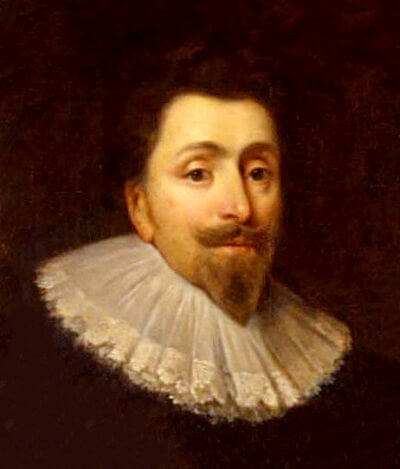
By the second charter given for planting the “First colony of Virginia,” as it was called, its breadth was cut down to four hundred miles along the seacoast. Virginia had formerly included all that the English claimed in America. Part of the four hundred miles was occupied by the Dutch in New Jersey and Delaware. And the territory of Virginia was, at length, further cut down by the taking of another part of it to form Maryland for Lord Baltimore.

George Calvert, afterward Lord Baltimore, was a Secretary of State to James I. In 1621 he planted a colony in Newfoundland, which he called Avalon. In 1627 he went to his colony in Newfoundland, but the climate was so cold that in 1629 he went to Virginia. Before going to Virginia, he wrote to the king, begging for territory to plant a colony there. Lord Baltimore had become a Catholic at a time when there were severe laws in England against Catholics. Even in the colonies Catholics were not allowed; and the Virginians took advantage of the orders given them from England, and insisted that he must take an oath declaring that the king was the head of the Church. As a Catholic, he could not do this, and the Virginians bade him leave the colony. Lord Baltimore returned to England, and got the king, Charles I, to give him a slice of Virginia north of the Potomac. This country King Charles named Maryland, in honor of the queen, his wife. For this, Baltimore was to pay to the king two American Indian arrows every year. But, before Lord Baltimore could send out a colony, he died.

Lord Baltimore

The territory was then granted to Lord Baltimore’s son, the second Lord Baltimore. He was given all the powers of a monarch. The first settlers were sent out in 1633, and reached Maryland in 1634. This company was composed of twenty gentlemen and three hundred laboring-men, and the first governor was Leonard Calvert, the second Lord Baltimore’s brother. Roman Catholic priests were with them, and at their landing they set up a cross. But there were also a good many Protestants in the party, and Baltimore had resolved from the beginning that there should be no persecution of any Christians on account of religion in his new province. In almost every country in the world at that time the established religion, of whatever sort it might be, was enforced by law.

The colonists came in two ships called the Ark and the Dove; they settled first at a place which they called St. Mary’s, on the St. Mary’s River, not far from the Potomac. They bought from the American Indians living on the place their village and corn-ground, and for the rest of that season they lived in half of the village with the American Indians. The colony had many troubles and several little civil wars in its first years. These mostly grew out of the religious differences of the people. But after a while Maryland prospered and grew rich by raising tobacco.

After the settlement of New England by Puritans, and Maryland by Catholics, there was a period of about thirty years in which no new colonies were planted. In this period occurred the Great Rebellion in England, in which Charles I was beheaded, and his son Charles II was kept out of England by the Puritans under Oliver Cromwell. But, after Cromwell’s death, Charles II was brought back to the throne of England. This is known as the Restoration. It took place in 1660.

After the Restoration there was a new interest in colonies. New York was taken from the Dutch, and new colonies were planned. King Charles II was a very thoughtless, self-indulgent monarch, who freely granted great tracts of land in America to several of his favorites. To some of his courtiers he gave, in 1663, a large territory cut off from Virginia on the south, which had been known before this time as Carolina, but was now called Carolina, from Carolus, the Latin form of King Charles’s name. This territory included what we call North and South Carolina. Those to whom this territory was granted were called “The Lords Proprietors of Carolina.” There were eight of them.

In the northeastern corner of this territory, on the Chowan River, a settlement had been made by people from Virginia, under the lead of a minister named Roger Green, in 1653. This was ten years before the country was granted to these lords proprietors, and the land belonged to Virginia when they settled there. A settlement was made at Port Royal, in South Carolina, in 1670, but the people afterward moved to where the city of Charleston now stands. The foundation of this city was laid in 1680. A large number of Huguenots, or French Protestants, settled in South Carolina about this time.

The lords-proprietors tried to force on the little settlements in the woods a constitution which they had prepared. This constitution provided for three orders of nobility, to be called palatines [pal-a-teens’], landgraves, and caciques [cas-seeks’]. But this system of government worked so badly that it was, after a while, given up.

The Carolina colonies grew slowly. But after the introduction of rice-culture, in 1696, South Carolina became prosperous. The proprietors, living in England, conducted the government of the colonies in a selfish spirit, and the people disliked their management. In 1719 the South Carolina people rose in rebellion and threw off the yoke of the lords proprietors. In 1729 the king bought out the interest of the proprietors, and after that the governors were appointed by the king. They had already an Assembly elected by the people to pass laws.

The Coming of the Dutch

The Coming of the Dutch

While Captain John Smith was in Virginia, he had a notion that there was a passage into the Pacific Ocean somewhere to the north of the Virginia Colony. He may have got this opinion from some old maps, or from misunderstanding something that the American Indians told him while he was exploring the Chesapeake Bay. He sent to his old friend Henry Hudson, in England, a letter and a map, which showed a way to go by sea into the Pacific Ocean, a little to the north of Virginia.

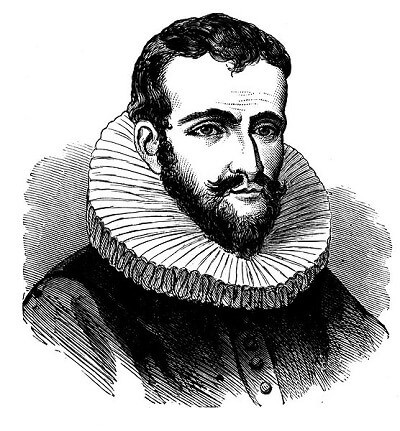
Henry Hudson was an Englishman already known as a bold explorer. In 1609, soon after getting John Smith’s letter and map, Hudson went to Holland and hired himself to the Dutch East India Company. This company sent him out with a little yacht, called the Half-Moon, manned by twenty sailors, to find a passage to China, by going around the north coast of Europe. But he found the sea in that direction so full of ice that he was obliged to give up the attempt to get to China in that way. So, remembering John Smith’s map, he set sail for America.

Henry Hudson

Hudson sailed as far to the south as the entrance to the Chesapeake, and then explored the coast to the northward. He went into Delaware Bay, and afterward into New York Harbor. In hope of finding a way to the East Indies, he kept on up the river, which we now call Hudson River, for eleven days. But when he had gone nearly as far as to the place where Albany is now, Hudson became satisfied that the road to China did not lie there, and so he sailed down and returned to Europe.

Though Hudson was an Englishman, he made this voyage for the Dutch, and the very next year the Dutch merchants began a fur trade with the American Indians on this river that Hudson had discovered. In the year that followed (1611) they explored the coast northeastward beyond Boston Harbor, and to the southward they sailed into the Delaware River, claiming all this country, which was then without any inhabitants but American Indians. They called this territory New Netherland. Netherland is another name for what we call Holland.

The Dutch had built a trading post, called a “fort,” at what is now Albany, and perhaps others like it elsewhere, but they did not send out a colony until 1623. Then two principal settlements were made, the one at Albany, the other at Wallabout, now part of Brooklyn. But the island of Manhattan, on which New York now stands, had been the center of their trade, and it soon became the little capital of the colony. The town which grew about the fort that stood at the south end of what is now New York city, was called by the Dutch New Amsterdam, after the principal city of Holland, their own country.

The Dutch also had settlements on the Connecticut River and on the Delaware River. But on the Connecticut River they got into trouble with the English settlers, who claimed the whole of that country. On the Delaware River the Dutch had trouble with some Swedes, who had planted a colony there in 1638. This colony the Swedes called New Sweden, just as the Dutch called theirs New Netherland, and as the English called their northern colonies New England, while the French named their settlements in Canada New France. After a great deal of quarreling between the Swedes and Dutch, the Dutch governor, Peter Stuyvesant, in 1655, mustered a little fleet with six or seven hundred men, and, sailing to the Delaware River, captured New Sweden.

But the English at this time claimed that all the territory between Virginia and New England belonged to England. They said that all that coast had been discovered by Cabot for Henry VII more than a century and a half before. In 1664, in time of peace, four English ships appeared in the harbor of New Amsterdam and demanded its surrender. Stout old Peter Stuyvesant, the lame governor who had ruled in the Dutch colonies for many years, resolved to fight. But the city was weak and without fortifications, and the people, seeing the uselessness of contending against the ships, persuaded Stuyvesant to surrender. The name New Amsterdam was immediately changed to New York, the whole province having been granted to the Duke of York.

At the time of the surrender New York city had but fifteen hundred people, most of them speaking the Dutch language. Today there are nearly a thousand times as many people in New York city. Many thousands of the people of New York and many in other States have descended from the first Dutch settlers and bear the old Dutch names. The Dutch settlers were generally industrious, frugal, and religious.

HENRY HUDSON

The time of Hudson’s birth is not known. Nor is anything known of the early voyages by which he became famous. In 1607, in the employ of an English company, he undertook to find the much-desired route to China by sailing straight across the north pole. He failed, of course, though he got farther north than any other voyager had done. In the next year, 1608, for the same company, he tried to find a passage to the East Indies by sailing to the northeast. He did not succeed, but he sets down in his journal that some of his company saw one day a mermaid, with a body like a woman and a tail like a porpoise. Intelligent people believed in such monsters in that day. In the next year Holland and France both tried to secure Hudson’s services. It is told in the text how, in this voyage in the Half-Moon, he discovered the great river of New York for the Dutch. In the year following he tried to find a way to China by the northwest, but, while sailing in what is now called Hudson Bay, part of his crew rose against him, and, putting Hudson and some of his men into an open boat, sailed away, leaving them to perish.

 Other Discoveries in America

Americus Vespucius was born in Florence in 1451. He went into mercantile life at Florence, and afterward removed to Spain a little before Columbus sailed on his first voyage. Vespucius claimed to have made four voyages to the New World, the first in 1497. But it is now believed that this first date is not correct, and that Vespucius was in Spain during all of that year. He undoubtedly went to America several times, both from Spain and Portugal. In 1503 Vespucius built a fort on the coast of what is now Brazil; and he left there a little colony, the first in that part of South America. Ferdinand of Spain made him pilot-major of his kingdom in 1508, and he died in 1512.

A part of the glory of Columbus’s great discovery was taken away from him by accident. An Italian, Amerigo Vespucci [am-a-ree’-go ves-poot’-chee], whose name in Latin was written Amer’icus Vespu’cius, was with an expedition that discovered part of South America in 1499. A false claim was made, indeed, that Americus saw that continent two years earlier, which would be before Columbus discovered it in 1498. Americus Vespucius wrote pleasantly about the new lands which he had seen, and some German geographers were so pleased with his descriptions that they called the country America, in honor of Americus, supposing him to have first seen the continent. When North America came to be placed on the maps, this name was applied to it also. Thus, nearly half the world goes by the name of a man who had no claim to be called its discoverer.

Americus Vespucius’ by Cristofano dell’Altissimo

The voyage of Columbus was undertaken, as we have seen, to open a trade with the Spice Islands of Asia, and the failure to find these was disappointing. There was another great Italian navigator living at the same time as Columbus, whose name was Zuan Cab-ot’-o. He is called in English John Cab’-ot. He had been in the city of Mecca, in Arabia, and had there seen the caravans bringing spices from India. He inquired of the people of these caravans where they got their spices. They said that other caravans brought them to their country, and that the people in those caravans said that they bought them from people who lived yet farther away. From all this John Cabot concluded that the spices so much valued in Europe must grow in the most easterly part of Asia, and that he could reach this part of Asia by sailing to the west, as Columbus had done.

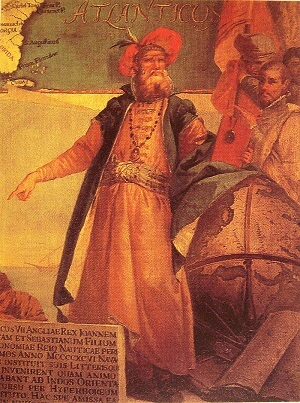
John Cabot’ by Giustino Menescardi

The King of England at this time was Henry VII. While Columbus was trying to persuade Ferdinand and Isabella to send him on a voyage of discovery, he had sent his brother, Bartholomew Columbus, to make a like offer to the English king. When Bartholomew returned to Spain with King Henry VII’s answer, Christopher Columbus had already discovered the New World.

But though Columbus had found what he believed to be a part of Asia, he had not found the region of gold and spices. John Cabot, who was then living in England, believed that he might be more fortunate. He got permission from Henry VII to sail at the expense of certain English merchants, and in May 1497, nearly five years after Columbus had started on his first voyage, Cabot set sail from Bristol with only one small vessel and eighteen persons. He discovered the Continent of North America, which he of course supposed to be a part of Asia. He did not meet any American Indians, but he brought to King Henry one of their traps for catching game, and a needle for making nets. He was received with great honor, and he who had gone away a poor Venetian pilot was now called “the Great Admiral,” and dressed himself in silks, after the manner of great men of that time.

The next year, accompanied by his son Sebastian, he set sail with a much larger expedition, to find his way to Japan or China. After going far to the north, he sailed along what is now the coast of Canada and the United States as far to the south as North Carolina. But, as he did not find the riches of Asia, the English appear to have lost much of their interest in Western voyages.

After both Columbus and John Cabot were dead, people began to suspect that the newly discovered lands were not part of Asia. In 1513 Vasco Nunez de Balboa [vas’-co noon-yeth deh bal-bo’-ah] crossed the Isthmus of Panama [pan-ah-mah’] and discovered the Pacific Ocean at the west of America.

It now became a question of finding a way through or around America, so as to come to the rich trade of the East Indies, which the Portuguese had reached in 1498, when Vasco da Gama [vas’-co dah gah’-mah] sailed there around the Cape of Good Hope. In 1520 Magellan [ma-jel’-lan], a Portuguese in the employ of Spain, sailed through the straits which bear his name, and so into the Pacific. It was not then known that one could pass around Cape Horn. Magellan lost his life in the Philippine Islands, but one of his smallest ships succeeded in making- the circuit of the earth – the first that ever accomplished that feat.

Magellan’s route was too long a course for trade, and many other navigators sailed up and down the American coast, expecting to find some passage by which they could get through the continent to go to China, India, and Japan, They thought America very narrow, and, indeed, they believed that it might prove to be cut through in some places by straits, if they could only find them. Several great English navigators tried to discover what they called the Northwest Passage, by sailing along the coast of Labrador. and into the rivers and bays of America.

For a long time nobody in England thought it worthwhile to send colonies to North America; it was regarded only as a bar to all attempts to reach Asia by the west. The colonists sent from Spain having found gold in great quantities in Mexico and South America, the English at length began to think of settling colonies in North America, to look for gold there also. Frobisher and Sir Humphrey Gilbert, in” the time of Queen Elizabeth, proposed to settle such colonies, but it was not until Sir Walter Raleigh undertook it that a hopeful beginning was made.

JOHN CABOT

John Cabot, or Zuan Caboto, as he was called in the Venetian dialect, was probably born in Genoa, but he was naturalized in Venice. He was living in Bristol, in England, with his wife and three sons, in 1495, when he laid his plans before Henry VII. He received a charter for discovery from that king in 1496, in which his three sons were named, and he sailed on his first voyage in 1497, and the second in 1498. It is probable that his son Sebastian went with him on both voyages. There is no account of John Cabot’s second return, nor do we know any more about him after his sailing to America the second time. His son Sebastian, who was a great geographer, and who lived to be very old, seems to have always spoken of the voyages as though he had made them alone, but we now know that it was John Cabot who discovered North America.

FERNANDO DA MAGALHAENS

Fernando da Magalhaens [mah-gal-yah’-ens], as his name is written and pronounced in Portuguese, but who is known in English as Magellan, was born in Portugal. He served the Portuguese government in the East Indies, and was in the expedition that discovered some of the Spice Islands. Having received a slight from the Portuguese government, he publicly renounced his country and entered the service of the King of Spain. He sailed on his famous voyage in September, 1519, with five ships. On the coast of South America, he lost one of his vessels and suppressed a mutiny. In October, 1520, he entered the straits that bear his name. His men were very reluctant to go on, and one ship turned back out of the channel and sailed home. With the three ships left he entered the Pacific. At the Philippine Islands he was killed in a battle with the natives. Only one of his ships, the Victoria, succeeded in getting around the world, and she had but eighteen men left alive when she got back, and they were sick and almost starving.

Ferdinand Magellan’ by Anonymous

How Columbus Discovered America

Christopher Columbus was born in Genoa, in Italy. The date of his birth is uncertain. His father was a humble wool comber, but Columbus received a fair education. He knew Latin, wrote a good hand, and drew maps exceedingly well. He sometimes supported himself by making maps and charts. He was well informed in geography as it was then understood. At fourteen he went to sea, and before he sailed on his great voyage, he had been almost all over the known world. He had gone some distance down the newly discovered coast of Africa, with the Portuguese, and north as far as Iceland. Columbus married the daughter of a Portuguese navigator, and came into possession of his charts. He was a man of great perseverance, and he held to his idea of sailing to the west through many long years of discouragement. He made four voyages to America, setting out on the first in 1492, the second in 1493, the third in 1498, and the fourth in 1502. Though a great navigator, he was not a wise governor of the colonies he planted, and he had many enemies. In 1500 he was cruelly sent home to Spain in chains. But Ferdinand and Isabella, as well as the people, were shocked at this degradation, and he was at once set free. His last voyage was unfortunate, and when he returned to Spain, in November, 1504, the monarchs paid little attention to him. Queen Isabella died soon after his return, while Columbus lay sick, and when the great navigator came to court the king was deaf to his petitions. Worn out with fatigue, exposure, and anxiety, the great admiral died on the 20th of May, 1506.

It is now about four hundred years since Columbus discovered America. Before that time people in Europe knew nothing of any lands on the western side of the Atlantic. Trade with India was carried on by caravans, and travelers who had gone to China and Japan brought back wonderful stories of the riches of their cities, and of the curious people who lived in those far-away countries. In order to reach these lands of wonder and to open a trade with India by sea, the Portuguese had been for a long time pushing their discoveries down the western coast of Africa. But the seamen of that time sailed mostly in the Mediterranean, and they were timid in the Atlantic Ocean. The Portuguese sent out expedition after expedition, for seventy years, before they succeeded in discovering the Cape of Good Hope, and they had not yet got around that cape when Columbus offered to find a new and shorter way to India.

As learned men already believed the world to be round, Columbus asked: Why try to get to India and China by going around Africa? Why not sail straight to the west around the world to Asia? He did not know that America was in the way, and he thought that the world was smaller than it is, and he believed that he could reach the rich lands of gold and spices in Asia by sailing only two or three thousand miles to the westward. So that Columbus discovered America in consequence of two mistakes.

He first offered to make this discovery for the city of Genoa, in which he was born. Then he offered his plan to the King of Portugal. By a voyage on the great Atlantic Ocean seemed a dreadful thing in those days. It was called the “Sea of Darkness,” because no one knew anything about it and people believed that it was inhabited by hideous monsters. As the world was round, some thought that, if a ship sailed down the sides of it, it would find it impossible to get back tip again. They said that people could not live on the other side of the world because they would be upside down.

The King of Portugal was an enlightened man, and the ideas of Columbus made an impression on him after a while. But he did not like to grant the great rewards demanded by the navigator if he should find land; so he secretly sent out a ship under another commander to sail to the westward and see if there was any land there. The sailors on this ship were easily discouraged, and they returned laughing at Columbus and his notions. When Columbus found that he had been cheated, he left Portugal to offer his idea to the King and Queen of Spain, the celebrated Ferdinand and Isabella. The Spanish monarchs were very busy in their war with the Moors, and Columbus, who was poor and obscure, spent about seven years in trying to persuade them to furnish him ships and sailors. At length, after he had waited so long, they refused his terms, and he set out for France, but certain officers of Queen Isabella, who believed in Columbus’s theory, persuaded her to call him back and to send him on his own terms.

Columbus, King Ferdinand, and Queen Isabella

Columbus sailed from Spain, with three small vessels, on the 3rd of August, 1492, and was more than two and his discovery months on the voyage. The sailors were more and more frightened as they found themselves going farther and farther out of the known world. They sometimes threatened to pitch Columbus overboard and return. He kept their courage up by every means he could think of, even by concealing from them how far they had come. One night, Columbus saw a light, and at two o’clock the next morning, which was the 12th of October, 1492, a sailor on one of the vessels raised the cry “Land!” There was the wildest joy on the ships. Those who had hated Columbus, and wished to kill him, now reverenced him.

Instead of finding the rich cities of Asia, Columbus had come upon one of the smallest of the West India islands, which was inhabited by people entirely naked, and living in the rudest manner. He afterward discovered larger islands, and then sailed homeward.

He carried with him some gold and some of the inhabitants of the islands. He was received by Ferdinand and Isabella with the greatest honor. They even made him sit down in their presence, a favor never shown except to the greatest grandees. The people who had believed him a fool when he went away, followed him with cheers as he walked along the street.

Columbus, in his second voyage to America, planted a colony on the island of Hispaniola, or Haiti. In this and in two other voyages he discovered other islands and a portion of the coast of South America, which he first saw in 1498. He never knew that he had found a new world, but lived and died in the belief that the large island of Cuba was a part of the mainland of Asia.

DISCOVERIES BEFORE COLUMBUS

There is some reason to believe that America may have been visited from Europe before the time of Columbus. The inhabitants of Scandinavia (the country now divided into Denmark, Sweden, and Norway) were known as Norsemen. In the old romantic tales of Scandinavia there are stories which go to show that these Norsemen, under the command of Leif, the son of Eric, in the year 1001, and afterward, probably explored the coast of America from Labrador southward for some distance. Fanciful theories have been built on these stories, such as the notion that the old stone windmill at Newport, R. I., is a tower built by the Norsemen. There is also a tradition in Wales that one Madoc, a Welsh prince, in the year 1170, discovered land to the west of Ireland, and took a colony thither, which was never heard of afterward. If these stories of Leif and Madoc represent real voyages, the discoveries which they relate would probably never have been recalled to memory if Columbus had not opened a wide door at the right moment.

‘Leif Erikson Discovers America’ by Christian Krohg

The Great Charter of Virginia

The Great Charter of Virginia

During all the early years of the Virginia colony the people were fed and clothed out of a common stock of provisions. They were also obliged to work for this stock. No division was made of the land, nor could the industrious man get any profit by his hard work. The laziest man was as well off as the one who worked hardest, and under this arrangement men neglected their work, and the colony was always poor. The men had been promised that after five years they should have land of their own and be free, but this promise was not kept. In 1614 Sir Thomas Dale gave to some who had been longest in Virginia three acres of ground apiece, and allowed them one month in the year to work on their little patches. For this they must support themselves and give the rest of their work to the common stock. This arrangement made them more industrious. But the cruel military laws put in force by the governor made Virginia very unpopular.

Argall, who came after Dale, governed very badly, and the colony was almost ruined. In 1618 many new emigrants were sent, and Lord De la Warr was again sent as governor, but he died on the way. The “Virginia Company,” of London, which had the government of the colony in November, 1618, granted to Virginia a “Great Charter,” under which the people of the colony were allowed a voice in making their own laws. This was the beginning of free government in America. Under this charter the government of Virginia was put into the hands of a governor, a “council of estate,” and a “general assembly.” The other American colonies afterward took pattern from this threefold government.

The government of the United States by a president, a senate, and a house of representatives shows that the ideas put into the Great Charter have left their mark on the constitution of our country. The governments of all our States also show traces of the same idea. Each State has a governor, a senate, and a house of representatives. So that the plan arranged in 1618 for a few hundred people in Virginia was a tiny stream that has spread out into a great river.

The Great Charter also gave the people of Virginia the right to divide the land into farms, and to own and work ground each for himself. When the new governor, Sir George Yeardley, got to Virginia in the spring of 1619, bringing this good news that the settlers were to live under laws of their own making, and were to enjoy the fruits of their own labors, they thought themselves the happiest people in the world.

About this time it was thought that the colony would be more firmly planted if the colonists had wives. Young women were therefore sent out to be married to the settlers. But, before any man could marry one of these, he was obliged to gain her consent, and to pay the cost of her passage, which was about a hundred and fifty pounds of tobacco. This venture proved very satisfactory to the Virginians, and women were therefore sent for wives from time to time for years afterward. When the colonists had land of their own, they felt themselves at home in America, and no longer thought of going back to England.

Before this there had been a good many small wars and troubles of one kind or other with the American Indians. But, as the American Indians had few firearms, the settlers could easily defend themselves. After 1619 many efforts were made to change and convert the American Indians. Money was given to educate their children, and a college was planned for them. One ambitious American Indian brave, whom the settlers called “Jack of the Feather,” and who was believed to be proof against bullets, was suspected of wishing war. At length he killed a settler, and the settler’s servants, in trying to take him to the governor, shot him. The American Indians did not show any resentment at his death at first, and O-pe-chan’-ka-no, who had become head chief on the death of Powhatan, said that the sky might fall sooner than he would break the peace.

But on the 22nd of March, 1622, while the men of the colony were in the fields, the American Indians suddenly fell on the settlements, killing the colonists mostly with their own axes, hatchets, and hoes. Three hundred and forty-seven men, women, and children were killed in a single day. One American Indian lad, living in a settler’s house, had given warning during the night before, and some of the settlements had time to prepare themselves for defense. From this time on there was almost continual war with the American Indians for many years.

In 1624 the Virginia Company, of London, was dissolved, and the colony was put under the government of the king. But the king, James I, when he put down the company, promised to the colony all the liberties which they then enjoyed. This promise was not well kept by his successors in after-years; the Virginians were often oppressed by the governors sent to them, but the right to pass laws in the General Assembly was never taken away.

The Spanish in Florida and the French in Canada


The English were not the only people who had colonies in North America. The Spaniards, who claimed the whole continent, had planted a colony at Saint Au’-gus-tine, in Florida, in 1565, forty-two years before the first English colony Jamestown. Saint Augustine is thus the oldest city in the United States. But the Spaniards were too busy in Mexico and in Central and South America to push their settlements farther to the north, though they were very jealous of the English colonies, and especially of South Carolina and Georgia.

English Privateers Attack St. Augustine


The French laid claim also to a large part of North America. They tried to plant a colony in Canada in 1549, and afterward made some other attempts that failed. Quebec [kwebec’] was founded by a great French explorer, Champlain, in 1608, the very year after the English settled at Jamestown. At Quebec the real settlement of Canada was begun, and it was always the capital of the vast establishments of the French in America.

The French, like the English, were trying to find the Pacific Ocean, and they were much more daring in their explorations than the English colonists, whose chief business was farming. A French explorer named Joliet [zhol-yay] reached the Mississippi in 1673, and another Frenchman, La Salle [lah-sahl], explored the great country west of the Alleghany Mountains, and discovered the Ohio. After many disasters and failures, La Salle succeeded in reaching the mouth of the Mississippi. Father Hennepin, a priest, explored the upper Mississippi. The French then laid claim to all the country west of the Alleghanies. Over the region they established posts and mission-houses, while the English contented themselves with multiplying their farming settlements east of the mountains.

When La Salle reached the mouth of the Mississippi, he took possession of the country in the name of Louis XIV., and called it Louisiana, in honor of that king. The settlement of Louisiana was begun in 1699. The French held the St. Lawrence and the Mississippi, the two great water-ways of North America, and they controlled most of the American Indian tribes by means of missionaries and traders. They endeavored to connect Canada and Louisiana by a chain of fortified posts, and so to hold for France an empire, in the heart of America, larger than France itself.

But the weakness of the French in America lay in the fewness of their people. Canada, the oldest of their colonies, was in a country too cold to be a prosperous farming country in that day. Besides, its growth was checked by the system of lordships with tenants, which some of the English colonies had also tried. But inferior as the French were in numbers, they were strong in their military character; they were almost all soldiers. The English were divided into colonies, and could never be made to act together; but the French, from Canada to the Mississippi, were absolutely subjected to their governors.

The French influenced and leveraged the American Indians to push back against the English colonies. The great business of the French in Canada was the fur trade, and this was pushed with an energy that quite left the English traders behind. The French drew furs from the shores of Lake Superior and from beyond the Mississippi. The French traders gained great influence over the American Indians. The English treated the American Indians as inferiors, the French lived among them on terms of equality. The French also gained control of the American Indian tribes by means of missionary priests, who risked their lives and spent their days in the dirty cabins of the American Indians to convert them to European religions. The powerful Iroquois confederacy, known as the “Five Nations,” and afterward as the “Six Nations,” sided with the English, and hated and killed the French. They lived in what is now the State of New York. But the most of the tribes were managed by the French, who sent missionaries to convert them, ambassadors to flatter them, gunsmiths to mend their arms, and military men to teach them to fortify, and to direct their attacks against the settlements of the English.
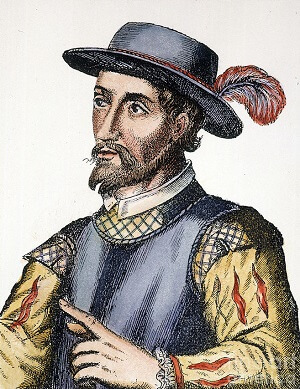
‘Engraving of Juan Ponce de León’
The wars between the French colony in Canada and the English colonies in what is now the United States were caused partly by wars between France and England in Europe. But there were also causes enough for enmity in the state of affairs on this side of the ocean. First, there was always a quarrel about territory. The French claimed that part of what is now the State of Maine which lies east of the Kennebec River, while the English claimed to the St. Croix. The French also claimed all the country back of the Alleghanies. With a population not more than one twentieth of that of one of the English colonies, they spread their claim over all the country watered by the lakes and the tributaries of the Mississippi, including more than half of the present United States. Second, both France and England wished to control the fisheries of the eastern coast. Third, both the French and the English endeavored to get the entire control of the fur trade. To do this the French tried to win the Iroquois Confederacy to their interest, while the English sought to take the trade of the Western tribes away from the French. Fourth, the French were Catholics and the English mostly Protestants. In that age men were very bigoted about religion, and hated and feared those who differed from them.

SPANISH DISCOVERIES IN FLORIDA

Ponce de Leon [pon’-thay day lay-on; commonly in English, ponss deh lee’-on], an old Spanish explorer, set sail in 1513 from the island of Puerto Rico, to discover a land reported to lie to the northward of Cuba, and which had somehow come to be called Bimini [bee-mcc-nee]. It was said to contain a fountain, by bathing in which an old man would be made young again. On Easter Sunday Ponce discovered the mainland, which he called Florida, from Pascua Florida [pas’-kwah floree’- dah], the Spanish name for Easter Sunday. In 1521 Ponce tried to settle Florida, but his party was attacked and he was mortally wounded by the American Indians. Florida was then believed to be an island. After his death, other Spanish adventurers explored the coast from Labrador southward, and even tried to find goldmines, and plant colonies in the interior of the country. The most famous of these expeditions was that of Hernando de Soto [aer-nan’-do day so’-to], a Spanish explorer, who reached Florida in 1539. He marched through Georgia, Alabama, and Mississippi. He was determined to find some land yielding gold, like Mexico and Peru. But he treated the American Indians cruelly, killing some of them wantonly, and forcing others to serve him as slaves. The American Indians, in turn, attacked him again and again, until his party was sadly reduced. De Soto tried to descend the Mississippi River to the Gulf of Mexico, but at the mouth of the Red River he died of a fever. His body was buried m the Mississippi, to keep the American Indians from disfiguring it in revenge. A few of his followers reached the Gulf and got to the Spanish settlements in Mexico.

Life in the Colonial Time


When people first came to this country, they had to take up with such houses as they could get. In Virginia and New England, as in New York and Philadelphia, holes were dug in the ground for dwelling places by some of the first settlers. In some places bark wigwams were made, like those of the American Indians. Sometimes a rudimentary cabin was built of round logs, and without a floor. As time advanced, better houses were built. Some of these were of hewed logs, some of planks, split, or sawed out by hand. The richer people built good houses soon after they came. Most of these had in the middle a large room, called “the hall.”

The chimneys were generally very large, with wide fireplaces. Sometimes there were seats inside the fireplace, and children, sitting on these seats in the evening, amused themselves by watching the stars through the top of the chimney. In the early houses most of the windows had paper instead of glass. This paper was oiled, so as to let light come through.

Except in the houses of rich people the furniture was scant and rough. Benches, stools, and tables were home-made. Beds were often filled with mistletoe, the down from cattail flags, or the feathers of wild-pigeons. People who were not rich brought their food to the table in wooden trenchers, or trays, and ate off wooden plates. Some used square blocks of wood instead of plates. Neither rich nor poor, in England or America, had forks when the first colonies were settled. Meat was cut with a knife and eaten from the fingers. On the tables of well-to-do people pewter dishes were much used, and a row of shining pewter in an open cupboard, called a dresser, was a sign of good housekeeping. The richest people had silverware for use on great occasions. They also had stately furniture brought from England. But carpets were hardly ever seen. The floor of the best room was strewed with sand, which was marked off in ornamental figures. There was no wall-paper until long after 1700, but rich cloths and tapestry hung on the walls of the finest houses.

Cooking was done in front of fireplaces in skillets and on griddles that stood upon legs, so that coals could be put under them, and in pots and kettles that hung over the fire on a swinging crane, so that they could be drawn out or pushed back. Sometimes there was an oven, for baking, built in the side of the chimney. Meat was roasted on a spit in front of the fire. The spit was an iron rod thrust through the piece to be roasted, and turned by a crank. A whole pig or fowl was sometimes hung up before the fire and turned about while it roasted. Often pieces of meat were broiled by throwing them on the live coals.

‘Still Life with Mince (Eel) Pie’ by Pieter Claesz


A mug of home-brewed beer, with bread and cheese, or a porridge of peas or beans, boiled with a little meat, constituted the breakfast of the early colonists. Neither tea nor coffee was known in England or this country until long after the first colonies were settled. When tea came in, it became a fashionable drink, and was served to company from pretty little china cups, set on lacquered tables. Mush, made of Indian-corn meal, was eaten for supper.

In proportion to the population, more wine and spirits were consumed at that time than now. The very strong Madeira wine was drunk at genteel tables. Rum, which from its destructive effects was known everywhere by the nickname of “kill-devil,” was much used then. At every social gathering rum was provided. Hard cider was a common drink. There was much drunkenness. Peach-brandy was used in the Middle and Southern colonies, and was very ruinous to health and morals.

People of wealth made great display in their dress. Much lace and many silver buckles and buttons were worn. Workingmen of all sorts wore leather, deerskin, or coarse canvas breeches. The stockings worn by men were long, the breeches were short, and buckled, or otherwise fastened, at the knees.

Our forefathers traveled about in canoes and little sailing-boats called shallops. Most of the canoes would hold about six men, but some were large enough to hold forty or more. For a long time, there were no roads except the trails and bridle paths created by the American Indians, which could only be traveled on foot or on horseback. Goods were carried on packhorses. When roads were made, wagons came into use.

In a life so hard and busy as that of the early settlers, there was little time for education. The schools were few and generally poor. Boys, when taught at all, learned to read, write, and “cast accounts.” Girls were taught even less. Many of the children born when the colonies were new grew up unable to write their names. There were few books at first, and no newspapers until after 1700. There was little to occupy the mind except the Sunday sermon.

In all the colonies people were very fond of dancing parties. Weddings were times of great excitement and often of much drinking. In some of the colonies wedding festivities were continued for several days. Even funerals were occasions of feasting, and sometimes of excessive drinking In the Middle and Southern colonies the people were fond of horseracing, cock-fighting, and many other cruel sports brought from England. New England people made their militia-trainings the occasions for feasting and amusement, fighting sham battles, and playing many rough, old-fashioned games. Coasting on the snow, skating, and sleighing were first brought into America from Holland by the Dutch settlers in New York. In all the colonies there was a great deal of hunting and fishing. The woods were full of deer and wild turkeys. Flocks of pigeons often darkened the sky, and the rivers were alive with waterfowl and fish.

 The Coming of the Puritans

Before the Pilgrims had become comfortably settled in their new home, other English people came to various parts of the New England coast to the northward of Plymouth. About 1623, a few scattering immigrants, mostly fishermen, traders with the American Indians, and timber-cutters, began to settle here and there along the sea about Massachusetts Bay, and later came to the colonies of New Hampshire and Maine.

‘Puritans Going to Church’ by George Henry Boughton


We have seen in the preceding chapter that the Pilgrims belonged to that party which had separated itself from the Church of England, and so got the name of Separatists. But there were also a great many people who did not like the ceremonies of the established church, but who would not leave it. These were called Puritans, because they sought to purify the Church from what they thought to be wrong. They formed a large part of the English people, and at a later time, under Oliver Cromwell, they got control of England. But at the time of the settlement of New England the party opposed to the Puritans was in power, and the Puritans were persecuted. The little colony of Plymouth, which had now got through its sufferings, showed them a way out of their troubles. Many of the Puritans began to think of emigration.

In 1628, when Plymouth had been settled almost eight years, the Massachusetts Company was formed. This was a company like the Virginia Company that had governed Virginia at first. The Massachusetts Company was controlled by Puritans, and proposed to make settlements within the territory granted to it in New England. The first party sent out by this company settled at Salem in 1628. Others were sent the next year.

But in 1630 a new and bold move was made. The Massachusetts Company resolved to change the place of holding its meetings from London to its new colony in America. This would give the people in the colony, as members of the company, a right to govern themselves. When this proposed change became known in England, many of the Puritans desired to go to America.
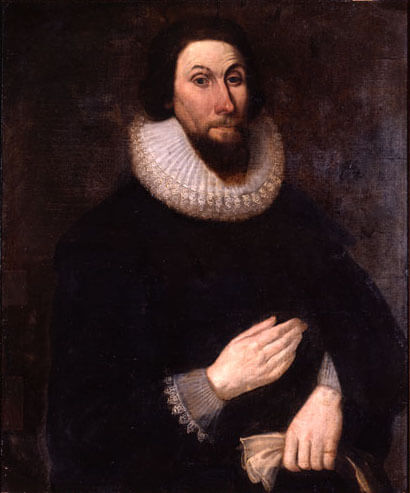
‘Portrait of Governor John Winthrop’ by Anthony van Dyck
John Winthrop, the new governor, set sail for Massachusetts in 1630, with the charter and about a thousand people, Winthrop and a part of his company settled at Boston, and that became the capital of the colony. No colony was settled more rapidly than Massachusetts. Twenty thousand people came between 1630 and 1640, though the colony was troubled for a while by bitter disputes among its people about matters of religion and by a war with the Pequot Indians.

Some of the Puritans in Massachusetts were dissatisfied with their lands. In 1635 and 1636 these people crossed Connecticut through the unbroken woods to the Connecticut River, and settled the towns of Windsor, Wethersfield, and Hartford, though there were already trading posts on the Connecticut River. This was the beginning of the Colony of Connecticut. Another colony was planted in 1638 in the region about New Haven. It was made up of Puritans under the lead of the Rev. John Davenport. In 1665 New Haven Colony was united with Connecticut.

In 1636 Roger Williams, a minister at Salem, in Massachusetts, was banished from that colony on account of his peculiar views on several subjects, religious and political. One of these was the doctrine that every man had a right to worship God without interference by the government. Williams went to the head of Narragansett Bay and established a settlement on the principle of entire religious liberty. The disputes in Massachusetts resulted in other settlements of banished people on Narragansett Bay, which were all at length united in one colony, from which came the present State of Rhode Island.

The first settlement of New Hampshire was made at Little Harbor, near Portsmouth, in 1623. The population of New Hampshire was increased by those who left the Massachusetts Colony on account of the religious disputes and persecutions there. Other settlers came from England. But there was much confusion and dispute about land-titles and about government, in consequence of which the colony was settled slowly. New Hampshire was several times joined to Massachusetts, but it was finally separated from it in 1741.

As early as 1607, about the time Virginia was settled, a colony was planted in Maine; but this attempt failed. The first permanent settlement in Maine was made at Pemaquid in 1625. Maine submitted to Massachusetts in 1652, but it afterward suffered disorders from conflicting governments until it was at length annexed to Massachusetts by the charter given to that colony in 1692. It remained a part of Massachusetts until it was admitted to the Union as a separate State, in 1820.

The New England colonies were governed under charters, which left them, in general, free from interference from England. Plymouth, Massachusetts, Connecticut, New Haven, and Rhode Island were the only colonies on the continent that had the privilege of choosing their own governors. In 1684 the first Massachusetts charter was taken away, and after that the governors of Massachusetts were appointed by the king, but under a new charter given in 1692 the colony enjoyed the greater part of its old liberties.


JOHN WINTHROP

John Winthrop, the principal founder of Massachusetts, was born in 1588. He was chosen Governor of the Massachusetts Company, and brought the charter and all the machinery of the government with him to America in 1630. He was almost continually governor until he died in 1649. He was a man of great wisdom. When another of the leading men in the colony wrote him an angry letter, he sent it back, saying that “he was not willing to keep such a provocation to ill-feeling by him.” The writer of the letter answered, “Your overcoming yourself has overcome me.” When the colony had little food, and Winthrop’s last bread was in the oven, he divided the small remainder of his flour among the poor. That very day a shipload of provisions came. He dressed plainly, drank little but water, and labored with his hands among his servants. He counted it the great comfort of his life that he had a “loving and dutiful son.” This son was also named John. He was a man of excellent virtues, and was the first Governor of Connecticut.