A place to grow your relationship with God

Archive for the ‘Poetry’ Category

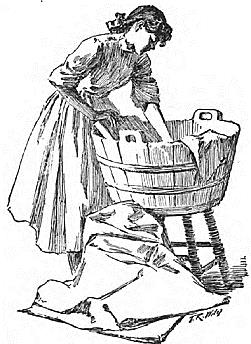
A Song from the Suds by Louisa May Alcott
A Song from the Suds
by: Louisa May Alcott

Queen of my tub, I merrily sing,
While the white foam rises high,
And sturdily wash and rinse and wring,
And fasten the clothes to dry.
Then out in the free fresh air they swing,
Under the sunny sky.

I wish we could wash from our hearts and souls
The stains of the week away,
And let water and air by their magic make
Ourselves as pure as they.
Then on the earth there would be indeed,
A glorious washing day!

Along the path of a useful life,
Will heartsease ever bloom.
The busy mind has no time to think
Of sorrow or care or gloom.
And anxious thoughts may be swept away,
As we bravely wield a broom.

I am glad a task to me is given,
To labor at day by day,
For it brings me health and strength and hope,
And I cheerfully learn to say,
“Head, you may think, Heart, you may feel,
But, Hand, you shall work alway!”
The Star-Spangled Banner

O say can you see, by the dawn’s early light,
What so proudly we hail’d at the twilight’s last gleaming,
Whose broad stripes and bright stars through the perilous fight
O’er the ramparts we watch’d were so gallantly streaming?
And the rocket’s red glare, the bombs bursting in air,
Gave proof through the night that our flag was still there,
O say does that star-spangled banner yet wave
O’er the land of the free and the home of the brave?

On the shore dimly seen through the mists of the deep
Where the foe’s haughty host in dread silence reposes,
What is that which the breeze, o’er the towering steep,
As it fitfully blows, half conceals, half discloses?
Now it catches the gleam of the morning’s first beam,
In full glory reflected now shines in the stream,
’Tis the star-spangled banner – O long may it wave
O’er the land of the free and the home of the brave!

And where is that band who so vauntingly swore,
That the havoc of war and the battle’s confusion
A home and a Country should leave us no more?
Their blood has wash’d out their foul footstep’s pollution.
No refuge could save the hireling and slave
From the terror of flight or the gloom of the grave,
And the star-spangled banner in triumph doth wave
O’er the land of the free and the home of the brave.

O thus be it ever when freemen shall stand
Between their lov’d home and the war’s desolation!
Blest with vict’ry and peace may the heav’n rescued land
Praise the power that hath made and preserv’d us a nation!
Then conquer we must, when our cause it is just,
And this be our motto – “In God is our trust,”
And the star-spangled banner in triumph shall wave
O’er the land of the free and the home of the brave.

Written by Frances Scott Key

When the Frost is on the Pumpkin

By Jame Whitcomb Riley

When the frost is on the punkin and the fodder’s in the shock,
And you hear the kyouck and gobble of the struttin’ turkey-cock,
And the clackin’ of the guineys, and the cluckin’ of the hens,
And the rooster’s hallylooyer as he tiptoes on the fence;
O, it’s then’s the times a feller is a-feelin’ at his best,
With the risin’ sun to greet him from a night of peaceful rest,
As he leaves the house, bareheaded, and goes out to feed the stock,
When the frost is on the punkin and the fodder’s in the shock.

They’s something kindo’ harty-like about the atmusfere
When the heat of summer’s over and the coolin’ fall is here-
Of course we miss the flowers, and the blossums on the trees,
And the mumble of the hummin’-birds and buzzin’ of the bees;
But the air’s so appetizin’; and the landscape through the haze
Of a crisp and sunny morning of the airly autumn days
Is a pictur’ that no painter has the colorin’ to mock-
When the frost is on the punkin and the fodder’s in the shock.

The husky, russel of the tossels of the corn,
And the raspin’ of the tangled leaves, as golden as the morn;
The stubble in the furries-kindo’ lonesome-like, but still
A-preachin’ sermuns to us of the barns they growed to fill;
The strawstack in the medder, and the reaper in the shed;
The hosses in theyr stalls below-the clover over-head!-
O, it sets my hart a-clickin’ like the tickin’ of a clock,
When the frost is on the punkin and the fodder’s in the shock!

Then your apples all is gethered, and the ones a feller keeps
Is poured around the celler-floor in red and yeller heaps;
And your cider-makin’ ‘s over, and your wimmern-folks is through
With their mince and apple-butter, and theyr souse and saussage, too! …
I don’t know how to tell it-but ef sich a thing could be
As the Angels wantin’ boardin’, and they’d call around on me-
I’d want to ‘commodate ’em-all the whole-indurin’ flock-
When the frost is on the punkin and the fodder’s in the shock!

The Boatman

“Ferry me across the water,
Do, boatman, do.”
“If you’ve a penny in your purse
I’ll ferry you.”


“I have a penny in my purse,
And my eyes are blue;
So, ferry me across the water,
Do, boatman, do!”


“Step into my ferry-boat,
Be they black or blue,
And for the penny in your purse
I’ll ferry you.”

by: Christina Georgina Rossetti

A Psalm of Life by Henry Wadsworth Longfellow

A Psalm of Life

By Henry Wadsworth Longfellow

What The Heart Of The Young Man Said To The Psalmist.

Tell me not, in mournful numbers,

   Life is but an empty dream!

For the soul is dead that slumbers,

   And things are not what they seem.

Life is real! Life is earnest!

   And the grave is not its goal;

Dust thou art, to dust returnest,

   Was not spoken of the soul.

Not enjoyment, and not sorrow,

   Is our destined end or way;

But to act, that each to-morrow

   Find us farther than to-day.

Art is long, and Time is fleeting,

   And our hearts, though stout and brave,

Still, like muffled drums, are beating

   Funeral marches to the grave.

In the world’s broad field of battle,

   In the bivouac of Life,

Be not like dumb, driven cattle!

   Be a hero in the strife!

Trust no Future, howe’er pleasant!

   Let the dead Past bury its dead!

Act,— act in the living Present!

   Heart within, and God o’erhead!

Lives of great men all remind us

   We can make our lives sublime,

And, departing, leave behind us

   Footprints on the sands of time;

Footprints, that perhaps another,

   Sailing o’er life’s solemn main,

A forlorn and shipwrecked brother,

   Seeing, shall take heart again.

Let us, then, be up and doing,

   With a heart for any fate;

Still achieving, still pursuing,

   Learn to labor and to wait.

Notes: ‘A Psalm of Life’ is about working hard and making an impact.

The poem also says your efforts may inspire those that follow you to achieve even greater things.

Mother Goose: Mary’s Canary

MARY’S CANARY
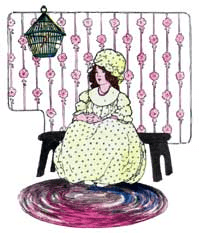
Mary had a pretty bird,
  Feathers bright and yellow,
Slender legs–upon my word
  He was a pretty fellow!

The sweetest note he always sung,
  Which much delighted Mary.
She often, where the cage was hung,
  Sat hearing her canary.

Mother Goose: Mary, Mary, Quite Contrary

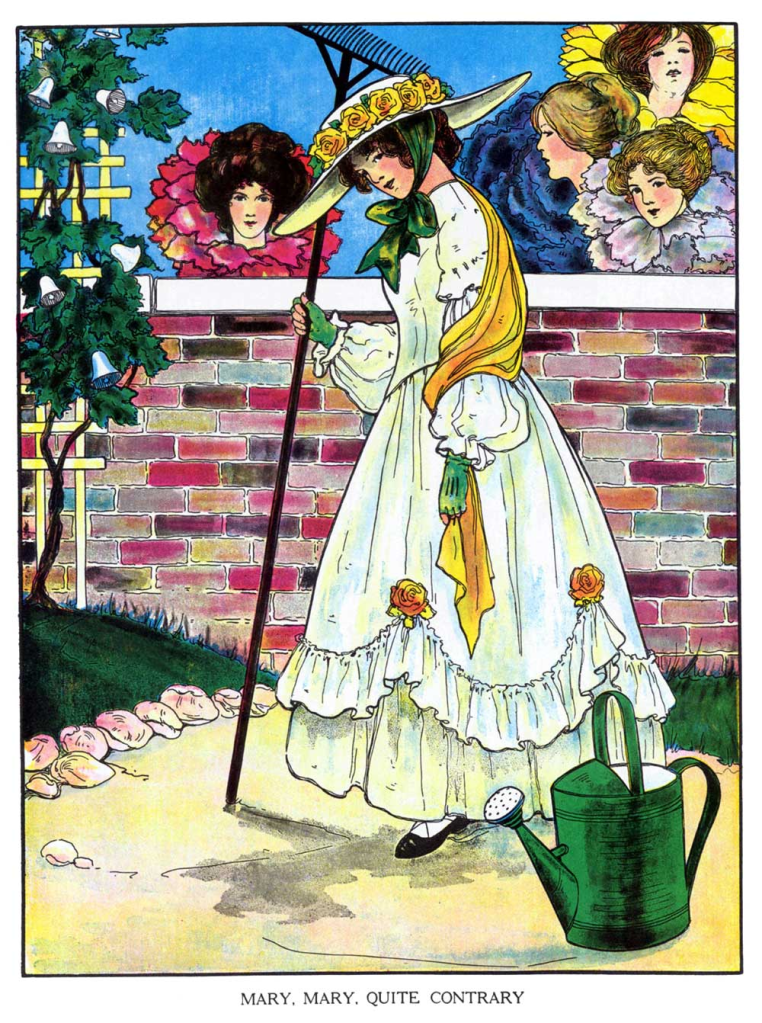
MARY, MARY, QUITE CONTRARY
Mary, Mary, quite contrary,
  How does your garden grow?
Silver bells and cockle-shells,
  And pretty maids all of a row.

Mother Goose: Little Jack Horner

LITTLE JACK HORNER
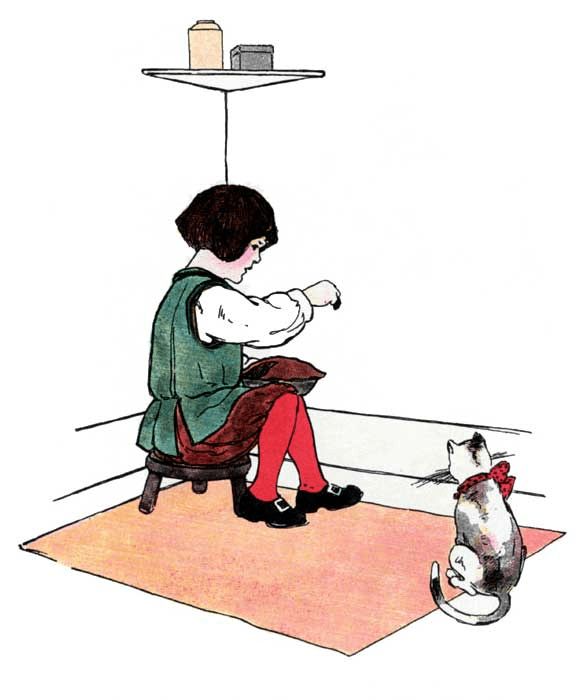
Little Jack Horner
Sat in the corner,
    Eating of Christmas pie:
He put in his thumb,
And pulled out a plum,
    And said, “What a good boy am I!”

Mother Goose: As I was Going Along

AS I WAS GOING ALONG

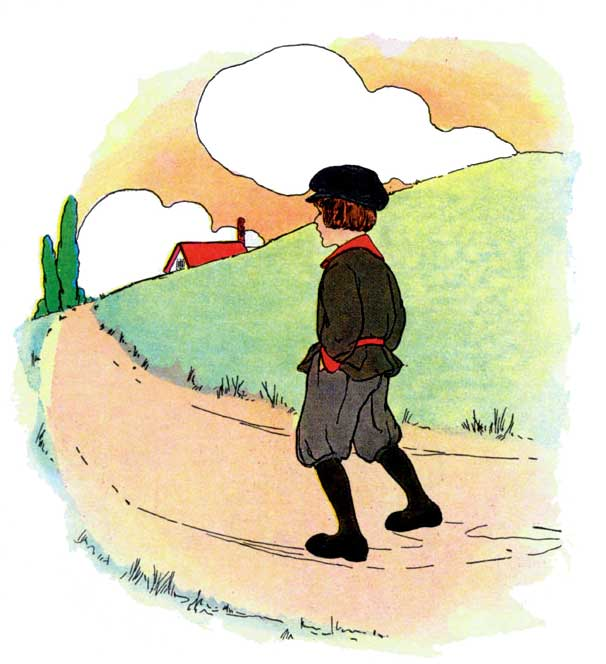
As I was going along, along,
A-singing a comical song, song, song,
The lane that I went was so long, long, long,
And the song that I sang was so long, long, long,
And so, I went singing along.

William Blake

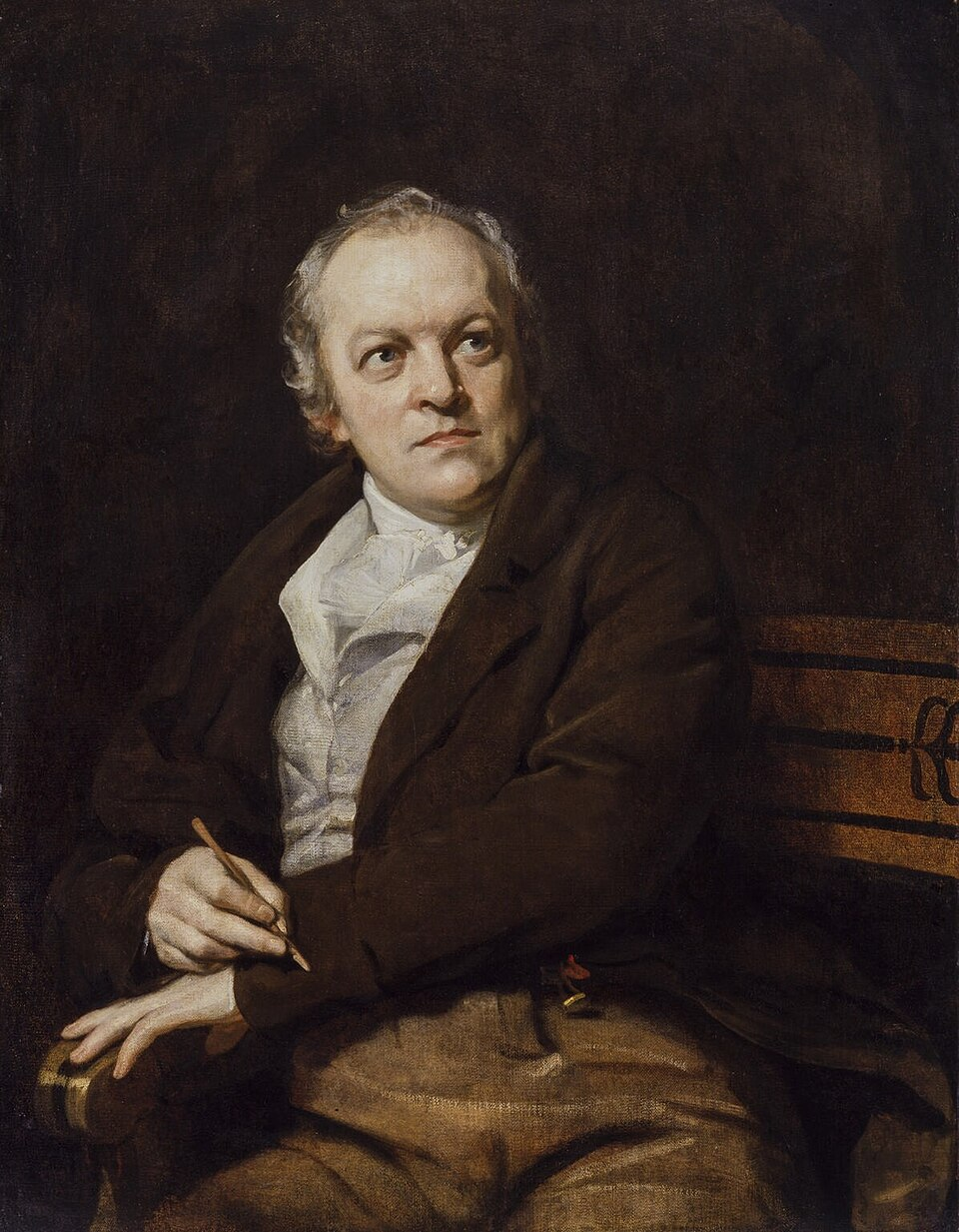
Mr. William Blake

William Blake was born in London on November 28, 1757, the third of seven children. His father, James, worked as a hosier, selling socks and stockings. Blake attended school just long enough to learn to read and write before continuing his education at home under the guidance of his mother, Catherine Blake.

In 1781, William Blake met Catherine Boucher, who was five years younger than him. They married on August 18, 1782. At the time, Catherine couldn’t read or write and signed their marriage certificate with an “X.” The original document can still be seen at St Mary’s Church in Battersea.

William later taught Catherine to read and write, and trained her as an engraver. She was a constant support, helping him produce his special illustrated books and lifting his spirits during hard times. Their marriage was loving and close until William’s death on August 12, 1827. In his final years, Blake lived in Fountain Court, London. After his passing, Catherine moved in with a friend, convinced that William’s spirit visited her often. She kept selling his art and books, always “consulting Mr. Blake” before making deals. Catherine died in October 1831, as calm and content as her husband had been.

Poems: