A place to grow your relationship with God

Archive for the ‘Author Bios’ Category

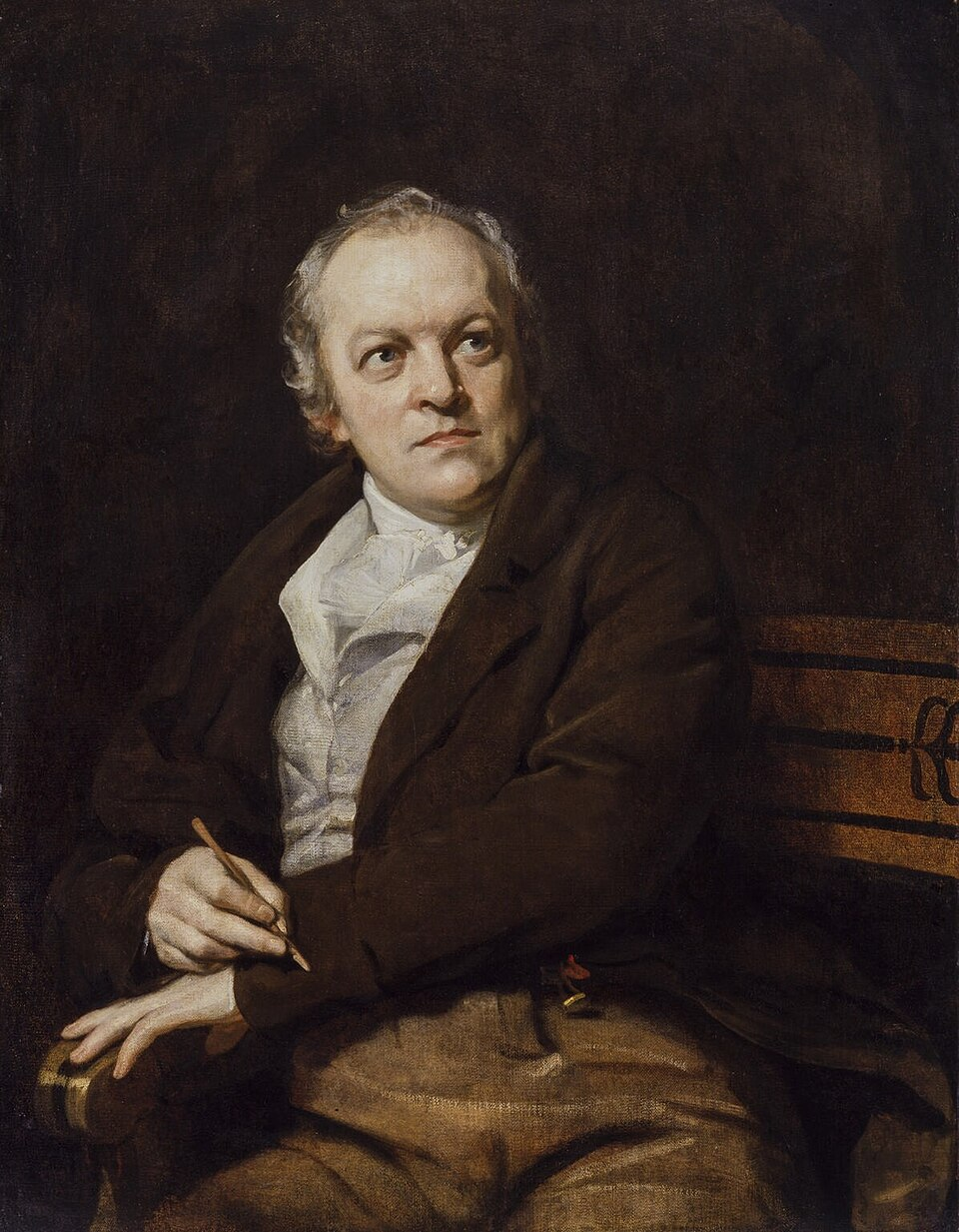
William Blake

Mr. William Blake

William Blake was born in London on November 28, 1757, the third of seven children. His father, James, worked as a hosier, selling socks and stockings. Blake attended school just long enough to learn to read and write before continuing his education at home under the guidance of his mother, Catherine Blake.

In 1781, William Blake met Catherine Boucher, who was five years younger than him. They married on August 18, 1782. At the time, Catherine couldn’t read or write and signed their marriage certificate with an “X.” The original document can still be seen at St Mary’s Church in Battersea.

William later taught Catherine to read and write, and trained her as an engraver. She was a constant support, helping him produce his special illustrated books and lifting his spirits during hard times. Their marriage was loving and close until William’s death on August 12, 1827. In his final years, Blake lived in Fountain Court, London. After his passing, Catherine moved in with a friend, convinced that William’s spirit visited her often. She kept selling his art and books, always “consulting Mr. Blake” before making deals. Catherine died in October 1831, as calm and content as her husband had been.

Poems:
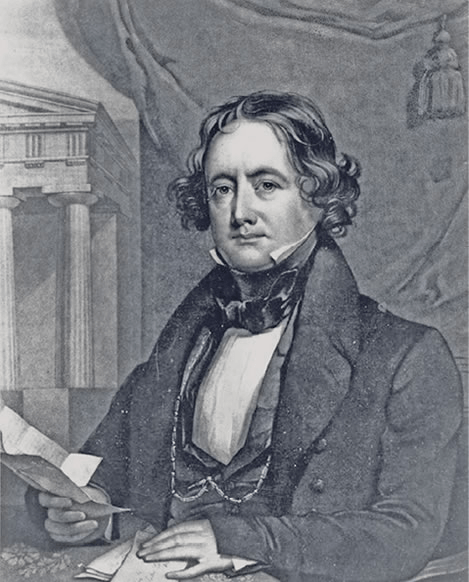
Henry Wadsworth Longfellow

Henry Wadsworth Longfellow

Henry Wadsworth Longfellow was born in 1807 in Portland, Maine. His ancestors included pilgrims who sailed from England to America on the Mayflower, and his grandfather was both a general in the American Revolutionary War and a congressman.

Longfellow was a kind-hearted boy who always tried to do the right thing. After shooting a robin, he was so upset that he never hunted again. He loved reading Washington Irving’s tales like Sleepy Hollow and Rip Van Winkle. At thirteen, he wrote a poem about Lovewell’s fight with the Indians and sent it to a newspaper, which published it. When a judge criticized the poem as “stiff” and borrowed from other poets, Longfellow felt hurt, but he didn’t quit. He kept writing and eventually became a celebrated poet.

Longfellow was an avid student who loved learning and reading. He went to Bowdoin College and later became a professor there. After studying in Europe, he taught at Harvard College.

Longfellow was one of the five New England poets known as the “Fireside Poets.” He wrote many song-like poems celebrated for their musical quality, often weaving in tales from myths and legends. He became the most popular American poet of his time, with his work admired both at home and abroad. Some critics felt he borrowed too much from European styles or that his poetry was overly sentimental.

In his life, Longfellow married, had six children, toured Europe worked as a college professor, and became a well-known poet. Longfellow faced sadness in his life. His first wife, Mary Potter, passed away in 1835. His second wife, Frances Appleton, died in 1861 after her dress accidentally caught fire. After this tragedy, it was hard for Longfellow to write poetry for a while. He spent time translating books from other languages instead. Longfellow passed away in 1882 of peritonitis in Cambridge, Massachusetts at the age of 75.

Poems:

Fannie Stearns Davis

Fannie Stearns Davis was born in Cleveland, Ohio on March 6, 1884.

She graduated from Smith College in 1904. She is credited with having two books of poetry published: Myself and I, 1913, and Crack O’ Dawn, 1915. Her poetry is marked by sensitive poetic feeling and delicate artistry. Davis taught English at Kemper Hall in Kenoshay, Wisconsin from 1906-07. She earned the distinction of being listed in the 1914 Who’s Who.

She married Augustus McKinstrey Gifford, and lived in Pittsfield, Massachusetts.

It appears that she is similar to Emily Dickerson in one way. Neither of the two liked to socialize. No one knows much about her except for maybe some very close family members.

The Life and Works of Jemima Thompson Luke

Luke, Jemima Thompson, the wife of Rev. Samuel Luke, an Independent minister of England, was the daughter of Thomas Thompson. She was born August 19, 1813, at Colebrooke Terrace, Islington. When only thirteen years of age she began writing for the Juvenile Magazine. She published a volume titled The Female Jesuit in 1851 and A Memoir of Eliza Ann Harris, of Clifton, in 1859, but her name is known to the Christian world almost wholly through the one hymn found in this volume, I think when I read that sweet story of old. She was married to the late Samuel Luke, a Congregational Minister, in 1843. Mrs. Luke died February 2, 1906.


Poems:

Snowflakes by Henry Wadsworth Longfellow

Snowflakes

Out of the bosom of the Air,

Out of the cloud-folds of her garments shaken,

Over the woodlands brown and bare,

Over the harvest-fields forsaken,

Silent, and soft, and slow

Descends the snow.

Even as our cloudy fancies take

Suddenly shape in some divine expression,

Even as the troubled heart doth make

In the white countenance confession,

The troubled sky reveals

The grief it feels.

This is the poem of the air,

Slowly in silent syllables recorded;

This is the secret of despair,

Long in its cloudy bosom hoarded,

Now whispered and revealed

To wood and field.

Exploring the Life of Charles Sangster: A Canadian Poet’s Journey

SANGSTER, CHARLES, poet, civil servant, and journalist; b. 16 July 1822 near Kingston, Upper Canada, son of James Sangster and Ann Ross; m. first 16 Sept. 1856 Mary Kilborn (d. 1858) in Kingston; m. secondly 30 Oct. 1860 Henrietta Charlotte Meagher at Niagara Falls, and they had three daughters and one son; d. 9 Dec. 1893 in Kingston.

Quiet and introspective by nature, Charles Sangster sought harmony in his connections with others and spiritual fulfillment through God’s will. Yet his life was marked by a string of misfortunes that, after the mid-1860s, brought anxiety, uneven literary output, and ultimately a nervous breakdown. Recognizing these contradictions and their influence on his work inspires respect for an artist wholly devoted to poetry. His talent stood out in colonial Canadian literature, earning praise from readers and critics of his era.

Sangster’s life played out mostly within the stretch from Kingston to Ottawa, with trips to visit family and friends taking him as far as Montreal, Niagara Falls, and Buffalo, N.Y. Ironically, his imagination traveled far beyond these borders, carrying him across the globe. Gentle and reserved on the outside, his poetry revealed deep emotions and personal struggles. In a note to his friend and literary executor William Douw Lighthall, he called himself “a self-made and pretty much a self-taught man,” yet his work showed a wide-ranging knowledge of geography, history, literature, science, and the events of his time.

Poems:

James Weldon Johnson: Activist and Literary Pioneer

James Weldon Johnson (June 17, 1871 – June 26, 1938) was an important American writer and civil rights activist. He was married to Grace Nail Johnson, who was also a civil rights activist.

James Weldon Johnson, born in Jacksonville, Florida, attended Atlanta University before taking on roles as a schoolteacher, lawyer, journalist, civil rights advocate, and U.S. consul in Venezuela and Nicaragua. Later, he taught at Fisk University. With his brother, composer Rosamond Johnson, he co-wrote “Lift Every Voice and Sing,” which became known as the Black National Anthem. His poetry collections include *Fifty Years and Other Poems* (1917), *Saint Peter Relates an Incident* (1934), *Selected Poems* (1936), *The Creation* (1994), *Lift Ev’ry Voice and Sing* (songs, 1995), and *Complete Poems* (2000). He received honors such as the Spingarn Medal and the W.E.B. Du Bois Prize for Negro Literature. Johnson died in a car accident while vacationing in Maine.

Poems:

William Bradford: Governor of Plymouth Colony and Author

William Bradford was born in Austerfield, England, and baptized on March 19, 1590. His family, who owned a large farm, was considered well-off. His childhood, however, was marked by hardship as he lost many family members. His father died when he was just over a year old. At four, after his mother remarried, he went to live with his grandfather, who passed away two years later. William then returned to live with his mother and stepfather, but his mother died the following year, in 1597. By the age of seven, he was an orphan living with two uncles.

William Bradford was an English leader and a Puritan who sought to break away from the Church of England. To escape persecution from King James I, he moved from England to Holland. In 1620, he journeyed to America aboard the famous Mayflower, settling in the Plymouth Colony.

Bradford signed the Mayflower Compact, a key agreement for the new colony, and went on to serve as Governor of Plymouth Colony for about 30 years, from 1621 to 1657. He also took on leadership roles in the United Colonies of New England several times. His journal, *Of Plymouth Plantation*, recounts the history of Plymouth from 1620 to 1646.

Poems: