A place to grow your relationship with God

Archive for the ‘Cool Facts’ Category

Celebrate Book Lovers Day: Key Dates for Readers

Jan:

  • Jan. 18 is National Winnie-the-Pooh Day! Did you know that Winnie-the-Pooh was inspired by Winnie, a black bear who lived at the London Zoo during World War I?
  • Jan. 16 is Book Publishers Day! Today we celebrate all the people who bring books to life. Editors, designers, printers, and distributors all help put books into your hands.
  • You read on Jan. 19, poet Edgar Allen Poe’s birthday! Check out some of his mysterious poems and short stories.
  • Jan. 26 is Library Shelfie Day! Snap a selfie of yourself in front of a bookshelf.
  • Jan. 2 is Science Fiction Day! Try a sci-fi saga for your next read.

Feb:

  • You read on Feb. 18, author Toni Morrison’s birthday! Crack open one of her many books to celebrate.
  • March 21 is World Poetry Day! Try reading some poetry or even writing prose of your own today.
  • You read on March 20! Reading boosts mental health, so it’s the perfect way to celebrate the

May:

  • May 6 is Free Comic Book Day! Find a super read at a comic store or library near you.

Jun:

  • You read on June 1, the first day of Audiobook Appreciation Month! Try an audiobook for your next read.
  • You read on June 23, which is the anniversary of the typewriter patent! Have you ever used a typewriter?

Aug:

  • You read on Aug. 2, author James Baldwin’s birthday!
  • Aug. 18 is Bad Poetry Day! Write one yourself!

Sep:

  • You read on Sep. 1, the first day of Library Card Sign-Up Month! Make sure your card is up to date!
  • You read on the first day of Hispanic Heritage Month! It’s a great time to find a new book by a Hispanic author.

Oct:

  • You read on Oct. 16, which is Dictionary Day. Look up a word you don’t know in the dictionary to celebrate!

Nov:

  • Nov. 18 is High Five a Librarian Day! It’s a great day to thank a librarian for their work!

Dec:

  • You read on Dec. 16! Today is author Jane Austen’s birthday, who’s famous for writing about women’s lives in books like “Pride and Prejudice” and “Emma.”

Other:

  • You read on World Athletics Day! Put down that book and move around for a bit!
  • You read on Madeline L’Engle’s birthday!
  • It’s read a new book month! Keep reading by finding a new book to love.
  • Reading, which builds empathy and understanding, is the perfect way to recognize the international Day of Peace!
  • You read on Coretta Scott King Award winning author Sharon Draper’s birthday!
  • You read on World Museum Day! Check out a museum this week!
  • You read on World Meditation Day! Breathe
  • You read on Sherlock Holmes Day! Try a mystery book this week!
  • You read on World Bicycle Day! Get out and ride!
  • You read on the day Nobel Prize-winning poet Pablo Neruda published his first work (he was just 13)!
  • You read on Friendship Day! Share a book with a friend.
  • You read on Malala Day! Reading is power!
  • You read on Fresh Veggies Day! Yummm!
  • You read on World Music Day! What will you listen to today?
  • You read on Jun. 25, author and illustrator Eric Carle’s birthday!
  • Keep reading! You already are on this International Literacy Day!
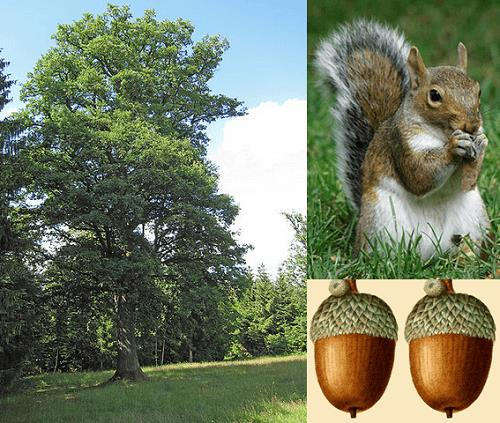
Sketch an Oak Tree

Sketch an Oak Tree

Objective:

Reinforce that oak trees grow acorns which are eaten by squirrels.

Materials:

Pencil, crayons or markers, and paper.

Procedure:

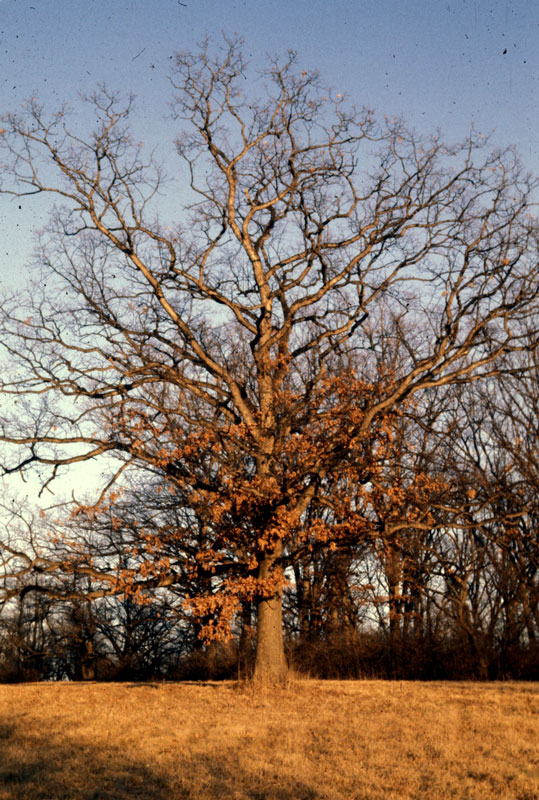
  • Examine the pictures of the oak tree, squirrel, and acorns below.
    • There is a video that may help.
  • Sketch an oak tree in the fall.
  • Unlike the green leaves in the picture, color your trees leaves yellow, orange, and red.
  • Draw nuts hanging from the tree branches and nuts on the ground around the tree.
  • Draw some squirrels eating the nuts.

Understanding Nuts: Nature’s Unique Fruits for Kids

Nuts are actually a type of fruit, defined as dry, single-seeded fruits with high oil content, usually encased in a leathery or hard outer shell. In botanical terms, a true nut has a single seed, a hard shell, and a protective husk—like chestnuts, hazelnuts, pecans, and walnuts. Peanuts and almonds, however, aren’t true nuts; peanuts are legumes, and almonds are surrounded by a fleshy coating similar to a plum. True nut or not, these tasty fruits are enjoyed by people all over the world.

Facts about nuts:

  1. Types of nuts include hazelnuts, birch nuts, chestnuts, acorns, and hickory nuts.
  2. Peanuts are not nuts. They are legumes, like peas and beans.
  3. Coconuts, almonds, macadamia, pistachio, pecan, walnuts, and cashews are also not true nuts.

Acorns

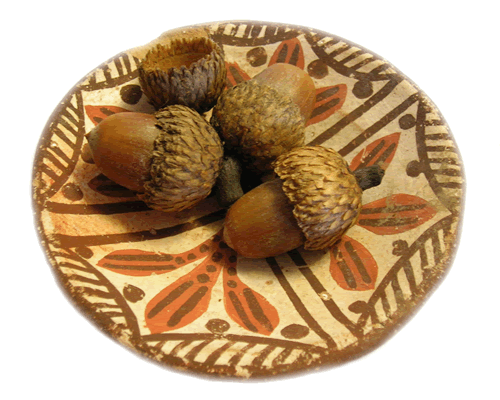
Acorns are the nuts that come from oak trees (Quercus spp.) and were once a staple food for many indigenous peoples of North America. They were especially important in California, where multiple oak species grow in the same areas.

Acorns were a great food source for Native Americans because they could be stored for many years. Photo by Teresa Prendusi.

White Oak (Quercus alba). Photo by Larry Stritch.

These hard-shelled fruits were an important food source because if properly treated in the sun, they could be stored for several years and used when needed. Acorns were stored in caches or on tall poles to protect them from being eaten by squirrels. When prepared for use in foods the ground acorn flower was rinsed in a stream to remove bitter tasting tannins.

  • Native American tribes used fire to promote the production of acorns within oak groves.
  • Ground fires were used to kill the larvae of acorn moths and acorn weevils that can prove disastrous to the acorn crop.
  • Burning occurred during the dormancy period in the soil, and the fires released nutrients bound in dead leaves and other plant debris into the soil.
  • Most North American oaks tolerate light fires, especially when consistent burning has eliminated woody fuel accumulation around their trunks.

Black Walnuts

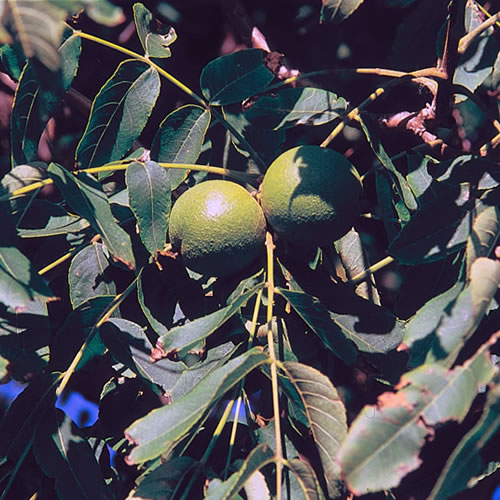
Black Walnuts (Juglans nigra) are native to North America. The nuts are primarily used in ice cream and candy.

  • Walnut trees are notorious for inhibiting growth of other plants around them. They produce chemicals in their leaves that are leached out by rain and soak into ground around the trunk.
  • Farmers planted these trees around farm animals to keep the flies away because they erroneously believed that the trees contained insecticides.
Black walnuts (Juglans nigra) have a strong taste and a very hard shell.

Pecans

Pecans (Carya illinoinensis) are a valuable nut species native to the American Southeast. Today, they’re widely cultivated across the southeastern United States and play a big role in the region’s cuisine.

In the past, native peoples and early American settlers enjoyed pecans because they were easy to find along major waterways and much simpler to shell than other North American nuts.

Pecan (Carya illinoinensis). Photo by Jerry A. Payne, USDA Agricultural Research Service, Bugwood.org.

source: Forest Service
U.S. Department of Agriculture

Marbles: From Ancient Play to Modern Collectibles and a Recipe for how to make Marbles

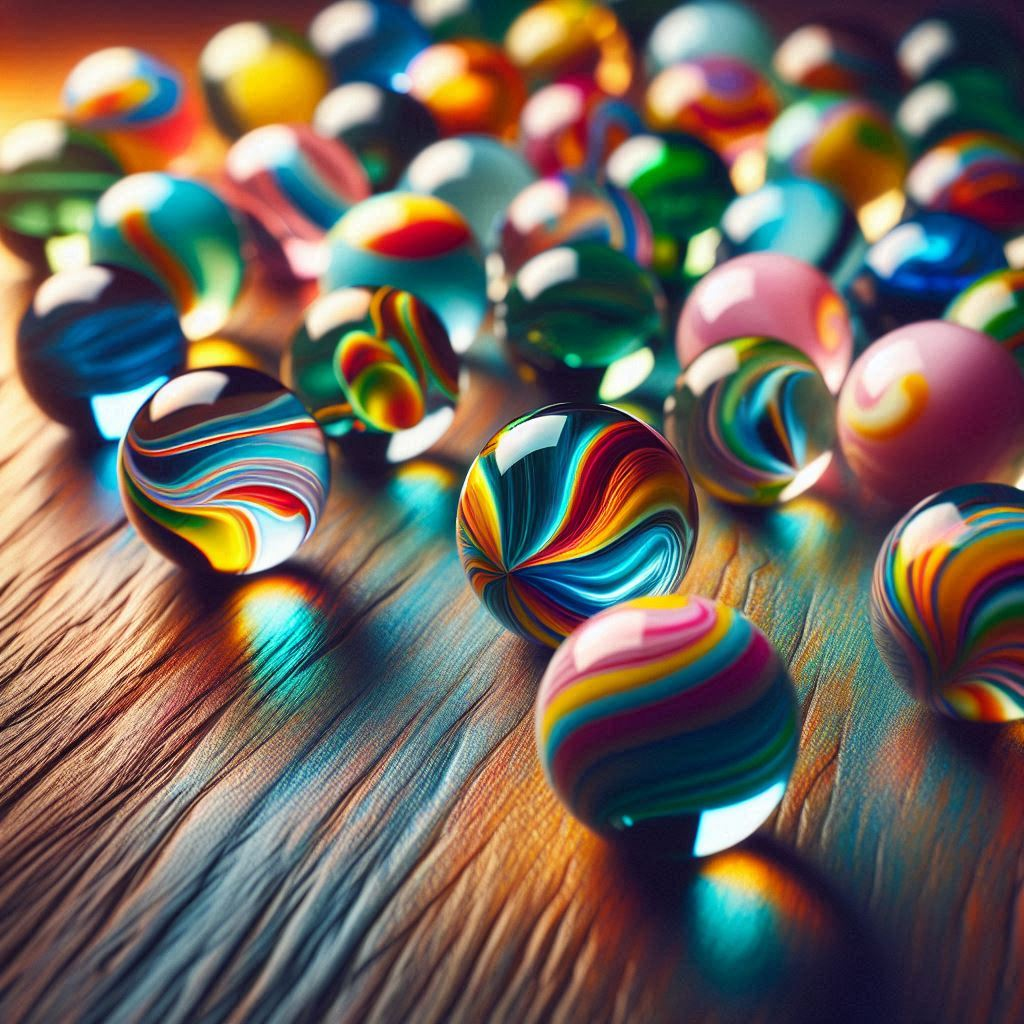
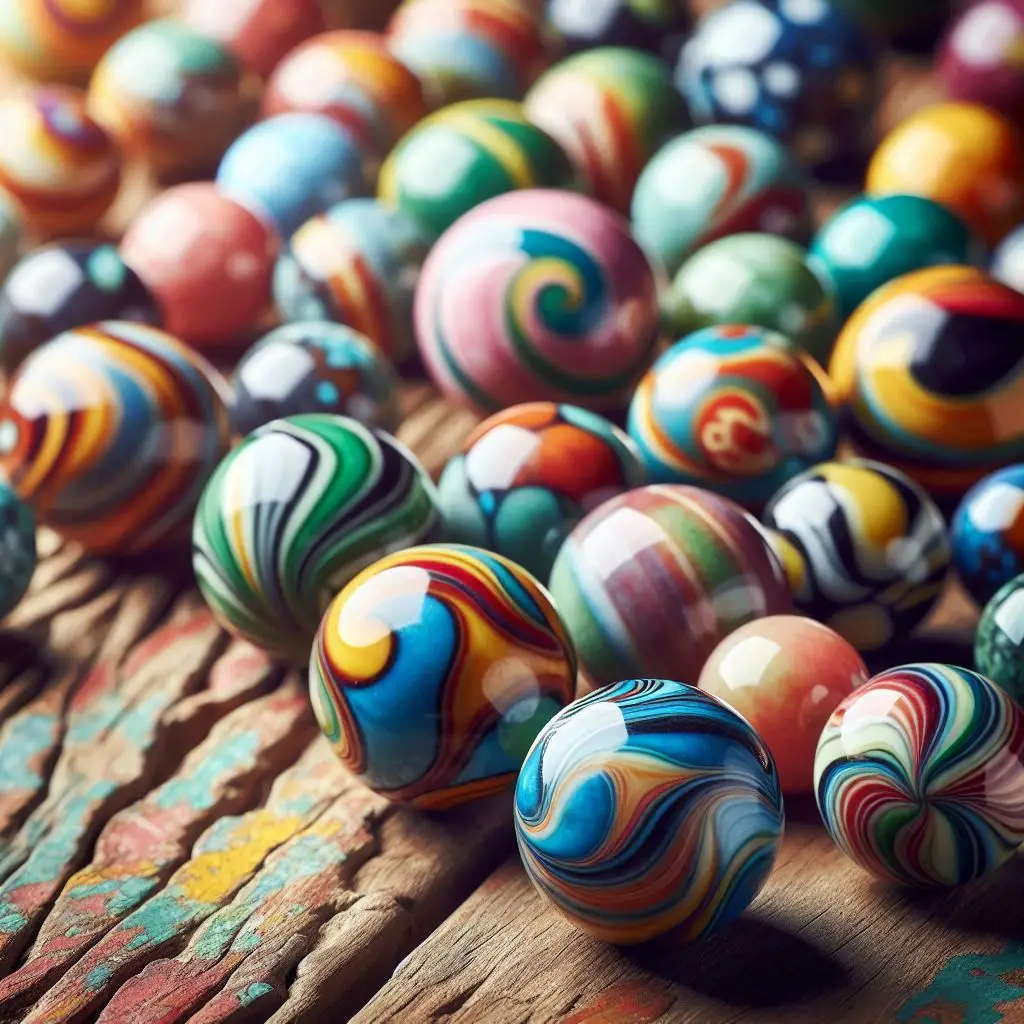
Glass Marbles

Ancient Origins of Marbles

  • Marbles have been found in archaeological sites worldwide, including the Indus Valley (Cira 2500 BC), ancient Egypt, Mesopotamia, Greece, and Rome, indicating their long- standing presence as a source of play.
  • Early marbles were made from stone, clay, nut, and fruit pits, polish or fired to create small spheres.
  • Roman children often played game with nuts, and references to this game appear in literature such as Ovid’s poem ‘nux”. Bas-reliefs from Roman times Depict children engaged in marbles game, and Early glass marbles have been found in Europe, though some may have originated as jewelry.

Medieval and Early Modern Europe

  • During the Middle Ages, marbles became popular in Europe. In Germany around 1503, authorities regulated marble games to specific areas, and marbles produced from marble, alabaster, agate, and limestone were polished for play.
  • Germany later became the center of marble craftsmanship, with water-powered stone mills turning raw marble and alabaster into perfectly shaped spheres by the 17th century Glass marbles emerged in Venice, Italy, and by the mid-19th century, German glassmakers invented marble scissors, allowing precise cutting of molten glass into uniform spheres.

Introduction to America and Industrialization

  • Marbles were brought to the United States by early settlers, and the first American mass-produced clay marbles were made by Samuel C. Dyke in Akron, Ohio, in the 1880s.
  • In the early 1900s, Martin Frederick Christensen invented machinery to produce glass marbles efficiently in Akron, marking the beginning of largescale U.S. glass marble production. His machinery could produce up to 10,000 marbles per day, creating more uniform and affordable marbles
  • The Akro Agate Company, founded in 1911 in West Virginia, quickly became a dominant manufacturer, controlling much of the U.S. market by the 1920s.

Golden Age and Global Expansion

  • The 1920s and 1930s are known as the “Golden Age of Marbles,” with marble games thriving as a popular children’s pastime. Companies like Peltier Glass, Christensen Agate, and Akro Agate produced colorful, decorative, and collectible marbles, including picture marbles showcasing comic-strip characters.
  • Post World 2, inexpensive Japanese cat’s eye marbles flooded Global markets, overtaking American production.

Modern Marbles and Collecting

  • Today, marbles are both games and collectibles, with art glass marbles created by artisans worldwide Machine-made marbles continue to be produced predominantly in Mexico and China for global distribution.
  • The British and World Marbles Championship in Tinsley Green, England, is still held annually since 1932, highlighting the enduring legacy of marble games.

Things to do with Marbles

Here are 25 Games with marbles that you can play. There are others game with Marbles like Chinese checkers

  • Classic Marbles [1]
  • Bullseye Marbles[2]
  • Mini Marble Golf [3]
  • Booby Trap [4]
  • Off The Wall [5]
  • What Decade? [6]
  • Color Match [7]
  • Bounce Eye [8]
  • The Conqueror [9]
  • Marble Obstacle Racing[10]
  • Marble Tilt [11]
  • Eggs in a Basket [12]
  • Thin Ice [13]
  • Marble Box [14]
  • Marble Skee Ball [15]
  • Marble Racetrack [16]
  • Pool Noodle Marble Race [17]
  • Newton’s Cradle [18]
  • Marble Cup [19]
  • Valentins Marble [20]
  • Guess How Many [21]
  • Marble Roll [22]
  • Pacman Marble [23]
  • Marble Painting [24]
  • Floating Marbles [25]
Clay marbles painted

Easy Homemade Marbles:

You can make homemade marbles using 2 cups of flour, 1 cup of salt, and 1 cup of water, adjusting slightly for texture as needed. Basic Ingredients and Ratio For a standard salt dough or homemade clay to form marbles:

Ingredients for a large batch (for large groups)

  • Oven
  • Wax paper
  • Baking sheet,
  • 2 1 teaspoons [To form the shooter]
  • 2 1/4 teaspoons [ To form the small Marbles]
  • 2 cups Flour
  • 1 cup Salt
  • 1 cup Water
  • Paints [for decoration]
  • Glitter [for decoration]

Ingredients for a small batch (for 1 person)

  • Oven
  • Wax paper
  • Baking sheet,
  • 2 1 teaspoons [To form the shooter]
  • 2 1/4 teaspoons [To form the small Marbles]
  • 1/2 cup Flour
  • 1/4 cup Salt
  • 1/4 cup Water
  • Paints [for decoration]
  • Glitter [for decoration]

What to do

  1. Cover: your workspace with wax paper.
  2. Combine Dry Ingredients: In a mixing bowl, mix the flour and salt thoroughly.
  3. Add Water: Gradually: Slowly pour in the water while stirring. Mix until a rough dough begins to form
  4. Knead the Dough: Place the dough on a lightly floured surface and knead for 5–10 minutes until it is smooth and pliable.
  5. If the dough: feels dry, add a tablespoon of water at a time; if too sticky, sprinkle in a little flour
  6. Form Marbles: Take small portions and roll them between your palms to form round marbles.
  7. To Ensure: they are smooth and even get two 1/4 teaspoons, put the small ball in them, and push them together. Then roll the ball around one more time in the palm of your hand. Do the same thing with two 1/2 teaspoons to make the shooter.
  8. Drying/Curing: You can either air dry the marbles for 24–48 hours or bake them in a low oven at around 200°F (93°C) for 2–3 hours, turning occasionally to prevent cracking
  9. Time to decoration: Decoration it will what you like .

Tips for Best Results

  • Use all-purpose flour for optimal texture; avoid self-rising flour.
  • Kneading well ensures a smooth, workable dough that holds its shape.
  • For firmer marbles, slightly increase the flour; for softer or more pliable dough, increase water slightly.
  • Store leftover dough in an airtight container in the fridge for a few days.
  • Optionally, you can paint or glaze baked marbles once fully hardened for decoration

Understanding Hair Growth: The Role of Roots and Blood for Kids

Facts about hair:

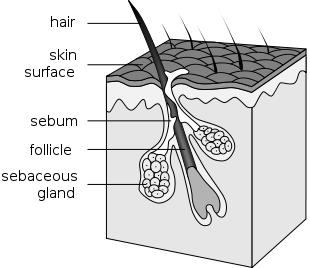
  1. Hair grows from ‘roots’ beneath our skin.
  2. Blood flowing through our bodies feeds the hair roots and makes the hair grow.
  3. Blood vessels carry the blood to the hair roots.

Study and Sketch Hair and Hair Roots

Objective:

Examine human hair. Sketch the root of a hair.

Materials:

Pencil and paper.

Procedure:

  • Examine another person’s scalp. Look at where the hair exits the skin.
  • Look for blood vessels under the scalp that carry blood to feed the hair roots.
  • Use the picture from above as a guide to draw a hair root. Draw a hair sprouting from the root.

Exploring Greenland: Geography and Nature Facts

Facts about Greenland

  • Geography
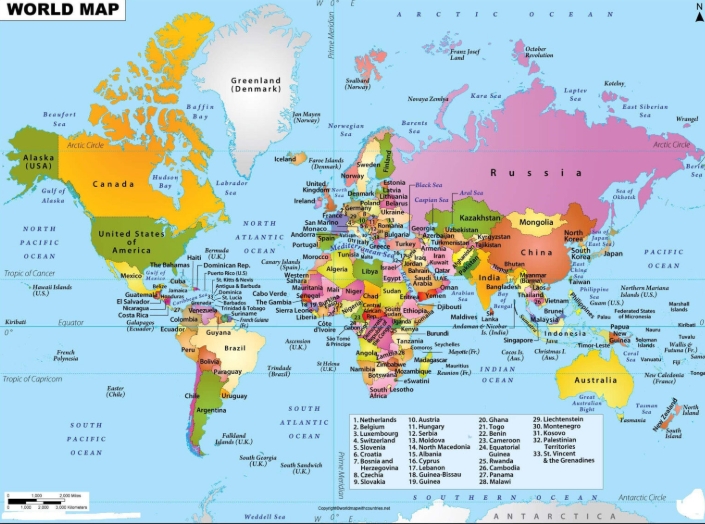
    • Greenland is a massive, mainly ice-covered island that stretches north from the Atlantic Ocean up to the Arctic Ocean.
    • Greenland is known for its immense glaciers.
    • Greenland, the world’s largest island, sits in the North Atlantic Ocean and is a territory of Denmark. It’s over three times bigger than Texas, with Canada’s Ellesmere Island just 16 miles (26 kilometers) to the north. Its closest European neighbor is Iceland, about 200 miles (321 kilometers) to the southeast.
    • About two-thirds of Greenland sits above the Arctic Circle, giving it a freezing climate all year long. In summer, residents enjoy 24 hours of daylight, though temperatures only climb to around 40°F (4°C). In winter, nearly constant darkness sets in, with temperatures dropping to as low as -30°F (-34°C).
    • The Arctic climate supports the island’s enormous ice sheet, a vast expanse of glacier ice that covers about 80 percent of the land. The Greenland Ice Sheet is the world’s second largest after Antarctica’s, stretching more than 1,500 miles (2,400 kilometers) from north to south and reaching nearly 5,000 feet (1,524 meters) thick in many areas—almost a mile deep in some spots!
    • The parts of Greenland not covered in ice are blanketed by tundra, a flat, treeless expanse often swept by strong winds. Even here, ice lingers in the form of permafrost, or frozen soil, beneath much of the ground. The island’s coastline is mostly rocky—and there’s plenty of it. Stretched out like a string, it would span 24,430 miles (39,330 kilometers), nearly enough to circle the Earth at the Equator.
  • NATURE
    • Greenland’s natural landscape is defined by its harsh Arctic climate, with most of its plant life found on the tundra beyond the ice sheets. The tundra is home to low-growing vegetation like dwarf birch and whortleberry, along with mosses and lichens scattered across the terrain.
    • The waters around the island are home to marine mammals like seals, walruses, and whales. On the ice sheets, you might spot polar bears, arctic foxes, wolves, reindeer, and musk oxen wandering about. Along the coast, around 230 bird species gather, including sea eagles that feast on saltwater fish such as salmon, flounder, and halibut.
    • Almost half of Greenland is preserved as the National Park of Greenland—its only national park and the largest in the world. Spanning 375,000 square miles (971,245 square kilometers), it covers most of the island’s northeastern region. The park is mainly visited by sealers and whalers from Ittoqqortoormiit, a remote town in eastern Greenland, along with a handful of scientists and military staff.

The Arctic Tundra: Life at the North Pole

Facts about the North Pole.

  1. The North Pole is the furthest north of any place on Earth.
  2. The North Pole is a point on the Northern Hemisphere where the world’s rotational axis meets with the surface of the earth.
  3. Located at the center of the Northern Hemisphere, the North Pole sits north of Greenland, Russia, and Canada. While it isn’t part of any continent, it’s also not considered a continent on its own.
  4. The North Pole is made of only frozen water. There is no land at the North Pole.
  5. The North Pole is part of the Arctic Tundra.
  6. The North Pole is covered with ice year-round.
  7. The sun stays up all summer.
  8. The sun never rises in the winter.
  9. Many types of animals live at the North Pole, including the walrus, seal, Arctic fox, moose, and snowy owl.
  10. Approximately 1,700 species of plants live on the Arctic tundra, including flowering plants, dwarf shrubs, herbs, grasses, mosses, and lichens.
    • The tundra is characterized by permafrost, a layer of soil and partially decomposed organic matter that is frozen year-round. Only a thin layer of soil, called the active layer, thaws and refreezes each year. This makes shallow root systems a necessity and prevents larger plants such as trees from growing in the Arctic.
    • Tundra vegetation is characterized by small plants (typically only centimeters tall) growing close together and close to the ground.

Map of the North Pole

Engaging Children’s Books, Fun Facts and Delicious Recipes

Children’s Bible books

  • For older kids
    • THE CHILDREN’S SIX MINUTES by Bruce S. Wright: The Children’s Six Minutes by Bruce S. Wright features a collection of themes exploring growth, kindness, faith, and life’s lessons through various engaging stories and reflections.
    • The Wonder Book of Bible Stories: “The Wonder Book of Bible Stories” by Logan Marshall shares simplified biblical narratives for children, conveying essential moral lessons through engaging tales from the Bible.

Children’s books

  • For younger kids
    • McGuffey Eclectic Primer: textbook focused on early literacy, teaching reading and writing through simple lessons and moral stories for young children.
    • McGuffey’s First Eclectic Reader: educational textbook for young readers, combining phonics, sight words, moral lessons, and simple narratives to enhance literacy skills.
    • MCGUFFEY’S SECOND ECLECTIC READER: educational book for children, promoting literacy and moral values through engaging prose, poetry, and vocabulary exercises.
    • The Real Mother Goose: a collection of nursery rhymes, reflecting childhood’s whimsical essence through well-known verses and engaging illustrations.
    • THE GREAT BIG TREASURY OF BEATRIX POTTER: The Great Big Treasury of Beatrix Potter features beloved stories like The Tale of Peter Rabbit and The Tale of Jemima Puddle-Duck, celebrating whimsical animal adventures.
    • The Tale of Solomon Owl is a whimsical children’s book by Arthur Scott Bailey, exploring themes of friendship and adventure through Solomon Owl’s humorous encounters with forest animals.
    • THE TALE OF JOLLY ROBIN: follows a young bird’s adventures as he learns life skills, values friendship, and explores youthful curiosity through humorous encounters in the wild.
    • Peter and Polly Series: The content describes a series of stories for 1st graders featuring Peter and Polly, exploring seasonal adventures, imaginative play, nature, family, and interactions with pets and animals.
    • The Adventures of Old Mr. Toad: recounts Old Mr. Toad’s humorous nature-filled journeys, emphasizing lessons on friendship, humility, and personal growth amidst various animal encounters.
    • The Wonderful Wizard of Oz: follows Dorothy’s adventures in Oz as she seeks to return home, meeting memorable friends while exploring themes of courage, friendship, and self-discovery.
  • For older kids
    • Stories of Don Quixote Written Anew for Children retells key adventures from Cervantes’ novel, preserving its spirit while engagingly presenting them for young readers in a cohesive narrative.
    • Heidi by Johanna Spyri follows a young girl adapting to life in the Swiss Alps with her grandfather, highlighting themes of family, love, and the power of nature.
    • Swiss Family Robinson by Johann David Wyss: is a beloved adventure novel by Johann David Wyss about a Swiss family stranded on a deserted island, relying on their creativity and teamwork to survive and build a new life.
    • Rebecca Of Sunnybrook Farm: follows the spirited Rebecca Randall as she navigates life with her aunts in Riverboro, experiencing adventure, growth, and identity exploration.

Children’s history book

  • For younger kids
    • Great Stories for Little Americans: introduces young readers to American history through engaging tales, fostering national pride and knowledge of heritage via accessible storytelling.
    • The Bird-woman of the Lewis and Clark Expedition: A Supplementary Reader for First and Second Grades- tells Sacajawea’s vital role in guiding the explorers, emphasizing her contributions and experiences during this historic journey.
    • The Story of Mankind: chronicles human history from prehistory to the modern era, highlighting key events, cultures, and figures that shaped civilization.
    • A First Book in American History: A first book in American history: with special reference to the lives and deeds of great Americans. This book chronicles pivotal figures in American history, from Columbus and John Smith to Franklin and Lincoln, highlighting their contributions and the nation’s expansion.
  • For older kids

Poem and stories

  • THE PLYMOUTH HARVEST by Governor Bradford
  • The Real Mother Goose Poems Book: a collection of nursery rhymes, reflecting childhood’s whimsical essence through well-known verses and engaging illustrations.
  • Top Poems for Children by Famous Authors: A list of children’s poems organized by author, with future additions anticipated, includes works by notable poets and authors. [Coming soon]
  • Poems and stories by Bell: Bell, a young poet, shares her love for God through inspiring poems and stories centered on nature, love, and faith, aiming to bless and bring joy to readers.
  • Explore Heartfelt Poems and Stories for Inspiration: Poems and stories to warm your heart.
  • Heartfelt Tales of My Beloved Pets: The author shares stories of various animals that have impacted their life, encouraging love for pets and providing comforting Bible verses for grieving pet owners.

Children bible study

States of Matter

In daily life, we come across matter in three forms: solid, liquid, and gas. The state of matter partly depends on the temperature of the substance. Liquids like water is the only matter that can exist in all three states of matter.

Room Temperature

At room temperature, water is a liquid.

  • Liquids, such as water, oil, and soda, adapt to the shape of their containers. Under a microscope, you’d see that their particles are packed closely together but arranged randomly, with the molecules constantly moving around.

Freezing

When liquid water gets cold enough, it freezes and turns into solid ice. It becomes a solid. Solids, like your desk, your backpack and your pants, are firm and stable. Their molecules are grouped together in organized patterns. The molecules might vibrate slightly, but they don’t move around.

Boiling

When liquid water heats up to a certain point, it transforms into water vapor, a gaseous state.

Gases like air, steam, and helium flow freely, allowing you to pass your hand through them effortlessly. They adapt to the shape of their container and can fill it completely. Their molecules are widely spaced and constantly moving, wiggling and jiggling around. You can see the air, but you can see what happens when air gets trapped into things like a balloon.

Understanding the Rotting Process in Fruits and Vegetables

What is rotting?

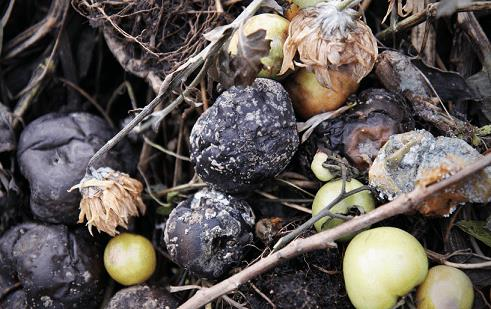
  1. If you leave a piece of fruit or a vegetable on the counter for too long, it will change color and develop an unpleasant odor.
  2. A fuzzy substance known as mold can grow on fruits or vegetables.
  3. This process is called rotting.

Why do things rot?

  1. When a farmer removes fruits or vegetables from their plants, they start to die immediately.
  2. All living things are made of small units called cells. As the fruits and vegetables die, their cells start to break down.
  3. Tiny microorganisms called bacteria, molds, and yeasts floating in the air land on the fruit and begin to further break down the fruit or vegetable.
  4. Moisture (water), light, temperature, and microorganisms work together to speed spoiling process.

How can we prevent things from rotting?

  1. Keeping foods in the refrigerator slows the spoiling process (less moisture, fewer microorganisms, less light, colder temperature), but food will eventually spoil.
  2. Keeping foods in the freezer at even colder temperatures slows the spoiling process even more.
  3. Never eat rotten food. It might make you sick. Rotten food may small bad, be a strange color, or have fuzzy mold spots on it.

Pee Yew! That’s Rotten!

Objective:

Observe the rotting process.

Materials:

Fruit, small dish

Procedure:

  • Leave a small chunk of fruit or vegetable out on the countertop in a small dish.
  • Observe the dish after a few hours and draw a picture of what you see.
  • Observe the dish after a day and draw a picture of what you see.
  • Observe the dish each subsequent day over the next week and draw a picture of what you see.

Results:

  • What changes did you observe over the week?
  • How long does it take for the fruit or vegetable to rot?