A place to grow your relationship with God

Archive for the ‘Chemistry and Physics’ Category

States of Matter

In daily life, we come across matter in three forms: solid, liquid, and gas. The state of matter partly depends on the temperature of the substance. Liquids like water is the only matter that can exist in all three states of matter.

Room Temperature

At room temperature, water is a liquid.

  • Liquids, such as water, oil, and soda, adapt to the shape of their containers. Under a microscope, you’d see that their particles are packed closely together but arranged randomly, with the molecules constantly moving around.

Freezing

When liquid water gets cold enough, it freezes and turns into solid ice. It becomes a solid. Solids, like your desk, your backpack and your pants, are firm and stable. Their molecules are grouped together in organized patterns. The molecules might vibrate slightly, but they don’t move around.

Boiling

When liquid water heats up to a certain point, it transforms into water vapor, a gaseous state.

Gases like air, steam, and helium flow freely, allowing you to pass your hand through them effortlessly. They adapt to the shape of their container and can fill it completely. Their molecules are widely spaced and constantly moving, wiggling and jiggling around. You can see the air, but you can see what happens when air gets trapped into things like a balloon.

Understanding the Rotting Process in Fruits and Vegetables

What is rotting?

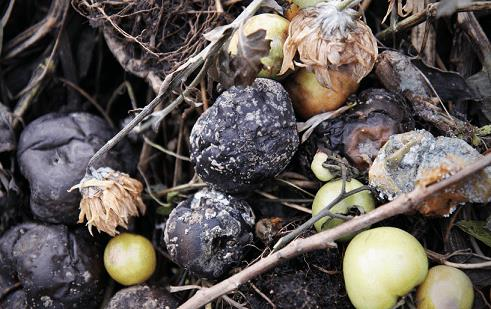
  1. If you leave a piece of fruit or a vegetable on the counter for too long, it will change color and develop an unpleasant odor.
  2. A fuzzy substance known as mold can grow on fruits or vegetables.
  3. This process is called rotting.

Why do things rot?

  1. When a farmer removes fruits or vegetables from their plants, they start to die immediately.
  2. All living things are made of small units called cells. As the fruits and vegetables die, their cells start to break down.
  3. Tiny microorganisms called bacteria, molds, and yeasts floating in the air land on the fruit and begin to further break down the fruit or vegetable.
  4. Moisture (water), light, temperature, and microorganisms work together to speed spoiling process.

How can we prevent things from rotting?

  1. Keeping foods in the refrigerator slows the spoiling process (less moisture, fewer microorganisms, less light, colder temperature), but food will eventually spoil.
  2. Keeping foods in the freezer at even colder temperatures slows the spoiling process even more.
  3. Never eat rotten food. It might make you sick. Rotten food may small bad, be a strange color, or have fuzzy mold spots on it.

Pee Yew! That’s Rotten!

Objective:

Observe the rotting process.

Materials:

Fruit, small dish

Procedure:

  • Leave a small chunk of fruit or vegetable out on the countertop in a small dish.
  • Observe the dish after a few hours and draw a picture of what you see.
  • Observe the dish after a day and draw a picture of what you see.
  • Observe the dish each subsequent day over the next week and draw a picture of what you see.

Results:

  • What changes did you observe over the week?
  • How long does it take for the fruit or vegetable to rot?

The Role of Fire in Human History and Modern Life

Fire is a reaction between oxygen, and a fuel, such as wood or gas, and it also needs heat to start. Most fires are combustion reactions, which occur when elements like carbon, hydrogen, and oxygen mix and react quickly. There are various types of fires, including wood fires, gas fires, and even metal fires, and they can be extremely dangerous if not managed properly.

  1. Fire is a reaction that produces heat and light.
  2. Fire produces red, orange, yellow, white, and blue flames that we can see, where red is the coolest and blue is the hottest.
  3. Fire is very dangerous. Children should never play with fire and should only be around fires when responsible adults are present.

The Fire Triangle

Fire needs three things to burn: oxygen, fuel, and heat. This is often called the “fire triangle.”

  • Fuel: This is anything that can burn, like wood, coal, or oil.
  • Oxygen: Fire needs oxygen from the air to keep burning.
  • Heat: Once a fire starts, it creates its own heat, which helps it keep burning.

If you take away any one of these three things, the fire will stop.

Stopping a Fire

You can stop a fire in three main ways:

  • Remove the fuel: If a fire runs out of things to burn, it will stop. Firefighters sometimes remove trees or buildings in a fire’s path to stop it from spreading.
  • Remove the oxygen: This is called “smothering” a fire. If you cover a fire with something that blocks oxygen, like sand or a special blanket, it will go out. Fires cannot burn without oxygen.
  • Remove the heat: The most common way to do this is by using water. Water absorbs the heat, cooling the fire down until it stops burning.

However, some fires, like those involving certain metals, can be tricky. For example, magnesium fires can even burn in carbon dioxide, so they can’t be smothered with a regular fire extinguisher.

Humans and Fire

Learning to control fire was a huge step for early humans. It changed their lives in many ways:

  • Cooking: Fire allowed people to cook food. This made food safer to eat and easier to digest.
  • Warmth: Fire provided heat, helping people stay warm in cold weather. This meant they could live in cooler places.
  • Protection: Fire helped keep dangerous animals away at night.
  • Tools: Over time, humans learned to use fire to make charcoal and manage the land.

Fire in Farming

During the Neolithic Revolution, as people began farming, they used fire to manage the land. They conducted “controlled burns” or “cool fires,” which were unlike the destructive “hot fires” that ruin soil and plants. Cool fires were typically done in spring and autumn to clear small plants and dry leaves. This practice helped prevent large, dangerous fires and created diverse environments where plants and animals could thrive.

Farmers often use fire to clear land for planting in a method called “slash-and-burn” agriculture. They cut down vegetation and burn it, releasing nutrients into the soil to help new crops grow. While this can benefit small farmers, it also has downsides. With growing populations and a warming climate, these fires can become uncontrollable, harming nature, destroying buildings, and producing smoke that causes health issues and further warms the atmosphere. Each year, vast areas of land around the world are burned.

Modern Uses of Fire

Fire is still used in many important ways today.

  • Vehicles: Most cars and trucks use fire inside their engines to make them move. This happens in the internal combustion engine.
  • Electricity: Many power plants use fire to heat water and create steam, which then generates electricity for homes and businesses.

Source Kids Encyclopedia Facts

Facts about Gravity for Kids

Gravity is a force which pulls us back toward the Earth as we jump.

If you trip and fall and scrape your knees, you can blame gravity!

  1. If there was no gravity and you didn’t encounter any forces (friction, resistance of the air), you could jump and move upward forever.
  2. Astronauts on the space station in outer space can float through the air. There is less gravity because the astronauts are far away from the Earth.
  3. The more matter something has, the greater the force of its gravity.
  4. Who discovered gravity?
    • For a long time, scientists knew that there was some mysterious force that keeps us on the surface of the Earth.
      • In 1666, Isaac Newton mathematically described the force of gravity, laying the foundation for his laws of universal gravitation. Legend has it that his inspiration came from watching an apple fall from a tree. He began to wonder what force caused the apple to fall downward instead of floating away.
      • Another renowned scientist, Albert Einstein, expanded on Newton’s ideas about gravity with his groundbreaking theory of relativity.
  5. Weight depends on gravity, as it measures the force of gravity acting on an object. For instance, your weight on Earth represents how strongly gravity pulls you toward the planet’s surface.
  6. Facts about Gravity
    • In outer space, there is no gravity, which means you would experience weightlessness while floating around!
    • In physics, weight is defined as a force and is measured in Newtons. And do you know who this unit is named after? That’s correct—Isaac Newton, the brilliant scientist who uncovered the laws of gravity.
    • Objects are slightly heavier at sea level compared to the top of a mountain.
    • According to Scientists, earth’s gravity holds in the mixture of gasses we call air forming the atmosphere.

Source: Cool Facts