A place to grow your relationship with God

Archive for the ‘Facts about Mammals’ Category

Discover Amazing Facts about the World

Understanding Mammals: Key Features Explained

Facts about mammals:

  1. They are warm-blooded. They stay warm even when their surroundings are cold.
  2. They have a backbone (unlike worms).
  3. They breathe with lungs (not with gills like a fish or through skin like worms).
  4. They have hair or fur (not feathers like birds or scales like snakes).
  5. Females usually give birth to live babies (not born from eggs like turtles).
  6. Females feed babies their milk (unlike birds that feed babies food such as insects, worms, berries, and seeds).

Did you know humans are mammals? Feel your forehead. Unless it is an extremely hot day outside, your forehead is warmer than the air around you, because you are warm-blooded. Feel your back and find your backbone. Feel the hair on your head. When human babies are born, they are born alive and often crying and wiggling. Many human mothers nurse their babies with their milk.

Links to more facts about various mammals (animals).

Facts about Squirrels for Kids

Squirrels are tree-dwelling rodents with bushy tails that typically eat nuts and seeds.

Facts about squirrels:

  1. Squirrels are animals, mammals, and vertebrates (they have backbones).
  2. Whether you live in the country or in a downtown apartment, you probably have squirrels living near you. Squirrels can live almost anywhere. There are 200 species of squirrels worldwide. They live in almost every country but Australia.
  3. Squirrels are ‘omnivorous’ which means they eat both plants and animals. They eat plants such as nuts, seeds, and fruits. Some squirrels also eat insects, eggs, small birds, snakes, and small rodents.
  4. Squirrels gather food year-round and bury food for winter.
  5. Some squirrels hibernate (sleep during winter), waking every few weeks to feed. Other squirrels, such as gray squirrels, stay awake all winter.
  6. Squirrels have litters of three to nine babies. The babies are born blind. They stay in a burrow or nest until they are three months old.
  7. Squirrels are in the rodent family.

Types of squirrels in the US include gray squirrels, red squirrels, fox squirrels, ground squirrels, and flying squirrels.

  1. Gray squirrels bury nuts all over the place and sometimes forget where they buried them. This helps new trees grow.
    • These squirrels are not gray in color; they are actually a mixture of black, browns and whites. They are actually banded with whitish ends, due to which they assume a grayish look.
  2. Red squirrels store a big pile of nuts in one place.
    • The American Red Squirrel is the smallest tree squirrel in North America, known for its feisty nature, bright reddish coat, and impressive ability to thrive in coniferous forests. Unlike the bigger Eastern Gray Squirrel, Western Gray Squirrel, or Fox Squirrel, Red Squirrels are fiercely territorial and have adapted perfectly to life in the tough northern forests and mountain regions of Canada and the northern United States.
    • Most people call this species the “American red squirrel.” 
    • The other red squirrels are small, tree-climbing rodents native to Eurasia. These squirrels have long bushy tails and pointed tufts of fur over their ears.
  3. Fox Squirrels are the largest tree squirrel found in North America, admired for its reddish-gray fur and bushy tail. 
    • Native to North America, fox squirrels are commonly found in the eastern and central United States, extending into Canada and parts of Mexico. They prefer open woodlands and forests but have adapted well to suburban and urban areas, often spotted in parks and neighborhoods.
  4. Flying squirrels
    • Did you know that flying squirrels don’t actually fly? Instead, they soar from tree to tree with the help of a built-in parachute. Their ‘parachute’ is a thin flap of skin stretching between their wrists and ankles.
  5. Ground squirrels
    • Have you ever noticed those busy little critters scurrying along hiking trails or popping out of burrows in open grasslands? Ground squirrels are a fascinating example of nature’s brilliance in adapting to life underground, though they’re often mistaken for their tree-dwelling relatives or written off as mere “prairie dogs.”

Facts about Rodents for Kids

Rodents are a very successful group of mammals. They belong to the animal group called the order Rodentia.

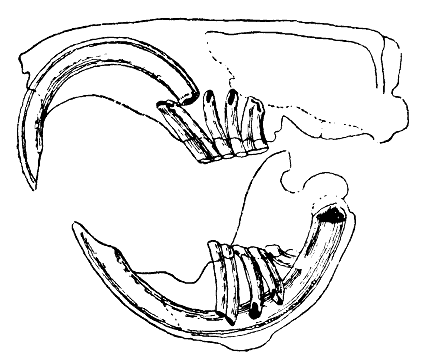
Rodents have four special incisor teeth at the front of their mouths. These teeth never stop growing! To keep them from getting too long, rodents must constantly gnaw or chew on hard things. This is how they got their name. The word “rodent” comes from the Latin words rodere, meaning “to gnaw,” and dent, meaning “tooth.”

This picture shows a typical rodent tooth system. The front of the incisors is made of hard enamel. This forms a sharp edge above the softer dentine as the teeth wear down.

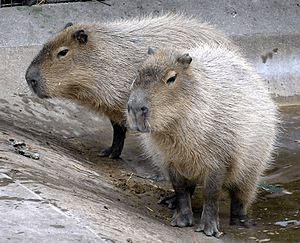
Most rodents are small, and you’re likely familiar with common ones like mice, rats, chipmunks, and squirrels. Some small rodents kept as pets include guinea pigs, hamsters, and gerbils. However, there are also larger rodents, such as porcupines and beavers. The largest living rodent is the capybara, which can grow 105 to 135 cm (about 40-55 in) long and weigh 35 to 65 kg (about 75-140 lbs). Incredibly, nearly half of all mammal species are rodents! Other examples include voles, prairie dogs, groundhogs, and chinchillas.

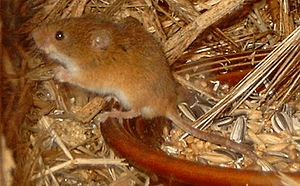
A harvest mouse
Capybaras
A Golden-mantled ground squirrel showing a typical rodent shape: a sturdy body, short legs, and a long tail.

People often mistake rabbits, hares, and pikas for rodents because their teeth keep growing. However, in 1912, biologists placed them in their own group, Lagomorpha, due to the presence of two extra incisor teeth in their upper jaw. Similarly, shrews may resemble mice, but they aren’t rodents either—they belong to a group called Insectivora.

source: Rodent facts for kids Kids Encyclopedia Facts

Understanding Animal Migration: A Seasonal Journey

 Migration is the seasonal movement of animals.

Facts about migration:

  1. Every year, certain groups of animals migrate from one location to another. Some travel thousands of miles in the spring and return the same distance in the fall. These incredible journeys are known as migrations.
  2. Why do animals migrate?
    • Animals migrate as the weather and seasons change, seeking warmer climates, better food sources, or a safe place to give birth to their offspring.
  3. How do animals know when and where to migrate?
    • Changes in weather, daylight length, or food availability can signal to animals that it’s time to move. How they know which direction to go remains a mystery. Some scientists believe animals are born with this knowledge, learning it “genetically” from their parents. This innate behavior is also known as instinct.
  4. How do they find their way?
    • Animals don’t rely on the internet, GPS, or maps to find their way, yet they travel thousands of miles across land and sea each year. They’ve developed unique ways to navigate the Earth. Some use the Sun and stars to determine direction, while others rely on wind patterns or landmarks like mountains, rivers, and lakes. Some even possess a special sense that helps them detect the Earth’s magnetic field to guide their journey. It’s incredible what animals are capable of!
  5. Migrations on the land
    • Caribou live in the snowy tundra of the far north. In North America, they migrate each spring to the northern coast to give birth to their calves in the summer. When fall comes, they head back south below the Arctic Circle. Some caribou herds travel up to 3,500 miles, covering as much as 35 miles a day.
    • Zebras and wildebeest – Every year, zebra and wildebeest herds in the African savannah embark on a massive clockwise migration. They’re always on the move, following the rainy seasons to find areas where food is abundant.
    • Emperor penguins, who are excellent swimmers, walk across 125 miles of ice each year to the place where they birth their chicks.
  6. Migrations in the air
    • Arctic terns -Arctic terns hold the record for the longest migration of any animal on Earth. Every six months, they journey from the Arctic to Antarctica and back again, covering an astonishing roundtrip distance of nearly 50,000 miles. Thankfully, these strong and speedy birds can complete the trip in just about 40 days.
      • The average arctic tern will travel the equivalent of going around the Earth 60 times in their lifetime.
    • Canadian geese – Every year, Canadian geese migrate south to escape the freezing winters that ice over lakes and ponds. In the summer, they head back north to breed and nest. Their iconic V-shaped flight formation helps them conserve energy, enabling them to travel up to 600 miles in a single day.
    • European White Storks – Migrating flocks of European white storks can stretch for lengths of up to 125 miles.
    • Insects such as butterflies migrate.
      • For example, monarch butterflies migrate in groups. No single butterfly makes the whole journey. The butterflies go through multiple generations to reach their destination.
  7. Migrations in the water
    • Gray whales – Gray whales migrate between the chilly northern waters of the Bering Sea during summer and the warm waters of Baja California in winter. They give birth to their calves in the winter before heading back north in early spring. Their migration spans an impressive 5,000 to 6,000 miles.
    • Salmon – Salmon have a fascinating one-time round-trip migration in their lifetime. They hatch from eggs in fresh water, grow, and eventually swim downstream to spend most of their lives in the ocean. When it’s time to spawn, they return to their birthplace to lay eggs, after which they die. Some salmon travel hundreds of miles upriver, with Chinook salmon covering 900 miles and climbing nearly 7,000 feet in altitude to complete their journey home.
    • Sea Turtles – Sea turtles migrate back to the same beach where they were born to lay their eggs.
  8. Fun Facts about Animal Migrations
    • Many animals get ready for migration by building up energy reserves and strengthening specific muscles to ensure they’re fit enough for the journey.
    • Birds save energy and are able to travel great distances by riding the air currents.
    • Male and female walruses migrate in separate herds.
    • Birds migrate when they fly south in fall and north in the spring.
    • Fish migrate through the water to feed or spawn (lay eggs to make baby fish).
    • Other animals such as mammals, amphibians, reptiles, and crustaceans also migrate.