A place to grow your relationship with God

Posts tagged ‘2’

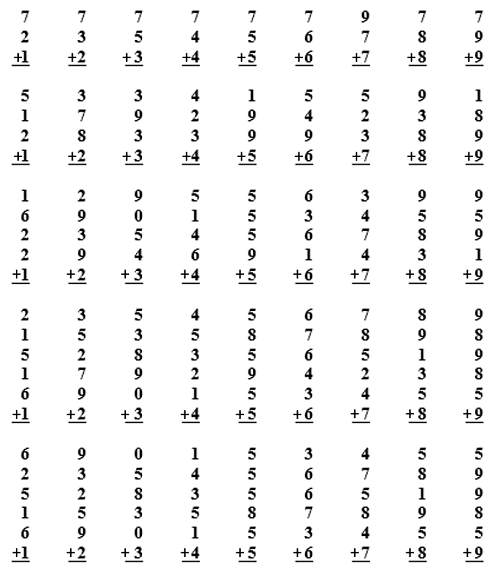
1st grade week 18 out of 36

Subscribe to continue reading

Subscribe to get access to the rest of this post and other subscriber-only content.

Should We Call God by His Hebrew Name?

It has been making the rounds for quite some time that we need to call God and Jesus by the Hebrew names. Some say that this may not apply to everybody. Others declare that you are worshiping an idol by not calling God by His Hebrew name. I am addressing those that make this a salvation issue.
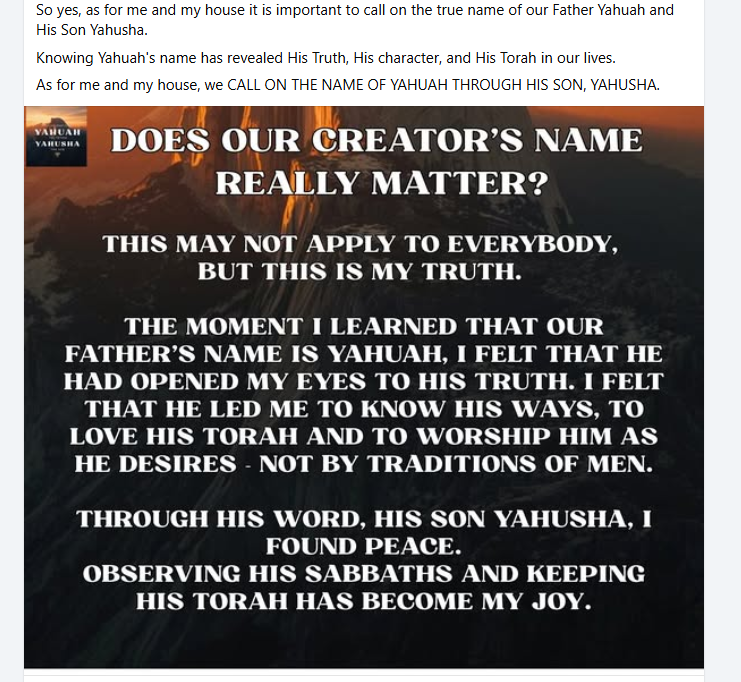
Now I want you to think about this carefully. Yes, we are supposed to worship God as he desires and not by the traditions of men. However, I want you to answer two very important questions.

  1. Who created the languages?
  2. Who knows man’s heart?

The answer to question #1 can be found in Genesis 11:9. Therefore, is the name of it called Babel; because the Lord did there confound the language of all the earth: and from thence did the Lord scatter them abroad upon the face of all the earth. God created the languages when he confounded the language of all the earth. Therefore, isn’t logical that since he created the languages that he also understands the languages. I am not getting into the argument that says the words were mistranslated (that is for linguistics to figure out). God knows that those that speak English use the words that are English. Learning the Bible is hard enough without having to learn a new language just to pray. Remember that on the Day of Pentecost, God poured out His Spirit.

  • Acts 2:4-11 And they were all filled with the Holy Ghost, and began to speak with other tongues, as the Spirit gave them utterance. And there were dwelling at Jerusalem Jews, devout men, out of every nation under heaven. Now when this was noised abroad, the multitude came together, and were confounded, because that every man heard them speak in his own language. And they were all amazed and marvelled, saying one to another, Behold, are not all these which speak Galilaeans? And how hear we every man in our own tongue, wherein we were born? Parthians, and Medes, and Elamites, and the dwellers in Mesopotamia, and in Judaea, and Cappadocia, in Pontus, and Asia, Phrygia, and Pamphylia, in Egypt, and in the parts of Libya about Cyrene, and strangers of Rome, Jews and proselytes, Cretes and Arabians, we do hear them speak in our tongues the wonderful works of God.

Notice how that God started the church by translating the wonderful works of God into many different languages.

The answer to question #2 can be found in 1 Samuel 16:7 But the Lord said unto Samuel, Look not on his countenance, or on the height of his stature; because I have refused him: for the Lord seeth not as man seeth; for man looketh on the outward appearance, but the Lord looketh on the heart. If what is in your heart is correct, then your actions will be correct. Thankfully God is all knowing. He knows what you are trying to say. He knows the intent of your heart.

Now if you have a heart’s desire to learn Hebrew, by all means learn it, but don’t make others feel bad by acting like they are dishonoring God by not learning Hebrew. I would rather that people pray in whatever language that they know and seek God with all their heart, soul, and mind than get discouraged by not knowing how to pray in Hebrew.

It is good to learn Hebrew and Greek for studying the Bible, but when it is time to witness to others, even God on the Day of Pentecost translated it into their language. He started the church by translating what needed to be translated and it wasn’t just Hebrew that he translated the words into.

1st grade week 14 out of 36

Subscribe to continue reading

Subscribe to get access to the rest of this post and other subscriber-only content.

1st grade week 13 out of 36

Subscribe to continue reading

Subscribe to get access to the rest of this post and other subscriber-only content.

Adding Columns of Numbers

Teach children to add columns of numbers.
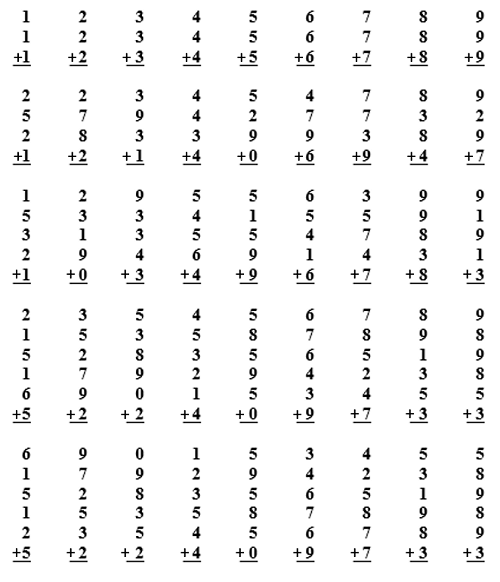
  • Direct children to mentally add the columns below, speaking aloud the results only of each operation.
  • Have children add columns from bottom to top for additional practice.
  • Exercise #1: Add the columns aloud from top to bottom and bottom to top. For example, for the first problem top to bottom, students say ‘2, 3.’

STEP 2

  • Exercise #2: Add the columns aloud from top to bottom and bottom to top. For example, for the first problem top to bottom, students say ‘9, 10.’
  • Direct children to mentally add the columns below, speaking aloud the results only of each operation.
  • Have children add columns from bottom to top for additional practice.
  • Exercise #1: Add the columns aloud from top to bottom and bottom to top. For example, for the first problem top to bottom, students say ‘2, 3.’
  • Exercise #2: Add the columns aloud from top to bottom and bottom to top. For example, for the first problem top to bottom, students say ‘9, 10.’
  • Exercise #3: Add the columns aloud from top to bottom and bottom to top. For example, for the first problem top to bottom, students say ‘4, 6.’

Mother Goose: Christmas

CHRISTMAS

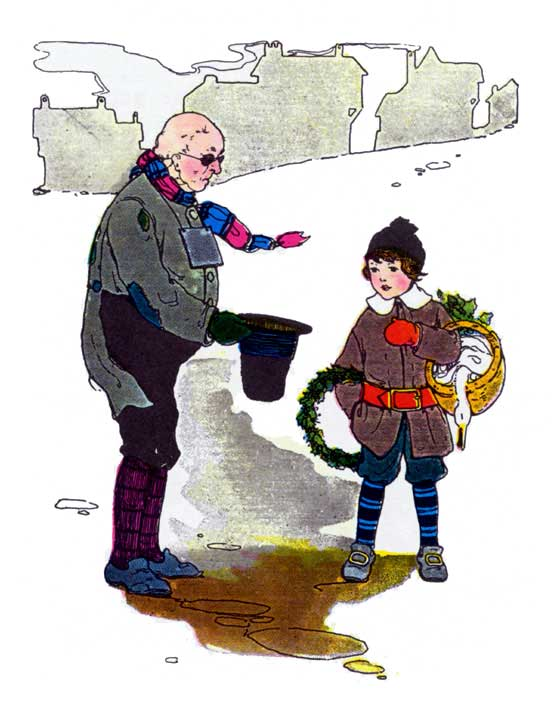
Christmas is coming, the geese are getting fat,
Please to put a penny in an old man’s hat;
If you haven’t got a penny a ha’penny will do,
If you haven’t got a ha’penny, God bless you.

Christmas #2

Christmas comes but once a year,

And when it comes it brings good cheer.

5th grade week 1 out of 36

Print out this page. As you do the assignments, write down the day that you completed each assignment. This will be your attendance record. Also, you can use this to record your scores. Parents, please see the lesson index for more important notes. Remember if any links don’t work, leave a detailed comment in the comments and I will fix it as soon as possible.

Monday

  • Math
    • Notes:
      • This course uses Khan Academy. If you have not done so already, please create a free account.
      • Please be sure to take notes on important points. Write down some of the sample problems in your notes.
      • There will be practice worksheets for you to keep for your records.
    • Unit 1: Decimal place value
  • Science
    • Read the first chapter on Characteristics of Living Organisms. Before you can use this site, you will need to register. Ask a parent to help you create a username and password.
    • This online textbook does not teach that God created the world in six days. It will speak of millions of years. You aren’t expected to take that as fact. You won’t be learning about this, but it mentions evolution, the hypothesis that all living things came from a single-cell organism that mutated and changed and developed into something else. That’s why people call primates our ancestors. They say they changed little by little until they became human. It takes a lot more faith to believe amazing things like DNA and the human eye were made by accident than to believe our incredible world was designed. I call it a hypothesis because it has never been observed happening and therefore cannot be called scientific theory, let alone fact.
    • Watch the video on the introduction to the characteristics of life. You can also watch this cell video. You can jump 40 seconds into it. You don’t need to know all these words, but it’s kind of fascinating watching it all work. It can give you some images in your mind for when you are learning about these things.
    • Answer the review questions 1-5 in your notebook. That’s where you stopped reading.
    • STUDY TIP: Go to the end and read the questions first. That way you can be looking for the answers while you read. It will make it easier for you if you will just take an extra minute to look at the questions before the reading.
  • Social Studies
    • Watch animation about the Growth of the Nation for review and preview. You can click on the box in the corner to watch it full screen.
  • Language Arts: A combination of reading, writing, and grammar.
    • Reading:
      • You will be reading Rebecca of Sunnybrook Farm by Kate Douglas Wiggin     
      • Chapter 1: We are Seven
        • Read the chapter
          • While reading if you come across any words that you don’t know, write them down and look them up in a dictionary.
          • Write down in your notebook:
            • a list of characters. add to this list every time there is new character mentioned.
            • a summary of what you read.
        • Study the vocabulary words.
          • Superintended: Supervised or overseen.
            Leghorn: A type of dried plaited wheat straw fabric or a hat made of such material.
            Seminary: A private residential school for girls.
            Sententiously: Concisely or pithily.
            Hair Trunk: A trunk covered with animal skin with the hair still attached.
            Genteel: Refined or excessively polite.
    • Writing
      • Later in the school year there will be cursive handwriting assignments. If you would like to get ahead start here is a cursive handwriting chart. You could laminate this chart and write and wipe.
  • Bible
  • Art

Tuesday

  • Math
  • Science
    • We’ll learn about cells later, but you should remember that everything in your body is made up of cells. Each cell is about 70% water, so what atoms do you know are present in your cells? (answer: hydrogen and oxygen –H20)
    • Read about skin. You should have created a free account yesterday.
    • Watch this skin lesson.
    • Complete the review questions in your notebook.
  • Social Studies
  • Language Arts:
    • Reading
      • Read chapter 2
        • While reading if you come across any words that you don’t know, write them down and look them up in a dictionary.
        • Write a summary of this chapter.
      • Study the vocabulary words
        • Spinster: A woman who has never been married, especially one past the typical marrying age according to social traditions.
          Votary: Someone who is devoted to a particular pursuit etc; an enthusiast.
          Muses: One of the nine Ancient Greek deities of the arts.
          Plucky: Having or showing courage or spirit in trying circumstances.
          Dauntless: Invulnerable to fear or intimidation.
          Brood: The children in one family.
          Foreshadow: To suggest or hint at something in advance.
      • Spelling
        • How are your spelling skills? Place the vowel combination in the correct coconut to make a word. Choose the hard level.
  • Bible
  • Music

Wednesday

Thursday

  • Math
  • Science
    • Muscular System
      •  Read the section on The Muscular System.
      • Answer review questions 1-6 in your notebook. (All questions this this are to be answered in your notebook.)
  • Social Studies
  • Reading
    • Rebecca of Sunnybrook Farm by Kate Douglas Wiggin     
    • Chapter 4: REBECCA’S POINT OF VIEW
      • While reading if you come across any words that you don’t know, write them down and look them up in a dictionary.
      • Write a summary of this chapter.
      • Remember to add to your list of characters.
  • Bible
  • Computer
    • Internet Review
      • Internet Safety Reminders: Do not download anything onto your computer without permission. Do not click on any advertising on a website even if it looks like a game to play.
      • You can also turn off advertising so that you don’t see bad images.
      • Don’t give out your name, age, address, phone number, email address, photo, etc., online without permission.
      • Do you remember these words: browser, desktop, window, crash, loading, refresh, download? If not, ask someone or look them up in a dictionary.

Friday

  • Math
  • Science
    • Study the attached diagram of muscles.
    • Label the muscles. You may not know all the muscles. That’s okay! Learn from it and try it again. See if you can beat your first score.
  • Social Studies
    • Read the news. Write a summary of the new article that you read.
  • Language Arts:
    • Reading
      • Chapter 5: Wisdom’s Ways
        • While reading if you come across any words that you don’t know, write them down and look them up in a dictionary.
        • Write a summary of this chapter.
        • Remember to add to your list of characters.
    • Spelling
      • Play this spelling game.
  • Bible

5th grade week 4 out of 36

Subscribe to continue reading

Subscribe to get access to the rest of this post and other subscriber-only content.

Kindergarten Week 5 out of 36

Subscribe to continue reading

Subscribe to get access to the rest of this post and other subscriber-only content.