A place to grow your relationship with God

Posts tagged ‘american-history’

 The Coming of the Puritans

Before the Pilgrims had become comfortably settled in their new home, other English people came to various parts of the New England coast to the northward of Plymouth. About 1623, a few scattering immigrants, mostly fishermen, traders with the American Indians, and timber-cutters, began to settle here and there along the sea about Massachusetts Bay, and later came to the colonies of New Hampshire and Maine.

‘Puritans Going to Church’ by George Henry Boughton


We have seen in the preceding chapter that the Pilgrims belonged to that party which had separated itself from the Church of England, and so got the name of Separatists. But there were also a great many people who did not like the ceremonies of the established church, but who would not leave it. These were called Puritans, because they sought to purify the Church from what they thought to be wrong. They formed a large part of the English people, and at a later time, under Oliver Cromwell, they got control of England. But at the time of the settlement of New England the party opposed to the Puritans was in power, and the Puritans were persecuted. The little colony of Plymouth, which had now got through its sufferings, showed them a way out of their troubles. Many of the Puritans began to think of emigration.

In 1628, when Plymouth had been settled almost eight years, the Massachusetts Company was formed. This was a company like the Virginia Company that had governed Virginia at first. The Massachusetts Company was controlled by Puritans, and proposed to make settlements within the territory granted to it in New England. The first party sent out by this company settled at Salem in 1628. Others were sent the next year.

But in 1630 a new and bold move was made. The Massachusetts Company resolved to change the place of holding its meetings from London to its new colony in America. This would give the people in the colony, as members of the company, a right to govern themselves. When this proposed change became known in England, many of the Puritans desired to go to America.
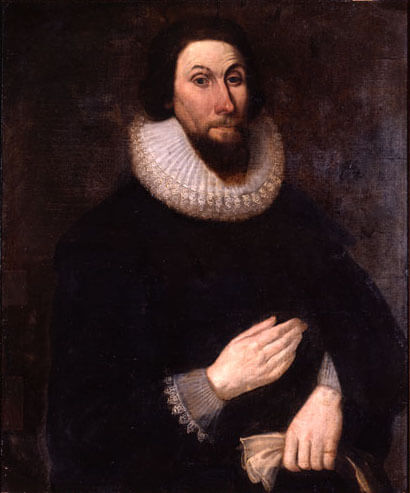
‘Portrait of Governor John Winthrop’ by Anthony van Dyck
John Winthrop, the new governor, set sail for Massachusetts in 1630, with the charter and about a thousand people, Winthrop and a part of his company settled at Boston, and that became the capital of the colony. No colony was settled more rapidly than Massachusetts. Twenty thousand people came between 1630 and 1640, though the colony was troubled for a while by bitter disputes among its people about matters of religion and by a war with the Pequot Indians.

Some of the Puritans in Massachusetts were dissatisfied with their lands. In 1635 and 1636 these people crossed Connecticut through the unbroken woods to the Connecticut River, and settled the towns of Windsor, Wethersfield, and Hartford, though there were already trading posts on the Connecticut River. This was the beginning of the Colony of Connecticut. Another colony was planted in 1638 in the region about New Haven. It was made up of Puritans under the lead of the Rev. John Davenport. In 1665 New Haven Colony was united with Connecticut.

In 1636 Roger Williams, a minister at Salem, in Massachusetts, was banished from that colony on account of his peculiar views on several subjects, religious and political. One of these was the doctrine that every man had a right to worship God without interference by the government. Williams went to the head of Narragansett Bay and established a settlement on the principle of entire religious liberty. The disputes in Massachusetts resulted in other settlements of banished people on Narragansett Bay, which were all at length united in one colony, from which came the present State of Rhode Island.

The first settlement of New Hampshire was made at Little Harbor, near Portsmouth, in 1623. The population of New Hampshire was increased by those who left the Massachusetts Colony on account of the religious disputes and persecutions there. Other settlers came from England. But there was much confusion and dispute about land-titles and about government, in consequence of which the colony was settled slowly. New Hampshire was several times joined to Massachusetts, but it was finally separated from it in 1741.

As early as 1607, about the time Virginia was settled, a colony was planted in Maine; but this attempt failed. The first permanent settlement in Maine was made at Pemaquid in 1625. Maine submitted to Massachusetts in 1652, but it afterward suffered disorders from conflicting governments until it was at length annexed to Massachusetts by the charter given to that colony in 1692. It remained a part of Massachusetts until it was admitted to the Union as a separate State, in 1820.

The New England colonies were governed under charters, which left them, in general, free from interference from England. Plymouth, Massachusetts, Connecticut, New Haven, and Rhode Island were the only colonies on the continent that had the privilege of choosing their own governors. In 1684 the first Massachusetts charter was taken away, and after that the governors of Massachusetts were appointed by the king, but under a new charter given in 1692 the colony enjoyed the greater part of its old liberties.


JOHN WINTHROP

John Winthrop, the principal founder of Massachusetts, was born in 1588. He was chosen Governor of the Massachusetts Company, and brought the charter and all the machinery of the government with him to America in 1630. He was almost continually governor until he died in 1649. He was a man of great wisdom. When another of the leading men in the colony wrote him an angry letter, he sent it back, saying that “he was not willing to keep such a provocation to ill-feeling by him.” The writer of the letter answered, “Your overcoming yourself has overcome me.” When the colony had little food, and Winthrop’s last bread was in the oven, he divided the small remainder of his flour among the poor. That very day a shipload of provisions came. He dressed plainly, drank little but water, and labored with his hands among his servants. He counted it the great comfort of his life that he had a “loving and dutiful son.” This son was also named John. He was a man of excellent virtues, and was the first Governor of Connecticut.

The Starving Time, and What Followed

The Starving Time, and What Followed

When Captain John Smith went back to England, in 1609, there were nearly five hundred settlers in Virginia. But the settlers soon got into trouble with the American Indians, who lay in the woods and killed every one that ventured out. There was no longer any chance to buy corn, and the food was soon exhausted. The starving people ate the hogs, the dogs, and the horses, even to their skins. Then they ate rats, mice, snakes, toadstools, and whatever they could get that might stop their hunger. One deceased American Indian was eaten, and, as their hunger grew more extreme, they were forced to consume their own dead. Starving men wandered off into the woods and died there; their companions, finding them, devoured them as hungry wild beasts might have done. This was always afterward remembered as “the starving time.”

Map Showing the Colony of Virginia by Willem Blaeu


Along with the people who came at the close of John Smith’s time, there had been sent another shipload of people, with Sir Thomas Gates, a new governor for the colony. This vessel had been shipwrecked, but Gates and his people had got ashore on the Bermuda Islands. These islands had no inhabitants at that time. Here these shipwrecked people lived well on wild hogs. When spring came, they built two little vessels of the cedar trees which grew on the island. These they rigged with sails taken from their wrecked ships, and getting their people aboard they made their way to Jamestown.

When they got there, they found alive but sixty of the four hundred and ninety people left in Virginia in the autumn before, and these sixty would all have died had Gates been ten days later in coming. The food that Gates brought would barely last them sixteen days. So he put the Jamestown people aboard his little cedar ships, intending to sail to Newfoundland, in hope of there falling in with some English fishing-vessels. He set sail down the river, leaving not one English settler on the whole continent of America.

Just before Gates and his people got out of the James River, they met a long boat rowing up toward them. Lord De la Warr had been appointed governor of Virginia, and sent out from England. From some men at the mouth of the river he had learned that Gates and all the people were coming down. He sent his long boat to turn them back again. On a Sunday morning De la Warr landed in Jamestown and knelt on the ground a while in prayer. Then he went to the little church, where he took possession of the government, and rebuked the people for the idleness that had brought them into such suffering.
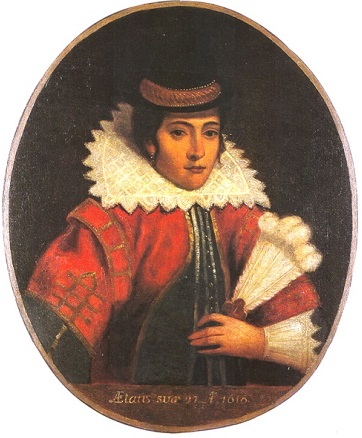
‘Pocahontas’ After Simon van de Passe
During this summer of 1610, a hundred and fifty of the settlers died, and Lord De la Warr, finding himself very ill, left the colony. The next year Sir Thomas Dale took charge, and Virginia was under his government and that of Sir Thomas Gates for five years afterward.

Dale was a soldier, and ruled with extreme severity. He forced the idle settlers to labor, he drove away some of the American Indians, settled some new towns, and he built fortifications. But he was so harsh that the people hated him. He punished men by flogging and by setting them to work in irons for years. Those who rebelled or ran away were put to death in cruel ways; some were burned alive, others were broken on the wheel, and one man, for merely stealing food, was starved to death.

Powhatan, the head chief of the neighboring tribes, gave the colony a great deal of trouble during the first part of Dale’s time. His daughter, Pocahontas, who, as a child, had often played with the boys within the palisades of Jamestown, and had shown herself friendly to Captain Smith and others in their trips among the American Indians, was now a woman grown. While she was visiting a chief named Japazaws, an English captain named Argall hired that chief with a copper kettle to betray her into his hands. Argall took her a captive to Jamestown. Here a settler by the name of John Rolfe married her, after she had received Christian baptism. This marriage brought about a peace between Powhatan and the English settlers in Virginia.

When Dale went back to England in 1616, he took with him some of the American Indians. Pocahontas, who was now called “the Lady Rebecca,” and her husband went to England with Dale. Pocahontas was called a “princess” in England, and received much attention. But she died when about to start back to the colony, leaving a little son.

The same John Rolfe who married Pocahontas was the first Englishman to raise tobacco in Virginia. This he did in 1612. Tobacco brought a large price in that day, and, as it furnished a means by which people in Virginia could make a living, it helped to make the colony successful. But in 1616 there were only three hundred and fifty English people in all North America.

 A History of the United States and its People by Edward Eggleston 

A History of the United States and its People by Edward Eggleston

The content outlines the early history of the United States, detailing exploration, settlement, colonial life, conflicts, and the events leading to the American Revolution.

CHAPTER

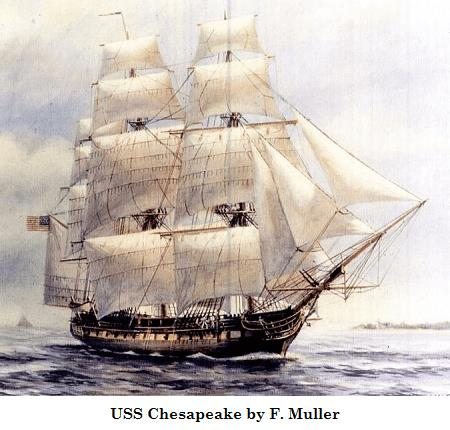
Great Stories for Little Americans Don’t Give Up the Ship

Fred was talking to his sister one day. He said, “Alice, what makes people say, ‘Don’t give up the ship’?”

Alice said, “I don’t know. That’s what the teacher said to me yesterday when I thought that I could not get my lesson.”

“Yes,” said Fred, “and that’s what father said to me. I told him I never could learn to write well.” He only said, “You must not give up the ship, my boy.”

“I haven’t any ship to give up,” said Alice.

“And what has a ship to do with my writing?” said Fred.

“There must be some story about a ship,” Alice said.

“Maybe grandfather would know,” said Fred. “Let’s ask him.”

They found their grandfather writing in the next room. They did not wish to disturb him. They turned to leave the room.

But grandfather looked up just then. He smiled, and laid down his pen.

“Did you want something?” he asked. “We wanted to ask you a question,” said Alice. “We want to know why people say, ‘Don’t give up the ship.'”

“We thought maybe there is a story to it,” said Fred.

“Yes, there is,” said their grandfather. “And I know a little rhyme that tells the story.”

“Could you say it to us?” asked Alice.

“Yes, if I can think of it. Let me see. How does it begin?”

Grandfather leaned his head back in the chair. He shut his eyes for a moment. He was trying to remember.

“Oh, now I remember it!” he said.

Then he said to them these little verses:

When I was but a boy,

I heard the people tell

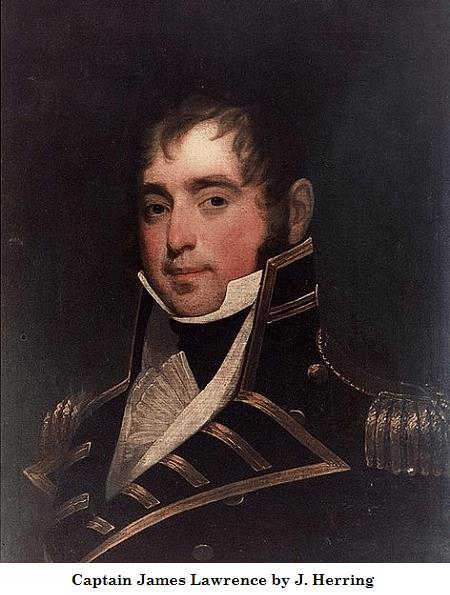
How gallant Captain Lawrence

So bravely fought and fell.

The ships lay close together,

I heard the people say,

And many guns were roaring

Upon that battle day.

A grapeshot struck the captain,

He laid him down to die:

They say the smoke of powder

Made dark the sea and sky.

The sailors heard a whisper

Upon the captain’s lip:

The last command of Lawrence

Was, “Don’t give up the ship.”

And ever since that battle

The people like to tell

How gallant Captain Lawrence

So bravely fought and fell.

When disappointment happens,

And fear your heart annoys,

Be brave, like Captain Lawrence–

And don’t give up, my boys!

The Coming of the Pilgrims

In the seventeenth century (that is, between the year 1600 and the year 1700) there was much religious persecution. In some countries the Catholics persecuted the Protestants, in other countries the Protestants persecuted the Catholics, and sometimes one kind of Protestants persecuted another. There were people in England who did not like the ceremonies of the Church of England, as established by law. These were called Puritans. Some of these went so far as to separate themselves from the Established Church and thus got the name of Separatists. They were persecuted in England, and many of them fled to Holland.

‘Embarkation of the Pilgrims’ by Robert W. Weir


Among these were the members of a little Separatist congregation in Scrooby, in the north of England. Their pastor’s name was John Robinson. In 1607, the year in which Jamestown was settled, these persecuted people left England and settled in Holland, where they lived about thirteen years, most of the time in the city of Leyden [li’-den]. Then they thought they would like to plant a colony in America, where they could be religious in their own way. These are the people that we call “The Pilgrims,” on account of their wanderings for the sake of their religion.

About half of them were to go first. The rest went down to the sea to say farewell to those who were going. It was a sad parting, as they all knelt down on the shore and prayed together. The Pilgrims came to America in a ship called the Mayflower. There were about a hundred of them, and they had a stormy and wretched passage. They intended to go to the Hudson River, but their captain took them to Cape Cod. After exploring the coast north of that cape for some distance, they selected as a place to land a harbor which had been called Plymouth on the map prepared by Captain John Smith, who had sailed along this coast in an open boat in 1614.

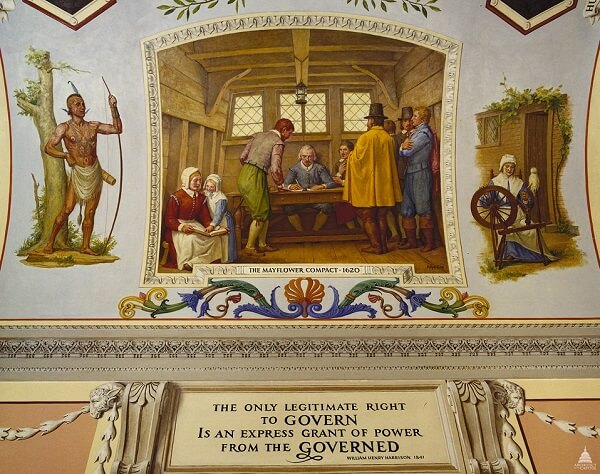
All the American Indians who had lived at this place had died a few years before of a pestilence, and the Pilgrims found the American Indian fields unoccupied. They first landed at this place on the nth day of December, 1620, as the days were then counted. This is the same as the 21st of December now, the mode of counting having changed since that time. (Through a mistake, the 22nd of December is generally kept in New England as “Forefathers’ Day.”) Before landing, the Pilgrims drew up an agreement by which they promised to be governed.

The bad voyage, the poor food with which they were provided, and a lack of good shelter in a climate colder than that from which they came, had their natural effect. Like the first settlers at Jamestown, they were soon nearly all sick. Forty-four out of the hundred Pilgrims died before the winter was ended, and by the time the first year was over half of them were dead. The Pilgrims were afraid of the American Indians, some of whom had attacked the first exploring party that had landed. To prevent the American Indians from finding out how much the party had been weakened by disease, they leveled all the graves, and planted Indian corn over the place in which the dead were buried.
‘The Mayflower Compact, 1620’ by the Architect of the Capitol
One day, after the winter was over, an American Indian walked into the village and said in English, “Welcome, Englishmen.” He was a chief named Sam-o’-set, who had learned a little English from the fishermen on the coast of Maine. Samoset afterward brought with him an American Indian named Squanto, who had been carried away to England by a cruel captain many years before, and then brought back. Squanto remained with the Pilgrims, and taught them how to plant their corn as the American Indians did, by putting one or two fish into every hill for manure. He taught them many other things, and acted as their interpreter in their trading with the American Indians. He told the American Indians that they must keep peace with the settlers, who had the pestilence stored in their cellar along with the gunpowder. The neighboring chief, Mas-sa-so’-it, was also a good friend to the Pilgrims as long as he lived.

Captain Myles Standish was the military commander at Plymouth. He dealt severely with any American Indians supposed to be hostile. Finding that certain of the Massachusetts Indians were planning to kill all the settlers, he and some of his men seized the plotters suddenly and killed them with the knives which the American Indians wore suspended from their own necks.

The people of Plymouth suffered much from scarcity of food for several years. They had often nothing but oysters or clams to eat for a long time together, and no drink but water Like the Jamestown people, they tried a plan of living out of a common stock, but with no better success. In 1624 each family received a small allotment of land for its own, and from that time there was always plenty to eat in Plymouth. Others of the Pilgrims came to them from Holland, as well as a few emigrants from England. Plymouth Colony was, next to Virginia, the oldest colony of all, but it did not grow very fast, and in 1692, by a charter from King William III, it was united with Massachusetts, of which its territory still forms a part.


PILGRIMS AT HOME

The Pilgrims held their meetings in a square house on top of a hill at Plymouth. On the flat roof of this house were six small cannons. The people were called to church by the beating of a drum. The men carried loaded firearms with them when they went to meeting on Sunday, and put them where they could reach them easily. The town was surrounded by a stockade and had three gates. Elder Brewster was the religious teacher of the Pilgrims at Plymouth; their minister, John Robinson, having stayed with those who waited in Holland, and died there. It is said that Brewster, when he had nothing but shellfish and water for dinner, would cheerfully give thanks that they were “permitted to suck of the abundance of the seas and of the treasures hid in the sand.”

How Jamestown was Settled

After the total disappearance of Raleigh’s second colony, many years passed before another attempt was made. In 1602 Bartholomew Gosnold tried to plant a colony on the Island of Cuttyhunk, Massachusetts, in Buzzard’s Bay. If this had succeeded, New England would have been first settled, but the men that were to stay went back in the ship that brought them. In 1603 Queen Elizabeth died, and her cousin, James VI, King of Scotland, came to the throne of England as James I. In 1606, while Raleigh was shut up in the Tower of London, a company of merchants and others undertook to send a new colony to America. Some of the men who had been Raleigh’s partners in his last colony were members of this new “Virginia Company.”

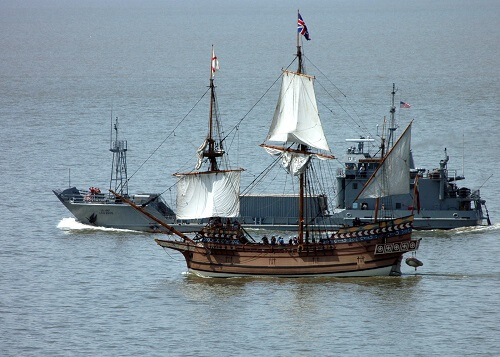
It was in the stormy December of 1606 that the little colony set out. There were, of course, no steamships then; and the vessels they had were clumsy, small, and slow. The largest of the three ships that carried out the handful of people which began the settlement of the United States was named “Susan Constant.” She was of a hundred tons burden. Not many ships so small cross the ocean today. But the “Godspeed” which went along with her was not half so big, and the smallest of the three was a little pinnace of only twenty tons, called “Discovery.”

On account of storms, these feeble ships were not able to get out of sight of the English coast for six weeks. People in that time were afraid to sail straight across the unknown Atlantic Ocean; they went away south by the Canary Islands and the West Indies, and so made the distance twice as great as it ought to have been. It took the new colony about four months to get from London to Virginia. They intended to land on Roanoke Island, where Raleigh’s unfortunate colonies had been settled, but a storm drove them into a large river, which they called “James River,” in honor of the king. They arrived in Virginia in the month of April, when the banks of the river were covered with flowers. Great white dog-wood blossoms and masses of bright-colored red-bud were in bloom all along the James River. The newcomers said that heaven and earth had agreed together to make this a country to live in.
Replica Ship Susan Constant (In Front of Navy Vessel)
After sailing up and down the river they selected a place to live upon, which they called Jamestown.

The Jamestown Colony

They had now pretty well eaten up their supply of food, and they had been so slow in settling themselves that it was too late to plant even if they had cleared ground. One small ladleful of pottage made of worm-eaten barley or wheat was all that was given to a man for a meal. The settlers were attacked by the American Indians, who wounded seventeen men and killed one boy in the fight. Each man in Jamestown had to take his turn every third night in watching against the American Indians, lying on the cold, bare ground all night. The only water to drink was that from the river, which was bad. The people were soon nearly all of them sick; there were not five able-bodied men to defend the place had it been attacked. Sometimes as many as three or four died in a single night, and sometimes the living were hardly able to bury those who had died. There were about a hundred colonists landed at Jamestown, and one half of these died in the first few months. All this time the men in Jamestown were living in wretched tents and poor little hovels covered with earth, and some of them even in holes dug into the ground. As the sickness passed away, those who remained built themselves better cabins, and thatched the roofs with straw.
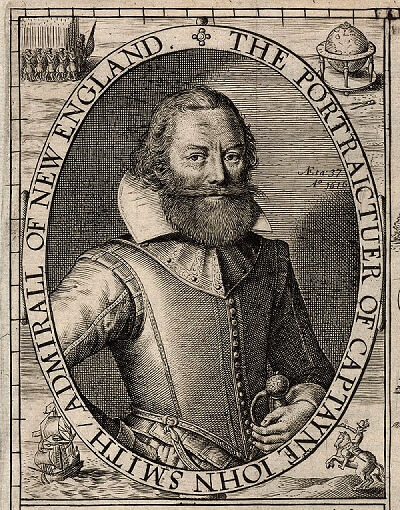
Captain John Smith
One of the most industrious men in the colony at this time was Captain John Smith, a young man who had had many adventures, of which he was fond of boasting. He took the little pinnace “Discovery” and sailed up and down the rivers and bays of Virginia, exploring the country, getting acquainted with many tribes of American Indians, and exchanging beads, bells, and other trinkets for corn, with which he kept the Jamestown people from starving. In one of these trips two of his men were killed, and he was made captive, and led from tribe to tribe a prisoner. But he managed so well that Powhatan [povv-at-tan’], the head chief of about thirty tribes, set him free and sent him back to Jamestown. It was in this captivity that he made the acquaintance of Pocahontas [po-ka-hun’-tas], a daughter of Powhatan. She was then about ten years old, and Captain Smith greatly admired her. Many years afterward he told a pretty story about her putting her arms about her neck and saving his life when Powhatan wished to put him to death.

John Smith explored Chesapeake Bay in two voyages, enduring many hardships with cheerfulness. He and his men would move their fire two or three times in a cold night, that they might have the warm ground to lie upon. He managed the American Indians well, put down mutinies at Jamestown, and rendered many other services to the colony. He was the leading man in the new settlement, and came at length to be governor. But when many hundreds of new settlers were brought out under men who were his enemies, and Smith had been injured by an explosion of gunpowder, he gave up the government and went back to England.


CAPTAIN JOHN SMITH

Captain John Smith was born in England in 1579. While yet little more than a boy, he went into the wars in the Netherlands. He was afterward shipwrecked, robbed at sea, and suffered great want in France. He fought against the Turks and slew three of them in single combat. He was at length made prisoner by the Turks and reduced to slavery. By killing his master, he got free, escaping into Russia, after sixteen days of wandering. He got back to England and soon departed with the first company to Jamestown. After leaving Virginia he was the first to examine carefully the coast of New England, and he received the title of “Admiral of New England.” He was a bold and able explorer and a brave man, with much practical wisdom. His chief faults were his vanity and boastfulness, which led him to exaggerate his romantic adventures. But without him the Jamestown colony would probably have perished. Like many other worthy men, he died poor and neglected.

Great Stories for Little Americans Washington Irving as a Boy

The Revolution was about over. Americans were very happy. Their country was to be free.

At this time, a little boy was born in New York. His family was named Irving. What should this little boy be named?

His mother said, “Washington’s work is done. Let us name the baby Washington.” So he was called Washington Irving.

When this baby grew to be a little boy, he was one day walking with his nurse. The nurse was a Scotch girl. She saw General Washington go into a shop. She led the little boy into the shop also.

The nurse said to General Washington, “Please, your Honor, here is a bairn that is named for you.”

“Bairn” is a Scotch word for child. Washington put his hand on the little boy’s head and gave him his blessing. When Irving became an author, he wrote a life of Washington.

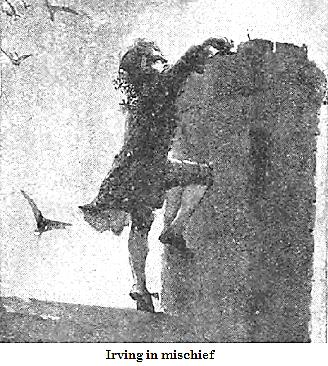
Little Irving was a merry, playful boy. He was full of mischief.

Sometimes he would climb out of a window to the roof of his father’s house. From this he would go to roofs of other houses. Then the little rascal would drop a pebble down a neighbor’s chimney. Then he would hurry back and get into the window again. He would wonder what the people thought when the pebble came rattling down their chimney. Of course, he was punished when his tricks were found out. But he was a favorite with his teacher. With all his faults, he would not tell a lie. The teacher called the little fellow “General.”

In those days, naughty schoolboys were whipped. Irving could not bear to see another boy suffer. When a boy was to be whipped, the girls were sent out. Irving always asked the schoolmaster to let him go out with the girls.

Like other boys, Irving was fond of stories. He liked to read about Sindbad the Sailor, and Robinson Crusoe. But most of all he liked to read about other countries. He had twenty small volumes called “The World Displayed.” They told about the people and countries of the world. Irving read these little books a great deal.

One day the schoolmaster caught him reading in school. The master slipped behind him and grabbed the book. Then he told Irving to stay after school.

Irving expected a punishment. But the master told him he was pleased to find that he liked to read such good books. He told him not to read them in school.

Reading about other countries made Irving wish to see them. He thought he would like to travel. Like other wild boys, he thought of running away. He wanted to go to sea.

But he knew that sailors had to eat salt pork. He did not like salt pork. He thought he would learn to like it. When he got a chance, he ate pork. And sometimes he would sleep all night on the floor. He wanted to get used to a hard bed.

But the more he ate pork, the more he disliked it. And the more he slept on the floor, the more he liked a good bed. So he gave up his foolish notion of being a sailor boy.

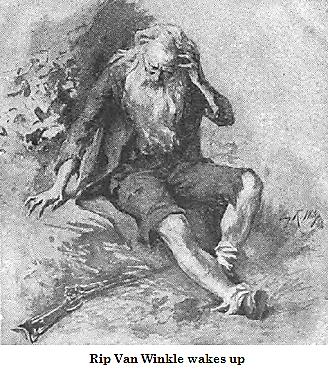
Someday, you will read Irving’s “Sketch Book.” You will find some famous stories in it. There is the story of Rip Van Winkle, who slept twenty years. And there is the funny story of the Headless Horseman. When you read these amusing stories, you will remember the playful boy who became a great author.

The Mystery of Roanoke Colony

Learn the Mystery of Roanoke Colony

  • The Roanoke Colony was England’s first attempt at a permanent settlement in North America.
  • The people of the colony disappeared under mysterious circumstances, leaving behind an empty fort.
  • The colonists and their bodies were never found.
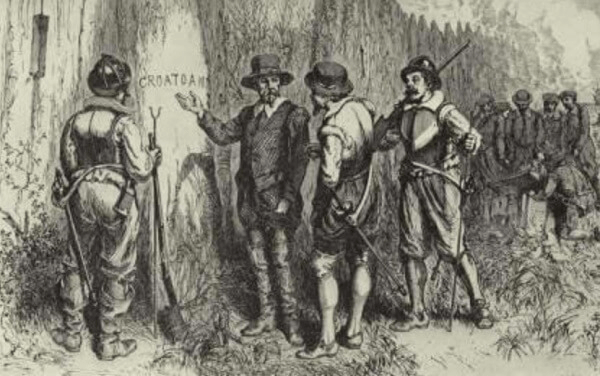
  • The only clue found was the word, ‘CROATOAN’ carved into Roanoke’s fort palisade.
  • Hypotheses include that the colonists were taken in or killed by the local Croatan Indians.
John White discovers the word “CROATOAN”
carved at Roanoke’s fort palisade
by unknown


Lost Colony of Roanoke
The Roanoke Colony was England’s first attempt to establish a settlement in the Americas. Sadly, the effort failed when the settlers vanished under mysterious conditions, earning it the nickname “The Lost Colony.”

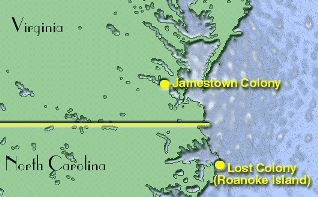
Map showing location of
Jamestown and Roanoke Island Colonies
by NOAA


Where was the colony located?

The Roanoke Colony was situated on Roanoke Island, just off the coast of what is now North Carolina. At the time, this area was considered part of Virginia.

Early Plans

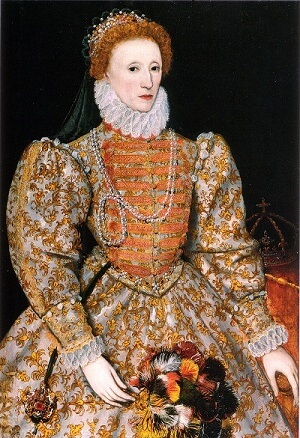
In 1584, Queen Elizabeth I granted Sir Walter Raleigh the land of Virginia in North America. The British aimed to expand their empire by establishing a presence in the Americas. Raleigh sent Captain Philip Amadas and Captain Arthur Barlowe to explore the region. They came across Roanoke Island and encountered the local natives. Raleigh decided it was an ideal spot to set up a colony.

First Colony at Roanoke

The first expedition to Roanoke was led by Sir Richard Greenville. The expedition arrived at Roanoke in 1585. Greenville left 107 settlers, all men, at Roanoke under the charge of Ralph Lane. Greenville then returned to England in order to gather additional supplies for the settlement.

The settlers built a fort at Roanoke, but struggled to survive. It didn’t help matters that they were constantly fighting with the local Native Americans. When English explorer Sir Francis Drake passed by the settlement and offered to take them back to England, the colonists agreed. Not long after the colonists left, Captain Greenville finally returned with new supplies only to discover that the settlement had been abandoned. He left a small group of men on the island and then returned to England.

Second Colony at Roanoke

A second attempt at starting a colony at Roanoke occurred in 1587. This time 115 colonists travelled to Roanoke led by John White. They hoped to find the men that Greenville had left a year earlier. However, upon their arrival, all they found at the settlement was a human skeleton. Despite this setback, the colonists began to build their settlement on Roanoke. Not long after their arrival, a girl named Virginia Dare was born. She was the first child born in the Americas to English parents.

Unfortunately, the colonists continued to have disputes with the local tribes and some colonists were killed. They also discovered that they were ill-prepared to build a thriving colony. John White decided to return to England in order to gain supplies and reinforcements for the colony.


The Colony has Disappeared

After returning to England, White could find little help for the colony. England was in the middle of a large battle with Spain and the Spanish Armada. As a result, White was unable to return until three years later in 1590. When White arrived he found the colony completely abandoned. The only clues that White found included the word “Croatoan” carved into a fence post and “Cro” carved into a tree.

White found no sign of a struggle, however, and figured that the colonists had moved to Croatoan, which was what they called a nearby island (Hatteras Island). He also had reason to hope because he had told the colonists to carve a Maltese cross if they were being forced leave. Since he found no cross, he figured the colonists were okay. White was unable to search the nearby island for the colonists because of a bad storm and was forced to return to England.

The colonists were never heard from again and the colony gained the nickname the “Lost Colony.”

 Sir Walter Raleigh Tries to Settle a Colony in America

Sir Walter Raleigh

Sir Walter Raleigh, while yet a young man, fought for years on the side of the Huguenots in the French civil wars, and afterward in the war in Ireland. On his return from Ireland, it is said that he won the Queen’s favor by throwing his new plush cloak into a muddy place in the road for her to walk on. He fitted out ships and fought against the Great Armada, or fleet, of Spain, when that country tried to conquer England. He was a great statesman, a great soldier, a great seaman, and an excellent poet and historian. He is said to have first planted the potato in Ireland. King James I kept him in prison in the Tower for more than twelve years, and then released him. In 1618 the same king had this great man put to death to please the King of Spain. When Raleigh was about to be beheaded, he felt of the edge of the axe, and said, “It is a sharp medicine to cure me of all my diseases.”

Sir Walter Raleigh was the first that landed a colony of English people on the land that is now the United States. Having received from Queen Elizabeth a charter which gave him a large territory in America, he sent out an exploring expedition in 1584, ninety-two years after the discovery by Columbus. This expedition was commanded by two captains, named Amidas and Barlowe. They landed on the coast in that part of America which we now call North Carolina. The country pleased them very much. They wondered at the wild grape-vines, which grew to the tops of the highest trees, and they found the American Indians very friendly. They stayed about six weeks in the New World, and, everything here being strange to their eyes, they fell into many mistakes in trying to describe what they saw and heard. When they got back to England, they declared that the part of America they had seen was the paradise of the world.

Raleigh was much encouraged by the accounts which his two captains gave of the new country they had found. It was named Virginia at this time, in honor of Queen Elizabeth, who was often called the “Virgin Queen.” But the name Virginia, which we apply to two of our states, was then used for nearly the whole eastern part of what is now the United States, between Maine and Georgia.
Queen Elizabeth I of England
In 1585, the year after the return of the first expedition, Raleigh sent out a colony to remain in America. Sir Richard Grenville, a famous seaman, had command of this expedition; but he soon returned to England, leaving the colony in charge of Ralph Lane. There were no women in Ralph Lane’s company. They made their settlement on Roanoke Island, which lies near to the coast of North Carolina, and they explored the mainland in many directions. They spent much time in trying to find gold, and they seem to have thought that the shell-beads worn by the American Indians were pearls. Like all the others who came to America in that time, they were very desirous of finding a way to get across America, which they believed to be very narrow. They hoped to reach the Pacific Ocean, and so open a new way of sailing: to China and the East Indies.

The American Indians by this time were tired of the settlers, and anxious to be rid of them. They told Lane that the Roanoke River came out of a rock so near to a sea at the west that the water sometimes dashed from the sea into the river, making the water of the river salt. Lane believed this story, and set out with most of his men to find a sea at the head of the river. Long before they got to the head of the Roanoke, their provisions gave out. But Lane made a brave speech to his men, and they resolved to go on. Having nothing else to eat, they killed their two dogs, and cooked the meat with sassafras leaves to give it a relish. When this meat was exhausted, they got into their boats and ran swiftly down the river, having no food to eat on the way home. Lane got back to Roanoke Island just in time to keep the American Indians from killing the men he had left there.

Sir Francis Drake came to see the colony on his return from an expedition to the West Indies. He furnished the company on the island with a ship and with whatever else they needed. But, while he remained at Roanoke, a storm arose which drove to sea the ship he had given to Lane. This so discouraged the colonists that they returned to England.
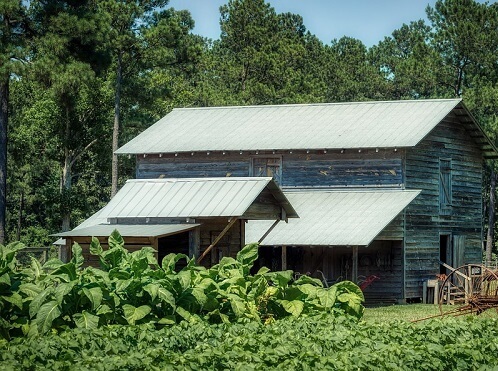
Tobacco Field in South Carolina
Ralph Lane and his companions were the first to carry tobacco into England. They learned from the American Indians to smoke it by drawing the smoke into their mouths and puffing it out through their nostrils. Raleigh adopted the practice, and many distinguished men and women followed his example. Some of the first tobacco-pipes in England were made by using a walnut-shell for the bowl of the pipe and a straw for the stem. It is related that, when Raleigh’s servant first saw his master with the smoke coming from his nose, he thought him to be on fire, and poured a pitcher of ale, which he was fetching, over Sir Walter’s head, to put the fire out.

Raleigh set to work, with the help of others, to send out another colony. This time he sent women and children, as well as men, intending to make a permanent settlement. The governor of this company was John White, an artist. Soon after White’s company had settled themselves on Roanoke Island, an English child was born. This little girl, being the first English child born in Virginia, was named Virginia Dare.

John White, the governor of the colony, who was Virginia Dare’s grandfather went back to England for supplies. He was detained by the war with Spain, and, when he got back to Roanoke Island, the colony had disappeared Raleigh had spent so much money already that he was forced to give up the attempt’ to plant a colony in America. But he sent several times to seek for the lost people of his second colony, without finding them. Twenty years after John White left them, it was said that seven of them were still alive among the American Indians of North Carolina.

Great Stories for Little Americans The First Steamboat

The first good steamboat was built in New York. She was built by Robert Fulton. Her name was “Clermont.” When the people saw her, they laughed. They said that such a boat would never go. For thousands of years, boatmen had made their boats go by using sails and oars. People had never seen any such boat as this. It seemed foolish to believe that a boat could be pushed along by steam.

The time came for Fulton to start his boat. A crowd of people were standing on the shore. The black smoke was coming out of the smokestack. The people were laughing at the boat. They were sure that it would not go. At last, the boat’s wheels began to turn around. Then the boat began to move. There were no oars. There were no sails. But still the boat kept moving. Faster and faster she went. All the people now saw that she could go by steam. They did not laugh anymore. They began to cheer.

The little steamboat ran up to Albany. The people who lived on the river did not know what to make of it. They had never heard of a steamboat. They could not see what made the boat go.

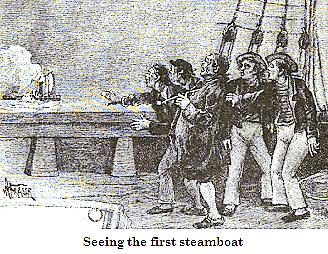
There were many sailing vessels on the river. Fulton’s boat passed some of these in the night. The sailors were afraid when they saw the fire and smoke. The sound of the steam seemed dreadful to them. Some of them went downstairs in their ships for fear. Some of them went ashore. Perhaps they thought it was a living animal that would eat them up.

But soon there were steamboats on all the large rivers.