Robert Fulton was the man who set steamboats to running on the rivers. Other men had made such boats before. But Fulton made the first good one.
When he was a boy, he lived in the town of Lancaster in Pennsylvania. Many guns were made in Lancaster. The men who made these guns put little pictures on them. That was to make them sell to the hunters who liked a gun with pictures. Little Robert Fulton could draw very well for a boy. He made some pretty little drawings. These the gun makers put on their guns.
Fulton went to the gun shops a great deal. He liked to see how things were made. He tried to make a small air gun for himself.
He was always trying to make things. He got some quicksilver. He was trying to do something with it. But he would not tell what he wanted to do. So the gunsmiths called him Quicksilver Bob.
He was so much interested in such things, that he sometimes neglected his lessons. He said that his head was so full of new notions, that he had not much room left for school learning.
One morning he came to school late.
“What makes you so late?” asked the teacher.
“I went to one of the shops to make myself a lead pencil,” said little Bob. “Here it is. It is the best one I ever had.”
The teacher tried it, and found it very good. Lead pencils in that day were made of a long piece of lead sharpened at the end.
Quicksilver Bob was a very odd little boy. He said many curious things. Once the teacher punished him for not getting his lessons. He rapped Robert on the knuckles with a ferule. Robert did not like this any more than any other boy would.
“Sir,” said the boy, “I came here to have something beaten into my head, not into my knuckles.”
In that day people used to light candles and stand them in the window on the Fourth of July. These candles in every window lighted up the whole town. But one year candles were scarce and high. The city asked the people not to light up their windows on the Fourth.
Bob did not like to miss the fun of his Fourth of July. He went to work to make something like rockets or Roman candles. It was a very dangerous business for a boy.
“What are you doing, Bob?” someone asked him.
“The city does not want us to burn our candles on the Fourth,” he said. “I am going to shoot mine into the air.”
He used to go fishing with a boy named Chris Gumpf. The father of Chris went with them. They fished from a flat boat. The two boys had to push the boat to the fishing place with poles.
“I am tired of poling that boat,” said Robert to Chris one day when they came home.
So he set to work to think out a plan to move the boat in an easier way than by poles. He whittled out the model of a tiny paddle wheel. Then he went to work with Chris Gumpf, and they made a larger paddle wheel. This they set up in the fishing boat. The wheel was turned by the boys with a crank. They did not use the poles anymore.
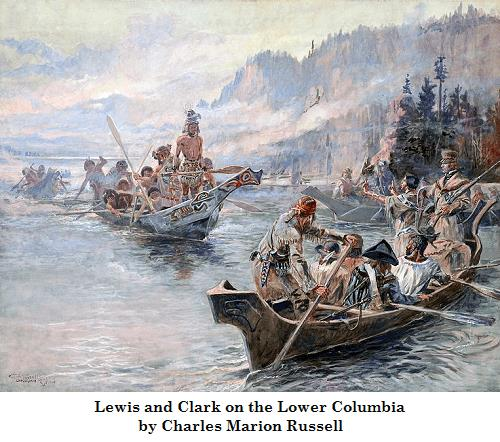
A long time ago, when Thomas Jefferson was President, most of the people in this country lived in the East. Nobody knew anything about the Far West. The only people that lived there were Indians. Many of these Indians had never seen a white man.
The President sent men to travel into this wild part of the country. He told them to go up to the upper end of the Missouri River. Then they were to go across the Rocky Mountains. They were to keep on till they got to the Pacific Ocean. Then they were to come back again. They were to find out the best way to get through the mountains. And they were to find out what kind of people the Indians in that country were. They were also to tell about the animals.
There were two captains of this company. Their names were Lewis and Clark. There were forty-five men in the party.
They were gone two years and four months. For most of that time they did not see any white men but their own party. They did not hear a word from home for more than two years.
They got their food mostly by hunting. They killed a great many buffaloes and elks and deer. They also shot wild geese and other large birds. Sometimes they had nothing but fish to eat. Sometimes they had to eat wolves. When they had no other meat, they were glad to buy dogs from the Indians and eat them. Sometimes they ate horses. They became fond of the meat of dogs and horses.
When they were very hungry, they had to live on roots if they could get them. Some of the Indians made a kind of bread out of roots. The white men bought this when they could not get meat. But there were days when they did not have anything to eat.
They were very friendly with the Indians. One day some of the men went to make a visit to an Indian village. The Indians gave them something to eat.
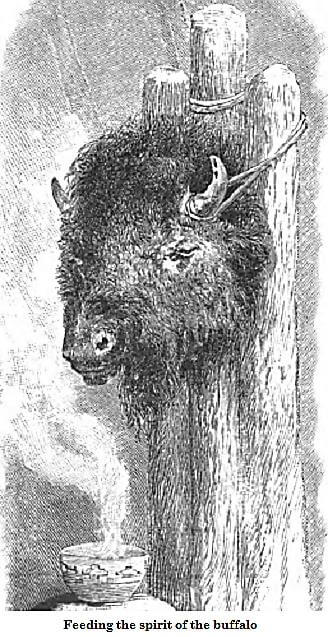
In the Indian wigwam where they were, there was a head of a dead buffalo. When dinner was over, the Indians filled a bowl full of meat. They set this down in front of the head. Then they said to the head, “Eat that.”
The Indians believed, that, if they treated this buffalo head politely, the live buffaloes would come to their hunting ground. Then they would have plenty of meat. They think the spirit of the buffalo is a kind of a god. They are very careful to please this god.
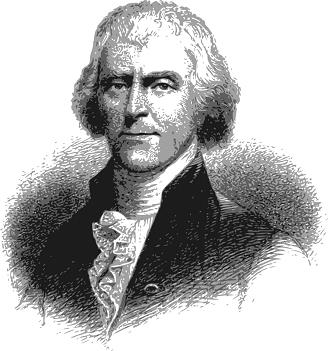
Thomas Jefferson was one of the great men of the Revolution. He was not a soldier. He was not a great speaker. But he was a great thinker. And he was a great writer.
He wrote a paper that was the very beginning of the United States. It was a paper that said that we would be free from England, and be a country by ourselves. We call that paper the Declaration of Independence.
When he was a boy, Jefferson was fond of boyish plays. But when he was tired of play, he took up a book. It pleased him to learn things. From the time when he was a boy he never sat down to rest without a book.
At school he learned what other boys did. But the difference between him and most other boys was this: he did not stop with knowing just what the other boys knew. Most boys want to learn what other boys learn. Most girls would like to know what their schoolmates know. But Jefferson wanted to know a great deal more.
As a young man, Jefferson knew Latin and Greek. He also knew French and Spanish and Italian.
He did not talk to show off what he knew. He tried to learn what other people knew. When he talked to a wagon maker, he asked him about such things as a wagon maker knows most about. He would sometimes ask how a wagon maker would go to work to make a wheel.
When Jefferson talked to a learned man, he asked him about those things that this man knew most about. When he talked with Indians, he got them to tell him about their language. That is the way he came to know so much about so many things. Whenever anybody told him anything worthwhile, he wrote it down as soon as he could.
One day Jefferson was traveling. He went on horseback. That was a common way of traveling at that time. He stopped at a country tavern. At this tavern, he talked with a stranger who was staying there.
After a while Jefferson rode away. Then the stranger said to the landlord, “Who is that man? He knew so much about law, that I was sure he was a lawyer. But when we talked about medicine, he knew so much about that, that I thought he must be a doctor. And after a while he seemed to know so much about religion, that I was sure he was a minister. Who is he?”
The stranger was very much surprised to hear that the man he had talked with was Thomas Jefferson.
Jefferson was a very polite man. One day his grandson was riding with him. They met a man. The man lifted his cap and bowed. Jefferson bowed to the man. But his grandson did not think it worthwhile to bow.
Then Jefferson said to his grandson, “Do not let another man be more of a gentleman than you are.” In the Declaration of Independence, Jefferson wrote these words: “All men are created equal.” He also said that the poor man had the same right as the rich man to live, and to be free, and to try to make himself happy.
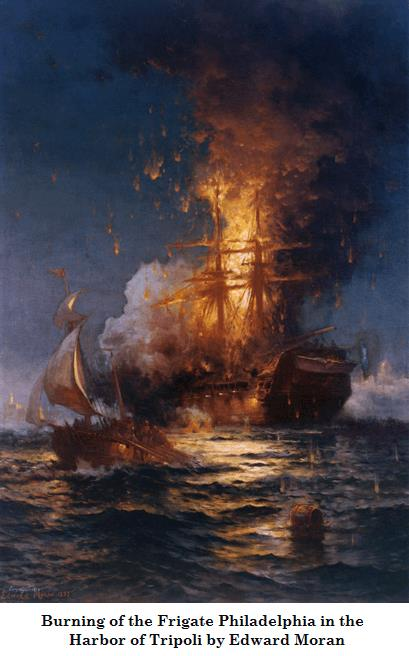
Nearly a hundred years have passed since the ship “Philadelphia” was burned. But the brave sailors who did it will never be forgotten.
The people of Tripoli in Africa were pirates. They took the ships of other nations at sea. They made slaves of their prisoners. The friends of these slaves sometimes sent money to buy their freedom. Some countries paid money to these pirates to let their ships go safe.
Our country had trouble with the pirates. This trouble brought on a war. Our ships were sent to fight against Tripoli.
One of the ships fighting against the pirates was called the “Philadelphia.” One day she was chasing a ship of Tripoli. The “Philadelphia” ran on the rocks. The sailors could not get her off. The pirates came and fought her as she lay on the rocks. They took her men prisoners. Then they went to work to get her off. After a long time, they got her into deep water. They took her to Tripoli. Our ships could not go there after her, because there were so many great cannons on the shore near the ship.
The pirates got the “Philadelphia” ready to go to sea. They loaded her cannons. They meant to slip out past our ships of war. Then they would take a great many smaller American ships.
But the Americans laid a plan to burn the “Philadelphia.” It was a very dangerous thing to try to do. The pirates had ships of war near the “Philadelphia.” They had great guns on the shore. There was no way to do it in the daytime. It could only be done by stealing into the Bay of Tripoli at night.
The Americans had taken a little vessel from the pirates. She was of the kind that is called a ketch. She had sails. She also had long oars. When there was no wind to sail with, the sailors could row her with the oars.
This little ketch was sent one night to burn the “Philadelphia.” The captain of this boat was Stephen Decatur. He was a young man, and very brave.
Decatur made his men lie down, so that the pirates would not know how many men he had on his ketch. Only about ten men were in sight. The rest were lying hidden on the boat.
They came near to the “Philadelphia.” It was about ten o’clock at night. The pirates called to them. The pilot of the ketch told them that he was from Malta. He told them that he had come to sell things to the people of Tripoli. He said that the ketch had lost her anchor. He asked them to let him tie her to the big ship till morning.
The pirates sent out a rope to them. But when the ketch came nearer, the pirates saw that they had been fooled. They cried out, “Americans, Americans!”
Then the Americans lying down took hold of the rope and pulled with all their might, and drew the ketch close to the ship. They were so close, that the ship’s cannons were over their heads. The pirates could not fire at them.
The men who had been lying still now rose up. There were eighty of them. In a minute, they were scrambling up the sides of the big ship. Some went in one way, some another. They did not shoot. They fought with swords and pikes, or short spears.
Soon they drove the pirates to one side of the ship. Then they could hear the pirates jumping over into the water. In a few minutes the pirates had all gone.
But the Americans could not stay long. They must burn the ship before the pirates on the shore should find out what they were doing.
They had brought a lot of kindling on the ketch. They built fires in all parts of the ship. The fire ran so fast, that some of the men had trouble to get off the ship.
When the Americans got back on the ketch, they could not untie the rope that held the ketch to the ship. The big ship was bursting into flames. The ketch would soon take fire.
They took swords and hacked the big rope in two. Then they pushed hard to get away from the fire. The ketch began to move. The sailors took the large oars and rowed. They were soon safe from the fire.
All this they had done without any noise. But, now that they had got away, they looked back. The fire was shooting up toward the sky. The men stopped rowing, and they gave three cheers. They were so glad, that they could not help it.
By this time the pirates on shore had waked up. They began to fire great cannon balls at the little ketch. One of the balls went through her sails. Ah! how the sailors rowed!
The whole sky was now lighted up by the fire. The pirates’ cannons were thundering. The cannon balls were splashing the water all around the ketch. But the Americans got away. At last, they were safe in their own ships.
At the time of the Revolution there were but few people living on the north side of the Ohio River. But there were many Indians there. These Indians killed a great many settlers in Kentucky.
The Indians were sent by British officers to do this killing. There was a British fort at Vincennes in what is now Indiana. There was another British fort or post at Kaskaskia in what is now the State of Illinois.
George Rogers Clark was an American colonel. He wanted to stop the murder of the settlers by the Indians. He thought that he could do it by taking the British posts.
He had three hundred men. They went down the Ohio River in boats. They landed near the mouth of the Ohio River. Then they marched a hundred and thirty miles to Kaskaskia.
Kaskaskia was far away from the Americans. The people there did not think that the Americans would come so far to attack them. When Clark got there, they were all asleep. He marched in and took the town before they woke up.
The people living in Kaskaskia were French. By treating them well, Clark made them all friendly to the Americans.
When the British at Vincennes heard that Clark had taken Kaskaskia, they thought that they would take it back again. But it was winter. All the streams were full of water. They could not march till spring. Then they would gather the Indians to help them, and take Clark and his men.
But Clark thought that he would not wait to be taken. He thought that he would just go and take the British. If he could manage to get to Vincennes in the winter, he would not be expected.
Clark started with a hundred and seventy men. The country was nearly all covered with water. The men were in the wet almost all the time. Clark had hard work to keep his men cheerful. He did everything he could to amuse them. They had to wade through deep rivers. The water was icy cold. But Clark made a joke of it. He kept them laughing whenever he could.
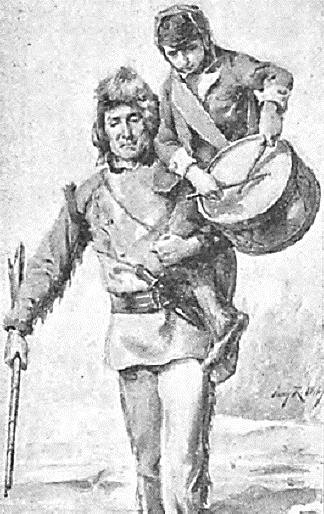
At one place the men refused to go through the freezing water. Clark could not persuade them to cross the river. He called to him a tall soldier. He was the very tallest man in Clark’s little army. Clark said to him, “Take the little drummer boy on your shoulders.” The little drummer was soon seated high on the shoulders of the tall man. “Now go ahead!” said Clark.
The soldier marched into the water. The little drummer beat a march on his drum. Clark cried out, “Forward!” Then he plunged into the water after the tall soldier. All the men went in after him. They were soon safe on the other side.
At another river the little drummer was floated over on the top of his drum. At last, the men drew near to Vincennes. They could hear the morning and evening gun in the British fort. But the worst of the way was yet to pass. The Wabash River had risen over its banks. The water was five miles wide. The men marched from one high ground to another through the cold water. They caught an Indian with a canoe. In this they got across the main river. But there was more water to cross. The men were so hungry that some of them fell down in the water. They had to be carried out.
Clark’s men got frightened at last, and then they had no heart to go any farther. But Clark remembered what the Indians did when they went to war. He took a little gunpowder in his hand. He poured water on it. Then he rubbed it on his face. It made his face black. He gave a war whoop. The men followed him again.
The men were tired and hungry. But they soon reached dry ground. They were now in sight of the fort. Clark marched his little army round and round in such a way as to make it seem that he had many men with him. He wrote a fierce letter to the British commander. He behaved like a general with a large army.
After some fighting, the British commander gave up. Clark’s little army took the British fort. This brave action saved to our country the land that lies between the Ohio River and the Lakes. It stopped the sending of Indians to kill the settlers in the West.
General Francis Marion was one of the best fighters in the Revolution. He was a homely little man. He was also a very good man. Another general said, “Marion is good all over.”
The American army had been beaten in South Carolina. Marion was sent there to keep the British from taking the whole country.
Marion got together a little army. His men had nothing but rough clothes to wear. They had no guns but the old ones they had used to shoot wild ducks and deer with.
Marion’s men wanted swords. There were no swords to be had. But Marion sent men to take the long saws out of the saw mills. These were taken to blacksmiths. The blacksmiths cut the saws into pieces. These pieces they hammered out into long, sharp swords.
Marion had not so many men as the British. He had no cannon. He could not build forts. He could not stay long in one place, for fear the British should come with a strong army and take him. He and his men hid in the dark woods. Sometimes he changed his hiding place suddenly. Even his own friends had hard work to find him.
From the dark woods he would come out suddenly. He would attack some party of British soldiers. When the battle was over, he would go back to the woods again.
When the British sent a strong army to catch him, he could not be found. But soon he would be fighting the British in some new place. He was always playing hide and seek.
The British called him the Swamp Fox. That was because he was so hard to catch. They could not conquer the country until they could catch Marion. And they never could catch the Swamp Fox. At one time Marion came out of the woods to take a little British fort. This fort was on the top of a high mound. It was one of the mounds built a long time ago by the Indians.
Marion put his men all around the fort, so that the men in the fort could not get out to get water. He thought that they would have to give up. But the men in the fort dug a well inside the fort. Then Marion had to think of another plan.
Marion’s men went to the woods and cut down stout poles. They got a great many poles. When night came, they laid a row of poles alongside one another on the ground. Then they laid another row across these. Then they laid another row on top of the last ones, and across the other way again.
They laid a great many rows of poles one on top of another. They crossed them this way and that. As the night went on, the pile grew higher. Still they handed poles to top of the pile.
Before morning came, they had built a kind of tower. It was higher than the Indian mound.
As soon as it was light, the men on Marion’s tower began to shoot. The British looked out. They saw a great tower with men on it. The men could shoot down into the fort. The British could not stand it. They had to give up. They were taken prisoners.
Washington had been fighting for seven years to drive the British soldiers out of this country. But there were still two strong British armies in America.
One of these armies was in New York. It had been there for years. The other army was far away at Yorktown in Virginia. The British general at Yorktown was Cornwallis. You have read how Washington got away from him at Trenton.
The King of France had sent ships and soldiers to help the Americans. But still Washington had not enough men to take New York from the British. Yet he went on getting ready to attack the British in New York. He had ovens built to bake bread for his men. He bought hay for his horses. He had roads built to draw his cannons on.
He knew that the British in New York would hear about what he was doing. He wanted them to think that he meant to come to New York and fight them. When the British heard what the Americans were doing, they got ready for the coming of Washington and the French. All at once they found that Washington had gone. He and his men had marched away. The French soldiers that had come to help him had gone with him.
Nobody knew what it meant. Washington’s own men did not know where they were going. They went from New Jersey into Pennsylvania. Then they marched across Pennsylvania. Then they went into Maryland. They marched across that State, and then they went into Virginia.
By this time everybody could tell where Washington was going. People could see that he was going straight to Yorktown. They knew that Washington was going to fight his old enemy at Yorktown.
But he had kept his secret long enough. The British in New York could not send help to Cornwallis. It was too late. The French ships sailed to Virginia, and shut up Yorktown on the side of the sea. Washington’s men shut it up on the side of the land. They built great banks of earth round it. On these banks of earth, they put cannons.
The British could not get away. They fought bravely. But the Americans and French came closer and closer.
Then the British tried to fight their way out. But they were driven back. Then Cornwallis tried to get his men across the river. He wanted to get out by the back door, as Washington had done. But the Americans on the other side of the river drove them back again. Washington had now caught Cornwallis in a trap.
The Americans fired red hot cannon balls into Yorktown. These set the houses on fire. At last, Cornwallis had to give up. The British marched out and laid down their guns and swords.
The British army in New York could not fight the Americans by itself. So the British gave it up. Then there was peace after the long war. The British pulled down the British flag and sailed away. The country was free at last.
After the battle of Trenton, Washington went back across the Delaware River. He had not men enough to fight the whole British army.
But the Americans were glad when they heard that he had beaten the Hessians. They sent him more soldiers. Then he went back across the river to Trenton again.
There was a British general named Cornwallis. He marched to Trenton. He fought against Washington. Cornwallis had more men than Washington had. Night came, and they could not see to fight. There was a little creek between the two armies.
Washington had not boats enough to carry his men across the river. Cornwallis was sure to beat him if they should fight a battle the next morning.
Cornwallis said, “I will catch the fox in the morning.”
He called Washington a fox. He thought he had him in a trap. Cornwallis sent for some more soldiers to come from Princeton in the morning. He wanted them to help him catch the fox.
But foxes sometimes get out of traps.
When it was dark, Washington had all his campfires lighted. He put men to digging where the British could hear them. He made Cornwallis think that he was throwing up banks of earth and getting ready to fight in the morning.
But Washington did not stay in Trenton. He did not wish to be caught like a fox in a trap. He could not get across the river. But he knew a road that went around the place where Cornwallis and his army were. He took that road and got behind the British army.
It was just like John waiting to catch James. James is in the house. John is waiting at the front door to catch James when he comes out. But James slips out by the back way. John hears him call “Hello!” James has gone around behind him and got away.
Washington went out of Trenton in the darkness. You might say that he marched out by the back door. He left Cornwallis watching the front door. The Americans went away quietly. They left a few men to keep up the fires, and make a noise like digging. Before morning these slipped away too.
When morning came, Cornwallis went to catch his fox. But the fox was not there. He looked for the Americans. There was the place where they had been digging. Their campfires were still burning. But where had they gone?
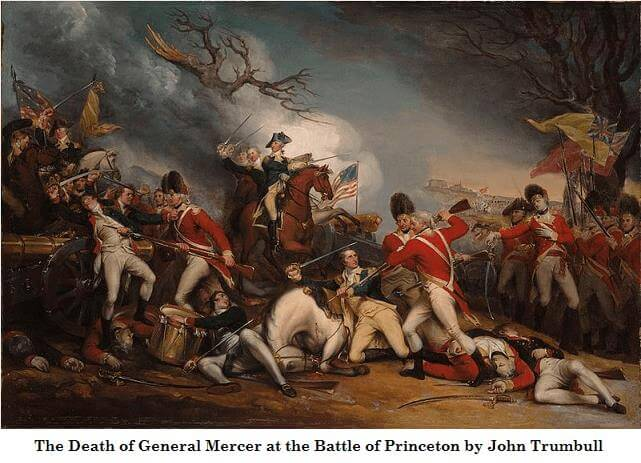
Cornwallis thought that Washington had crossed the river by some means. But soon he heard guns firing away back toward Princeton. He thought that it must be thunder. But he found that it was a battle. Then he knew that Washington had gone to Princeton.
Washington had marched all night. When he got to Princeton, he met the British coming out to go to Trenton. They were going to help Cornwallis to catch Washington. But Washington had come to Princeton to catch them. He had a hard fight with the British at Princeton. But at last he beat them.
When Cornwallis knew that the Americans had gone to Princeton, he hurried there to help his men. But it was too late. Washington had beaten the British at Princeton, and had gone on into the hills, where he was safe.
It was Saturday morning. Little Elizabeth Brown sat by a window in the big kitchen, hemming a tiny pink dress for a doll she was making for her little sister Hope.
On the chair beside her lay the doll, though you might not have thought of calling it a doll. It did not have curly hair and eyes that open and shut, or even a jointed body, and no amount of pinching or squeezing could make it cry. In those days no child had dolls like ours. Hope’s doll was made of a corncob, and the face was painted on a piece of white linen stretched over a little ball of wool on the end of the cob.
When the last neat little stitches were taken, Elizabeth dressed the doll in the pink gown and the tiny blue sunbonnet which Aunt Faith had made for it. Then she folded a small white kerchief about its neck, and when Hope awoke all rosy and smiling from her nap, there lay the little lady on the bed beside her.
Could any child have been happier than was Hope with her first doll! What did it matter that its body was a corncob and its face a bit of white cloth? It was a perfectly beautiful doll to Hope. She called it Mary Ellen and carried it about with her wherever she went.
In another room their mother was looking over the clothes to be worn to meeting the next day.
“It was a perfectly beautiful doll to Hope” When the last button was sewed on and the clothes were well brushed, she laid them out on chairs, ready to be put on on Sunday morning.
Nothing that could be done on Saturday was ever left over until Sunday. Even the potatoes were peeled, and the meat for Sunday’s dinner was cooked on Saturday.
About noon shouts were heard outside, and down the hill came a merry group of boys with axes over their shoulders. They had been cutting wood in the forest all the morning, As they passed the window where Elizabeth sat darning stockings, they called to her, “Come to the hill this afternoon. The ice is frozen on the pond, and we can coast down the long hill and away across the ice.”
It took Hope some time to decide whether she would rather go coasting or stay at home and play with Mary Ellen. But Aunt Faith thought even doll babies ought to have naps sometimes, so Mary Ellen was rocked to sleep and warmily covered in Hope’s little bed.
Elizabeth and Hope took their . . . sled and went to the hill”
Then Elizabeth and Hope took their clumsy wooden sled and went to the-hill. Many boys and girls of the village were already flying down the long, smooth track. The air rang with their merry voices.
All too soon they heard the boom! boom! of the sunset gun The happy holiday was at an end.
“What a pity it gets dark so early in the winter, when we want to coast,” they sighed, as they started toward home.
For the Puritans the Sabbath began at sunset on Saturday, and no child might play after the sunset gun was heard. The evening was spent in reading the Bible and learning verses from it.
When the children reached home, Hope ran to her bed to get Mary Ellen. Presently her mother came in and said, ‘‘This is the Sabbath now, Hope. You must not play with your doll on the Sabbath.”
So Hope kissed her baby and carried it into the bedroom to find a safe warm place for it to stay until the next evening. There lay her father’s Sunday coat; what cozier nest could she find for Mary Ellen than its big pocket?
Early Sunday morning, Mistress Brown came to the children’s bed and awakened them. ‘“‘Get up, little girls,” she said. ‘“‘This is the Lord’s Day and we must not waste it in bed.”
After breakfast the family had prayers, after which they did such work as must be done, and then dressed for meeting.
Master Brown filled the little tin foot stove with hot coals from the hearth. Then he took down his gun from its hook and looked to see that it was ready for use. In those days no man went anywhere without his gun,-—not even to church, for the Indians were likely to come at any time.
Rub-a-dub-dub! Rub-a-dub-dub!
Is that a call to arms? Are the Indians about? Oh, no, that is only the drummer calling the people to church.
There were no bells on the first meetinghouses in New England. Sometimes the firing of a gun was the call to worship. More often a big drum, beaten on the steps of the meetinghouse, told the people it was time to come together.
At the sound of the drum Master Brown and his wife, with Elizabeth, Hope, and Aunt Faith, started to church. From every house in the village came men, women, and children. They were always ready when the drum began to beat. It was not the custom to be late to meeting and as for staying away one had to be very ill indeed to do that.
Elizabeth saw her dear friend, Mary, just ahead of her. Do you suppose she skipped along to speak to her, or walked to meeting by her side? No, indeed. “The Sabbath day is not the time for light talk,’ her mother told her.
When the meetinghouse was reached, Master Brown led his family to their pew. He opened a little door to let them in. The pew was much like a large box with seats around the sides.
The church was very cold, for there was no fire; but the children warmed their toes and fingers by the queer little foot stove their father had brought from home.
The boys were not allowed to sit with their
“From every house im the ‘village came men, women, and children’ parents. They all sat together at one side of the church or on the pulpit stairs. When all the people were in their seats, the minister climbed the steps to his high pulpit.
Only a very few people had hymn books. The minister read two lines of the hymn and they all sang them to some well-known tune. Then he read two more lines, and all sang them, and so on until they had sung all the verses.
The sermon was always very long, three hours at the least. The children could not understand what it was all about, and it was very hard for them to sit up and listen quietly.
Elizabeth was four years older than Hope, so she felt quite like a little woman. She sat up
A colonial foot stove
beside her mother and looked at the minister almost all the time. But sometimes she had to wink hard to keep awake.
When she thought she could not hang her feet down another minute she would slip on to the footstool to rest.
But she was often much ashamed of Hope. Poor little Hope could not sit still ten minutes.
Hope enjoyed singing the hymns. She stood up on the footstool at her father’s side and sang with all her might. Then she sat down and tried to listen to the sermon. When she began to stir about a little, her mother shook her head at her. She tried to sit still, but was soon restless again.
Then Aunt Faith gave her a sprig of some sweet, spicy plant. This kept her quiet for a while, but at last leaves, stems, and all were eaten. Hope folded her hands and for a few minutes looked straight at the minister. She was trying hard to be good.
Presently she began to be sleepy and nestled her head upon her father’s arm, fora nap. But now she felt something in his pocket she was sure she knew. A happy smile came over Hope’s face. She was wide awake now.
Slipping her hand into the wide pocket, she drew out Mary Ellen, and smoothed her wrinkled gown.
Master Brown’s thoughts were all on the sermon, and even Mistress Brown did not notice her for a little time. When she did, what do you suppose she saw? Hope standing up on the seat, showing her doll to the little girl in the pew behind her!
Oh, oh, how ashamed her mother was! She pulled her little daughter down quickly and whispered, ‘“‘Do you want the tithingman to come with his rod? Well, then, sit down and listen.” Then taking Mary Ellen, she slipped her into her big muff.
Little Hope did sit down and listen. She did not even turn around when the kind lady behind them dropped a peppermint over the high-backed pew for her.
Hope was very much afraid of the tithingman, who sat on a high seat behind the people. He had a long rod with a hard knob on one end and a squirrel’s tail on the other.
When he saw a lady nodding during the sermon, he stepped around to her pew and tickled her face with the fur end of the rod. She would waken with a start and be, oh, so ashamed. She would be very glad the pew had such high sides to hide her blushing face.
Perhaps you think the boys on the other side of the church had a good time with no parents near to keep them quiet. But there was the tithingman again. When he saw a boy whispering or playing, as children sometimes do when so many are together, he rapped him on the head with the knob end of the rod.
The whispering would stop at once, for the rod often brought tears and left a headache. But the tithingman and his rod could not always keep the boys in order. We read that in one church the boys were fined for cutting the seats with their knives. In another, whips were placed here and there, and certain persons chosen to use them when they thought the boys needed to be punished.
“What shall we do with our boys?” the fathers often asked each other. At last some one thought of a plan which worked very well. What do you suppose it was? Simply this: to let each little boy sit with his own father and mother.
“They had quite forgotten the tithingman”
Besides keeping the boys from playing and the grown people from going to sleep, the tithingman must turn the hourglass. In those days very few people could afford clocks, but every one could have an hourglass. It took the fine sand just one hour to pour from the upper part of the glass through the tiny hole into the lower part.
When the sand had all run through, the tithingman turned the glass over and the sand began to tell another hour. When the glass had been turned three times, the minister closed the service. Then the men picked up their muskets and foot stoves, the women wrapped their long capes more closely about them, and all went home.
Often there was another service in the afternoon. At sunset the Puritan Sabbath ended. Then the women brought out their knitting or spinning, or prepared for Monday’s washing and the children were free to play until bedtime.
George Washington was fighting to set this country free. But the army that the King of England sent to fight him was stronger than Washington’s army. Washington was beaten and driven out of Brooklyn. Then he had to leave New York. After that, he marched away into New Jersey to save his army from being taken. At last, he crossed the Delaware River. Here he was safe for a while.
Some of the Hessian soldiers that the king had hired to fight against the Americans came to Trenton. Trenton is on the Delaware River.
Washington and his men were on the other side of the Delaware River from the Hessians. Washington’s men were discouraged. They had been driven back all the way from Brooklyn. It was winter, and they had no warm houses to stay in. They had not even warm clothes. They were dressed in old clothes that people had given them. Some of them were barefooted in this cold weather.
The Hessians and other soldiers of the king were waiting for the river to freeze over. Then they would march across on the ice. They meant to fight Washington once more, and break up his army. But Washington was thinking about something too.
He was waiting for Christmas. He knew that the Hessian soldiers on the other side of the river would eat and drink a great deal on Christmas Day.
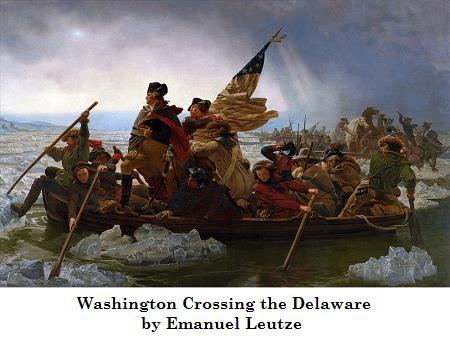
The afternoon of Christmas came. The Hessians were singing and drinking in Trenton. But Washington was marching up the river bank. Some of his barefoot men left blood marks on the snow as they marched.
The men and cannons were put into flat boats. These boats were pushed across the river with poles. There were many great pieces of ice in the river. But all night long the flat boats were pushed across and then back again for more men. It was three o’clock on the morning after Christmas when the last Americans crossed the river. It was hailing and snowing, and it was very cold. Two or three of the soldiers were frozen to death.
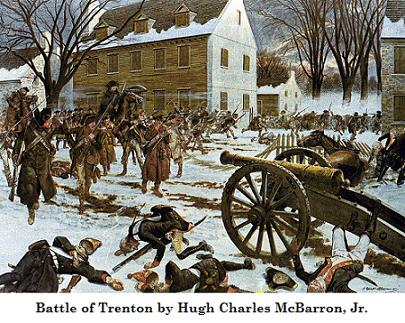
It was eight o’clock in the morning when Washington got to Trenton. The Hessians were sleeping soundly. The sound of the American drums waked them. They jumped out of their beds. They ran into the streets. They tried to fight the Americans.
But it was too late. Washington had already taken their cannons. His men were firing these at the Hessians. The Hessians ran into the fields to get away. But the Americans caught them.
The battle was soon over. Washington had taken nine hundred prisoners.
This was called the battle of Trenton. It gave great joy to all the Americans. It was Washington’s Christmas gift to the country.


 articlesforchristians