Who was Ishtar and What does She have to do with Cross Dressing?
Who was Ishtar?
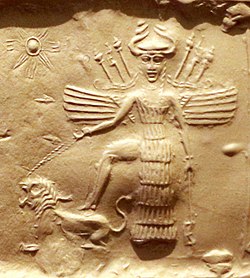
Ishtar was an ancient pagan god. She was linked to the planet Venus. Ishtar was known both as the morning star and the evening star, hinting at her dual nature. She existed at both ends of the spectrum, embodying polar opposites. On one hand, she was the goddess of love, beauty, allure, and female sexuality. On the other, she personified ferocity, aggression, violence, battle, war, and destruction—traits often associated with masculinity. She could be depicted as a naked woman adorned with jewels, symbolizing sexuality, or as an armored warrior, representing war. In a single being, she embodied both male and female. Ishtar’s connection to femininity and masculinity was more than mere symbolism. An ancient Mesopotamian tablet records her saying these words:
- When I sit in the alehouse, I am a woman, and I am an exuberant young man.
Another ancient writing records her saying this:
- Though I am a woman I am a noble young man.
The core and operative words in such statements are these:
- I am a woman. I am a man.
The Assinnu, Kurgarru, Kalu, and Gala
The Assinnu, Kurgarru, Kalu, and Gala were key figures in the ancient Mesopotamian cult of Ishtar, each with unique roles in her worship and rituals. The Assinnu, often shown as effeminate, took on behaviors linked to women, like dancing, singing, and engaging in same-sex relations as the receptive partner. The Kurgarru stood out as a tough, militant type, tied to weapons and acts of self-mutilation. The Kalu usually worked as a palace attendant, while the Gala was known for chanting laments. Together, they embodied social constructs that reinforced distinctions between men, women, and a third, more ambiguous gender, much like the goddess herself.
 articlesforchristians