1st grade week 4 out of 36

Subscribe to continue reading
Subscribe to get access to the rest of this post and other subscriber-only content.
Subscribe to get access to the rest of this post and other subscriber-only content.
Subscribe to get access to the rest of this post and other subscriber-only content.
Subscribe to get access to the rest of this post and other subscriber-only content.
THE GENTLE HAND
By Timothy S. Arthur
When and where, it matters not now to relate—but once upon a time, as I was passing through a thinly peopled district of country, night came down upon me almost unawares. Being on foot, I could not hope to gain the village toward which my steps were directed until a late hour; and I therefore preferred seeking shelter and a night’s lodging at the first humble dwelling that presented itself.
Dusky twilight was giving place to deeper shadows, when I found myself in the vicinity of a dwelling, from the small uncurtained windows of which the light shone with a pleasant promise of good cheer and comfort. The house stood within an inclosure, and a short distance from the road along which I was moving with wearied feet.
Turning aside, and passing through the ill-hung gate, I approached the dwelling. Slowly the gate swung on its wooden hinges, and the rattle of its latch, in closing, did not disturb the air until I had nearly reached the porch in front of the house, in which a slender girl, who had noticed my entrance, stood awaiting my arrival.
A deep, quick bark answered, almost like an echo, the sound of the shutting gate, and, sudden as an apparition, the form of an immense dog loomed in the doorway. At the instant when he was about to spring, a light hand was laid upon his shaggy neck, and a low word spoken.
“Go in, Tiger,” said the girl, not in a voice of authority, yet in her gentle tones was the consciousness that she would be obeyed; and, as she spoke, she lightly bore upon the animal with her hand, and he turned away and disappeared within the dwelling.
“Who’s that?” A rough voice asked the question; and now a heavy looking man took the dog’s place in the door.
“How far is it to G——?” I asked, not deeming it best to say, in the beginning, that I sought a resting-place for the night.
“To G——!” growled the man, but not so harshly as at first. “It’s good six miles from here.”
“A long distance; and I’m a stranger, and on foot,” said I. “If you can make room for me until morning, I will be very thankful.”
I saw the girl’s hand move quickly up his arm, until it rested on his shoulder, and now she leaned to him still closer.
“Come in. We’ll try what can be done for you.” There was a change in the man’s voice that made me wonder. I entered a large room, in which blazed a brisk fire. Before the fire sat two stout lads, who turned upon me their heavy eyes, with no very welcome greeting. A middle-aged woman was standing at a table, and two children were amusing themselves with a kitten on the floor.
“A stranger, mother,” said the man who had given me so rude a greeting at the door; “and he wants us to let him stay all night.”
The woman looked at me doubtingly for a few moments, and then replied coldly, “We don’t keep a public house.”
“I’m aware of that, ma’am,” said I; “but night has overtaken me, and it’s a long way yet to G——.”
“Too far for a tired man to go on foot,” said the master of the house, kindly, “so it’s no use talking about it, mother; we must give him a bed.”
So unobtrusively that I scarce noticed the movement, the girl had drawn to her mother’s side. What she said to her I did not hear, for the brief words were uttered in a low voice; but I noticed, as she spoke, one small; fair hand rested on the woman’s hand.
Was there magic in that touch? The woman’s repulsive aspect changed into one of kindly welcome, and she said: “Yes, it’s a long way to G——. I guess we can find a place for him.”
Many times more during that evening, did I observe the magic power of that hand and voice—the one gentle yet potent as the other. On the next morning, breakfast being over, I was preparing to take my departure when my host informed me that if I would wait for half an hour he would give me a ride in his wagon to G——, as business required him to go there. I was very well pleased to accept of the invitation.
In due time the farmer’s wagon was driven into the road before the house, and I was invited to get in. I noticed the horse as a rough-looking Canadian pony, with a certain air of stubborn endurance. As the farmer took his seat by my side, the family came to the door to see us off.
“Dick!” said the farmer in a peremptory voice, giving the rein a quick jerk as he spoke. But Dick moved not a step. “Dick! you vagabond! get up.” And the farmer’s whip cracked sharply by the pony’s ear.
It availed not, however, this second appeal. Dick stood firmly disobedient. Next the whip was brought down upon him with an impatient hand; but the pony only reared up a little. Fast and sharp the strokes were next dealt to the number of half a dozen. The man might as well have beaten the wagon, for all his end was gained.
A stout lad now came out into the road, and, catching Dick by the bridle, jerked him forward, using, at the same time, the customary language on such occasions, but Dick met this new ally with increased stubbornness, planting his fore feet more firmly and at a sharper angle with the ground.
The impatient boy now struck the pony on the side of the head with his clenched hand, and jerked cruelly at its bridle. It availed nothing, however; Dick was not to be wrought upon by any such arguments.
“Don’t do so, John!” I turned my head as the maiden’s sweet voice reached my ear. She was passing through the gate into the road, and, in the next moment, had taken hold of the lad and drawn him away from the animal. No strength was exerted in this; she took hold of his arm, and he obeyed her wish as readily as if he had no thought beyond her gratification.
And now that soft hand was laid gently on the pony’s neck, and a single low word spoken. How instantly were the tense muscles relaxed—how quickly the stubborn air vanished.
“Poor Dick!” said the maiden, as she stroked his neck lightly; or softly patted it with a childlike hand. “Now, go along, you provoking fellow!” she added, in a half-chiding, yet affectionate voice, as she drew up the bridle.
The pony turned toward her, and rubbed his head against her arm for an instant or two; then, pricking up his ears, he started off at a light, cheerful trot, and went on his way as freely as if no silly crotchet had ever entered his stubborn brain.
“What a wonderful power that hand possesses!” said I, speaking to my companion, as we rode away.
He looked at me for a moment, as if my remark had occasioned surprise. Then a light came into his countenance, and he said briefly, “She’s good! Everybody and everything loves her.”
Was that, indeed, the secret of her power? Was the quality of her soul perceived in the impression of her hand, even by brute beasts? The father’s explanation was doubtless the true one. Yet have I ever since wondered, and still do wonder, at the potency which lay in that maiden’s magic touch. I have seen something of the same power, showing itself in the loving and the good, but never to the extent as instanced in her, whom, for want of a better name, I must still call “Gentle Hand.”
DEFINITIONS:
Mayan Music
The Indian civilizations of South and Central America had a vibrant musical heritage. The Mayas used a variety of wind and percussion instruments, such as flutes, whistles, trumpets, rattles, bone and gourd rasps, and drums. These instruments are mentioned in texts and illustrated in Maya art. Among the most fascinating discoveries is the Maya whistle.
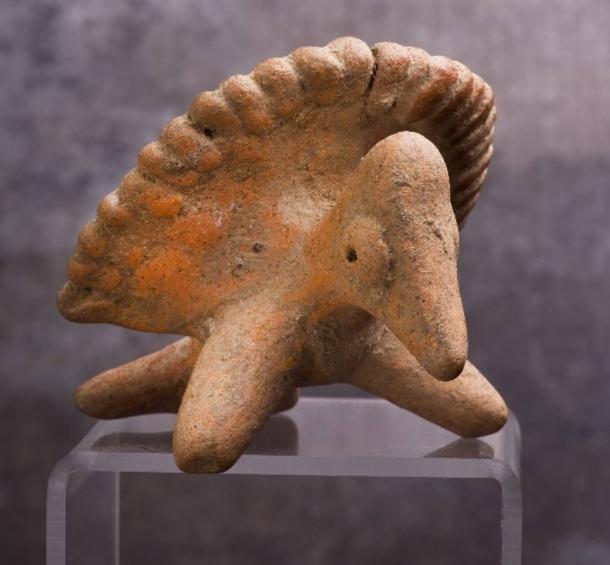
A whistle flute, sometimes called a fipple flute, is a flute blown from the end. Air is sent through a simple mouthpiece against the sharp edge of a hole cut in the pipe below the mouthpiece. It was often made of clay or wood. There is even an example of one made from bird bones. Finger holes make more than one pitch possible. Whistle flutes were common.
Ocarinas are flutes in the shape of animals. The word ocarina comes from the Spanish, who settled in the Central American country of Costa Rica, rich in rainforest animals.
The ancient inhabitants of Costa Rica crafted ocarinas that represented birds, armadillos, owls, bats, tapirs, monkeys, and other rainforest creatures.
Today, modern Latin American artists make ocarinas inspired by the ancient ones. The instruments are played by blowing in the small hole at the end, covering the four holes on the body with your fingers, and leaving the large hole at the end uncovered.
When fingers are lifted off any of the four holes on the body, varying sounds are created. The sounds made are similar to the calls of Costa Rican birds.
JEALOUS JASPER JAY
The feathered folk in Pleasant Valley were all aflutter. They had heard a strange tale–the oddest tale, almost, that had ever been told in their neighborhood.
It was Jolly Robin who had started the story. And since he was not in the habit of playing jokes on people, everybody believed what he said–at least, everybody except Jasper Jay. He declared from the first that Jolly Robin’s tale was a hoax.
“I claim that there’s not a word of truth in it!” Jasper Jay said.
Now, there was a reason why Jasper spoke in that disagreeable way. He didn’t want the story to be true. And, somehow, he felt that if he said it was a hoax, it would really prove to be one.
“I know well enough,” said Jasper, “that there’s no golden bird in Pleasant Valley–and nowhere else, either!”
You see, Jolly Robin had hurried to the woods one day and told everyone he met that a wonderful golden bird had come to Pleasant Valley.
“He’s not just yellow, like a goldfinch. He’s solid gold all over, from the tip of his bill to the tip of his tail. Even his feet are golden. And he glistens in the sunshine as if he were afire!” That was the way Jolly Robin described the marvellous newcomer. “He’s the handsomest bird that ever was seen,” he added.
Perhaps Jasper Jay was jealous. You know he was a great dandy, being very proud of his blue suit, which was really quite beautiful. Anyhow, Jasper Jay began to sulk as soon as he heard the news.
“Where is this magnificent person?” he asked Jolly Robin with a sneer. “Do let me see him! And if he wants to fight, I’ll soon spoil his finery for him. He won’t look so elegant after I’ve pulled out his tail-feathers.”
But Jolly Robin wouldn’t tell anybody where he had seen the wonderful bird. He said the golden bird was three times as big as Jasper Jay. And he didn’t want Jasper to get hurt, even if he was so disagreeable.
Anyone can see, just from that, that Jolly Robin was very kind.
“You’d better be careful, or I’ll fight you, too!” Jasper warned him.
But Jolly was not afraid. He knew that Jasper was something of a braggart and a bully. He had chased Jasper once. And he thought he could do it again, if he had to.
“My cousin will tell me where to find this yellow fellow,” said Jasper Jay at last. “There’s not much that happens in Pleasant Valley that my cousin doesn’t know about.” So he flew off to find old Mr. Crow—for he was the cousin of whom Jasper was speaking.
Jasper found Mr. Crow in his favorite tree in the pine woods. And sure enough! the old gentleman seemed to know all about the golden bird. But like Jolly Robin, he refused to say where he had seen him. To tell the truth, Mr. Crow had never set eyes on the strange bird. But he did not like to admit it. “He’s a great credit to the neighborhood,” said old Mr. Crow. “And you’d better let him alone, if you should happen to find him, because he’s solid gold, you know. And if you flew at him and tried to peck him, just as likely as not you’d break your bill on him, he’s so hard.” Old Mr. Crow’s warning, however, had no effect at all upon Jasper Jay.
“I’m going to search every corner in the valley until I find this fop. And I’ll teach him that he’d better get out of our neighborhood with his fine airs.”
When he heard that, old Mr. Crow shook his head.
“You’re going to have trouble!” he told Jasper. And then he hurried away to tell Jolly Robin that he ought to advise the golden bird to leave Pleasant Valley.
But Jolly Robin said he had not spoken with the stranger. And never having talked with a golden bird, he felt a bit shy about saying anything to him.
“Then there’ll be a terrible fight, I’m afraid,” said Mr. Crow.
“I’m afraid so,” Jolly Robin agreed. And strange as it may seem, they both said that if there was going to be a fight they didn’t want to miss seeing it.
NEXT morning, the pretty blue and white dishes washed, the kettles scoured, and fresh white sand sprinkled on the kitchen floor, Patience took baby Love and went out on the doorstep to watch the boats on the canal.
There were many of these boats passing to and fro. Some carried fuel or grain. Some carried fish, and others were loaded with boxes of goods from the mills. Some were passenger boats and carried people from one town to another.
Soon Jonathan came out with a large stone jar, which he set upon the wall of the canal. On the next doorstep sat Mary and Remember Allerton, and they, too, had a large jar. There was one at Mistress Chilton’s door, and all up and down the street might be seen these brown jars.
What were they for? Water, to be sure! These children were waiting for the water barge to come along and fill their jars. This seems strange in a land where there is more water than anything else. But the water in the canals is not fit to drink, so the people must buy fresh water every day. This is brought from the river far beyond the city.
While the children waited for the water barge, they saw a large boat coming down the canal. There was no wind, so the sail was down. At first they could not see what made it glide along so easily. As it came nearer they saw that there was a long rope tied to the bow, and the boat was being drawn by a large dog and a boy, who walked along the bank of the canal.
When the boat was in front of Elder Brewster’s house, it stopped. The father came ashore and tied his boat to a strong post, and then went back to his breakfast.
This was not served in the neat little cabin with the white curtains at the windows. The breakfast table was spread on the deck of the boat. There was no cloth, but the table was scoured as white as Katrina’s strong little arms could make it.
While Katrina and her mother were washing the dishes, the water barge was seen coming slowly down the canal, stopping at each house. The mother saw the little barge, and, calling her son, said something to him which the little Pilgrims could not understand.
But Jan understood. He took up a large, shining can and came over where Jonathan and Patience were.
“Good morning,” said Jonathan, “Are you waiting for the water barge, too?” But Jan only smiled and said nothing. He had not understood one word.
When Mevrow Vedder came up in her flat little boat, with its rows of shining brass water cans, Jan talked fast enough. He seemed to know Mevrow Vedder, and Karl and Hans, who had come with their mother to help steer the boat.

“Mevrow Vedder . . . in her flat little boat, with . . .shining brass water cans”
How fast they all talked, and how strange the language sounded to the English children! The Dutch language was so different from their own. The little pilgrims thought they could never learn to speak or understand this strange tongue.
But they did, and Jan and Katrina were their first teachers. After a few days, when Jan called in Dutch, “Can you come up on the boat to play?” the English children would answer, “Yes,” or “No,” in his language.
They soon learned the Dutch names for the games they played, for the different parts of the boat, and for many things in their own homes. Little by little they grew to understand what their neighbors said to them. The children learned the language much easier than their parents did.
Jan and Katrina lived on the canal boat winter and summer. They had no other home, and they did not wish for one. They thought a canal boat much better than a house, which must always stay in one place.
Many families lived in their boats all of the year. In winter they had to live in the little cabin, but in summer the kitchen, dining room, and sitting room were all on deck.
All Hollanders are fond of flowers and you are sure to see them somewhere about each home. Of course Katrina had her little flower garden. It was in one corner of the deck, and her mother had a long box of plants in the cabin window.
All fall and winter this canal boat stayed in the same place. While their father worked in the mill, Jan and Katrina went to school. Katrina often knitted as she walked to and from school. Little Dutch girls often knit on the street. They can knit and walk as easily as we can talk and walk.
EARLY one morning soon after the Pilgrims came to Holland they heard strange sounds in the street. Such a splashing and dashing of water! Swish! swish! trickle! trickle!
Could it be the dike was leaking? Mary Chilton ran to the door to see what was the matter.
There she saw Mevrow van Zant and her daughter with jars, and pails, and kettles of water. With her strong white arms the girl dashed the water upon the sides of the house. With long-handled brushes she and her mother scrubbed the windows and walls. Then Hilda dashed on more water and they scrubbed again.
Splash! dash! swish! drip!
How the windows shine! Just find a spot of dust on that house, if you can!
Then out came more pails and kettles of water, and more plump Hollanders in their white caps, short skirts, and wooden shoes. All up and down the street, on both sides of the canal, it was, splash! dash! swish! drip!
Even the canal boats were having a wonderful scrubbing, both inside and outside. Their brass trimmings were polished like gold.
While Mary Chilton looked on with wonder in her round eyes, her father came out of the house.
“Why so sober, little one?” he asked. “I think they will not dash water over you.”
“I was wondering if our houses are the only ones on the street left dirty, or if we had the only clean ones before. I do not see any dust.”

“On scrubbing day Holland scrubs”
“Oh, that makes no difference,” laughed her father. “On scrubbing day Holland scrubs. It comes so often things never have time to get very dusty.”
Subscribe to get access to the rest of this post and other subscriber-only content.
Print out this page. As you do the assignments, write down the day that you completed each assignment. This will be your attendance record. Also, you can use this to record your scores.
Monday
Tuesday
Wednesday
Thursday
Friday
 articlesforchristians
