The Remarkable Journey of Benjamin Boardley: From Slavery to Steam Engines
Early life
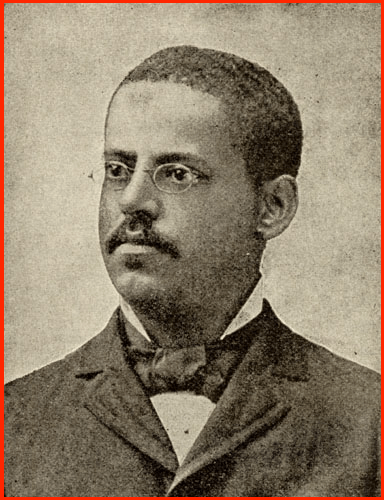
Benjamin Boardley was born into slavery in Anne Arundel County, Maryland, in March 1830. It’s believed he learned to read and write by studying alongside his master’s children. Maryland State Manumission records show that his owner was John T. Hammond.
As a teenager, Bradley worked in a printing office, where he revealed his knack for creativity and mechanical skill. By 16, he had built a steam engine using a gun barrel, pewter, round steel, and other materials. Impressed by his talent, his master helped him land a job as a helper in the Department of Natural and Experimental Philosophy at the Naval Academy in Annapolis.
Career
Bradley worked as a helper at the U.S. Naval Academy. The African Repository of 1859 noted that while he was paid in full, his earnings went to his master, who let him keep five dollars a month. At the academy, he assisted in setting up science experiments involving chemical gases.
His professors at the Naval Academy were reportedly very impressed with him. Professor Hopkins noted Bradley’s contributions as a helper, saying he set up experiments, learned quickly, and “looks for the law by which things act.” Hopkins’s children also taught Bradley to read, write, and do math, including arithmetic, algebra, and geometry.
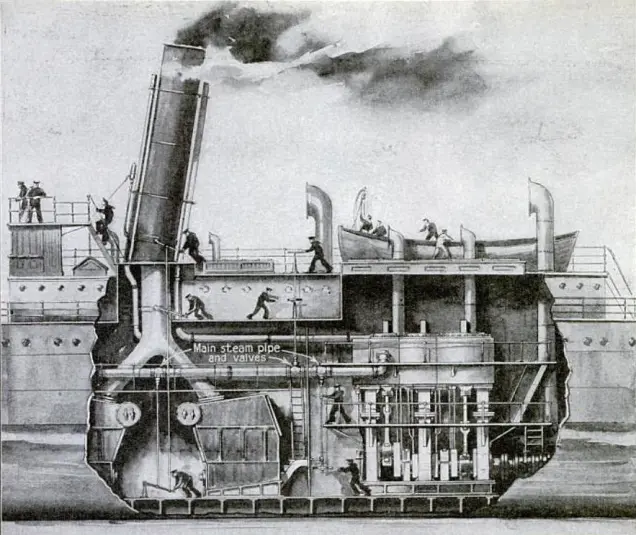
While at the Naval Academy, Bradley built a steam engine and sold it to a Midshipman. Using the profits from that sale, along with savings from his work at the Academy, he designed and built a steam engine powerful enough to propel the first cutter of a sloop-of-war at 16 knots (18 mph). Cutters were small boats carried by larger warships, and according to the US Navy Textbook of Seamanship (1891), a first cutter measured between 26 and 30 feet (7.9–9.1 m) in length.
As a slave, Bradley wasn’t allowed to patent the engine he created, but he was able to sell it. Using the money from that sale, along with contributions from Naval Academy professors, he bought his freedom for $1,000 (about $34,996 in 2024). According to Maryland State Manumission records, he was freed by his owner, John T. Hammond, on September 30, 1859.
During the Civil War, the U.S. Naval Academy moved to Newport, Rhode Island. According to the August 1865 issue of the African Repository, Bradley, a freeman, worked there under Prof. A.W. Smith. He continued building small steam engines, showcasing his remarkable mechanical talent. In 1864, he served as an instructor in the Philosophical Department and was credited with designing and constructing a “miniature steam engine and boiler of about six-fly power.”
Later life
In the 1900 U.S. Census, Bradley was listed as 64 years old and living in Mashpee, Massachusetts, working as a philosophical lecturer. He had been married to Gertrude Boardley for 19 years, and they had three children.
 articlesforchristians