A place to grow your relationship with God

Posts tagged ‘Benjamin Franklin’

Boyhood of Franklin

Benjamin Franklin, the youngest in a family of seventeen children, was born in Boston in 1706. Benjamin learned to read when he was very young, but he was only sent to school for two years. When he was ten years old he had to help his father. Franklin’s father made his living by boiling soap and making tallow candles. Little Benjamin had to cut wicks for the candles, fill the molds with the melted tallow, tend the shop, and run on errands. He did not like the soap and candle trade. Playing about the water, he had learned to swim and manage a boat. Like many other boys, he got the notion that it would be a fine thing to go to sea and be a sailor. But his father did not think so.
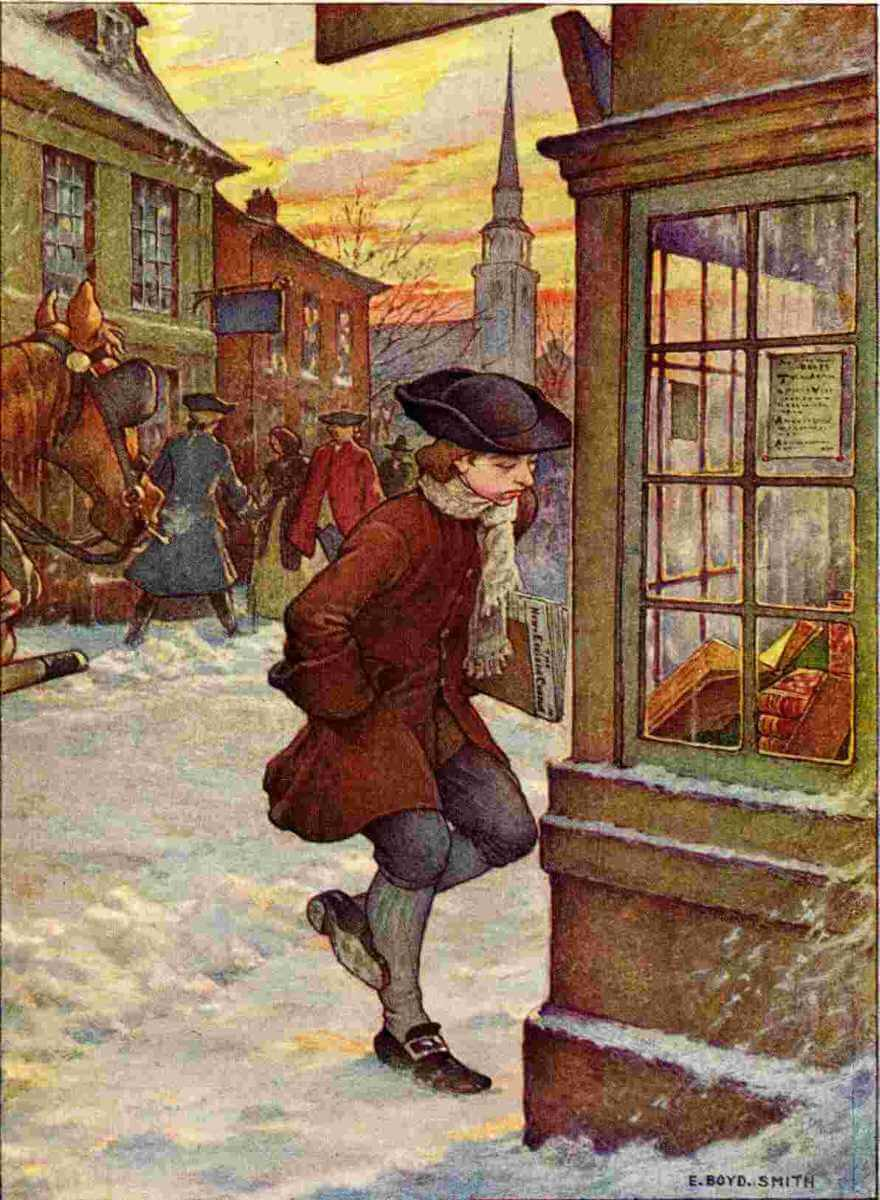
Franklin and his playmates used to fish for minnows in a millpond which had a salt marsh for a shore, so that the boys had to stand in the mud. He was a leader among the boys and already very ingenious. So he proposed that the boys should build a little wharf in this marsh to stand on. Near the marsh there was a pile of stones, put there to be used in building a new house. In the evening, when the workmen were gone, Franklin and the other boys tugged and toiled until they had managed to carry all these stones away and build them into a wharf or pier reaching out into the water.

In the morning, the workmen were very much surprised to find that their pile of stones had walked away during the night. They soon found out where the stones were and complained to the parents of the boys. Franklin and some of the other boys were punished for their mischief. Benjamin tried to make his father see that it was a very useful work to build such a pier, but the father soon showed him that “nothing was useful that was not honest.”

When Franklin had worked for two years with his father at the trade of making tallow candles, the father began to be afraid that Ben would run away and go to sea, as another of his sons had done before. So Franklin’s father took him walking with him sometimes to look at men working at their trades, such as bricklaying, turning, and joining, to see if the boy would not take a fancy to one of these occupations. Meantime, Benjamin became very fond of reading. He read his father’s books, which were very dull for children, and he sold some little things of his own to buy more. As the boy was so fond of books, Benjamin’s father could think of nothing better than to make him a printer. So Benjamin was apprenticed to his older brother, James Franklin, who already had a printing office. Benjamin liked this trade and learned very fast. As he was often sent to bookstores, he got a chance to borrow books. He sometimes sat up all night to read one of these, taking great care to keep the books clean and return them soon.

Benjamin took a fancy to write poetry about this time. His brother printed this “wretched stuff,” as Franklin afterward called it, and sent the boy around the town to peddle it. Ben was very proud of his poetry until his father made fun of it and told him that “verse makers were generally beggars.”

Franklin had a notion as a boy that it was wrong to eat meat, so he told his brother that if he would give him half of what his board cost, he would board himself. After this, Benjamin made his dinner on biscuit or a tart from the baker’s. In this way, he saved some of his board money to buy books and used the time while the other printers were at dinner to study.

James Franklin, Benjamin’s brother, printed a little newspaper. Franklin was printer’s boy and paper carrier, for after he had worked at printing the papers, he carried them around to the houses of the subscribers. But he also wanted to write for the paper. He did not dare propose so bold a thing to his brother, so he wrote some articles and put them under the printing office door at night. They were printed, and even Benjamin’s brother did not suspect that they were written by the boy.

The two brothers did not get on well together. The younger brother was rather saucy, and the older brother, who was high-tempered, sometimes gave him a whipping.

James Franklin once printed something in his newspaper which offended the government of the colony. He was arrested and put in prison for a month; for the press was not free in that day. Benjamin ran the little paper while his brother was in prison and put in the sharpest things he dared to say about the government. After James got out of prison, he was forbidden to print a newspaper any longer. So he made up his mind to print it in the name of his brother Benjamin. In order to do this, he was obliged to release Benjamin Franklin from his apprenticeship, though it was agreed that Ben was to remain at work for his brother, as though still an apprentice, till he was twenty-one years old. But Benjamin soon got into another quarrel with his brother, and now that he was no longer bound, Benjamin left him. This was not fair on his part, and he was afterward sorry for it.
YOUNG BENJAMIN FRANKLIN

YOUNG BENJAMIN FRANKLIN

By Nathaniel Hawthorne.

When Benjamin Franklin was a boy he was very fond of fishing; and many of his leisure hours were spent on the margin of the mill pond catching flounders, perch, and eels that came up thither with the tide.

The place where Ben and his playmates did most of their fishing was a marshy spot on the outskirts of Boston. On the edge of the water there was a deep bed of clay, in which the boys were forced to stand while they caught their fish.

“This is very uncomfortable,” said Ben Franklin one day to his comrades, while they were standing in the quagmire.

“So it is,” said the other boys. “What a pity we have no better place to stand on!”

On the dry land, not far from the quagmire, there were at that time a great many large stones that had been brought there to be used in building the foundation of a new house. Ben mounted upon the highest of these stones.

“ Boys,” said he, “I have thought of a plan. You know what a plague it is to have to stand in the quagmire yonder. See, I am bedaubed to the knees, and you are all in the same plight. Now I propose that we build a wharf. You see these stones ? The workmen mean to use them for building a house here. My plan is to take these same stones, carry them to the edge of the water, and build a wharf with them. What say you, lads? Shall we build the wharf?”

“ Yes, yes,” cried the boys; “ let’s set about it!”

It was agreed that they should all he on the spot that evening, and begin their grand public enterprise by moonlight.

Accordingly, at the appointed time, the boys met and eagerly began to remove the stones. They worked like a colony of ants, sometimes two or three of them taking hold of one stone ; and at last they had carried them all away, and built their little wharf.

“Now, boys,” cried Ben, when the job was done, “let’s give three cheers, and go home to bed. Tomorrow we may catch fish at our ease.”

“Hurrah! hurrah! hurrah! ” shouted his comrades, and all scampered off home and to bed, to dream of tomorrow’s sport.

In the morning the masons came to begin their work. But what was their surprise to find the stones all gone! The master mason, looking carefully on the ground, saw the tracks of many little feet, some with shoes and some barefoot. Following these to the water side, he soon found what had become of the missing building stones.

“ Ah! I see what the mischief is,” said he;“ those little rascals who were here yesterday have stolen the stones to build a wharf with. And I must say that they understand their business well.”

He was so angry that he at once went to make a complaint before the magistrate ; and his Honor wrote an order to “take the bodies of Benjamin Franklin, and other evil-disposed persons,” who had stolen a heap of stones.

If the owner of the stolen property had not been more merciful than the master mason, it might have gone hard with our friend Benjamin and his comrades. But, luckily for them, the gentleman had a respect for Ben’s father, and, moreover, was pleased with the spirit of the whole affair. He therefore let the culprits off easily.

But the poor boys had to go through another trial, and receive sentence, and suffer punishment, too, from their own fathers. Many a rod was worn to the stump on that unlucky night. As for Ben, he was less afraid of a whipping than of his father’s reproof. And, indeed, his father was very much disturbed.

“Benjamin, come hither,” began Mr. Franklin in his usual stern and weighty tone. The boy approached and stood before his father’s chair. “ Benjamin,” said his father, what could induce you to take property which did not belong to you?”

“Why, father,” replied Ben, hanging his head at first, but then lifting his eyes to Mr. Franklin’s face, “if it had been merely for my own benefit, I never should have dreamed of it. But I knew that the wharf would be a public convenience. If the owner of the stones should build a house with them, nobody would enjoy any advantage but himself. Now, I made use of them in a way that was for the advantage of many persons.”

“My son,” said Mr. Franklin solemnly, “so far as it was in your power, you have done a greater harm to the public than to the owner of the stones. I do verily believe, Benjamin, that almost all the public and private misery of mankind arises from a neglect of this great truth,- — that evil can produce only evil, that good ends must be wrought out by good means.”

To the end of his life, Ben Franklin never forgot this conversation with his father; and we have reason to suppose, that, in most of his public and private career, he sought to act upon the principles which that good and wise man then taught him.

Definitions: In defining words, that meaning is given which is appropriate to them in the connection in which they are used. The pupil should look in the dictionary for the meanings of all others with which he is not perfectly familiar.

  • quagmire: soft, wet,miry land.
  • Outskirts: borders.
  • Plague: bother, great trouble.
  • Plight: condition.
  • Wharf: a platform on the shore of a harbor, river, or lake, extending some way into the water.
  • Comrades: companions, playfellows.
  • Magistrate: an officer of the law, justice of the peace.
  • Ringleader: the leader of several persons acting together.
  • Culprits: wrong-doers.
  • Solemnly: with great dignity
  • Induce: lead, persuade.
  • benefit: profit, accommodation.
  • Verily: truly.

Exercises:

  • Where is Boston?
  • How long ago did Benjamin Franklin live?
  • Learn all that you can about his life and work, and repeat it to the class at the next recitation.

Great Stories for Little Americans: FRANKLIN ASKS THE SUNSHINE SOMETHING.

One day Franklin was eating dinner at the house of a friend. The lady of the house, when she poured out the coffee, found that it was not hot.

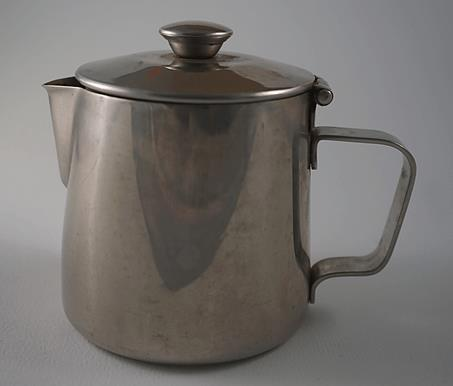
She said, “I am sorry that the coffee is cold. It is because the servant forgot to scour the coffee-pot. Coffee gets cold more quickly when the coffee-pot is not bright.”

This set Franklin to thinking. He thought that a black or dull thing would cool more quickly than a white or bright one. That made him think that a black thing would take in heat more quickly than a white one.

He wanted to find out if this were true or not. There was no-body who knew, so there was no-body to ask. But Franklin thought that he would ask the sunshine. Maybe the sunshine would tell him whether a black thing would heat more quickly than a white thing.

But how could he ask the sunshine?

There was snow on the ground. Franklin spread a white cloth on the snow. Then he spread a black cloth on the snow near the white one. When he came to look at them, he saw that the snow under the black cloth melted away much sooner than that under the white cloth.

That is the way that the sunshine told him that black would take in heat more quickly than white. After he had found this out, many people got white hats to wear in the summer time. A white hat is cooler than a black one.

Some time when there is snow on the ground, you can take a white and a black cloth and ask the sunshine the same question.

Great Stories for Little Americans: How Benjamin Franklin Found Out Things

Benjamin Franklin thought that ants know how to tell things to one another. He thought that they talk by some kind of signs. When an ant has found a dead fly too big for him to drag away, he will run off and get some other ant to help him. Franklin thought that ants have some way of telling other ants that there is work to do.

One day he found some ants eating molasses out of a little jar in a closet. He shook them out. Then he tied a string to the jar, and hung it on a nail in the ceiling. But he had not got all the ants out of the jar. One little ant liked sweet things so well that he stayed in the jar, and kept on eating like a greedy boy.

At last, when this greedy ant had eaten all that he could, he started to go home. Franklin saw him climb over the rim of the jar. Then the ant ran down the outside of the jar. But when he got to the bottom, he did not find any shelf there. He went all round the jar. There was no way to get down to the floor. The ant ran this way and that way, but he could not get down.

At last, the greedy ant thought he would see if he could go up. He climbed up the string to the ceiling. Then he went down the wall. He came to his own hole at last, no doubt.

After a while he got hungry again, perhaps. He thought about that jar of sweets at the end of a string. Then perhaps he told the other ants. Maybe he let them know that there was a string by which they could get down to the jar.

In about half an hour after the ant had gone up the string, Franklin saw a swarm of ants going down the string. They marched in a line, one after another. Soon there were two lines of ants on the string. The ants in one line were going down to get at the sweet food. The ants in the other line were marching up the other side of the string to go home. Do you think that the greedy ant told the other ants about the jar?

And did he tell them that there was a string by which an ant could get there?

And did he tell it by speaking, or by signs that he made with his feelers?

If you watch two ants when they meet, you will see that they touch their feelers together, as if they said “Good morning!”