A place to grow your relationship with God

Posts tagged ‘Bible Study’

IMPORTUNITY REWARDED

IMPORTUNITY REWARDED

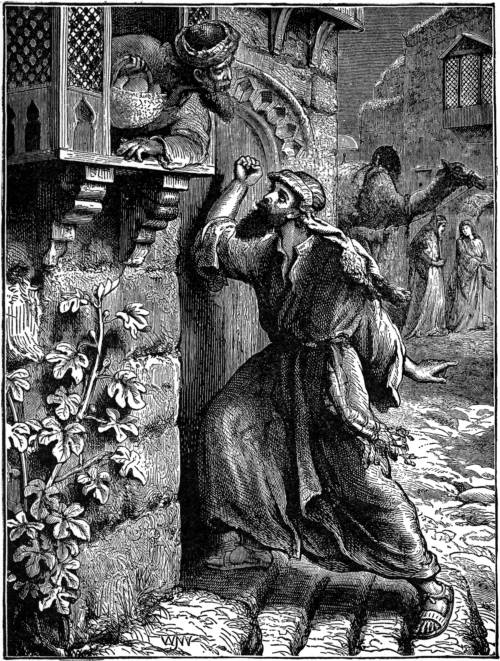
One day Jesus was asked by His disciples to teach them to pray. So Jesus taught them the prayer we all know so well, beginning with “Our Father, which art in Heaven, hallowed be Thy name.” But Jesus told them it was not enough to pray: they must not get tired of praying, even if they failed to receive quickly the things they asked for. They must keep on asking, until God in His own time and manner should grant them what He saw to be good. This great lesson Jesus taught them by the following parable:—

“Which of you shall have a friend,” said Jesus, “and shall go unto him at midnight, and say unto him, Friend, lend me three loaves, for a friend of mine in his journey is come to me, and I have nothing to set before him? And he from within shall answer and say, Trouble me not, the door is now shut, and my children are with me in bed; I cannot rise and give thee. I say unto you,” said Jesus, “though he will not rise and give him because he is his friend, yet because of his importunity (continued asking) he will rise and give him as many as he needeth.”

Then Jesus told His disciples, and He tells us too, “Ask, and it shall be given you; seek, and ye shall find; knock, and it shall be opened unto you.” For, said He, “every one that asketh receiveth; and he that seeketh findeth; and to him that knocketh it shall be opened.” If we ask for those things that God sees to be good for us, we may certainly expect to receive them. Let us ask God to keep us every day; and to give us such things as He knows will be for our good.
Nebuchadnezzar’s Dream: A Prophetic Vision of Nations

The times of the Gentiles

  • Nations continue to rise and fall.
  • No story tells it better than the prophetic dream of Nebuchadnezzar.

Nebuchadnezzar’s Dream (Daniel 2:31-45)

  • Nebuchadnezzar was king of Babylon.
  • He reigned during the fall and captivity of the nation of Israel.
  • One night he had a dream that would foretell events over centuries.
  • Mighty Kingdoms would be represented by this dream.
  • Israel was in Babylonian captivity as a result of sin.
  • God revealed who would rule over Israel.
  • Daniel, a prophet of God, was called to interpret the dream.
  • The Dream:
    • Daniel 2:31-36
      • Thou, O king, sawest, and behold a great image. This great image, whose brightness was excellent, stood before thee; and the form thereof was terrible.
      • This image’s head was of fine gold, his breast and his arms of silver, his belly and his thighs of brass,
      • His legs of iron, his feet part of iron and part of clay.
      • Thou sawest till that a stone was cut out without hands, which smote the image upon his feet that were of iron and clay, and brake them to pieces.
      • Then was the iron, the clay, the brass, the silver, and the gold, broken to pieces together, and became like the chaff of the summer threshingfloors; and the wind carried them away, that no place was found for them: and the stone that smote the image became a great mountain, and filled the whole earth.
      • This is the dream; and we will tell the interpretation thereof before the king.
        • A giant statue:
          • The head was gold
          • the breast and arms were silver
          • the belly and thighs were made of brass
          • the legs were made of iron
          • the feet were part iron and clay
        • A stone struck the feet and broke them into pieces.
        • The statue was destroyed and became like chaff.
        • The stone then became a great mountain and filled the earth.

The Head of Gold (Babylon)

  • Ruled the Jews and the Middle East at the time of the dream.
  • This kingdom lasted from 606 B.C. to 538 B.C.
  • The Babylonians were known for their wealth in gold.
  • The Babylonians destroyed the temple and took the Jews captive.

The Chest and arms of silver (Medo- Persia)

  • In 538 B.C. Babylon fell to the Medes and the Persians. Darius was the king of the Medes.
  • The Persians eventually became the dominant.
  • This kingdom was portrayed by two arms because it was made up of two reigns that joined together as one unit.
  • It lasted until 330 B.C.
  • Silver was important to the Persians. Taxes were paid in silver.
  • Cyrus later became king, and he allowed the Jews to return and rebuild.

The Belly and the Thighs of brass (Greece)

  • Alexander the Great came out of the west with conquest on his mind. He conquered the Persian Empire in 330 B.C. and established an empire based on the Greek language and culture. After Alexander’s death in 323 B.C. the empire was divided into four parts.
  • The Grecian empire lasted until 160 B.C. when the Romans conquered it.
    • Daniel 2:39 And after thee shall arise another kingdom inferior to thee, and another third kingdom of brass, which shall bear rule over all the earth.
  • The Jewish temple was defiled by Antiochus Epiphanes.
  • The armies of the Greeks used brass helmets and weaponry in their conflicts.

The Legs of Iron (Roman Empire)

  • The legs represented the Roman Empire, which lasted for many centuries.
    • Daniel 2:40 And the fourth kingdom shall be strong as iron: forasmuch as iron breaketh in pieces and subdueth all things: and as iron that breaketh all these, shall it break in pieces and bruise.
  • Iron has a twofold meaning:
    • it was the metal the Romans used to make their chariots and weapons.
    • it typified the Romans’s method of war and fighting.
      • they were violent and unmerciful in wartime.
        • This can be seen in their treatment:
          • of the Jews before the siege of Jerusalem in 70 AD.
          • of the Christians for 3 centuries following the birth of Christianity.
  • The two iron legs on the metallic image clearly represented and predicted the two-division split that would occur in the Imperial Roman Empire. This begins in 395 AD.
    • The Roman Empire was divided into the East and West (the two legs)
  • The fall of the Roman Empire
    • the west fell to ten Germanic tribes
      • And whereas thou sawest the feet and toes, part of potters’ clay, and part of iron, the kingdom shall be divided; but there shall be in it of the strength of the iron, forasmuch as thou sawest the iron mixed with miry clay.
      • The Roman Church arose to replace imperial Roman power with the influence of the popes.
        • They maintained dominion through much of the Western Europe.
    • the east became the Byzantine Empire.
      • The Byzantines ruled out of Constantinople (Turkey).
      • They constructed Churches in Palestine.
        • marking many of the Holy Sites
      • The Byzantines exercised influence over much of the east including Palestine and Jerusalem until it fell to the Muslim Turks

The Feet or Iron and Clay (?)

  • At the bottom of the statue, the king saw two legs of iron that merged into two feet of iron and ceramic clay.
  • At the conclusion of the age, the two legs will separate into two seperate feet and ten toes.
    • Daniel 2:41-43
      • And as the toes of the feet were part of iron, and part of clay, so the kingdom shall be partly strong, and partly broken.
      • And whereas thou sawest iron mixed with miry clay, they shall mingle themselves with the seed of men: but they shall not cleave one to another, even as iron is not mixed with clay.
    • The two legs are linked with Rome (west) and Turkey (East)
      • The final east-west division will continue.
        • 1 foot is the east, and 1 foot is the west.
  • Iron and clay do not mix; the kingdom is part strong and part weak (see Daniel 2:41-42)
    • Many Scholars believe that this is a symbolic description of communism and democracy.
      • the east became a strong hold for communism.
        • Communism was depicted as the iron curtain.
        • After the fall of communism, the east is now mixing communism with democracy.
          • Islam is also stronger in the east.
      • The west became a strong area of democracy.
    • As iron and clay begin the struggle to mix, it will be a sign that soon the final 10 toes will emerge.

The 10 Toes (?)

  • A 10-nation confederacy is what the 10 toes represent.
  • This world power will arise on the territory of the original Roman Empire.
    • The antichrist will begin his rule of the world during this time.
  • All of the will lead to the Great Tribulation
    • Daniel 7:7-8
      • After this I saw in the night visions, and behold a fourth beast, dreadful and terrible, and strong exceedingly; and it had great iron teeth: it devoured and brake in pieces, and stamped the residue with the feet of it: and it was diverse from all the beasts that were before it; and it had ten horns.
      • I considered the horns, and, behold, there came up among them another little horn, before whom there were three of the first horns plucked up by the roots: and, behold, in this horn were eyes like the eyes of man, and a mouth speaking great things.
    • Revelations17:12
      • And the ten horns which thou sawest are ten kings, which have received no kingdom as yet; but receive power as kings one hour with the beast.

The Stone (Jesus Christ)

  • Jesus is identified as a stone.
    • Matthew 21:42
      • Jesus saith unto them, Did ye never read in the scriptures, The stone which the builders rejected, the same is become the head of the corner: this is the Lord’s doing, and it is marvellous in our eyes?
    • 1 Peter 2:6-8
      • Wherefore also it is contained in the scripture, Behold, I lay in Sion a chief corner stone, elect, precious: and he that believeth on him shall not be confounded.
      • Unto you therefore which believe he is precious: but unto them which be disobedient, the stone which the builders disallowed, the same is made the head of the corner,
      • And a stone of stumbling, and a rock of offence, even to them which stumble at the word, being disobedient: whereunto also they were appointed.
  • The coming of Jesus Christ at the battle of Armageddon will destroy all the kingdoms of this world system. God will set up a new kingdom over all the earth for a thousand years.
  • This is the millennium (which means a thousand years in Latin).
    • Revelation 20:1-6
      • And I saw an angel come down from heaven, having the key of the bottomless pit and a great chain in his hand.
      • And he laid hold on the dragon, that old serpent, which is the Devil, and Satan, and bound him a thousand years,
      • And cast him into the bottomless pit, and shut him up, and set a seal upon him, that he should deceive the nations no more, till the thousand years should be fulfilled: and after that he must be loosed a little season.
      • And I saw thrones, and they sat upon them, and judgment was given unto them: and I saw the souls of them that were beheaded for the witness of Jesus, and for the word of God, and which had not worshipped the beast, neither his image, neither had received his mark upon their foreheads, or in their hands; and they lived and reigned with Christ a thousand years.
      • But the rest of the dead lived not again until the thousand years were finished. This is the first resurrection.
      • Blessed and holy is he that hath part in the first resurrection: on such the second death hath no power, but they shall be priests of God and of Christ, and shall reign with him a thousand years.

The Significance of Hanukkah: A Historical Perspective

In I Maccabees is the story of Hanukkah. (1 Maccabees Chapters 1-4 chapter)
Hanukkah is an eight-day Jewish Festival that celebrates the Cleansing and rededication of the temple in 164 B.C.

Jesus attended the Feast of Dedication.

  • John 10:22 And it was at Jerusalem the feast of the dedication, and it was winter.

Other Names for it

  • Feast of Dedication
  • Festival of lights

Ways of spelling it

  • Chanukkah
  • Hanukkah

Names to Know

  • Alexander the Great / Son of Philip
  • Antiochus Epiphanes (Son of King Antiochus)
  • King Antiochus
  • King Ptolemy
  • Lysias
  • Nicanor
  • Gorgias
  • Apollonius
  • Mattathias, son of John, Son of Simoen
  • John surnamed Gaddi
  • Simen called Thassi
  • Judas called Maccabeus
  • Elezar called Avaran
  • Jonathan called Apphus

Places to Know City to Know

  • Israel
  • Greece
    • Greece here designates the region of Asia Minor that had already been colonized by the Greeks for a long time.
  • Rome
  • Egypt
  • Judah
  • Kittim
    • Kittim: designates primarily Cyprus but encompasses other foreign countries among which was Macedonia. 
  • Jerusalem
  • Modein
    • Modein was seventeen miles west of Jerusalem

River to know

  • Euphrates

Terms to know

  • Gentiles
    • a person of a non-Jewish nation or of non-Jewish faith
  • Persians
    • one of the people of Persia: such as
      • one of the ancient Iranians who under Cyrus and his successors founded an empire in southwest Asia
      • a member of one of the peoples forming the modern Iranian nationality
  • Medes
    •  native or inhabitant of ancient Media in Persia
  • Greeks
    • a native or inhabitant of ancient or modern Greece
    • a person of Greek descent
    • the language used by the Greeks from prehistoric times to the present constituting a branch of Indo-European see Indo-European Languages Table
    • ancient Greek as used from the time of the earliest records to the end of the second century a.d. see Indo-European Languages Table
  • Hasideans
    • The Hasideans were a Jewish group during the Maccabean Revolt that took place from around 167–142 BCE. 

Word meanings

  • Strongholds
    • as in fortress
  • Advance
    • to move forward along a course
  • Plundered
    • as in looted
    • to search through with the intent of committing robbery
  • Hellenism
    • devotion to or imitation of ancient Greek thought, customs, or styles
  • summons
    • as in called
    • to demand or request the presence or service of
  • heirs
    • a person who has the right to inherit property
  • renegades 
    • as in deserter
    • a person who abandons a cause or organization usually without right
  • Gymnasium
    • as in gym
    • a building or room used for sports activities and exercising
  • Pagan
    • a person who does not worship the one true God of the Bible
  • Ancestors
    • as in grandfathers
    • a person who is several generations earlier in an individual’s line of descent

Timeline of how Hanukkah Came to Be

  • Alexander the Great rule over all the land
    • 1 Maccabees 1:1-4 After Alexander of Macedon, the son of Philip, had come from the land of Kittim and defeated Darius, the king of the Persians and the Medes, he succeeded him as king, in addition to his position as king of Greece. He engaged in many campaigns, captured strongholds, and executed kings. In his advance to the ends of the earth, he plundered countless nations. When the earth was reduced to silence before him, his heart swelled with pride and arrogance. He recruited a very powerful army, and as provinces, nations, and rulers were conquered by him, they became his tributaries.
      • After defeating the Persians, Alexander the Great reached the Indian Ocean.
  • Alexander the Great Dies
    • 1 Maccabees 1:5-9 However, when all this had been accomplished, Alexander became ill, and he realized that his death was imminent. Therefore, he summoned his officers, nobles who had been brought up with him from his youth, and he divided his kingdom among them while he was still alive. Then, in the twelfth year of his reign, Alexander died. After that, his officers assumed power in the kingdom, each in his own territory. They all put on royal crowns after his death, as did their heirs who succeeded them for many years, inflicting great evils on the world.
      • Twelfth year: 334 B.C.
  • Antiochus Epiphanes, Renegade Jews, and Hellenism
    • 1 Maccabees 1:10 From these there sprang forth a wicked offshoot, Antiochus Epiphanes, the son of King Antiochus. Previously he had been a hostage in Rome. He began his reign in the one hundred and thirty-seventh year of the Greeks.
      • The year 137 of the Seleucid era corresponds to 175 B.C.
    • 1 Maccabees 1;11-15
      • In those days there emerged in Israel a group of renegades who led many people astray, saying, “Let us enter into an alliance with the Gentiles around us. Many disasters have come upon us since we separated ourselves from them.” This proposal received great popular support, and when some of the people immediately thereafter approached the king; he authorized them to introduce the practices observed by the Gentiles. Therefore, they built a gymnasium in Jerusalem according to Gentile custom, concealed the marks of their circumcision, and abandoned the holy covenant. Thus they allied themselves to the Gentiles and sold themselves to the power of evil.
        • In order to unify his kingdom, the new monarch Antiochus IV Epiphanes imposed Greek customs everywhere. These were contradictory to the Jewish religious requirements, which were made precise from the end of the Exile. Nonetheless, the king could rely—especially at Jerusalem—on a current of opportunists favorable to Hellenism because of ambition or a desire for cultural integration: the clan of Jason whose members are termed renegades.
  • Antiochus in Egypt
    • 1 Maccabees 1:16-19 Once his kingdom had been firmly established, Antiochus was determined to become king of Egypt so that he might reign over both kingdoms. He invaded Egypt with a massive force of chariots, elephants, and cavalry, supported by a large fleet.  When he engaged Ptolemy, the king of Egypt, in battle, Ptolemy fled in fear before him, amidst a great number of casualties. The fortified cities in the land of Egypt were captured, and Antiochus plundered the kingdom.
  • The Temple is Destroyed
    • 1 Maccabees 1:20-28
      • After his return from his conquest of Egypt in the year one hundred and forty-three, Antiochus advanced upon Israel and Jerusalem with a massive force. In his arrogance he entered the sanctuary and removed the golden altar, the lampstand for the light with all its fixtures, the table for the loaves of offering, the libation cups and bowls, the golden censers, the curtain, and the crowns. He stripped off all the gold decorations on the front of the temple, and he seized the silver and gold and precious vessels and all the hidden treasures he could find. Taking all this, he returned to his own country, having caused great bloodshed and boasted arrogantly of what he had accomplished.
      • There was great mourning throughout Israel, and the rulers and the elders groaned.
      • Girls and young men wasted away, and the beauty of the women waned.
      • Every bridegroom raised up laments, and the bride sat mourning in her bridal chamber.
      • The land trembled for its inhabitants, and the entire house of Jacob was clothed in shame.
  • The Occupation of Jerusalem (1 Maccabees 1:29-40)
    • 1 Maccabees 1:29-35 Two years later the king sent his chief collector of tribute to the cities of Judah. When he came to Jerusalem with a powerful force, he deceitfully addressed the people there with sentiments of peace. Once he had gained their confidence, he suddenly launched a savage attack on the city and exterminated many of the people of Israel. He plundered the city and set it on fire. He demolished its dwellings and the walls that encircled the city, took the women and children captive, and seized the livestock. Then they rebuilt the City of David with a massive high wall and strong towers, and it became their citadel. There they stationed a sinful race of renegades, who fortified themselves inside it, storing up arms and provisions, and depositing there the plunder they had collected from Jerusalem. Thus, they posed a significant threat.
      • Citadel: The ancient Jebusite fortress defeated by David (see 2 Sam 5:7-9).
  • The Great Persecution (1 Maccabees 1:41-64)
    • 1 Maccabees 1:44-50
      • The king also sent messengers to Jerusalem and the cities of Judah with edicts commanding them to adopt practices that were foreign to their country: 
        • to prohibit holocausts, sacrifices, and libations in the sanctuary,
        • to profane the Sabbaths and feast days, 
        • to defile the temple and its priests, to build altars, temples, and shrines for idols, 
        • to sacrifice swine and other unclean beasts, 
        • to leave their sons uncircumcised, and to allow themselves to be defiled with every kind of impurity and abomination, 
        • so that they would forget the law and change all their observances. 
      • Anyone who refused to obey the command of the king was to be put to death.
  • Mattathias & His Sons
    • 1 Maccabees 2:1-5
      • In those days Mattathias, son of John, son of Simeon, a priest of the family of Joarib, departed from Jerusalem and settled in Modein. 
        • Mattathias signifies “gift of Yahweh.” 
        • Joarib was the head of the first priestly division (see 1 Chr 24:7). 
        • Modein was seventeen miles west of Jerusalem.
      • He had five sons:
        • John, who was called Gaddi; 
        • Simon, who was called Thassi; 
        • Judas, who was called Maccabeus;
          • Maccabeus is thought to derive from a Hebrew word meaning “hammer.”
        • Eleazar, who was called Avaran;
        • and Jonathan, who was called Apphus
  • Pagan Worship Refused (1Maccabees 2:15-28 )
    • 1Maccabees 2:15-18
      • The officers of the king who had been commissioned to enforce the apostasy came to the town of Modein to ensure that the sacrifices were being offered.  Many Israelites assembled around them, but Mattathias and his sons stood apart. Then the officers of the king addressed Mattathias in these words:
      • “You are a leader in this town, respected and influential, and you have the support of your sons and brothers.  Now be the first to come forward and obey the decree of the king, as all the Gentiles have done, as well as the citizens of Judah and the people who remain in Jerusalem. Then you and your sons will be counted among the Friends of the King, and you and your sons will be honored with gold and silver and many other gifts.”
  • Run to the hills
    • 1 Maccabees 2:27-30
      • Then Mattathias advanced through the town, shouting: “Let everyone who is zealous for the law and who stands by the covenant come with me!” Then he and his sons fled to the hills, leaving behind in the town everything that they possessed. Many of the people who desired to live in accordance with justice and the law went down to the desert and settled there, taking with them their sons, their wives, and their livestock, so oppressive were the sufferings that they had been forced to endure.
        • The desert refers to the wilderness of Judea, southward from Jerusalem and west of the Dead Sea, where one could easily find hiding places in grottoes and caves.
  • It was reported to the officers of the king and the forces stationed in Jerusalem
    • 1 Maccabees 2:31-38
      • Shortly thereafter it was reported to the officers of the king and the forces stationed in Jerusalem, the City of David, that those who had refused to obey the king’s edict had retreated to hiding places in the desert. 
      • A large force set out in pursuit and caught up with them; they encamped opposite them and prepared to attack them on the Sabbath. 
      • “Enough of this defiance!” they said. “Come out and obey the king’s edict, and your lives will be spared.” 
      • “We will not come out,” they replied, “nor will we do what the king commands and profane the Sabbath.”
      • Then the enemy immediately launched an attack on them, but they did not retaliate, neither hurling rocks nor barricading their hiding places. They only said, “Let us all die in a state of innocence. Heaven and earth are our witnesses that you are massacring us without the slightest justification.” Therefore, the enemy attacked on the Sabbath and massacred them along with their wives, their children, and their livestock—one thousand persons in all.
  • Mattathias Organizes the Resistance
    • 1 Maccabees 2:39-41
      • When Mattathias and his friends were informed of this, they grieved deeply for them.  “If we all do as our kindred have done,” they said to one another, “and refuse to fight against the Gentiles in defense of our lives and our traditions, they will soon wipe us off the face of the earth.” On that day they formulated this decision: “Let us fight against anyone who attacks us on the Sabbath, so that we will not all be killed, as happened to our kindred who died in their hiding places.”
  • Counterattack (1 Maccabees 2:42-48)
    • Soon thereafter they were joined by a group of Hasideans, valiant warriors of Israel, each one a stout defender of the law. In addition, all those who were refugees from the persecution joined up with them, adding to their strength. 
    • After organizing an army, they struck down sinners in their anger and renegades in their fury. Those who escaped them fled to the Gentiles for safety. Mattathias and his friends marched through the kingdom, destroying the pagan altars and forcibly circumcising all the uncircumcised boys they found within the borders of Israel. They hunted down their arrogant enemies, and their efforts prospered under their direction. Thus, they defended the law against the Gentiles and their kings, and they did not allow the wicked to emerge triumphant.
  • Last Words of Mattathias (I Maccabees 2:49-70)
    • I Maccabees 2:49-50
      • When the time drew near for Mattathias to die, he said to his sons: “Arrogance and scorn have now grown strong; this is an age of turmoil and violent fury. Therefore, my sons, be zealous for the law and be willing to give your lives for the covenant of our ancestors.
      • 1 Maccabees 2:69-70 Then he blessed them and was gathered to his ancestors. 70 He died in the year one hundred and forty-six and was buried in the tombs of his ancestors in Modein, and all Israel mourned him with great lamentation.
  • First Battles of Judas (1 Maccabees 3:10-26)
    • Battle 1
      • Then Apollonius united the Gentiles with a large army from Samaria to wage war against Israel. 
        •  Apollonius is probably the same Mysian “collector of tribute” who the year before had carried out a great slaughter at Jerusalem, imposing Hellenism by force of arms (see 1 Mac 1:29-34). Inasmuch as he was a strategist from Samaria (and its governor, according to Josephus), we can understand how he could gather together a large army of Samaritans, whose enmity toward the Jews was long-established and deep-seated (see Ezr 4:1-5Neh 4:1-212:28).
      • On learning this, Judas marched out to confront him, and he defeated and killed him. Many fell wounded, and those who survived took flight. 
      • Then their spoils were seized. The sword of Apollonius was taken by Judas, who used it in his battles for the rest of his life.
    •  Battle 2
      • When Seron, the commander of the Assyrian army, learned that Judas had mustered a large force of faithful soldiers prepared for battle, he said, “I will make a name for myself and win great renown in the kingdom if I defeat Judas and his followers who have shown such contempt for the king’s edict.” And once again a large army of unbelievers banded together to help him exact vengeance on the Israelites.
      • When he reached the ascent of Beth-horon, Judas marched out to confront him with a small contingent. 
        • The ascent of Beth-horon: a gorge that ran from the mountains of Judea to the coast. The town was about twelve miles from Jerusalem.
      • However, when they observed the army that was gathered to do battle with them, his soldiers said to Judas, “How can we, as few as we are, fight against so great a multitude? Besides, we are faint with hunger, for we have eaten nothing all day.” 
      • But Judas replied, “It is easy for many to be defeated by a few. In the sight of Heaven, there is no distinction between deliverance by many and deliverance by a few. 
        • In late Judaism, it was customary to avoid naming Yahweh: at the time of the Persians, the expression “God of heaven” was used. In the period that interests us, the name Heaven is used in the same sense. This discretion was inspired by respect toward the one God.
      • Victory in war does not depend upon the size of the fighting force, but rather upon the strength that comes from Heaven. Our enemies have come against us in a display of insolence and lawlessness to destroy us and our wives and our children, and to plunder us. However, we are fighting in defense of our lives and our laws. He himself will crush them before our eyes; therefore, do not be afraid of them.”
      • When he had finished speaking, he rushed suddenly against Seron and his army, and they were crushed before him. He pursued them down the descent of Beth-horon as far as the plain. About eight hundred of their men fell, and those who survived fled to the country of the Philistines. As a result, Judas and his brothers began to be feared, and terror seized the Gentiles all around them. His fame came to the attention of the king, and all the Gentiles talked about Judas and his battles.
  • Syria Readies the Repression (1 Maccabees 3:27-37)
    • 1 Maccabees 3:27 When King Antiochus learned about these developments, he was infuriated, and he ordered the mobilization of all the forces of his kingdom, a very powerful army.
    • 1 Maccabees 3:34-35
      • He turned over to him half of his army, together with the elephants, and provided him with detailed instructions about all that he wanted done.
      • As for the inhabitants of Judea and Jerusalem, Lysias was to send an army against them to crush and destroy the power of Israel and the remnant of Jerusalem, and to wipe out the memory of them from the land. 
    • a Maccabees 3:37
      • The king then took the remaining half of his forces and set out from Antioch, his capital, in the year one hundred and forty-seven. He crossed the Euphrates River and advanced through the upper provinces.
  • Preparations for Battle
    • 1 Maccabees 3:38-41
      • Lysias chose Ptolemy, the son of Dorymenes, and Nicanor and Gorgias, powerful men among the Friends of the King, and under their command he sent forty thousand infantry and seven thousand cavalry to invade the land of Judah and destroy it in compliance with the king’s orders. 
        • Nicanor was the leader of another expedition against the Jews four years later and was ultimately slain by Judas (see 1 Mac 7:26-46).
      •  Setting out with all their forces, they reached the plain in the region of Emmaus, where they pitched camp. 
        • Emmaus: this was not the Emmaus of Lk 24:13, but a town about twenty-five miles west of Jerusalem, which dominated the ways of access to it.
      • When the local merchants heard the news of this army, they came to the camp with a large amount of silver and gold as well as fetters, seeking to purchase the Israelites for slaves. In addition, forces from Idumea and Philistia joined with them.
  •  Judas Prepares for Battle (1 Maccabees 3:42-59)
    • 1 Maccabees 3:42-44
      • Judas and his brothers realized how critical their situation had become, with opposing forces encamped within their territory.
      • They also had learned of the orders that the king had issued for the total destruction of their people. 
      • Therefore, they said to one another, “Let us restore the shattered fortunes of our people and fight for our people and our sanctuary.”
      • They then gathered together in a full assembly, both to prepare for battle and to offer prayers and implore mercy and compassion.
        • Preparations are made for a holy war by prayer and penitence (see 1 Sam 7:5). The Lord is implored, his word is consulted (see v. 48), and the law is more strictly observed, for it is from Heaven—that is, from God—that the outcome of the combat depends. The people are ready to risk everything in the cause of God, to save the temple and the nation.
    • 1 Maccabees 3:55-59
      •  After this, Judas appointed leaders of the people, in charge of thousands, hundreds, fifties, and tens. 
      • He ordered to return to their homes those who were building houses, those who were just married, those who were planting vineyards, and those who were afraid, in accordance with the provisions of the law. 
      • Then the army marched out and encamped to the south of Emmaus.  “Arm yourselves and be brave,” Judas instructed. “In the morning be prepared to fight against these Gentiles who have assembled against us to destroy us and our sanctuary. It is better that we die in battle than that we witness the misfortunes of our people and our sanctuary. Whatever Heaven wills, so will he do.”
  • Battle at Emmaus (1 Maccabees 4:1-25)
    • 1 Maccabees 4:1-5
      • Gorgias took five thousand infantry and a thousand picked cavalry, and this detachment set out at night in order to launch a surprise attack on the camp of the Jews. Men from the citadel served as his guides. 
      • However, Judas learned of their plan, and he and his soldiers moved out to attack the royal forces at Emmaus while some of the troops were still dispersed away from the camp. 
      • When Gorgias reached the camp of Judas by night, therefore, he found no one there, and he began to search for them in the mountains, saying, “These men are fleeing from us.”
    • 1 Maccabees 4:6-8
      • At daybreak, Judas appeared in the plain with three thousand men, although they lacked the armor and the swords they would have wished for. They saw the camp of the Gentiles with its strong fortifications, flanked with cavalry, and a fighting force expert in the art of warfare. 
      •  Judas said to those who were with him: “Do not be afraid of their superior numbers or panic when they attack.
    • 1 Maccabees 4:12-18
      • When the foreigners looked up and saw them advancing against them, they came out of their camp to engage in battle.
      • Then the men with Judas blew their trumpets, and the fighting began.
      • The Gentiles were defeated and fled into the plain. All those who were in the rear fell by the sword, and the rest were pursued as far as Gazara and the plains of Judea, to Azotus and Jamnia, with about three thousand of them slain.
        • The pursuit took all directions: Gazara, or Gezer, lay five miles northwest of Emmaus; Judea was to the far south; Azotus, or Ashdod, and Jamnia, were west and southwest.
      •  When Judas and his army broke off their pursuit, he said to the people: 
        • “Do not be greedy for plunder, for we have yet another battle ahead of us. Gorgias and his army are very close to us in the mountain area. Stand firm now against our enemies and defeat them. After that, you can safely take as much booty as you please.”
  • Victory over Lysias
    • 1 Maccabees 4:26-60
      • Those foreigners who had managed to escape went to Lysias and reported to him everything that had occurred. When he heard the news, he was greatly disturbed and disappointed, because his plots against Israel had not turned out as he had intended and in accordance with the command of the king.
      • So the following year he mobilized sixty thousand picked infantry and five thousand cavalry to defeat them.  They marched into Idumea and encamped at Beth-zur.
        • Beth-zur: ancient Canaanite city situated on an isolated height at the confines of Idumea about twenty miles south of Jerusalem on the road to Hebron.
      • Judas confronted them with ten thousand men, and when he realized how strong their army was, he offered this prayer:
        • “Blessed are you, O Savior of Israel, who crushed the attack of the mighty warrior by the hand of your servant David and delivered the camp of the Philistines into the hands of Jonathan, the son of Saul, and of his armor-bearer. Deliver this army into the hands of your people Israel, and destroy the pride of the enemy in their troops and cavalry.  Fill them with fear, weaken the boldness of their strength, and let them quake at their own destruction. Strike them down with the sword of those who love you, so that all who acknowledge your name will praise you with hymns.”
      • Then both sides entered into battle, and in the hand-to-hand combat five thousand of the army of Lysias were slain. 
      • When Lysias saw his army being routed and the boldness of the soldiers of Judas who were prepared either to live or to die nobly, he withdrew to Antioch and began to recruit a force of mercenaries for a further invasion of Judea with an even larger army.
  • Cleansing and Dedication of the Temple (1 Maccabees 4:36-61)
    • 1 Maccabees 4:36-45
      • Then Judas and his brothers said: “Behold, our enemies have been crushed; let us go up to purify the sanctuary and rededicate it.” 
        • And so the entire army assembled, and they went up to Mount Zion. 
      • There they found the sanctuary desolate, the altar desecrated, the gates burned to the ground, the courts overgrown with weeds as in a thicket or on some mountain, and the chambers of the priests in ruins.
      •  Then Judas designated men to engage in combat with those in the citadel while he purified the sanctuary. 
      • He appointed blameless priests who were devoted to the law; these purified the sanctuary and carried off the stones of the Abomination to an unclean place. 
      • They discussed what should be done about the altar of burnt offerings that had been desecrated, and they made the proper decision to demolish it so that it would not be a source of lasting shame to them inasmuch as the Gentiles had defiled it.
        • Therefore, they tore down the altar and stored the stones in a suitable place on the temple hill until a prophet should appear on the scene to determine what should be done with them. 
      • They took unhewn stones, according to the law, and built a new altar fashioned after the former one. 
      • They also repaired the sanctuary and the interior of the temple and purified the courts. 
      • They made new sacred vessels and brought the lampstand, the altar of incense, and the table into the temple. 
      • Then they burned incense on the altar, and they lit the lamp on the lampstands to illuminate the temple. 
      • Finally, they placed loaves of bread on the table and hung the curtains, thereby bringing to completion all of the work they had undertaken.
      • Early in the morning on the twenty-fifth day of the ninth month, that is, the month of Chislev, in the year one hundred and forty-eight, they arose and offered sacrifice, in accordance with the law, on the new altar of burnt offerings that they had constructed. 
        • On the anniversary of the day on which the Gentiles had desecrated it, on that very day it was dedicated with hymns, harps, flutes, and cymbals.
    • 1 Maccabees 4:56
      • They celebrated the dedication of the altar for eight days and joyfully offered burnt offerings and sacrifices of praise and thanksgiving.
    • 1 Maccabees 4:59
      • Then Judas, his brothers, and the entire congregation of Israel decreed that the days marking the rededication of the altar should be observed with joy and gladness for eight days every year on the anniversary, beginning on the twenty-fifth day of the month Chislev.
    • After telling the story of the miracle of the cruse of oil, the Talmud adds, “The following year these days were established as a Festival with the recital of Hallel and thanksgiving.” Ever since, Hanukkah has been celebrated each year starting on the 25th of Chislev.
    • Hanukkah is an eight-day Jewish holiday celebrating the miracle of a single cruse of oil lasting eight days. On the first night, one candle is lit along with the shammash, and another candle is added each night. By the final night, nine candles, including the shammash, shine brightly. After lighting the Menorah, it’s traditional to sing Ma’oz Tzur in honor of the holiday. Latkes and other fried foods are also enjoyed commemorating the miracle of the oil.

For information on Celebrating the Light: Insights into Hanukkah.

Last Words of Mattathias & Eulogy of a Hero

When the time drew near for Mattathias to die, he said to his sons: “Arrogance and scorn have now grown strong; this is an age of turmoil and violent fury. Therefore, my sons, be zealous for the law and be willing to give your lives for the covenant of our ancestors.

  • “Remember the deeds that our ancestors performed in their generations, and you shall win great honor and everlasting renown.
  • Was not Abraham found faithful when he was put to the test, and it was reckoned to him as righteousness?
  • Joseph, in the time of his distress, kept God’s law, and he became the lord of Egypt.
  • Phinehas, our ancestor, because of his burning zeal, received the covenant of everlasting priesthood.
  • Joshua, for carrying out his commission, became a judge in Israel.
  • Caleb, for his testimony in the assembly, received an inheritance in the land.
  • David, as a result of his mercy, inherited the throne of an everlasting kingdom.
  • Elijah, because of his burning zeal for the law, was taken up into heaven.
  • Hananiah, Azariah, and Mishael, for their faith, were rescued from the flames.
  • Daniel, for his innocence, was rescued from the lions’ jaws.
  • Therefore, remember that from generation to generation no one who hopes in him will be lacking in strength.
    • Do not fear the words of sinful people, for their glory will turn to dung and worms.
    • Today they are exalted, but tomorrow they are nowhere to be found because they have returned to the dust, and their grandiose schemes have come to naught.
    • My children, draw your courage and strength from the law, for through it glory will be yours.
  • “Here is your brother:
    • Simon who I know is a man of sound judgment. Always listen to him, for he will act as your father. 
    • Judas Maccabeus, a mighty warrior from his youth, will be the commander of your army and direct your battles against the peoples. 
  • Enroll in your cause all who observe the law, and in this way you will avenge the wrongs perpetrated on your people. 
  • Pay back the Gentiles in full, and obey the precepts of the law.”
  • Then he blessed them and was gathered to his ancestors. He died in the year one hundred and forty-six and was buried in the tombs of his ancestors in Modein, and all Israel mourned him with great lamentation.
    • Mattathias died in 166 B.C., a year after the beginning of the revolt.

Eulogy of a Hero.

Then his son Judas, who was known as Maccabeus, took his place. All his brothers and all who had allied themselves to his father gave him their support, and they enthusiastically continued to fight for Israel.

  • He enhanced the glory of his people, and like a giant he put on his breastplate.
  • He girded himself with the armor of warfare, engaging in battles and protecting the camp by his sword.
  • In his exploits he was like a lion, like a young lion roaring for prey.
  • He pursued and tracked down the wicked, and he cast into the flames those who troubled his people.
  • The lawbreakers cowered with terror at his approach; all evildoers were completely confounded.
  • Under his leadership deliverance was achieved, as he caused many kings to become embittered,
    but Jacob to be gladdened by his deeds; and his memory is blessed forever.
  • He marched through the towns of Judea, destroying the apostates who dwelt there.
  • He turned away wrath from Israel, and his renown spread to the ends of the earth, as he saved those that were on the brink of perishing.

taken from 1 Maccabees 2:49-70 & 1 Maccabees 3:1-9

I Think When I read that Sweet Story of Old

I THINK WHEN I READ THAT SWEET STORY OF OLD

By Jemima Luke

I think when I read that sweet story of old,
When Jesus was here among men,
How He called little children as lambs to His fold,
I should like to have been with them then.

I should like to have been with them then,
I should like to have been with them then;
How He called little children as lambs to His fold,
I should like to have been with them then.

I wish that His hands had been placed on my head,
That His arm had been thrown around me,
And that I might have seen His kind look when He said,
“Let the little ones come unto me.”


“Let the little ones come unto Me,
Let the little ones come unto Me;”
And that I might have seen His kind look when He said,
“Let the little ones come unto Me.”

Yet still to His footstool in prayer I may go,
And ask for a share in His love;
And if I now earnestly seek Him below,
I shall see Him and hear Him above.

I shall see Him and hear Him above,
I shall see Him and hear Him above;
And if I now earnestly seek Him below,
I shall see Him and hear Him above.

In that beautiful place He has gone to prepare,
For all who are washed and forgiven;
And many dear children are gathering there,
For “Of such is the kingdom of heaven.”

For “Of such is the kingdom of heaven,”
For “Of such is the kingdom of heaven;”
And many dear children are gathering there,
For “Of such is the kingdom of heaven.”

Notes: This poem was written to be a song. It is recorded that this hymn was composed in a stagecoach in 1841, and was designed for use in the village school, near her father’s seat, Poundsford Park. It was published anonymously in the Leeds Hymn Book, 1853, No. 874, in 3 stanzas of 8 lines, and has since come into use through children’s hymnbooks in most English-speaking countries.

Here is a video of some people singing the song. you may need to turn up the volume a little.

THE GOOD SAMARITAN

THE GOOD SAMARITAN

As Jesus was talking to His disciples, a certain lawyer stood up and asked, “Who is my neighbour?” And Jesus answered by telling them this story:—

A certain man went down from Jerusalem to Jericho, and fell among thieves, who robbed him, stripped him of his clothes, and, wounding him, left him on the road half dead. By chance there came a priest that way, and, as a teacher of religion to men, he should have stopped to help the poor man. Instead of this, he pretended not to see, and passed by on the other side of the road. Then there came by a Levite, who also, as an official of the church, should have given help. But he merely came and looked on the injured man, and passed on the other side as the priest had done.

Afterwards there came by a Samaritan, and, when he caught sight of the wounded Jew, he went over to him and was very sorry for him. Now the Jews hated the Samaritans, and were their enemies, so that it would not have been surprising if he, also, had done as the priest and the Levite did. But, no! Though it was his enemy, he could not pass him by and leave him on the road, perhaps to die. He examined his wounds and bound them up; doing all that he could to soothe them. Then he lifted him carefully on his own beast, and brought him to the nearest inn, and took care of him through the night. The next day, when the Samaritan departed, he paid the man who kept the inn, and said to him, “Take care of this poor man until he is well, and whatever it may cost for his lodging and food, that I will pay thee when I come again.”

“Which of these three, thinkest thou, was neighbour unto him that fell among thieves?” The lawyer answered, “He that showed mercy unto him.” Then said Jesus, “Go, and do thou likewise.”

Biblical Principles for a Godly Family Life

Family is important to God. He created the first family. His word has much to say about family. When the family is in correct alignment with God’s Word, everything is easier. Here is some Bible Studies to help you understand what the Bible says about various issues that may come up in your family.

  • Biblical Insights on Marriage: A Divine Blueprint– The Bible outlines the significance of marriage as instituted by God, emphasizing companionship, partnership, and a selfless bond. Guidelines for marriage encourage faithfulness, respectful relationships, and marrying based on shared beliefs. Additionally, it highlights the importance of intimacy while recognizing that not everyone is meant for marriage, underscoring the sacred nature of this union.
  • The Biblical Perspective on Women’s Responsibilities: The Bible describes women’s roles as teachers, keepers of the home, and supportive partners, emphasizing obedience to husbands while also highlighting the importance of their honor in marriage.
  • Biblical Guidance for Raising Godly Children: The Bible provides extensive guidance on raising children, emphasizing instruction, compassion, discipline, and bringing them to Jesus, ensuring spiritual growth and development.
  • God’s Perspective on Children in Scripture: The Bible emphasizes the value of children, their divine purpose, and the joy they bring to families, highlighting their unique relationship with God and their future significance.
  • The Truth About Abortion: This explains the true origins of abortion.
  • Prayers that can be said for Children: The content emphasizes the significance of praying for children as they navigate various challenges in today’s world. It provides guidance through two specific prayers: one for overcoming rebellion in teens and another focused on dedicating a child’s future to God, underscoring the importance of faith, guidance, and nurturing relationships. More Prayers will be added soon.

Biblical Parallels: Abraham, Isaac, and Christ’s Sacrifice

THE PARALLELS BETWEEN ABRAHAM AND ISAAC’S STORY AND CHRIST’S DEATH

Abraham and Isaac’s StoryChrist’s Crucifixion Account
Mount Moriah in Jerusalem
Gen. 22:2 And he said, Take now thy son, thine only son Isaac, whom thou lovest, and get thee into the land of Moriah; and offer him there for a burnt offering upon one of the mountains which I will tell thee of.
Crucified near Mount Moriah in Jerusalem: Golgotha and Mount Moriah aren’t the exact same spot, but they’re pretty close to each other. Mount Moriah is traditionally linked to the site of the Jewish Temple, where sacrifices took place. The whole area, including Golgotha, holds deep meaning in God’s redemptive story. According to Jewish tradition, Mount Moriah was home to the Holy of Holies, where God’s presence dwelled in the temple (2 Chronicles 3:1). Both places clearly reflect the strong connection between sacrifice and atonement.
Abraham was the fatherGod is Jesus’ Father: John 3:16 For God so loved the world, that he gave his only begotten Son, that whosoever believeth in him should not perish, but have everlasting life.
Isaac was the covenant sonChrist is the only begotten Son of God
Two unnamed men were there: Gen 22:3 And Abraham rose up early in the morning, and saddled his ass, and took two of his young men with him, and Isaac his son, and clave the wood for the burnt offering, and rose up, and went unto the place of which God had told him.May represent the two unnamed men crucified on Golgotha: John 19:18 Where they crucified him, and two other with him, on either side one, and Jesus in the midst.
Saw the mount on the third day: Gen 22:4 Then on the third day Abraham lifted up his eyes, and saw the place afar off.Jesus was raised from the grave on the third day: 1 Corinthians 15:4 And that he was buried, and that he rose again the third day according to the scriptures:
The wood was laid on Isaac: Gen 22:6 And Abraham took the wood of the burnt offering, and laid it upon Isaac his son; and he took the fire in his hand, and a knife; and they went both of them together.The cross was laid on Christ: John 19:17 And he bearing his cross went forth into a place called the place of a skull, which is called in the Hebrew Golgotha:
Isaac got up off the altar Gen 22:13 And Abraham lifted up his eyes, and looked, and behold behind him a ram caught in a thicket by his horns: and Abraham went and took the ram, and offered him up for a burnt offering in the stead of his son.Christ arose from the grave: 1 Cor. 15:3-6 For I delivered unto you first of all that which I also received, how that Christ died for our sins according to the scriptures; And that he was buried, and that he rose again the third day according to the scriptures: And that he was seen of Cephas, then of the twelve: After that, he was seen of above five hundred brethren at once; of whom the greater part remain unto this present, but some are fallen asleep.
A ram replaced Isaac Gen 22:13 And Abraham lifted up his eyes, and looked, and behold behind him a ram caught in a thicket by his horns: and Abraham went and took the ram, and offered him up for a burnt offering in the stead of his son.Christ was sacrificed in our place: Hebrews 10:9-12 Then said he, Lo, I come to do thy will, O God. He taketh away the first, that he may establish the second. By the which will we are sanctified through the offering of the body of Jesus Christ once for all. And every priest standeth daily ministering and offering oftentimes the same sacrifices, which can never take away sins: But this man, after he had offered one sacrifice for sins for ever, sat down on the right hand of God;
God will provide a lamb: Gen 22:8 And Abraham said, My son, God will provide himself a lamb for a burnt offering: so they went both of them together.Christ is the “lamb of God”: John 1:29  The next day John seeth Jesus coming unto him, and saith, Behold the Lamb of God, which taketh away the sin of the world.


Abraham takes Isaac to the same land where, years earlier, he had met the king-priest Melchizedek (Gen. 14). When Isaac asks, “Where is the lamb?” Abraham assures him that God will “provide Himself a lamb.” Yet, it’s a ram—not a lamb—that takes Isaac’s place. Upon the ram’s appearance, Abraham names the place Jehovah-Jireh, meaning “the Lord will see to it.” Moses writes, “In the mount of the Lord it shall be seen” (Gen. 22:14). So, what will be seen there? I believe, through the revelation of the Holy Spirit, Abraham glimpsed something not recorded in the story—he knew a lamb would one day appear on that mountain to bring redemption. That lamb is Christ, the One Jesus referred to when He said, “Abraham rejoiced to see my day; and he saw it” (John 8:56).

Weekly Recap of Articles for Christians Dec 7th to Dec 13th

Understanding the Lineage of Noah’s Sons

The sons of Noah and their name meaning

And Noah was five hundred years old: and Noah begat Shem, Ham, and Japheth. Genesis 5:32

The name Shem means: שֵׁם Shêm, shame; the same as H8034; name; Shem, a son of Noah (often includ. his posterity):—Sem, Shem.
The name Ham means: חָם Châm, khawm; the same as H2525; hot (from the tropical habitat); Cham, a son of Noah; also (as a patronymic) his descendants or their country:—Ham.
The name Japheth means: יֶפֶת Yepheth, yeh’-feth; from H6601; expansion; Jepheth, a son of Noah; also his posterity:—Japheth.

Who was which Father?

Japheth is the Father of the Gentiles
Shem is the Father of the Israelites
Ham is the Father of the Philistines

Sons of Japeth

See Genesis 10:2-5 {Japheth had 7 Sons}

The name Gomer means :גֹּמֶר Gômer, go’-mer; from H1584; completion; Gomer, the name of a son of Japheth and of his descendants; also of a Hebrewess:—Gomer.
The name Magog means: מָגוֹג Mâgôwg, maw-gogue’; from H1463; Magog, a son of Japheth; also a barbarous northern region: —Magog.
 The name Madai means: מָדַי Mâday, maw-dah’-ee; of foreign derivation; Madai, a country of central Asia: —Madai, Medes, Media.
The name Javan means: יָוָן Yâvân, yaw-vawn’; probably from the same as H3196; effervescing (i.e. hot and active); Javan, the name of a son of Joktan, and of the race (Ionians, i.e. Greeks) descended from him, with their territory; also of a place in Arabia:—Javan.
The name Tubal means: תּוּבַל Tûwbal, too-bal’; or תֻּבַל Tubal; probably of foreign derivation; Tubal, a postdiluvian patriarch and his posterity:—Tubal.
The name Meshech means: מֶשֶׁךְ Meshek, meh’-shek; the same in form as H4901, but probably of foreign derivation; Meshek, a son of Japheth, and the people descended from him:—Mesech, Meshech.
The name Tiras means: תִּירָס Tîyrâç, tee-rawce’; probably of foreign derivation; Tiras, a son of Japheth:—Tiras

Sons of Gomer

Gensis 10:3 [Gomer had 3 sons]

The name Ashkenaz means: אַשְׁכְּנַז ʼAshkᵉnaz, ash-ken-az’; of foreign origin; Ashkenaz, a Japhethite, also his descendants: —Ashkenaz.
The name Riphath means: רִיפַת Rîyphath, ree-fath’; or (probably by orthographical error) דִּיפַת Dîyphath; of foreign origin; Riphath, a grandson of Japheth and his descendants:—Riphath.
The name Togarmah means: תּוֹגַרְמָה Tôwgarmâh, to-gar-maw’; or תֹּגַרְמָה Tôgarmâh; probably of foreign derivation; Togarmah, a son of Gomer and his posterity: —Togarmah.

Sons of Javan

Gensis 10:4 [Javan had 4 sons]

The name Elishah means :אֱלִישָׁה ʼĔlîyshâh, el-ee-shaw’; probably of foreign derivation; Elishah, a son of Javan: —Elishah.
The name Tarhish means:תַּרְשִׁישׁ Tarshîysh, tar-sheesh’; probably the same as H8658 (as the region of the stone, or the reverse); Tarshish, a place on the Mediterranean, hence, the ephithet of a merchant vessel (as if for or from that port); also the name of a Persian and of an Israelite:—Tarshish, Tharshish.
The name Kittim means:כִּתִּי Kittîy, kit-tee’; or כִּתִּיִּי Kittîyîy; patrial from an unused name denoting Cyprus (only in the plural); a Kittite or Cypriote; hence, an islander in general, i.e. the Greeks or Romans on the shores opposite Palestine:—Chittim, Kittim.
The name Dodanim means: דֹּדָנִים Dôdânîym, do-daw-neem’; or (by orthographical error) רֹדָנִים Rôdânîym (1 Chronicles 1:7); a plural of uncertain derivation; Dodanites, or descendants of a son of Javan:—Dodanim.

Sons of Ham

Gensis 10:6 [Ham had  4 sons]

The name Cush means: כּוּשׁ Kûwsh, koosh; probably of foreign origin; Cush (or Ethiopia), the name of a son of Ham, and of his territory; also of an Israelite:—Chush, Cush, Ethiopia.
The name Mizraim means: מִצְרַיִם Mitsrayim, mits-rah’-yim; dual of H4693; Mitsrajim, i.e. Upper and Lower Egypt: —Egypt, Egyptians, Mizraim.
The name Phut means: פּוּט Pûwṭ, poot; of foreign origin; Put, a son of Ham, also the name of his descendants or their region, and of a Persian tribe:—Phut, Put
The name Canaan means: כְּנַעַן Kᵉnaʻan, ken-ah’-an; from H3665; humiliated; Kenaan, a son a Ham; also the country inhabited by him:—Canaan, merchant, traffick.

Sons of Cush

Gensis 10:7-9 [Cush had 6 sons]

The name Seba means: סְבָא Çᵉbâʼ, seb-aw’; of foreign origin; Seba, a son of Cush, and the country settled by him: —Seba.
The name Havilah means: חֲוִילָה Chăvîylâh, khav-ee-law’; probably from H2342; circular; Chavilah, the name of two or three eastern regions; also perhaps of two men:—Havilah.
The name Sabtah means: סַבְתָּא Çabtâʼ, sab-taw’; or סַבְתָּה Çabtâh; probably of foreign derivation; Sabta or Sabtah, the name of a son of Cush, and the country occupied by his posterity:—Sabta, Sabtah.
The name Raamah means: רַעְמָה Raʻmâh, rah-maw’; the same as H7483; Ramah, the name of a grandson of Ham, and of a place (perhaps founded by him):—Raamah.
The name Sabtecha means: סַבְתְּכָא Çabtᵉkâʼ, sab-tek-aw’; probably of foreign derivation; Sabteca, the name of a son of Cush, and the region settled by him:—Sabtecha, Sabtechah
The name Nimrod means:נִמְרוֹד Nimrôwd, nim-rode’; or נִמְרֹד Nimrôd; probably of foreign origin; Nimrod, a son of Cush:—Nimrod.

Nimrod = “rebellion” or “the valiant”
the son of Cush, grandson of Ham, and great grandson of Noah; a mighty hunter, he established an empire in the area of Babylon and Assyria

Son of Raamah

Gensis 10:7 {The end of verse 7}[ Raamah had 2 sons]

The name Sheba means: שְׁבָא Shᵉbâʼ, sheb-aw’; of foreign origin; Sheba, the name of three early progenitors of tribes and of an Ethiopian district:—Sheba, Sabeans.
The name Dedan means: דְּדָן Dᵉdân, ded-awn’; or (prolonged) דְּדָנֶה Dᵉdâneh; (Ezekiel 25:13), of uncertain derivation; Dedan, the name of two Cushites and of their territory:—Dedan.

Sons of Mizram

Gensis 10:13-14 Mizraim had 6 sons

The name Ludim means: לוּדִי Lûwdîy, loo-dee’; or לוּדִיִּי Lûwdîyîy; patrial from H3865; a Ludite or inhabitants of Lud (only in plural):—Ludim. Lydians.
The name Anamic means: עֲנָמִים ʻĂnâmîym, an-aw-meem’; as if plural of some Egyptian word; Anamim, a son of Mizraim and his descendants, with their country:—Anamim.
The name Lehabim means: לְהָבִים Lᵉhâbîym, leh-haw-beem’; plural of H3851; flames; Lehabim, a son of Mizraim, and his descendants:—Lehabim.
The name Naphtuhim means:נַפְתֻּחִים Naphtuchîym, naf-too-kheem; plural of foreign origin, Naphtuchim, an Egyptian tribe:—Naptuhim.
The name Pathrusim means: פַּתְרֻסִי Pathruçîy, path-roo-see’; patrial from H6624; a Pathrusite, or inhabitant of Pathros: —Pathrusim.
The name Casluhim means: כַּסְלֻחִים Kaçluchîym, kas-loo’-kheem; a plural probably of foreign derivation; Casluchim, a people cognate to the Egyptians:—Casluhim.

Sons of Casluhim

Gensis 10:14 {The end of 14} [Casluhim had 2 sons}

The name Philistima means: פַּתְרֻסִי Pathruçîy, path-roo-see’; patrial from H6624; a Pathrusite, or inhabitant of Pathros:—Pathrusim.
The name Caphtorim means: כַּסְלֻחִים Kaçluchîym, kas-loo’-kheem; a plural probably of foreign derivation; Casluchim, a people cognate to the Egyptians:—Casluhim.

Sons of Canaan

Gensis 10:15-20 [Canaan had 11 sons]

The name Sidon means :צִידוֹן Tsîydôwn, tsee-done’; or צִידֹן Tsîydôn; from H6679 in the sense of catching fish; fishery; Tsidon, the name of a son of Canaan, and of a place in Palestine:—Sidon, Zidon.
The name Heth means: חֵת Chêth, khayth; from H2865; terror; Cheth, an aboriginal Canaanite:—Heth.
The name Jebusite means: יְבוּסִי Yᵉbûwçîy, yeb-oo-see’; patrial from H2982; a Jebusite or inhabitant of Jebus: —Jebusite(-s).
The name Amorite means: אֱמֹרִי ʼĔmôrîy, em-o-ree’; probably a patronymic from an unused name derived from H559 in the sense of publicity, i.e. prominence; thus, a mountaineer; an Emorite, one of the Canaanitish tribes:—Amorite.
The name Girgasite means: גִּרְגָּשִׁי Girgâshîy, ghir-gaw-shee’; patrial from an unused name (of uncertain derivation); a Girgashite, one of the native tribes of Canaan:—Girgashite, Girgasite.
The name Hivite means: חִוִּי Chivvîy, khiv-vee’; perhaps from H2333; a villager; a Chivvite, one of the aboriginal tribes of Palestine:—Hivite.
The name Arkite means: עַרְקִי ʻArqîy, ar-kee’; patrial from an unused name meaning a tush; an Arkite or inhabitant of Erek:—Arkite.
The name Sinite means: סִינִי Çîynîy, see-nee’; from an otherwise unknown name of a man; a Sinite, or descendant of one of the sons of Canaan:—Sinite.
The name Arvadite means: אַרְוָדִי ʼArvâdîy, ar-vaw-dee’; patrial from H719; an Arvadite or citizen of Arvad:—Arvadite.
The name Zemarite means: צְמָרִי Tsᵉmârîy, tsem-aw-ree’; patrial from an unused name of a place in Palestine; a Tsemarite or branch of the Canaanites:—Zemarite.
The name Hamathite means: חֲמָתִי Chămâthîy, kham-aw-thee’; patrial from H2574; a Chamathite or native of Chamath:—Hamathite.

Sons of Shem

Genesis 10:22 [Shem had 5 sons]

The name Elam means: עֵילָם ʻÊylâm, ay-lawm’; or עוֹלָם ʻÔwlâm; (Ezra 10:2; Jeremiah 49:36), probably from H5956; hidden, i.e. distant; Elam, a son of Shem and his descendants, with their country; also of six Israelites:—Elam.
The name Asshur means: אַשּׁוּר ʼAshshûwr, ash-shoor’; or אַשֻּׁר ʼAshshur; apparently from H833 (in the sense of successful); Ashshur, the second son of Shem; also his descendants and the country occupied by them (i.e. Assyria), its region and its empire:—Asshur, Assur, Assyria, Assyrians. See H838.
The name Arphaxad means:אַרְפַּכְשַׁד ʼArpakshad, ar-pak-shad’; probably of foreign origin; Arpakshad, a son of Noah; also the region settled by him:—Arphaxad.
The name Lud means: לוּד Lûwd, lood; probably of foreign derivation; Lud, the name of two nations:—Lud, Lydia.
The name Aram means: אֲרָם ʼĂrâm, arawm’; from the same as H759; the highland; Aram or Syria, and its inhabitants; also the name of the son of Shem, a grandson of Nahor, and of an Israelite:—Aram, Mesopotamia, Syria, Syrians.

Son of Aram

Gensis 10: 23 [Aram had 4 sons]

The name Uz means: עוּץ ʻÛwts, oots; apparently from H5779; consultation; Uts, a son of Aram, also a Seirite, and the regions settled by them.:—Uz.
The name Hul means: חוּל Chûwl, khool; from H2342; a circle; Chul, a son of Aram; also the region settled by him:—Hul.
The name Gether means: גֶּתֶר Gether, gheh’-ther; of uncertain derivation; Gether, a son of Aram, and the region settled by him:—Gether.
The name Mash means: מַשׁ Mash, mash; of foreign derivation; Mash, a son of Aram, and the people descended from him:—Mash.

Son of Arphaxed

Gensis 10:24 [Arphaxad had 1 son]

The name Salah means: שֶׁלַח Shelach, sheh’-lakh; the same as H7973; Shelach, a postdiluvian patriarch:—Salah, Shelah. Compare H7975.

Son of Salah

Gensis 10:24 [Salah had 1 son]

The name Eber means: עֵבֵר ʻÊbêr, ay’-ber; the same as H5676; Eber, the name of two patriarchs and four Israelites: —Eber, Heber. H5676: עֵבֶר ʻêber, ay’-ber; from H5674; properly, a region across; but used only adverbially (with or without a preposition) on the opposite side (especially of the Jordan; usually meaning the east):

Sons of Eber

Gensis 10:25 [Eber had 2 sons]

The name Peleg means: פֶּלֶג Peleg, peh’-leg; the same as H6388; earthquake; Peleg, a son of Shem:—Peleg.
The name Jaktan means: יׇקְטָן Yoqṭân, yok-tawn’; from H6994; he will be made little; Joktan, an Arabian patriarch:—Joktan.

Sons of Jaktan

Gensis 10:26-32 [Joktan had 13 sons]

The name Almodad means: אַלְמוֹדָד ʼAlmôwdâd, al-mo-dawd’; probably of foreign derivation Almodad, a son of Joktan:—Almodad.
The name Sheleph means:שֶׁלֶף sheleph, sheh’-lef; from H8025; extract; Sheleph, a son of Jokthan:—Sheleph.
The name Hazarmaveth means:]חֲצַרְמָוֶת Chătsarmâveth, khats-ar-maw’-veth; from H2691 and H4194; village of death; Chatsarmaveth, a place in Arabia:—Hazarmaveth.
The name Jerah means: יֶרַח Yerach, yeh’-rakh; the same as H3391; Jerach, an Arabian patriarch:—Jerah.
The name Hadoram means: הֲדוֹרָם Hădôwrâm, had-o-rawm’; or הֲדֹרָם Hădôrâm; probably of foreign derivation; Hadoram, a son of Joktan, and the tribe descended from him:—Hadoram.
The name Uzal means: אוּזָל ʼÛwzâl, oo-zawl’; of uncertain derivation; Uzal, a son of Joktan:—Uzal.
The name Diklah means: דִּקְלָה Diqlâh, dik-law’; of foreign origin; Diklah, a region of Arabia:—Diklah.
The name Obal means: עוֹבָל ʻÔwbâl, o-bawl’; of foreign derivation; Obal, a son of Joktan:—Obal.
The name Abimael means: אֲבִימָאֵל ʼĂbîymâʼêl, ab-ee-maw-ale’; from H1 and an elsewhere unused (probably foreign) word; father of Mael (apparently some Arab tribe); Abimael, a son of Joktan:—Abimael.
The name Sheba means: סְבָא Çᵉbâʼ, seb-aw’; of foreign origin; Seba, a son of Cush, and the country settled by him:—Seba.
The name Ophir means: אוֹפִיר ʼÔwphîyr, o-feer’; or (shortened) אֹפִיר ʼÔphîyr; and אוֹפִר ʼÔwphir; of uncertain derivation; Ophir, the name of a son of Joktan, and of a gold region in the East:—Ophir.
The name Havilah means: חֲוִילָה Chăvîylâh, khav-ee-law’; probably from H2342; circular; Chavilah, the name of two or three eastern regions; also perhaps of two men:—Havilah.
The name Jobab means: יוֹבָב Yôwbâb, yo-bawb’; from H2980; howler; Jobab, the name of two Israelites and of three foreigners:—Jobab.