Who was Ishtar and What does She have to do with Cross Dressing?: Ishtar was an ancient pagan goddess associated with Venus, embodying both love and war, thus representing duality. She was depicted as both a seductive woman and a fierce warrior. Her worship was accompanied by figures like the Assinnu, Kurgarru, Kalu, and Gala, who personified gender complexities (homosexuality) and roles in ancient Mesopotamian society.
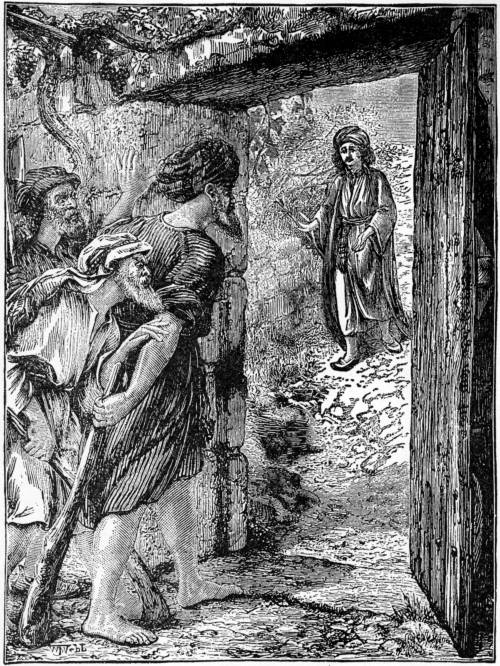
One day when the priests and elders of the Temple were asking questions of Jesus, He told them this parable.
There was a certain man who had a vineyard which was hedged or walled round, and had a tower. But he was going away into a country far off, so he let the vineyard to a number of husbandmen, or labourers, who were to give him part of the fruit of the vines. When the time had come that the fruit was ripe, he sent his servants to the husbandmen that he might receive his share. But the wicked husbandmen took his servants, and slew one, and beat another, and stoned the third. Then he sent other servants, more than before, but the husbandmen served them as they had done the others. Last of all he sent his own son, saying, “They will reverence my son.” But when those wicked men saw him coming, they said among themselves, “This is the heir to all the vineyard; come, let us kill him and seize on his inheritance.” So they caught him, and cast him out of the vineyard, and slew him.
Then Jesus said to the priests and elders, “When the Lord of the vineyard cometh, what will he do unto these husbandmen?” And they answered, “He will miserably destroy those wicked men, and will let out his vineyard to others, who shall render him the fruits in their season.”
In this parable the owner of the vineyard means God; the vineyard Canaan, and the husbandmen are the Jews, who had promised to obey Him, but had not done so. He had sent His prophets among them, to warn them, but these had been killed. At last, He sent His only Son, but they would not own Him as such, and soon they would kill Him. When the priests heard this, they knew it referred to them, and they were very angry and would have taken Him and killed Him, but they were afraid of the people, who took Jesus to be a prophet.
When most people think of the Armor of God, they think of Ephesians 6:11-18 where Paul tells us to put on the armor of God. Did you know that the Old Testament speaks about the armor of God? It is not as laid out as Paul puts it in Ephesians, but it is there.
Here are the different pieces of armor found throughout the Old Testament:
Belt of Truth
Ephesians 6:14 Stand therefore, having your loins girt about with truth, and having on the breastplate of righteousness;
Psalms 18:32 It is God that girdeth me with strength, and maketh my way perfect.
Psalms 18:39 For thou hast girded me with strength unto the battle: thou hast subdued under me those that rose up against me.
Breastplate of Righteousness
Ephesians 6:14 Stand therefore, having your loins girt about with truth, and having on the breastplate of righteousness;
Psalms 132:9 Let thy priests be clothed with righteousness; and let thy saints shout for joy.
Isaiah 59:17 For he put on righteousness as a breastplate, and an helmet of salvation upon his head; and he put on the garments of vengeance for clothing, and was clad with zeal as a cloak.
Shoes of Peace
Remember the function of shoes is to protection the feet and to help keep your feet from slipping.
Ephesians 6:15 And your feet shod with the preparation of the gospel of peace;
Psalms 18:36 Thou hast enlarged my steps under me, that my feet did not slip.
Psalms 40:2 He brought me up also out of an horrible pit, out of the miry clay, and set my feet upon a rock, and established my goings.
Psalms 56:13 For thou hast delivered my soul from death: wilt not thou deliver my feet from falling, that I may walk before God in the light of the living?
Psalms 119:59 I thought on my ways, and turned my feet unto thy testimonies.
Psalms 119:105 Thy word is a lamp unto my feet, and a light unto my path.
Shield of Faith
Ephesians 6:16 Above all, taking the shield of faith, wherewith ye shall be able to quench all the fiery darts of the wicked.
Psalms 3:3 But thou, O Lord, art a shield for me; my glory, and the lifter up of mine head.
Proverbs 30:5 Every word of God is pure: he is a shield unto them that put their trust in him.
Helmet of Salvation
Ephesians 6:17 And take the helmet of salvation, and the sword of the Spirit, which is the word of God:
Isaiah 59:17 For he put on righteousness as a breastplate, and an helmet of salvation upon his head; and he put on the garments of vengeance for clothing, and was clad with zeal as a cloak.
Remember to take the Whole Armor of God.
Ephesians 6:12-13 Put on the whole armour of God, that ye may be able to stand against the wiles of the devil. For we wrestle not against flesh and blood, but against principalities, against powers, against the rulers of the darkness of this world, against spiritual wickedness in high places. Wherefore take unto you the whole armour of God, that ye may be able to withstand in the evil day, and having done all, to stand.
The Old Serpent, or the Devil, cast down from Heaven.
Each of the three great books concludes with this same foreshowing of Apocalyptic truth. The same great enemy is referred to in all these pictures. He is the Serpent; he is the Dragon; “the great dragon, that old serpent, called the Devil and Satan” (Rev. xii. 9). The Serpent represents him as the Deceiver; the Dragon, as the Destroyer.
This First Book concludes with the Dragon being cast down from heaven.
The Second Book concludes with Cetus, the Sea Monster, Leviathan, bound.
The Third Book concludes with Hydra, the Old Serpent, destroyed.
Here, at the close of the First Book, we see not merely a dragon, but the Dragon cast down! That is the point of this great star-picture.
No one has ever seen a dragon; but among all nations (especially in China and Japan), and in all ages, we find it described and depicted in legend and in art. Both Old and New Testaments refer to it, and all unite in connecting with it one and the same great enemy of God and man.
It is against him that the God-Man— “the Son of God—goes forth to war.” It is for him that the eternal fires are prepared. It is he who shall shortly be cast down from the heavens preparatory to his completed judgment. It is of him we read, “The great dragon was cast out, that old serpent, called the Devil, and Satan, which deceiveth the whole world: he was cast out and his angels with him. And I heard a loud voice saying in heaven, Now is come salvation, and strength, and the kingdom of our God, and the power of His Christ; for the accuser of our brethren is cast down” (Rev. xii. 9, 10).
It is of him that David sings: —
“God is my king of old,
Working salvation in the midst of the earth …
Thou brakest the heads of the dragons in the waters.
Thou brakest the heads of leviathan in pieces.”
(Ps. lxxiv. 12-14.)
Of him also the Spirit causes Isaiah to say, “In that day, shall this song be sung in the land of Judah”; —
“In that day the Lord, with his sore, and great, and strong sword,
Shall punish leviathan the piercing (r.v. swift) serpent,
Even leviathan that crooked serpent;
And he shall slay the dragon that is in the sea.”
(Isa. xxvi. 1; xxvii. 1.)
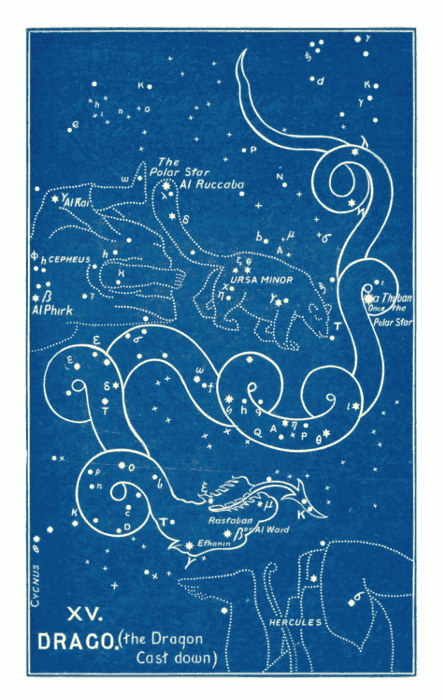
This is exactly what is foreshadowed by this constellation of Draco. Its name is from the Greek, and means trodden on, as in the Septuagint of Ps. xci. 13: “The dragon shalt thou trample under feet,” from the Hebrew דָּרַךְ, Dahrach, to tread.
Plate 15: DRACO (the Dragon Cast down)
In the Zodiac of Denderah it is shown as a serpent under the fore-feet of Sagittarius, and is named Her-fent, which means the serpent accursed!
There are 80 stars in the constellation; four of the 2nd magnitude, seven of the 3rd magnitude, ten of the 4th, etc.
The brightest star, α (in one of the latter coils), is named Thuban (Heb.), the subtle. Some 4,620 years ago it was the Polar Star. It is manifest, therefore, that the Greeks could not have invented this constellation, as is confessed by all modern astronomers. It is still a very important star in nautical reckonings, guiding the commerce of the seas, and thus “the god of this world” is represented as winding in his contortions round the pole of the world, as if to indicate his subtle influence in all worldly affairs.
The next star, β (in the head), is called by the Hebrew name Rastaban, and means the head of the subtle (serpent). In the Arabic it is still called Al Waid, which means who is to be destroyed.
The next star, γ (also in the head), is called Ethanin, i.e., the long serpent, or dragon.
The Hebrew names of other stars, not identified, are Grumian, the subtle; Giansar, the punished enemy. Other (Arabic) names are Al Dib, the reptile; El Athik, the fraudful; El Asieh, the bowed down.
And thus the combined testimony of every star (without a single exception) of each constellation, and the constellations of each sign, accords with the testimony of the Word of God concerning the coming Seed of the woman, the bruising of His heel, the crushing of the serpent’s head, “the sufferings of Christ, and the glory which should follow.”
In the morning, when Jesus had left Bethany and was coming towards Jerusalem, He was hungry. Seeing a fig-tree afar off, covered with leaves, He came to it, hoping to find some fruit on it. But the tree was a young one, and had not yet commenced to bear fruit. And He found thereon nothing but leaves. Then He said unto it, “Let no fruit grow on thee henceforward for ever.” And the fig-tree withered away and was dead from the roots. When the disciples saw it, they marvelled, saying, “How soon the fig-tree is withered away!”
Jesus answered, and said unto them, “Verily I say unto you, if ye have faith and doubt not, ye shall not only do as I have done to this fig-tree, but, also, if ye shall say unto this mountain, ‘Be thou removed and be cast into the sea,’ it shall be done. And all things, whatsoever ye shall ask in prayer, believe that ye will receive them, and ye shall have them. And when ye are praying, forgive any that have injured you, that your Father also which is in heaven may forgive you your trespasses against Him. But if ye do not forgive, neither will your Father which is in heaven forgive your trespasses.”
How strange it seems that Jesus, who was gentle and kind, should pronounce a curse on this fig-tree, and cause it to wither away. Why did He do so? Because He wished to impress upon His disciples the terrible danger of unfruitfulness. If we are the disciples of Jesus, we must bear good fruit; we must be loving, kind, and gentle, and try, like Him, to be always doing good.
The penny, or denarius, was a silver coin, stamped with the image of the Roman Emperor, and worth about 16 cents of our money. It was a full ordinary day’s wage at that time.
Numbers 14:22 Because all those men which have seen my glory, and my miracles, which I did in Egypt and in the wilderness, and have tempted me now these ten times, and have not hearkened to my voice;
This verse indicts that the Children of Israel tested and tempted God 10 different times. They had problems trusting God even after seeing the plagues in Egypt. Below are the 10 times where they doubted God.
The Red Sea
Exodus 14:10-12: And when Pharaoh drew nigh, the children of Israel lifted up their eyes, and, behold, the Egyptians marched after them; and they were sore afraid: and the children of Israel cried out unto the Lord. And they said unto Moses, Because there were no graves in Egypt, hast thou taken us away to die in the wilderness? wherefore hast thou dealt thus with us, to carry us forth out of Egypt? Is not this the word that we did tell thee in Egypt, saying, Let us alone, that we may serve the Egyptians? For it had been better for us to serve the Egyptians, than that we should die in the wilderness.
They were scared and accused God of bringing them into the wilderness to kill them.
This incident set the pattern for recurring disbelief, even though God miraculously parted the Red Sea soon after (Exodus 14:21-22).
Complaining about Bitter Water
Exodus 15:22-24 So Moses brought Israel from the Red sea, and they went out into the wilderness of Shur; and they went three days in the wilderness, and found no water. And when they came to Marah, they could not drink of the waters of Marah, for they were bitter: therefore the name of it was called Marah. And the people murmured against Moses, saying, What shall we drink?
After three days wandering through the Wilderness of Shur without finding drinkable water, the people became frustrated when they reached Marah and discovered its waters were bitter. Instead of recalling how God had delivered them at the Red Sea, they grumbled to Moses, questioning whether God would continue to provide for them.
Grumbling about Food in the Wilderness
Exodus 16:2-3 And they took their journey from Elim, and all the congregation of the children of Israel came unto the wilderness of Sin, which is between Elim and Sinai, on the fifteenth day of the second month after their departing out of the land of Egypt. And the whole congregation of the children of Israel murmured against Moses and Aaron in the wilderness: And the children of Israel said unto them, Would to God we had died by the hand of the Lord in the land of Egypt, when we sat by the flesh pots, and when we did eat bread to the full; for ye have brought us forth into this wilderness, to kill this whole assembly with hunger.
God responded to their lack of faith by raining down manna, demonstrating His continual care despite their complaints (Exodus 16:4-5).
Disobedience Regarding the Manna and the Sabbath
Exodus 16:27-30 And it came to pass, that there went out some of the people on the seventh day for to gather, and they found none. And the Lord said unto Moses, How long refuse ye to keep my commandments and my laws? See, for that the Lord hath given you the sabbath, therefore he giveth you on the sixth day the bread of two days; abide ye every man in his place, let no man go out of his place on the seventh day. So the people rested on the seventh day.
God told the Israelites to collect manna for six days and rest on the seventh. But some ignored this and went out to gather manna on the Sabbath anyway. Their disobedience tested God’s patience and showed their ongoing doubt.
Quarreling about Water at Rephidim
Exodus 17:1-7 And all the congregation of the children of Israel journeyed from the wilderness of Sin, after their journeys, according to the commandment of the Lord, and pitched in Rephidim: and there was no water for the people to drink. Wherefore the people did chide with Moses, and said, Give us water that we may drink. And Moses said unto them, Why chide ye with me? wherefore do ye tempt the Lord? And the people thirsted there for water; and the people murmured against Moses, and said, Wherefore is this that thou hast brought us up out of Egypt, to kill us and our children and our cattle with thirst? And Moses cried unto the Lord, saying, What shall I do unto this people? they be almost ready to stone me. And the Lord said unto Moses, Go on before the people, and take with thee of the elders of Israel; and thy rod, wherewith thou smotest the river, take in thine hand, and go. Behold, I will stand before thee there upon the rock in Horeb; and thou shalt smite the rock, and there shall come water out of it, that the people may drink. And Moses did so in the sight of the elders of Israel. And he called the name of the place Massah, and Meribah, because of the chiding of the children of Israel, and because they tempted the Lord, saying, Is the Lord among us, or not?
Later in Deutronomy when the travels and the Law is being reviewed, this incident it recalled.
Deutronomy 6:16 Ye shall not tempt the Lord your God, as ye tempted him in Massah.
Jesus when answering Satan quotes from Deutronomy.
Matthew 4:7 Jesus said unto him, It is written again, Thou shalt not tempt the Lord thy God.
God instructed Moses to strike the rock at Horeb, causing water to flow and providing the people with evidence of His faithfulness (Exodus 17:6-7).
The Golden Calf at Mount Sinai
Exodus 32:1-6 And when the people saw that Moses delayed to come down out of the mount, the people gathered themselves together unto Aaron, and said unto him, Up, make us gods, which shall go before us; for as for this Moses, the man that brought us up out of the land of Egypt, we wot not what is become of him. And Aaron said unto them, Break off the golden earrings, which are in the ears of your wives, of your sons, and of your daughters, and bring them unto me. And all the people brake off the golden earrings which were in their ears, and brought them unto Aaron. And he received them at their hand, and fashioned it with a graving tool, after he had made it a molten calf: and they said, These be thy gods, O Israel, which brought thee up out of the land of Egypt. And when Aaron saw it, he built an altar before it; and Aaron made proclamation, and said, To morrow is a feast to the Lord. And they rose up early on the morrow, and offered burnt offerings, and brought peace offerings; and the people sat down to eat and to drink, and rose up to play. And the Lord said unto Moses, Go, get thee down; for thy people, which thou broughtest out of the land of Egypt, have corrupted themselves:
While Moses was on Mount Sinai receiving the Law, the people grew restless and asked Aaron to make them gods. They ended up crafting a golden calf, crediting this idol with their escape from Egypt. This open act of idolatry challenged God’s holiness, despite all the incredible signs and wonders they had already seen.
General Complaints and Discontent
Numbers 11:1-3 And when the people complained, it displeased the Lord: and the Lord heard it; and his anger was kindled; and the fire of the Lord burnt among them, and consumed them that were in the uttermost parts of the camp. And the people cried unto Moses; and when Moses prayed unto the Lord, the fire was quenched. And he called the name of the place Taberah: because the fire of the Lord burnt among them.
As they traveled from Mount Sinai, the Israelites started grumbling once more for no clear reason. The Bible says that “the fire of the LORD burned among them and consumed the outskirts of the camp” (Numbers 11:1). This episode highlights how their complaints were ongoing and intentional acts of disbelief.
Craving Meat and Rejecting Manna
Numbers 11:4-6 And the mixt multitude that was among them fell a lusting: and the children of Israel also wept again, and said, Who shall give us flesh to eat? We remember the fish, which we did eat in Egypt freely; the cucumbers, and the melons, and the leeks, and the onions, and the garlick: But now our soul is dried away: there is nothing at all, beside this manna, before our eyes.
They insisted they were better off in Egypt, once again ignoring God’s continued provision. By longing more for their former lives there than trusting His plan, they put the Lord to the test.
Disbelief Following the Spies’ Report
Numbers 14:1-4 And all the congregation lifted up their voice, and cried; and the people wept that night. And all the children of Israel murmured against Moses and against Aaron: and the whole congregation said unto them, Would God that we had died in the land of Egypt! or would God we had died in this wilderness! And wherefore hath the Lord brought us unto this land, to fall by the sword, that our wives and our children should be a prey? were it not better for us to return into Egypt? And they said one to another, Let us make a captain, and let us return into Egypt.
When Moses sent spies to scout out Canaan, most came back with a discouraging report. The Israelites were gripped by fear, unwilling to trust that God would give them the land. They even considered picking a new leader and heading back to Egypt. This deep lack of faith stood in stark contrast to the powerful acts of deliverance God had already shown them.
Rebellion of Korah and the Aftermath
Numbers 16:1-3 Now Korah, the son of Izhar, the son of Kohath, the son of Levi, and Dathan and Abiram, the sons of Eliab, and On, the son of Peleth, sons of Reuben, took men: And they rose up before Moses, with certain of the children of Israel, two hundred and fifty princes of the assembly, famous in the congregation, men of renown: And they gathered themselves together against Moses and against Aaron, and said unto them, Ye take too much upon you, seeing all the congregation are holy, every one of them, and the Lord is among them: wherefore then lift ye up yourselves above the congregation of the Lord?
Numbers 16:41 But on the morrow all the congregation of the children of Israel murmured against Moses and against Aaron, saying, Ye have killed the people of the Lord.
Korah, Dathan, and Abiram stood against Moses’ authority, and God responded with a dramatic judgment, causing the earth to swallow them. But the very next day, the people grumbled again, accusing Moses of causing their deaths (Numbers 16:41). This moment shows yet another refusal to accept God’s chosen leader and trust in His decisions.
Significance of the Ten Tests
These ten events show a pattern of doubt, ingratitude, and defiance, even in the face of remarkable displays of divine power. Time after time, the Israelites had clear proof of God’s faithfulness—through miracles, provisions, and warnings—yet they continued to struggle with disbelief.
These stories offer lasting lessons about the risks of becoming complacent or ignoring guidance. For readers today, they highlight the value of trusting the One who always provides and supports, even when situations seem overwhelming.
Implications for Faith and Obedience
These repeated challenges remind believers of the real consequences of not trusting God’s promises. Each moment comes with a call to return to faithful obedience, urging us not to “test the LORD” (see Deuteronomy 6:16). Paul, reflecting on these wilderness events, said, “Now these things happened to them as examples and were written down as warnings for us” (1 Corinthians 10:11). Choosing faith in tough times keeps us rooted in God’s gracious character, giving us a firm spiritual foundation and helping us avoid the traps of rebellion.
Conclusion
The account of Israel testing God ten times is a powerful reminder that disbelief and defiance can cloud our vision, no matter how many miracles we’ve seen. Real faith grows when it’s grounded in humble trust, recalling past rescues and leaning on God’s promises. Looking at these events shows us that His character deserves our complete confidence, and that any challenge to His faithfulness should lead us to respond with trust and obedience, knowing His love and strength have never failed.
Bible books are great for Bible Study. Here are many books that are great to use with children and one that offers interesting insight for adults.
For Children
The Wonder Book of Bible Stories: “The Wonder Book of Bible Stories” by Logan Marshall shares simplified biblical narratives for children, conveying essential moral lessons through engaging tales from the Bible.MOTHER STORIES From the Old Testament: This book contains engaging stories from the Old Testament including tales of creation, heroes, and important lessons.
THE CHILDREN’S SIX MINUTES by Bruce S. Wright: The Children’s Six Minutes by Bruce S. Wright features a collection of themes exploring growth, kindness, faith, and life’s lessons through various engaging stories and reflections. Mother Stories from the New Testament: “Mother Stories from the New Testament” shares engaging narratives for children, emphasizing faith, kindness, and moral lessons from Jesus’ life.
There were some nations that God did not have Joshua drive out from the promise land. Those nations were left as a test for Israel.
Judges 3:1-5
Now these are the nations which the Lord left [in order] to test Israel by them (that is, all [the people of Israel] who had not [previously] experienced any of the wars in Canaan;
only in order that the generations of the sons of Israel might be taught war, at least those who had not experienced it previously).
The remaining nations are:
the five lords (governors) of the Philistines,
all the Canaanites,
the Sidonians,
and the Hivites who lived on Mount Lebanon from Mount Baal-hermon to the entrance of Hamath.
They were [allowed to remain] for the testing of Israel, to determine whether Israel would listen to and obey the commandments of the Lord, which He had commanded their fathers (ancestors) through Moses.
Israel was commanded not to intermarry.
Deuteronomy 7:3-4
You shall not intermarry with them; you shall not give your daughter to his son, nor shall you take his daughter for your son;
for they will turn your sons away from following Me to serve other gods; then the anger of the Lord will be kindled and burn against you and He will quickly destroy you.
Israel disobeyed.
Judges 3:5-6
And the Israelites lived among the Canaanites, Hittites, Amorites, Perizzites, Hivites, and Jebusites;
and they took their daughters for themselves as wives and gave their own daughters to their sons, and served their [pagan] gods.
God allowed Cushan-rishathaim the king of Mesopotamia to put them into bondage.
Cushan-rishathaim is often interpreted to mean “Cushan of double wickedness” or “Cushan of double iniquity,” reflecting his oppressive rule over Israel.
Cushan-rishathaim is described as the king of Aram Naharaim, which is often identified with the region of Mesopotamia, specifically the area between the Tigris and Euphrates rivers.
Aram Naharaim is better known as the Kingdom of Mitanni. This Kingdom came on the scene around 1600 BC
After 8 years of bondage the Children of Israel cried out to God.
Judges 3:9
But when the Israelites cried out to the Lord [for help], the Lord raised up a man to rescue the people of Israel, Othniel the son of Kenaz, Caleb’s younger brother.
Othniel
Othniel means “lion of God.”
He was Caleb’s younger brother.
Caleb was one of the two honest 12 spies.
Numbers 13:6 from the tribe of Judah, Caleb the son of Jephunneh
We 1st learn about Othniel in Joshua 15:13-17
Now to Caleb the son of Jephunneh Joshua gave a portion among the sons of Judah, as the Lord commanded him, namely, Kiriath-arba, Arba being the father of Anak (that is, Hebron).
So Caleb drove out from there the three sons of Anak: Sheshai and Ahiman and Talmai, the children of Anak.
Then he went up from there against the people of Debir; Debir was formerly named Kiriath-sepher.
Caleb said, “I will give Achsah my daughter as wife to the man who attacks Kiriath-sepher and captures it.”
And Othniel the son of Kenaz, Caleb’s brother, captured it; so he gave him Achsah his daughter as a wife.
The spirit of God came upon Othniel.
Judges 3:10-11
The Spirit of the Lord came upon him, and he judged Israel. He went out to war, and the Lord gave Cushan-rishathaim king of Mesopotamia into his hand, and he prevailed over Cushan-rishathaim.
And the land was at rest [from oppression for] forty years. Then Othniel the son of Kenaz died.
This battle corresponds to the downfall of Aram Naharaim in the 14th century BC.
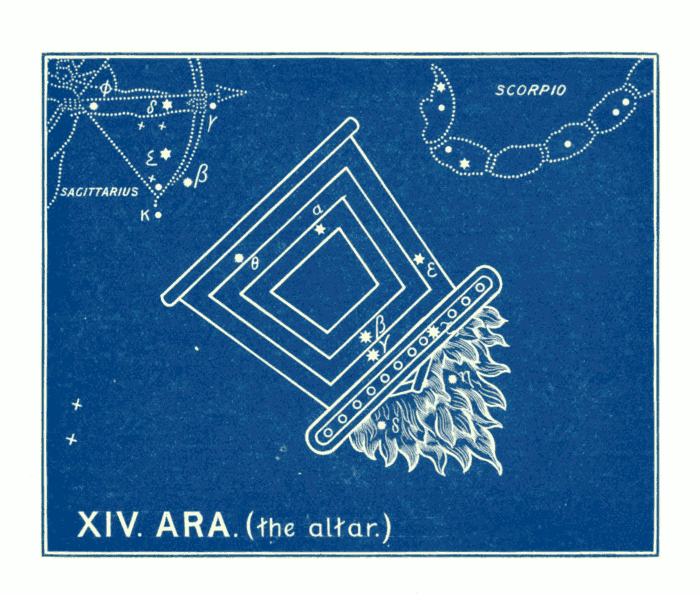
Here we have an altar or burning pyre, placed significantly and ominously upside down! with its fires burning and pointing downwards towards the lower regions, called Tartarus, or the abyss, or “outer-darkness.”
Plate 14: ARA (the Altar)
It is an asterism with nine stars, of which three are of the 3rd magnitude, four of the 4th, etc. It is south of the Scorpion’s tail, and when these constellations were first formed it was visible only on the very lowest horizon of the south, pointing to the completion of all judgment in the lake of fire.
In the Zodiac of Denderah we have a different picture, giving us another aspect of the same judgment. It is a man enthroned, with a flail in his hand. His name is Bau, the same name as Hercules has, and means He cometh. It is from the Hebrew בּוֹא (Bōh), to come, as in Isa. lxiii. 1:
“Who is this that cometh from Edom,
With dyed garments from Bozrah.”
This is a coming in judgment, as is clear from reason given in verse 4:
“For the day of vengeance is in Mine heart,
And the year of My redeemed is come.
And I looked, and there was none to help;
And I wondered that there was none to uphold;
Therefore Mine own arm brought salvation,
And My fury, it upheld Me.”
(Isa. lxiii. 4, 5.)
The completion of judgment, therefore, is what is pictured both by the burning pyre and the Coming One enthroned, with his threshing instrument.
In Arabic it is called Al Mugamra, which means the completing, or finishing. The Greeks used the word Ara sometimes in the sense of praying, but more frequently in the sense of imprecation or cursing.
This is the curse pronounced against the great enemy. This is the burning fire, pointing to the completion of that curse, when he shall be cast into that everlasting fire “prepared for the devil and his angels.” This is the allusion to it written in the midst of the very Scripture from which we have already quoted, Ps. xxi., where we read in verse 9 (which we then omitted): —
“Thou shalt make them as a fiery oven in the time of Thine anger:
The Lord shall swallow them up in His wrath;
And the fire shall devour them.”
This brings us to the final scene, closing up this first great book of the Heavens.




 articlesforchristians