A place to grow your relationship with God

Posts tagged ‘bible’

Understanding Daniel’s Stand: Purity Amidst Adversity

When Babylon captured Judah it took trophies – treasures from the house of God and Children (youth). The treasures from the house of God was placed in the treasure house of their god.

  • Daniel 1:1-5
    • In the third year of the reign of Jehoiakim king of Judah came Nebuchadnezzar king of Babylon unto Jerusalem, and besieged it.
    • And the Lord gave Jehoiakim king of Judah into his hand, with part of the vessels of the house of God: which he carried into the land of Shinar to the house of his god; and he brought the vessels into the treasure house of his god.
    • And the king spake unto Ashpenaz the master of his eunuchs, that he should bring certain of the children of Israel, and of the king’s seed, and of the princes;
    • Children in whom was no blemish, but well favoured, and skilful in all wisdom, and cunning in knowledge, and understanding science, and such as had ability in them to stand in the king’s palace, and whom they might teach the learning and the tongue of the Chaldeans.
    • 5And the king appointed them a daily provision of the king’s meat, and of the wine which he drank: so nourishing them three years, that at the end thereof they might stand before the king.

Daniel and three of his friends were among the children taken.

  • Daniel 1:6
    • Now among these were of the children of Judah, Daniel, Hananiah, Mishael, and Azariah:

The goal of taken the children was to indoctrinate them into the belief of the Babylonians. They did this by:

  • Isolation
    • took the children away from everyone and everything that they knew.
  • Inculturation
    • Education
      • whom they might teach the learning and the tongue of the Chaldeans.
  • Integration
    • that at the end thereof they might stand before the king.
  • Identity changing
    • name changes: gave them new names that pointed away from who they were to who the Babylonians wanted them to be.
Old NameOld Name MeaningNew NameNew Name Meaning
DanielGod is my judgeBelteshazzar“Bel protects the king” or “Bel’s prince”. ‘Bel’ referring to the Babylonian god Marduk and ‘Shazar’ meaning ‘treasurer’ or ‘steward’.
HananiahYahweh is graciousShadrachservant of Aku” Aku was the Babylonian moon god.
Mishael“Who belongs to God?” Meshach“guest of a king”
AzariahYahweh has helpedAbednego “servant of Nego or Nebo

Names in those days had major meaning. Your name told you who you were. Your name was your identity. Therefore, the Babylonians gave them a new identity (a new name).

Daniel was respectful. This is evident with the prince of the eunuchs showing Daniel favor. However, Daniel stayed true to God.

  • Daniel 1:8-9
    • But Daniel purposed in his heart that he would not defile himself with the portion of the king’s meat, nor with the wine which he drank: therefore he requested of the prince of the eunuchs that he might not defile himself.
    • Now God had brought Daniel into favour and tender love with the prince of the eunuchs.

Defile

  • גָּאַל gâʼal, gaw-al’; a primitive root, to soil or (figuratively) desecrate:—defile, pollute, stain.

Daniel chooses to stay pure and Holy before God. He does this by following God’s laws. The laws concerning food are linked to purity, holiness, and being clean.

  • Leviticus 11:46-47
    • This is the law of the beasts, and of the fowl, and of every living creature that moveth in the waters, and of every creature that creepeth upon the earth:
    • To make a difference between the unclean and the clean, and between the beast that may be eaten and the beast that may not be eaten.
  • Leviticus 10:9-10
    • And that ye may put difference between holy and unholy, and between unclean and clean;
  • Deuteronomy 14:2-3
    • For thou art an holy people unto the Lord thy God, and the Lord hath chosen thee to be a peculiar people unto himself, above all the nations that are upon the earth.
    •  Thou shalt not eat any abominable thing.
  • Deuteronomy 14:21
    • Ye shall not eat of anything that dieth of itself: thou shalt give it unto the stranger that is in thy gates, that he may eat it; or thou mayest sell it unto an alien: for thou art an holy people unto the Lord thy God. Thou shalt not seethe a kid in his mother’s milk.

For more information read: The Significance of Clean and Unclean Foods in the Bible.

Today we are called to be in the world but not of the world. This is similar to the situation that Daniel found himself in. He was in the world (Babylon), but he refused to be of the world. He refused to defile himself by letting the world in him.

Here is a potation of a prayer that Jesus prayed before going to the cross. Notice how Jesus prays for us.

John 17:14-21

  • I have given them thy word; and the world hath hated them, because they are not of the world, even as I am not of the world.
  • I pray not that thou shouldest take them out of the world, but that thou shouldest keep them from the evil.
  • They are not of the world, even as I am not of the world.
  • Sanctify them through thy truth: thy word is truth.
  • As thou hast sent me into the world, even so have I also sent them into the world.
  • And for their sakes I sanctify myself, that they also might be sanctified through the truth.
  • Neither pray I for these alone, but for them also which shall believe on me through their word;
  • That they all may be one; as thou, Father, art in me, and I in thee, that they also may be one in us: that the world may believe that thou hast sent me.

A 10-day test period was granted to Daniel and his three friends. At the end of the test period, Daniel and his friends did better than the others.

Daniel 1:15-16

  •  And at the end of ten days their countenances appeared fairer and fatter in flesh than all the children which did eat the portion of the king’s meat.
  • 16 Thus Melzar took away the portion of their meat, and the wine that they should drink; and gave them pulse.

At the end of the three years, Daniel and his friends were still better than the rest.

Daniel 1:17-20

  • As for these four children, God gave them knowledge and skill in all learning and wisdom: and Daniel had understanding in all visions and dreams.
  • Now at the end of the days that the king had said he should bring them in, then the prince of the eunuchs brought them in before Nebuchadnezzar.
  • And the king communed with them; and among them all was found none like Daniel, Hananiah, Mishael, and Azariah: therefore stood they before the king.
  • And in all matters of wisdom and understanding, that the king enquired of them, he found them ten times better than all the magicians and astrologers that were in all his realm.

It is always better to be Holy and not defile yourself with the world than to fit in with the world.
The Cleansing of the Temple at Passover

 Jeremiah 7:8-12

“Behold, you are trusting in deceptive and useless words that bring no benefit. Will you steal, murder, commit adultery, swear [oaths] falsely, offer sacrifices or burn incense to Baal, and follow after other gods that you have not known, 10 and [then dare to] come and stand before Me in this house, which is called by My Name, and say, ‘We are protected and set free [by this act of religious ritual]!’—only to go on with this wickedness and these disgusting and loathsome things? 11 Has this house, which is called by My Name, become a den of robbers in your eyes [a place of retreat for you between acts of violence]? Behold, I Myself have seen it,” says the Lord.

12 “But go now to My place which was in Shiloh [in Ephraim], where I first set My Name, and see what I did to it because of the wickedness of My people Israel. 

Jeremiah 7:11

11 Has this house, which is called by My name, become a den of robbers in your sight? Behold, I Myself have seen it,” declares the Lord.

Isaiah 56:7

Even those I will bring to My holy mountain,
And make them joyful in My house of prayer.
Their burnt offerings and their sacrifices will be acceptable on My altar;
For My house will be called a house of prayer for all the peoples.”

Matthew 21:10-17

When He entered Jerusalem, all the city was trembling [with excitement], saying, “Who is this?” 11 And the crowds were saying, “This is the prophet Jesus, from Nazareth in Galilee.”

Cleansing the Temple

12 And Jesus entered the temple [grounds] and drove out [with force] all who were buying and selling [birds and animals for sacrifice] in the temple area, and He turned over the tables of the moneychangers [who made a profit exchanging foreign money for temple coinage] and the chairs of those who were selling doves [for sacrifice]. 13 Jesus said to them, “It is written [in Scripture], ‘My house shall be called a house of prayer’; but you are making it a robbers’ den.”

14 And the blind and the lame came to Him in [the porticoes and courts of] the temple area, and He healed them. 15 But when the chief priests and the scribes saw the wonderful and miraculous things that Jesus had done, and heard the boys who were shouting in [the porticoes and courts of] the temple [in praise and adoration], “Hosanna to the Son of David (the Messiah),” they became indignant 16 and they said to Him, “Do You hear what these children are saying?” And Jesus replied to them, “Yes; have you never read [in the Scripture], ‘Out of the mouths of infants and nursing babies You have prepared and provided praise for Yourself’?” 17 Then He left them and went out of the city to Bethany and spent the night there.

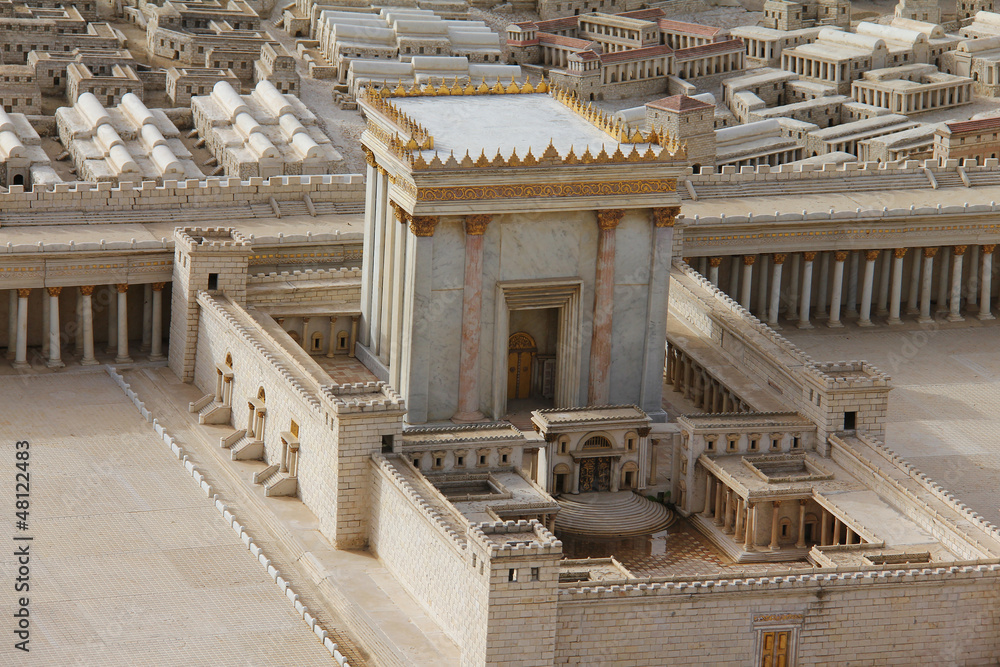
Jesus had just entered into the city. He went to the temple. He found that they had turned what should have been a Holy place of prayer and worship into a den of thieves (Jer. 7:11 and Mat. 21:13). This was the second time that he cleaned the temple. At the 1st Passover that Jesus attended after beginning his earthly ministry he cleaned the temple for the same reason. The people thought that they were good (Jer. 7:10) when in fact they were heading for destruction (Jer. 7:12). Jesus had come to earth to live and die in order to save the world from sin so that they could have eternal life. However, that involves the removal of some things. Even today we must allow Jesus to clean the temple (our body).

  • 1 Corinthians 6:19-20
    • What? know ye not that your body is the temple of the Holy Ghost which is in you, which ye have of God, and ye are not your own?
    • For ye are bought with a price: therefore, glorify God in your body, and in your spirit, which are God’s.

First Passover—Cleansing the Temple

13 Now the Passover of the Jews was approaching, so Jesus went up to Jerusalem. 14 And in the temple [enclosure], He found the people who were selling oxen and sheep and doves, and the money changers sitting at their tables15 He made a whip of cords, and drove them all out of the temple, with the sheep and the oxen; and He scattered the coins of the money changers and overturned their tables; 16 then to those who sold the doves He said, “Take these things away! Stop making My Father’s house a place of commerce!” 17 His disciples remembered that it is written [in the Scriptures], “Zeal (love, concern) for Your house [and its honor] will consume Me.” 18 Then the Jews retorted, “What sign (attesting miracle) can You show us as [proof of] your authority for doing these things?” 19 Jesus answered them, “Destroy this temple, and in three days I will raise it up.” 20 Then the Jews replied, “It took forty-six years to build this temple, and You will raise it up in three days?” 21 But He was speaking of the temple which was His body. 22 So when He had risen from the dead, His disciples remembered what He had said. And they believed and trusted in and relied on the Scripture and the words that Jesus had spoken.

It was after cleaning the temple for the 1st time that he explained that His body was the temple. It is interesting to note that both cleaning were at the time of Passover.

Jesus is referred to as the Passover Lamb in the Bible, symbolizing his sacrifice for humanity

  • 1 Corinthians 5:7: “For Christ, our Passover lamb, has been sacrificed.”
    • This verse emphasizes that Jesus’ sacrifice fulfills the role of the Passover lamb, which was central to the Passover celebration.
  • John 1:29: “The next day he saw Jesus coming toward him, and said, ‘Behold, the Lamb of God, who takes away the sin of the world!'”
    • This declaration by John the Baptist identifies Jesus as the sacrificial lamb, linking him to the Passover tradition.
  • Matthew 26:17: “Now on the first day of the Feast of the Unleavened Bread, the disciples came to Jesus, saying, ‘Where do You want us to prepare for You to eat the Passover?'”
    • This verse sets the context for the Last Supper, which was a Passover meal.
  • Exodus 12:13: “The blood shall be a sign for you on the houses where you live; and when I see the blood, I will pass over you, and no plague will befall you to destroy you when I strike the land of Egypt.”
    • This Old Testament verse establishes the significance of the Passover lamb’s blood, which is echoed in the New Testament through Jesus’ sacrifice.
  • Luke 22:15: “And He said to them, ‘I have eagerly desired to eat this Passover with you before I suffer.'”
    • This verse highlights Jesus’ intention to celebrate Passover with his disciples before his crucifixion, linking his impending sacrifice to the Passover celebration.

The Significance of Clean and Unclean Foods in the Bible

Food is considered clean or unclean for eating. Food that is kosher is considered clean (fitting for eating).

God gave these food laws as a means of separating His people from the pagans. This obedience to these laws was a matter of Holiness.

  • Leviticus 11:46-47
    • This is the law of the beasts, and of the fowl, and of every living creature that moveth in the waters, and of every creature that creepeth upon the earth:
    • To make a difference between the unclean and the clean, and between the beast that may be eaten and the beast that may not be eaten.
  • Leviticus 10:9-10
    • And that ye may put difference between holy and unholy, and between unclean and clean;
  • Deuteronomy 14:2-3
    • For thou art an holy people unto the Lord thy God, and the Lord hath chosen thee to be a peculiar people unto himself, above all the nations that are upon the earth.
    •  Thou shalt not eat any abominable thing.
  • Deuteronomy 14:21
    • Ye shall not eat of anything that dieth of itself: thou shalt give it unto the stranger that is in thy gates, that he may eat it; or thou mayest sell it unto an alien: for thou art an holy people unto the Lord thy God. Thou shalt not seethe a kid in his mother’s milk.

Here is a summary of the Laws.

Of the “beasts of the earth” (which basically refers to land mammals with the exception of swarming rodents), you may eat any animal that has cloven hooves and chews its cud. Lev. 11:3; Deut. 14:6. Any land mammal that does not have both of these qualities is forbidden.

  Not Allowed  Allowed
  Camel  Cattle
  Rabbit/ Hare  Sheep
  Pig  Goats
  Dog  Deer
 cat  Bison

Of the things that are in the waters, you may eat anything that has fins and scales. Lev. 11:9; Deut. 14:9.

  Not Allowed  Allowed
  lobsters  tuna
  shrimp  carp
  clams  salmon
  crabs  herring

For birds, the criteria are less clear. The Torah provides a list of forbidden birds (Lev. 11:13‑19; Deut. 14:11‑18) but does not specify why these particular birds are forbidden. All of the birds on the list are birds of prey or scavengers, thus the rabbis inferred that this was the basis for the distinction. Other birds are permitted, such as chicken, geese, ducks and turkeys. However, some people avoid turkey, because it is was unknown at the time of the giving of the Torah, leaving room for doubt.

Of the “winged swarming things” (winged insects), a few are specifically permitted (Lev. 11:22), but the Sages are no longer certain which ones they are, so all have been forbidden. There are communities that have a tradition about what species are permitted, and in those communities some insects are eaten.

Rodents, reptiles, amphibians, and insects (except as mentioned above) are all forbidden. Lev. 11:29‑30, 42‑43.

Any product derived from these forbidden animals, such as their milk, eggs, fat, or organs, also cannot be eaten. Rennet, an enzyme used to harden cheese, is often obtained from non‑kosher animals, thus kosher hard cheese can be difficult to find.

Today we are still called to be Holy.

  • 1 Peter 1:15-16
    • But as he which hath called you is holy, so be ye holy in all manner of conversation;
    • Because it is written, Be ye holy; for I am holy.

“Manner of conversation” is a phrase:

  • STRONGS G391:ἀναστροφή-ῆς, (from the passive ἀναστρέφομαι, see the preceding word), properly, ‘walk,’ i. e. manner of life, behavior, conduct

Unlocking the Relevance of the Old Testament for Christians

The Old Testament is seen as a book of rules that are outdated and or not relevant to Christians today. However, the Bible tells us that all scripture is important.

2 Timothy 3:16 (amp)
All Scripture is God-breathed [given by divine inspiration] and is profitable for instruction, for conviction [of sin], for correction [of error and restoration to obedience], for training in righteousness [learning to live in conformity to God’s will, both publicly and privately—behaving honorably with personal integrity and moral courage];

This means that even the Old Testament is useful.

Here are some Bible Studies comparing what the Old Testament says to the New Testament.

Laws and regulations

  • The Oneness of God in Scripture: The content compares Old Testament laws regarding God with corresponding New Testament scriptures. It emphasizes the importance of recognizing one true God, loving Him, fearing Him, and keeping His name sacred. It also addresses listening to Jesus as a prophet and warns against testing Him. The scriptures provide moral guidelines for believers.
  • Character Laws in the Old Testament Explained: The content outlines biblical laws governing behavior and character found in the Old and New Testaments. Key themes include emulating God’s ways, loving others, avoiding hatred, refraining from revenge, and supporting the weak. It encourages believers to demonstrate kindness, forgiveness, and unity, reflecting Christ’s teachings in their conduct.
  • Biblical Wisdom: Old Testament Laws for Study: The content discusses the importance of studying the Bible, comparing insights from the Old and New Testaments. It emphasizes the Torah’s role in instruction and hope, as seen in Deuteronomy and Romans. Believers are encouraged to respect teachers of the law and share their faith with humility and readiness.
  • Paganism and Idolatry: Biblical Insights: (coming soon)
  • The Significance of Clean and Unclean Foods in the Bible: The food laws establish distinctions between clean and unclean animals, emphasizing holiness for God’s people through specific dietary restrictions, as outlined in biblical texts like Leviticus and Deuteronomy.

Worship

Prophecies of the Messiah (Jesus)

  • Understanding Zechariah 9:9 and Its Fulfillment in Jesus: Zechariah’s prophecy of a humble king entering Jerusalem is fulfilled by Jesus, recognized as the Messiah from David’s lineage, sparking hope and eventual betrayal.
  • The Prophecy of the Anointed One in Psalm 2

Other principles from the Old Testament

Biblical Wisdom: Old Testament Laws for Study

What does the Bible say about studying it in the Old Testament? How does that compare to what the New Testament Says? Read on to find out.

Laws of Torah Study

  • To learn Torah
    • Deut. 6:7
      • And thou shalt teach them diligently unto thy children, and shalt talk of them when thou sittest in thine house, and when thou walkest by the way, and when thou liest down, and when thou risest up.
    • Romans 15:4 ESV
      • For whatever was written in former days was written for our instruction, that through endurance and through the encouragement of the Scriptures we might have hope.
    • 2 Timothy 3:16-17 ESV
      • All Scripture is breathed out by God and profitable for teaching, for reproof, for correction, and for training in righteousness, that the man of God may be complete, equipped for every good work.
    • Hebrews 4:12 ESV
      • For the word of God is living and active, sharper than any two-edged sword, piercing to the division of soul and of spirit, of joints and of marrow, and discerning the thoughts and intentions of the heart.
    • James 1:25 ESV
      • But the one who looks into the perfect law, the law of liberty, and perseveres, being no hearer who forgets but a doer who acts, he will be blessed in his doing.
    • 1 Peter 2:2 ESV
      • Like newborn infants, long for the pure spiritual milk, that by it you may grow up into salvation
    • Matthew 5:17-19 ESV
      • “Do not think that I have come to abolish the Law or the Prophets; I have not come to abolish them but to fulfill them. For truly, I say to you, until heaven and earth pass away, not an iota, not a dot, will pass from the Law until all is accomplished. Therefore whoever relaxes one of the least of these commandments and teaches others to do the same will be called least in the kingdom of heaven, but whoever does them and teaches them will be called great in the kingdom of heaven.
  • To honor those who teach and know Torah
    • Lev. 19:32
      • Thou shalt rise up before the hoary head, and honour the face of the old man, and fear thy God: I am the Lord.
    • Hebrews 13:17 ESV
      • Obey your leaders and submit to them, for they are keeping watch over your souls, as those who will have to give an account. Let them do this with joy and not with groaning, for that would be of no advantage to you.
    • 1 Thessalonians 5:12-13 ESV
      • We ask you, brothers, to respect those who labor among you and are over you in the Lord and admonish you, and to esteem them very highly in love because of their work. Be at peace among yourselves.

Notes:

Paul teaches us in Romans 15:4 (ESV) For whatever was written in former days was written for our instruction, that through endurance and through the encouragement of the Scriptures we might have hope. This means that the Old Testament including the Torah (1st five books of the Old Testament) in our instructions. Those things, when we learn it, gives us hope. Notice how it is written in the KJV: For whatsoever things were written aforetime were written for our learning, that we through patience and comfort of the scriptures might have hope. This clarifies that the Old Testament was written for our learning. We are supposed to learn and be instructed by the Old Testament so that we can have hope. That hope has many purposes. However, we have a commandment as to 1 thing we are to do with that hope.

  • 1 Peter 3:15 But sanctify the Lord God in your hearts: and be ready always to give an answer to every man that asketh you a reason of the hope that is in you with meekness and fear:

The word hope is the same in both 1 Peter 3:15 and Romans 15:4.

Hope

  • Strong’s G1680 – elpis
    • ἐλπίς elpís, el-pece’; from a primary ἔλπω élpō (to anticipate, usually with pleasure); expectation (abstractly or concretely) or confidence:—faith, hope.

We are to learn so that we can have hope and then be ready to give a reason of having the hope with meekness and fear.

The Church as the Lord’s Army: A Biblical Perspective

Biblical Foundation

The concept of the five-fold ministry originates from Ephesians 4:11-13, where the Apostle Paul describes these roles as gifts given by Christ to the church. The purpose of these ministries is to equip believers for service, promote unity in faith, and help the church reach maturity in Christ.

Ephesians

  • And he gave some, apostles; and some, prophets; and some, evangelists; and some, pastors and teachers;
  • For the perfecting of the saints, for the work of the ministry, for the edifying of the body of Christ:
  • Till we all come in the unity of the faith, and of the knowledge of the Son of God, unto a perfect man, unto the measure of the stature of the fulness of Christ:


Roles and Functions

Apostles: Often seen as foundational leaders, apostles are responsible for pioneering new works and establishing churches. They provide vision and direction, ensuring that the church remains aligned with God’s mission.

Prophets: Prophets are called to discern and declare God’s Word, guiding the church towards faithfulness and holiness. They serve as spiritual voices, often calling the community to repentance and deeper commitment to God.

Evangelists: Tasked with spreading the gospel, evangelists gather people into the church and encourage outreach efforts. They play a crucial role in expanding the church’s reach and bringing new believers into the faith.

Pastors: Pastors provide care and guidance to the congregation, nurturing spiritual growth and fostering community. They are often seen as shepherds who protect and lead their flock.

Teachers: Teachers are responsible for instructing and grounding believers in biblical truth. They help the church understand scripture and apply it to their lives, ensuring that the congregation is well-equipped for ministry.

The Lord’s Army

Now let’s put this another way. We are called to be soldiers in the Lord’s Army. That is why Paul tells us to put on the whole armor of God. Click here for more information on the Armor of God.

We are not called to be seat warmers in a building on Sunday Mornings. We are called to fight against the forces of darkness. Every part of the fivefold ministry is for the equipping of the saints to the work of God. Now I am going to loosely use the military rankings of the United States Army to put things into a military perspective so that you can better understand you job in the Lord’s Army.

Private: Everyone starts off as a private. This is the lowest level. It is at this point that you still have learning to do. You have just accepted Jesus as your Lord and Savior. Now it is time to start learning how to live as Christ would want you to live.

  • In the real army there are several levels of the rank of private. These levels are like you learning and growing in faith.
  • Some will rank up all the way into the five-fold ministry. Others will be the general soldiers.
    • Both are needed. General soldiers are the general workers. The others are the future leaders of the church community.
    • All are important to the body of Christ.

Drill Sergent: This would be the teachers. Now just because I am relating teachers to the rank of Drill Sergent does not mean I think teachers should act like a Drill Sergent is portrayed on television. Teachers are to be

  • patient
  • loving
  • kind
  • caring
  • knowledgeable

Remember that the teachers are in charge of training the next generation of soldiers and some of them will be all of the other rankings. This ranking and job should be taken seriously.

Colonel: This would be the pastor of the local church. They are also the shepherd of the congregation. They are the organizers of the local body. Their job is to ensure that everyone is where they are supposed to be.

  • They shepherd the privates into the various classes.
  • They look after the various groups within the congregation and see what needs to be done.
  • They have some helpers that we call deacons.
    • They organize them into sections and send them out to see to the needs of the church.
      • feeding the widows
      • feeding the orphans
      • making sure the teachers have what they need to teach

The Deacons would be like the Lieutenant Colonels. They are not the head of the church, but they sure help run the church and keep things running smoothly.

Commissioned officer: This would be the Evangelists and Apostles

  • The rank of a recruiting officer in the Army is typically classified as a commissioned officer. Commissioned officers are leaders who command Army units and make strategic decisions. The ranks of commissioned officers range from Lieutenant (O-1) to General (O-10), with each rank indicating a higher level of responsibility and command authority.

Their job is to go out and recruit others (find the new privates). They do this in various ways. The Evangelists usually does this closer to home. The Apostles are usually who we now call missionaries.

The Military Intelligence Officer: This would be the prophet. Their job is similar to that of the lookout guard. In the Bible, there would-be people positioned in the watch towers. Their job was to alert the people of approaching danger. In the military today that is similar to the job of the intelligence officer. They are responsible for gathering the information needed to guard the church body from false prophets, false teachings, and anything else that would hinder the work of God.

  • The rank of a Military Intelligence Officer in the U.S. Army typically starts at the rank of Captain (O-6). They are responsible for supervising the Military Intelligence process for unit commanders and leading intelligence operations. The rank progression for Military Intelligence Officers includes:
    Lieutenant (O-4)
    Captain (O-6)
    Major (O-5)
    Lieutenant Colonel (O-6)
    Colonel (O-7)
    Brigadier General (O-8)
    Major General (O-9)
    Lieutenant General (O-9)
    General (O-10)
    These ranks reflect the leadership capabilities and responsibilities of the officer in the intelligence field.

Everyone has a job in the army. Everyone has a job in the body of Christ. The Church needs to take their jobs just as seriously as the military takes it job.

Understanding the Stations of the Cross

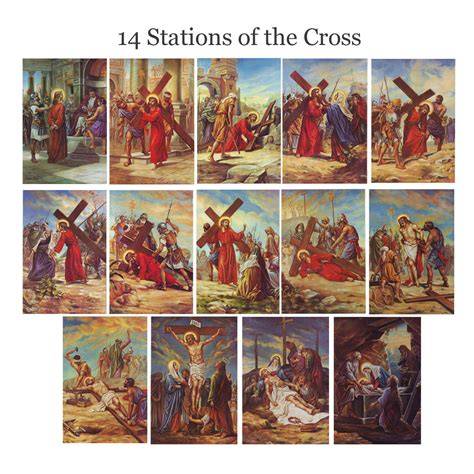
The Stations of the Cross, also called the Way of the Cross, Way of Suffering, or Via Dolorosa, is a series of fourteen images depicting scenes from the day of Jesus Christ’s crucifixion, each accompanied by prayers. It is inspired by the Via Dolorosa in Jerusalem, a traditional route symbolizing the path Jesus walked from the Lion’s Gate to Mount Calvary. Its purpose is to guide Christians on a spiritual journey through reflection on the Passion of Christ. This devotion is widely practiced and found in many Western Christian traditions, including the Roman Catholic, Lutheran, Anglican, and Methodist churches.

Typically, a set of fourteen images is arranged in numerical order along a path, where the faithful, alone or in procession, move from one station to the next, stopping at each one to pray and reflect on its meaning. These devotions are especially common during Lent, particularly on Good Friday, and express a spirit of reparation for the suffering and humiliations that Jesus endured during his Passion. As a physical act of devotion involving standing and kneeling, the Stations of the Cross are closely related to the Christian themes of repentance and self-denial.

The style, form, and location of the Stations of the Cross can vary considerably. Traditional versions typically consist of small plaques with reliefs or paintings arranged around the central part of a church. Modern, minimalist versions may be simple crosses with a number in the center. Sometimes, the Stations of the Cross are prayed without images, such as when the Pope leads the devotion around the Colosseum in Rome on Good Friday.

This devotion is not obligatory, but it is a good way to remember the supreme sacrifice Jesus made, offering his life to save us from our sins. This devotion helps foster gratitude for what Jesus did and encourages believers to carry their own crosses in life, enduring inevitable suffering.

Whether or not you participate in the Stations of the Cross, the Bible commands us to remember the Lord’s death until his return.

  • 1 Corintios 11:23-26
    • For I received from the Lord what I also passed on to you: The Lord Jesus, on the night he was betrayed, took bread,
    • and when he had given thanks, he broke it and said, “Take, eat; this is my body, which is broken for you; do this in remembrance of me.”
    • In the same way, after supper he took the cup, saying, “This cup is the new covenant in my blood; do this, whenever you drink it, in remembrance of me.”
    • For whenever you eat this bread and drink this cup, you proclaim the Lord’s death until he comes.

Here are the Stations of the Cross according to tradition. Biblical references are included whenever possible.

1. Jesus is condemned to death.

  • Luke 23:24-25
    • Then Pilate sentenced that their request should be granted; and he released to them the man who had been thrown into prison for sedition and murder, the one they had asked for; and he handed Jesus over to their will.

2. Jesus takes up his cross.

  • John 19:17
    • And he, carrying his cross, went out to the place called the Place of the Skull, which in Hebrew is called Golgotha;

3. Jesus falls for the first time (by inference from Stations 2 and 5).

4. Jesus meets his grieving mother (by inference from John 19:25-27).

  • John 19:25-27
    • Standing near the cross of Jesus were his mother, his mother’s sister, Mary the wife of Clopas, and Mary Magdalene.
    • When Jesus saw his mother and the disciple whom he loved standing nearby, he said to his mother, “Woman, here is your son.”
    • Then he said to the disciple, “Here is your mother.” From that hour on, the disciple took her into his home.

5. Simon of Cyrene helps carry the cross.

  • Matthew 27:32
    • As they were going out, they found a man from Cyrene named Simon, and they forced him to carry the cross.

6. Veronica wipes the face of Jesus (an episode not recorded in the Scriptures).

  • The Bible does not recount the story of Veronica wiping Jesus’ face on the way to Calvary. Instead, her story appears in a work called the “Acts of Pilate,” which identifies her as the woman who had suffered from hemorrhages for twelve years, approached Jesus from behind, touched the hem of his garment, and was healed (Matthew 9:20-22). This non-canonical text also claims that Jesus left the image of his face imprinted on the cloth she used. The story goes on to say that Veronica later traveled to Rome and healed Emperor Tiberius by showing him a painting of Christ that she had made after her own healing.

7. Jesus falls for the second time (this event is not recorded in the Scriptures).

8. Jesus meets the holy women of Jerusalem.

  • Luke 23:27-31
    • And a great multitude of the people followed him, and of women who were weeping and lamenting for him.
    • But Jesus, turning to them, said, “Daughters of Jerusalem, do not weep for me, but weep for yourselves and for your children.
    • For behold, the days are coming when they will say, ‘Blessed are the barren, and the wombs that never bore children, and the breasts that never nursed.’
    • Then they will begin to say to the mountains, ‘Fall on us!’ and to the hills, ‘Cover us!’
    • For if they do these things in the green wood, what will happen in the dry?”

9. Jesus falls for the third time (this event is not recorded in the Scriptures).

10. Jesus is stripped of his clothes.

  • John 19:23
    • When the soldiers had crucified Jesus, they took his clothes and divided them into four parts, one for each soldier. They also took his tunic, which was seamless, woven in one piece from top to bottom.

11. Jesus is nailed to the cross.

  • Mark 15:24
    • And when they had crucified him, they parted his garments, casting lots upon them, what every man should take.

12. Jesus dies on the cross.

  • Mark 15:37
    • And Jesus cried with a loud voice, and gave up the ghost.

13. Jesus’ body is taken down from the cross.

  • Luke 23:52-53
    • He went to Pilate and asked for the body of Jesus.
    • And taking it down, he wrapped it in a linen cloth and laid it in a tomb cut into the rock, where no one had yet been laid.

14. Jesus’ body is placed in the tomb.

  • Matthew 27:59-60
    • And Joseph took the body, wrapped it in a clean linen shroud,
    • and placed it in his own new tomb, which he had cut out of the rock; and after rolling a large stone to the entrance of the tomb, he went away.

Genesis 1:1 Explained: Alef, Tav and Creation

THE FIRST SEVEN PHRASES IN GENESIS (1:1)

In the English Bible, Genesis 1:1 reads, “In the beginning God created the heavens and the earth.” This ten-word statement consists of seven Hebrew words in the Hebrew text. Below is a chart with the verse with the Hebrew words and the English.

In the beginningרֵאשִׁית Bereshit
createdבָּרָא barah
Godאֱלֹהִים Elohim
This word is not translated. It is the 1st letter of the Hebrew alphabet.א (Aleph)
This word is not translated. It is the last letter of the Hebrew alphabet.ת  (Tav)
the heavens (in KJV it is translated heaven). The Hebrew word indicate the plural sense in other places.תשָׁמַיִם hashamayim
and theוְאֵ֥ת vehet
earthהָאָֽרֶץ haeretz

At the very center of this Hebrew phrase are the two letters Alef and Tav, left untranslated. These letters often pronounced “et,” appear throughout the Hebrew Scriptures and serve in grammar as a marker indicating that the word following is the definite direct object.


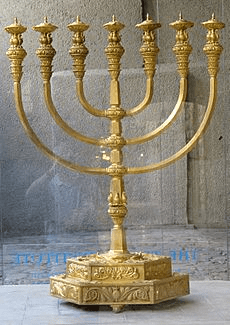
Some believe this seven-word Hebrew phrase depicts the ancient temple’s golden candlestick, the menorah.

The temple menorah had seven branches, with the central shaft known as the “servant branch.” In Revelation 1:8, Jesus is described as standing among seven golden candlesticks (a menorah) and declaring, “I am Alpha and Omega,” the first and last letters of the Greek alphabet. In Hebrew, He would have said, “I am the Alef and the Tav,” the first and last letters of the Hebrew alphabet. Reading Genesis 1:1 this way— “In the beginning God created the Alef-Tav”—suggests that God declared the end from the beginning, and that Christ was with God from the very start. Viewed as a menorah, the center represents the Alef-Tav, the same position as the “servant branch.” From Christ flows the anointing oil, as He promised to send the Holy Spirit to all believers. Remember that Jesus came not to be served but to serve.

  • Mark 10:45 For even the Son of man came not to be ministered unto, but to minister, and to give his life a ransom for many.

So, likening him to the “Servant Branch” describes what Jesus came to do according to Mark 10:45.

Understanding the Message to Philadelphia in Revelation

To the Church in Philadelphia:

Revelations 3:713

  • And to the angel of the church in Philadelphia write; These things saith he that is holy, he that is true, he that hath the key of David, he that openeth, and no man shutteth; and shutteth, and no man openeth;
  • I know thy works: behold, I have set before thee an open door, and no man can shut it: for thou hast a little strength, and hast kept my word, and hast not denied my name.
  • Behold, I will make them of the synagogue of Satan, which say they are Jews, and are not, but do lie; behold, I will make them to come and worship before thy feet, and to know that I have loved thee.
  • Because thou hast kept the word of my patience, I also will keep thee from the hour of temptation, which shall come upon all the world, to try them that dwell upon the earth.
  • Behold, I come quickly: hold that fast which thou hast, that no man take thy crown.
  • Him that overcometh will I make a pillar in the temple of my God, and he shall go no more out: and I will write upon him the name of my God, and the name of the city of my God, which is new Jerusalem, which cometh down out of heaven from my God: and I will write upon him my new name.
  • He that hath an ear, let him hear what the Spirit saith unto the churches.

History:

Philadelphia was located about 30 miles southeast of Bardia, about 30 miles southeast of Sardis and about 70 miles east of Smyrna, and lay at the upper end of a broad valley that passed through Sardis and near Smyrna. The city of Philadelphia was located at the foot of a mountain plateau in the area today known as West Central Turkey. It was built on an important travel route linking the city with Laodicea to the south.

Like Sardis Philadelphia was almost destroyed by the massive earthquakes in southwest Asia Minor in AD 17. The tremors continued for years. It was later rebuilt with the assistance of Emperor Tiberius.

When the Moslems overran Asia Minor in the fourteenth century A.D., Philadelphia resisted far longer than other cities and became an island for Christianity. The city exists today as the Turkish town of Alasehir and contains the ruins of many ancient churches.

Wine making, wool production, and agriculture were primary industries in the city.

Notes:

  • Its name means “Brotherly Love” and represents the faithful church in all ages.
  • The reference to the key of David is taken from Isaiah 22:22, where it relates messianic authority.
    • Isaiah 22:22
      • And the key of the house of David will I lay upon his shoulder; so he shall open, and none shall shut; and he shall shut, and none shall open.
  • The reference to “The open door”, which no man can shut, refers to an opportunity for testimony and service.
    • The city sat on a mountain pass which served as a doorway to the Anatolian hill country
  • Those who are of the synagogue of Satan are probably unbelieving Jews or Judaizers.
  • Because thou hast kept the word of my patience, I also will keep thee from the hour of temptation, which shall come upon all the world, to try them that dwell upon the earth.
    • This is saying that God will keep those who keeps His word from the temptation that everyone else must face.
      • 1 Corinthians 10:13
        • There hath no temptation taken you but such as is common to man: but God is faithful, who will not suffer you to be tempted above that ye are able; but will with the temptation also make a way to escape, that ye may be able to bear it.
      • The word “temptation” is from the same Greek word.
        • πειρασμός peirasmós, pi-ras-mos’; from G3985; a putting to proof (by experiment (of good), experience (of evil), solicitation, discipline or provocation); by implication, adversity:—temptation, × try.
  • Behold, I come quickly: hold that fast which thou hast, that no man take thy crown.
    • Jesus is coming back. So, hold tightly to the Word of God and you will receive a crown.
    • This is probably referring to the crown of life.
      • James 1:12
        • Blessed is the man that endureth temptation: for when he is tried, he shall receive the crown of life, which the Lord hath promised to them that love him.
  • Him that overcometh will I make a pillar in the temple of my God, and he shall go no more out: and I will write upon him the name of my God, and the name of the city of my God, which is new Jerusalem, which cometh down out of heaven from my God: and I will write upon him my new name.
    •  In Philadelphia, powerful earthquakes toppled buildings; temples withstood tremors because their pillars were massive and immovable.
      • Two bronze pillars—Jachin (“He establishes”) and Boaz (“In Him is strength”)—stood at Solomon’s temple entrance (1 Kings 7:15-22).
        • Believers familiar with those names would immediately hear stability and strength.
      • Pillars carried inscriptions honoring kings or donors; Jesus promises His own name instead.
    • What Being a Pillar Signifies for Believers Today
      • Permanent Residence in God’s Presence
        • John 14:3
          • And if I go and prepare a place for you, I will come again, and receive you unto myself; that where I am, there ye may be also.
      • Stability and Strength
        • God establishes and upholds us
          • Psalm 40:2
            • He brought me up also out of an horrible pit, out of the miry clay, and set my feet upon a rock, and established my goings.
      • Galatians 2:9 calls James, Cephas, and John “pillars,” believers God uses to support others.
        • And when James, Cephas, and John, who seemed to be pillars, perceived the grace that was given unto me, they gave to me and Barnabas the right hands of fellowship; that we should go unto the heathen, and they unto the circumcision.
      • Honor and Visibility
        • Pillars stand at the front; Christ publicly honors faithful believers
          • John 12:26
            • If any man serve me, let him follow me; and where I am, there shall also my servant be: if any man serve me, him will my Father honour.
      • Bearing God’s Name
        • Names signify ownership and character
          • Isaiah 43:1
            • But now thus saith the Lord that created thee, O Jacob, and he that formed thee, O Israel, Fear not: for I have redeemed thee, I have called thee by thy name; thou art mine.
        • Three inscriptions promised:
          • – the name of God (belonging to Him),
          • – the name of the New Jerusalem (citizenship),
          • – Christ’s “new name” (shared identity with the victorious King).
      • Participation in the Living Temple
        • Ephesians 2:19-22—believers built together into a dwelling of God.
          • Now therefore ye are no more strangers and foreigners, but fellowcitizens with the saints, and of the household of God;
          • And are built upon the foundation of the apostles and prophets, Jesus Christ himself being the chief corner stone;
          • In whom all the building fitly framed together groweth unto an holy temple in the Lord:
          • In whom ye also are builded together for an habitation of God through the Spirit.
        • 1 Peter 2:5—“living stones” offering spiritual sacrifices.
          •  Ye also, as lively stones, are built up a spiritual house, an holy priesthood, to offer up spiritual sacrifices, acceptable to God by Jesus Christ.
        • Revelation 21:22—God and the Lamb are the eternal temple; pillars share their glory forever.
          • And I saw no temple therein: for the Lord God Almighty and the Lamb are the temple of it.

Character Laws in the Old Testament Explained

In the Old Testament it gives laws about your behavior (Character). Have you ever wondered how those laws compare to what the New Testament says?

Laws of Character:

To emulate His (God’s) ways

  • Deut. 28:9
    • The Lord shall establish thee an holy people unto himself, as he hath sworn unto thee, if thou shalt keep the commandments of the Lord thy God, and walk in his ways.
  • Ephesians 5:1 ESV
    • Therefore be imitators of God, as beloved children.
  • Philippians 3:17 ESV
    • Brothers, join in imitating me, and keep your eyes on those who walk according to the example you have in us.
  • 1 Corinthians 11:1 ESV
    • Be imitators of me, as I am of Christ.
  • 3 John 1:11 ESV
    • Beloved, do not imitate evil but imitate good. Whoever does good is from God; whoever does evil has not seen God.
  • 1 John 2:6 ESV
    • Whoever says he abides in him ought to walk in the same way in which he walked.
  • 1 Peter 2:21 ESV
    • For to this you have been called, because Christ also suffered for you, leaving you an example, so that you might follow in his steps.
  • Hebrews 13:7 ESV
    • Remember your leaders, those who spoke to you the word of God. Consider the outcome of their way of life, and imitate their faith.
  • Hebrews 6:12 ESV
    • So that you may not be sluggish, but imitators of those who through faith and patience inherit the promises.
  • 1 Timothy 4:12 ESV
    • Let no one despise you for your youth, but set the believers an example in speech, in conduct, in love, in faith, in purity.
  • 1 Thessalonians 1:6 ESV
    • And you became imitators of us and of the Lord, for you received the word in much affliction, with the joy of the Holy Spirit,
  • Philippians 4:9 ESV
    • What you have learned and received and heard and seen in me—practice these things, and the God of peace will be with you.
  • Philippians 2:5 ESV
    • Have this mind among yourselves, which is yours in Christ Jesus,
  • Ephesians 4:32 ESV
    • Be kind to one another, tenderhearted, forgiving one another, as God in Christ forgave you.
  • Romans 15:5 ESV
    • May the God of endurance and encouragement grant you to live in such harmony with one another, in accord with Christ Jesus,

To cleave to those who know Him

  • Deut. 10:20
    • Thou shalt fear the Lord thy God; him shalt thou serve, and to him shalt thou cleave, and swear by his name.
  • Acts 11:22-24
    • Then tidings of these things came unto the ears of the church which was in Jerusalem: and they sent forth Barnabas, that he should go as far as Antioch. Who, when he came, and had seen the grace of God, was glad, and exhorted them all, that with purpose of heart they would cleave unto the Lord. For he was a good man, and full of the Holy Ghost and of faith: and much people was added unto the Lord.

To love Others

  • Lev. 19:18
    • Thou shalt not avenge, nor bear any grudge against the children of thy people, but thou shalt love thy neighbour as thyself: I am the Lord.
  • Matthew 22:39
    • And the second is like unto it, Thou shalt love thy neighbour as thyself.

To love converts

  • Deut. 10:19
    • Love ye therefore the stranger: for ye were strangers in the land of Egypt.
  • Acts 10:34-35 ESV
    • So Peter opened his mouth and said: “Truly I understand that God shows no partiality, but in every nation anyone who fears him and does what is right is acceptable to him.
  • Colossians 3:11 ESV
    • Here there is not Greek and Jew, circumcised and uncircumcised, barbarian, Scythian, slave, free; but Christ is all, and in all.
  • Romans 15:7 ESV
    • Therefore welcome one another as Christ has welcomed you, for the glory of God.
  • Acts 15:8-9 ESV
    • And God, who knows the heart, bore witness to them, by giving them the Holy Spirit just as he did to us, and he made no distinction between us and them, having cleansed their hearts by faith.
  • Galatians 3:28 ESV
    • There is neither Jew nor Greek, there is neither slave nor free, there is no male and female, for you are all one in Christ Jesus.
  • Ephesians 2:19 ESV
    • So, then you are no longer strangers and aliens, but you are fellow citizens with the saints and members of the household of God,

Not to hate fellow others

  • Lev. 19:17
    • Thou shalt not hate thy brother in thine heart: thou shalt in any wise rebuke thy neighbour, and not suffer sin upon him.
  • 1 John 3:15 ESV
    • Everyone who hates his brother is a murderer, and you know that no murderer has eternal life abiding in him.
  • Ephesians 4:31-32 ESV
    • Let all bitterness and wrath and anger and clamor and slander be put away from you, along with all malice. Be kind to one another, tenderhearted, forgiving one another, as God in Christ forgave you.
  • 1 John 4:20-21 ESV
    • If anyone says, “I love God,” and hates his brother, he is a liar; for he who does not love his brother whom he has seen cannot love God whom he has not seen. And this commandment we have from him: whoever loves God must also love his brother.
  • Matthew 5:22-24 ESV
    • But I say to you that everyone who is angry with his brother will be liable to judgment; whoever insults his brother will be liable to the council; and whoever says, ‘You fool!’ will be liable to the hell of fire. So if you are offering your gift at the altar and there remember that your brother has something against you, leave your gift there before the altar and go. First be reconciled to your brother, and then come and offer your gift.
  • Matthew 18:15 ESV
    • “If your brother sins against you, go and tell him his fault, between you and him alone. If he listens to you, you have gained your brother.
  • Colossians 3:13 ESV
    • Bearing with one another and, if one has a complaint against another, forgiving each other; as the Lord has forgiven you, so you also must forgive.
  • James 4:11-12 ESV
    • Do not speak evil against one another, brothers. The one who speaks against a brother or judges his brother, speaks evil against the law and judges the law. But if you judge the law, you are not a doer of the law but a judge. There is only one lawgiver and judge, he who is able to save and to destroy. But who are you to judge your neighbor?
  • Romans 12:9-10 ESV
    • Let love be genuine. Abhor what is evil; hold fast to what is good. Love one another with brotherly affection. Outdo one another in showing honor.
  • 1 Peter 2:1 ESV
    • So put away all malice and all deceit and hypocrisy and envy and all slander.
  • 1 Corinthians 13:4-7 ESV
    • Love is patient and kind; love does not envy or boast; it is not arrogant or rude. It does not insist on its own way; it is not irritable or resentful; it does not rejoice at wrongdoing, but rejoices with the truth. Love bears all things, believes all things, hopes all things, endures all things.
  • Galatians 5:14-15 ESV
    • For the whole law is fulfilled in one word: “You shall love your neighbor as yourself.” But if you bite and devour one another, watch out that you are not consumed by one another.
  • Mark 11:25 ESV
    • And whenever you stand praying, forgive, if you have anything against anyone, so that your Father also who is in heaven may forgive you your trespasses.”
  • Luke 6:27-28 ESV
    • “But I say to you who hear, Love your enemies, do good to those who hate you, bless those who curse you, pray for those who abuse you.

To reprove

  • Lev. 19:17 Thou shalt not hate thy brother in thine heart: thou shalt in any wise rebuke thy neighbour, and not suffer sin upon him.
  • Matthew 18:15 ESV / 5 helpful votes Helpful Not Helpful
    • “If your brother sins against you, go and tell him his fault, between you and him alone. If he listens to you, you have gained your brother.
  • Luke 17:3 ESV
    • Pay attention to yourselves! If your brother sins, rebuke him, and if he repents, forgive him,
  • 2 Timothy 4:2 ESV
    • Preach the word; be ready in season and out of season; reprove, rebuke, and exhort, with complete patience and teaching.
  • Galatians 6:1 ESV
    • Brothers, if anyone is caught in any transgression, you who are spiritual should restore him in a spirit of gentleness. Keep watch on yourself, lest you too be tempted.
  • James 5:19-20 ESV
    • My brothers, if anyone among you wanders from the truth and someone brings him back, let him know that whoever brings back a sinner from his wandering will save his soul from death and will cover a multitude of sins.

Not to embarrass others

  • Lev. 19:17
    • Thou shalt not hate thy brother in thine heart: thou shalt in any wise rebuke thy neighbour, and not suffer sin upon him.
  • Ephesians 4:29 ESV
    • Let no corrupting talk come out of your mouths, but only such as is good for building up, as fits the occasion, that it may give grace to those who hear.
  • Colossians 3:12-13 ESV
    • Put on then, as God’s chosen ones, holy and beloved, compassionate hearts, kindness, humility, meekness, and patience, bearing with one another and, if one has a complaint against another, forgiving each other; as the Lord has forgiven you, so you also must forgive.
  • James 1:19-20 ESV
    • Know this, my beloved brothers: let every person be quick to hear, slow to speak, slow to anger; for the anger of man does not produce the righteousness of God.
  • Matthew 7:12 ESV
    • “So, whatever you wish that others would do to you, do also to them, for this is the Law and the Prophets.
  • Philippians 2:3-4 ESV
    • Do nothing from selfish ambition or conceit, but in humility count others more significant than yourselves. Let each of you look not only to his own interests, but also to the interests of others.

Not to oppress the weak

  • Ex. 23:6
    • Thou shalt not wrest the judgment of thy poor in his cause.
  • James 1:27 ESV
    • Religion that is pure and undefiled before God the Father is this: to visit orphans and widows in their affliction, and to keep oneself unstained from the world.
  • Luke 12:33 ESV
    • Sell your possessions, and give to the needy. Provide yourselves with moneybags that do not grow old, with a treasure in the heavens that does not fail, where no thief approaches and no moth destroys.
  • 1 John 3:17 ESV
    • But if anyone has the world’s goods and sees his brother in need, yet closes his heart against him, how does God’s love abide in him?
  • 1 John 3:17-18 ESV
    • But if anyone has the world’s goods and sees his brother in need, yet closes his heart against him, how does God’s love abide in him? Little children, let us not love in word or talk but in deed and in truth.

Not to speak derogatorily of others

  • Lev. 19:16
    • Thou shalt not go up and down as a talebearer among thy people: neither shalt thou stand against the blood of thy neighbour; I am the Lord.
  • Matthew 12:36-37 ESV
    • I tell you, on the day of judgment people will give account for every careless word they speak, for by your words you will be justified, and by your words you will be condemned.”
  • 1 Peter 3:10 ESV
    • For “Whoever desires to love life and see good days, let him keep his tongue from evil and his lips from speaking deceit;
  • James 1:26 ESV
    • If anyone thinks he is religious and does not bridle his tongue but deceives his heart, this person’s religion is worthless.
  • Ephesians 4:29 ESV
    • Let no corrupting talk come out of your mouths, but only such as is good for building up, as fits the occasion, that it may give grace to those who hear.

Not to take revenge

  • Lev. 19:18 Thou shalt not avenge, nor bear any grudge against the children of thy people, but thou shalt love thy neighbour as thyself: I am the Lord.
  • Hebrews 10:30 ESV
    • For we know him who said, “Vengeance is mine; I will repay.” And again, “The Lord will judge his people.”
  • Romans 13:4 ESV
    • For he is God’s servant for your good. But if you do wrong, be afraid, for he does not bear the sword in vain. For he is the servant of God, an avenger who carries out God’s wrath on the wrongdoer.
  • Romans 12:19-21 ESV
    • Beloved, never avenge yourselves, but leave it to the wrath of God, for it is written, “Vengeance is mine, I will repay, says the Lord.” To the contrary, “if your enemy is hungry, feed him; if he is thirsty, give him something to drink; for by so doing you will heap burning coals on his head.” Do not be overcome by evil, but overcome evil with good.

Not to bear a grudge

  • Lev. 19:18
    • Thou shalt not avenge, nor bear any grudge against the children of thy people, but thou shalt love thy neighbour as thyself: I am the Lord.
  • Ephesians 4:26 ESV
    • Be angry and do not sin; do not let the sun go down on your anger,
  • Mark 11:25 ESV
    • And whenever you stand praying, forgive, if you have anything against anyone, so that your Father also who is in heaven may forgive you your trespasses.”
  • Matthew 6:14-15 ESV
    • For if you forgive others their trespasses, your heavenly Father will also forgive you, but if you do not forgive others their trespasses, neither will your Father forgive your trespasses.
  • Ephesians 4:31-32 ESV
    • Let all bitterness and wrath and anger and clamor and slander be put away from you, along with all malice. Be kind to one another, tenderhearted, forgiving one another, as God in Christ forgave you.