A place to grow your relationship with God

Posts tagged ‘chilren’s history book’

Great Stories for Little Americans: The Author of ‘Little Women’

Louisa Alcott was a wild little girl. When she was very little, she would run away from home. She liked to play with beggar children.

One day she wandered so far away from her home, she could not find the way back again. It was growing dark. The little girl’s feet were tired. She sat down on a doorstep. A big dog was lying on the step. He wagged his tail. That was his way of saying, “I am glad to see you.”

Little Louisa grew sleepy. She laid her head on the curly head of the big dog. Then she fell asleep.

Louisa’s father and mother could not find her. They sent out the town crier to look for her.

The town crier went along the street. As he went, he rang his bell. Every now and then he would tell that a little girl was lost. At last, the man with the bell came to the place where Louisa was asleep. He rang his bell. That waked her up. She heard him call out in a loud voice,

“Lost, lost! a little girl six years old. She wore a pink frock, a white hat, and new green shoes.”

When the crier had said that, he heard a small voice coming out of the darkness. It said, “Why, dat’s me.” The crier went to the voice, and found Louisa sitting by the big dog on the doorstep. The next day she was tied to the sofa to punish her for running away.

She and her sisters learned to sew well. Louisa set up as a doll’s dressmaker. She was then twelve years old. She hung out a little sign. She put some pretty dresses in the window to show how well she could do.

Other girls liked the little dresses that she made. They came to her to get dresses made for their dolls. They liked the little doll’s hats she made better than all. Louisa chased the chickens to get soft feathers for these hats.

She turned the old fairy tales into little plays. The children played these plays in the barn.

One of these plays was Jack and the Beanstalk. A squash vine was put up in the barn. This was the beanstalk. When it was cut down, the boy who played giant would come tumbling out of the hayloft.

Louisa found it hard to be good and obedient. She wrote some verses about being good. She was fourteen years old when she wrote them. Here they are:

A little kingdom I possess

Where thoughts and feelings dwell,

And very hard I find the task

Of governing it well.

For passion tempts and troubles me,

A wayward will misleads,

And selfishness its shadow casts

On all my words and deeds.

I do not ask for any crown

But that which all may win,

Nor seek to conquer any world

Except the one within.

The Alcott family were very poor. Louisa made up her mind to do something to make money when she got big. She did not like being so very poor.

One day she was sitting on a cartwheel thinking. She was thinking how poor her father was. There was a crow up in the air over her head. The crow was cawing. There was nobody to tell her thoughts to but the crow. She shook her fist at the big bird, and said,

“I will do something by and by. Don’t care what. I’ll teach, sew, act, write, do anything to help the family. And I’ll be rich and famous before I die. See if I don’t.”

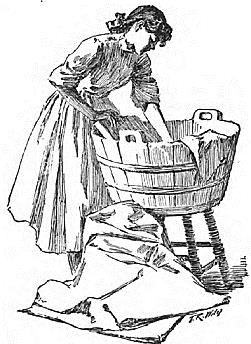
The crow did not make any answer. But Louisa kept thinking about the work she was going to do. The other children got work to do that made money. But Louisa was left at home to do housework. She had to do the washing. She made a little song about it. Here are some of the verses of this song:

Queen of my tub, I merrily sing,

While the white foam rises high,

And sturdily wash and rinse and wring,

And fasten the clothes to dry;

Then out in the free fresh air they swing,

Under the sunny sky.

I am glad a task to me is given,

To labor at day by day;

For it brings me health and strength and hope,

And I cheerfully learn to say,

“Head you may think, Heart you may feel,

But Hand you shall work always.”

Louisa grew to be a woman at last. She went to nurse soldiers in the war. She wrote books. When she wrote the book called “Little Women,” all the young people were delighted. What she had said to the crow came true at last. She became famous. She had money enough to make the family comfortable.
Great Stories for Little Americans: A Wonderful Woman

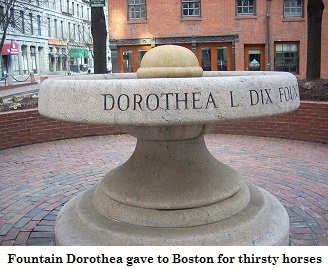
Little Dorothy Dix was poor. Her father did not know how to make a living. Her mother did not know how to bring up her children.

The father moved from place to place. Sometimes he printed little tracts to do good. But he let his own children grow up poor and wretched.

Dorothy wanted to learn. She wanted to become a teacher. She wanted to get money to send her little brothers to school.

Dorothy was a girl of strong will and temper. When she was twelve years old, she left her wretched home. She went to her grandmother. Her grandmother Dix lived in a large house in Boston. She sent Dorothy to school.

Dorothy learned fast. But she wanted to make money. She wanted to help her brothers. When she was fourteen, she taught a school. She tried to make herself look like a woman. She made her dresses longer.

She soon went back to her grandmother. She went to school again. Then she taught school. She soon had a school in her grandmother’s house. It was a very good school. Many girls were sent to her school. Miss Dix was often ill. But when she was well enough, she worked away. She was able to send her brothers to school until they grew up.

Besides helping her brothers, she wanted to help other poor children. She started a school for poor children in her grandmother’s barn.

After a while she left off teaching. She was not well. She had made all the money she needed.

But she was not idle. She went one day to teach some poor women in an almshouse. Then she went to see the place where the crazy people were kept. These insane people had no fire in the coldest weather.

Miss Dix tried to get the managers to put up a stove in the room. But they would not do it. Then she went to the court. She told the judge about it. The judge said that the insane people ought to have a fire. He made the managers put up a stove in the place where they were kept.

Then Miss Dix went to other towns. She wanted to see how the insane people were treated. Some of them were shut up in dark, damp cells. One young man was chained up with an iron collar about his neck.

Miss Dix got new laws made about the insane. She persuaded the States to build large houses for keeping the insane. She spent most of her life at this work. The Civil War broke out. There were many sick and wounded soldiers to be taken care of.

All of the nurses in the hospitals were put under Miss Dix. She worked at this as long as the war lasted. Then she spent the rest of her life doing all that she could for insane people.

Great Stories for Little Americans Horace Greeley Learning to Print

Horace Greeley had always wanted to be a printer. He liked books and papers. He thought it would be a fine thing to learn to make them.

One day he heard that the newspaper at East Poultney wanted a boy to learn the printer’s trade. He walked many long miles to see about it. He went to see Mr. Bliss. Mr. Bliss was one of the owners of the paper. Horace found him working in his garden. Mr. Bliss looked up. He saw a big boy coming toward him. The boy had on a white felt hat with a narrow brim. It looked like a half-peck measure. His hair was white. His trousers were too short for him. All his clothes were coarse and poor. He was such a strange-looking boy, that Mr. Bliss wanted to laugh.

“I heard that you wanted a boy,” Horace said.

“Do you want to learn to print?” Mr. Bliss said.

“Yes,” said Horace.

“But a printer ought to know a good many things,” said Mr. Bliss. “Have you been to school much?”

“No,” said Horace. “I have not had much chance at school. But I have read some.”

“What have you read?” asked Mr. Bliss.

“Well, I have read some history, and some travels, and a little of everything.”

Mr. Bliss had examined a great many schoolteachers. He liked to puzzle teachers with hard questions. He thought he would try Horace with these. But the gawky boy answered them all. This towheaded boy seemed to know everything.

Mr. Bliss took a piece of paper from his pocket. He wrote on it, “Guess we’d better try him.”

He gave this paper to Horace, and told him to take it to the printing office. Horace, with his little white hat and strange ways, went into the printing office. The boys in the office laughed at him. But the foreman said he would try him.

That night the boys in the office said to Mr. Bliss, “You are not going to take that tow head, are you?”

Mr. Bliss said, “There is something in that towhead. You boys will find it out soon.”

A few days after this, Horace came to East Poultney to begin his work. He carried a little bundle of clothes tied up in a handkerchief.

The foreman showed him how to begin. From that time, he did not once look around. All day he worked at his type. He learned more in a day than some boys do in a month.

Day after day he worked, and said nothing. The other boys joked him. But he did not seem to hear them. He only kept on at his work. They threw type at him. But he did not look up.

The largest boy in the office thought he could find a way to tease him. One day he said that Horace’s hair was too white. He went and got the ink ball. He stained Horace’s hair black in four places. This ink stain would not wash out. But Horace did not once look up.

After that, the boys did not try to tease him anymore. They all liked the goodhearted Horace. And everybody in the town wondered that the boy knew so much.

Horace’s father had moved away to Pennsylvania. Horace sent him all the money he could spare. He soon became a good printer. He started a paper of his own. He became a famous newspaper man.

Great Stories for Little Americans Horace Greeley as a Boy

Horace Greeley was the son of a poor farmer. He was always fond of books. He learned to read almost as soon as he could talk. He could read easy books when he was three years old. When he was four, he could read any book that he could get.

He went to an old-fashioned school. Twice a day all the children stood up to spell. They were in two classes. Little Horace was in the class with the grownup young people. He was the best speller in the class. It was funny to see the little midget at the head of this class of older people. But he was only a little boy in his feelings. If he missed a word, he would cry. The one that spelled a word that he missed would have a right to take the head of the class. Sometimes when he missed, the big boys would not take the head. They did not like to make the little fellow cry. He was the pet of all the school.

People in that day were fond of spelling. They used to hold meetings at night to spell. They called these “spelling schools.”

At a spelling school two captains were picked out. These chose their spellers. Then they tried to see which side could beat the other at spelling.

Little Horace was always chosen first. The side that got him got the best speller in the school. Sometimes the little fellow would go to sleep. When it came his turn to spell, somebody would wake him up. He would rub his eyes, and spell the word. He would spell it right, too.

When he was four or five years old, he would lie under a tree, and read. He would lie there, and forget all about his dinner or his supper. He would not move until somebody stumbled over him or called him.

People had not found out how to burn kerosene oil in lamps then. They used candles. But poor people like the Greeleys could not afford to burn many candles. Horace gathered pine knots to read by at night.

He would light a pine knot Then he would throw it on top of the large log at the back of the fire. This would make a bright flickering light.

Horace would lay all the books he wanted on the hearth. Then he would lie down by them. His head was toward the fire. His feet were drawn up out of the way.

The first thing that he did was to study all his lessons for the next day. Then he would read other books. He never seemed to know when anybody came or went. He kept on with his reading. His father did not want him to read too late. He was afraid that he would hurt his eyes. And he wanted to have him get up early in the morning to help with the work. So when nine o’clock came, he would call, “Horace, Horace, Horace!” But it took many callings to rouse him.

When he got to bed, he would say his lessons over to his brother. He would tell his brother what he had been reading. But his brother would fall asleep while Horace was talking.

Horace liked to read better than he liked to work. But when he had a task to do, he did it faithfully. His brother would say, “Let us go fishing.” But Horace would answer, “Let us get our work done first.”

Horace Greeley’s father grew poorer and poorer. When Horace was ten years old, his land was sold. The family were now very poor. They moved from New Hampshire. They settled in Vermont. They lived in a poor little cabin.

Horace had to work hard like all the rest of the family. But he borrowed all the books he could get. Sometimes he walked seven miles to borrow a book.

A rich man who lived near the Greeleys used to lend books to Horace. Horace had grown tall. His hair was white. He was poorly dressed. He was a strange-looking boy. One day he went to the house of the rich man to borrow books. Someone said to the owner of the house, “Do you lend books to such a fellow as that?”

But the gentleman said, “That boy will be a great man someday.”

This made all the company laugh. It seemed funny that anybody should think of this poor boy becoming a great man. But it came true. The poor white headed boy came to be a great man.

Horace Greeley learned all that he could learn in the country schools. When he was thirteen, one teacher said to his father,

“Mr. Greeley, Horace knows more than I do. It is not of any use to send him to school anymore.”

Great Stories for Little Americans Kit Carson and the Bears

Great men of one kind are known only in new countries like ours. These men discover new regions. They know how to manage the Indians. They show other people how to live in a wild country.

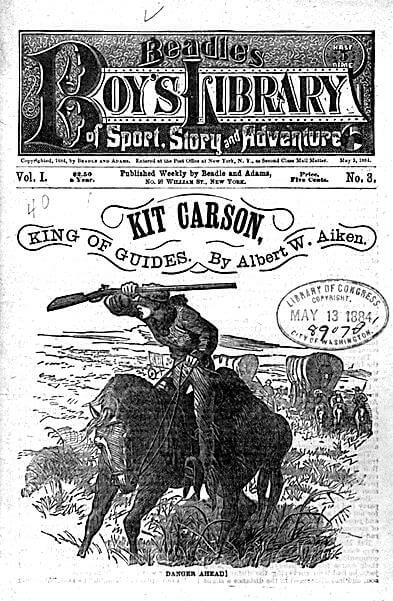
One of the most famous of such men was Kit Carson. He knew all about the wild animals. He was a great hunter. He learned the languages of the Indians. The Indians liked him. He was a great guide. He showed soldiers and settlers how to travel where they wished to go.

Once he was marching through the wild country with other men. Evening came. He left the others, and went to shoot something to eat. It was the only way to get meat for supper. When he had gone about a mile, he saw the tracks of some elks. He followed these tracks. He came in sight of the elks. They were eating grass on a hill, as cows do.

Kit Carson crept up behind some bushes. But elks are very timid animals. Before the hunter got very near, they began to run away. So Carson fired at one of them as it was running. The elk fell dead.

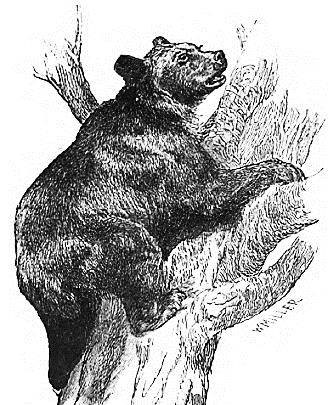
But just at that moment he heard a roar. He turned to see what made this ugly noise. Two huge bears were running toward him. They wanted some meat for supper, too.

Kit Carson’s gun was empty. He threw it down. Then he ran as fast as he could. He wanted to find a tree.

Just as the bears were about to seize him, he got to a tree. He caught hold of a limb. He swung himself up into the tree. The bears just missed getting him.

But bears know how to climb trees. Carson knew that they would soon be after him. He pulled out his knife, and began to cut off a limb. He wanted to make a club.

A bear is much larger and stronger than a man. He cannot be killed with a club. But every bear has one tender spot. It is his nose. He does not like to be hit on the nose. A sharp blow on the nose hurts him a great deal.

Kit Carson got his club cut just in time. The bears were coming after him. Kit got up into the very top of the tree. He drew up his feet, and made himself as small as he could.

When the bears came near, one of them reached for Kit. Whack! went the stick on the end of his nose. The bear drew back, and whined with pain.

First one bear tried to get him, and then the other. But whichever one tried, Kit was ready. The bear was sure to get his nose hurt.

The bears grew tired, and rested awhile. But they kept up their screeching and roaring. When their noses felt better, they tried again. And then they tried again. But every time they came away with sore noses. At last, they both tried at once. But Carson pounded faster than ever. One of the bears cried like a baby. The tears ran out of his eyes. It hurt his feelings to have his nose treated in this rude way.

After a long time, one of the bears got tired. He went away. After awhile, the other went away too. Kit Carson stayed in the tree a long time. Then he came down. The first thing he did was to get his gun. He loaded it. But the bears did not come back. They were too busy rubbing noses.

Great Stories for Little Americans Longfellow as a Boy

Longfellow was a noble boy. He always wanted to do right. He could not bear to see one person do any wrong to another.

He was very tenderhearted. One day he took a gun and went shooting. He killed a robin. Then he felt sorry for the robin He came home with tears in his eyes. He was so grieved, that he never went shooting again.

He liked to read Irving’s “Sketch Book.” Its strange stories about Sleepy Hollow and Rip Van Winkle pleased his fancy.

When he was thirteen he wrote a poem. It was about Lovewell’s fight with the Indians. He sent his verses to a newspaper. He wondered if the editor would print them. He could not think of anything else. He walked up and down in front of the printing office. He thought that his poem might be in the printer’s hands.

When the paper came out, there was his poem. It was signed “Henry.” Longfellow read it. He thought it a good poem.

But a judge who did not know whose poem it was talked about it that evening. He said to young Longfellow, “Did you see that poem in the paper? It was stiff. And all taken from other poets, too.”

This made Henry Longfellow feel bad. But he kept on trying. After many years, he became a famous poet.

For more than fifty years, young people have liked to read his poem called “A Psalm of Life.” Here are three stanzas of it:

“Lives of great men all remind us

We can make our lives sublime,

And, departing, leave behind us

Footprints on the sands of time,

“Footprints, that perhaps another,

Sailing o’er life’s solemn main,

A forlorn and shipwrecked brother,

Seeing, may take heart again.

“Let us, then, be up and doing,

With a heart for any fate;

Still achieving, still pursuing,

Learn to labor and to wait.”

Great Stories for Little Americans Doctor Kane Gets Out of the Frozen Sea

After they got the seal, Doctor Kane and his men traveled on. Sometimes they were on the ice. Sometimes they were in the boats. The men were so weak, that they could hardly row the boats. They were so hungry, that they could not sleep well at night.

One day they were rowing, when they heard a sound. It came to them across the water. It did not sound like the cry of sea birds. It sounded like people’s voices.

“Listen!” Doctor Kane said to Petersen.

Petersen spoke the same language as the people of Greenland. He listened. The sound came again. Petersen was so glad, that he could hardly speak. He told Kane in a half whisper, that it was the voice of someone speaking his own language. It was some Greenland men in a boat.

The next day they got to a Greenland town. Then they got into a little ship going to England. They knew that they could get home from England. But the ship stopped at another Greenland town. While they were there, a steamer was seen. It came nearer. They could see the stars and stripes flying from her mast. It was an American steamer sent to find Doctor Kane.

Doctor Kane and his men were full of joy. They pushed their little boat into the water once more. This little boat was called the “Faith.” It had carried Kane and his men hundreds of miles in icy seas.

Once more the men took their oars, and rowed. This time they rowed with all their might. They held up the little flag that they had carried farther north than anybody had ever been before. They rowed straight to the steamer.

In the bow of the boat was a little man with a tattered red shirt. He could see that the captain of the boat was looking at him through a spyglass.

The captain shouted to the little man, “Is that Doctor Kane?”

The little man in the red shirt shouted back, “Yes!”

Doctor Kane and his men had been gone more than two years. People had begun to think that they had all died. This steamer had been sent to find out what had become of them. When the men on the steamer heard that this little man in the red shirt was Doctor Kane himself, they sent up cheer after cheer. In a few minutes more, Doctor Kane and his men were on the steamer. They were now safe among friends. They were sailing away toward their homes.

Great Stories for Little Americans A Dinner on the Ice

After two winters of cold and darkness, Doctor Kane made up his mind to leave the ship fast in the ice. He wanted to get to a place in Greenland where there were people living. Then he might find some way of getting home again.

The men started out, drawing the boats on sleds. Whenever they came to open water, they put the boats into the water, and took the sleds in the boats. When they came to the ice again, they had to draw out their boats, and carry them on the sleds. At first, they could travel only about a mile a day.

It was a hard journey. Some of the men were ill. These had to be drawn on the sleds by the rest. They had not enough food. At one time, they rested three days in a kind of cave. Here they found many birds’ eggs. These made very good food for them. At another place, they stayed a week. They stayed just to eat the eggs of the wild birds.

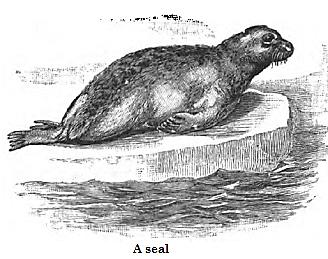
After they left this place, they were hungry. The men grew thinner and thinner. It seemed that they must die for want of food. But one day they saw a large seal. He was floating on a piece of ice. The hungry men thought, “What a fine dinner he would make for us!” If they could get the seal, they would not die of hunger.

Every one of the poor fellows trembled for fear the seal would wake up. A man named Petersen took a gun, and got ready to shoot. The men rowed the boat toward the seal. They rowed slowly and quietly. But the seal waked up. He raised his head. The men thought that he would jump off into the water. Then they might all die for want of food.

Doctor Kane made a motion to Petersen. That was to tell him to shoot quickly. But Petersen did not shoot. He was so much afraid that the seal would get away, that he could not shoot. The seal now raised himself a little more. He was getting ready to jump into the water. Just then Petersen fired. The seal fell dead on the ice.

The men were wild with joy. They rowed the boats with all their might. When they got to the seal, they dragged it farther away from the water. They were so happy, that they danced on the ice. Some of them laughed. Some were so glad, that they cried. Then they took their knives and began to cut up the seal. They had no fire on the ice, and they were too hungry to think of lighting one. So they ate the meat of the seal without waiting to cook it.

Great Stories for Little Americans Doctor Kane in the Frozen Sea

Elisha Kent Kane was a doctor in one of the war ships of the United States. He had sailed about the world a great deal. When he heard that ships were to be sent into the icy seas of the north, he asked to be sent along. He went the first time as a doctor. Then he wanted to find out more about the frozen ocean. So he went again as captain of a ship. His ship was called the “Advance.”

Kane sailed into the icy seas. His ship was driven far into the ice by a furious storm. She was crowded by icebergs. At one time, she was lifted clear out of the water. The ship seemed ready to fall over on her side. But the ice let her down again. Then she was squeezed till the men thought that she would be crushed like an eggshell. At last, the storm stopped. Then came the awful cold. The ship was frozen into the ice. The ice never let go of her. She was farther north than any ship had ever been before. But she was so fast in the ice that she never could get away.

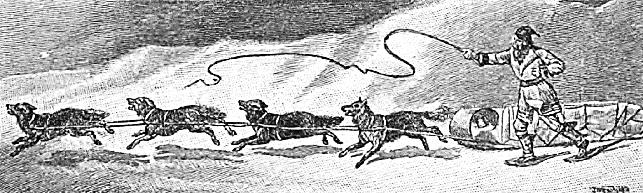
In that part of the world it is night nearly all winter. For months, there was no sun at all. Daylight came again. It was now summer, but it did not get warm. Doctor Kane took sleds, and went about on the ice to see what he could see. The sleds were drawn by large dogs. But nearly all of the dogs died in the long winter night.

Doctor Kane thought that the ice would melt. He wanted to get the ship out. But the ice did not melt at all.

At last, the summer passed away. Another awful winter came. The sun did not rise anymore. It was dark for months and months. The men were ill. Some of them died. They were much discouraged. But Kane kept up his heart, and did the best he could.

At last, the least little streak of light could be seen. It got a little lighter each day. But the sick men down in the cabin of the ship could not see the light.

Doctor Kane said to himself, “If my poor men could see this sunlight, it would cheer them up. It might save their lives.” But they were too ill to get out where they could see the sun. It would be many days before the sun would shine into the cabin of the ship. The men might die before that time.

So Doctor Kane took some looking glasses up to the deck or top of the ship. He fixed one of these so it would catch the light of the sun. Then he fixed another so that the first one would throw the light on this one. The last one would throw the sunlight down into the cabin where the sick men were.

One day the poor fellows were ready to give up. Then the sun fell on the looking glasses, and flashed down into the cabin. It was the first daylight the sick men had seen for months. The long winter night was over. Think how happy they were!

Great Stories for Little Americans The India-Rubber Man

Many years ago, a strange-looking man was sometimes seen in the streets of New York. His cap was made of India rubber. So was his coat. He wore a rubber waistcoat. Even his cravat was of India rubber. He wore rubber shoes in dry weather. People called this man “The India rubber man.”

His name was Charles Goodyear. He was very poor. He was trying to find out how to make India rubber useful.

India rubber trees grow in South America. The juice of these trees is something like milk or cream. By drying this juice, India rubber is made.

The Indians in Brazil have no glass to make bottles with. A long time ago, they learned to make bottles out of rubber. More than a hundred years ago, some of these rubber bottles were brought to this country. The people in this country had never seen India rubber before. They thought the bottles made out of it by the Indians very curious.

In this country, rubber was used only to rub out pencil marks. That is why we call it rubber. People in South America learned to make a kind of heavy shoe out of it. But these shoes were hard to make. They cost a great deal when they were sold in this country.

Goodyear wanted to try his rubber. That is why he wore a rubber coat and a rubber waistcoat and a rubber cravat. That is why he wore a rubber cap and rubber shoes when it was not raining. He made paper out of rubber, and wrote a book on it. He had a doorplate made of it. He even carried a cane made of India rubber. It is no wonder people called him the India rubber man.

He was very poor. Sometimes he had to borrow money to buy rubber with. Sometimes his friends gave him money to keep his family from starving. Sometimes there was no wood and no coal in the house in cold weather.

But Goodyear kept on trying. He thought that he was just going to find out. Years went by, and still he kept on trying.

One day he was mixing some rubber with Sulphur. It slipped out of his hand. It fell on the hot stove. But it did not melt. Goodyear was happy at last. That night it was cold. Goodyear took the burned piece of rubber out of doors, and nailed it to the kitchen door. When morning came, he went and got it. It had not frozen.

He was now sure that he was on the right track. But he had to find out how to mix and heat his rubber and Sulphur. He was too poor to buy rubber to try with. Nobody would lend him anymore money. His family had to live by the help of his friends. He had already sold almost everything that he had. Now he had to sell his children’s schoolbooks to get money to buy rubber with.

At last, his rubber goods were made and sold. Poor men who had to stand in the rain could now keep themselves dry. People could walk in the wet with dry feet. A great many people are alive who would have died if they had not been kept dry by India rubber.

You may count up, if you can, how many useful things are made of rubber. We owe them all to one man. People laughed at Goodyear once. But at last, they praised him. To be “The India rubber man” was something to be proud of.