Blessed is the man that walketh not in the counsel of the ungodly, nor standeth in the way of sinners, nor sitteth in the seat of the scornful.
But his delight is in the law of the Lord; and in his law doth he meditate day and night.
And he shall be like a tree planted by the rivers of water, that bringeth forth his fruit in his season; his leaf also shall not wither; and whatsoever he doeth shall prosper.
The ungodly are not so: but are like the chaff which the wind driveth away.
Therefore the ungodly shall not stand in the judgment, nor sinners in the congregation of the righteous.
For the Lord knoweth the way of the righteous: but the way of the ungodly shall perish.
The key word in the psalm is “blessed,” used here as a declaration about a certain kind of man. Essentially, the psalm teaches that the blessed, happy man is the righteous man. He avoids evil influences, deeds, and attitudes, and delights in God’s Word; as a result, God causes him to prosper. In contrast, the ungodly are like chaff, worthless and destined for judgment. The Lord’s evaluation is clear in verse 6: He knows the way of the righteous (and it will be blessed), but He also knows the way of the ungodly, and it will perish. This psalm serves as a fitting introduction to the Psalter, presenting the three main figures who appear throughout: the righteous, the ungodly, and God.
A Prayer to go with the Psalm:
Lord our God, source of blessing and justice, your Son, Jesus, lived the only true life. Through him, we can know, love, and rejoice in you. Keep us nourished by your grace and grounded in your Spirit, so our ears hear your voice, and our feet walk in your ways, giving all glory to you alone. Amen.
Instructor Note: No such letters as included in this lesson exist. This chapter features imaginary letters written by the book author, Van Loon, to convey his personal retelling of the story of Jesus.
In the autumn of the year of the city 783 (which would be 62 A.D., in our way of counting time) Aesculapius Cultellus, a Roman physician, wrote to his nephew who was with the army in Syria as follows:
My dear Nephew,
A few days ago I was called in to prescribe for a sick man named Paul. He appeared to be a Roman citizen of Jewish parentage, well-educated and of agreeable manners. I had been told that he was here in connection with a lawsuit, an appeal from one of our provincial courts, Caesarea or some such place in the eastern Mediterranean. He had been described to me as a “wild and violent” fellow who had been making speeches against the People and against the Law. I found him very intelligent and of great honesty.
A friend of mine who used to be with the army in Asia Minor tells me that he heard something about him in Ephesus where he was preaching sermons about a strange new god. I asked my patient if this were true and whether he had told the people to rebel against the will of our beloved Emperor. Paul answered me that the Kingdom of which he had spoken was not of this world and he added many strange utterances which I did not understand, but which were probably due to his fever.
His personality made a great impression upon me and I was sorry to hear that he was killed on the Ostian Road a few days ago. Therefore, I am writing this letter to you. When next you visit Jerusalem, I want you to find out something about my friend Paul and the strange Jewish prophet, who seems to have been his teacher. Our slaves are getting much excited about this so-called Messiah, and a few of them, who openly talked of the new kingdom (whatever that means) have been crucified. I would like to know the truth about all these rumors and I am
Your devoted Uncle,
AESCULAPIUS CULTELLUS.
Six weeks later, Gladius Ensa, the nephew, a captain of the VII Gallic Infantry, answered as follows:
My dear Uncle,
I received your letter and I have obeyed your instructions.
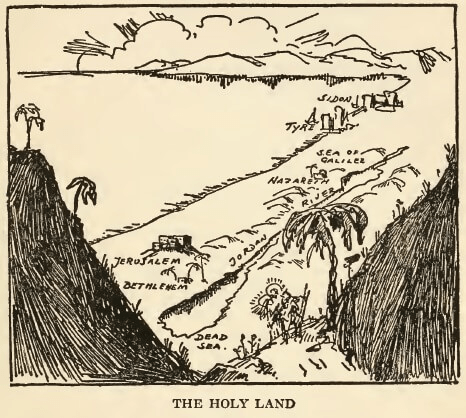
Two weeks ago our brigade was sent to Jerusalem. There have been several revolutions during the last century and there is not much left of the old city. We have been here now for a month and tomorrow we shall continue our march to Petra, where there has been trouble with some of the Arab tribes. I shall use this evening to answer your questions, but pray do not expect a detailed report.
I have talked with most of the older men in this city but few have been able to give me any definite information. A few days ago, a peddler came to the camp. I bought some of his olives and I asked him whether he had ever heard of the famous Messiah who was killed when he was young. He said that he remembered it very clearly, because his father had taken him to Golgotha (a hill just outside the city) to see the execution, and to show him what became of the enemies of the laws of the people of Judaea. He gave me the address of one Joseph, who had been a personal friend of the Messiah and told me that I had better go and see him if I wanted to know more.
This morning I went to call on Joseph. He was quite an old man. He had been a fisherman on one of the fresh-water lakes. His memory was clear, and from him at last I got a fairly definite account of what had happened during the troublesome days before I was born.
Tiberius, our great and glorious emperor, was on the throne, and an officer of the name of Pontius Pilatus was governor of Judaea and Samaria. Joseph knew little about this Pilatus. He seemed to have been an honest enough official who left a decent reputation as procurator of the province. In the year 755 or 756 (Joseph had forgotten when) Pilatus was called to Jerusalem on account of a riot. A certain young man (the son of a carpenter of Nazareth) was said to be planning a revolution against the Roman government. Strangely enough our own intelligence officers, who are usually well informed, appear to have heard nothing about it, and when they investigated the matter they reported that the carpenter was an excellent citizen and that there was no reason to proceed against him. But the old-fashioned leaders of the Jewish faith, according to Joseph, were much upset. They greatly disliked his popularity with the masses of the poorer Hebrews. The “Nazarene” (so they told Pilatus) had publicly claimed that a Greek or a Roman or even a Philistine, who tried to live a decent and honorable life, was quite as good as a Jew who spent his days studying the ancient laws of Moses. Pilatus does not seem to have been impressed by this argument, but when the crowds around the temple threatened to lynch Jesus, and kill all his followers, he decided to take the carpenter into custody to save his life.
He does not appear to have understood the real nature of the quarrel. Whenever he asked the Jewish priests to explain their grievances, they shouted “heresy” and “treason” and got terribly excited. Finally, so Joseph told me, Pilatus sent for Joshua (that was the name of the Nazarene, but the Greeks who live in this part of the world always refer to him as Jesus) to examine him personally. He talked to him for several hours. He asked him about the “dangerous doctrines” which he was said to have preached on the shores of the sea of Galilee. But Jesus answered that he never referred to politics. He was not so much interested in the bodies of men as in Man’s soul. He wanted all people to regard their neighbors as their brothers and to love one single god, who was the father of all living beings.
Pilatus, who seems to have been well versed in the doctrines of the Stoics and the other Greek philosophers, does not appear to have discovered anything seditious in the talk of Jesus. According to my informant he made another attempt to save the life of the kindly prophet. He kept putting the execution off. Meanwhile the Jewish people, lashed into fury by their priests, got frantic with rage. There had been many riots in Jerusalem before this and there were only a few Roman soldiers within calling distance. Reports were being sent to the Roman authorities in Caesarea that Pilatus had “fallen a victim to the teachings of the Nazarene.” Petitions were being circulated all through the city to have Pilatus recalled, because he was an enemy of the Emperor. You know that our governors have strict instructions to avoid an open break with their foreign subjects. To save the country from civil war, Pilatus finally sacrificed his prisoner, Joshua, who behaved with great dignity and who forgave all those who hated him. He was crucified amidst the howls and the laughter of the Jerusalem mob.
That is what Joseph told me, with tears running down his old cheeks. I gave him a gold piece when I left him, but he refused it and asked me to hand it to one poorer than himself. I also asked him a few questions about your friend Paul. He had known him slightly. He seems to have been a tent maker who gave up his profession that he might preach the words of a loving and forgiving god, who was so very different from that Jehovah of whom the Jewish priests are telling us all the time. Afterwards, Paul appears to have travelled much in Asia Minor and in Greece, telling the slaves that they were all children of one loving Father and that happiness awaits all, both rich and poor, who have tried to live honest lives and have done good to those who were suffering and miserable.
I hope that I have answered your questions to your satisfaction. The whole story seems very harmless to me as far as the safety of the state is concerned. But then, we Romans never have been able to understand the people of this province. I am sorry that they have killed your friend Paul. I wish that I were at home again, and I am, as ever,
“To the angel (divine messenger) of the church in Sardis write:
“These are the words of Him who has the seven Spirits of God and the seven stars:
‘I know your deeds; you have a name (reputation) that you are alive, but [in reality] you are dead.
Wake up, and strengthen and reaffirm what remains [of your faithful commitment to Me], which is about to die;
for I have not found [any of] your deeds completed in the sight of My God or meeting His requirements.
So, remember and take to heart the lessons you have received and heard. Keep and obey them, and repent [change your sinful way of thinking, and demonstrate your repentance with new behavior that proves a conscious decision to turn away from sin].
So then, if you do not wake up, I will come like a thief, and you will not know at what hour I will come to you.
But you [still] have a few people in Sardis who have not soiled their clothes [that is, contaminated their character and personal integrity with sin]; and they will walk with Me [dressed] in white,
because they are worthy (righteous).
He who overcomes [the world through believing that Jesus is the Son of God] will accordingly be dressed in white clothing; and I will never blot out his name from the Book of Life, and I will confess and openly acknowledge his name before My Father and before His angels [saying that he is one of Mine].
He who has an ear, let him hear and heed what the Spirit says to the churches.’
Some History about Sardis
It is in modern Sart, Turkey.
In Roman times, was a wealthy city known for the manufacture and dyeing of woolen fabric and carpets.
Originally, it was the capital of the ancient Lydian Empire and was the first city to mint coinage (600 b.c.).
A stream that flowed through its marketplace carried gold dust from a nearby mountain.
King Croesus of Lydia (560-546 b.c.) financed the building of the great Temple of Artemis in Ephesus (550 b.c.).
The city was conquered twice, under Cyrus the Great and under Antiochus, due to lack of adequate watchfulness.
The chief idol deity was the goddess Artemis.
Artemis was worshipped as the mother goddess.
Sardis was destroyed by an earthquake in 17 AD. It was later rebuilt.
This city was known for its lack of watchfulness. It was conquered not once, but twice for the same reason. In the letter sent to the church, Jesus is telling them to wake up and pay attention. They think that they are good, but destruction is just around the corner, spiritually speaking. Most are already dead spiritually, some are just before dying spiritually, and a few are righteous. However, according to their reputation they are alive and doing well. This is similar what Jesus was trying to say to the pharisees.
“Woe to you, [self-righteous] scribes and Pharisees, hypocrites! For youare like whitewashed tombs which look beautiful on the outside, but inside arefullofdead men’s bones and everything unclean.
Don’t be self-righteous. Instead, remember and take to heart the lessons you have received and heard. Keep and obey them, and repent [change your sinful way of thinking, and demonstrate your repentance with new behavior that proves a conscious decision to turn away from sin].
Remember that spiritual deadness is the same as if you are not saved. To be saved means to be alive spiritually. Take a good hard look at yourself. Remember that if you judge yourself, God doesn’t have to.
1 Corinthians 11:31-32 amp
But if we evaluated and judged ourselves honestly [recognizing our shortcomings and correcting our behavior], we would not be judged.
But when we [fall short and] are judged by the Lord, we are disciplined [by undergoing His correction] so that we will not be condemned [to eternal punishment] along with the world.
In the beginning God created the heaven and the earth.
John 1:1
In the beginning was the Word, and the Word was with God, and the Word was God. The same was in the beginning with God. All things were made by him; and without him was not any thing made that was made.
The Seven Days of Creation Explained: The Creation Week describes God’s ordering of the universe, culminating in human creation, emphasizing their unique status over animals.
Man: Created in God’s Image: The content discusses the biblical perspective on man as a divinely created three-part being: body, soul, and spirit, reflecting God’s image.
The Fall of Man: Lessons from Adam and Eve: Adam and Eve’s disobedience, initiated by Eve’s deception by the serpent, led to sin entering the world through their choices.
The book of Psalms is a great resource for learning the Bible. We are commanded to read and use it for teaching.
Ephesians 5:19 Speaking to yourselves in psalms and hymns and spiritual songs, singing and making melody in your heart to the Lord; Colossians 3:16 Let the word of Christ dwell in you richly in all wisdom; teaching and admonishing one another in psalms and hymns and spiritual songs, singing with grace in your hearts to the Lord.
The Hebrew name for the book of Psalms is Tehillim, meaning “songs of praise,” with individual psalms called Mizmorim, such as Mizmor Aleph (Psalm 1), Mizmor Bet (Psalm 2), and so forth. The Psalms have long served as the Bible’s prayer book. Traditionally, Tehillim is divided into five books, mirroring the five books of the Torah. Just as Moses gave Israel the Torah, David gave the Psalms—“Moses gave the path, but David gave directions.” In the Hebrew Bible, the Psalms are part of the wisdom literature within the Ketuvim (“Writings”). Each of the first four books concludes with a doxology (a usually liturgical expression of praise to God). Psalm 150 serves as a doxology for the fifth book and an appropriate conclusion to the entire Psalter.
Here is some Bible Studies from the book of Psalms.
Unveiling the Armor of God in the Old Testament: The Armor of God, detailed in Ephesians 6:11-18, is also referenced in the Old Testament, emphasizing truth, righteousness, peace, faith, and salvation as spiritual protections against evil.
The Lord’s Prayer from Psalms: The Lord’s Prayer concepts resonate throughout Psalms, emphasizing God’s glory, kingdom, provision, forgiveness, and salvation. Key verses reflect these themes, illustrating the spiritual connection between the texts.
Essential Elements for Meaningful Worship: Worship requires preparation and order, emphasizing sincerity and truth. Key elements include gathering, praise, confession, and prayer, with guidance from Psalms to facilitate a meaningful experience.
The 5 Books of Psalms
The Genesis Book concerning man: Psalms 1-41
All 41 of these psalms are ascribed to King David.
Psalms 9, 10, 25, 34, and 37 have acrostic elements.
The Righteous vs. The Ungodly: Insights from Psalm 1 (coming soon)
The Prophecy of the Anointed One in Psalm 2 (coming soon)
The Exodus Book Concerning Israel as a Nation: Psalms 42-72
Of the 31 psalms in this section,
David wrote 18
Solomon wrote 1 (Psalm 72)
The rest were written by Korach (or anonymously):
The Leviticus Book Concerning the Sanctuary: Psalms 73-89
Of the 17 psalms in this section
Asaph appears to have written most of them
David wrote Psalm 86
Heman the Ezraite wrote Psalm 88
Ethan the Ezraite wrote the 89th:
The Numbers Book concerning Israel and the Nation: Psalms 90-106
Of the 17 psalms in this section
Psalm 90 is ascribed to Moses
Psalms 101 and 103 are ascribed to David:
The Deutronomy Book concerning God and His Word: Psalms 107-150
Of the 44 psalms in this section
15 are ascribed to David
one (Psalm 127) to Solomon
the rest are anonymous.
The Hallel: (Hebrew: הַלֵּל, ‘Praise’) is a Jewish prayer, a verbatim recitation from Psalms 113–118 which is recited by observant Jews on Jewish holidays as an act of praise and thanksgiving.
It is recited during the three festivals of Pesach (Passover), Shavu’ot (Pentecost), and Sukkot (Tabernacles).
The Hallel is also recited at Rosh Chodesh (the new moon) and during the eight days of Hanukkah.
Psalm 136 is generally called “the great Hallel.”
Psalms 120-134 are referred to as “Songs of Degrees” or the Psalms of Ascent.
Exploring the Four Meanings of the Psalms of Ascent: The Psalms of Ascent (120-134), also called Pilgrim Psalms, reflect different themes such as distress, security, and unity, sung during journeys to Jerusalem, highlighting both physical and spiritual ascent.
Acrostic Psalms:
Psalm 119 is the longest Psalm, with each set of 8 pesukim (verses) beginning with one of the 22 Hebrew letters.
Other psalms that have alphabetical arrangements are Psalm 9, 10, 25, 34, 37, 111, 112, and 145.
In certain parts of the East it is the custom for a man when he is married to bring home his bride at night, and for his relatives and friends to go out with lamps and torches and music to meet him.
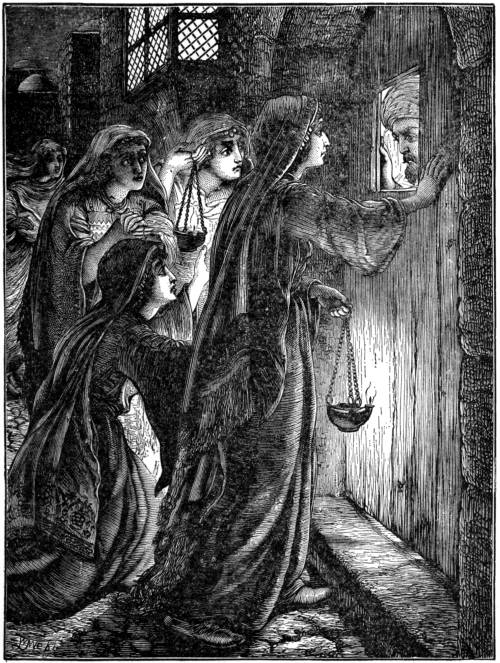
Ten young women had been invited to meet the bridegroom with their lamps burning and to sit down with him at the wedding-feast. Five of them were wise and five were foolish. The wise ones took a supply of oil in case their lamps should burn out before the bridegroom arrived; the foolish five took no oil but what was in their lamps. But before the bridegroom came they all fell asleep.
At midnight there was a cry, “Behold, the bridegroom cometh; go ye out to meet him.” But five lamps had almost burnt out, and the foolish virgins said unto the wise, “Give us of your oil, for our lamps are gone out.” But the wise ones answered, “Not so; lest there be not enough for us and for you. Go ye, rather, to them that sell, and buy for yourselves.” And while they went to buy, the bridegroom came, and they that were ready went in with him to the marriage-feast, and the door was shut.
Afterwards, came also the other virgins, saying, “Lord, Lord, open the door to us.” But he answered and said, “Verily I say unto you, I know you not,” and would not open the door to them.
In this parable the bridegroom means Jesus returning to earth, on the Day of Judgment. The ten virgins are the people of this world, some of whom have their hearts full of the love of God and keep their lamps burning with a steady and bright light; that is, they fulfil God’s commandments and obey the teachings of Christ. The others have not this love in their hearts and are not prepared for Christ’s coming. Their lamps give out a feeble light and soon will go out.
When you want to worship you need to have certain elements or parts to the worship service. There should order to worship. Remember that God said that everything should be done in decency and in order. Worship can occur anywhere. Jesus made this clear when he answered the woman at the well.
John 4:21-24
Jesus saith unto her, Woman, believe me, the hour cometh, when ye shall neither in this mountain, nor yet at Jerusalem, worship the Father.
Ye worship ye know not what: we know what we worship: for salvation is of the Jews.
But the hour cometh, and now is, when the true worshippers shall worship the Father in spirit and in truth: for the Father seeketh such to worship him.
God is a Spirit: and they that worship him must worship him in spirit and in truth.
The following is just a guide taken from various scriptures in the book of Psalms. Remember that Psalms was written for use in the temple of God. Also, the New Testament says:
Ephesians 5:19
Speaking to yourselves in psalms and hymns and spiritual songs, singing and making melody in your heart to the Lord;
Colossians 3:16
Let the word of Christ dwell in you richly in all wisdom; teaching and admonishing one another in psalms and hymns and spiritual songs, singing with grace in your hearts to the Lord.
The Worship Elements
Preparation for Worship: prepare your heart and mind for worship
Psalms 15
Lord, who shall abide in thy tabernacle? who shall dwell in thy holy hill?
He that walketh uprightly, and worketh righteousness, and speaketh the truth in his heart.
He that backbiteth not with his tongue, nor doeth evil to his neighbour, nor taketh up a reproach against his neighbour.
In whose eyes a vile person is contemned; but he honoureth them that fear the Lord. He that sweareth to his own hurt, and changeth not.
He that putteth not out his money to usury, nor taketh reward against the innocent. He that doeth these things shall never be moved.
Psalms 24:3-5
Who shall ascend into the hill of the Lord? or who shall stand in his holy place?
He that hath clean hands, and a pure heart; who hath not lifted up his soul unto vanity, nor sworn deceitfully.
He shall receive the blessing from the Lord, and righteousness from the God of his salvation.
This two Psalms are talking about the presence of God. Those who are not right with God, must repent before they can come fully into the presence of God.
Gathering – Coming together
Psalms 43:3-4
O send out thy light and thy truth: let them lead me; let them bring me unto thy holy hill, and to thy tabernacles.
Then will I go unto the altar of God, unto God my exceeding joy: yea, upon the harp will I praise thee, O God my God.
Psalms 100:4
Enter into his gates with thanksgiving, and into his courts with praise: be thankful unto him, and bless his name.
Call to Worship
Psalms 150:1-6
Praise ye the Lord. Praise God in his sanctuary: praise him in the firmament of his power.
Praise him for his mighty acts: praise him according to his excellent greatness.
Praise him with the sound of the trumpet: praise him with the psaltery and harp.
Praise him with the timbrel and dance: praise him with stringed instruments and organs.
Praise him upon the loud cymbals: praise him upon the high sounding cymbals.
Let every thing that hath breath praise the Lord. Praise ye the Lord.
Praise & Adoration
Psalms 146:1-2
Praise ye the Lord. Praise the Lord, O my soul.
While I live will I praise the Lord: I will sing praises unto my God while I have any being.
Ps 149:1
Praise ye the Lord. Sing unto the Lord a new song, and his praise in the congregation of saints.
Call to Confession
Psalms 32:5-6
I acknowledge my sin unto thee, and mine iniquity have I not hid. I said, I will confess my transgressions unto the Lord; and thou forgavest the iniquity of my sin. Selah.
For this shall every one that is godly pray unto thee in a time when thou mayest be found: surely in the floods of great waters they shall not come nigh unto him.
Psalms 79:8-9
O remember not against us former iniquities: let thy tender mercies speedily prevent us: for we are brought very low.
Help us, O God of our salvation, for the glory of thy name: and deliver us, and purge away our sins, for thy name’s sake.
Psalms 27:7-9
Hear, O Lord, when I cry with my voice: have mercy also upon me, and answer me.
When thou saidst, Seek ye my face; my heart said unto thee, Thy face, Lord, will I seek.
Hide not thy face far from me; put not thy servant away in anger: thou hast been my help; leave me not, neither forsake me, O God of my salvation.
Psalms 51:9-12
Hide thy face from my sins, and blot out all mine iniquities.
Create in me a clean heart, O God; and renew a right spirit within me.
Cast me not away from thy presence; and take not thy holy spirit from me.
Restore unto me the joy of thy salvation; and uphold me with thy free spirit.
Assurance of forgiveness
Psalms 86:4-7
Rejoice the soul of thy servant: for unto thee, O Lord, do I lift up my soul.
For thou, Lord, art good, and ready to forgive; and plenteous in mercy unto all them that call upon thee.
Give ear, O Lord, unto my prayer; and attend to the voice of my supplications.
In the day of my trouble I will call upon thee: for thou wilt answer me.
Psalms 103:1-4
Bless the Lord, O my soul: and all that is within me, bless his holy name.
Bless the Lord, O my soul, and forget not all his benefits:
Who forgiveth all thine iniquities; who healeth all thy diseases;
Who redeemeth thy life from destruction; who crowneth thee with lovingkindness and tender mercies;
Testimony
Psalms 30:11-12
Thou hast turned for me my mourning into dancing: thou hast put off my sackcloth, and girded me with gladness;
To the end that my glory may sing praise to thee, and not be silent. O Lord my God, I will give thanks unto thee forever.
Psalms 107:1-2
O give thanks unto the Lord, for he is good: for his mercy endureth for ever.
Let the redeemed of the Lord say so, whom he hath redeemed from the hand of the enemy;
Prayer for illumination / Guidance
Psalms 25:4-5
Shew me thy ways, O Lord; teach me thy paths.
Lead me in thy truth, and teach me: for thou art the God of my salvation; on thee do I wait all the day.
Psalms 43:3-4
O send out thy light and thy truth: let them lead me; let them bring me unto thy holy hill, and to thy tabernacles.
Then will I go unto the altar of God, unto God my exceeding joy: yea, upon the harp will I praise thee, O God my God.
Psalms 95:6-7
O come, let us worship and bow down: let us kneel before the Lord our maker.
For he is our God; and we are the people of his pasture, and the sheep of his hand. To day if ye will hear his voice,
Psalms 119:105
Thy word is a lamp unto my feet, and a light unto my path.
Everything must be looked at in light of Word of God.
Offering
Psalms 50:14
Offer unto God thanksgiving; and pay thy vows unto the most High:
Psalms 51:16:17
For thou desirest not sacrifice; else would I give it: thou delightest not in burnt offering.
The sacrifices of God are a broken spirit: a broken and a contrite heart, O God, thou wilt not despise.
Lord’s Supper
Table prepared
Psalms 23:5
Thou preparest a table before me in the presence of mine enemies: thou anointest my head with oil; my cup runneth over.
Cup
Psalms 116:13
I will take the cup of salvation, and call upon the name of the Lord.
Thanksgiving after the Lord’s Supper
PS 103:1-5
Bless the Lord, O my soul: and all that is within me, bless his holy name.
Bless the Lord, O my soul, and forget not all his benefits:
Who forgiveth all thine iniquities; who healeth all thy diseases;
Who redeemeth thy life from destruction; who crowneth thee with lovingkindness and tender mercies;
Who satisfieth thy mouth with good things; so that thy youth is renewed like the eagle’s.
Baptism (there may not be a Baptism every time)
Psalms 51:2
Wash me throughly from mine iniquity, and cleanse me from my sin.
Psalms 51:7
Purge me with hyssop, and I shall be clean: wash me, and I shall be whiter than snow.
There was a certain King who gave a great feast upon the occasion of his son’s wedding. And he sent out his servants to bring in those that had been invited, but they would not come. Then he sent forth other servants, saying, “Tell them which were bidden, ‘Behold, I have prepared my dinner; my oxen and my fatlings are killed, and all things are ready. Come unto the feast.'” But they made light of the message and went their ways, one to his farm, another to his warehouse; others took the servants and slew them.
When the King heard what had been done, he was very angry, and sent out his army to destroy the murderers, and burn up their city. Then said he to the servants, “The wedding is ready, but they which were bidden were not worthy. Go ye therefore into the highways, and all ye shall find, bid them come to the marriage.” So they gathered together as many as they could find. And upon each one, as he entered the house, was put a beautiful marriage garment, which the King had prepared. But when the people were all seated, and the King had entered the house, he saw there a man that had not on a wedding garment, and he said unto him, “Friend, how camest thou in hither without a wedding garment?” And the man was speechless, for the garment had been offered to him at first, but he had refused it. Then said the King to the servants, “Bind him hand and foot, and take him away and cast him into outer darkness.”
In this parable, the King means God, who gave the feast for His Son, Jesus Christ. Those who were first asked were the Jews, who refused to believe in Christ. Those who were afterwards brought in, signify the people who have since listened to His Word, and believed in Him. The one without the wedding garment is anyone that pretends to accept the invitation to be one of God’s people, but in his heart does not believe in Christ.
Ehud was born around 1318 BC and around died 1217 BC. He was the second judge of Israel. He rose after Israel had fallen into sin.
Judges 3:12-14
Now the Israelites again did evil in the sight of the Lord, and the Lord strengthened Eglon king of Moab against Israel, since they had done what was evil in the sight of the Lord.
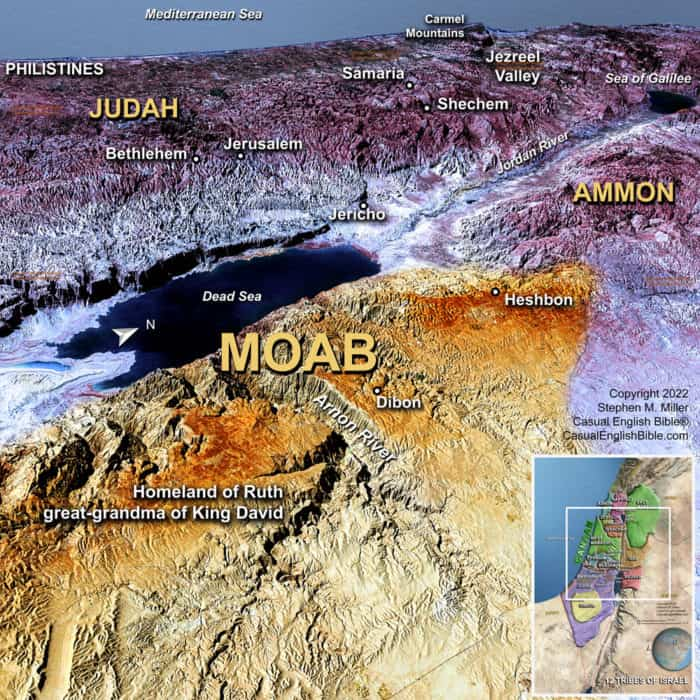
And Eglon gathered to him the sons of Ammon and Amalek, and went and struck down Israel [in defeat], and they took possession of the City of Palm Trees (Jericho).
And the Israelites served Eglon king of Moab eighteen years.
Ehud Rescues Israel from Moab Judges 3:15
But when the Israelites cried out to the Lord [for help], the Lord raised up a man to rescue them, Ehud the son of Gera, a Benjamite, a left-handed man. And the Israelites sent a gift of tribute by him to Eglon king of Moab.
From this verse we learn a few things about Ehud.
Ehud was the son of Gera.
Ehud was from the tribe of Benjamin.
Ehud was left-handed.
What Ehud didas recorded in Judges 3:16-30
Ehud made himself a double-edged sword eighteen inches long.
He strapped it to his right thigh under his clothes and brought the tribute to King Eglon of Moab, who was an extremely fat man.
When Ehud had finished presenting the tribute, he dismissed the people who had carried it.
At the carved images near Gilgal he returned and said, “King Eglon, I have a secret message for you.”
The king said, “Silence!” and all his attendants left him.
Then Ehud approached him while he was sitting alone in his upstairs room where it was cool. Ehud said, “I have a message from God for you,” and the king stood up from his throne.
Ehud reached with his left hand, took the sword from his right thigh, and plunged it into Eglon’s belly.
Even the handle went in after the blade, and Eglon’s fat closed in over it, so that Ehud did not withdraw the sword from his belly. And the waste came out.
Ehud escaped by way of the porch, closing and locking the doors of the upstairs room behind him.
Ehud was gone when Eglon’s servants came in. They looked and found the doors of the upstairs room locked and thought he was relieving himself in the cool room. The servants waited until they became embarrassed and saw that he had still not opened the doors of the upstairs room. So, they took the key and opened the doors—and there was their lord lying dead on the floor!
Ehud escaped while the servants waited. He passed the Jordan near the carved images and reached Seirah.
After he arrived, he sounded the ram’s horn throughout the hill country of Ephraim. The Israelites came down with him from the hill country, and he became their leader.
He told them, “Follow me, because the Lord has handed over your enemies, the Moabites, to you.” So, they followed him, captured the fords of the Jordan leading to Moab, and did not allow anyone to cross over.
At that time, they struck down about ten thousand Moabites, all stout and able-bodied men. Not one of them escaped. Moab became subject to Israel that day, and the land had peace for eighty years.
According to Jewish tradition (not all Jewish tradition is good) remember what Jesus said about Jewish traditions:
Mark 7:13 You nullify the word of God by your tradition that you have handed down. And you do many other similar things.
However, some of the traditions has more to do with history than the Law of God. This is the tradition that they have about family linage. Also, some parts of this tradition can be proven with scripture. I am adding all of it here because it brings up an interesting thought.
Zippor was the father of Balak
Numbers 22:2 Now Balak son of Zippor saw all that Israel had done to the Amorites.
Balak was the father of Eglon
Eglon was the father of Orpah & Ruth
Ruth & Orpah was the daughter-n-law of Naomi
Orpah stayed in Moab
Ruth went with Naomi
Orpah married again and had children
Goliath
Saph
Lahmi
Ishbibenob
Ruth married Boaz and had a child Obed
Ruth 4:21-22
Salmon fathered Boaz,
Boaz fathered Obed,
Obed fathered Jesse,
and Jesse fathered David.
David killed Goliath
1 Samuel 17: 49-51
David put his hand in the bag, took out a stone, slung it, and hit the Philistine on his forehead. The stone sank into his forehead, and he fell facedown to the ground.
David defeated the Philistine with a sling and a stone. David overpowered the Philistine and killed him without having a sword.
David ran and stood over him. He grabbed the Philistine’s sword, pulled it from its sheath, and used it to kill him. Then he cut off his head. When the Philistines saw that their hero was dead, they fled.
1 Samuel 17:54
David took Goliath’s head and brought it to Jerusalem, but he put Goliath’s weapons in his own tent.
Notes: If this Goliath was the same Goliath as Orpah’s son, then Goliath had to be at least 120 years old. If the tradition about Orpah having a son named Goliath is true, then 1 of 3 possibilities happened:
The Goliah that David killed was really a descendant of Orpah’s son who was named after Orpah’s son.
Goliah had superhuman abilities because of his father being a fallen angel that allowed him to have incredibly long life.
This Goliath was a totally different Goliath with no direct connection to Orpah.

 articlesforchristians