A place to grow your relationship with God

Posts tagged ‘family’

Heidi Chapter 1 – Part 3

Going Up To The Alm Uncle

The child, feeling free and comfortable, started to converse with Peter, and he had to answer many questions. She asked him how many goats he had, and where he led them, what he did with them when he got there, and so forth.

1

At last the children reached the summit in front of the hut. When Deta saw the little party of climbers she cried out shrilly: “Heidi, what have you done? What a sight you are! Where are your dresses and your shawl? Are the new shoes gone that I just bought for you, and the new stockings that I made myself? Where are they all, Heidi?”

The child quietly pointed down and said “There.”
The aunt followed the direction of her finger and descried a little heap with a small red dot in the middle, which she recognized as the shawl.

“Unlucky child!” Deta said excitedly. “What does all this mean? Why have you taken your things all off?”

“Because I do not need them,” said the child, not seeming in the least repentant of her deed.

“How can you be so stupid, Heidi? Have you lost your senses?” the aunt went on, in a tone of mingled vexation and reproach. “Who do you think will go way down there to fetch those things up again? It is half-an-hour’s walk. Please, Peter, run down and get them. Do not stand and stare at me as if you were glued to the spot.”
“I am late already,” replied Peter, and stood without moving from the place where, with his hands in his trousers’ pockets, he had witnessed the violent outbreak of Heidi’s aunt.

“There you are, standing and staring, but that won’t get you further,” said Deta.

“I’ll give you this if you go down.” With that she held a five-penny-piece under his eyes. That made Peter start and in a great hurry he ran down the straightest path. He arrived again in so short a time that Deta had to praise him and gave him her little coin without delay. He did not often get such a treasure, and therefore his face was beaming and he laughingly dropped the money deep into his pocket.

“If you are going up to the uncle, as we are, you can carry the pack till we get there,” said Deta. They still had to climb a steep ascent that lay behind Peter’s hut. The boy readily took the things and followed Deta, his left arm holding the bundle and his right swinging the stick. Heidi jumped along gaily by his side with the goats.
After three quarters of an hour they reached the height where the hut of the old man stood on a prominent rock, exposed to every wind, but bathed in the full sunlight. From there you could gaze far down into the valley. Behind the hut stood three old fir-trees with great shaggy branches. Further back the old grey rocks rose high and sheer. Above them you could see green and fertile pastures, till at last the stony boulders reached the bare, steep cliffs.

Overlooking the valley the uncle had made himself a bench, by the side of the hut. Here he sat, with his pipe between his teeth and both hands resting on his knees. He quietly watched the children climbing up with the goats and Aunt Deta behind them, for the children had caught up to her long ago. Heidi reached the top first, and approaching the old man she held out her hand to him and said: “Good evening, grandfather!”

“Well, well, what does that mean?” replied the old man in a rough voice. Giving her his hand for only a moment, he watched her with a long and penetrating look from under his bushy brows. Heidi gazed back at him with an unwinking glance and examined him with much curiosity, for he was strange to look at, with his thick, grey beard and shaggy eyebrows, that met in the middle like a thicket.
Heidi’s aunt had arrived in the meantime with Peter, who was eager to see what was going to happen.

“Good-day to you, uncle,” said Deta as she approached. “This is Tobias’s and Adelheid’s child. You won’t be able to remember her, because last time you saw her she was scarcely a year old.”

“Why do you bring her here?” asked the uncle, and turning to Peter he said: “Get away and bring my goats. How late you are already!”
Peter obeyed and disappeared on the spot; the uncle had looked at him in such a manner that he was glad to go.

“Uncle, I have brought the little girl for you to keep,” said Deta. “I have done my share these last four years and now it is your turn to provide for her.”
The old man’s eyes flamed with anger. “Indeed!” he said. “What on earth shall I do, when she begins to whine and cry for you? Small children always do, and then I’ll be helpless.”

“You’ll have to look out for that!” Deta retorted. “When the little baby was left in my hands a few years ago, I had to find out how to care for the little innocent myself and nobody told me anything. I already had mother on my hands and there was plenty for me to do. You can’t blame me if I want to earn some money now. If you can’t keep the child, you can do with her whatever you please. If she comes to harm you are responsible and I am sure you do not want to burden your conscience any further.”

Deta had said more in her excitement than she had intended, just because her conscience was not quite clear. The uncle had risen during her last words and now he gave her such a look that she retreated a few steps. Stretching out his arm in a commanding gesture, he said to her: “Away with you! Begone! Stay wherever you came from and don’t venture soon again into my sight!”

Deta did not have to be told twice. She said “Good-bye” to Heidi and “Farewell” to the uncle, and started down the mountain. Like steam her excitement seemed to drive her forward, and she ran down at a tremendous rate. The people in the village called to her now more than they had on her way up, because they all were wondering where she had left the child. They were well acquainted with both and knew their history. When she heard from door and windows: “Where is the child?” “Where have you left her, Deta?” and so forth, she answered more and more reluctantly: “Up with the Alm-Uncle,—with the Alm-Uncle!” She became much provoked because the women called to her from every side: “How could you do it?” “The poor little creature!” “The idea of leaving such a helpless child up there!” and, over and over again: “The poor little dear!” Deta ran as quickly as she could and was glad when she heard no more calls, because, to tell the truth, she herself was uneasy. Her mother had asked her on her deathbed to care for Heidi. But she consoled herself with the thought that she would be able to do more for the child if she could earn some money. She was very glad to go away from people who interfered in her affairs, and looked forward with great delight to her new place.
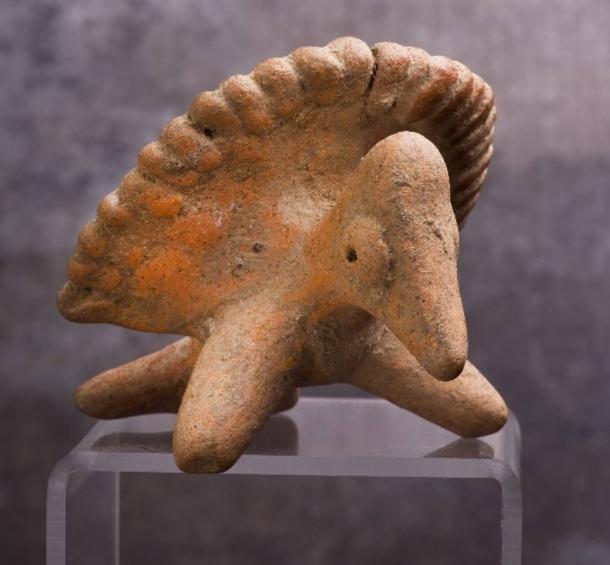
Exploring Ancient Maya Musical Instruments

Mayan Music
The Indian civilizations of South and Central America had a vibrant musical heritage. The Mayas used a variety of wind and percussion instruments, such as flutes, whistles, trumpets, rattles, bone and gourd rasps, and drums. These instruments are mentioned in texts and illustrated in Maya art. Among the most fascinating discoveries is the Maya whistle.

Maya bird whistle made around 1000 AD. Credit: William Scott / Source: BigStockPhoto

A whistle flute, sometimes called a fipple flute, is a flute blown from the end. Air is sent through a simple mouthpiece against the sharp edge of a hole cut in the pipe below the mouthpiece. It was often made of clay or wood. There is even an example of one made from bird bones. Finger holes make more than one pitch possible. Whistle flutes were common.

Ocarinas are flutes in the shape of animals. The word ocarina comes from the Spanish, who settled in the Central American country of Costa Rica, rich in rainforest animals.

The ancient inhabitants of Costa Rica crafted ocarinas that represented birds, armadillos, owls, bats, tapirs, monkeys, and other rainforest creatures.

Today, modern Latin American artists make ocarinas inspired by the ancient ones. The instruments are played by blowing in the small hole at the end, covering the four holes on the body with your fingers, and leaving the large hole at the end uncovered.

When fingers are lifted off any of the four holes on the body, varying sounds are created. The sounds made are similar to the calls of Costa Rican birds.

The Children’s Six Minutes: Letters

LETTERS

Who is the most popular man in your town? The Postman. Who is the man who is most eagerly looked for as he comes down the street? The Postman. Who receives, at every door where he stops, a most cordial welcome? The Postman. I wonder if the thrill of getting a letter will ever pass away. When you come home from school the first thing you do is to look on the hall table to see if the Postman has brought you a letter. It is the same when we grow up. No matter how many letters we may receive we never get over the keen delight at having the Postman bring us letters.

Last Sunday afternoon you wrote your grandmother. You said, “Only two months more of school and then I am coming to see you, and all the summer vacation I am going to play around your big house, and in the barn, and across the fields, and through the woods.” On your way to school Monday morning, you posted that letter. Monday afternoon you began looking for an answer. Tuesday you were impatient [59]that you had not received a reply. Wednesday you were almost in tears, though, had you only stopped to think you would have known that it takes two days for a letter to get to your grandmother, she lives so far away. Thursday the answer came. “I am eager for vacation time to come so that you, my dear grandchild, may be here with me.”

I have here an unusual book. It is a book of letters. All the letters were written by a big man, a father, to little children, his children. The man who wrote them was Theodore Roosevelt. What fortunate children were his! Not many fathers take time to write to their children as did our great president. Oh, for more fathers like Roosevelt! Oh, for appreciative children, who will not only gladly receive, but cheerfully write, letters of love!

MEMORY VERSE, I John 2: 12

“I write unto you, fathers, because ye have known him that is from the beginning. I write unto you, little children, because ye have known the Father.”

MEMORY HYMN

“I love to tell the story.”

1 I love to tell the story
of unseen things above,
of Jesus and His glory,
of Jesus and His love.
I love to tell the story
because I know it’s true.
it satisfies my longings
as nothing else can do.

Refrain:
I love to tell the story!
‘Twill be my theme in glory
to tell the old, old story
of Jesus and His love.

2 I love to tell the story;
more wonderful it seems
than all the golden fancies
of all our golden dreams.
I love to tell the story;
it did so much for me,
and that is just the reason
I tell it now to thee. [Refrain]

3 I love to tell the story;
’tis pleasant to repeat
what seems, each time I tell it
more wonderfully sweet.
I love to tell the story;
for some have never heard
the message of salvation
from God’s own holy Word. [Refrain]

4 I love to tell the story,
for those who know it best
seem hungering and thirsting
to hear it like the rest.
And when in scenes of glory
I sing the new, new song,
’twill be the old, old story
that I have loved so long. [Refrain]

Source: Our Great Redeemer’s Praise #160

Chapter 4: REBECCA’S POINT OF VIEW

Dear Mother,—I am safely here. My dress was not much tumbled and Aunt Jane helped me press it out. I like Mr. Cobb very much. He chews but throws newspapers straight up to the doors. I rode outside a little while, but got inside before I got to Aunt Miranda’s house. I did not want to, but thought you would like it better. Miranda is such a long word that I think I will say Aunt M. and Aunt J. in my Sunday letters. Aunt J. has given me a dictionary to look up all the hard words in. It takes a good deal of time and I am glad people can talk without stoping to spell. It is much eesier to talk than write and much more fun. The brick house looks just the same as you have told us. The parler is splendid and gives you creeps and chills when you look in the door. The furnature is ellergant too, and all the rooms but there are no good sitting-down places exsept in the kitchen. The same cat is here but they do not save kittens when she has them, and the cat is too old to play with. Hannah told me once you ran away with father and I can see it would be nice. If Aunt M. would run away I think I should like to live with Aunt J. She does not hate me as bad as Aunt M. does. Tell Mark he can have my paint box, but I should like him to keep the red cake in case I come home again. I hope Hannah and John do not get tired doing my chores.

Your afectionate friend
Rebecca.

P. S. Please give the piece of poetry to John because he likes my poetry even when it is not very good. This piece is not very good but it is true but I hope you won’t mind what is in it as you ran away.

This house is dark and dull and dreer
No light doth shine from far or near
       Its like the tomb.

And those of us who live herein
Are most as dead as serrafim
       Though not as good.

My gardian angel is asleep
At leest he doth no vigil keep

Ah! woe is me!

Then give me back my lonely farm
Where none alive did wish me harm
       Dear home of youth!

P. S. again. I made the poetry like a piece in a book but could not get it right at first. You see “tomb” and “good” do not sound well together but I wanted to say “tomb” dreadfully and as serrafim are always “good” I couldn’t take that out. I have made it over now. It does not say my thoughts as well but think it is more right. Give the best one to John as he keeps them in a box with his birds’ eggs. This is the best one.

SUNDAY THOUGHTS

BY

REBECCA ROWENA RANDALL

This house is dark and dull and drear
No light doth shine from far or near
       Nor ever could.

And those of us who live herein
Are most as dead as seraphim
       Though not as good.

My guardian angel is asleep
At least he doth no vigil keep
       But far doth roam.

Then give me back my lonely farm
Where none alive did wish me harm,
       Dear childhood home!

Dear Mother,—I am thrilling with unhappyness this morning. I got that out of Cora The Doctor’s Wife whose husband’s mother was very cross and unfealing to her like Aunt M. to me. I wish Hannah had come instead of me for it was Hannah that was wanted and she is better than I am and does not answer back so quick. Are there any peaces of my buff calico. Aunt J. wants enough to make a new waste button behind so I wont look so outlandish. The stiles are quite pretty in Riverboro and those at Meeting quite ellergant more so than in Temperance.

This town is stilish, gay and fair,
And full of wellthy riches rare,
But I would pillow on my arm
The thought of my sweet Brookside Farm.

School is pretty good. The Teacher can answer more questions than the Temperance one but not so many as I can ask. I am smarter than all the girls but one but not so smart as two boys. Emma Jane can add and subtract in her head like a streek of lightning and knows the speling book right through but has no thoughts of any kind. She is in the Third Reader but does not like stories in books. I am in the Sixth Reader but just because I cannot say the seven multiplication Table Miss Dearborn threttens to put me in the baby primer class with Elijah and Elisha Simpson, little twins.

Sore is my heart and bent my stubborn pride,
With Lijah and with Lisha am I tied,
My soul recoyles like Cora Doctor’s Wife,
Like her I feer I cannot bare this life.

I am going to try for the speling prize but fear I cannot get it. I would not care but wrong speling looks dreadful in poetry. Last Sunday when I found seraphim in the dictionary I was ashamed I had made it serrafim but seraphim is not a word you can guess at like another long one outlandish in this letter which spells itself. Miss Dearborn says use the words you CAN spell and if you cant spell seraphim make angel do but angels are not just the same as seraphims. Seraphims are brighter whiter and have bigger wings and I think are older and longer dead than angels which are just freshly dead and after a long time in heaven around the great white throne grow to be seraphims.

I sew on brown gingham dresses every afternoon when Emma Jane and the Simpsons are playing house or running on the Logs when their mothers do not know it. Their mothers are afraid they will drown and Aunt M. is afraid I will wet my clothes so will not let me either. I can play from half past four to supper and after supper a little bit and Saturday afternoons. I am glad our cow has a calf and it is spotted. It is going to be a good year for apples and hay so you and John will be glad and we can pay a little more morgage. Miss Dearborn asked us what is the object of edducation and I said the object of mine was to help pay off the morgage. She told Aunt M. and I had to sew extra for punishment because she says a morgage is disgrace like stealing or smallpox and it will be all over town that we have one on our farm. Emma Jane is not morgaged nor Richard Carter nor Dr. Winship but the Simpsons are.

Rise my soul, strain every nerve,
Thy morgage to remove,
Gain thy mother’s heartfelt thanks
Thy family’s grateful love.

Pronounce family QUICK or it won’t sound right

Your loving little friend
Rebecca

Dear John,—You remember when we tide the new dog in the barn how he bit the rope and howled I am just like him only the brick house is the barn and I can not bite Aunt M. because I must be grateful and edducation is going to be the making of me and help you pay off the morgage when we grow up. Your loving

Becky.

How Children Learn from Their Environment

Have you ever heard this poem?

Children Learn What They Live
By Dorothy Law Nolte, Ph.D.

If children live with criticism, they learn to condemn.
If children live with hostility, they learn to fight.
If children live with fear, they learn to be apprehensive.
If children live with pity, they learn to feel sorry for themselves.
If children live with ridicule, they learn to feel shy.
If children live with jealousy, they learn to feel envy.
If children live with shame, they learn to feel guilty.
If children live with encouragement, they learn confidence.
If children live with tolerance, they learn patience.
If children live with praise, they learn appreciation.
If children live with acceptance, they learn to love.
If children live with approval, they learn to like themselves.
If children live with recognition, they learn it is good to have a goal.
If children live with sharing, they learn generosity.
If children live with honesty, they learn truthfulness.
If children live with fairness, they learn justice.
If children live with kindness and consideration, they learn respect.
If children live with security, they learn to have faith in themselves and in those about them.
If children live with friendliness, they learn the world is a nice place in which to live.

Copyright © 1972 by Dorothy Law Nolte

This is a great poem with lots of truth to it. Children learn based on what they see and hear. Children learn by doing and they often copy what they see and hear the adults and other children around them do. It is important to be careful what you say and do around children because they are always watching. It is important how you treat children and others because children learn how to treat others by watching you. Many of the problems that our society has today was create yesterday by how the adults behaved around the children. In order to create a better tomorrow, we must start today by correcting our behavior today.

Children are not born knowing how to act, talk, or walk. They learn by watching the adults and other children around them. So, the next time the child in your care misbehaves, go look in a mirror and see what you are doing and check on what any children around them are doing. Yes, they need to be corrected, but it is possible that your actions or the actions of others need correcting as well. Remember the old adage, Birds of a feather flock together. The people that children are around will cause them to start behaving just like them. Now stop and think about what kind of person you want children to become when they grow up. What kind of world do we want the future to be? Do you like the way the world seems to be going? The future is literally in your hands today. Correct your behavior today for a better tomorrow.

Life in a submarine: Deep water

My name is Rebecca. My family lives in a submarine.
I live with my sister Joy, my brothers, Danny and Mark and there is my mom, my dad, and my dad’s helpers. We all lived in a yellow Sub.
One day, it rained hard. Joy and I were worried, but my mom said let make cookies, and so we did. My dad works hard keeping us on tack to Ireland, but the waves didn’t help. Mark tried to help, but he had to watch Danny, the youngest. Danny was 5, Mark 9, Joy was 7, and I am old 12-years-old.
Mother was getting worried. Father said that we are going a little deeper but not too deep. Joseph, my dad’s helper, takes us down deeper. While Tom makes sure, we don’t go too deep.

Mom asks Dad a question, “Should one of us be in the Control room?” Still a little worried Dad said, “Yes, one or maybe two should be in the Control room.” So, Dad asks Joseph and Tom to be in the control room.

Later, we ate dinner and went to bed. That night we woke; the red alert was going off. What is going on Joy asked me. I don’t know. So, Joy and I run to little Danny’s room. He was crying. Rebecca, “I am worried. Let’s see where Mark is. Maybe he is on his way to the control room,” said little Danny. Ok let’s go. When we got there, Mark was with mom and dad in the control room. “What’s going on father?” Mark asks. “The water- it is too deep!” was the reply. Daddy, are we going to be all right asked Rebecca. Yes, Rebecca we are. God is with us. He was with us when we told people about him, and he is here now.

I knew my father was right. My mom and dad are missionaries and when I was little my dad said a Bible verse a lot to me when I was scared. The verse says, “Be careful for nothing; but in everything by prayer and supplication with thanksgiving let your requests be made known unto God.” Philippians 4:6. So, I knew my dad right. If we ask God, he with Help us.

Why don’t you take the kids to the living room and pray and I will see if we can get to Ireland ok. Mom agreed and said, “I will try to call grandma and grandpa in Scotland [Edinburg]. I will tell them that we are trying to get home but having trouble making it back to Ireland [Dublin].”

Rebecca, please carry Danny. “Ok” I answered. “So, mom, are we going to sleep in the living room?” asked Mark. “Yes, Mark we are.” answered mom.

“Mom”, Joy asked, “how far are we from home?” About 2 miles. Surprisingly the call goes through. Grandma and Grandpa were so worried. After the call, dad came into the room. He said, “we are out of deep water.” We were all happy to Hear that.

The next morning Joy, Danny, Mark, Mom, Dad, Tom, Joseph, and I were so happy to walk on dry land.

For the next part of the story: Visiting the old castle

A work of fiction written by Bell

Understanding Relationships Through a Child’s Eyes

My parents divorced when I was 4 years old. My mom got full custody of me and my dad had visitation rights. My dad was a long-haul truck driver. He was one of the best drivers. He won many safe driving awards. For a few years he was a long-haul driving instructor. That meant that the student and my dad lived in the same truck for the long trip. One of his students later became his girlfriend. Her name was Dolly. However, Dolly did not know that she was not the only girlfriend.

One of the other girlfriends (Tina) lived in Atlanta, GA. Uncle Hollis also lived in Atlanta, GA. So, when my dad and I went to see Uncle Hollis we stayed at Tina’s place. I told my dad that I did not like Tina. I told him this when it was just me and him in the car. He asked me why I didn’t like her. I explained that she was not understanding about my food allergies and that her children were mean to me. He explained that he didn’t like her either and that staying with her was cheaper than a motel room. He explained that after her usefulness was over, meaning Uncle Hollies was dead, that he was going to dump her. I am about 6 years old at this time. In the summer of 1991 Uncle Hollis dies. Sometime after the funeral my dad breaks it off with Tina.

The fall of 1991 my dad has decided to ask Dolly to marry him. He plans for me to go to my grandma’s house for Thanksgiving. He has Dolly meet him there. Before can ask Dolly to marry him Grandma puts my dad to work doing some chores for her. My grandma at this time is still running the Raymond Cleaners in Mississippi. So, Dolly is elected to keep me. I actually like Dolly. She was fun. She would play with me, take me out to eat, take me to the movies, and take me bowling.

This next part is difficult to explain. That day I made a big mistake. While Dolly was watching me, I called out the wrong name. I called her Tina. I have no idea why I called her that. Dolly asks me if I have an imaginary friend. I freeze up. I don’t know what to say. My dad gets very angry with me because I have ruined his plans. He tries hard to explain his actions, but to no avail.

Dolly stays in contact with me. Years later we talk about that day. She tells me how thankful was for my mistake. She explains that God was using me to keep her from making a big mistake. She also explains to me that around that same time, she had just started back to church. Over the years she kept going to church.

Two Surprises at the Mountain Home

It all started when school was out for the year. My sister (Elizabeth), and I (Peter) both realize it was different this time. Our Mom said we were to go on to Grandma & Grandpa’s house, but usually we all go together. That’s how me and my brother realize it was different. We pack our bags, me and my sister pack three bags each. Because in summer vacation we kind of live with our Grandparents. When we were all packed I and my brother put our bags in our two red folds up wagon and walked to the bus stop. Simon, our friend, was there. He said that we could have only one bag on the bus, but the other two would have to go at the back of the bus in the baggage storage area. Se we each picked a bag to keep near us on the ride. We gave Simon the others. Mom made sure that our phone was working.

Now we were on our way. Mom had said that if we wanted to see outside to sit in the back where there was more windows. So, my sister and I sat in the back. It felt like four hours, but it was only 1 1/2 hours. When we were almost there, we got a call from our grandparents. Near the end of the call, they said something about having a surprise for us. My sister and I wanted to know what it was, but we did not have any ideas.

When we got to the bus stop in the mountains, we got out of the wagon and our bags together. We then got off the bus with Simon. Simon made sure that our grandparents were there, and they were, so he went back to work. Simon had been good to our family for a long time and to my sister and me. After we got to our Grandparents’ home, we unpacked and then we relaxed. “Children,” Grandma said, “want to make some cookies?” “Yes,” we cried. So, we made 5 dozen cookies with Grandma’s help.

“Peter, Elizabeth, Grandpa, Dinner is ready. So, let us eat dinner. So, we ate dinner. After dinner we called mom and said good night. Then we went to bed.

After Breakfast bright and early the next morning, we went to the park. There we saw our friends, Joy, Eric, Timmy, and Maggie. So, we talked and played. Then when it was time to go, Grandma called and asked us to run to the store and get some things. So, we did. When we got home, there was a note. Peter read it. It said, “To Peter and Elizabeth: Thanks for running to the store. Please put the things up and then go out the back door to the barn.” When we went to the barn, there was another note. This time Elizabeth read it. It said, “Your surprise is in the barn. Love, Mom, Grandma, and Grandpa”

“Peter, Is mom here?” asked Elizabeth. Peter answered, “I don’t know Beth. Let’s go and find out what the surprise is. Let’s go on three. 1,2,3. Oh my ponies! “Surprise!” yelled mom. “What are you doing here!?” Peter and Elizabeth asked. “Well, I wanted to surprise you guys,” said mom. “Well, you did”, we answered.

They are so cute. What are their names? Starlight and Sunny are their names. That’s not all. look over there. Puppies? Yes, they could run beside you when you ride. Grandma, Grandpa, Mom, “How could it get better?” “Should I tell them?” asked mom. Tell us what MoM. Well Beth, Peter you Know my job is in the city, but now I have a new job that better fits me, an animal rescuer. Oh, mom does that mean we get to live with Grandma & Grandpa? Mom? Yes, Peter and Beth it does. Children it does. After that Simon helped us move all our things to our Grandparents home. After we had moved all of our things, we asked our friends Joy, Eric, Timmy and Maggie to come over and celebrate.

Mom, how did you get two puppies and two ponies? Well, I had the new job for about a week. A week! Yes, and that’s how. How what? How I got them. The ponies were going to be put down, and the puppies were all by their shelves. No way. Mom, how could anyone be so mean? Elizabeth, some people are just mean. “Mrs. Good Heart”? Yes, Simon. Everything is ready for the party. Thank you, Simon, for being so good to us. Oh, it’s nothing, Mrs. Good Heart. Children it’s time for you guys to go open the gate in front. Our two new puppies ran beside us. We named our new puppies Honey and Bingo. After Joy, Eric, Timmy and Maggie and their family came, we had fun playing games and taking turns riding ponies and of course playing with our puppies, Honey and Bingo. And with that the Story ends.

by Bell

Essential Meal Planning Tips for Busy Moms

Meal planning is a most for busy moms. It is useful for anyone wanting to be less wasteful and more organized. Here are some resources that I have found that can be helpful with planning and organizing. As I find more resources, they will be added.

  • Here is a meal planning guide to help you organize mealtime. This is a simple planning guide. I have used this one with some success.
  • Meal Planning for Busy Moms: This is a how-to meal plan using the below printables. I have recently found this one.
    • FREE Meal Planning Printables! (Below lists what you get.)
      • Printable Main Dish List– to list your family’s favorite dinner meals
      • Printable Menu Plan– a sheet to plan your dinners and grocery list
      • Printable Freezer Meals – a sheet to keep track of what’s in your freezer
  • Time-Saving Cooking Tips for Busy Families: Efficient cooking strategies include batch-preparing meals, using deli foods, and storing leftovers for quick and easy family meals, ensuring nutritious dining without extensive preparation.

A Guide to Common Cooking Terms and Techniques

Here are some general cooking terms that are frequently used in recipes.

WordMeaning
BakeCook in the oven
BeatMix fast with beater or spoon
BlendMix ingredients until they are smooth
BoilCook until liquid is so hot it bubbles
hard and steams
BroilCook by direct heat. (You can use the broiler section of the oven.
BrushSpread on the ingredient thinly with a brush
ChopCut food in pieces with a knife or chopper
Combine Mix ingredients together
CoreRemove the stem and seeds
CreamBeat shortening and sugar until they are well mixed and fluffy
CubeCut into 1/4 to 1/2-inch squares
DiceCut food into very small cubes
DotDrop bits of butter, cheese, or other food here
and there over the food
Fold
Mix ingredients gently with a rubber spatula, whisk, or spoon. Cut down through mixture, across the bottom of the bowl, up and over the top, close to the surface of the mixture. Do this over and over.
FryCook in hot fat.
Garnish Decorate food-for example, a cherry on top of ice cream, or a sprig of parsley on top of potatoes.
GrateScrape food against a grater, as in grating a carrot.
GreaseSpread shortening evenly on the bottom and sides of pan.
MeltTurn butter or margarine into a liquid by heating.
MinceChop or cut food into tiny pieces, as in mincing an onion.
MixStir ingredients together.
PareCut away the outside covering of fruits and vegetables.
PeelStrip off the outer covering, such as peeling a banana.
PitTake seeds or pits out of fruit
ShredCut food into very strips, think about shredded cheese
SiftPut dry ingredients, such as flour and baking powder through a sifter or large strainer
SimmerCook food over a very low heat
StirMix ingredients lightly, such as tossing a salad
WhipBeat eggs and cream with an eggbeater or mixer until light and fluffy