Exodus 12:40 Now the sojourning of the children of Israel, who dwelt in Egypt, was four hundred and thirty years.
This seems like a contradiction because the children of Israel only lived in Egypt for about 3 generations. However, it is helpful to look at the original prophecy of the 400 Years prediction.
And he said unto Abram, Know of a surety that thy seed shall be a stranger in a land that is not theirs, and shall serve them; and they shall afflict them four hundred years. (KJV, Genesis 15:13)
It basically says that the seed (descendants) of Abraham would be a stranger in a land that is not theirs and shall server them and afflicted them 400 years.
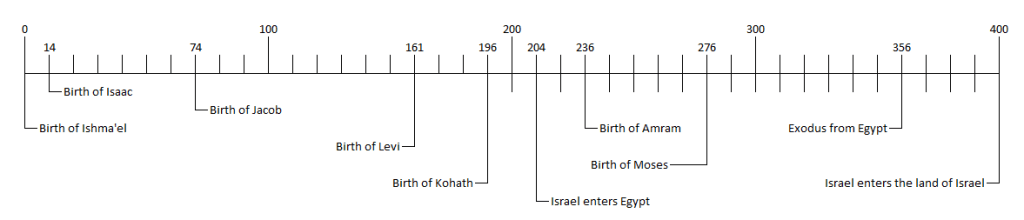
If we call the year of Ishma’el’s birth “0,” as he is Abram’s first seed, we can then use various passages to calculate how many years from then until Israel entered the land of Canaan.
Birth of Isaac:
Abraham is 100 (Gen 17:17; 21:5)
Ishmael is 13 the year before Isaac’s birth (Gen 17:25)
Birth of Jacob:
Isaac is 60 (Gen 25:26)
Birth of Joseph:
Jacob is 91 – Jacob was 130 when entering Egypt (Gen 47:9)
Joseph was 30 when entering Pharoahs service (Gen 41:46)
7 years of plenty (Gen 41:53,54)
2 years of famine when Jacob came to Egypt (Gen 45:6)
Joseph was 39 (30+7+2) when Jacob entered Egypt
Jacob was 91 at birth of Joseph (130-39)
Birth of Levi: Jacob is 87
Jacob is 91 at birth of Joseph who was born in the 14 year of service to Laban (Gen 30:25,26)
Jacob is 77 when arrives at Labans (91-14)
Jacob serves 7 years and recieves Leah (Gen 29:27) who bears Levi, her third son approximately 3 years after being with Jacob.
Jacob is approximately 87 at birth of Levi (77+7+3).
The Children of Israel enter the land of Egypt 17 years before the death of Jacob (Gen 47:28) and when Levi is 87 years old.
Birth of Kohath:
Levi is ~35 – Levi was younger than 40 when Kohath was born as Levi was 43 when he went to Egypt with his 3 sons (Gen 46:8,11)
if this is correct Kohath would be 8 when entering Egypt.
Birth of Amram: Kohath is ~40 (an average generaton)
Birth of Moses: Amram is ~40 (an average generaton)
Israel leaves Egypt when Moses is 80 years old.
The children of Israel enter the land of Israel after the 40 years of wandering, which is 400 years after the birth of Ishmael.
These numbers are approximate calculations. The other 30 years can be time getting to the promise land and how much time that it should have taken to take the land. Instead, they are wandering in the wilderness for 40 Years. They still were journeying in a land that was not their own.
Israel is Twelve groups of families in Israel who were descendants of the twelve tribes of Israel’s sons of Jacob. Jacob’s name was changed to Israel. His twelve sons and their descendants made up the nation of Israel, sometimes called “the children of Israel.” The family of Jacob began when Jacob stayed at Haran with his uncle Laban. Because his brother Esau was mad that he got the birth right that he was to get and not his brother Jacob.
The birth of the sons came through Jacob’s wives, Leah and Rachel, and their maids, Zilpah and Bilhah. The sons were Reuben, Simeon, Levi, Judah, Dan, Naphtali, Gad, Asher, Issachar, Zebulun, Joseph, and Benjamin.
Joseph’s sons were Ephraim and Manasseh. They were adopted by Jacob, and each one became the father of one of the tribes of Israel. Each tribe except Levi received a portion of the land in Canaan. The tribe of Levi was the priesthood, and in Bible time, priests led people to worship God through sacrifices.
Children of Leah (6 boys and 1 girl) with name meanings
Reuben
Behold, a son
Simeon
God has heard
Levi
Joined
Judah
Praise
Issachar
Reward
Zebulun
Honor
Dinah (she is only girl)
Justice or Judgement
Sons of Leah’s hand maid (Zilpah)
Gad
Good fortune
Asher
Happy
Sons of Rachel
Joseph
May He add
Benjamin (Rachel called his name Benoni but his father called him Benjamin)
Benoni
Son of my Sorrow
Benjamin
Son of my right hand
Son of Rachel’s hand maid (Bilhah)
Dan
Judge
Naphtali
My struggle
Jacob’s children in order of birth
Reuben [Leah]
Simeon[Leah]
Levi [Leah]
Judah [Leah]
Dan [Rachel hand maid Bilhah]
Naphtali [Rachel hand maid Bilhah]
Gad [Leah hand maid Zilpah]
Asher [Leah hand maid Zilpah]
Issachar [Leah]
Zebulun [Leah]
Dinah [Leah] she is a girl
Joseph [Rachel]
Benjamin [Rachel]
Reuben is Jacob’s oldest son the one that has the most power. Their symbol is the Mandrake Flower.
Simeon is a fighting tribe. Their symbol is the mighty sword.
Judah is brave and strong, so their symbol is the lion brave and strong.
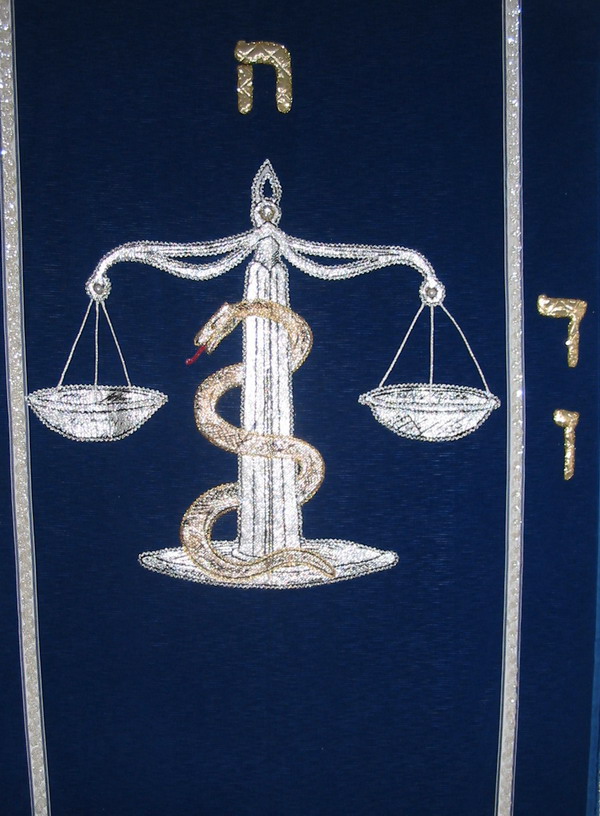
Dan’s name means God has judged me, so their symbol is the snake and the Justice scale.
Naphtali’s name means I have Wrestled. Their symbol is the deer.
Gad’s name means good fortune. Their symbol is the tent.
Asher’s name means happy. Their symbol is the olive tree.
Issachar’s name means God has Repaid me. Their Symbol is the Donkey.
Zebulun’s name means God will dwell with me. Their symbol is a sailing ship.
Manasseh’s name means God hath made me forget all my toil. Their symbol is the unicorn.
Ephraim’s name means God has Caused me to be Fruitful. Their symbol is the bull.
Bejamin’s name means son of my right hand. Their Symbol is the big brave wolf.
Levi’s name means Joined. Note: because Levi is of the priesthood, they do not have a tribal banner.
How wonderful is the way in which God works for those who fear Him! The history of Joseph teaches us this truth.
Joseph had one younger and ten elder brothers. The name of the younger brother was Benjamin. Jacob was the father of them all; and Rachel was the mother of Joseph and Benjamin. Jacob loved Joseph more than all his other sons, and made him a coat of many colours; but his elder brothers hated him, and one day, when far away from home, proposed to kill him. They cast him into a pit instead, and afterwards sold him as a slave to some merchants who were travelling from Gilead to Egypt. When they returned to their father, they took Joseph’s coat of many colours, which they had dipped in blood, and brought it to Jacob, saying: “This have we found: know now if it be thy son’s coat or no.” Jacob knew the coat; and thought Joseph had been killed by some wild beast, and mourned for him greatly.
The merchants carried Joseph into Egypt, and sold him to one of the king’s officers, named Potiphar. But, though a slave, he was not forsaken by God. No, God was with him, and made all that he did to prosper. His master placed him over all his house, but his mistress wanted him to commit a great sin. When he refused, she accused him unjustly to his master, and Potiphar had him cast into prison.
God was with Joseph in the prison, and gave him such favour with the keeper that he set him over all the other prisoners. Among them were two; one who had been the king’s butler, and the other his baker. Both had dreams which troubled them much, but Joseph was enabled by God to interpret their dreams for them. By-and-by Pharaoh, the king, dreamed a dream. He was standing on the banks of a river, and saw seven fat cows come up out of the water and feed in a meadow; afterwards seven very lean cows came up and devoured the fat ones. Then Pharaoh awoke; but he dreamed again, and saw that seven very poor ears of corn devoured seven that were full and good. In the morning he was greatly troubled. What could the dreams mean? He called for the magicians and the wise men, but they could not tell. At last it was told him how Joseph had interpreted the dreams in the prison; so he sent for Joseph, who came from the prison, and stood before the king.
Pharaoh said, “I have dreamed a dream, and there is none that can interpret it; and I have heard say of thee, that thou canst understand a dream to interpret it.” Joseph answered, “It is not in me: God shall give Pharaoh an answer of peace.” Then Joseph told Pharaoh that the dreams had been sent by God, to show him that after seven years of great plenty had passed there would come seven years of famine. He also advised Pharaoh to lay up corn in cities during the years of plenty, so that the people might be fed during the years of famine. Pharaoh saw what great wisdom God had given Joseph, and made him ruler over all the land of Egypt. The corn was stored up; and after the years of plenty the famine came.
JOSEPH BEFORE THE PHAROAH
During all this time Jacob and his sons had been dwelling in Canaan; where, through the famine, they were now in want of food. So Jacob sent his sons to Egypt to buy corn. The Bible tells us, in the book of Genesis, how they came to Egypt, and all that befell them there; and how at last Joseph, the ruler of the mighty kingdom, made himself known to them as the brother they had cruelly sold for a slave. But he forgave them, and sent to fetch his father Jacob, saying that all were to come into Egypt, where he would provide for them.
Jacob could not at first believe the good news his sons brought; but when he saw the waggons which Joseph had sent to carry him and the little ones, he said, “It is enough; Joseph my son is yet alive; I will go and see him before I die.” So he journeyed to Egypt, with his sons, and all that he had; and as he drew near Joseph went to meet him. When Joseph met his father, he fell on his neck, and wept there. And Jacob said, “Now let me die, since I have seen thy face, because thou art yet alive.” He was so full of joy that it seemed to him there was nothing else worth living for. Afterwards Joseph presented his father to Pharaoh; and Jacob blessed Pharaoh; who allowed him and his family to dwell in the land of Goshen.
Now Esau, when he grew up, did not care for his birthright or the blessing which God had promised. But Jacob, who was a wise man, wished greatly to have the birthright which would come to Esau when his father died. Once, when Esau came home, hungry and tired from hunting in the fields, he saw that Jacob had a bowl of something that he had just cooked for dinner. And Esau said:
“Give me some of that red stuff in the dish. Will you not give me some? I am hungry.”
“Sell me your birthright”
And Jacob answered, “I will give it to you, if you will first of all sell to me your birthright.”
And Esau said, “What is the use of the birthright to me now, when I am almost starving to death? You can have my birthright if you will give me something to eat.”
Then Esau made Jacob a solemn promise to give to Jacob his birthright, all for a bowl of food. It was not right for Jacob to deal so selfishly with his brother; but it was very wrong in Esau to care so little for his birthright and God’s blessing.
Some time after this, when Esau was forty years old, he married two wives. Though this would be very wicked in our times, it was not supposed to be wrong then; for even good men then had more than one wife. But Esau’s two wives were women from the people of Canaan, who worshipped idols, and not the true God. And they taught their children also to pray to idols; so that those who came from Esau, the people who were his descendants, lost all knowledge of God, and became very wicked. But this was long after that time.
Isaac and Rebekah were very sorry to have their son Esau marry women who prayed to idols and not to God; but still Isaac loved his active son Esau more than his quiet son Jacob. But Rebekah loved Jacob more than Esau.
Isaac became at last very old and feeble, and so blind that he could see scarcely anything. One day he said to Esau:
“My son, I am very old, and do not know how soon I must die. But before I die, I wish to give to you, as my older son, God’s blessing upon you, and your children, and your descendants. Go out into the fields, and with your bow and arrows shoot some animal that is good for food, and make for me a dish of cooked meat such as you know I love; and after I have eaten it I will give you the blessing.”
Now Esau ought to have told his father that the blessing did not belong to him, for he had sold it to his brother Jacob. But he did not tell his father. He went out into the fields hunting, to find the kind of meat which his father liked the most.
Now Rebekah was listening, and heard all that Isaac had said to Esau. She knew that it would be better for Jacob to have the blessing than for Esau; and she loved Jacob more than Esau. So she called to Jacob and told him what Isaac had said to Esau, and she said:
“Now, my son, do what I tell you, and you will get the blessing instead of your brother. Go to the flocks and bring to me two little kids from the goats, and I will cook them just like the meat which Esau cooks for your father. And you will bring it to your father, and he will think that you are Esau, and will give you the blessing; and it really belongs to you.”
“Now, my son, do what I tell you”
But Jacob said, “You know that Esau and I are not alike. His neck and arms are covered with hairs, while mine are smooth. My father will feel of me, and he will find that I am not Esau; and then, instead of giving me a blessing, I am afraid that he will curse me.”
But Rebekah answered her son, “Never mind; you do as I have told you, and I will take care of you. If any harm comes it will come to me; so do not be afraid, but go and bring the meat.”
Then Jacob went and brought a pair of little kids from the flocks, and from them his mother made a dish of food, so that it would be to the taste just as Isaac liked it. Then Rebekah found some of Esau’s clothes, and dressed Jacob in them; and she placed on his neck and hands some of the skins of the kids, so that his neck and his hands would feel rough and hairy to the touch.
Then Jacob came into his father’s tent, bringing the dinner, and speaking as much like Esau as he could, he said:
“Here I am, my father.”
And Isaac said, “Who are you, my son?”
And Jacob answered, “I am Esau, your oldest son; I have done as you bade me; now sit up and eat the dinner that I have made, and then give me your blessing as you promised me.”
And Isaac said, “How is it that you found it so quickly?”
Jacob answered, “Because the Lord your God showed me where to go and gave me good success.”
Isaac did not feel certain that it was his son Esau, and he said, “Come near and let me feel you, so that I may know that you are really my son Esau.”
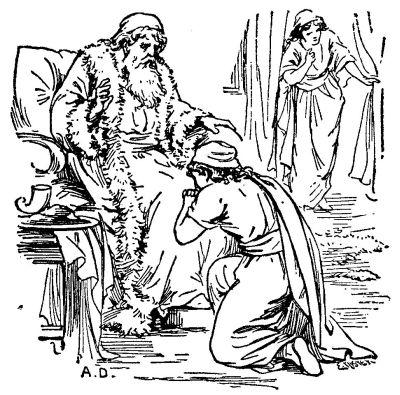
And Jacob went up close to Isaac’s bed, and Isaac felt of his face, and his neck, and his hands, and he said:
“May nations bow down to you.”
“The voice sounds like Jacob, but the hands are the hands of Esau. Are you really my son Esau?”
And Jacob told a lie to his father, and said, “I am.”
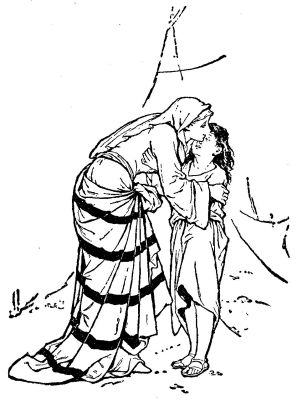
Then the old man ate the food that Jacob had brought to him; and he kissed Jacob, believing him to be Esau; and he gave him the blessing, saying to him:
“May God give you the dew of heaven, and the richness of the earth, and plenty of grain and wine. May nations bow down to you and peoples become your servants. May you be the master over your brother, and may your family and descendants that shall come from you rule over his family and his descendants. Blessed be those that bless you, and cursed be those that curse you.”
Just as soon as Jacob had received the blessing he rose up and hastened away. He had scarcely gone out, when Esau came in from hunting, with the dish of food that he had cooked. And he said:
“Let my father sit up and eat the food that I have brought, and give me the blessing.”
And Isaac said, “Why, who are you?”
Esau answered, “I am your son; your oldest son, Esau.”
And Isaac trembled, and said, “Who then is the one that came in and brought to me food? and I have eaten his food and have blessed him; yes, and he shall be blessed.”
When Esau heard this, he knew that he had been cheated; and he cried aloud, with a bitter cry, “O, my father, my brother has taken away my blessing, just as he took away my birthright! But cannot you give me another blessing, too? Have you given everything to my brother?”
And Isaac told him all that he had said to Jacob, making him the ruler over his brother.
But Esau begged for another blessing; and Isaac said:
“My son, your dwelling shall be of the riches of the earth and of the dew of heaven. You shall live by your sword and your descendants shall serve his descendants. But in time to come they shall break loose and shall shake off the yoke of your brother’s rule and shall be free.”
All this came to pass many years afterward. The people who came from Esau lived in a land called Edom, on the south of the land of Israel, where Jacob’s descendants lived. And after a time the Israelites became rulers over the Edomites; and later still, the Edomites made themselves free from the Israelites. But all this took place hundreds of years afterward.
It was better that Jacob’s descendants, those who came after him, should have the blessing, than that Esau’s people should have it; for Jacob’s people worshipped God, and Esau’s people walked in the way of the idols and became wicked.
Joseph God reaffirmed His covenant with Jacob (Israel), and Jacob fathered twelve sons (Genesis 35:22-26). One of Jacob’s sons, Joseph, was chosen by God to be a preserver of the family of Jacob (Genesis 45:5).
Joseph Sold into Egypt
Joseph was sensitive to the Lord and a person of high moral character. His brothers became jealous of him when they saw that their father loved him above the other sons. Later, Joseph had some dreams which suggested that his brothers and mother and father would bow down to him. Predictably, their hatred for him increased.
One day, when Jacob sent Joseph to check on his brothers, they saw an opportunity to rid themselves of him forever. After casting him into a pit, they sold him to some Midianite merchants for twenty pieces of silver. The Midianites took him into Egypt, where they sold him to Potiphar, who was one of Pharaoh’s officers and a captain of the guard.
Jacob Deceived
After having disposed of Joseph, his brothers took a goat and killed it, dipping Joseph’s coat in the blood. They brought the coat to their father and asked, “Is this thy son’s coat?” “It is my son’s coat,” Jacob declared. “An evil beast hath devoured him. Joseph is without doubt rent in pieces. In his despair, Jacob refused to be comforted and mourned with tears for Joseph (Genesis 37:31-35).
Meanwhile, Joseph, being the conscientious, godly man that he was did his very best as a servant to Potiphar. He had every reason for bitterness and an excuse to be sullen. Instead he served his master diligently. Potiphar saw that God was with him and that everything Joseph did prospered. Finally, Potiphar made Joseph the overseer of all that he had. Potiphar concerned himself only with the food that was set before him to eat Joseph took care of everything.
Joseph’s Temptation
Joseph’s trials were not over, however. Potiphar’s wife became infatuated with Joseph and daily tempted him to commit immorality with her. He steadfastly refused her advances, until one day, as he fled from her presence. she grasped part of his clothing. Seeing that she was rebuffed, she contrived to blame Joseph with trying to assault her, using his clothing as proof. Potiphar, his wrath kindled, put Joseph in the prison where the king’s prisoners were kept.
Joseph in Prison
Even in the prison, Joseph kept the right attitude. He refused to be bitter and looked for opportunities to serve God. The keeper of the prison committed to Joseph’s hand all the prisoners and the complete management of the prison. Even in prison, God blessed Joseph and prepared the way for the fulfillment of His plan.
In the prison were two men who had served Pharaoh as the chief of the butlers and the chief of the bakers. They both had dreams, which Joseph Interpreted. True to Joseph’s interpretation, the butler was restored to his office, while the baker was hanged.
Joseph’s Elevation under Pharaoh
At the end of two years, Pharaoh had a dream that which none of his men could interpret. Then the butler remembered Joseph and suggested to Pharaoh that Joseph might be able to interpret Pharaoh’s dream. Pharaoh called for Joseph, who told him the significance of his dream: Egypt would experience seven years of plenty followed by seven years of famine.
Pharaoh promoted Joseph to the position of second most powerful ruler in all of Egypt and gave to this thirty-year-old Hebrew the responsibility of storing up food during the seven years of plenty in preparation for the drastic famine that was to follow (Genesis 41:46).
Joseph’s Brothers Come to Egypt
When the famine came to Egypt, it also affected the land of Canaan, where Joseph’s family still lived. When Jacob heard that Egypt had grain, he sent his sons-all except the youngest son, Benjamin-to buy some. The person in charge of selling grain was Joseph, and just as he had dreamed many years previously, his brothers came before him bowing down to the earth!
Recognizing them, Joseph disguised himself and spoke roughly, trying to find out if his father was still alive and attempting to devise a plan to bring his father to Egypt. He accused his brothers of being spies. When they denied the charges and said that they were all the sons of one man, Joseph took one of them, Simeon, and bound him until the others could return with their youngest brother, Benjamin, as proof of their innocence.
Jacob was greatly troubled and refused to send Benjamin for fear that he too would never return. But when the famine grew worse, the family had no choice but to comply with Joseph’s instructions. Judah took personal responsibility for Benjamin, and the brothers traveled to Egypt once again.
This time, Joseph devised a plan to keep Benjamin, which involved secretly returning the brothers’ money in the mouth of their sacks and putting his personal silver cup in the sack of Benjamin. When the brothers were stopped by Joseph’s servant and returned to him, Joseph could no longer refrain from revealing to them exactly who he was. He wept aloud, and said, “I am Joseph; doth my father yet live?”
Joseph Forgives His Brothers
His brothers, troubled and surprised, could not answer. Then Joseph, who had every reason to be bitter, harsh, and unforgiving, said, “Now therefore be not grieved, nor angry with yourselves, that ye sold me hither: for God did send me before you to preserve life” (Genesis 45:5).
Long before the New Testament was ever written, Joseph had learned one of the most valuable lessons that we can ever learn: “And we know that all things work together for good to them that love God, to them who are the called according to his purpose’ (Romans 8:28). As he was to say later, “Ye thought evil against me; but God meant it unto good, to bring to pass, as it is this day, to save much people alive’ (Genesis 50:20).
Jacob and His Family Settle in Goshen
Joseph supplied his brothers with wagons and equipment. They returned to Canaan and brought their father, Jacob, back to Egypt to settle in the land of Goshen, the choice land of all Egypt. Here they enjoyed many years of blessings, peace, and plenty while Joseph was alive.
Israel in Egyptian Bondage
After Joseph’s death, a new king arose in Egypt who did not know Joseph. This pharaoh began to be fearful of the Israelites, for they were numerous and strong. He was afraid that they would side with his enemies to help them overthrow Egypt in war. In his fear, the new pharaoh set taskmasters over the Israelites and made slaves of them. But the more the Egyptians afflicted the Israelites (Hebrews), the more the Israelites multiplied and grew. God was preparing them for the great exodus from Egypt back to their promised land of Canaan.
Jacob and Esau It was through Isaac that God had promised to raise up descendants to Abraham, Isaac’s wife, Rebekah, had two sons, Esau and Jacob. Like Cain and Abel, these two sons were quite different. The Lord had said to Rebekah, “Two nations are in thy womb, and two manner of people shall be separated from thy bowels; and the one people shall be stronger than the other people and the elder shall serve the younger” (Genesis 25:23). Esau the elder son was a cunning hunter, a man of the field, while Jacob was a man of the plains who lived in tents.
Esau Sells His Birthright
Jacob, the younger of the two, was making stew one day when Esau came in from the field. Esau was hungry and said. “Feed me, I pray thee with that same red pottage for I am faint” (Genesis 25:30). Esau appears to have been a who was concerned with fleshly, physical things. He was guided by his senses. When he was hungry satisfying his appetite was the most important thing in the world to him.
Jacob, on the other hand, had an appreciation for spiritual things, although he was by no means perfect. In response to Esau’s request, Jacob demanded, “Sell me this day thy birthright” (Genesis 25:31).The birthright was the privilege given to the oldest son. It gave him preferred treatment in the family, including first claim on the inheritance. Esau was so oriented to the present, rather than the future, that he answered, “Behold, I am at the point to die and what profit shall this birthright do to me?” (Genesis 25:32).
“Swear to me this day.” Jacob insisted, and Esau sold his birthright to Jacob for bread and stew of lentils. Then Esau arose and went his way, having sold out a most valuable blessing for a temporary, fleshly satisfaction (Genesis 25:33-34).
How sad it is that when confronted with a choice of preparing for the future eternity or receiving a small measure of satisfaction right now, many will choose the present. Such people are looking at things that are seen and not things that are eternal (II Corinthians 4:18).
Jacob Steals the Blessing
The dramatic scene of Jacob gaining Esau’s birthright was not their last encounter over family blessings. When Isaac was old and his vision dim so that he could not see, he called Esau, his favorite of the two boys, and asked Esau to go into the field with his bow and arrows for some venison. Isaac enjoyed the meat and wanted to eat some prior to bestowing upon Esau the blessing due to the firstborn.
Rebekah heard Isaac’s instructions to Esau, and she instructed Jacob, who was her favorite son, to bring her two kids of the goats. She prepared the meat that Isaac liked and disguised Jacob by putting the goat skins on Jacob’s hands and neck and giving him Esau’s clothing to wear.
Then, pretending to be Esau, Jacob went into his blind father and presented Isaac with the meat. Isaac was surprised that Esau had returned so soon with the meat, and he was a bit skeptical. He called Jacob near in order to feel of him and said, “The voice is Jacob’s voice, but the hands are the hands of Esau” (Genesis 27:22). But Isaac was unable to distinguish that it was Jacob, and he gave Jacob Esau’s blessing.
Shortly thereafter, just as Jacob had left his father, Esau came in. Isaac was very disturbed that he had been deceived. Esau cried with a bitter cry, but the blessing could not be removed from Jacob. Esau hated Jacob and planned to kill him in revenge. Rebekah heard of his plans and urged Jacob to flee to Haran, where her brother, Laban, lived.
Jacob’s Encounter with God (Genesis 28:10-22)
As Jacob traveled, he came to a place called Luz, where he prepared to stay the night. While he slept, he dreamed of a ladder set up on the earth with its top reaching heaven. The angels of God were going up and down on the ladder. Above the ladder stood the Lord, who said, “I am the LORD God of Abraham thy father, and the God of Isaac: the land whereon thou liest, to thee will I give it, and to thy seed; and thy seed shall be as the dust of the earth, and thou shalt spread abroad to the west, and to the east, and to the north, and to the south: and in thee and in thy seed shall all the families of the earth be blessed” (Genesis 28:13-14).
Jacob awoke and said, “Surely the LORD is in this place; and I knew it not. Being afraid, he continued, “How dreadful is this place! this is none other but the house of God, and this is the gate of heaven” (Genesis 28:16-17).
Jacob Remembers the House of the Lord
Early in the morning, Jacob rose and set up a pillar from the stones he had used for pillows. He poured oil on the pillar and called the name of the place Bethel, which means “house of God.” Jacob vowed, “If God will be with me, and will keep me in this way that I go, and will give me bread to eat, and raiment to put on, so that I come again to my father’s house in peace; then shall the LORD be my God: and this stone, which I have set for a pillar, shall be God’s house and of all that thou shalt give me I will surely give the tenth unto thee” (Genesis 28:20-22).
Thus, God renewed with Jacob the covenant that He had made with his father, Isaac, and his grandfather, Abraham.
Jacob Wrestles with the Angel of the Lord
Twenty years later, after Jacob had spent time with his Uncle Laban and had begun his family, he was on his way back to see his aged father. He heard that Esau was coming to meet him, and fear rose up in his heart as he remembered his brother’s pledge to kill him. Sending his family on, Jacob stayed behind. An angel of the Lord wrestled with him until daybreak. When the angel saw that Jacob was not going to release him, he touched the hollow of Jacob’s thigh, permanently shrinking the sinew and causing him to limp. The angel said, “Let me go, for the day breaketh.” Jacob answered, “I will not let thee go, except thou bless me.” The angel asked, “What is thy name?” “Jacob” “Thy name shall be called no more Jacob,” said the angel, “but Israel: for as a prince hast thou power with God and with men, and hast prevailed” (Genesis 32:24-28).
Because of his persistence, Jacob received the blessing that he desired and left that place a different man. His former name, Jacob, meant “supplanter” and had the connotation of trickery and deceit. His new name, Israel, meant “he who strives with God.” There was also a physical difference: every time he took a step, the limp reminded him of his encounter with the angel of the Lord.
Certainly, when a person comes into the presence of God and determines to receive God’s best, a miraculous change takes place. He is never the same!
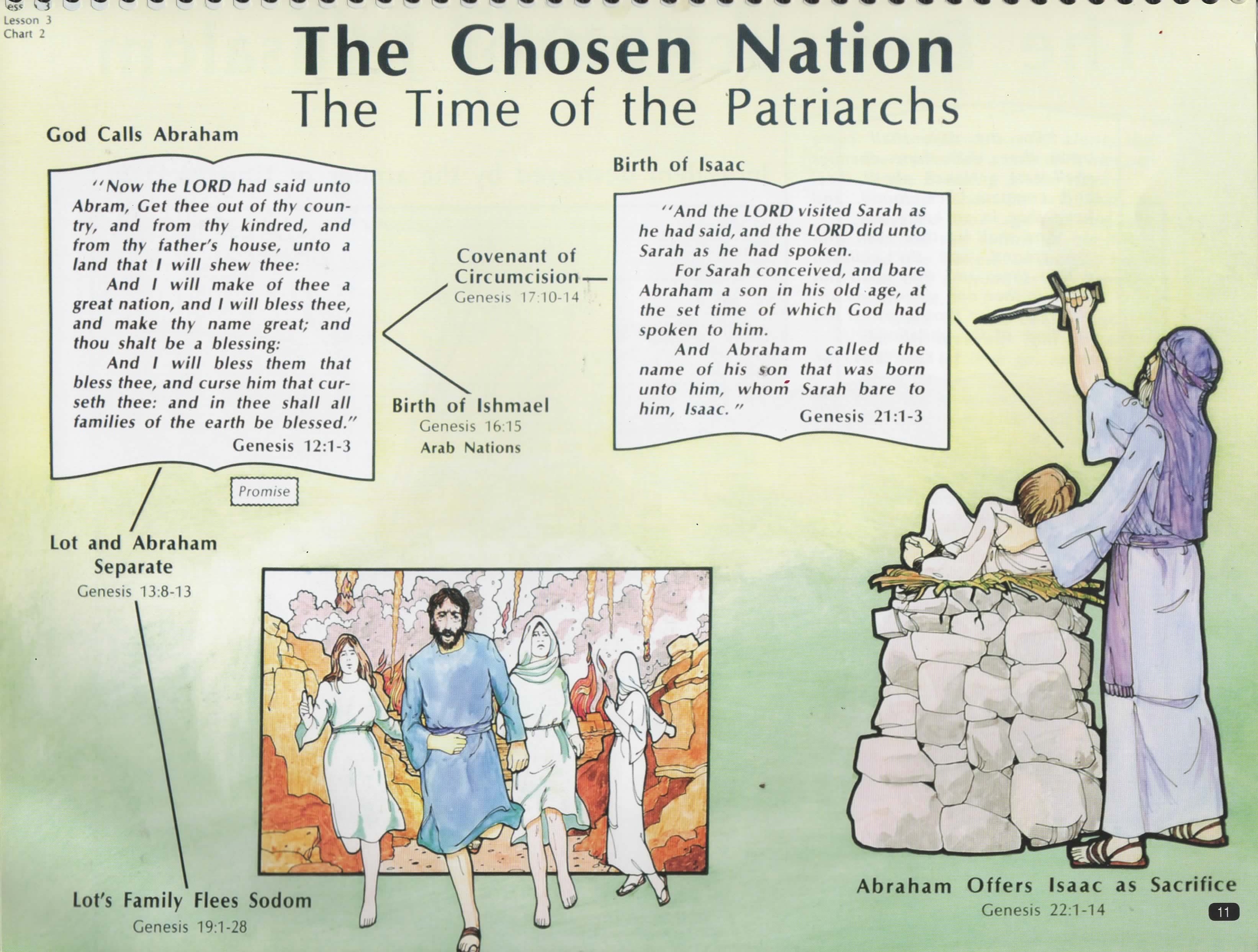
As in the days of Noah, God looked upon the earth and found a man with whom He could make a covenant. This man had come from Ur of the Chaldees with his father, Terah. The man’s name was Abram. The Lord told Abram to leave his country; his kindred, and his father’s house to journey to a land that God would show him. The Lord promised, “I will make of thee a great nation, and I will bless thee, and make thy name great and thou shalt be a blessing; and I will bless them that bless thee, and curse him that curseth thee: and in thee shall all families of the earth be blessed” (Genesis 12:2-3).
Abram obeyed the Lord and left his home in Haran when he was seventy-five years old. He took his wife, Sarai, and his nephew, Lot, and they traveled to the land of Canaan. When the Lord called Abram, he had no children. Part of God’s promise was that He would make of Abram a great nation. This promise was subsequently fulfilled, as seen in Deuteronomy 4:6; 1 Kings 3:8-9; and Joshua 21:43-45.
The Arab Nations
The days passed, however, without any physical sign that God was keeping His promise. Finally, as human beings often do, Abram and Sarai decided to take matters into their own hands. Sarai, who had an Egyptian handmaid named Hagar, said unto Abram, “Behold now, the LORD hath restrained me from bearing I pray thee, go in unto my maid, it may be that I may obtain children by her (Genesis 16:2). Abram acted on his wife’s counsel, which was according to the custom of the time and Ishmael was born of this union.
By trying to help God out because they could see no visible sign of His promise coming to pass, Abram and Sarai brought many sorrows to their family, Ishmael and their son, Isaac, would have conflicts. The seeds were sown for conflict between the Arabs and the Jews, nations who sprang from these two men.
God’s Covenant with Abraham
When Abram was ninety-nine years old, the Lord appeared to him and said, “I am the Almighty God; walk before me, and be thou perfect. And I will make my covenant between me and thee and will multiply thee exceedingly” (Genesis 17:1-2). As Abram fell on his face before God, the Lord continued to talk with him. God renewed His promise to make him the father of many nations and changed his name to Abraham. Abram means “high father: Abraham means “father of a multitude” He also changed Sarai’s name to Sarah. Sarai means “princess”; Sarah means “my princess” Then God gave a token of His covenant. He said. “This is my covenant, which ye shall keep between me and you and thy seed after thee: every man child among you shall be circumcised. And ye shall circumcise the flesh of your foreskin and it shall be a token betwixt me and you” (Genesis 1710-11). Abraham took his son Ishmael with all the male members of his household, and they were all circumcised the same day in obedience to God’s Word.
Separation
Strife developed between the herdsmen of Abraham’s cattle and those of Lot. The problem was that both Abraham and Lot were very rich, with many flocks herds, and tents, and the land simply was not able to bear them. Abraham said to Lot, “Let there be no strife, I pray thee, between me and thee, and between my herdsmen and thy herdsmen; for we be brethren. Is not the whole land before thee! separate thyself, I pray thee, from me: if thou wilt take the left hand, then i will go to the right; or if thou depart to the right hand, then I will go to the left” (Genesis 13:8-9)
Lot’s Choice
Abraham was very gracious in allowing his nephew to make the first choice. Lot observed the well-watered plain of Jordan and chose that for himself. He then journeyed east, separating himself from Abraham and pitching his tent in the direction of Sodom. This proved to be a mistake for Lot, for the people of Sodom were wicked and terrible sinners in the Lord’s eyes (Genesis 13:13). It is always dangerous to go in the direction of sin.
Judgment against Sin
God observed the mounting wickedness in Sodom and Gomorrah, where Abraham’s nephew, Lot, lived with his family. The Lord appeared to Abraham and informed him that the cities would be destroyed. Abraham, knowing that his relatives lived in the doomed city of Sodom, sought the Lord to spare the city. He agreed to do so, if only ten righteous people could be found. But sadly, Sodom and Gomorrah were so wicked that not even ten righteous people could be located (Genesis 18).
Angels of Mercy
The angels visited Lot and removed him, his wife, and two unmarried daughters from the city. God sent angels of mercy to Sodom that day. The prayers of Abraham did not save the cities, but they did save Lot. Lot was blessed to have an uncle who stayed close to the Lord. But Lot’s grievous error in moving into this wicked city took its toll. He had to leave behind daughters who had married men of Sodom. In disobedience to the angel’s commands his wife looked back as they were fleeing and turned into a pillar of salt. However, Lot and his two unmarried daughters fled for their lives.
Because of the great wickedness of these cities, God destroyed them with fire and brimstone. Today, they have been wiped off the face of the earth. Some Bible students believe the destruction of these cities may have been connected with the formation of the Dead Sea.
The judgment of God upon Sodom and Gomorrah stands forever as a solemn warning to any who would violate God’s Word. “And turning the cities of Sodom and Gomorrah into ashes condemned them with an overthrow making them an ensample unto those that after should live ungodly” (1 Peter 2:6).
As one author noted, “The teachings of Christ are not unlike a river that flows for a long time smoothly and noiselessly between its banks and then suddenly takes the tremendous plunge of the cataract. In the utterance of Jesus about the coming of His kingdom we have the cataract note of His preaching. The same lips which pronounced the Beatitudes and spake the quiet parables of growth and development tell of the coming of His kingdom and the great and terrible day of the Lord.” Judgment is coming! It is time to prepare!
Isaac, the Promised Son
At last, in God’s time, Sarah conceived and gave birth to a son. Abraham named the child Isaac and circumcised him when he was eight days old. Abraham was one hundred years old when Isaac was born. God had kept His promise, but He was not yet finished trying Abraham’s faith.
Abraham’s Faith Tested
God said to Abraham, “Take now they son, thine only son Isaac, whom thou lovest, and get thee into the land of Moriah; and offer him there for a burnt offering upon one of the mountains which I will tell thee of (Genesis 22:2). What thoughts must have gone through Abraham’s mind! God had promised him a son. The promise had taken many years to be fulfilled, and now God commanded him to sacrifice that son! Abraham was a man of great faith in God, however. He knew that Isaac was the promised son that God had given him. He believed that through Isaac God would raise up countless offspring as He had promised. He knew that, even if he offered Isaac to God, God was able to raise him up from the dead in order to keep His Word.
As Hebrews 11:17-19 says, “By faith Abraham, when he was tried, offered up Isaac: and he that received the promises offered up his only begotten son, of whom it was said, That in Isaac shall thy seed be called: accounting that God was able to raise him up, even from the dead; from whence also he received him in a figure”
Abraham’s Obedience
“And Abraham rose up early in the morning, and saddled his ass, and took two of his young men with him, and Isaac his son, and clave the wood for the burnt offering, and rose up, and went unto the place of which God had told him” (Genesis 22:3). On the third day of their journey, Abraham saw in the distance the mountain upon which God had commanded that he offer Isaac. He told the servants to stay behind while he and Isaac went to worship.
Abraham’s faith is clear in the statement that he made to his servants: “I and the lad will go yonder and worship, and come again to you” (Genesis 22:5). He believed that God had a divine purpose in the task that he hadbeen asked to perform.
Abraham’s Continuing Faith
As Abraham and Isaac traveled toward their destination, Isaac noticed that they had everything but the sacrifice. He asked, “Behold the fire and the wood: but where is the lamb for a burnt offering!” Abraham responded with statement of eternal significance: “My son, God will provide himself a lamb for a burnt offering” (Genesis 22:7-8).
After they had prepared the altar, Abraham bound his son and placed him on the altar. Then Abraham stretched forth his hand with the knife to slay his son. At that moment, the angel of the Lord called, “Abraham, Abraham!” “Here am I,” he answered. “Lay not thine hand upon the lad,” said the angel, “neither do thou anything unto him: for now I know that thou fearest God, seeing thou hast not withheld thy son, thine only son from me” (Genesis 22:12). Abraham’s faith had been tested by what was dear to him, and he came through the trial victoriously. After Abraham heard the voice of the angel, he turned and saw a ram caught by its horns in the thicket nearby. God had provided a sacrifice. Abraham’s statement was prophetic in that many years later Jesus Christ, who was God manifest in the flesh, came as the Lamb of God to take away the sin of the world John 1:29; 1 Timothy 3:16). What a marvelous thing is faith!
In the history of our country men traveled by horseback and had to cross rivers swollen by the rains. If they looked at the swirling waters around them, they would become dizzy and possibly fall from the saddle and be swept away. But if they fixed their eye upon the other bank, a tree, a large rock, or a hillside, they would rise safely through.
Similarly, in the storms of life, faith is the balance that gives calmness and victory. It is important to fix our eyes, not upon the shifting scene around us, but upon the solid Rock, Jesus Christ.
On the 6th day of Creation, God created Adam and Eve. They were placed in the Garden of Eden to tend and care for the garden and the animals. They both were innocent. Sin had not yet entered the world.
God had planted a wonderful garden. It was full of all kinds of good plants that produced good things to eat. He also put two interesting trees in the garden. We can read about this in Genesis 2:9 where it says, “And out of the ground made the Lord God to grow every tree that is pleasant to the sight, and good for food; the tree of life also in the midst of the garden, and the tree of knowledge of good and evil.”
There were also rivers in the garden. Genesis 2: 10-14: And a river went out of Eden to water the garden; and from thence it was parted, and became into four heads. The name of the first is Pison: that is it which compasseth the whole land of Havilah, where there is gold; And the gold of that land is good: there is bdellium and the onyx stone. And the name of the second river is Gihon: the same is it that compasseth the whole land of Ethiopia. And the name of the third river is Hiddekel: that is it which goeth toward the east of Assyria. And the fourth river is Euphrates.
God did not leave Adam and Eve without any rules. At this time, they only had one rule. It was a very simple yet profound rule. This rule can be found in Genesis 2:16-17. And the Lord God commanded the man, saying, Of every tree of the garden thou mayest freely eat: But of the tree of the knowledge of good and evil, thou shalt not eat of it: for in the day that thou eatest thereof thou shalt surely die.
God also gave man free will. He did not want man to be like a robot. He wanted to have joyful fellowship. God gave man the power to choice to obey him or to choice disobedience.








 articlesforchristians