A place to grow your relationship with God

Posts tagged ‘history’

Marbles: From Ancient Play to Modern Collectibles and a Recipe for how to make Marbles

Glass Marbles

Ancient Origins of Marbles

  • Marbles have been found in archaeological sites worldwide, including the Indus Valley (Cira 2500 BC), ancient Egypt, Mesopotamia, Greece, and Rome, indicating their long- standing presence as a source of play.
  • Early marbles were made from stone, clay, nut, and fruit pits, polish or fired to create small spheres.
  • Roman children often played game with nuts, and references to this game appear in literature such as Ovid’s poem ‘nux”. Bas-reliefs from Roman times Depict children engaged in marbles game, and Early glass marbles have been found in Europe, though some may have originated as jewelry.

Medieval and Early Modern Europe

  • During the Middle Ages, marbles became popular in Europe. In Germany around 1503, authorities regulated marble games to specific areas, and marbles produced from marble, alabaster, agate, and limestone were polished for play.
  • Germany later became the center of marble craftsmanship, with water-powered stone mills turning raw marble and alabaster into perfectly shaped spheres by the 17th century Glass marbles emerged in Venice, Italy, and by the mid-19th century, German glassmakers invented marble scissors, allowing precise cutting of molten glass into uniform spheres.

Introduction to America and Industrialization

  • Marbles were brought to the United States by early settlers, and the first American mass-produced clay marbles were made by Samuel C. Dyke in Akron, Ohio, in the 1880s.
  • In the early 1900s, Martin Frederick Christensen invented machinery to produce glass marbles efficiently in Akron, marking the beginning of largescale U.S. glass marble production. His machinery could produce up to 10,000 marbles per day, creating more uniform and affordable marbles
  • The Akro Agate Company, founded in 1911 in West Virginia, quickly became a dominant manufacturer, controlling much of the U.S. market by the 1920s.

Golden Age and Global Expansion

  • The 1920s and 1930s are known as the “Golden Age of Marbles,” with marble games thriving as a popular children’s pastime. Companies like Peltier Glass, Christensen Agate, and Akro Agate produced colorful, decorative, and collectible marbles, including picture marbles showcasing comic-strip characters.
  • Post World 2, inexpensive Japanese cat’s eye marbles flooded Global markets, overtaking American production.

Modern Marbles and Collecting

  • Today, marbles are both games and collectibles, with art glass marbles created by artisans worldwide Machine-made marbles continue to be produced predominantly in Mexico and China for global distribution.
  • The British and World Marbles Championship in Tinsley Green, England, is still held annually since 1932, highlighting the enduring legacy of marble games.

Things to do with Marbles

Here are 25 Games with marbles that you can play. There are others game with Marbles like Chinese checkers

  • Classic Marbles [1]
  • Bullseye Marbles[2]
  • Mini Marble Golf [3]
  • Booby Trap [4]
  • Off The Wall [5]
  • What Decade? [6]
  • Color Match [7]
  • Bounce Eye [8]
  • The Conqueror [9]
  • Marble Obstacle Racing[10]
  • Marble Tilt [11]
  • Eggs in a Basket [12]
  • Thin Ice [13]
  • Marble Box [14]
  • Marble Skee Ball [15]
  • Marble Racetrack [16]
  • Pool Noodle Marble Race [17]
  • Newton’s Cradle [18]
  • Marble Cup [19]
  • Valentins Marble [20]
  • Guess How Many [21]
  • Marble Roll [22]
  • Pacman Marble [23]
  • Marble Painting [24]
  • Floating Marbles [25]
Clay marbles painted

Easy Homemade Marbles:

You can make homemade marbles using 2 cups of flour, 1 cup of salt, and 1 cup of water, adjusting slightly for texture as needed. Basic Ingredients and Ratio For a standard salt dough or homemade clay to form marbles:

Ingredients for a large batch (for large groups)

  • Oven
  • Wax paper
  • Baking sheet,
  • 2 1 teaspoons [To form the shooter]
  • 2 1/4 teaspoons [ To form the small Marbles]
  • 2 cups Flour
  • 1 cup Salt
  • 1 cup Water
  • Paints [for decoration]
  • Glitter [for decoration]

Ingredients for a small batch (for 1 person)

  • Oven
  • Wax paper
  • Baking sheet,
  • 2 1 teaspoons [To form the shooter]
  • 2 1/4 teaspoons [To form the small Marbles]
  • 1/2 cup Flour
  • 1/4 cup Salt
  • 1/4 cup Water
  • Paints [for decoration]
  • Glitter [for decoration]

What to do

  1. Cover: your workspace with wax paper.
  2. Combine Dry Ingredients: In a mixing bowl, mix the flour and salt thoroughly.
  3. Add Water: Gradually: Slowly pour in the water while stirring. Mix until a rough dough begins to form
  4. Knead the Dough: Place the dough on a lightly floured surface and knead for 5–10 minutes until it is smooth and pliable.
  5. If the dough: feels dry, add a tablespoon of water at a time; if too sticky, sprinkle in a little flour
  6. Form Marbles: Take small portions and roll them between your palms to form round marbles.
  7. To Ensure: they are smooth and even get two 1/4 teaspoons, put the small ball in them, and push them together. Then roll the ball around one more time in the palm of your hand. Do the same thing with two 1/2 teaspoons to make the shooter.
  8. Drying/Curing: You can either air dry the marbles for 24–48 hours or bake them in a low oven at around 200°F (93°C) for 2–3 hours, turning occasionally to prevent cracking
  9. Time to decoration: Decoration it will what you like .

Tips for Best Results

  • Use all-purpose flour for optimal texture; avoid self-rising flour.
  • Kneading well ensures a smooth, workable dough that holds its shape.
  • For firmer marbles, slightly increase the flour; for softer or more pliable dough, increase water slightly.
  • Store leftover dough in an airtight container in the fridge for a few days.
  • Optionally, you can paint or glaze baked marbles once fully hardened for decoration
The Story of Mankind: Feudalism

The following, then, is the state of Europe in the year one thousand, when most people were so unhappy that they welcomed the prophecy foretelling the approaching end of the world and rushed to the monasteries, that the Day of Judgement might find them engaged upon devout duties.

At an unknown date, the Germanic tribes had left their old home in Asia and had moved westward into Europe. By sheer pressure of numbers they had forced their way into the Roman Empire. They had destroyed the great western empire, but the eastern part, being off the main route of the great migrations, had managed to survive and feebly continued the traditions of Rome’s ancient glory.

During the days of disorder which had followed, (the true “dark ages” of history, the sixth and seventh centuries of our era,) the German tribes had been persuaded to accept the Christian religion and had recognized the Bishop of Rome as the Pope or spiritual head of the world. In the ninth century, the organizing genius of Charlemagne had revived the Roman Empire and had united the greater part of western Europe into a single state. During the tenth century this empire had gone to pieces. The western part had become a separate kingdom, France. The eastern half was known as the Holy Roman Empire of the German nation, and the rulers of this federation of states then pretended that they were the direct heirs of Caesar and Augustus.

Unfortunately the power of the kings of France did not stretch beyond the moat of their royal residence, while the Holy Roman Emperor was openly defied by his powerful subjects whenever it suited their fancy or their profit.

To increase the misery of the masses of the people, the triangle of western Europe was forever exposed to attacks from three sides. On the south lived the ever-dangerous Muslims. The western coast was ravaged by the Northmen. The eastern frontier (defenseless except for the short stretch of the Carpathian Mountains) was at the mercy of hordes of Huns, Hungarians, Slavs and Tartars.

The peace of Rome was a thing of the remote past, a dream of the “Good Old Days” that were gone forever. It was a question of “fight or die,” and quite naturally people preferred to fight. Forced by circumstances, Europe became an armed camp and there was a demand for strong leadership. Both King and Emperor were far away. The frontiersmen (and most of Europe in the year 1000 was “frontier”) must help themselves. They willingly submitted to the representatives of the king who were sent to administer the outlying districts, provided they could protect them against their enemies.

Soon central Europe was dotted with small principalities, each one ruled by a duke or a count or a baron or a bishop, as the case might be, and organized as a fighting unit. These dukes and counts and barons had sworn to be faithful to the king who had given them their “feudum” (hence our word “feudal,”) in return for their loyal services and a certain amount of taxes. But travel in those days was slow and the means of communication were exceedingly poor. The royal or imperial administrators therefore enjoyed great independence, and within the boundaries of their own province they assumed most of the rights which in truth belonged to the king.

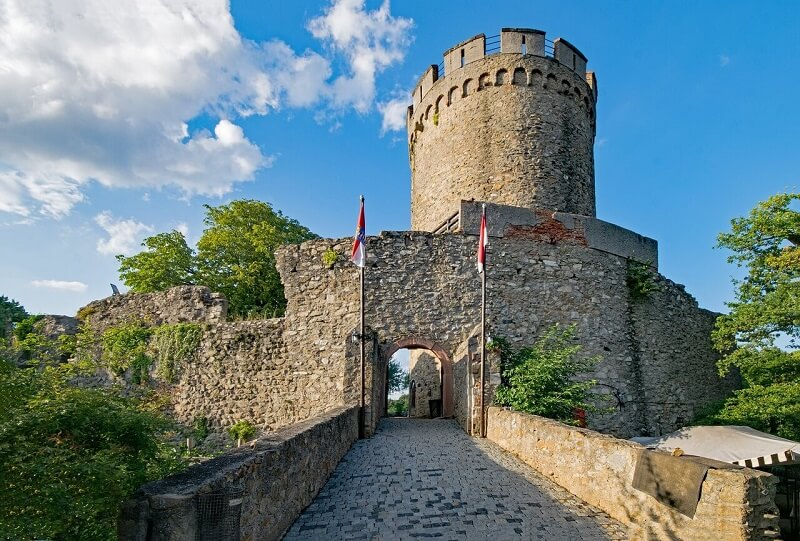
But you would make a mistake if you supposed that the people of the eleventh century objected to this form of government. They supported Feudalism because it was a very practical and necessary institution. Their Lord and Master usually lived in a big stone house erected on the top of a steep rock or built between deep moats, but within sight of their subjects. In case of danger the subjects found shelter behind the walls of the baronial stronghold. That is why they tried to live as near the castle as possible and it accounts for the many European cities which began their career around a feudal fortress.

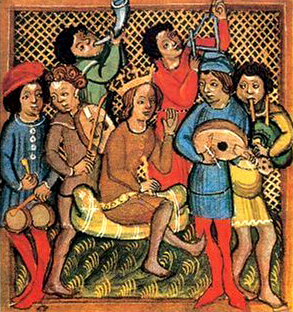
But the knight of the early middle ages was much more than a professional soldier. He was the civil servant of that day. He was the judge of his community and he was the chief of police. He caught the highwaymen and protected the wandering peddlers who were the merchants of the eleventh century. He looked after the dikes so that the countryside should not be flooded (just as the first noblemen had done in the valley of the Nile four thousand years before). He encouraged the troubadours who wandered from place to place telling the stories of the ancient heroes who had fought in the great wars of the migrations. Besides, he protected the churches and the monasteries within his territory, and although he could neither read nor write, (it was considered unmanly to know such things,) he employed a number of priests who kept his accounts and who registered the marriages and the births and the deaths which occurred within the baronial or ducal domains.

In the fifteenth century the kings once more became strong enough to exercise those powers which belonged to them because they were “anointed of God.” Then the feudal knights lost their former independence. Reduced to the rank of country squires, they no longer filled a need and soon they became a nuisance. But Europe would have perished without the “feudal system” of the dark ages. There were many bad knights as there are many bad people today. But generally speaking, the rough-fisted barons of the twelfth and thirteenth century were hard-working administrators who rendered a most useful service to the cause of progress. During that era the noble torch of learning and art which had illuminated the world of the Egyptians and the Greeks and the Romans was burning very low. Without the knights and their good friends, the monks, civilization would have been extinguished entirely, and the human race would have been forced to begin once more where the caveman had left off.

Evidence of the Ice Age in the Bible: Key Verses

Is there evidence of a possible ice age in the bible? Yes! Look at these verses. Job lived in a desert yet he is talking about ice.

  • Job 37:10
    • By the breath of God frost is given: and the breadth of the waters is straitened.
  • Job 6:16
    • Which are blackish by reason of the ice, and wherein the snow is hid:
  • Job 38:29
    • Out of whose womb came the ice? and the hoary frost of heaven, who hath gendered it?

Even in the book of Psalm it makes reference to ice.

  • Psalm 147:17
    • He casteth forth his ice like morsels: who can stand before his cold?

During the flood the waters covered the highest part of the earth.

  • Genesis 7:10-12 And it came to pass after seven days, that the waters of the flood were upon the earth.
    •  In the six hundredth year of Noah’s life, in the second month, the seventeenth day of the month, the same day were all the fountains of the great deep broken up, and the windows of heaven were opened.
    • And the rain was upon the earth forty days and forty nights.
  • Genesis 7:17-20
    • And the flood was forty days upon the earth; and the waters increased, and bare up the ark, and it was lift up above the earth.
    • And the waters prevailed, and were increased greatly upon the earth; and the ark went upon the face of the waters.
    • And the waters prevailed exceedingly upon the earth; and all the high hills, that were under the whole heaven, were covered.
    • Fifteen cubits upward did the waters prevail; and the mountains were covered.
      • A cubit is about 18 inches.
      • 15 cubits would be equal to about 270 inches or 22.5 feet.

All that water had to go somewhere. It makes sense that God would have simply cooled the earth and caused ice to form in many places such as the north and the south poles.

Timeline of Key Events in Early Christianity

This timeline goes from the Disciples gathering to meet in the upper room through the writing of the Book of Revelations. A few other historical events will be added as additional information. There are some secular resources that links to other websites.

All Dates are Approximate.

  • 30 AD Matthias Chosen by Lot
    • Acts 1:12
  • 30 AD The Holy Spirit Comes at Pentecost
  • 30 AD Peter Heals and Preaches Acts 3
  • 30 AD Peter and John Arrested and Released
    • Acts 4
  • 30 AD Believers Share All
    • Acts 4:32
  • 30 AD Deaths of Ananias and Sapphira
    • Acts 5
  • 30 AD Apostles Preach and Heal
    • Acts 5:11
  • 31 AD Stephen’s Speech, Stoning and Death Acts 6, 7
  • 31 AD Saul Persecutes the Church
    • Acts 8
  • 31 AD Philip in Samaria
    • Acts 8:3
  • 31 AD Simon the Sorcerer
    • Acts 8:9
  • 31 AD Philip and the Ethiopian
    • Acts 8:26
  • 32 AD Birth of the Emperor Otho in the city of Ferentium.
  • 34 AD Saul’s Conversion
    • Acts 9
  • 37 AD Death of Tiberius on the island of Capri. Caligula ascends to the throne.
  • 37 AD Birth of the historian Flavius Josephus, in Jerusalem. Birth of the Emperor Nero, in the town of Antium.
  • 37 AD Peter Preaches to the Gentiles
    • Acts 10, 11
  • 39 AD Caligula marches with the legions to Germania in a ‘mock’ campaign.
  • 39 AD Caligula bridges the Bay of Naples with boats from Baiae to Puteoli
  • 40 AD Caligula marches to the English Channel with the intention of invading Britain. Instead, the legions collect seashells, and he returns to Rome to celebrate a fabricated triumph.
  • 40 AD Birth of the Emperor Titus. Birth of the Roman general Gn. Julius Agricola, in the province of Gallia Narbonesis.
  • 40 AD Emperor Caligula orders that a statue of himself is to be erected in the temple at Jerusalem. Herod delays implementation long enough to prevent wide-spread revolt in Judaea.
  • 41 AD Caligula is assassinated by the Praetorian Guard. Claudius, supposedly found hiding in the curtains of the palace is hailed the new Caesar.
  • 41 AD The Roman writer Seneca is banished to the island of Corsica after he is accused of committing adultery with Claudius’s niece Livilla.
  • 41 AD Livia, the wife of Augustus, is finally deified by the senate.
  • 42 AD Barnabas Sent to Antioch
    • Acts 11:22
  • 42 AD Peter Led from Prison by the Angel
    • Acts 12
  • 43 AD Claudius begins the first large-scale Roman invasion of Britain, at first under the command of general A. Plautius.
  • 43 AD Lycia is annexed into the empire.
  • 44 AD Herod Agrippa Dies
    • Acts 12:20
  • 44 AD Judaea is annexed as a Roman province after the death of Herod Agrippa.
  • 45 AD James Writes his Letter
    • James 1 – 5
  • 46 AD The client kingdom of Thrace is annexed into the empire as a province.
  • 47 AD The Roman general Gn. Domitius Corbulo defeats the Frisii.
  • 47 AD Claudius celebrates the Secular Games, as Rome celebrates the 800th anniversary of the founding of the city.
  • 48 AD Paul’s First Missionary Journey
    • Acts 13
  • 48 AD Paul preaches in Pisidian Antioch
    • Acts 13:14
  • 48 AD Paul and Barnabas in Iconium
    • Acts 14
  • 48 AD Paul and Barnabas in Lystra and Derbe
    • Acts 14:8
  • 48 AD Paul and Barnabas Return to Syrian Antioch
    • Acts 14:21
  • 48 AD Return to Syrian Antioch
    • Acts 14:24
  • 48 AD The Council at Jerusalem
    • Acts 15
  • 49 AD Claudius passes an edict expelling all Jews from Rome.
    • Acts 18:1-3 mentions this edict.
  • 49 AD Paul’s Second Missionary Journey
    • Acts 15:36
  • 49 AD Paul in Philippi
    • Acts 16
  • 49 AD Paul in Thessalonica, Berea, Athens
    • Acts 17
  • 50 AD Claudius adopts Nero as heir.
  • 51 AD Birth of the Emperor Domitian in Rome.
  • 51 AD Paul in Corinth
    • Acts 18
  • 51 AD Paul Writes to the Thessalonians
    • 1 Thess. 1 – 5
  • 52 AD Paul Writes again to the Thessalonians
    • 2 Thess. 1 – 3
  • 54 AD Death and deification of Claudius. Nero ascends to the throne.
  • 54 AD Paul in Ephesus
    • Acts 19
  • 54 AD Paul Writes to the Corinthians
    • 1 Corinthians 1 – 16
  • 54 AD Paul Writes to the Galatians
    • Galatians 1 – 6
  • 56 AD Birth of the great Roman historian Tacitus, probably in Rome.
  • 56 – 57 AD Nero expels actors from Rome and dictates reforms of circuses and festivals.
  • 57 AD Paul in Macedonia and Greece
    • Acts 20
  • 57 AD Paul Writes to the Romans
    • Romans 1 – 16
  • 57 AD Paul Writes again to the Corinthians
    • 2 Corinthians 1 – 13
  • 58 AD The Roman general Gn. Domitius Corbulo conquers Armenia, after the capture of the capital Artaxata.
  • 59 AD Paul Returns to Jerusalem
    • Acts 21 – 23
  • 60 AD Paul imprisoned in Caesarea
    • Acts 24
  • 61 AD In BritainBoudicca, the queen of the Iceni tribe, leads a revolt against Roman occupation.
  • 62 AD Birth of the Roman historian Pliny the Younger in Italy.
  • 62 AD Suetonius Paullus defeats the Iceni revolt of Boudicca, who commits suicide.
  • 62 AD Lucius Caesennius Paetus in Armenia surrenders to invading Parthians after a defeat at Rhandeia. Gn. Domitius Corbulo returns and invades Parthia.
  • 62 AD Nero divorces his wife Octavia and marries his mistress Poppaea Sabina.
  • 62 AD The first signs of volcanic activity are recorded in Mt. Vesuvius, when an earthquake damages some nearby Campanian towns. (Much of which damage would never be repaired prior to its eruption some 18 years later.)
  • 62 AD Paul Before Festus
    • Acts 25
  • 62 AD Paul Before Agrippa
    • Acts 26
  • 62 AD Paul Sails for Rome
    • Acts 27
  • 62 AD The Shipwreck
    • Acts 27:13
  • 62 AD Paul Ashore at Malta
    • Acts 28
  • 62 AD Paul Preaches at Rome
    • Acts 28:11
  • 62 AD Paul Writes to the Ephesians
    • Ephesians 1 – 6
  • 62 AD Paul Writes to the Philippians
    • Philippians 1 – 4
  • 62 AD Paul Writes to the Colossians
    • Colossians 1 – 4
  • 62 AD Paul Writes to Philemon
    • Philemon 1
  • 63 AD Paul Writes to Timothy
  • 64 AD The Great Fire of Rome, speculated to have been started by Nero to make room for his palace. Christians Persecuted as scapegoats. Nero begins construction of the domus aurea (the Golden House).
  • 64 AD Peter Writes his First Letter
    • 1 Peter 1 – 5
  • 65 AD A plot against the Emperor Nero, known as the ‘Pisonian Conspiracy’, led by G. Calpurnius Piso. Nineteen men are executed or forced to commit suicide.
  • 65 AD Death of Nero’s wife, Poppaea, whom he kicked to death after an argument.
  • 66 AD Paul Writes to Titus
    • Titus 1 – 3
  • 67 AD The future Emperor Vespasian is sent to Judaea to put down a Jewish revolt.
  • 67 AD Nero enters the Olympic games and is named the winner of every he event he enters.
  • 67 AD Paul Writes Again to Timothy
    • 2 Timothy 1 – 4
  • 67 AD Peter Writes his Second Letter
    • 2 Peter 1 – 3
  • 67 AD Letter to the Hebrews
    • Hebrews 1 – 13
  • 67 AD Death of Paul the Apostle.
  • 68 AD Widespread revolt forces Nero to commit suicide, sparking civil war.
  • 68 – 69 AD Year of the four emperors.
  • 68 AD Jude Writes his Letter
    • Jude 1
  • 69 AD Death of the Emperor Galba. Executed by members of the Praetorian Guard.
  • 69 AD
  • The German legions proclaim Vitellius as emperor. He defeats rival Otho at Bedriacum and is victorious. Otho commits suicide.
  • 69 AD A fire breaks out on the Capitoline Hill, destroying much of Rome’s archives.
  • 69 AD Battle of Cremona, in which Emperor Vitellius is defeated (killed) by one of the armies of Vespasian.
  • 69 AD Birth of the Roman historian Suetonius, in Rome.
  • 69 AD Vespasian proclaimed emperor, and while consolidation would take another 6 months his reign marked the end of the civil wars.
  • 70 AD Titus, the son of Emperor Vespasian, captures Jerusalem after a four-month siege.
  • 71 – 74 AD Petilius Cerealis conquers the Brigantes in modern Yorkshire.
  • 73 AD The final Jewish stronghold, Masada, is captured after a long seige.
  • 73 AD The nomadic Sarmatians, the Alans, invade Parthia and Armenia.
  • 74 – 78 AD The governor of Britain, Julius Frontinus, defeats the Silures in modern South Wales.
  • 75 AD The construction of the Temple of Peace is completed. The temple of Jupiter Capitolinus is rebuilt.
  • 76 AD Parthian invasion of Syria is repulsed.
  • 76 AD Birth of the Emperor Hadrian, in Rome.
  • 77 – 84 AD Final conquest of Britain by Gn. Julius Agricola.
  • 77 AD The Roman writer Pliny the Elder completes his work Naturalis Historia (Natural History).
  • 79 AD Death of Vespasian. Ascension of his son, Titus.
  • 79 AD Mt. Vesuvius erupts burying the towns of Pompeii and Herculaneum. Pliny the Elder suffocates by getting too close in order to record the event.
  • 80 AD The Flavian Ampitheatre (Colosseum), begun by Vespasian, is completed by the Emperor Titus.
  • 80 AD Destruction of the Capitoline temple. The dedication of the Baths of Titus.
  • 81 AD Arch of Titus is constructed in Rome.
  • 81 AD Death of Titus, possibly at the hands of his brother Domitian. Domitian succeeds Titus as Emperor.
  • 81 AD The Roman general Gn. Julius Agricola campaigns in Caledonia.
  • 82 AD The Capitoline temple is restored and dedicated.
  • 83 AD Domitian campaigns in Germania.
  • 84 AD The Roman general Gn. Julius Agricola defeats the Caledonians under Calgacus at the battle of Mons Graupius.
  • 85 AD Invasion of Moesia by the Dacians under Decebalus.
  • 86 AD Emperor Antoninus Pius is born in the town of Lanuvium.
  • 87 AD Gn. Julius Agricola is recalled to Rome by Emperor Domitian, who seemed to be jealous of Agricola’s victories.
  • 88 AD Tettius Julianus defeats the Dacians at Tapae.
  • 89 AD A short-lived peace treaty is signed between Rome and Dacia by Emperor Domitian and King Decebalus.
  • 89 AD Domitian campaigns aganst the Chatti.
  • 90 AD The head of the Vestal Virgins, Cornelia, is buried alive as punishment for promiscuity. Her lovers are beaten to death.
  • 90 AD John Writes his First Letter
    • 1 John 1 – 5
  • 92 AD John Writes his Second Letter
    • 2 John 1
  • 93 AD Death of the Roman general Gn. Julius Agricola.
  • 93 – 96 AD ‘Reign of Terror’ of Domitian.
  • 94 AD John Writes his Third Letter
    • 3 John 1
  • 95 AD John’s Revelation on Patmos
    • Revelation 1 – 22
  • 96 AD Assassination of the Emperor Domitian.
  • 96 AD With the ascension of Nerva, the era of the “Five Good Emperors” begins.
  • 97 AD The future emperor Trajan is made governor in Germania and adopted as ‘Caesar’ or heir by Nerva.
  • 97 AD The alimenta (a form of social welfare for poor children and aid for farmers) is instituted.
  • 97 AD A Chinese embassy en route to Rome is perhaps turned back in Mesopotamia by the Parthians.
  • 98 AD Death of the Emperor Nerva who is succeeded by Trajan.
  • 98 AD Tacitus finishes two of his books, the Agricola and the Germania.
  • 98 AD Trajan defeats the Bructeri in Germania and returns to Rome as a hero.

The Story of Mankind: Charlemagne

The battle of Poitiers had saved Europe from the Muslims. But the enemy within—the hopeless disorder which had followed the disappearance of the Roman police officer—that enemy remained. It is true that the new converts of the Christian faith in Northern Europe felt a deep respect for the mighty Bishop of Rome. But that poor bishop did not feel any too safe when he looked toward the distant mountains. Heaven knew what fresh hordes of barbarians were ready to cross the Alps and begin a new attack on Rome. It was necessary—very necessary—for the spiritual head of the world to find an ally with a strong sword and a powerful fist who was willing to defend His Holiness in case of danger.


And so, the Popes, who were not only very holy but also very practical, cast about for a friend, and presently they made overtures to the most promising of the Germanic tribes who had occupied north-western Europe after the fall of Rome. They were called the Franks. One of their earliest kings, called Merovech, had helped the Romans in the battle of the Catalaunian fields in the year 451 when they defeated the Huns. His descendants, the Merovingians, had continued to take little bits of imperial territory until the year 486 when king Clovis (the old French word for “Louis”) felt himself strong enough to beat the Romans in the open. But his descendants were weak men who left the affairs of state to their Prime minister, the “Major Domus” or Master of the Palace.

Frankish Pepin the Short, the son of the famous Charles Martel, who succeeded his father as Master of the Palace, hardly knew how to handle the situation. His royal master was a devout theologian, without any interest in politics. Pepin asked the Pope for advice. The Pope, who was a practical person, answered that the “power in the state belonged to him who was actually possessed of it.” Pepin took the hint. He persuaded Childeric, the last of the Merovingians to become a monk and then made himself king with the approval of the other Germanic chieftains. But this did not satisfy the shrewd Pepin. He wanted to be something more than a barbarian chieftain. He staged an elaborate ceremony at which Boniface, the great missionary of the European northwest, anointed him and made him a “King by the grace of God.” It was easy to slip those words, “Del gratia,” into the coronation service. It took almost fifteen hundred years to get them out again.

Pepin was sincerely grateful for this kindness on the part of the church. He made two expeditions to Italy to defend the Pope against his enemies. He took Ravenna and several other cities away from the Longobards and presented them to His Holiness, who incorporated these new domains into the so-called Papal State, which remained an independent country until half a century ago.

After Pepin’s death, the relations between Rome and Aix-la-Chapelle or Nymwegen or Ingelheim, (the Frankish Kings did not have one official residence, but travelled from place to place with all their ministers and court officers,) became more and more cordial. Finally, the Pope and the King took a step which was to influence the history of Europe in a most profound way.

Charles, commonly known as Carolus Magnus or Charlemagne, succeeded Pepin in the year 768. He had conquered the land of the Saxons in eastern Germany and had built towns and monasteries all over the greater part of northern Europe. At the request of certain enemies of Abd-ar-Rahman, he had invaded Spain to fight the Moors. But in the Pyrenees he had been attacked by the wild Basques and had been forced to retire. It was upon this occasion that Roland, the great Margrave of Breton, showed what a Frankish chieftain of those early days meant when he promised to be faithful to his King, and gave his life and that of his trusted followers to safeguard the retreat of the royal army.

During the last ten years of the eighth century, however, Charles was obliged to devote himself exclusively to affairs of the South. The Pope, Leo III, had been attacked by a band of Roman rowdies and had been left for dead in the street. Some kind people had bandaged his wounds and had helped him to escape to the camp of Charles, where he asked for help. An army of Franks soon restored quiet and carried Leo back to the Lateran Palace which ever since the days of Constantine, had been the home of the Pope. That was in December of the year 799. On Christmas day of the next year, Charlemagne, who was staying in Rome, attended the service in the ancient church of St. Peter. When he arose from prayer, the Pope placed a crown upon his head, called him Emperor of the Romans and hailed him once more with the title of “Augustus” which had not been heard for hundreds of years.

Once more Northern Europe was part of a Roman Empire, but the dignity was held by a German chieftain who could read just a little and never learned to write. But he could fight and for a short while there was order and even the rival emperor in Constantinople sent a letter of approval to his “dear Brother.”

Unfortunately, this splendid old man died in the year 814. His sons and his grandsons at once began to fight for the largest share of the imperial inheritance. Twice the Carolingian lands were divided, by the treaties of Verdun in the year 843 and by the treaty of Mersen-on-the-Meuse in the year 870. The latter treaty divided the entire Frankish Kingdom into two parts. Charles the Bold received the western half. It contained the old Roman province called Gaul where the language of the people had become thoroughly Romanized. The Franks soon learned to speak this language, and this accounts for the strange fact that a purely Germanic land like France should speak a Latin tongue.

The other grandson got the eastern part, the land which the Romans had called Germania. Those inhospitable regions had never been part of the old Empire. Augustus had tried to conquer this “far east,” but his legions had been annihilated in the Teutoburg Wood in the year 9 and the people had never been influenced by the higher Roman civilization. They spoke the popular Germanic tongue. The Teuton word for “people” was “thiot.” The Christian missionaries therefore called the German language the “lingua theotisca” or the “lingua teutisca,” the “popular dialect” and this word “teutisca” was changed into “Deutsch” which accounts for the name “Deutschland.”

As for the famous Imperial Crown, it very soon slipped off the heads of the Carolingian successors and rolled back onto the Italian plain, where it became a sort of plaything of a number of little potentates who stole the crown from each other amidst much bloodshed and wore it (with or without the permission of the Pope) until it was the turn of some more ambitious neighbor. The Pope, once more sorely beset by his enemies, sent north for help. He did not appeal to the ruler of the west-Frankish kingdom, this time. His messengers crossed the Alps and addressed themselves to Otto, a Saxon Prince who was recognized as the greatest chieftain of the different Germanic tribes.

Otto, who shared his people’s affection for the blue skies and the gay and beautiful people of the Italian peninsula, hastened to the rescue. In return for his services, the Pope, Leo VIII, made Otto “Emperor,” and the eastern half of Charles’ old kingdom was henceforth known as the “Holy Roman Empire of the German Nation.”

This strange political creation managed to live to the ripe old age of eight hundred and thirty-nine years. In the year 1801, (during the presidency of Thomas Jefferson,) it was most unceremoniously relegated to the historical scrapheap. The brutal fellow who destroyed the old Germanic Empire was the son of a Corsican notary-public who had made a brilliant career in the service of the French Republic. He was ruler of Europe by the grace of his famous Guard Regiments, but he desired to be something more. He sent to Rome for the Pope and the Pope came and stood by while General Napoleon placed the imperial crown upon his own head and proclaimed himself heir to the tradition of Charlemagne. For history is like life. The more things change, the more they remain the same.

Something about the Great Civil War

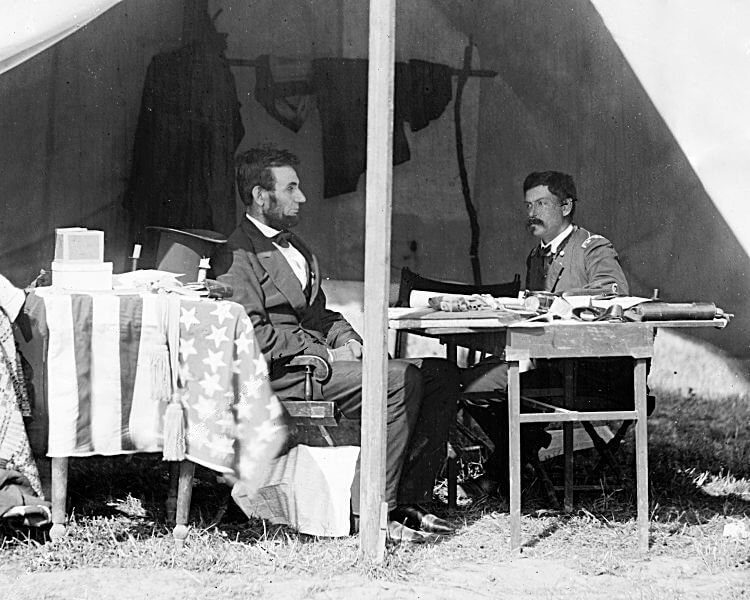
Soon after Abraham Lincoln became President, there broke out the civil war, which caused the death of many hundreds of thousands of brave men and brought sorrow to nearly every home in the United States. Perhaps none of those who study this book will ever see so sad a time. But it was also a brave time, when men gave their lives for the cause they believed to be right. Women, in those days, suffered in patience the loss of their husbands and sons, and very many of them went to nurse the wounded or toiled at home to gather supplies of nourishing food for sick soldiers in hospitals.

The war came about in this way: There had been almost from the foundation of the Government a rivalry between the Northern and Southern States. Long and angry debates took place about slavery, about the rights of the States and the government of the Territories. These had produced much bitter feeling. When a President opposed to slavery was elected, some of the Southern States claimed that they had a right to withdraw from the Union. This the Northern States denied, declaring that the Union could not be divided; but before Lincoln was inaugurated, seven States had declared themselves out of the Union. They formed a new government, which they called “the Confederate States of America,” and elected Jefferson Davis President.

President Lincoln refused to acknowledge that the Confederate States were a government. He refused to allow the United States fort in the harbor of Charleston, South Carolina, to be surrendered to the Confederates, and he sent ships with provisions for the small garrison of this fort. The Southern troops about Charleston refused to let these provisions be landed and at length opened fire on the fort. This began the war. Four other States now joined the Confederacy, making eleven in all.

It was a time of awful excitement in every part of the country. All winter long angry passions had been rising both in the North and in the South. When the first gun was fired at Sumter, in April, 1861, there was such a storm of fierce excitement as may never be seen again in America. At the North, a hundred thousand men were enlisted in three days. The excitement at the South was just as great, and a large portion of the Southern people rushed to arms. In those stormy times the drums were beating all day long in the streets; flags waved in every direction, and trains were thronged with armed men bidding farewell to friends and hastening forward to battle and death. Men and women wept in the streets as they cheered “the boys” who were hurrying away to the war. For a while, people hardly took time to sleep.

We cannot tell the story of the war here; you will study about it in larger histories. The armies on both sides became very large, and during the war there were some of the greatest conflicts ever seen in the world. The first great battle was fought at Shiloh, in Tennessee. Others took place at Murfreesboro [mur’-freze-bur’-ro], Chickamauga [chick-a-maw’-gah], and Nashville, in Tennessee; at Antietam [an-tee’-tam], in Maryland; and at Gettysburg, in Pennsylvania. Very many battles, great and small, were fought in Virginia, between Washington and Richmond.

On the side of the Union, the three most famous generals were U. S. Grant, W. T. Sherman, and Philip H. Sheridan. The three greatest generals on the Confederate side were Robert E. Lee, Joseph E. Johnston, and Thomas J. Jackson, commonly called “Stonewall Jackson.”

Both sides showed the greatest courage. The generals on both sides were very skillful. Victory was now with one party and now with the other; but, as the years passed on, the Union armies, being the stronger, gradually gained one advantage after another. By means of troops and gunboats sent down from the North under Grant and a fleet under Admiral Farragnt, which was sent around by sea to capture New Orleans, the whole of the Mississippi River was secured. Between Washington and Richmond, the Confederates won many victories, but they were at length compelled to fall back behind the fortifications of Richmond and Petersburg, where they were besieged by General Grant.

During the time of this siege, General Sherman marched directly into the heart of the Confederacy, where he was for weeks without any communication with the North. He marched across the great and fertile State of Georgia, from Atlanta to Savannah, on the sea coast, and then from Savannah northward toward Richmond. By destroying the railroads and the food by which General Lee’s army in Richmond was supplied, this march of Sherman’s made it impossible for the Confederates to continue the war.

Lee was forced to retreat from Richmond, and he surrendered his army on the 9th of April, 1865. All the other Confederate forces soon after laid down their arms. The war had lasted four years. As a result of the long struggle, slavery was abolished in all the territory of the United States.

Martin Luther King, Jr. “I have a Dream Speech”

I am happy to join with you today in what will go down in history as the greatest demonstration for freedom in the history of our nation.

Five score years ago, a great American, in whose symbolic shadow we stand today, signed the Emancipation Proclamation. This momentous decree came as a great beacon light of hope to millions of Negro slaves who had been seared in the flames of withering injustice. It came as a joyous daybreak to end the long night of their captivity.

But 100 years later, the Negro still is not free. One hundred years later, the life of the Negro is still sadly crippled by the manacles of segregation and the chains of discrimination. One hundred years later, the Negro lives on a lonely island of poverty in the midst of a vast ocean of material prosperity. One hundred years later, the Negro is still languished in the corners of American society and finds himself an exile in his own land. And so we’ve come here today to dramatize a shameful condition.

In a sense we’ve come to our nation’s capital to cash a check. When the architects of our republic wrote the magnificent words of the Constitution and the Declaration of Independence, they were signing a promissory note to which every American was to fall heir. This note was a promise that all men — yes, black men as well as white men — would be guaranteed the unalienable rights of life, liberty, and the pursuit of happiness.

It is obvious today that America has defaulted on this promissory note insofar as her citizens of color are concerned. Instead of honoring this sacred obligation, America has given the Negro people a bad check, a check that has come back marked “insufficient funds.”

But we refuse to believe that the bank of justice is bankrupt. We refuse to believe that there are insufficient funds in the great vaults of opportunity of this nation. And so we’ve come to cash this check, a check that will give us upon demand the riches of freedom and security of justice. We have also come to his hallowed spot to remind America of the fierce urgency of now. This is no time to engage in the luxury of cooling off or to take the tranquilizing drug of gradualism. Now is the time to make real the promises of democracy. Now is the time to rise from the dark and desolate valley of segregation to the sunlit path of racial justice. Now is the time to lift our nation from the quicksands of racial injustice to the solid rock of brotherhood. Now is the time to make justice a reality for all of God’s children.

It would be fatal for the nation to overlook the urgency of the moment. This sweltering summer of the Negro’s legitimate discontent will not pass until there is an invigorating autumn of freedom and equality. 1963 is not an end but a beginning. Those who hoped that the Negro needed to blow off steam and will now be content will have a rude awakening if the nation returns to business as usual. There will be neither rest nor tranquility in America until the Negro is granted his citizenship rights. The whirlwinds of revolt will continue to shake the foundations of our nation until the bright day of justice emerges.

But there is something that I must say to my people who stand on the warm threshold which leads into the palace of justice. In the process of gaining our rightful place we must not be guilty of wrongful deeds. Let us not seek to satisfy our thirst for freedom by drinking from the cup of bitterness and hatred. We must forever conduct our struggle on the high plane of dignity and discipline. We must not allow our creative protest to degenerate into physical violence. Again and again we must rise to the majestic heights of meeting physical force with soul force. The marvelous new militancy which has engulfed the Negro community must not lead us to a distrust of all white people, for many of our white brothers, as evidenced by their presence here today, have come to realize that their destiny is tied up with our destiny. And they have come to realize that their freedom is inextricably bound to our freedom. We cannot walk alone.

As we walk, we must make the pledge that we shall always march ahead. We cannot turn back. There are those who are asking the devotees of civil rights, “When will you be satisfied?” We can never be satisfied as long as the Negro is the victim of the unspeakable horrors of police brutality. We can never be satisfied as long as our bodies, heavy with the fatigue of travel, cannot gain lodging in the motels of the highways and the hotels of the cities. We cannot be satisfied as long as the Negro’s basic mobility is from a smaller ghetto to a larger one. We can never be satisfied as long as our children are stripped of their selfhood and robbed of their dignity by signs stating “for whites only.” We cannot be satisfied as long as a Negro in Mississippi cannot vote and a Negro in New York believes he has nothing for which to vote. No, no we are not satisfied and we will not be satisfied until justice rolls down like waters and righteousness like a mighty stream.

I am not unmindful that some of you have come here out of great trials and tribulations. Some of you have come fresh from narrow jail cells. Some of you have come from areas where your quest for freedom left you battered by storms of persecution and staggered by the winds of police brutality. You have been the veterans of creative suffering. Continue to work with the faith that unearned suffering is redemptive.

Go back to Mississippi, go back to Alabama, go back to South Carolina, go back to Georgia, go back to Louisiana, go back to the slums and ghettos of our northern cities, knowing that somehow this situation can and will be changed.

Let us not wallow in the valley of despair. I say to you today my friends — so even though we face the difficulties of today and tomorrow, I still have a dream. It is a dream deeply rooted in the American dream.

I have a dream that one day this nation will rise up and live out the true meaning of its creed: “We hold these truths to be self-evident, that all men are created equal.”

I have a dream that one day on the red hills of Georgia the sons of former slaves and the sons of former slave owners will be able to sit down together at the table of brotherhood.

I have a dream that one day even the state of Mississippi, a state sweltering with the heat of injustice, sweltering with the heat of oppression, will be transformed into an oasis of freedom and justice.

I have a dream that my four little children will one day live in a nation where they will not be judged by the color of their skin but by the content of their character.

I have a dream today.

I have a dream that one day down in Alabama, with its vicious racists, with its governor having his lips dripping with the words of interposition and nullification — one day right there in Alabama little black boys and black girls will be able to join hands with little white boys and white girls as sisters and brothers.

I have a dream today.

I have a dream that one day every valley shall be exalted, and every hill and mountain shall be made low, the rough places will be made plain, and the crooked places will be made straight, and the glory of the Lord shall be revealed and all flesh shall see it together.

This is our hope. This is the faith that I go back to the South with. With this faith we will be able to hew out of the mountain of despair a stone of hope. With this faith we will be able to transform the jangling discords of our nation into a beautiful symphony of brotherhood. With this faith we will be able to work together, to pray together, to struggle together, to go to jail together, to stand up for freedom together, knowing that we will be free one day.

This will be the day, this will be the day when all of God’s children will be able to sing with new meaning “My country ’tis of thee, sweet land of liberty, of thee I sing. Land where my father’s died, land of the Pilgrim’s pride, from every mountainside, let freedom ring!”

And if America is to be a great nation, this must become true. And so let freedom ring from the prodigious hilltops of New Hampshire. Let freedom ring from the mighty mountains of New York. Let freedom ring from the heightening Alleghenies of Pennsylvania.

Let freedom ring from the snow-capped Rockies of Colorado. Let freedom ring from the curvaceous slopes of California.

But not only that; let freedom ring from Stone Mountain of Georgia.

Let freedom ring from Lookout Mountain of Tennessee.

Let freedom ring from every hill and molehill of Mississippi — from every mountainside.

Let freedom ring. And when this happens, and when we allow freedom ring — when we let it ring from every village and every hamlet, from every state and every city, we will be able to speed up that day when all of God’s children — black men and white men, Jews and Gentiles, Protestants and Catholics — will be able to join hands and sing in the words of the old Negro spiritual: “Free at last! Free at last! Thank God Almighty, we are free at last!”

Martin Luther King, Jr.
August 28, 1963
Lincoln Memorial, Washington, D.C., United States of America

Events in January: Fun Days and Historical Remembrances

This page gives a list of some Holidays and other events that occur in January. Some of the events are fun days. Others are for remembering only. Information is attached to many of the events. Have fun reading, learning, and/ or celebrating.

New Year’s Day: celebrated on January 1, marks the beginning of the year in the Gregorian calendar. It follows the festivities of New Year’s Eve and offers a moment for reflection and new beginnings.

World Braille Day: World Braille Day is annually celebrated on January 4, the birthday of Braille inventor, Louis Braille. The day recognizes the contributions of Louis Braille in helping blind and visually impaired people to read and write.

Epiphany: commonly known as Three Kings’ Day in the United States, is on January 6. It celebrates the three wise men’s visit to baby Jesus and also remembers his baptism, according to the Christian Bible’s events.

Feast of the Baptism of the Lord: The Baptism of Jesus is celebrated annually on the Sunday after January 6 (the Feast of the Epiphany). This celebration is recognized in various Christian denominations, including the Catholic, Anglican, and Lutheran churches.

Battle of New Orleans: January 8th is celebrated as Battle of New Orleans day in the state of Louisiana.

Benjamin Franklin Day: January 17 is celebrated worldwide as Benjamin Franklin Day.

Martin Luther King Jr. Day: is a federal holiday held on the third Monday of January. It celebrates the life and achievements of Martin Luther King Jr., an influential American civil rights leader.

Robert E. Lee’s Birthday: also known as Robert E. Lee Day, is a state holiday in some parts of the United States. In some states it is an annual shared state holiday with Martin Luther King’s birthday on the third Monday of January.

Civil Rights Day: is a state holiday in Arizona and New Hampshire, in the United States, on the third Monday of January. It honors civil rights activists and is combined with Martin Luther King Day.

World Leprosy Day: World Leprosy Day is annually observed around the world on the last Sunday of January. The day was initiated in 1954 by French philanthropist and writer Raoul Follereau, as a way to raise global awareness of this deadly ancient disease and call attention to the fact that it can be prevented, treated, and cured.

World Holocaust Victims Remembrance Day: On January 27 each year, the United Nations (UN) remembers the Holocaust that affected many people of Jewish origin during World War II. This day is called the International Day of Commemoration in Memory of the Victims of the Holocaust. It also commemorates when the Soviet troops liberated the Nazi concentration and death camp Auschwitz-Birkenau in Poland on January 27, 1945.

Rome and Carthage Part II

This short account of the early history of Rome shows you the enormous difference between the Roman ideal of a healthy state, and that of the ancient world which was embodied in the town of Carthage. The Romans counted upon the cheerful and hearty co-operation between a number of “equal citizens.” The Carthaginians, following the example of Egypt and western Asia, insisted upon the unreasoning (and therefore unwilling) obedience of “Subjects” and when these failed they hired professional soldiers to do their fighting for them.

You will now understand why Carthage was bound to fear such a clever and powerful enemy and why the plutocracy of Carthage was only too willing to pick a quarrel that they might destroy the dangerous rival before it was too late.

But the Carthaginians, being good business men, knew that it never pays to rush matters. They proposed to the Romans that their respective cities draw two circles on the map and that each town claim one of these circles as her own “sphere of influence” and promise to keep out of the other fellow’s circle. The agreement was promptly made and was broken just as promptly when both sides thought it wise to send their armies to Sicily where a rich soil and a bad government invited foreign interference.

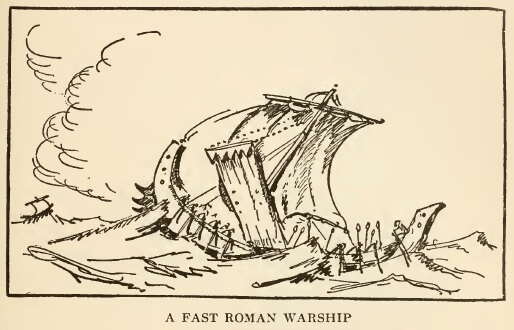
The war which followed (the so-called first Punic War) lasted twenty-four years. It was fought out on the high seas and in the beginning it seemed that the experienced Carthaginian navy would defeat the newly created Roman fleet. Following their ancient tactics, the Carthaginian ships would either ram the enemy vessels or by a bold attack from the side they would break their oars and would then kill the sailors of the helpless vessel with their arrows and with fire balls. But Roman engineers invented a new craft which carried a boarding bridge across which the Roman infantrymen stormed the hostile ship. Then there was a sudden end to Carthaginian victories. At the battle of Mylae their fleet was badly defeated. Carthage was obliged to sue for peace, and Sicily became part of the Roman domains.

Twenty-three years later new trouble arose. Rome (in quest of copper) had taken the island of Sardinia. Carthage (in quest of silver) thereupon occupied all of southern Spain. This made Carthage a direct neighbor of the Romans. The latter did not like this at all and they ordered their troops to cross the Pyrenees and watch the Carthaginian army of occupation.

The stage was set for the second outbreak between the two rivals. Once more a Greek colony was the pretext for a war. The Carthaginians were besieging Saguntum on the east coast of Spain. The Saguntians appealed to Rome and Rome, as usual, was willing to help. The Senate promised the help of the Latin armies, but the preparation for this expedition took some time, and meanwhile Saguntum had been taken and had been destroyed. This had been done in direct opposition to the will of Rome. The Senate decided upon war. One Roman army was to cross the African sea and make a landing on Carthaginian soil. A second division was to keep the Carthaginian armies occupied in Spain to prevent them from rushing to the aid of the home town. It was an excellent plan and everybody expected a great victory. But the gods had decided otherwise.

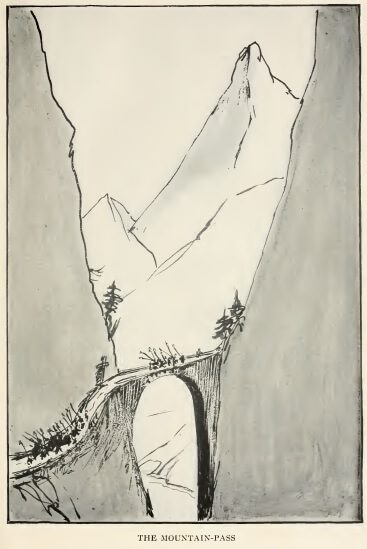
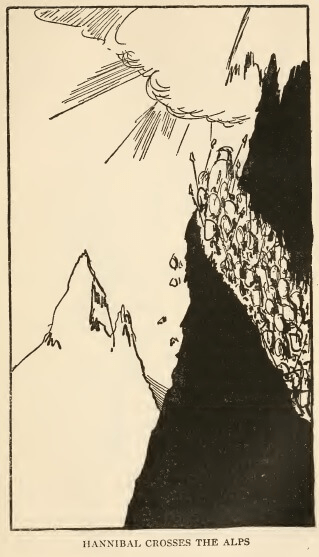
It was the fall of the year 218 before the birth of Christ and the Roman army which was to attack the Carthaginians in Spain had left Italy. People were eagerly waiting for news of an easy and complete victory when a terrible rumor began to spread through the plain of the Po. Wild mountaineers, their lips trembling with fear, told of hundreds of thousands of brown men accompanied by strange beasts “each one as big as a house,” who had suddenly emerged from the clouds of snow which surrounded the old Graian pass through which Hercules, thousands of years before, had driven the oxen of Geryon on his way from Spain to Greece. Soon an endless stream of bedraggled refugees appeared before the gates of Rome, with more complete details. Hannibal, the son of Hamilcar, with fifty thousand soldiers, nine thousand horsemen and thirty-seven fighting elephants, had crossed the Pyrenees. He had defeated the Roman army of Scipio on the banks of the Rhone and he had guided his army safely across the mountain passes of the Alps although it was October and the roads were thickly covered with snow and ice. Then he had joined forces with the Gauls and together they had defeated a second Roman army just before they crossed the Trebia and laid siege to Placentia, the northern terminus of the road which connected Rome with the province of the Alpine districts.

The Senate, surprised but calm and energetic as usual, hushed up the news of these many defeats and sent two fresh armies to stop the invader. Hannibal managed to surprise these troops on a narrow road along the shores of the Trasimene Lake and there he killed all the Roman officers and most of their men. This time there was a panic among the people of Rome, but the Senate kept its nerve. A third army was organized and the command was given to Quintus Fabius Maximus with full power to act “as was necessary to save the state.”

Fabius knew that he must be very careful lest all be lost. His raw and untrained men, the last available soldiers, were no match for Hannibal’s veterans. He refused to accept battle but forever he followed Hannibal, destroyed everything eatable, destroyed the roads, attacked small detachments and generally weakened the morale of the Carthaginian troops by a most distressing and annoying form of guerilla warfare.

Such methods however did not satisfy the fearsome crowds who had found safety behind the walls of Rome. They wanted “action.” Something must be done and must be done quickly. A popular hero by the name of Varro, the sort of man who went about the city telling everybody how much better he could do things than slow old Fabius, the “Delayer,” was made commander-in-chief by popular acclamation. At the battle of Cannae (216) he suffered the most terrible defeat of Roman history. More than seventy thousand men were killed. Hannibal was master of all Italy.

He marched from one end of the peninsula to the other, proclaiming himself the “deliverer from the yoke of Rome” and asking the different provinces to join him in warfare upon the mother city. Then once more the wisdom of Rome bore noble fruit. With the exceptions of Capua and Syracuse, all Roman cities remained loyal. Hannibal, the deliverer, found himself opposed by the people whose friend he pretended to be. He was far away from home and did not like the situation. He sent messengers to Carthage to ask for fresh supplies and new men. Alas, Carthage could not send him either.

The Romans with their boarding-bridges, were the masters of the sea. Hannibal must help himself as best he could. He continued to defeat the Roman armies that were sent out against him, but his own numbers were decreasing rapidly and the Italian peasants held aloof from this self-appointed “deliverer.”

After many years of uninterrupted victories, Hannibal found himself besieged in the country which he had just conquered. For a moment, the luck seemed to turn. Hasdrubal, his brother, had defeated the Roman armies in Spain. He had crossed the Alps to come to Hannibal’s assistance. He sent messengers to the south to tell of his arrival and ask the other army to meet him in the plain of the Tiber. Unfortunately, the messengers fell into the hands of the Romans and Hannibal waited in vain for further news until his brother’s head, neatly packed in a basket, came rolling into his camp and told him of the fate of the last of the Carthaginian troops.

With Hasdrubal out of the way, young Publius Scipio easily reconquered Spain and four years later the Romans were ready for a final attack upon Carthage. Hannibal was called back. He crossed the African Sea and tried to organize the defenses of his home-city. In the year 202 at the battle of Zama, the Carthaginians were defeated. Hannibal fled to Tyre. From there he went to Asia Minor to stir up the Syrians and the Macedonians against Rome. He accomplished very little but his activities among these Asiatic powers gave the Romans an excuse to carry their warfare into the territory of the east and annex the greater part of the Aegean world.

Driven from one city to another, a fugitive without a home, Hannibal at last knew that the end of his ambitious dream had come. His beloved city of Carthage had been ruined by the war. She had been forced to sign a terrible peace. Her navy had been sunk. She had been forbidden to make war without Roman permission. She had been condemned to pay the Romans millions of dollars for endless years to come. Life offered no hope of a better future. In the year 190 B.C. Hannibal took poison and killed himself.

Forty years later, the Romans forced their last war upon Carthage. Three long years the inhabitants of the old Phoenician colony held out against the power of the new republic. Hunger forced them to surrender. The few men and women who had survived the siege were sold as slaves. The city was set on fire. For two whole weeks the store-houses and the palaces and the great arsenal burned. Then a terrible curse was pronounced upon the blackened ruins and the Roman legions returned to Italy to enjoy their victory.

For the next thousand years, the Mediterranean remained a European sea. But as soon as the Roman Empire had been destroyed, Asia made another attempt to dominate this great inland sea, as you will learn when I tell you about Mohammed.

Who was Ishtar and What does She have to do with Cross Dressing?

Who was Ishtar?

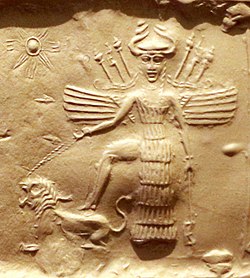
Ishtar was an ancient pagan god. She was linked to the planet Venus. Ishtar was known both as the morning star and the evening star, hinting at her dual nature. She existed at both ends of the spectrum, embodying polar opposites. On one hand, she was the goddess of love, beauty, allure, and female sexuality. On the other, she personified ferocity, aggression, violence, battle, war, and destruction—traits often associated with masculinity. She could be depicted as a naked woman adorned with jewels, symbolizing sexuality, or as an armored warrior, representing war. In a single being, she embodied both male and female. Ishtar’s connection to femininity and masculinity was more than mere symbolism. An ancient Mesopotamian tablet records her saying these words:

  • When I sit in the alehouse, I am a woman, and I am an exuberant young man.

Another ancient writing records her saying this:

  • Though I am a woman I am a noble young man.

The core and operative words in such statements are these:

  • I am a woman. I am a man.

The Assinnu, Kurgarru, Kalu, and Gala

The Assinnu, Kurgarru, Kalu, and Gala were key figures in the ancient Mesopotamian cult of Ishtar, each with unique roles in her worship and rituals. The Assinnu, often shown as effeminate, took on behaviors linked to women, like dancing, singing, and engaging in same-sex relations as the receptive partner. The Kurgarru stood out as a tough, militant type, tied to weapons and acts of self-mutilation. The Kalu usually worked as a palace attendant, while the Gala was known for chanting laments. Together, they embodied social constructs that reinforced distinctions between men, women, and a third, more ambiguous gender, much like the goddess herself.