The Louisiana Purchase was a land deal made by U.S. President Thomas Jefferson in 1803. He purchased the Louisiana Territory from France, led by Napoleon Bonaparte, for 15 million USD. Initially, the delegates sent to France were authorized to spend up to 10 million USD to acquire New Orleans and possibly the west bank of the Mississippi River. However, the French government offered to sell the entire Louisiana Territory for just 5 million more. Jefferson approved the deal and used his constitutional authority to sign treaties to finalize the purchase.
Napoleon Bonaparte sold the land to fund the Great French War. With the British back in the conflict and France losing the Haitian Revolution, defending Louisiana became impossible. Thomas Jefferson seized the French offer as a chance to expand America, even though it went against his Republican principles of small government—some argue he overstepped his constitutional authority by making the deal on his own.
Louisiana Purchase
A map of the Louisiana Purchase compared to state boundaries in 2025. The Louisiana Purchase is shown in green overtop of what states would be formed from it.
The Lewis and Clark expedition explored the Louisiana Purchase and the Oregon Territory. They started from St. Louis. Their route traced the Missouri River.
LORD sent Moses and Aaron to ask pharaoh to let God’s people go so they may worship God in the wilderness, but Pharaoh said no so God sent the 10 plagues on Egypt. After all of that Pharaoh said get out and take your people with you. So, Mose led the people out of Egypt. That is the story of the exodus when the people left Egypt. Here are the 10 Plagues, if you have a bible turn to them.
Nile rivers turn to blood
Genesis 7:17-18 Thus saith the Lord, In this thou shalt know that I am the Lord: behold, I will smite with the rod that is in mine hand upon the waters which are in the river, and they shall be turned to blood. And the fish that is in the river shall die, and the river shall stink; and the Egyptians shall lothe to drink of the water of the river.
Frogs
Genesis 8:1-5 And the Lord spake unto Moses, Go unto Pharaoh, and say unto him, Thus saith the Lord, Let my people go, that they may serve me. And if thou refuse to let them go, behold, I will smite all thy borders with frogs: And the river shall bring forth frogs abundantly, which shall go up and come into thine house, and into thy bedchamber, and upon thy bed, and into the house of thy servants, and upon thy people, and into thine ovens, and into thy kneading troughs: And the frogs shall come up both on thee, and upon thy people, and upon all thy servants. And the Lord Spake unto Moses, say unto Aaron, stretch forth thine hand with thy rod over the streams, over the rivers, and over the ponds, and cause frogs to come up upon the land of Egypt.
Lice
Exodus 8:16-17 And the Lord said unto Moses, say unto Aaron, stretch out thy rod, and smite the dust of the land, that it may become lice throughout all the land of Egypt. And they did so; for Aaron stretched out his hand with his rod, and smote the dust of the earth, and it became lice in man, and in beast; all the dust of the land became lice throughout all the land of Egypt.
Flies: The Egyptians had flies, but the Israelites did not.
Genesis 8:20-23 And the Lord said unto Moses, Rise up early in the morning, and stand before Pharaoh; lo, he cometh forth to the water; and say unto him, Thus saith the Lord, Let my people go, that they may serve me. Else, if thou wilt not let my people go, behold, I will send swarms of flies upon thee, and upon thy servants, and upon thy people, and into thy houses: and the houses of the Egyptians shall be full of swarms of flies, and also the ground whereon they are. And I will sever in that day the land of Goshen, in which my people dwell, that no swarms of flies shall be there; to the end thou mayest know that I am the Lord in the midst of the earth. And I will put a division between my people and thy people: tomorrow shall this sign be.
The cattle of Egypt died, but the cattle of the children of Israel didn’t die.
Genesis 9:3-6 Behold, the hand of the Lord is upon thy cattle which is in the field, upon the horses, upon the asses, upon the camels, upon the oxen, and upon the sheep: there shall be a very grievous murrain. And the Lord shall sever between the cattle of Israel and the cattle of Egypt: and there shall nothing die of all that is the children’s of Israel. And the Lord appointed a set time, saying, Tomorrow the Lord shall do this thing in the land. And the Lord did that thing on the morrow, and all the cattle of Egypt died: but of the cattle of the children of Israel died not one.
Boils:
Genesis 9:8-10 And the Lord said unto Moses and unto Aaron, Take to you handfuls of ashes of the furnace, and let Moses sprinkle it toward the heaven in the sight of Pharaoh. And it shall become small dust in all the land of Egypt, and shall be a boil breaking forth with blains upon man, and upon beast, throughout all the land of Egypt. And they took ashes of the furnace, and stood before Pharaoh; and Moses sprinkled it up toward heaven; and it became a boil breaking forth with blains upon man, and upon beast.
Thunder, Hail, and Fire
Genesis 9:18-20 Behold, tomorrow about this time I will cause it to rain a very grievous hail, such as hath not been in Egypt since the foundation thereof even until now. Send therefore now, and gather thy cattle, and all that thou hast in the field; for upon every man and beast which shall be found in the field, and shall not be brought home, the hail shall come down upon them, and they shall die. He that feared the word of the Lord among the servants of Pharaoh made his servants and his cattle flee into the houses: And he that regarded not the word of the Lord left his servants and his cattle in the field. And the Lord said unto Moses, Stretch forth thine hand toward heaven, that there may be hail in all the land of Egypt, upon man, and upon beast, and upon every herb of the field, throughout the land of Egypt. And Moses stretched forth his rod toward heaven: and the Lord sent thunder and hail, and the fire ran along upon the ground; and the Lord rained hail upon the land of Egypt.
Genesis 9:26 Only in the land of Goshen, where the children of Israel were, was there no hail.
Locusts
Genesis 10:4-6 Else, if thou refuse to let my people go, behold, tomorrow will I bring the locusts into thy coast: And they shall cover the face of the earth, that one cannot be able to see the earth: and they shall eat the residue of that which is escaped, which remaineth unto you from the hail, and shall eat every tree which groweth for you out of the field: And they shall fill thy houses, and the houses of all thy servants, and the houses of all the Egyptians; which neither thy fathers, nor thy fathers’ fathers have seen, since the day that they were upon the earth unto this day. And he turned himself and went out from Pharaoh.
Darkness
Genesis 10:21-23 And the Lord said unto Moses, Stretch out thine hand toward heaven, that there may be darkness over the land of Egypt, even darkness which may be felt. And Moses stretched forth his hand toward heaven; and there was a thick darkness in all the land of Egypt three days: They saw not one another, neither rose any from his place for three days: but all the children of Israel had light in their dwellings.
All of the first-born both human and animal in the land of Egypt died
All that did not have the lamb’s blood on their door died, but all that had the blood of the Lamb the Lord passed over them that is how we get Passover. Many people now call part of Passover Easter.
Genesis 11:4-7 And Moses said, Thus saith the Lord, About midnight will I go out into the midst of Egypt: And all the firstborn in the land of Egypt shall die, from the first born of Pharaoh that sitteth upon his throne, even unto the firstborn of the maidservant that is behind the mill; and all the firstborn of beasts. And there shall be a great cry throughout all the land of Egypt, such as there was none like it, nor shall be like it any more. But against any of the children of Israel shall not a dog move his tongue, against man or beast: that ye may know how that the Lord doth put a difference between the Egyptians and Israel.
Whenever you start to read a story that you hope will be interesting, you always wonder, do you not, how it is going to turn out? Your favorite fairy tale or wonder story that began with “once upon a time,” ends, does it not, “so the prince married the beautiful princess, and they lived happy ever after?”
Now, how does this story that we have been reading together turn out? You don’t think it ended happily, do you? It was, in some respects, more marvelous than any fairy tale or wonder story; but, dear me! you say, why couldn’t Columbus have lived happily, after he had gone through so much, and done so much, and discovered America, and given us who came after him so splendid a land to live in?
Now, just here comes the real point of the story. Wise men tell us that millions upon millions of busy little insects die to make the beautiful coral islands of the Southern seas. Millions and millions of men and women have lived and labored, died and been forgotten by the world they helped to make the bright, and beautiful, and prosperous place to live in that it is to-day.
Columbus was one of these millions; but he was a leader among them and has not been forgotten. As the world has got farther away from the time in which he lived, the man Columbus, who did so much and yet died almost unnoticed, has grown more and more famous; his name is immortal, and to-day he is the hero Columbus—one of the world’s greatest men.
We, in America, are fond of celebrating anniversaries. I suppose the years that you boys and girls have thus far lived have been the most remarkable in the history of the world for celebrating anniversaries. For fully twenty years the United States has been keeping its birthday. The celebration commenced long before you were born, with the one hundredth anniversary of the Battle of Lexington (in 1875). It has not ended yet. But in 1892, We celebrated the greatest of all our birthdays—the discovery of the continent that made it possible for us to be here at all.
Now this has not always been so with us. I suppose that in 1592 and in 1692 no notice whatever was taken of the twelfth day of October, on which—one hundred and two hundred years before—Columbus had landed on that flat little “key” known as Watling’s Island down among the West Indies, and had begun a new chapter in the world’s wonderful story. In 1592, there was hardly anybody here to celebrate the anniversary—in fact, there was hardly anybody here at all, except a few Spanish settlers in the West Indies, in Mexico, and in Florida. In 1692, there were a few scattered settlements of Frenchmen in Canada, of Englishmen in New England, Dutchmen in New York, Swedes in Delaware, and Englishmen in Maryland, Virginia and the Carolinas. But none of these people loved the Spaniards. They hated them, indeed; for there had been fierce fighting going on for nearly a hundred years between Spain and England, and you couldn’t find an Englishman, a Dutchman or a Swede who was willing to say a good word for Spain, or thank God for the man who sailed away in Spanish ships to discover America two hundred years before.
In 1792, people did think a little more about this, and there were a few who did remember that, three hundred years before, Columbus had found the great continent upon which, in that year 1792, a new republic, called the United States of America, had only just been started after a long and bloody war of rebellion and revolution.
We do not find, however, that in that year of 1792 there were many, if any, public celebrations of the Discovery of America, in America itself. A certain American clergyman, however, whose name was the Rev. Elhanan Winchester, celebrated the three hundredth anniversary of the Discovery of America by Columbus. And he celebrated it not in America, but in England, where he was then living. On the twelfth of October, 1792, Winchester delivered an address on “Columbus and his Discoveries,” before a great assembly of interested listeners. In that address he said some very enthusiastic and some very remarkable things about the America that was to be:
“I see the United States rise in all their ripened glory before me,” he said. “I look through and beyond every yet peopled region of the New World, and behold period still brightening upon period. Where one contiguous depth of gloomy wilderness now shuts out even the beams of day, I see new States and empires, new seats of wisdom and knowledge, new religious domes spreading around. In places now untrod by any but savage beasts, or men as savage as they, I hear the voices of happy labor, and see beautiful cities rising to view. I behold the whole continent highly cultivated and fertilized, full of cities, towns and villages, beautiful and lovely beyond expression. I hear the praises of my great Creator sung upon the banks of those rivers now unknown to song. Behold the delightful prospect! See the silver and gold of America employed in the service of the Lord of the whole earth! See slavery, with all its train of attendant evils, forever abolished! See a communication opened through the whole continent, from North to South and from East to West, through a most fruitful country. Behold the glory of God extending, and the gospel spreading through the whole land!”
Of course, it was easy for a man to see and to hope and to say all this; but it is a little curious, is it not, that he should have seen things just as they have turned out?
In Mr. Winchester’s day, the United States of America had not quite four millions of inhabitants. In his day Virginia was the largest State—in the matter of population—Pennsylvania was the second and New York the third. Philadelphia was the greatest city, then followed New York, Boston, Baltimore and Charleston. Chicago was not even thought of.
To-day, four hundred years after Columbus first saw American shores, one hundred and sixteen years after the United States were started in life by the Declaration of American Independence, these same struggling States of one hundred years ago are joined together to make the greatest and most prosperous nation in the world. With a population of more than sixty-two millions of people; with the thirteen original States grown into forty-four, with the population of its three largest cities—New York; Philadelphia and Chicago—more than equal to the population of the whole country one hundred years ago; with schools and colleges and happy homes brightening the whole broad land that now stretches from ocean to ocean, the United States leads all other countries in the vast continent Columbus discovered. Still westward, as Columbus led, the nation advances; and, in a great city that Columbus could never have imagined, and that the prophet of one hundred years ago scarcely dreamed of, the mighty Republic in 1892 invited all the rest of the world to join with it in celebrating the four hundredth anniversary of the Discovery of America by Columbus the Admiral. And to do this celebrating fittingly and grandly, it built up the splendid White City by the great Fresh Water Sea.
Columbus was a dreamer; he saw such wonderful visions of what was to be, that people, as we know, tapped their foreheads and called him “the crazy Genoese.” But not even the wildest fancies nor the most wonderful dreams of Columbus came anywhere near to what he would really have seen if—he could have visited the Exposition at Chicago, in the great White City by the lake—a “show city” specially built for the World’s Fair of 1893, given in his honor and as a monument to his memory.
Why, he would say, the Cathay that I spent my life trying to find was but a hovel alongside this! What would he have seen? A city stretching a mile and a half in length, and more than half a mile in breadth; a space covering over five hundred acres of ground, and containing seventeen magnificent buildings, into any one of which could have been put the palaces of all the kings and queens of Europe known to Columbus’s day. And in these buildings he would have seen gathered together, all the marvelous and all the useful things, all the beautiful and all the delightful things that the world can make to-day, arranged and displayed for all the world to see. He would have stood amazed in that wonderful city of glass and iron, that surpassingly beautiful city, all of purest white, that had been built some eight miles from the center of big and busy Chicago, looking out upon the blue waters of mighty Lake Michigan. It was a city that I wish all the boys and girls of America—especially all who read this story of the man in whose honor it was built, might have visited. For as they saw all its wonderful sights, studied its marvelous exhibits, and enjoyed its beautiful belongings, they would have been ready to say how proud, and glad, and happy they were to think that they were American girls and boys, living in this wonderful nineteenth century that has been more crowded with marvels, and mysteries, and triumphs than any one of the Arabian Nights ever contained.
But, whether you saw the Columbian Exhibition or not, you can say that. And then stop and think what a parrot did. That is one of the most singular things in all this wonder story you are reading. Do you not remember how, when Columbus was slowly feeling his way westward, Captain Alonso Pinzon saw some parrots flying southward, and believing from this that the land they sought was off in that direction, he induced Columbus to change his course from the west to the south? If Columbus had not changed his course and followed the parrots, the Santa Maria, with the Pinta and the Nina, would have sailed on until they had entered the harbor of Savannah or Charleston, or perhaps the broad waters of Chesapeake Bay. Then the United States of to-day would have been discovered and settled by Spaniards, and the whole history of the land would have been quite different from what it has been. Spanish blood has peopled, but not uplifted, the countries of South America and the Spanish Main. English blood, which, following after—because Columbus had first shown the way—peopled, saved and upbuilt the whole magnificent northern land that Spain missed and lost. They have found in it more gold than ever Columbus dreamed of in his never-found Cathay; they have filled it with a nobler, braver, mightier, and more numerous people than ever Columbus imagined the whole mysterious land of the Indies contained; they have made it the home of freedom, of peace, of education, of intelligence and of progress, and have protected and bettered it until the whole world respects it for its strength, honors it for its patriotism, admires it for its energy, and marvels at it for its prosperity.
And this is what a flying parrot did: It turned the tide of lawless adventure, of gold-hunting, of slave-driving, and of selfish strife for gain to the south; it left the north yet unvisited until it was ready for the strong, and sturdy, and determined men and women who, hunting for liberty, came across the seas and founded the colonies that became in time the free and independent republic of the United States of America.
And thus has the story of Columbus really turned out. Happier than any fairy tale, more marvelous than any wonder book, the story of the United States of America is one that begins, “Once upon a time,” and has come to the point where it depends upon the boys and girls who read it, to say whether or not they shall “live happily ever after.”
The four hundred years of the New World’s life closed its chapter of happiness in the electric lights and brilliant sunshine of the marvelous White City by Lake Michigan. It is a continued story of daring, devotion and progress, that the boys and girls of America should never tire of reading. And this story was made possible and turned out so well, because of the briefer, but no less interesting story of the daring, the devotion and the faith of the determined Genoese sailor of four hundred years ago, whom men knew as Don Christopher Columbus, the Admiral of the Ocean Seas.
Any one who is sick, as some of you may know, is apt to be anxious and fretful and full of fears as to how he is going to get along, or who will look out for his family. Very often there is no need for this feeling; very often it is a part of the complaint from which the sick person is suffering.
In the case of Columbus, however, there was good cause for this depressed and anxious feeling. King Ferdinand, after Queen Isabella’s death, did nothing to help Columbus. He would not agree to give the Admiral what he called his rights, and though Columbus kept writing letters from his sick room asking for justice, the king would do nothing for him. And when the king’s smile is turned to a frown, the fashion of the court is to frown, too.
So Columbus had no friends at the king’s court. Diego, his eldest son, was still one of the royal pages, but he could do nothing. Without friends, without influence, without opportunity, Columbus began to feel that he should never get his rights unless he could see the king himself. And sick though he was he determined to try it.
It must have been sad enough to see this sick old man drag himself feebly to the court to ask for justice from the king whom he had enriched. You would think that when King Ferdinand really saw Columbus at the foot of the throne, and when he remembered all that this man had done for him and for Spain, and how brave and persistent and full of determination to do great things the Admiral once had been, he would at least have given the old man what was justly due him.
But he would not. He smiled on the old sailor, and said many pleasant things and talked as if he were a friend, but he would not agree to anything Columbus asked him; and the poor Admiral crawled back to his sick bed again, and gave up the struggle. I have done all that I can do, he said to the few friends who remained faithful to him; I must leave it all to God. He has always helped me when things were at the worst.
And God helped him by taking him away from all the fret, and worry, and pain, and struggle that made up so much of the Admiral’s troubled life. On the twentieth of May, 1506, the end came. In the house now known as Number 7 Columbus Avenue, in the city of Valladolid; in Northern Spain, with a few faithful friends at his side, he signed his will, lay back in bed and saying trustfully these words: Into thy hands, O Lord, I commit my spirit! the Admiral of the Ocean Seas, the Viceroy of the Indies, the Discoverer of a New World, ended his fight for life. Christopher Columbus was dead.
He was but sixty years old. With Tennyson, and Whittier, and Gladstone, and De Lesseps living to be over eighty, and with your own good grandfather and grandmother, though even older than Columbus, by no means ready to be called old people, sixty years seems an early age to be so completely broken and bent and gray as was he. But trouble, and care, and exposure, and all the worries and perils of his life of adventure, had, as you must know, so worn upon Columbus that when he died he seemed to be an old, old man. He was white-haired, you remember, even before he discovered America, and each year he seemed to grow older and grayer and more feeble.
And after he had died in that lonely house in Valladolid, the world seems for a time to have almost forgotten him. A few friends followed him to the grave; the king, for whom he had done so much, did not trouble himself to take any notice of the death of his Admiral, whom once he had been forced to honor, receive and reward. The city of Valladolid, in which Columbus died, was one of those fussy little towns in which everybody knew what was happening next door, and talked and argued about whatever happened upon its streets and in its homes; and yet even Valladolid hardly seemed to know of the presence within its gates of the sick “Viceroy of the Indies.” Not until four weeks after his death did the Valladolid people seem to realize what had happened; and then all they did was to write down this brief record: “The said Admiral is dead.”
To-day, the bones of Columbus inclosed in a leaden casket lie in the Cathedral of Santo Domingo. People have disputed about the place where the Discoverer of America was born; they are disputing about the place where he is buried. But as it seems now certain that he was born in Genoa, so it seems also certain that his bones are really in the tomb in the old Cathedral at Santo Domingo, that old Haytian city which he founded, and where he had so hard a time.
At least a dozen places in the Old World and the New have built monuments and statues in his honor; in the United States, alone, over sixty towns and villages bear his name, or the kindred one of Columbia. The whole world honors him as the Discoverer of America; and yet the very name that the Western Hemisphere bears comes not from the man who discovered it, but from his friend and comrade Americus Vespucius.
Like Columbus, this Americus Vespucius was an Italian; like him, he was a daring sailor and a fearless adventurer, sailing into strange seas to see what he could find. He saw more of the American coast than did Columbus, and not being so full of the gold-hunting and slave-getting fever as was the Admiral, he brought back from his four voyages so much information about the new-found lands across the sea, that scholars, who cared more for news than gold, became interested in what he reported. And some of the map-makers in France, when they had to name the new lands in the West that they drew on their maps—the lands that were not the Indies, nor China, nor Japan—called them after the man who had told them so much about them—Americus Vespucius. And so it is that to-day you live in America and not in Columbia, as so many people have thought this western world of ours should be named.
And even the titles, and riches, and honors that the king and queen of Spain promised to Columbus came very near being lost by his family, as they had been by himself. It was only by the hardest work, and by keeping right at it all the time, that the Admiral’s eldest son, Diego Columbus, almost squeezed out of King Ferdinand of Spain the things that had been promised to his father.
But Diego was as plucky, and as brave, and as persistent as his father had been; then, too, he had lived at court so long—he was one of the queen’s pages, you remember that he knew just what to do and how to act so as to get what he wanted. And at last he got it.
He was made Viceroy over the Indies; he went across the seas to Hayti, and in his palace in the city of Santo Domingo he ruled the lands his father had found, and which for centuries were known as the Spanish Main; he was called Don Diego; he married a high-born lady of Spain, the niece of King Ferdinand; he received the large share of “the riches of the Indies” that his father had worked for, but never received. And the family of Christopher Columbus, the Genoese adventurer—under the title of the Dukes of Veragua—have, ever since Don Diego’s day, been of what is called “the best blood of Spain.”
If you have read this story of Christopher Columbus aright, you must have come to the conclusion that the life of this Italian sea captain who discovered a new world was not a happy one. From first to last it was full of disappointment. Only once, in all his life, did he know what happiness and success meant, and that was on his return from his first voyage, when he landed amid cheers of welcome at Palos, and marched into Barcelona in procession like a conqueror to be received as an equal by his king and queen.
Except for that little taste of glory, how full of trouble was his life! He set out to find Cathay and bring back its riches and its treasures. He did not get within five thousand miles of Cathay. He returned from his second voyage a penitent, bringing only tidings of disaster. He returned from his third voyage in disgrace, a prisoner and in chains, smarting under false charges of theft, cruelty and treason. He returned from his fourth voyage sick unto death, unnoticed, unhonored, unwelcomed.
From first to last he was misunderstood. His ideas were made fun of, his efforts were treated with contempt, and even what he did was not believed, or was spoken of as of not much account. A career that began in scorn ended in neglect. He died unregarded, and for years no one gave him credit for what he had done, nor honor for what he had brought about.
Such a life would, I am sure, seem to all boys and girls, but a dreary prospect if they felt it was to be theirs or that of any one they loved. And yet what man to-day is more highly honored than Christopher Columbus? People forget all the trials and hardships and sorrows of his life, and think of him only as one of the great successes of the world—the man who discovered America.
And out of his life of disaster and disappointment two things stand forth that all of us can honor and all of us should wish to copy. These are his sublime persistence and his unfaltering faith. Even as a boy, Columbus had an idea of what he wished to try and what he was bound to do. He kept right at that idea, no matter what might happen to annoy him or set him back.
It was the faith and the persistence of Columbus that discovered America and opened the way for the millions who now call it their home. It is because of these qualities that we honor him to-day; it is because this faith and persistence ended as they did in the discovery of a new world, that to-day his fame is immortal.
Other men were as brave, as skillful and as wise as he. Following in his track they came sailing to the new lands; they explored its coasts, conquered its red inhabitants, and peopled its shores with the life that has made America today the home of millions of white men and millions of free men. But Columbus showed the way.
CHAPTER XII. HOW THE ADMIRAL PLAYED ROBINSON CRUSOE
While the terrible storm that wrecked the great gold fleet of the governor was raging so furiously, Columbus with his four ships was lying as near shore as he dared in a little bay farther down the coast of Hayti. Here he escaped the full fury of the gale, but still his ships suffered greatly, and came very near being shipwrecked. They became separated in the storm, but the caravels met at last after the storm was over and steered away for the island of Jamaica.
For several days they sailed about among the West India Islands; then they took a westerly course, and on the thirtieth of July, Columbus saw before him the misty outlines of certain high mountains which he supposed to be somewhere in Asia, but which we now know were the Coast Range Mountains of Honduras. And Honduras, you remember, is a part of Central America.
Just turn to the map of Central America in your geography and find Honduras. The mountains, you see, are marked there; and on the northern coast, at the head of a fine bay, you will notice the seaport town of Truxillo. And that is about the spot where, for the first time, Columbus saw the mainland of North America.
As he sailed toward the coast a great canoe came close to the ship. It was almost as large as one of his own caravels, for it was over forty feet long and fully eight feet wide. It was paddled by twenty-five Indians, while in the middle, under an awning of palm-thatch sat the chief Indian, or cacique, as he was called. A curious kind of sail had been rigged to catch the breeze, and the canoe was loaded with fruits and Indian merchandise.
This canoe surprised Columbus very much. He had seen nothing just like it among the other Indians he had visited. The cacique and his people, too, were dressed in clothes and had sharp swords and spears. He thought of the great galleys of Venice and Genoa; he remembered the stories that had come to him of the people of Cathay; he believed that, at last, he had come to the right place. The shores ahead of him were, he was sure, the coasts of the Cathay he was hunting for, and these people in “the galley of the cacique” were much nearer the kind of people he was expecting to meet than were the poor naked Indians of Hayti and Cuba.
In a certain way he was right. These people in the big canoe were, probably, some of the trading Indians of Yucatan, and beyond them, in what we know to-day as Mexico, was a race of Indians, known as Aztecs, who were what is called half-civilized; for they had cities and temples and stone houses and almost as much gold and treasure as Columbus hoped to find in his fairyland of Cathay. But Columbus was not to find Mexico. Another daring and cruel Spanish captain, named Cortez, discovered the land, conquered it for Spain, stripped it of its gold and treasure, and killed or enslaved its brave and intelligent people.
After meeting this canoe, Columbus steered for the distant shore. He coasted up and down looking for a good harbor, and on the seventeenth of August, 1502, he landed as has been told you, near what is now the town of Truxillo, in Honduras. There, setting up the banner of Castile, he took possession of the country in the name of the king and queen of Spain.
For the first time in his life Columbus stood on the real soil of the New World. All the islands he had before discovered and colonized were but outlying pieces of America. Now he was really upon the American Continent.
But he did not know it. To him it was but a part of Asia. And as the main purpose of this fourth voyage was to find a way to sail straight to India—which he supposed lay somewhere to the south—he set off on his search. The Indians told him of “a narrow place” that he could find by sailing farther south, and of a “great water.” beyond it. This “narrow place” was the Isthmus of Panama, and the “great water” beyond it was, of course, the Pacific Ocean. But Columbus thought that by a “narrow place” they meant a strait instead of an isthmus. If he could but find that strait, he could sail through it into the great Bay of Bengal which, as you know and as he had heard, washes the eastern shore of India.
So he sailed along the coasts of Honduras and Nicaragua trying to find the strait he was hunting for. Just look at your map and see how near he was to the way across to the Pacific that men are now digging out, and which, as the Nicaragua Canal, will connect the Atlantic and the Pacific Oceans. And think how near he was to finding that Pacific Ocean over which, if he could but have got across the Isthmus of Panama, he could have sailed to the Cathay and the Indies he spent his life in trying to find. But if he had been fortunate enough to get into the waters of the Pacific, I do not believe it would have been so lucky for him, after all. His little ships, poorly built and poorly provisioned, could never have sailed that great ocean in safety, and the end might have proved even more disastrous than did the Atlantic voyages of the Admiral.
He soon understood that he had found a richer land than the islands he had thus far discovered. Gold and pearls were much more plentiful along the Honduras coast than they were in Cuba and Hayti, and Columbus decided that, after he had found India, he would come back by this route and collect a cargo of the glittering treasures.
The land was called by the Indians something that sounded very much like Veragua. This was the name Columbus gave to it; and it was this name, Veragua, that was afterward given to the family of Columbus as its title; so that, to-day, the living descendant of Christopher Columbus in Spain is called the Duke of Veragua.
But as Columbus sailed south, along what is called “the Mosquito Coast,” the weather grew stormy and the gales were severe. His ships were crazy and worm-eaten; the food was running low; the sailors began to grumble and complain and to say that if they kept on in this way they would surely starve before they could reach India.
Columbus, too, began to grow uneasy. His youngest son, Ferdinand, a brave, bright little fellow of thirteen, had come with him on this voyage, and Columbus really began to be afraid that something might happen to the boy, especially if the crazy ships should be wrecked, or if want of food should make them all go hungry. So at last he decided to give up hunting for the strait that should lead him into the Bay of Bengal; he felt obliged, also, to give up his plan of going back to the Honduras coast for gold and pearls. He turned his ships about and headed for Hayti where he hoped he could get Governor Ovando to give him better ships so that he could try it all over again.
Here, you see, was still another disappointing defeat for Columbus. For after he had been on the American coast for almost a year; after he had come so near to what he felt to be the long-looked-for path to the Indies; after most wonderful adventures on sea and land, he turned his back on it all, without really having accomplished what he set out to do and, as I have told you, steered for Hayti.
But it was not at all easy to get to Hayti in those leaky ships of his. In fact it was not possible to get there with them at all; for on the twenty-third of June, 1503, when he had reached the island of Jamaica he felt that his ships would not hold out any longer. They were full of worm-holes; they were leaking badly; they were strained and battered from the storms. He determined, therefore, to find a good harbor somewhere on the island of Jamaica and go in there for repairs. But he could not find a good one; his ships grew worse and worse; every day’s delay was dangerous; and for fear the ships would sink and carry the crews to the bottom of the sea, Columbus decided to run them ashore anyhow. This he did; and on the twelfth of August, 1503, he deliberately headed for the shore and ran his ships aground in a little bay on the island of Jamaica still known as Sir Christopher’s Cove. And there the fleet was wrecked.
The castaways lashed the four wrecks together; they built deck-houses and protections so as to make themselves as comfortable as possible, and for a whole year Columbus and his men lived there at Sir Christopher’s Cove on the beautiful island of Jamaica.
It proved anything but beautiful for them, however. It makes a good deal of difference, you know, in enjoying things whether you are well and happy. If you are hungry and can’t get anything to eat, the sky does not look so blue or the trees so green as if you were sitting beneath them with a jolly picnic party and with plenty of lunch in the baskets.
It was no picnic for Columbus and his companions. That year on the island of Jamaica was one of horror, of peril, of sickness, of starvation. Twice, a brave comrade named Diego Mendez started in an open boat for Hayti to bring relief. The first time he was nearly shipwrecked, but the second time he got away all right. And then for months nothing was heard of him, and it was supposed that he had been drowned. But the truth was that Governor Ovando, had an idea that the king and queen of Spain were tired of Columbus and would not feel very bad if they never saw him again. He promised to send help, but did not do so for fear he should get into trouble. And the relief that the poor shipwrecked people on Jamaica longed for did not come.
Then some of the men who were with Columbus mutinied and ran away. In fact, more things happened during this remarkable fourth voyage of Columbus than I can begin to tell you about. The story is more wonderful than is that of Robinson Crusoe, and when you are older you must certainly read it all and see just what marvelous adventures Columbus and his men met with and how bravely the little Ferdinand Columbus went through them all. For when Ferdinand grew up he wrote a life of his father, the Admiral, and told the story of how they all played Robinson Crusoe at Sir Christopher’s Cove.
At last the long-delayed help was sent by Governor Ovando, and one day the brave Diego Mendez came sailing into Sir Christopher’s Cove. And Columbus forgave the rebels who had run away; and on the twenty-eighth of June, 1504, they all sailed away from the place, that, for a year past, had been almost worse than a prison to them all.
On the fifteenth of August, the rescued crews sailed into the harbor of Santo Domingo. The governor, Ovando, who had reluctantly agreed to send for Columbus, was now in a hurry to get him away. Whether the governor was afraid of him, or ashamed because of the way he had treated him, or whether he felt that Columbus was no longer held so high in Spain, and that, therefore, it was not wise to make much of him, I cannot say. At any rate he hurried him off to Spain, and on the twelfth of September, 1504, Columbus turned his back forever on the new world he had discovered, and with two ships sailed for Spain.
He had not been at sea but a day or two before he found that the ship in which he and the boy Ferdinand were sailing was not good for much. A sudden storm carried away its mast and the vessel was sent back to Santo Domingo. Columbus and Ferdinand, with a few of the men, went on board the other ship which was commanded by Bartholomew Columbus, the brother of the Admiral, who had been with him all through the dreadful expedition. At last they saw the home shores again, and on the seventh of November, 1504, Columbus sailed into the harbor of San Lucar, not far from Cadiz.
He had been away from Spain for fully two years and a half. He had not accomplished a single thing he set out to do. He had met with disappointment and disaster over and over again, and had left the four ships that had been given him a total wreck upon the shores of Jamaica. He came back poor, unsuccessful, unnoticed, and so ill that he could scarcely get ashore.
And so the fourth voyage of the great Admiral ended. It was his last. His long sickness had almost made him crazy. He said and did many odd things, such as make us think, nowadays, that people have, as we call it, “lost their minds.” But he was certain of one thing—the king and queen of Spain had not kept the promises they had made him, and he was determined, if he lived, to have justice done him, and to make them do as they said they would.
They had told him that only himself or one of his family should be Admiral of the Ocean Seas and Viceroy of the New Lands; they had sent across the water others, who were not of his family, to govern what he had been promised for his own. They had told him that he should have a certain share of the profits that came from trading and gold hunting in the Indies; they had not kept this promise either, and he was poor when he was certain he ought to be rich.
So, when he was on land once more, he tried hard to get to court and see the king and queen. But he was too sick.
He had got as far as beautiful Seville, the fair Spanish city by the Guadalquivir, and there he had to give up and go to, bed. And then came a new disappointment. He was to lose his best friend at the court. For when he had been scarcely two weeks in Spain, Queen Isabella died.
She was not what would be considered in these days either a particularly good woman, or an especially good queen. She did many cruel things; and while she talked much about doing good, she was generally looking out for herself most of all. But that was not so much her fault as the fault of the times in which she lived. Her life was not a happy one; but she had always felt kindly toward Columbus, and when he was where he could see her and talk to her, he had always been able to get her to side with him and grant his wishes.
Columbus was now a very sick man. He had to keep his bed most of the time, and this news of the queen’s death made him still worse, for he felt that now no one who had the “say” would speak a good word for the man who had done so much for Spain, and given to the king and queen the chance to make their nation great and rich and powerful.
Louisa Alcott was a wild little girl. When she was very little, she would run away from home. She liked to play with beggar children.
One day she wandered so far away from her home, she could not find the way back again. It was growing dark. The little girl’s feet were tired. She sat down on a doorstep. A big dog was lying on the step. He wagged his tail. That was his way of saying, “I am glad to see you.”
Little Louisa grew sleepy. She laid her head on the curly head of the big dog. Then she fell asleep.
Louisa’s father and mother could not find her. They sent out the town crier to look for her.
The town crier went along the street. As he went, he rang his bell. Every now and then he would tell that a little girl was lost. At last, the man with the bell came to the place where Louisa was asleep. He rang his bell. That waked her up. She heard him call out in a loud voice,
“Lost, lost! a little girl six years old. She wore a pink frock, a white hat, and new green shoes.”
When the crier had said that, he heard a small voice coming out of the darkness. It said, “Why, dat’s me.” The crier went to the voice, and found Louisa sitting by the big dog on the doorstep. The next day she was tied to the sofa to punish her for running away.
She and her sisters learned to sew well. Louisa set up as a doll’s dressmaker. She was then twelve years old. She hung out a little sign. She put some pretty dresses in the window to show how well she could do.
Other girls liked the little dresses that she made. They came to her to get dresses made for their dolls. They liked the little doll’s hats she made better than all. Louisa chased the chickens to get soft feathers for these hats.
She turned the old fairy tales into little plays. The children played these plays in the barn.
One of these plays was Jack and the Beanstalk. A squash vine was put up in the barn. This was the beanstalk. When it was cut down, the boy who played giant would come tumbling out of the hayloft.
Louisa found it hard to be good and obedient. She wrote some verses about being good. She was fourteen years old when she wrote them. Here they are:
A little kingdom I possess
Where thoughts and feelings dwell,
And very hard I find the task
Of governing it well.
For passion tempts and troubles me,
A wayward will misleads,
And selfishness its shadow casts
On all my words and deeds.
I do not ask for any crown
But that which all may win,
Nor seek to conquer any world
Except the one within.
The Alcott family were very poor. Louisa made up her mind to do something to make money when she got big. She did not like being so very poor.
One day she was sitting on a cartwheel thinking. She was thinking how poor her father was. There was a crow up in the air over her head. The crow was cawing. There was nobody to tell her thoughts to but the crow. She shook her fist at the big bird, and said,
“I will do something by and by. Don’t care what. I’ll teach, sew, act, write, do anything to help the family. And I’ll be rich and famous before I die. See if I don’t.”
The crow did not make any answer. But Louisa kept thinking about the work she was going to do. The other children got work to do that made money. But Louisa was left at home to do housework. She had to do the washing. She made a little song about it. Here are some of the verses of this song:
Queen of my tub, I merrily sing,
While the white foam rises high,
And sturdily wash and rinse and wring,
And fasten the clothes to dry;
Then out in the free fresh air they swing,
Under the sunny sky.
I am glad a task to me is given,
To labor at day by day;
For it brings me health and strength and hope,
And I cheerfully learn to say,
“Head you may think, Heart you may feel,
But Hand you shall work always.”
Louisa grew to be a woman at last. She went to nurse soldiers in the war. She wrote books. When she wrote the book called “Little Women,” all the young people were delighted. What she had said to the crow came true at last. She became famous. She had money enough to make the family comfortable.
I suppose you think Bobadilla was a very cruel man. He was. But in his time people were apt to be cruel to one another whenever they had the power in their own hands. The days in which Columbus lived were not like these in which we are living. You can never be too thankful for that, boys and girls. Bobadilla had been told to go over the water and set the Columbus matters straight. He had been brought up to believe that to set matters straight you must be harsh and cruel; and so he did as he was used to seeing other people in power do. Even Queen Isabella did not hesitate to do some dreadful things to certain people she did not like when she got them in her power. Cruelty was common in those days. It was what we call the “spirit of the age.” So you must not blame Bobadilla too much, although we will all agree that it was very hard on Columbus.
So Columbus, as I have told you, sailed back to Spain. But when the officer who had charge of him and whose name was Villijo, had got out to sea and out of Bobadilla’s sight, he wanted to take the chains off. For he loved Columbus and it made him feel very sad to see the old Admiral treated like a convict or a murderer. Let me have these cruel chains struck off, Your Excellency, he said. No, no, Villijo, Columbus replied. Let these fetters remain upon me. My king and queen ordered me to submit and Bobadilla has put me in chains. I will wear these irons until my king and queen shall order them removed, and I shall keep them always as relics and memorials of my services.
It always makes us sad to see any one in great trouble. To hear of a great man who has fallen low or of a rich man who has become poor, always makes us say: Is not that too bad? Columbus had many enemies in Spain. The nobles of the court, the men who had lost money in voyages to the Indies, the people whose fathers and sons and brothers had sailed away never to return, could not say anything bad enough about “this upstart Italian,” as they called Columbus.
But to the most of the people Columbus was still the great Admiral. He was the man who had stuck to his one idea until he had made a friend of the queen; who had sailed away into the West and proved the Sea of Darkness and the Jumping-off place to be only fairy tales after all; who had found Cathay and the Indies for Spain. He was still a great man to the multitude.
So when on a certain October day, in the year 1500, it was spread abroad that a ship had just come into the harbor of Cadiz, bringing home the great Admiral, Christopher Columbus, a prisoner and in chains, folks began to talk at once. Why, who has done this? they cried. Is this the way to treat the man who found Cathay for Spain, the man whom the king and the queen delighted to honor, the man who made a procession for us with all sorts of birds and animals and pagan Indians? It cannot be. Why, we all remember how he sailed into Palos Harbor eight years ago and was received like a prince with banners and proclamations and salutes. And now to bring him home in chains! It is a shame; it is cruel; it is wicked. And when people began to talk in this way, the very ones who had said the worst things against him began to change their tone.
As soon as the ship got into Cadiz, Columbus sent off a letter to a friend of his at the court in the beautiful city of Granada. This letter was, of course, shown to the queen. And it told all about what Columbus had suffered, and was, so full of sorrow and humbleness and yet of pride in what he had been able to do, even though he had been disgraced, that Queen Isabella (who was really a friend to Columbus in spite of her dissatisfaction with the things he sometimes did) became very angry at the way he had been treated.
She took the letter to King Ferdinand, and at once both the king and the queen hastened to send a messenger to Columbus telling him how angry and sorry they were that Bobadilla should have dared to treat their good friend the Admiral so. They ordered his immediate release from imprisonment; they sent him a present of five thousand dollars and asked him to come to court at once.
On the seventeenth of December, 1500, Columbus came to the court at Granada in the beautiful palace of the Alhambra. He rode on a mule. At that time, in Spain, people were not allowed to ride on mules, because if they did the Spanish horses would not be bought and sold, as mules were so much cheaper and were easier to ride. But Columbus was sick and it hurt him to ride horseback, while he could be fairly comfortable on an easy-going mule. So the king and queen gave him special permission to come on mule-back.
When Columbus appeared before the queen, looking so sick and troubled, Isabella was greatly affected. She thought of all he had done and all he had gone through and all he had suffered, and as he came to the steps of the throne the queen burst into tears. That made Columbus cry too, for he thought a great deal of the queen, and he fell at her feet and told her how much he honored her, and how much he was ready to do for her, if he could but have the chance.
Then the king and queen told him how sorry they were that any one should have so misunderstood their desires and have treated their brave and loyal Admiral so shamefully. They promised to make everything all right for him again, and to show him that they were his good friends now as they always had been since the day he first sailed away to find the Indies for them and for Spain.
Of course this made Columbus feel much better. He had left Hayti in fear and trembling. He had come home expecting something dreadful was going to happen; he would not have been surprised at a long imprisonment; he would not even have been surprised if he had been put to death—for the kings and queens and high lords of his day were very apt to order people put to death if they did not like what had been done. The harsh way in which Bobadilla had treated him made him think the king and queen had really ordered it. Perhaps they had; and perhaps the way in which the people cried out in indignation when they saw the great Admiral brought ashore in chains had its influence on Queen Isabella. King Ferdinand really cared nothing about it. He would gladly have seen Columbus put in prison for life; but the queen had very much to say about things in her kingdom, and so King Ferdinand made believe he was sorry and talked quite as pleasantly to Columbus as did the queen.
Now Columbus, as you must have found out by this time, was as quick to feel glad as he was to feel sad. And when he found that the king and queen were his friends once more, he became full of hope again and began to say where he would go and what he would do when he went back again as Viceroy of the Indies and Admiral of the Ocean Seas. He begged the queen to let him go back again at once, with ships and sailors and the power to do as he pleased in the islands he had found and in the lands he hoped to find.
They promised him everything, for promising is easy. But Columbus had once more to learn the truth of the old Bible warning that he had called to mind years before on the Bridge of Pinos: Put not your trust in princes.
The king and queen talked very nicely and promised much, but to one thing King Ferdinand had made up his mind—Columbus should never go back again to the Indies as viceroy or governor. And King Ferdinand was as stubborn as Columbus was persistent.
Not very much gold had yet been brought back from the Indies, but the king and queen knew from the reports of those who had been over the seas and kept their eyes open that, in time, a great deal of gold and treasure would come from there. So they felt that if they kept their promises to Columbus he would take away too large a slice of their profits, and if they let him have everything to say there it would not be possible to let other people, who were ready to share the profits with them, go off discovering on their own hook.
So they talked and delayed and sent out other expeditions and kept Columbus in Spain, unsatisfied. Another governor was sent over to take the place of Bobadilla, for they soon learned that that ungentlemanly knight was not even so good or so strict a governor as Columbus had been.
Almost two years passed in this way and still Columbus staid in Spain. At last the king and queen said he might go if he would not go near Hayti and would be sure to find other and better gold lands.
Columbus did not relish being told where to go and where not to go like this; but he promised. And on the ninth of May, 1502, with four small caravels and one hundred and fifty men, Christopher Columbus sailed from Cadiz on his fourth and last voyage to the western world.
He was now fifty-six years old. That is not an age at which we would call any one an old man. But Columbus had grown old long before his time. Care, excitement, exposure, peril, trouble and worry had made him white-haired and wrinkled. He was sick, he was nearly blind, he was weak, he was feeble—but his determination was just as firm, his hope just as high, his desire just as strong as ever. He was bound, this time, to find Cathay.
And he had one other wish. He had enemies in Hayti; they had laughed and hooted at him when he had been dragged off to prison and sent in chains on board the ship. He did wish to get even with them. He could not forgive them. He wanted to sail into the harbor of Isabella and Santo Domingo with his four ships and to say: See, all of you! Here I am again, as proud and powerful as ever. The king and queen have sent me over here once more with ships and sailors at my command. I am still the Admiral of the Ocean Seas and all you tried to do against me has amounted to nothing.
This is not the right sort of a spirit to have, either for men or boys; it is not wise or well to have it gratified. Forgiveness is better than vengeance; kindliness is better than pride.
At any rate, it was not to be gratified with Columbus. When his ships arrived off the coast of Hayti, although his orders from the king and queen were not to stop at the island going over, the temptation to show himself was too strong. He could not resist it. So he sent word to the new governor, whose name was Ovando, that he had arrived with his fleet for the discovery of new lands in the Indies, and that he wished to come into Santo Domingo Harbor as one of his ships needed repairs; he would take the opportunity, he said, of mending his vessel and visiting the governor at the same time.
Now it so happened that Governor Ovando was just about sending to Spain a large fleet. And in these ships were to go some of the men who had treated Columbus so badly. Bobadilla, the ex-governor, was one of them; so was the rebel Roldan who had done so much mischief; and there were others among the passengers and prisoners whom Columbus disliked or who hated Columbus. There was also to go in the fleet a wonderful cargo of gold—the largest amount yet sent across to Spain. There were twenty-six ships in all, in the great gold fleet, and the little city of Santo Domingo was filled with excitement and confusion.
We cannot altogether make out whether Governor Ovando was a friend to Columbus or not. At any rate, he felt that it would be unwise and unsafe for Columbus to come into the harbor or show himself in the town when so many of his bitter enemies were there. So he sent back word to Columbus that he was sorry, but that really he could not let him come in.
How bad that must have made the old Admiral feel! To be refused admission to the place he had found and built up for Spain! It was unkind, he said; he must and would go in.
Just then Columbus, who was a skillful sailor and knew all the signs of the sky, and all about the weather, happened to notice the singular appearance of the sky, and saw that there was every sign that a big storm was coming on. So he sent word to Governor Ovando again, telling him of this, and asking permission to run into the harbor of Santo Domingo with his ships to escape the coming storm. But the governor could not see that any storm was coming on. He said: Oh! that is only another way for the Admiral to try to get around me and get me to let him in. I can’t do it. So, he sent back word a second time that he really could not, let Columbus come in. I know you are a very clever sailor, he said, but, really, I think you must be mistaken about this storm. At any rate, you will have time to go somewhere else before it comes on, and I shall be much obliged if you will.
Now, among the twenty-six vessels of the gold fleet was one in which was stored some of the gold that belonged to Columbus as his share, according to his arrangement with the king and queen. If a storm came on, this vessel would be in danger, to say nothing of all the rest of the fleet. So Columbus sent in to Governor Ovando a third time. He told him he was certain a great storm was coming. And he begged the governor, even if he was not allowed to come up to Santo Domingo, by all means to keep the fleet in the harbor until the storm was over. If you don’t, there will surely be trouble, he said. And then he sailed with his ships along shore looking for a safe harbor.
But the people in Santo Domingo put no faith in the Admiral’s “probabilities.” There will be no storm, the captains and the officers said. If there should be our ships are strong enough to stand it. The Admiral Columbus is getting to be timid as he grows older. And in spite of the old sailor’s warning, the big gold fleet sailed out of the harbor of Santo Domingo and headed for Spain.
But almost before they had reached the eastern end of the island of Hayti, the storm that Columbus had prophesied burst upon them.
It was a terrible tempest. Twenty of the ships went to the bottom. The great gold fleet was destroyed. The enemies of Columbus—Bobadilla, Roldan and the rest were drowned. Only a few of the ships managed to get back into Santo Domingo Harbor, broken and shattered. And the only ship of all the great fleet that got safely through the storm and reached Spain all right was the one that carried on board the gold that belonged to Columbus. Was not that singular?
Then all the friends of Columbus cried: How wonderful! Truly the Lord is on the side of the great Admiral!
But his enemies said: This Genoese is a wizard. He was mad because the governor would not let him come into the harbor, and he raised this storm in revenge. It is a dangerous thing to interfere with the Admiral’s wishes.
For you see in those days people believed in witches and spells and all kinds of fairy-book things like those, when they could not explain why things happened. And when they could not give a good reason for some great disaster or for some stroke of bad luck, they just said: It is witchcraft; and left it so.
Little Dorothy Dix was poor. Her father did not know how to make a living. Her mother did not know how to bring up her children.
The father moved from place to place. Sometimes he printed little tracts to do good. But he let his own children grow up poor and wretched.
Dorothy wanted to learn. She wanted to become a teacher. She wanted to get money to send her little brothers to school.
Dorothy was a girl of strong will and temper. When she was twelve years old, she left her wretched home. She went to her grandmother. Her grandmother Dix lived in a large house in Boston. She sent Dorothy to school.
Dorothy learned fast. But she wanted to make money. She wanted to help her brothers. When she was fourteen, she taught a school. She tried to make herself look like a woman. She made her dresses longer.
She soon went back to her grandmother. She went to school again. Then she taught school. She soon had a school in her grandmother’s house. It was a very good school. Many girls were sent to her school. Miss Dix was often ill. But when she was well enough, she worked away. She was able to send her brothers to school until they grew up.
Besides helping her brothers, she wanted to help other poor children. She started a school for poor children in her grandmother’s barn.
After a while she left off teaching. She was not well. She had made all the money she needed.
But she was not idle. She went one day to teach some poor women in an almshouse. Then she went to see the place where the crazy people were kept. These insane people had no fire in the coldest weather.
Miss Dix tried to get the managers to put up a stove in the room. But they would not do it. Then she went to the court. She told the judge about it. The judge said that the insane people ought to have a fire. He made the managers put up a stove in the place where they were kept.
Then Miss Dix went to other towns. She wanted to see how the insane people were treated. Some of them were shut up in dark, damp cells. One young man was chained up with an iron collar about his neck.
Miss Dix got new laws made about the insane. She persuaded the States to build large houses for keeping the insane. She spent most of her life at this work. The Civil War broke out. There were many sick and wounded soldiers to be taken care of.
All of the nurses in the hospitals were put under Miss Dix. She worked at this as long as the war lasted. Then she spent the rest of her life doing all that she could for insane people.
If you know a boy or a girl whose mind is set on any one thing, you will find that they are always talking about that thing. Is not this so? They have what people call a “hobby” (which is a kind of a horse, you know), and they are apt, as we say, to “ride their hobby to death.”
If this is true of certain boys and girls, it is even more true of men and women. They get to be what we call people of one idea, and whatever they see or whatever they do always turns on that one idea.
It was so with Columbus. All his life his one idea had been the finding of Asia—the Indies, or Cathay, as he called it—by sailing to the west. He did sail to the west. He did find land. And, because of this, as we have seen, all his voyaging and all his exploring were done in the firm belief that he was discovering new parts of the eastern coast of Asia. The idea that he had found a new world never entered his head.
So, when he looked toward the west, as he sailed around the island of Trinidad and saw the distant shore, he said it was a new part of Asia. He was as certain of this as he had before been certain that Cuba was a part of the Asiatic mainland.
But when he sailed into the mouth of the great Orinoco River he was puzzled. For the water was no longer salt; it grew fresher and fresher as he sailed on. And it rushed out so furiously through the two straits at the northern and southern ends of Trinidad (which because of the terrible rush of their currents he called the Lion’s Mouth and the Dragon’s Mouth) that he was at first unable to explain it all.
Then he had a curious idea. Columbus was a great reader of the Bible; some of the Bible scholars of his day said that the Garden of Eden was in a far Eastern land where a mighty river came down through it from the hills of Paradise; as Columbus saw the beautiful land he had reached, and saw the great river sending down its waters to the sea, he fitted all that he saw to the Bible stories he knew so well, and felt sure that he had really discovered the entrance to the Garden of Eden.
He would gladly have sailed across the broad bay and up the great river to explore this heavenly land; but he was ill with gout, he was nearly blind from his sore eyes, his ships were shaky and leaky, and he felt that he ought to hurry away to the city of Isabella where his brothers, Bartholomew and Diego, were in charge of affairs and were, he knew, anxiously waiting for him to come back.
So at last he turned away from the lovely land that he thought must be Paradise and steered toward Hayti. On the nineteenth of August he arrived off the coast of Hayti. He sent a messenger with news of his arrival, and soon greeted his brother Bartholomew, who, when he heard of the Admiral’s arrival, sailed at once to meet him.
Bartholomew Columbus had a sad story to tell his brother Christopher. Things had been going badly in Hayti, and the poor Admiral grew sicker and sicker as he listened to what Bartholomew had to tell.
You have heard it said that there are black sheep in every flock. There were black sheep in this colony of Columbus. There were lazy men and discontented men and jealous men, and they made great trouble, both in the city of Isabella and in the new town which Bartholomew bad built in another part of the island and called Santo Domingo.
Such men are sure to make mischief, and these men in Hayti had made a lot of it. Columbus had staid so long in Spain that these men began to say that they knew he was certainly in trouble or disgrace there, that the king and queen were angry with him, and that his offices of viceroy and admiral were to be taken away from him. If this were so, they were going to look out for themselves, they said. They would no longer obey the commands of the Admiral’s brothers, Bartholomew and Diego, whom he had left in charge.
So they rose in rebellion, and made things so uncomfortable for the two brothers that the colony was soon full of strife and quarreling.
The leader of this revolt was one of the chief men in the colony. His name was Roldan. When Columbus and Bartholomew sailed into the harbor of Santo Domingo, on the thirtieth of August, they found that Roldan and his followers had set up a camp for themselves in another part of the island, and given out that they were determined never to have anything more to do with the three Columbus brothers.
This rebellion weakened the colony dreadfully. Things looked desperate; so desperate indeed that Columbus, after thinking it all over, thought that the only way to do was to seem to give in to Roldan and patch up some sort of an agreement by which they could all live together in peace. But all the same, he said, I will complain to the king and have this rebel Roldan punished.
So the Admiral wrote Roldan a letter in which he offered to forgive and forget all that he had done if he would come back and help make the colony strong and united again. Roldan agreed to do this, if he could have the same position he held before, and if Columbus would see that his followers had all the land they wanted. Columbus agreed to this and also gave the rebels permission to use the poor natives as slaves on their lands. So the trouble seemed to be over for a while, and Columbus sent two of his ships to Spain with letters to the king and queen. But in these letters he accused Roldan of rebellion and tried to explain why it was that things were going so badly in Hayti.
But when these ships arrived in Spain the tidings they brought and the other letters sent by them only made matters worse. People in Spain had heard so many queer things from across the sea that they were beginning to lose faith in Columbus. The men who had lost health and money in the unlucky second voyage of the Admiral were now lazy loafers about the docks, or they hung about the court and told how Columbus had made beggars of them, while they hooted after and insulted the two sons of Columbus who were pages in the queen’s train. They called the boys the sons of “the Admiral of Mosquitoland.”
Then came the ships with news of Roldan’s rebellion, but with little or no gold. And people said this was a fine viceroy who couldn’t keep order among his own men because, no doubt, he was too busy hiding away for his own use the gold and pearls they knew he must have found in the river of Paradise he said he had discovered.
Then came five shiploads of Indian slaves, sent to Spain by Columbus, and along with them came the story that Columbus had forgiven Roldan for his rebellion and given him lands and office in Hayti.
King Ferdinand had never really liked Columbus and had always been sorry that he had given him so much power and so large a share in the profits. The queen, too, began to think that while Columbus was a good sailor, he was a very poor governor. But when she heard of the shiploads of slaves he had sent, and found out that among the poor creatures were the daughters of some of the chiefs, or caciques, of the Indians, she was very angry, and asked how “her viceroy” dared to use “her vassals” so without letting her know about it. Things were indeed beginning to look bad for Columbus. The king and queen had promised that only members of the Admiral’s family should be sent to govern the island; they had promised that no one but himself should have the right to trade in the new lands. But now they began to go back on their promises. If Columbus cannot find us gold and spices, they said, other men can. So they gave permission to other captains to explore and trade in the western lands. And as the complaints against the Admiral kept coming they began to talk of sending over some one else to govern the islands.
More letters came from Columbus asking the king and queen to let him keep up his slave-trade, and to send out some one to act as a judge of his quarrel with Roldan. Then the king and queen decided that something must be done at once. The queen ordered the return of the slaves Columbus had sent over, and the king told one of his officers named Bobadilla to go over to Hayti and set things straight. And he sent a letter by him commanding Columbus to talk with him, to give up all the forts and arms in the colony and to obey Bobadilla in all things.
Bobadilla sailed at once. But before he got across the sea matters, as we know, had been straightened out by the Admiral; and when Bobadilla reached Hayti he found everything quiet there. Columbus had made friends with Roldan (or made believe that he had), and had got things into good running order again.
This was not what Bobadilla had reckoned upon. He had expected to find things in such a bad way that he would have to take matters into his own hand at once, and become a greater man than the Admiral. If everything was all right he would have his journey for nothing and everybody would laugh at him. So he determined to go ahead, even though there was no necessity for his taking charge of affairs. He had been sent to do certain things, and he did them at once. Without asking Columbus for his advice or his assistance, he took possession of the forts and told every one that he was governor now. He said that he had come to set things straight, and he listened to the complaints of all the black sheep of the colony—and how they did crowd around him and say the worst things they could think of against the Admiral they had once been so anxious to follow.
Bobadilla listened to all their stories. He proceeded to use the power the king and queen had given him to punish and disgrace Columbus—which was not what they meant him to do. He moved into the palace of the Admiral; he ordered the Admiral and his brothers to come to him, and when they came expecting to talk things over, Bobadilla ordered that they be seized as prisoners and traitors, that they be chained hand and foot and put in prison.
Columbus’s saddest day had come. The man who had found a new world for his king and queen, who had worked so hard in their service and who had meant to do right, although he had made many mistakes, was thrust into prison as if he were a thief or a murderer. The Admiral of the Ocean Seas, the Viceroy of the Indies, the grand man whom all Spain had honored and all the world had envied, was held as a prisoner in the land he had found, and all his powers were taken by a stranger. He was sick, he was disappointed, he was defeated in all his plans. And now he was in chains. His third voyage had ended the worst of all. He had sailed away to find Cathay; he had, so he believed, found the Garden of Eden and the river of Paradise. And here, as an end to it all, he was arrested by order of the king and queen he had tried to serve, his power and position were taken from him by an insolent and unpitying messenger from Spain; he was thrown into prison and after a few days he was hurried with his brothers on board a ship and sent to Spain for trial and punishment. How would it all turn out? Was it not a sad and sorry ending to his bright dreams of success?
Horace Greeley had always wanted to be a printer. He liked books and papers. He thought it would be a fine thing to learn to make them.
One day he heard that the newspaper at East Poultney wanted a boy to learn the printer’s trade. He walked many long miles to see about it. He went to see Mr. Bliss. Mr. Bliss was one of the owners of the paper. Horace found him working in his garden. Mr. Bliss looked up. He saw a big boy coming toward him. The boy had on a white felt hat with a narrow brim. It looked like a half-peck measure. His hair was white. His trousers were too short for him. All his clothes were coarse and poor. He was such a strange-looking boy, that Mr. Bliss wanted to laugh.
“I heard that you wanted a boy,” Horace said.
“Do you want to learn to print?” Mr. Bliss said.
“Yes,” said Horace.
“But a printer ought to know a good many things,” said Mr. Bliss. “Have you been to school much?”
“No,” said Horace. “I have not had much chance at school. But I have read some.”
“What have you read?” asked Mr. Bliss.
“Well, I have read some history, and some travels, and a little of everything.”
Mr. Bliss had examined a great many schoolteachers. He liked to puzzle teachers with hard questions. He thought he would try Horace with these. But the gawky boy answered them all. This towheaded boy seemed to know everything.
Mr. Bliss took a piece of paper from his pocket. He wrote on it, “Guess we’d better try him.”
He gave this paper to Horace, and told him to take it to the printing office. Horace, with his little white hat and strange ways, went into the printing office. The boys in the office laughed at him. But the foreman said he would try him.
That night the boys in the office said to Mr. Bliss, “You are not going to take that tow head, are you?”
Mr. Bliss said, “There is something in that towhead. You boys will find it out soon.”
A few days after this, Horace came to East Poultney to begin his work. He carried a little bundle of clothes tied up in a handkerchief.
The foreman showed him how to begin. From that time, he did not once look around. All day he worked at his type. He learned more in a day than some boys do in a month.
Day after day he worked, and said nothing. The other boys joked him. But he did not seem to hear them. He only kept on at his work. They threw type at him. But he did not look up.
The largest boy in the office thought he could find a way to tease him. One day he said that Horace’s hair was too white. He went and got the ink ball. He stained Horace’s hair black in four places. This ink stain would not wash out. But Horace did not once look up.
After that, the boys did not try to tease him anymore. They all liked the goodhearted Horace. And everybody in the town wondered that the boy knew so much.
Horace’s father had moved away to Pennsylvania. Horace sent him all the money he could spare. He soon became a good printer. He started a paper of his own. He became a famous newspaper man.


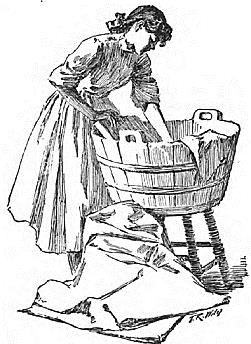



 articlesforchristians
