The Mole had been working very hard all the morning, spring-cleaning his little home. First with brooms, then with dusters; then on ladders and steps and chairs, with a brush and a pail of whitewash; till he had dust in his throat and eyes, and splashes of whitewash all over his black fur, and an aching back and weary arms. Spring was moving in the air above and in the earth below and around him, penetrating even his dark and lowly little house with its spirit of divine discontent and longing. It was small wonder, then, that he suddenly flung down his brush on the floor, and said ‘Bother!’ and ‘O blow!’ and also ‘Hang spring-cleaning!’ and bolted out of the house without even waiting to put on his coat. Something up above was calling him imperiously, and he made for the steep little tunnel which answered in his case to the gavelled carriage-drive owned by animals whose residences are nearer to the sun and air. So he scraped and scratched and scrabbled and scrooged and then he scrooged again and scrabbled and scratched and scraped, working busily with his little paws and muttering to himself, ‘Up we go! Up we go!’ till at last, pop! his snout came out into the sunlight, and he found himself rolling in the warm grass of a great meadow.
‘This is fine!’ he said to himself. ‘This is better than whitewashing!’ The sunshine struck hot on his fur, soft breezes caressed his heated brow, and after the seclusion of the cellarage he had lived in so long the carol of happy birds fell on his dulled hearing almost like a shout. Jumping off all his four legs at once, in the joy of living and the delight of spring without its cleaning, he pursued his way across the meadow till he reached the hedge on the further side.
‘Hold up!’ said an elderly rabbit at the gap. ‘Sixpence for the privilege of passing by the private road!’ He was bowled over in an instant by the impatient and contemptuous Mole, who trotted along the side of the hedge chaffing the other rabbits as they peeped hurriedly from their holes to see what the row was about. ‘Onion-sauce! Onion-sauce!’ he remarked jeeringly, and was gone before they could think of a thoroughly satisfactory reply. Then they all started grumbling at each other. ‘How STUPID you are! Why didn’t you tell him–‘ ‘Well, why didn’t YOU say–‘ ‘You might have reminded him–‘ and so on, in the usual way; but, of course, it was then much too late, as is always the case.
It all seemed too good to be true. Hither and thither through the meadows he rambled busily, along the hedgerows, across the copses, finding everywhere birds building, flowers budding, leaves thrusting-everything happy, and progressive, and occupied. And instead of having an uneasy conscience pricking him and whispering ‘whitewash!’ he somehow could only feel how jolly it was to be the only idle dog among all these busy citizens. After all, the best part of a holiday is perhaps not so much to be resting yourself, as to see all the other fellows busy working.
He thought his happiness was complete when, as he meandered aimlessly along, suddenly he stood by the edge of a full-fed river. Never in his life had he seen a river before-this sleek, sinuous, full-bodied animal, chasing and chuckling, gripping things with a gurgle and leaving them with a laugh, to fling on fresh playmates that shook themselves free, and were caught and held again. All was a-shake and a-shiver-glints and gleams and sparkles, rustle and swirl, chatter and bubble. The Mole was bewitched, entranced, fascinated. By the side of the river he trotted as one trots, when very small, by the side of a man who holds one spell-bound by exciting stories; and when tired at last, he sat on the bank, while the river still chattered on to him, a babbling procession of the best stories in the world, sent from the heart of the earth to be told at last to the insatiable sea.
As he sat on the grass and looked across the river, a dark hole in the bank opposite, just above the water’s edge, caught his eye, and dreamily he fell to considering what a nice snug dwelling-place it would make for an animal with few wants and fond of a bijou riverside residence, above flood level and remote from noise and dust. As he gazed, something bright and small seemed to twinkle down in the heart of it, vanished, then twinkled once more like a tiny star. But it could hardly be a star in such an unlikely situation; and it was too glittering and small for a glow-worm. Then, as he looked, it winked at him, and so declared itself to be an eye; and a small face began gradually to grow up round it, like a picture round a frame.
A brown little face, with whiskers.
A grave round face, with the same twinkle in its eye that had first attracted his notice.
Small neat ears and thick silky hair.
It was the Water Rat!
Then the two animals stood and regarded each other cautiously.
‘Hullo, Mole!’ said the Water Rat.
‘Hullo, Rat!’ said the Mole.
‘Would you like to come over?’ enquired the Rat presently.
‘Oh, it’s all very well to TALK,’ said the Mole, rather pettishly, he being new to a river and riverside life and its ways.
The Rat said nothing, but stooped and unfastened a rope and hauled on it; then lightly stepped into a little boat which the Mole had not observed. It was painted blue outside and white within, and was just the size for two animals; and the Mole’s whole heart went out to it at once, even though he did not yet fully understand its uses.
The Rat sculled smartly across and made fast. Then he held up his forepaw as the Mole stepped gingerly down. ‘Lean on that!’ he said. ‘Now then, step lively!’ and the Mole to his surprise and rapture found himself actually seated in the stern of a real boat.
‘This has been a wonderful day!’ said he, as the Rat shoved off and took to the sculls again. ‘Do you know, I’ve never been in a boat before in all my life.’
‘What?’ cried the Rat, open-mouthed: ‘Never been in a-you never-well I-what have you been doing, then?’
‘Is it so nice as all that?’ asked the Mole shyly, though he was quite prepared to believe it as he leant back in his seat and surveyed the cushions, the oars, the rowlocks, and all the fascinating fittings, and felt the boat sway lightly under him.
‘Nice? It’s the ONLY thing,’ said the Water Rat solemnly, as he leaned forward for his stroke. ‘Believe me, my young friend, there is NOTHING-absolute nothing-half so much worth doing as simply messing about in boats. Simply messing,’ he went on dreamily: ‘messing-about-in-boats; messing–‘
‘Look ahead, Rat!’ cried the Mole suddenly.
It was too late. The boat struck the bank full tilt. The joyous oarsman lay on his back at the bottom of the boat, his heels in the air.
‘-about in boats-or WITH boats,’ the Rat went on composedly, picking himself up with a pleasant laugh. ‘In ’em or out of ’em, it doesn’t matter. Nothing seems really to matter, that’s the charm of it. Whether you get away, or whether you don’t; whether you arrive at your destination or whether you reach somewhere else, or whether you never get anywhere at all, you’re always busy, and you never do anything in particular; and when you’ve done there’s always something else to do, and you can do it if you like, but you’d much better not. Look here! If you’ve really nothing else on hand this morning, supposing we drop down the river together, and have a long day of it?’
The Mole waggled his toes from sheer happiness, spread his chest with a sigh of full contentment, and leaned back blissfully into the soft cushions. ‘WHAT a day I’m having!’ he said. ‘Let us start at once!’
‘Hold hard a minute, there!’ said the Rat. He looped the painter through a ring in his landing-stage, climbed up into his hole above, and after a short interval reappeared staggering under a fat, wicker luncheon-basket.
‘Shove that under your feet,’ he observed to the Mole, as he passed it down into the boat. Then he untied the painter and took the sculls again.
‘What’s inside it?’ asked the Mole, wriggling with curiosity.
‘There’s cold chicken inside it,’ replied the Rat briefly; ‘coldtonguecoldhamcoldbeefpickledgherkinssaladfrenchrollscresssandwichespottedmeatgingerbeerlemonadesodawater–‘
‘O stop, stop,’ cried the Mole in ecstasies: ‘This is too much!’
‘Do you really think so?’ enquired the Rat seriously. ‘It’s only what I always take on these little excursions; and the other animals are always telling me that I’m a mean beast and cut it VERY fine!’
The Mole never heard a word he was saying. Absorbed in the new life he was entering upon, intoxicated with the sparkle, the ripple, the scents and the sounds and the sunlight, he trailed a paw in the water and dreamed long waking dreams. The Water Rat, like the good little fellow he was, sculled along steadily and forbore to disturb him.
‘I like your clothes awfully, old chap,’ he remarked after some half an hour or so had passed. ‘I’m going to get a black velvet smoking-suit myself someday, as soon as I can afford it.’
‘I beg your pardon,’ said the Mole, pulling himself together with an effort. ‘You must think me very rude; but all this is so new to me. So-this-is-a-River!’
‘THE River,’ corrected the Rat.
‘And you really live by the river? What a jolly life!’
‘By it and with it and on it and in it,’ said the Rat. ‘It’s brother and sister to me, and aunts, and company, and food and drink, and (naturally) washing. It’s my world, and I don’t want any other. What it hasn’t got isn’t worth having, and what it doesn’t know is not worth knowing. Lord! the times we’ve had together! Whether in winter, summer, spring or autumn, it’s always got its fun and its excitements. When the floods are on in February, and my cellars and basement are brimming with drink that’s no good to me, and the brown water runs by my best bedroom window; or again when it all drops away and, shows patches of mud that smells like plum-cake, and the rushes and weed clog the channels, and I can potter about dry shod over most of the bed of it and find fresh food to eat, and things careless people have dropped out of boats!’
‘But isn’t it a bit dull at times?’ the Mole ventured to ask. ‘Just you and the river, and no one else to pass a word with?’
‘No one else to-well, I mustn’t be hard on you,’ said the Rat with forbearance. ‘You’re new to it, and of course you don’t know. The bank is so crowded nowadays that many people are moving away altogether: O no, it isn’t what it used to be, at all. Otters, kingfishers, dabchicks, moorhens, all of them all about all day long and always wanting you to DO something-as if a fellow had no business of his own to attend to!’
‘What lies over THERE’ asked the Mole, waving a paw towards a background of woodland that darkly framed the water-meadows on one side of the river.
‘That? O, that’s just the Wild Wood,’ said the Rat shortly. ‘We don’t go there very much, we river-bankers.’
‘Aren’t they-aren’t they very NICE people in there?’ asked the Mole, a trifle nervously.
‘W-e-ll,’ replied the Rat, ‘let me see. The squirrels are all right. AND the rabbits-some of ’em, but rabbits are a mixed lot. And then there’s Badger, of course. He lives right in the heart of it; wouldn’t live anywhere else, either, if you paid him to do it. Dear old Badger! Nobody interferes with HIM. They’d better not,’ he added significantly.
‘Why, who SHOULD interfere with him?’ asked the Mole.
‘Well, of course-there’s the others,’ explained the Rat in a hesitating sort of way.
‘Weasels-and stoats-and foxes-and so on. They’re all right in a way-I’m very good friends with them-pass the time of day when we meet, and all that-but they break out sometimes, there’s no denying it, and then-well, you just can’t trust them, and that’s the fact.’
The Mole knew well that it is quite against animal-etiquette to dwell on possible trouble ahead, or even to allude to it; so he dropped the subject.
‘And beyond the Wild Wood again?’ he asked: ‘Where it’s all blue and dim, and one sees what may be hills or perhaps they mayn’t, and something like the smoke of towns, or is it only cloud-drift?’
‘Beyond the Wild Wood comes the Wide World,’ said the Rat. ‘And that’s something that doesn’t matter, either to you or me. I’ve never been there, and I’m never going, nor you either, if you’ve got any sense at all. Don’t ever refer to it again, please. Now then! Here’s our backwater at last, where we’re going to lunch.’
Leaving the main stream, they now passed into what seemed at first sight like a little land-locked lake. Green turf sloped down to either edge, brown snaky tree-roots gleamed below the surface of the quiet water, while ahead of them the silvery shoulder and foamy tumble of a weir, arm-in-arm with a restless dripping mill-wheel, that held up in its turn a grey-gabled mill-house, filled the air with a soothing murmur of sound, dull and smothery, yet with little clear voices speaking up cheerfully out of it at intervals. It was so very beautiful that the Mole could only hold up his forepaws and gasp, ‘O my! O my! O my!’
The Rat brought the boat alongside the bank, made her fast, helped the still awkward Mole safely ashore, and swung out the luncheon-basket. The Mole begged as a favour to be allowed to unpack it all by himself; and the Rat was very pleased to indulge him, and to sprawl at full length on the grass and rest, while his excited friend shook out the table-cloth and spread it, took out all the mysterious packages one by one and arranged their contents in due order, still gasping, ‘O my! O my!’ at each fresh revelation. When all was ready, the Rat said, ‘Now, pitch in, old fellow!’ and the Mole was indeed very glad to obey, for he had started his spring-cleaning at a very early hour that morning, as people WILL do, and had not paused for bite or sup; and he had been through a very great deal since that distant time which now seemed so many days ago.
‘What are you looking at?’ said the Rat presently, when the edge of their hunger was somewhat dulled, and the Mole’s eyes were able to wander off the table-cloth a little.
‘I am looking,’ said the Mole, ‘at a streak of bubbles that I see travelling along the surface of the water. That is a thing that strikes me as funny.’
‘Bubbles? Oho!’ said the Rat, and chirruped cheerily in an inviting sort of way.
A broad glistening muzzle showed itself above the edge of the bank, and the Otter hauled himself out and shook the water from his coat.
‘Greedy beggars!’ he observed, making for the provender. ‘Why didn’t you invite me, Ratty?’
‘This was an impromptu affair,’ explained the Rat. ‘By the way-my friend Mr. Mole.’
‘Proud, I’m sure,’ said the Otter, and the two animals were friends forthwith.
‘Such a rumpus everywhere!’ continued the Otter. ‘All the world seems out on the river today. I came up this backwater to try and get a moment’s peace, and then stumble upon you fellows!-At least-I beg pardon-I didn’t exactly mean that, you know.’
There was a rustle behind them, proceeding from a hedge wherein last year’s leaves still clung thick, and a stripy head, with high shoulders behind it, peered forth on them.
‘Come on, old Badger!’ shouted the Rat.
The Badger trotted forward a pace or two; then grunted, ‘H’m! Company,’ and turned his back and disappeared from view.
‘That’s JUST the sort of fellow he is!’ observed the disappointed Rat. ‘Simply hates Society! Now we shan’t see anymore of him today. Well, tell us, WHO’S out on the river?’
‘Toad’s out, for one,’ replied the Otter. ‘In his brand-new wager-boat; new togs, new everything!’
The two animals looked at each other and laughed.
‘Once, it was nothing but sailing,’ said the Rat, ‘Then he tired of that and took to punting. Nothing would please him but to punt all day and every day, and a nice mess he made of it. Last year it was house-boating, and we all had to go and stay with him in his house-boat, and pretend we liked it. He was going to spend the rest of his life in a house-boat. It’s all the same, whatever he takes up; he gets tired of it, and starts on something fresh.’
‘Such a good fellow, too,’ remarked the Otter reflectively: ‘But no stability-especially in a boat!’
From where they sat they could get a glimpse of the main stream across the island that separated them; and just then a wager-boat flashed into view, the rower-a short, stout figure-splashing badly and rolling a good deal, but working his hardest. The Rat stood up and hailed him, but Toad-for it was he-shook his head and settled sternly to his work.
‘He’ll be out of the boat in a minute if he rolls like that,’ said the Rat, sitting down again.
‘Of course he will,’ chuckled the Otter. ‘Did I ever tell you that good story about Toad and the lock-keeper? It happened this way. Toad….’
An errant May-fly swerved unsteadily athwart the current in the intoxicated fashion affected by young bloods of May-flies seeing life. A swirl of water and a ‘cloop!’ and the May-fly was visible no more.
Neither was the Otter.
The Mole looked down. The voice was still in his ears, but the turf whereon he had sprawled was clearly vacant. Not an Otter to be seen, as far as the distant horizon.
But again, there was a streak of bubbles on the surface of the river.
The Rat hummed a tune, and the Mole recollected that animal-etiquette forbade any sort of comment on the sudden disappearance of one’s friends at any moment, for any reason or no reason whatever.
‘Well, well,’ said the Rat, ‘I suppose we ought to be moving. I wonder which of us had better pack up the luncheon-basket?’ He did not speak as if he was frightfully eager for the treat.
‘O, please let me,’ said the Mole. So, of course, the Rat let him.
Packing the basket was not quite such pleasant work as unpacking’ the basket. It never is. But the Mole was bent on enjoying everything, and although just when he had got the basket packed and strapped up tightly he saw a plate staring up at him from the grass, and when the job had been done again the Rat pointed out a fork which anybody ought to have seen, and last of all, behold! the mustard pot, which he had been sitting on without knowing it-still, somehow, the thing got finished at last, without much loss of temper.
The afternoon sun was getting low as the Rat sculled gently homewards in a dreamy mood, murmuring poetry-things over to himself, and not paying much attention to Mole. But the Mole was very full of lunch, and self-satisfaction, and pride, and already quite at home in a boat (so he thought) and was getting a bit restless besides: and presently he said, ‘Ratty! Please, I want to row, now!’
The Rat shook his head with a smile. ‘Not yet, my young friend,’ he said-‘wait till you’ve had a few lessons. It’s not so easy as it looks.’
The Mole was quiet for a minute or two. But he began to feel more and more jealous of Rat, sculling so strongly and so easily along, and his pride began to whisper that he could do it every bit as well. He jumped up and seized the sculls, so suddenly, that the Rat, who was gazing out over the water and saying more poetry-things to himself, was taken by surprise and fell backwards off his seat with his legs in the air for the second time, while the triumphant Mole took his place and grabbed the sculls with entire confidence.
‘Stop it, you SILLY ass!’ cried the Rat, from the bottom of the boat. ‘You can’t do it! You’ll have us over!’
The Mole flung his sculls with a flourish, and made a great dig at the water. He missed the surface altogether, his legs flew up over his head, and he found himself lying on the top of the prostrate Rat. Greatly alarmed, he made a grab at the side of the boat, and the next moment-Sploosh!
Over went the boat, and he found himself struggling in the river.
O my, how cold the water was, and O, how VERY wet it felt. How it sang in his ears as he went down, down, down! How bright and welcome the sun looked as he rose to the surface coughing and spluttering! How black was his despair when he felt himself sinking again! Then a firm paw gripped him by the back of his neck. It was the Rat, and he was evidently laughing-the Mole could FEEL him laughing, right down his arm and through his paw, and so into his-the Mole’s-neck.
The Rat got hold of a scull and shoved it under the Mole’s arm; then he did the same by the other side of him and, swimming behind, propelled the helpless animal to shore, hauled him out, and set him down on the bank, a squashy, pulpy lump of misery.
When the Rat had rubbed him down a bit, and wrung some of the wet out of him, he said, ‘Now, then, old fellow! Trot up and down the towing-path as hard as you can, till you’re warm and dry again, while I dive for the luncheon-basket.’
So the dismal Mole, wet without and ashamed within, trotted about till he was fairly dry, while the Rat plunged into the water again, recovered the boat, righted her and made her fast, fetched his floating property to shore by degrees, and finally dived successfully for the luncheon-basket and struggled to land with it.
When all was ready for a start once more, the Mole, limp and dejected, took his seat in the stern of the boat; and as they set off, he said in a low voice, broken with emotion, ‘Ratty, my generous friend! I am very sorry indeed for my foolish and ungrateful conduct. My heart quite fails me when I think how I might have lost that beautiful luncheon-basket. Indeed, I have been a complete ass, and I know it. Will you overlook it this once and forgive me, and let things go on as before?’
‘That’s all right, bless you!’ responded the Rat cheerily. ‘What’s a little wet to a Water Rat? I’m more in the water than out of it most days. Don’t you think any more about it; and, look here! I really think you had better come and stop with me for a little while. It’s very plain and rough, you know-not like Toad’s house at all-but you haven’t seen that yet; still, I can make you comfortable. And I’ll teach you to row, and to swim, and you’ll soon be as handy on the water as any of us.’
The Mole was so touched by his kind manner of speaking that he could find no voice to answer him; and he had to brush away a tear or two with the back of his paw. But the Rat kindly looked in another direction, and presently as the Mole’s spirits revived again, he was even able to give some straight back-talk to a couple of moorhens who were sniggering to each other about his bedraggled appearance.
When they got home, the Rat made a bright fire in the parlor, and planted the Mole in an arm-chair in front of it, having fetched down a dressing-gown and slippers for him, and told him river stories till supper-time. Very thrilling stories they were, too, to an earth-dwelling animal like Mole. Stories about weirs, and sudden floods, and leaping pike, and steamers that flung hard bottles-at least bottles were certainly flung, and FROM steamers, so presumably BY them; and about herons, and how particular they were whom they spoke to; and about adventures down drains, and night-fishings with Otter, or excursions far a-field with Badger. Supper was a most cheerful meal; but very shortly afterwards a terribly sleepy Mole had to be escorted upstairs by his considerate host, to the best bedroom, where he soon laid his head on his pillow in great peace and contentment, knowing that his new-found friend the River was lapping the sill of his window.
This day was only the first of many similar ones for the emancipated Mole, each of them longer and fuller of interest as the ripening summer moved onward. He learnt to swim and to row, and entered into the joy of running water; and with his ear to the reed-stems he caught, at intervals, something of what the wind went whispering so constantly among them.
This timeline goes from the Birth of John the Baptist to the Ascension of Jesus. It includes other historic events that were happening during this same time frame. There are some secular resources that links to other websites.
14 AD Death of the Roman historian Livy, in the city of Patavium, Italy.
14 AD The aqueduct, the Pont du Gard, is completed near modern Nimes in Gaul.
15 AD Emperor Tiberius transfers the elections from the popular assemblies to the Senate.
15 AD Birth of the Emperor Vitellius.
17 AD Death of the Roman writer Ovid, who died in Tomis, Moesia while exile, apparantly because of offenses to Augustus’ moral code.
19 AD Death of Germanicus, possibly but not necessarily by the direct order of Tiberius.
22 AD Construction of the Castra Praetoria (Praetorian barracks) by Sejanus is completed and the Praetorians are forever changed into a political force.
23 AD Birth of the Roman historian Pliny the Elder, in the town of Novum Comum, in Italy.
George Washington was born in a plain, old-fashioned house in Westmoreland County, Virginia, on the twenty-second day of February, 1732. He was sent to what was called an “old field school.” The country schoolhouses in Virginia at that time were built in fields too much worn out to grow anything. Little George Washington went to a school taught by a man named Hobby.
In that day the land in Virginia was left to the oldest son, after the custom in England, for Virginia was an English colony. As George’s elder brother Lawrence was to have the land and be the great gentleman of the family, he had been sent to England for his education. When he got back, with many a strange story of England to tell, George became very proud of him, and Lawrence was equally pleased with his manly little brother. When Lawrence went away as captain, in the regiment raised in America for service in the English army against the Spaniards in the West Indies, George began to think much of a soldier’s life, and to drill the boys in Hobby’s school. There were marches and parades and bloodless battles fought among the tufts of broom-straw in the old field, and in these young George was captain.
This play-captain soon came to be a tall boy. He could run swiftly, and he was a powerful wrestler. The stories of the long jumps he made are almost beyond belief. It was also said that he could throw farther than anybody else. The people of that day went everywhere on horseback, and George was not afraid to get astride of the wildest horse or an unbroken colt. These things proved that he was a strongly built and fearless boy. But a better thing is told of him. He was so just, that his schoolmates used to bring their quarrels for him to settle.
When Washington was eleven years old his father died, but his mother took pains to bring him up with manly ideas. He was now sent to school to a Mr. Williams, from whom he learned reading, writing, and arithmetic. To these were added a little book-keeping and surveying.
George took great pains with all he did. His copybooks have been kept, and they show that his handwriting was very neat. He also wrote out over fifty rules for behavior in company.” You see that he wished to be a gentleman in every way.
His brother Lawrence wanted George to go to sea as a midshipman in the British navy, and George himself liked the plan. But his mother was unwilling to part with him. So he stayed at school until he was sixteen years old.
A great deal of the northern part of Virginia at this time belonged to Lord Fairfax, an eccentric nobleman, whose estates included many whole counties. George Washington must have studied his books of surveying very carefully, for he was only a large boy when he was employed to go over beyond the Blue Ridge Mountains and survey some of the wild lands of Lord Fairfax.
So, when he was just sixteen years old, young Washington accepted the offer of Lord Fairfax, and set out for the wilderness. He crossed rough mountains and rode his horse through swollen streams. The settlers’ beds were only masses of straw, with, perhaps, a ragged blanket. But George slept most of the time out under the sky by a campfire, with a little haw straw, or fodder for a bed. Sometimes men and women and children slept around these fires, “like cats and dogs,” as Washington wrote, “and happy is he who gets nearest the fire.” Once the straw on which the young- surveyor was asleep blazed up, and he might have been consumed if one of the party had not waked him in time. Washington must have been a pretty good surveyor, for he received large pay for his work, earning from seven to twenty-one dollars a day, in a time when things were much cheaper than they are now.
The food of people in the woods was the meat of wild turkey and other game. Every man was his own cook, toasting his meat on a forked stick, and eating it off a chip instead of a plate. Washington led this rough life for three years. It was a good school for a soldier. Here, too, he made his first acquaintance with the American Indians. He saw a party of them dance to the music of a drum made by stretching deer-skin very tightly over the top of a pot half full of water. They also had a rattle, made by putting shot into a gourd. They took pains to tie a piece of horse’s tail to the gourd, so as to see the horse-hair switch to and fro when the gourd was shaken.
When Washington was but nineteen years old the governor of Virginia made him a major of He took lessons in military drill from an old soldier, and practiced sword exercises under the instruction of a Dutchman named Van Braam. The people in Virginia and the other colonies were looking forward to a war with the French, who in that day had colonies in Canada and Louisiana. They claimed the country west of the Alleghany Mountains. The English colonists had spread over most of the country east of the mountains, and they were beginning to cross the Alleghanies. But the French built forts on the west side of the mountains and stirred up the Indians to prevent the English settlers from coming over into the rich valley of the Ohio River.
The governor of Virginia resolved to send an officer to warn the French that they were on English ground. Who was so fit to go on this hard and dangerous errand as the brave young Major Washington, who knew both the woods and the ways of the Indians? So Washington set out with a few hardy frontiersmen. When at length, after crossing swollen streams and rough mountains, he got over to the Ohio River, where all was wilderness, he called the Indians together and had a big talk with them, at a place called Logtown. He got a chief called “The Half-king,” and some other Indians, to go with him to the French fort.
The French officers had no notion of giving up their fort to the English. They liked this brave and gentlemanly young Major Washington and entertained him well. But they tried to get the Half-king and his Indians to leave Washington and did what they could to keep him from getting safely home again. With a great deal of trouble, he got his Indians away from the French fort at last and started back. Part of the way they traveled in canoes, jumping out into the icy water now and then to lift the canoes over shallow places.
When Washington came to the place where he was to leave the Indians and recross the mountains, his packhorses were found to be so weak that they were unfit for their work. So Major Washington gave up his saddlehorse to carry the baggage. Then he strapped a pack on his back, shouldered his gun, and with a man named Gist set out ahead of the rest of the party.
Washington and Gist had a rascally Indian for guide. When Washington was tired this fellow wished to carry his gun for him, but the young major thought the gun safer in his own hands. At length, as evening came on, the Indian turned suddenly, leveled his gun, and fired on Washington and Gist, in the dark, but without hitting either of them. They seized him before he could reload his gun. Gist wanted to kill him, but Washington thought it better to let him go.
Afraid of being attacked, they now traveled night and day till they got to the Alleghany River. This was full of floating ice, and they tried to cross it on a raft. Washington was pushing the raft with a pole, when the ice caught the pole in such a way as to fling him into the river. He caught hold of the raft and got out again. He and Gist spent the cold night on an island in the river and got ashore in the morning by walking on the ice.
They now stopped at the house of an Indian trader. Nearby was a chief, who was offended that she had not been asked to the council Washington had held with the Indians at Logtown. To make friends, he made her a visit, and presented her with a blanket such as the Indians wear on their shoulders. Washington bought a horse here, and soon got back to the settlements, where the story of the adventures of the young major was told from one plantation to another, producing much excitement.
George Washington Carver (1864-1943) was a Black American scientist who gained worldwide recognition for his agricultural research, particularly with peanuts. He developed over 300 peanut-based products, such as a milk substitute, face powder, printer’s ink, and soap. Carver also dedicated himself to advancing the interests of Black people and fostering better relationships between Black and white communities.
Early years
Carver was born into slavery on a farm near Diamond, Missouri. Soon after his birth, his father died in an accident, and his mother was kidnapped by night raiders. He was raised by his owners, Moses and Susan Carver, until slavery was abolished in 1865. As a young boy, George had a strong fascination with plants and a deep eagerness to learn. The Carvers taught him how to read and write, and around the age of 11, he moved to Neosho, Missouri, to attend a school for Black children. Over the next 20 years, Carver took on various jobs to support himself and fund his education. In 1890, he enrolled at Simpson College in Indianola, Iowa, where he showed talent as a painter but ultimately chose to pursue agriculture. A year later, he transferred to Iowa State Agricultural College (now Iowa State University) in Ames, earning his bachelor’s degree in agriculture in 1894 and his master’s degree in 1896.
Tuskegee instructor and researcher
In 1896, Carver moved to Alabama to join the faculty at the Tuskegee Institute (now Tuskegee University), an industrial and agricultural school for Black students. He became head of the agricultural department and director of a state agricultural station. Initially, Carver continued his research on fungi, a subject he had specialized in while in Iowa. Over time, however, he shifted his focus to soil conservation and other methods to boost production. He also wrote and distributed pamphlets and bulletins on applied agriculture to farmers in Alabama and beyond. In addition, Carver worked to promote better farming practices among Southern farmers, especially Black farmers, through conferences, traveling exhibits, demonstrations, and public lectures. In 1910, Carver became head of Tuskegee’s newly established Department of Research. By 1914, he turned his attention to studying peanuts. His big break came in 1921, when he testified before Congress about the many uses of peanuts, gaining national recognition. He went on to tour the country, promoting peanuts, and during the 1920s devoted much of his time to improving race relations. He was especially active with the Commission on Inter-Racial Cooperation and the Young Men’s Christian Association (YMCA).
Awards and honors
Carver received many awards for his accomplishments.
In 1916, he was named a fellow of the Royal Society of Arts of London.
In 1923, the National Association for the Advancement of Colored People (NAACP) awarded him the Spingarn Medal for distinguished service in agricultural chemistry.
In 1939, Carver received the Theodore Roosevelt Medal for his valuable contributions to science.
In 1951, the George Washington Carver National Monument was established on 210 acres (85 hectares) of the Missouri farm where Carver was born.
Paul and Silas were in prison. They had done no wrong, but wicked men had taken them before the magistrates; and the magistrates had caused them to be severely beaten, and afterwards had sent them to prison, where they were securely fastened in an inner dungeon, and their feet made fast in the stocks. This was a most painful position for Paul and Silas. But they were not unhappy. They prayed to God, and sang praises to Him; and they sang so heartily that the other prisoners heard them. It was midnight, and all was dark in the prison. But suddenly there was an earthquake; so that the foundations of the prison were shaken, all the doors were opened, and every one’s bonds were loosed. All the prisoners might have run away had they been minded to do so.
The keeper of the prison had been sleeping, but the earthquake awoke him. When he saw the doors open, he supposed that all the prisoners had fled; and knowing how severely he would be punished on that account, he drew his sword to kill himself. Paul knew this, and called out loudly, “Do thyself no harm, for we are all here.” Then the keeper, who but a little while before had cruelly treated Paul and Silas, came trembling, and fell down before them, and said, “Sirs, what must I do to be saved?” He was afraid because of his sins; and wanted to know how he might be saved from the fearful consequences of sin. Paul’s answer was, “Believe on the Lord Jesus Christ and thou shalt be saved.” Then Paul and Silas spoke to him about Jesus. He believed, and was baptized; and the next morning the two disciples were set at liberty.
The Code of Hammurabi is one of the most important monuments in the history of the human race. Containing as it does the laws which were enacted by a king of Babylonia in the third millennium B.C., whose rule extended over the whole of Mesopotamia from the mouths of the rivers Tigris and Euphrates to the Mediterranean coast, we must regard it with interest.
The monument itself consists of a block of black diorite, nearly eight feet high, found in pieces, but readily rejoined. It contains on the obverse a very interesting representation of the King Hammurabi, receiving his laws from the seated sun-god Šamaš, ‘the judge of heaven and earth.’ Then follow, on the obverse, sixteen columns of writing with 1114 lines. There were five more columns on this side, but they have been erased and the stone repolished, doubtless by the Elamite conqueror, who meant to inscribe his name and titles there. As we have lost those five columns we may regret that he did not actually do this, but there is now no trace of any hint as to who carried off the stone. On the reverse side are twenty-eight columns with more than 2500 lines of inscription.
Replica of the Code of Hammurabi
A great space, some 700 lines, is devoted by the king to setting out his titles, his glory, his care for his subjects, his veneration of his gods, and incidentally revealing the cities and districts under his rule, with many interesting hints as to local cults. He also invokes blessing on those who should preserve and respect his monument, and curses those who should injure or remove it.
THE TEXT OF THE CODE
§ 1. If a man weave a spell and put a ban upon a man, and has not justified himself, he that wove the spell upon him shall be put to death.
§ 2. If a man has put a spell upon a man, and has not justified himself, he upon whom the spell is laid shall go to the holy river, he shall plunge into the holy river, and if the holy river overcome him, he who wove the spell upon him shall take to himself his house. If the holy river makes that man to be innocent, and has saved him, he who laid the spell upon him shall be put to death. He who plunged into the holy river shall take to himself the house of him who wove the spell upon him.
§ 3. If a man, in a case pending judgement, has uttered threats against the witnesses, or has not justified the word that he has spoken, if that case be a capital suit, that man shall be put to death.
§ 4. If he has offered corn or money to the witnesses, he shall himself bear the sentence of that case.
§ 5. If a judge has judged a judgement, decided a decision, granted a sealed sentence, and afterwards has altered his judgement, that judge, for the alteration of the judgement that he judged, one shall put him to account, and he shall pay twelvefold the penalty which was in the said judgement, and in the assembly one shall expel him from his judgement seat, and he shall not return, and with the judges at a judgement he shall not take his seat.
§ 6. If a man has stolen the goods of temple or palace, that man shall be killed, and he who has received the stolen thing from his hand shall be put to death.
§ 7. If a man has bought silver, gold, manservant or maidservant, ox or sheep or ass, or anything whatever its name, from the hand of a man’s son, or of a man’s slave, without witness and bonds, or has received the same on deposit, that man has acted the thief, he shall be put to death.
§ 8. If a man has stolen ox or sheep or ass, or pig, or ship, whether from the temple or the palace, he shall pay thirtyfold. If he be a poor man, he shall render tenfold. If the thief has nought to pay, he shall be put to death.
§ 9. If a man who has lost something of his, something of his that is lost has been seized in the hand of a man, the man in whose hand the lost thing has been seized has said, ‘A giver gave it me,’ or ‘I bought it before witnesses,’ and the owner of the thing that is lost has said, ‘Verily, I will bring witnesses that know my lost property,’ the buyer has brought the giver who gave it him and the witnesses before whom he bought it, and the owner of the lost property has brought the witnesses who know his lost property, the judge shall see their depositions, the witnesses before whom the purchase was made and the witnesses knowing the lost property shall say out before God what they know; and if the giver has acted the thief he shall be put to death, the owner of the lost property shall take his lost property, the buyer shall take the money he paid from the house of the giver.
§ 10. If the buyer has not brought the giver who gave it him and the witnesses before whom he bought, and the owner of the lost property has brought the witnesses knowing his lost property, the buyer has acted the thief, he shall be put to death; the owner of the lost property shall take his lost property.
§ 11. If the owner of the lost property has not brought witnesses knowing his lost property, he has lied, he has stirred up strife, he shall be put to death.
§ 12. If the giver has betaken himself to his fate, the buyer shall take from the house of the giver fivefold as the penalty of that case.
§ 13. If that man has not his witnesses near, the judge shall set him a fixed time, up to six months, and if within six months he has not driven in his witnesses, that man has lied, he himself shall bear the blame of that case.
§ 14. If a man has stolen the son of a freeman, he shall be put to death.
§ 15. If a man has caused either a palace slave or palace maid, or a slave of a poor man or a poor man’s maid, to go out of the gate, he shall be put to death.
§ 16. If a man has harboured in his house a manservant or a maidservant, fugitive from the palace, or a poor man, and has not produced them at the demand of the commandant, the owner of that house shall be put to death.
§ 17. If a man has captured either a manservant or a maidservant, a fugitive, in the open country and has driven him back to his master, the owner of the slave shall pay him two shekels of silver.
§ 18. If that slave will not name his owner he shall drive him to the palace, and one shall enquire into his past, and cause him to return to his owner.
§ 19. If he confine that slave in his house, and afterwards the slave has been seized in his hand, that man shall be put to death.
§ 20. If the slave has fled from the hand of his captor, that man shall swear by the name of God, to the owner of the slave, and shall go free.
§ 21. If a man has broken into a house, one shall kill him before the breach and bury him in it (?).
§ 22. If a man has carried on brigandage, and has been captured, that man shall be put to death.
§ 23. If the brigand has not been caught, the man who has been despoiled shall recount before God what he has lost, and the city and governor in whose land and district the brigandage took place shall render back to him whatever of his was lost.
§ 24. If it was a life, the city and governor shall pay one mina of silver to his people.
§ 25. If in a man’s house a fire has been kindled, and a man who has come to extinguish the fire has lifted up his eyes to the property of the owner of the house, and has taken the property of the owner of the house, that man shall be thrown into that fire.
§ 26. If either a ganger or a constable, whose going on an errand of the king has been ordered, goes not, or hires a hireling and sends him in place of himself, that ganger or constable shall be put to death; his hireling shall take to himself his house.
§ 27. If a ganger or a constable, who is diverted to the fortresses of the king, and after him one has given his field and his garden to another, and he has carried on his business, if he returns and regains his city, one shall return to him his field and his garden, and he shall carry on his business himself.
§ 28. If a ganger or a constable who is diverted to the fortresses of the king, his son be able to carry on the business, one shall give him field and garden and he shall carry on his father’s business.
§ 29. If his son is young and is not able to carry on his father’s business, one-third of the field and garden shall be given to his mother, and his mother shall rear him.
§ 30. If a ganger or a constable has left alone his field, or his garden, or his house, from the beginning of his business, and has caused it to be waste, a second after him has taken his field, his garden, or his house, and has gone about his business for three years, if he returns and regains his city, and would cultivate his field, his garden, and his house, one shall not give them to him; he who has taken them and carried on his business shall carry it on.
§ 31. If it is one year only and he had let it go waste, and he shall return, one shall give his field, his garden, and his house, and he shall carry on his business.
§ 32. If a ganger or a constable who is diverted on an errand of the king’s, a merchant has ransomed him and caused him to regain his city, if in his house there is means for his ransom, he shall ransom his own self; if in his house there is no means for his ransom, he shall be ransomed from the temple of his city; if in the temple of his city there is not means for his ransom, the palace shall ransom him. His field, his garden, and his house shall not be given for his ransom.
§ 33. If either a governor or a magistrate has taken to himself the men of the levy, or has accepted and sent on the king’s errand a hired substitute, that governor or magistrate shall be put to death.
§ 34. If either a governor or a magistrate has taken to himself the property of a ganger, has plundered a ganger, has given a ganger to hire, has stolen from a ganger in a judgement by high-handedness, has taken to himself the gift the king has given the ganger, that governor or magistrate shall be put to death.
§ 35. If a man has bought the cattle or sheep which the king has given to the ganger from the hand of the ganger, he shall be deprived of his money.
§ 36. The field, garden, and house of a ganger, or constable, or a tributary, he shall not give for money.
§ 37. If a man has bought the field, garden, or house of a ganger, a constable, or a tributary, his tablet shall be broken and he shall be deprived of his money. The field, garden, or house he shall return to its owner.
§ 38. The ganger, constable, or tributary shall not write off to his wife, or his daughter, from the field, garden, or house of his business, and he shall not assign it for his debt.
§ 39. From the field, garden, and house which he has bought and acquired, he may write off to his wife or his daughter and give for his debt.
§ 40. A votary, merchant, or foreign sojourner may sell his field, his garden, or his house; the buyer shall carry on the business of the field, garden, or house which he has bought.
§ 41. If a man has bartered for the field, garden, or house of a ganger, constable, or tributary, and has given exchanges, the ganger, constable, or tributary shall return to his field, garden, or house, and shall keep the exchanges given him.
§ 42. If a man has taken a field to cultivate and has not caused the corn to grow in the field, and has not done the entrusted work on the field, one shall put him to account and he shall give corn like its neighbour.
§ 43. If he has not cultivated the field and has left it to itself, he shall give corn like its neighbour to the owner of the field, and the field he left he shall break up with hoes and shall harrow it and return to the owner of the field.
§ 44. If a man has taken on hire an unreclaimed field for three years to open out, and has left it aside, has not opened the field, in the fourth year he shall break it up with hoes, he shall hoe it, and harrow it, and return to the owner of the field, and he shall measure out ten gur of corn per gan.
§ 45. If a man has given his field for produce to a cultivator, and has received the produce of his field, and afterwards a thunderstorm has ravaged the field or carried away the produce, the loss is the cultivator’s.
§ 46. If he has not received the produce of his field, and has given the field either for one-half or for one-third, the corn that is in the field the cultivator and the owner of the field shall share according to the tenour of their contract.
§ 47. If the cultivator, because in the former year he did not set up his dwelling, has assigned the field to cultivation, the owner of the field shall not condemn the cultivator; his field has been cultivated, and at harvest time he shall take corn according to his bonds.
§ 48. If a man has a debt upon him and a thunderstorm ravaged his field or carried away the produce, or the corn has not grown through lack of water, in that year he shall not return corn to the creditor, he shall alter his tablet and he shall not give interest for that year.
§ 49. If a man has taken money from a merchant and has given to the merchant a field planted with corn or sesame, and said to him, ‘Cultivate the field, reap and take for thyself the corn and sesame which there is,’ if the cultivator causes to grow corn or sesame in the field, at the time of harvest the owner of the field forsooth shall take the corn or sesame which is in the field and shall give corn for the money which he took from the merchant, and for its interests and for the dwelling of the cultivator, to the merchant.
§ 50. If the field was cultivated or the field of sesame was cultivated when he gave it, the owner of the field shall take the corn or sesame which is in the field and shall return the money and its interests to the merchant.
§ 51. If he has not money to return, the sesame, according to its market price for the money and its interest which he took from the merchant, according to the standard fixed by the king, he shall give to the merchant.
§ 52. If the cultivator has not caused corn or sesame to grow in the field, he shall not alter his bonds.
§ 53. If a man has neglected to strengthen his bank of the canal, has not strengthened his bank, a breach has opened out itself in his bank, and the waters have carried away the meadow, the man in whose bank the breach has been opened shall render back the corn which he has caused to be lost.
§ 54. If he is not able to render back the corn, one shall give him and his goods for money, and the people of the meadow whose corn the water has carried away shall share it.
§ 55. If a man has opened his runnel to water and has neglected it, and the field of his neighbour the waters have carried away, he shall pay corn like his neighbour.
§ 56. If a man has opened the waters, and the plants of the field of his neighbour the waters have carried away, he shall pay ten gur of corn per gan.
§ 57. If a shepherd has caused the sheep to feed on the green corn, has not come to an agreement with the owner of the field, without the consent of the owner of the field has made the sheep feed off the field, the owner shall reap his fields, the shepherd who without consent of the owner of the field has fed off the field with sheep shall give over and above twenty gur of corn per gan to the owner of the field.
§ 58. If from the time that the sheep have gone up from the meadow, and the whole flock has passed through the gate, the shepherd has laid his sheep on the field and has caused the sheep to feed off the field, the shepherd who has made them feed off the field one shall watch, and at harvest time he shall measure out sixty gur of corn per gan to the owner of the field.
§ 59. If a man without the consent of the owner of the orchard has cut down a tree in a man’s orchard, he shall pay half a mina of silver.
§ 60. If a man has given a field to a gardener to plant a garden and the gardener has planted the garden, four years he shall rear the garden, in the fifth year the owner of the garden and the gardener shall share equally, the owner of the garden shall cut off his share and take it.
§ 61. If the gardener has not included all the field in the planting, has left a waste place, he shall set the waste place in the share which he takes.
§ 62. If the field which has been given him to plant he has not planted as a garden, if it was corn land, the gardener shall measure out corn to the owner of the field, like its neighbour, as produce of the field for the years that are neglected, and he shall do the ordered work on the field and return to the owner of the field.
§ 63. If the field was unreclaimed land, he shall do the ordered work on the field and return it to the owner of the field and measure out ten gur of corn per gan for each year.
§ 64. If a man has given his garden to a gardener to farm, the gardener as long as he holds the garden shall give to the owner of the garden two-thirds from the produce of the garden, and he himself shall take one-third.
§ 65. If the gardener does not farm the garden and has diminished the yield, he shall measure out the yield of the garden like its neighbour.
note.—Here five columns of the monument have been erased, only the commencing characters of column xvii. being visible. The subjects of this last part included the further enactments concerning the rights and duties of gardeners, the whole of the regulations concerning houses let to tenants, and the relationships of the merchant to his agents, which continue on the obverse of the monument. Scheil estimates the lost portion at 35 sections, and following him we recommence with
§ 100. . . . the interests of the money, as much as he took, he shall write down, and when he has numbered his days he shall answer his merchant.
§ 101. If where he has gone he has not seen prosperity, he shall make up and return the money he took, and the agent shall give to the merchant.
§ 102. If a merchant has given to the agent money as a favour, and where he has gone he has seen loss, the full amount of money he shall return to the merchant.
§ 103. If while he goes on his journey the enemy has made him quit whatever he was carrying, the agent shall swear by the name of God and shall go free.
§ 104. If the merchant has given to the agent corn, wool, oil, or any sort of goods, to traffic with, the agent shall write down the price and hand over to the merchant; the agent shall take a sealed memorandum of the price which he shall give to the merchant.
§ 105. If an agent has forgotten and has not taken a sealed memorandum of the money he has given to the merchant, money that is not sealed for, he shall not put in his accounts.
§ 106. If an agent has taken money from a merchant and his merchant has disputed with him, that merchant shall put the agent to account before God and witnesses concerning the money taken, and the agent shall give to the merchant the money as much as he has taken threefold.
§ 107. If a merchant has wronged an agent and the agent has returned to his merchant whatever the merchant gave him, the merchant has disputed with the agent as to what the agent gave him, that agent shall put the merchant to account before God and witnesses, and the merchant because he disputed the agent shall give to the agent whatever he has taken sixfold.
§ 108. If a wine merchant has not received corn as the price of drink, has received silver by the great stone, and has made the price of drink less than the price of corn, that wine merchant one shall put her to account and throw her into the water.
§ 109. If a wine merchant has collected a riotous assembly in her house and has not seized those rioters and driven them to the palace, that wine merchant shall be put to death.
§ 110. If a votary, a lady, who is not living in the convent, has opened a wine shop or has entered a wine shop for drink, that woman one shall burn her.
§ 111. If a wine merchant has given sixty ka of best beer at harvest time for thirst, she shall take fifty ka of corn.
§ 112. If a man stays away on a journey and has given silver, gold, precious stones, or treasures of his hand to a man, has caused him to take them for transport, and that man whatever was for transport, where he has transported has not given and has taken to himself, the owner of the transported object, that man, concerning whatever he had to transport and gave not, shall put him to account, and that man shall give to the owner of the transported object fivefold whatever was given him.
§ 113. If a man has corn or money upon a man, and without consent of the owner of the corn has taken corn from the heap or from the store, that man for taking of the corn without consent of the owner of the corn from the heap or from the store, one shall put him to account, and he shall return the corn as much as he has taken, and shall lose all that he gave whatever it be.
§ 114. If a man has not corn or money upon a man and levies a distraint, for every single distraint he shall pay one-third of a mina.
§ 115. If a man has corn or money upon a man and has levied a distraint, and the distress in the house of his distrainer dies a natural death, that case has no penalty.
§ 116. If the distress has died in the house of his distrainer, of blows or of want, the owner of the distress shall put his merchant to account, and if he be the son of a freeman (that has died), his son one shall kill; if the slave of a free-man, he shall pay one-third of a mina of silver, and he shall lose all that he gave whatever it be.
§ 117. If a man a debt has seized him, and he has given his wife, his son, his daughter for the money, or has handed over to work off the debt, for three years they shall work in the house of their buyer or exploiter, in the fourth year he shall fix their liberty.
§ 118. If he has handed over a manservant or a maidservant to work off a debt, and the merchant shall remove and sell them for money, no one can object.
§ 119. If a debt has seized a man, and he has handed over for the money a maidservant who has borne him children, the money the merchant paid him the owner of the maid shall pay, and he shall ransom his maid.
§ 120. If a man has heaped up his corn in a heap in the house of a man, and in the granary a disaster has taken place, or the owner of the house has opened the granary and taken the corn, or has disputed as to the total amount of the corn that was heaped up in his house, the owner of the corn shall recount his corn before God, the owner of the house shall make up and return the corn which he took and shall give to the owner of the corn.
§ 121. If a man has heaped up corn in the house of a man, he shall give as the price of storage five ka of corn per gur of corn per annum.
§ 122. If a man shall give silver, gold, or anything whatever, to a man on deposit, all whatever he shall give he shall shew to witnesses and fix bonds and shall give on deposit.
§ 123. If without witness and bonds he has given on deposit, and where he has deposited they keep disputing him, this case has no remedy.
§ 124. If a man has given silver, gold, or anything whatever to a man on deposit before witnesses and he has disputed with him, one shall put that man to account, and whatever he has disputed he shall make up and shall give.
§ 125. If a man has given anything of his on deposit, and where he gave it, either by housebreaking or by rebellion, something of his has been lost, along with something of the owner of the house, the owner of the house who has defaulted all that was given him on deposit and has been lost, he shall make good and render to the owner of the goods, the owner of the house shall seek out whatever of his is lost and take it from the thief.
§ 126. If a man has lost nothing of his, but has said that something of his is lost, has exaggerated his loss, since nothing of his is lost, his loss he shall recount before God, and whatever he has claimed he shall make up and shall give to his loss.
§ 127. If a man has caused the finger to be pointed against a votary, or a man’s wife, and has not justified himself, that man they shall throw down before the judge and brand his forehead.
§ 128. If a man has married a wife and has not laid down her bonds, that woman is no wife.
§ 129. If the wife of a man has been caught in lying with another male, one shall bind them and throw them into the waters. If the owner of the wife would save his wife or the king would save his servant (he may).
§ 130. If a man has forced the wife of a man who has not known the male and is dwelling in the house of her father, and has lain in her bosom and one has caught him, that man shall be killed, the woman herself shall go free.
§ 131. If the wife of a man her husband has accused her, and she has not been caught in lying with another male, she shall swear by God and shall return to her house.
§ 132. If a wife of a man on account of another male has had the finger pointed at her, and has not been caught in lying with another male, for her husband she shall plunge into the holy river.
§ 133. If a man has been taken captive and in his house there is maintenance, his wife has gone out from her house and entered into the house of another, because that woman has not guarded her body, and has entered into the house of another, one shall put that woman to account and throw her into the waters.
§ 134. If a man has been taken captive and in his house there is no maintenance, and his wife has entered into the house of another, that woman has no blame.
§ 135. If a man has been taken captive and in his house there is no maintenance before her, his wife has entered into the house of another and has borne children, afterwards her husband has returned and regained his city, that woman shall return to her bridegroom, the children shall go after their father.
§ 136. If a man has left his city and fled, after him his wife has entered the house of another, if that man shall return and has seized his wife, because he hated his city and fled, the wife of the truant shall not return to her husband.
§ 137. If a man has set his face to put away his concubine who has borne him children or his wife who has granted him children, to that woman he shall return her her marriage portion and shall give her the usufruct of field, garden, and goods, and she shall bring up her children. From the time that her children are grown up, from whatever is given to her children they shall give her a share like that of one son, and she shall marry the husband of her choice.
§ 138. If a man has put away his bride who has not borne him children, he shall give her money as much as her dowry, and shall pay her the marriage portion which she brought from her father’s house, and shall put her away.
§ 139. If there was no dowry, he shall give her one mina of silver for a divorce.
§ 140. If he is a poor man, he shall give her one-third of a mina of silver.
§ 141. If the wife of a man who is living in the house of her husband has set her face to go out and has acted the fool, has wasted her house, has belittled her husband, one shall put her to account, and if her husband has said, ‘I put her away,’ he shall put her away and she shall go her way, he shall not give her anything for her divorce. If her husband has not said ‘I put her away,’ her husband shall marry another woman, that woman as a maidservant shall dwell in the house of her husband.
§ 142. If a woman hates her husband and has said ‘Thou shalt not possess me,’ one shall enquire into her past what is her lack, and if she has been economical and has no vice, and her husband has gone out and greatly belittled her, that woman has no blame, she shall take her marriage portion and go off to her father’s house.
§ 143. If she has not been economical, a goer about, has wasted her house, has belittled her husband, that woman one shall throw her into the waters.
§ 144. If a man has espoused a votary, and that votary has given a maid to her husband and has brought up children, that man has set his face to take a concubine, one shall not countenance that man, he shall not take a concubine.
§ 145. If a man has espoused a votary, and she has not granted him children and he has p. 29set his face to take a concubine, that man shall take a concubine, he shall cause her to enter into his house. That concubine he shall not put on an equality with the wife.
§ 146. If a man has espoused a votary, and she has given a maid to her husband and she has borne children, afterwards that maid has made herself equal with her mistress, because she has borne children her mistress shall not sell her for money, she shall put a mark upon her and count her among the maidservants.
§ 147. If she has not borne children her mistress may sell her for money.
§ 148. If a man has married a wife and a sickness has seized her, he has set his face to marry a second wife, he may marry her, his wife whom the sickness has seized he shall not put her away, in the home she shall dwell, and as long as she lives he shall sustain her.
§ 149. If that woman is not content to dwell in the house of her husband, he shall pay her her marriage portion which she brought from her father’s house, and she shall go off.
§ 150. If a man to his wife has set aside field, garden, house, or goods, has left her a sealed deed, after her husband her children shall not dispute her, the mother after her to her children whom she loves shall give, to brothers she shall not give.
§ 151. If a woman, who is dwelling in the house of a man, her husband has bound himself that she shall not be seized on account of a creditor of her husband’s, has granted a deed, if that man before he married that woman had a debt upon him, the creditor shall not seize his wife, and if that woman before she entered the man’s house had a debt upon her, her creditor shall not seize her husband.
§ 152. If from the time that that woman entered into the house of the man a debt has come upon them, both together they shall answer the merchant.
§ 153. If a man’s wife on account of another male has caused her husband to be killed, that woman upon a stake one shall set her.
§ 154. If a man has known his daughter, that man one shall expel from the city.
§ 155. If a man has betrothed a bride to his son and his son has known her, and he afterwards has lain in her bosom and one has caught him, that man one shall bind and cast her into the waters.
§ 156. If a man has betrothed a bride to his son and his son has not known her, and he has lain in her bosom, he shall pay her half a mina of silver and shall pay to her whatever she brought from her father’s house, and she shall marry the husband of her choice.
§ 157. If a man, after his father, has lain in the bosom of his mother, one shall burn them both of them together.
§ 158. If a man, after his father, has been caught in the bosom of her that brought him up, who has borne children, that man shall be cut off from his father’s house.
§ 159. If a man who has brought in a present to the house of his father-in-law, has given a dowry, has looked upon another woman, and has said to his father-in-law, ‘Thy daughter I will not marry,’ the father of the daughter shall take to himself all that he brought him.
§ 160. If a man has brought in a present to the house of his father-in-law, has given a dowry, and the father of the daughter has said, ‘My daughter I will not give thee,’ he shall make up and return everything that he brought him.
§ 161. If a man has brought in a present to the house of his father-in-law, has given a dowry, and a comrade of his has slandered him, his father-in-law has said to the claimant of the wife, ‘My daughter thou shalt not espouse,’ he shall make up and return all that he brought him, and his comrade shall not marry his wife.
§ 162. If a man has married a wife and she has borne him children, and that woman has gone to her fate, her father shall have no claim on her marriage portion, her marriage portion is her children’s forsooth.
§ 163. If a man has married a wife, and she has not granted him children, that woman has gone to her fate, if his father-in-law has returned him the dowry that that man brought to the house of his father-in-law, her husband shall have no claim on the marriage portion of that woman, her marriage portion belongs to the house of her father forsooth.
§ 164. If his father-in-law has not returned him the dowry, he shall deduct all her dowry from his marriage portion and shall return her marriage portion to the house of her father.
§ 165. If a man has apportioned to his son, the first in his eyes, field, garden, and house, has written him a sealed deed, after the father has gone to his fate, when the brothers divide, the present his father gave him he shall take, and over and above he shall share equally in the goods of the father’s house.
§ 166. If a man, in addition to the children which he has possessed, has taken a wife, for his young son has not taken a wife, after the father has gone to his fate, when the brothers divide, from the goods of the father’s house to their young brother who has not taken a wife, beside his share, they shall assign him money as a dowry and shall cause him to take a wife.
§ 167. If a man has taken a wife, and she has borne him sons, that woman has gone to her fate, after her, he has taken to himself another woman and she has borne children, afterwards the father has gone to his fate, the children shall not share according to their mothers, they shall take the marriage portions of their mothers and shall share the goods of their father’s house equally.
§ 168. If a man has set his face to cut off his son, has said to the judge ‘I will cut off my son,’ the judge shall enquire into his reasons, and if the son has not committed a heavy crime which cuts off from sonship, the father shall not cut off his son from sonship.
§ 169. If he has committed against his father a heavy crime which cuts off from sonship, for the first time the judge shall bring back his face; if he has committed a heavy crime for the second time, the father shall cut off his son from sonship.
§ 170. If a man his wife has borne him sons, and his maidservant has borne him sons, the father in his lifetime has said to the sons which the maidservant has borne him ‘my sons,’ has numbered them with the sons of his wife, after the father has gone to his fate, the sons of the wife and the sons of the maidservant shall share equally in the goods of the father’s house; the sons that are sons of the wife at the sharing shall choose and take.
§ 171. And if the father in his lifetime, to the sons which the maidservant bore him, has not said ‘my sons,’ after the father has gone to his fate the sons of the maid shall not share with the sons of the wife in the goods of the father’s house, one shall assign the maidservant and her sons freedom; the sons of the wife shall have no claim on the sons of the maidservant for servitude, the wife shall take her marriage portion and the settlement which her husband gave her and wrote in a deed for her and shall dwell in the dwelling of her husband, as long as lives she shall enjoy, for money she shall not give, after her they are her sons’ forsooth.
§ 172. If her husband did not give her a settlement, one shall pay her, her marriage portion, and from the goods of her husband’s house she shall take a share like one son. If her sons worry her to leave the house, the judge shall enquire into her reasons and shall lay the blame on the sons, that woman shall not go out of her husband’s house. If that woman has set her face to leave, the settlement which her husband gave her she shall leave to her sons, the marriage portion from her father’s house she shall take and she shall marry the husband of her choice.
§ 173. If that woman where she has entered shall have borne children to her later husband after that woman has died, the former and later sons shall share her marriage portion.
§ 174. If she has not borne children to her later husband, the sons of her bridegroom shall take her marriage portion.
§ 175. If either the slave of the palace or the slave of the poor man has taken to wife the daughter of a gentleman, and she has borne sons, the owner of the slave shall have no claim on the sons of the daughter of a gentleman for servitude.
§ 176. And if a slave of the palace or the slave of a poor man has taken to wife the daughter of a gentleman and, when he married her, with a marriage portion from her father’s house she entered into the house of the slave of the palace, or of the slave of the poor man, and from the time that they started to keep house and acquired property, after either the servant of the palace or the servant of the poor man has gone to his fate, the daughter of the gentleman shall take her marriage portion, and whatever her husband and she from the time they started have acquired one shall divide in two parts and the owner of the slave shall take one-half, the daughter of a gentleman shall take one-half for her children. If the gentleman’s daughter had no marriage portion, whatever her husband and she from the time they started have acquired one shall divide into two parts, and the owner of the slave shall take half, the gentleman’s daughter shall take half for her sons.
§ 177. If a widow whose children are young has set her face to enter into the house of another, without consent of a judge she shall not enter. When she enters into the house of another the judge shall enquire into what is left of her former husband’s house, and the house of her former husband to her later husband, and that woman he shall entrust and cause them to receive a deed. They shall keep the house and rear the little ones. Not a utensil shall they give for money. The buyer that has bought a utensil of a widow’s sons shall lose his money and shall return the property to its owners.
§ 178. If a lady, votary, or a vowed woman whose father has granted her a marriage portion, has written her a deed, in the deed he has written her has not, however, written her ‘after her wherever is good to her to give,’ has not permitted her all her choice, after the father has gone to his fate, her brothers shall take her field and her garden, and according to the value of her share shall give her corn, oil, and wool, and shall content her heart. If her brothers have not given her corn, oil, and wool according to the value of her share, and have not contented her heart, she shall give her field or her garden to a cultivator, whoever pleases her, and her cultivator shall sustain her. The field, garden, or whatever her father has given her she shall enjoy as long as she lives, she shall not give it for money, she shall not answer to another, her sonship is her brothers’ forsooth.
§ 179. If a lady, a votary, or a woman vowed, whose father has granted her a marriage portion, has written her a deed, in the deed he wrote her has written her ‘after her wherever is good to her to give,’ has allowed to her all her choice, after the father has gone to his fate, after her wherever is good to her she shall give, her brothers have no claim on her.
§ 180. If a father to his daughter a votary, bride, or vowed woman has not granted a marriage portion, after the father has gone to his fate, she shall share in the goods of the father’s house a share like one son, as long as she lives she shall enjoy, after her it is her brothers’ forsooth.
§ 181. If a father has vowed to God a votary, hierodule, or nu-bar, and has not granted her a marriage portion, after the father has gone to his fate she shall share in the goods of the father’s house one-third of her sonship share and shall enjoy it as long as she lives, after her it is her brothers’ forsooth.
§ 182. If a father, to his daughter, a votary of Marduk, of Babylon, has not granted her a marriage portion, has not written her a deed, after the father has gone to his fate, she shall share with her brothers in the goods of the father’s house, one-third of her sonship share, and shall pay no tax; a votary of Marduk, after her, shall give wherever it is good to her.
§ 183. If a father to his daughter, a concubine, has granted her a marriage portion, has given her to a husband, has written her a deed, after the father has gone to his fate, she shall not share in the goods of the father’s house.
§ 184. If a man to his daughter, a concubine, p. 41has not granted a marriage portion, has not given her to a husband, after the father has gone to his fate, her brothers according to the capacity of the father’s house, shall grant her a marriage portion and shall give her to a husband.
§ 185. If a man has taken a young child ‘from his waters’ to sonship, and has reared him up, no one has any claim against that nursling.
§ 186. If a man has taken a young child to sonship, and when he took him his father and mother rebelled, that nursling shall return to his father’s house.
§ 187. The son of a ner-se-ga, a palace warder, or the son of a vowed woman no one has any claim upon.
§ 188. If an artisan has taken a son to bring up, and has caused him to learn his handicraft, no one has any claim.
§ 189. If he has not caused him to learn his handicraft, that nursling shall return to his father’s house.
§ 190. If a man the child whom he took to p. 42his sonship and has brought him up, has not numbered him with his sons, that nursling shall return to his father’s house.
§ 191. If a man, after a young child whom he has taken to his sonship and brought him up, has made a house for himself and acquired children, and has set his face to cut off the nursling, that child shall not go his way, the father that brought him up shall give to him from his goods one-third of his sonship, and he shall go off; from field, garden, and house he shall not give him.
§ 192. If a son of a palace warder, or of a vowed woman, to the father that brought him up, and the mother that brought him up, has said ‘thou art not my father, thou art not my mother,’ one shall cut out his tongue.
§ 193. If a son of a palace warder, or of a vowed woman, has known his father’s house, and has hated the father that brought him up or the mother that brought him up, and has gone off to the house of his father, one shall tear out his eye.
§ 194. If a man has given his son to a wet nurse, that son has died in the hand of the wet nurse, the wet nurse without consent of his father and his mother has procured another child, one shall put her to account, and because, without consent of his father and his mother, she has procured another child, one shall cut off her breasts.
§ 195. If a man has struck his father, his hands one shall cut off.
§ 196. If a man has caused the loss of a gentleman’s eye, his eye one shall cause to be lost.
§ 197. If he has shattered a gentleman’s limb, one shall shatter his limb.
§ 198. If he has caused a poor man to lose his eye or shattered a poor man’s limb, he shall pay one mina of silver.
§ 199. If he has caused the loss of the eye of a gentleman’s servant or has shattered the limb of a gentleman’s servant, he shall pay half his price.
§ 200. If a man has made the tooth of a man that is his equal to fall out, one shall make his tooth fall out.
p. 44§ 201. If he has made the tooth of a poor man to fall out, he shall pay one-third of a mina of silver.
§ 202. If a man has struck the strength of a man who is great above him, he shall be struck in the assembly with sixty strokes of a cow-hide whip.
§ 203. If a man of gentle birth has struck the strength of a man of gentle birth who is like himself, he shall pay one mina of silver.
§ 204. If a poor man has struck the strength of a poor man, he shall pay ten shekels of silver.
§ 205. If a gentleman’s servant has struck the strength of a free-man, one shall cut off his ear.
§ 206. If a man has struck a man in a quarrel, and has caused him a wound, that man shall swear ‘I do not strike him knowing’ and shall answer for the doctor.
§ 207. If he has died of his blows, he shall swear, and if he be of gentle birth he shall pay half a mina of silver.
§ 208. If he be the son of a poor man, he shall pay one-third of a mina of silver.
§ 209. If a man has struck a gentleman’s daughter and caused her to drop what is in her womb, he shall pay ten shekels of silver for what was in her womb.
§ 210. If that woman has died, one shall put to death his daughter.
§ 211. If the daughter of a poor man through his blows he has caused to drop that which is in her womb, he shall pay five shekels of silver.
§ 212. If that woman has died, he shall pay half a mina of silver.
§ 213. If he has struck a gentleman’s maidservant and caused her to drop that which is in her womb, he shall pay two shekels of silver.
§ 214. If that maidservant has died, he shall pay one-third of a mina of silver.
§ 215. If a doctor has treated a gentleman for a severe wound with a bronze lancet and has cured the man, or has opened an abscess of the eye for a gentleman with the bronze lancet and has cured the eye of the gentleman, he shall take ten shekels of silver.
§ 216. If he (the patient) be the son of a poor man, he shall take five shekels of silver.
§ 217. If he be a gentleman’s servant, the master of the servant shall give two shekels of silver to the doctor.
§ 218. If the doctor has treated a gentleman for a severe wound with a lancet of bronze and has caused the gentleman to die, or has opened an abscess of the eye for a gentleman with the bronze lancet and has caused the loss of the gentleman’s eye, one shall cut off his hands.
§ 219. If a doctor has treated the severe wound of a slave of a poor man with a bronze lancet and has caused his death, he shall render slave for slave.
§ 220. If he has opened his abscess with a bronze lancet and has made him lose his eye, he shall pay money, half his price.
§ 221. If a doctor has cured the shattered limb of a gentleman, or has cured the diseased bowel, the patient shall give five shekels of silver to the doctor.
§ 222. If it is the son of a poor man, he shall give three shekels of silver.
§ 223. If a gentleman’s servant, the master of the slave shall give two shekels of silver to the doctor.
§ 224. If a cow doctor or a sheep doctor has treated a cow or a sheep for a severe wound and cured it, the owner of the cow or sheep shall give one-sixth of a shekel of silver to the doctor as his fee.
§ 225. If he has treated a cow or a sheep for a severe wound and has caused it to die, he shall give a quarter of its price to the owner of the ox or sheep.
§ 226. If a brander without consent of the owner of the slave has branded a slave with an indelible mark, one shall cut off the hands of that brander.
§ 227. If a man has deceived the brander, and has caused him to brand an indelible mark on the slave, that man one shall kill him and bury him in his house, the brander shall swear, ‘Not knowing I branded him,’ and shall go free.
§ 228. If a builder has built a house for a man and has completed it, he shall give him as his fee two shekels of silver per sar of house.
§ 229. If a builder has built a house for a man and has not made strong his work, and the house he built has fallen, and he has caused the death of the owner of the house, that builder shall be put to death.
§ 230. If he has caused the son of the owner of the house to die, one shall put to death the son of that builder.
§ 231. If he has caused the slave of the owner of the house to die, he shall give slave for slave to the owner of the house.
§ 232. If he has caused the loss of goods, he shall render back whatever he has caused the loss of, and because he did not make strong the house he built, and it fell, from his own goods he shall rebuild the house that fell.
§ 233. If a builder has built a house for a man, and has not jointed his work, and the wall has fallen, that builder at his own cost shall make good that wall.
§ 234. If a boatman has navigated a ship of sixty gur for a man, he shall give him two shekels of silver for his fee.
§ 235. If a boatman has navigated a ship for a man and has not made his work trustworthy, and in that same year that he worked that ship it has suffered an injury, the boatman shall exchange that ship or shall make it strong at his own expense and shall give a strong ship to the owner of the ship.
§ 236. If a man has given his ship to a boatman, on hire, and the boatman has been careless, has grounded the ship, or has caused it to be lost, the boatman shall render ship for ship to the owner.
§ 237. If a man has hired a boatman and ship, and with corn, wool, oil, dates, or whatever it be as freight, has freighted her, that boatman has been careless and grounded the ship, or has caused what is in her to be lost, the boatman shall render back the ship which he has grounded and whatever in her he has caused to be lost.
§ 238. If a boatman has grounded the ship of a man and has refloated her, he shall give money to half her price.
§ 239. If a man has hired a boatman, he shall give him six gur of corn per year.
§ 240. If a ship that is going forward has struck a ship at anchor and has sunk her, the owner of the ship that has been sunk whatever he has lost in his ship shall recount before God, and that of the ship going forward which sunk the ship at anchor shall render to him his ship and whatever of his was lost.
§ 241. If a man has taken an ox on distraint, he shall pay one-third of a mina of silver.
§ 242. If a man has hired a working ox for one year, he shall pay four gur of corn as its hire.
§ 243. If a milch cow, he shall give three gur of corn to its owner.
§ 244. If a man has hired an ox or sheep and a lion has killed it in the open field, that loss is for its owner forsooth.
§ 245. If a man has hired an ox and through neglect or by blows has caused it to die, ox for ox to the owner of the ox he shall render.
§ 246. If a man has hired an ox and has crushed its foot or has cut its nape, ox for ox to the owner of the ox he shall render.
§ 247. If a man has hired an ox and has caused it to lose its eye, he shall pay half its price to the owner of the ox.
§ 248. If a man has hired an ox, and has crushed its horn, cut off its tail, or pierced its nostrils, he shall pay a quarter of its price.
§ 249. If a man has hired an ox, and God has struck it and it has died, the man who has hired the ox shall swear before God and shall go free.
§ 250. If a wild bull in his charge has p. 52gored a man and caused him to die, that case has no remedy.
§ 251. If the ox has pushed a man, by pushing has made known his vice, and he has not blunted his horn, has not shut up his ox, and that ox has gored a man of gentle birth and caused him to die, he shall pay half a mina of silver.
§ 252. If a gentleman’s servant, he shall pay one-third of a mina of silver.
§ 253. If a man has hired a man to reside in his field and has furnished him seed, has entrusted him the oxen and harnessed them for cultivating the field—if that man has stolen the corn or plants, and they have been seized in his hands, one shall cut off his hands.
§ 254. If he has taken the seed, worn out the oxen, from the seed which he has hoed he shall restore.
§ 255. If he has hired out the oxen of the man or has stolen the corn and has not caused it to grow in the field, that man one p. 53shall put him to account and he shall measure out sixty gur of corn per gan of land.
§ 256. If his compensation he is not able to pay, one shall remove the oxen from that field.
§ 257. If a man has hired a harvester, he shall give him eight gur of corn per year.
§ 258. If a man has hired an ox-driver, he shall give him six gur of corn per year.
§ 259. If a man has stolen a watering machine from the meadow, he shall give five shekels of silver to the owner of the watering machine.
§ 260. If he has stolen a watering bucket or a harrow, he shall pay three shekels of silver.
§ 261. If a man has hired a herdsman for the cows or a shepherd for the sheep, he shall give him eight gur of corn per annum.
§ 262. If a man, ox, or sheep to [this section is defaced].
§ 263. If he has caused an ox or sheep which was given him to be lost, ox for ox, p. 54sheep for sheep, he shall render to their owner.
§ 264. If a herdsman who has had cows or sheep given him to shepherd, has received his hire, whatever was agreed, and his heart was contented, has diminished the cows, diminished the sheep, lessened the offspring, he shall give offspring and produce according to the tenour of his bonds.
§ 265. If a shepherd to whom cows and sheep have been given him to breed, has falsified and changed their price, or has sold them, one shall put him to account, and he shall render cows and sheep to their owner tenfold what he has stolen.
§ 266. If in a sheepfold a stroke of God has taken place or a lion has killed, the shepherd shall purge himself before God, and the accident to the fold the owner of the fold shall face it.
§ 267. If a shepherd has been careless and in a sheepfold caused a loss to take place, the shepherd shall make good the fault of the loss which he has caused to be in the fold and p. 55shall pay cows or sheep and shall give to their owner.
§ 268. If a man has hired an ox, for threshing, twenty ka of corn is its hire.
§ 269. If he has hired an ass, for threshing, ten ka of corn is its hire.
§ 270. If he has hired a calf (goat?), for threshing, one ka of corn is its hire.
§ 271. If a man has hired oxen, a wagon, and its driver, he shall give one hundred and eighty ka of corn per diem.
§ 272. If a man has hired a wagon by itself, he shall give forty ka of corn per diem.
§ 273. If a man has hired a labourer, from the beginning of the year till the fifth month, he shall give six še of silver per diem; from the sixth month to the end of the year, he shall give five še of silver per diem.
(j) the hire of a builder. . . še of silver per diem he shall give.
§ 275. If a man has hired a (boat?) per diem, her hire is three še of silver.
§ 276. If a man has hired a fast ship, he shall give two and a half še of silver per diem as her hire.
§ 277. If a man has hired a ship of sixty gur, he shall give one-sixth of a shekel of silver per diem as her hire.
§ 278. If a man has bought a manservant or a maidservant, and he has not fulfilled his month and the bennu sickness has fallen upon him, he shall return him to the seller, and the buyer shall take the money he paid.
§ 279. If a man has bought a manservant or a maidservant and has a complaint, his seller shall answer the complaint.
§ 280. If a man has bought in a foreign land the manservant or the maidservant of a man, when he has come into the land, and the owner of the manservant or the maidservant has recognised his manservant or his maidservant, if the manservant or maidservant are natives without price he shall grant them their freedom.
§ 281. If they are natives of another land the buyer shall tell out before God the money he paid, and the owner of the manservant or the maidservant shall give to the merchant the money he paid, and shall recover his manservant or his maidservant.
§ 282. If a slave has said to his master ‘Thou art not my master,’ as his slave one shall put him to account and his master shall cut off his ear.
* * * * *
The judgements of righteousness which Hammurabi the mighty king confirmed and caused the land to take a sure guidance and a gracious rule.
The following three sections, which are known to belong to the Code from copies made for an Assyrian king in the seventh century b.c., are given here for the sake of completeness. They obviously come within the space once occupied by the five erased columns.
§ X. If a man has taken money from a merchant and has given a plantation of dates to the merchant, has said to him, ‘The dates that are in my plantation take for thy money,’ that merchant shall not agree, the dates that are in the plantation the owner of the plantation shall take, and he shall answer to the merchant for the money and its interests according to the tenour of his bond. The dates that are over, which are in the plantation, the owner of the plantation shall take forsooth.
§ Y. . . . the man dwelling (in the house) has given to the owner (of the house) the money of its rent in full for the year, the owner of the house has ordered the dweller to go out when his days are not full, the owner of the house, because he has ordered the dweller to leave when his days are not full, p. 59(shall give) of the money which the dweller gave him. . . .
§ Z. If a man has to pay, in money or corn, but has not money or corn to pay with, but has goods, whatever is in his hands, before witnesses, according to what he has brought, he shall give to his merchant. The merchant shall not object, he shall receive it.
After a time, Franklin started a printing office of his own. He was very much in debt for his printing press and types. To pay for them he worked very hard. Men saw him at work when they got up in the morning, and when they went to bed at night the candle in his office was still shining. When he wanted paper, he would sometimes take the wheelbarrow himself and bring it from the store at which he bought it to his printing office.
People began to say: “What an honest, hard-working young man that Franklin is! He is sure to get on!” And then, to help him get on, they brought their work to his office.
He started a newspaper. Now his reading of good books and his practice in writing since he was a little boy helped him. He could write intelligently on almost any subject, and his paper was the best one printed in all America at that time.
Franklin married Miss Deborah Read, the same who had laughed when she saw him walking the street with a roll under each arm and his spare clothes in his pockets. His wife helped him to attend the shop, for he sold stationery in connection with his printing. They kept no servant, and Franklin ate his breakfast of plain bread and milk out of an earthen porringer with a pewter spoon. In time, he paid off all his debts and began to grow rich.
In those days books were scarce and people had but few of them. But everybody bought an almanac. Franklin published one of these useful little pamphlets every year. It was known as “Poor Richard’s Almanac,” because it pretended to be written by a poor man named Richard Saunders, though everybody knew that Richard was Franklin himself. This almanac was very popular on account of the wise and witty sayings of Poor Richard about saving time and money.
Franklin did not spend all his time making money. He studied hard as usual and succeeded in learning several languages without the help of a teacher. This knowledge was afterward of the greatest use to him.
Like other people in America at that time, he found it hard to get the books he wanted. To help himself and to do good to others, he started a public library in Philadelphia, which was the first ever started in America. Many like it were established in other towns, and the people in America soon had books within their reach. It was observed, after a while, that plain people in America knew more than people in the same circumstances in other countries.
Franklin did many other things for the public. Seeing how wasteful the old fireplaces were, since they burned a great deal of wood and made the rooms cold and full of draughts, and often filled the house with smoke, he invented a system of saving heat by means of a small iron fireplace or open stove. He founded a high school, which afterward became a great university. When the frontier people were slain by American Indians during the French War, he was the chief man in raising and arming troops for their relief.
These and other acts of the sort made Franklin well known in Pennsylvania. But he presently did one thing which made him famous all the world over. This one thing was accomplished in a very short time; but it came from the habits of study he formed when he was a little boy. He was always reading, to get more knowledge, and trying experiments, to find out things. People did not know a great deal about electricity at that time. In Europe many learned men were trying to find out what they could about various sorts of electricity, and lectures on the subject had been given in Philadelphia. Something made Franklin think that the electricity which was produced by a machine was of the same nature as the lightning in the sky. So he devised a plan to find out. He set a trap to catch the lightning. He made a kite by stretching a silk handkerchief on frame. Then he fastened a metal point to the kite and tied a hemp string to it to fly it with. He thought that if lightning were electricity, it would go from the metal part down the hemp string. At the lower end of the string he tied a key, and a silk string to catch hold of, so that he should not let the electricity escape through his hand.
Franklin knew that if a grown man were seen flying a kite he would soon be surrounded by a crowd. So one stormy night he went out and sent up his kite. He waited under a shed to see if the electricity would come. When he saw the little fibers of the hemp stand up charged with electricity, he held his hand near the key and felt a shock. Then he went home, the only man in the world that knew for certain that lightning was electricity. When he had found out this secret he invented the lightning-rod, which takes electricity from the air to the earth and keeps it from doing harm.
When the learned men of Europe heard that a man who had hardly ever been to school had made a great discovery, they were struck with wonder, and Franklin was soon considered one of the great men of the world and was called Dr. Franklin.
When the troubles between England and her colonies began, there was no one so suitable to make peace as the famous Dr. Franklin. Franklin went to England and tried hard to settle matters. But he would not consent to any plan by which Americans should give up their rights.
When the war broke out Dr. Franklin came home again. He was made a member of Congress, and he helped to make the Declaration of Independence. After the Americans had declared themselves independent they found it a hard task to fight against so powerful a country as England. They wanted to get some other country to help them. So Franklin, who was well known in Europe, and who had studied French when he was a poor printer, was sent to France.
When Franklin went to France he had to appear at the finest court in the world. But in the midst of all the display and luxury of the French court he wore plain clothes and did not pretend to be anything more than he was in Philadelphia. This pleased the French, who admired his independent spirit and called him “the philosopher.” He persuaded the French Government to give money and arms to the Americans. He fitted out vessels to attack English ships, and during the whole War of the Revolution he did much for his country.
When the war was ended there came the hard task of making peace. In this Franklin took a leading part. When peace had been made, Dr. Franklin set out to leave Paris. As he was old and feeble, the queen’s litter, which was carried by mules was furnished to him. On this litter he traveled till he reached the sea. After he got home he was the most honored man in America next to Washington. He became a member of the Convention of 1787, which formed the Constitution of the United States. He died in 1790, at the age of eighty-four.
When Franklin was a boy his father used to repeat to him Solomon’s proverb, “Seest thou a man diligent in his business? he shall stand before kings.” This was always an encouragement to him, though he did not expect really to stand before kings. But he was presented to five different kings in his lifetime.

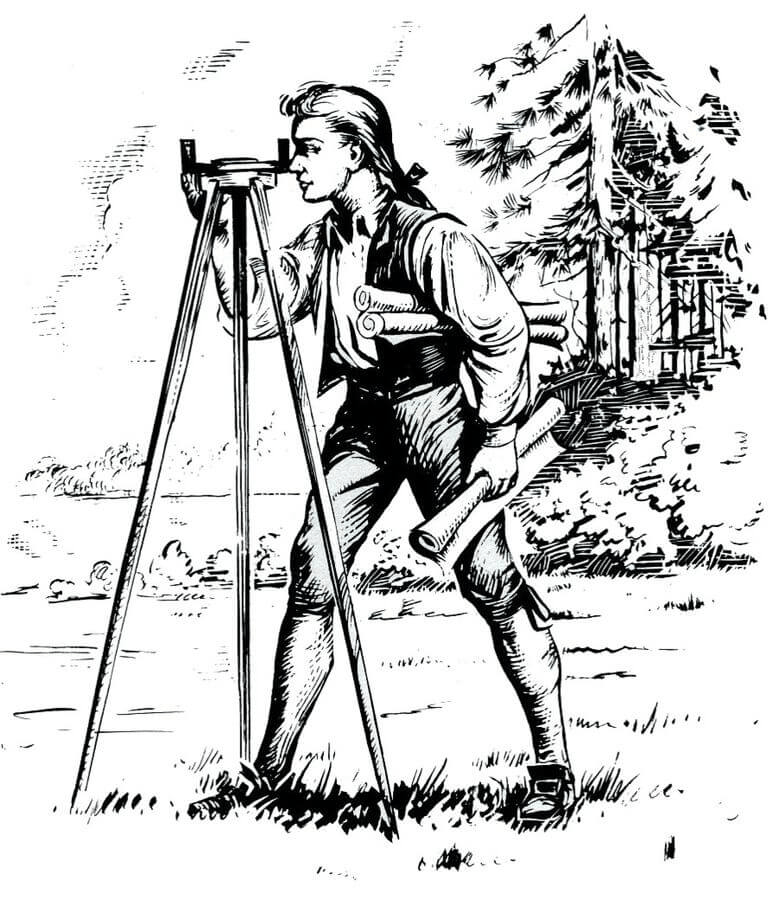
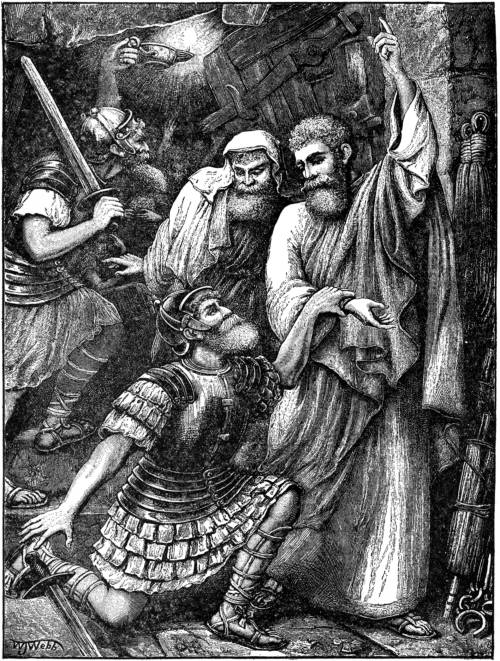
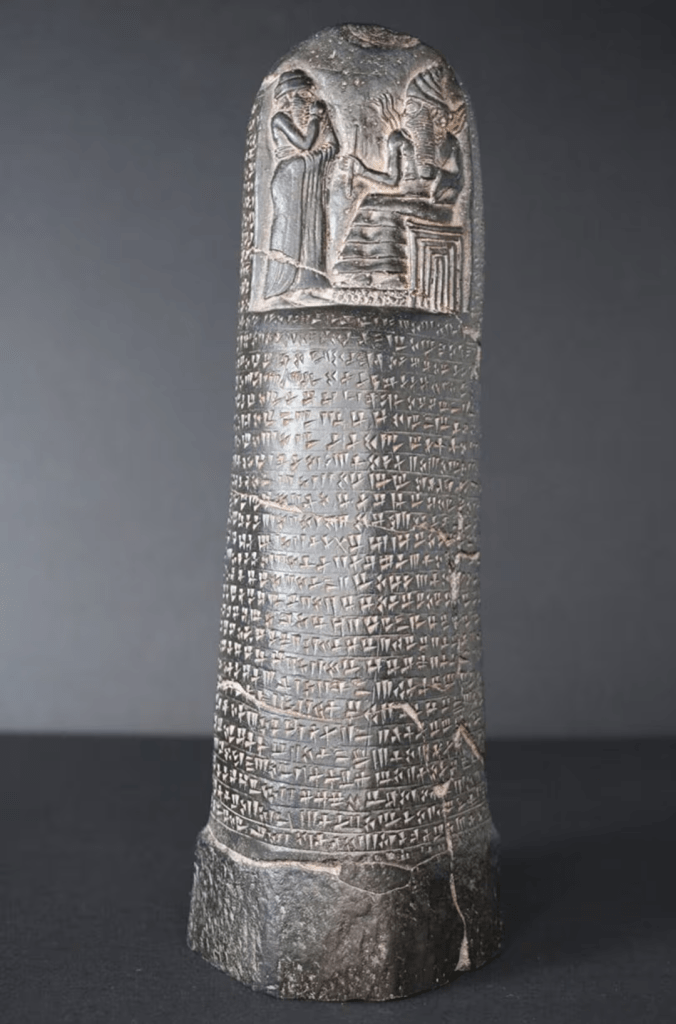
 articlesforchristians