A place to grow your relationship with God

Posts tagged ‘Jesus’

The Children’s Six Minutes: Marbles in the Pocket

MARBLES IN THE POCKET

Do you know what a Missionary Box is? Well, I will tell you. It is a box or barrel sent from a missionary society in a city or town to a missionary family or school on the frontier. The box contains clothing, bedding, and sometimes toys, dolls and picture books if there are children at the frontier end of the journey.

In a certain city one Christmas season the children of the Sunday School brought gifts to fill a box. Some brought clothes they had outgrown. Some who had two coats decided they could give one. Others brought books. One little girl brought a beautiful doll. She had other dolls, and this one she dearly loved, but she said, “I want some other little girl to be happy, and I think I can get along without this doll, though I shall miss her dreadfully.”

One day the committee came together to sort the gifts and pack the box. One woman picked up a boy’s coat. She felt something, hard in one of the pockets. Another woman said, “Better look all through those pockets; you can never tell what a boy will use his pockets for.” So, she went all through the pockets. In one of them she found a soiled handkerchief tied in a knot. With much pulling, for it was a hard knot, she loosed the little package, and there she found five marbles. With the marbles was a note scrawled in a boy’s hand—

“DEAR BOY WHO GETS THIS COAT,

I have eight marbles. First I put in four for you. Then I put in another one. I hope you will like the coat, and the marbles.

From your friend,

JOHN MASON.”

Now what do you think of that? Isn’t it glorious? To give more to the other fellow than you keep for yourself, especially when that other fellow is some one you have never seen, is Christlike.

MEMORY VERSE, Matthew 7: 12

“All things whatsoever ye would that men should do to you, do ye even so to them.”

MEMORY HYMN

“O Master, let me walk with thee.”

Biblical Parallels: Abraham, Isaac, and Christ’s Sacrifice

THE PARALLELS BETWEEN ABRAHAM AND ISAAC’S STORY AND CHRIST’S DEATH

Abraham and Isaac’s StoryChrist’s Crucifixion Account
Mount Moriah in Jerusalem
Gen. 22:2 And he said, Take now thy son, thine only son Isaac, whom thou lovest, and get thee into the land of Moriah; and offer him there for a burnt offering upon one of the mountains which I will tell thee of.
Crucified near Mount Moriah in Jerusalem: Golgotha and Mount Moriah aren’t the exact same spot, but they’re pretty close to each other. Mount Moriah is traditionally linked to the site of the Jewish Temple, where sacrifices took place. The whole area, including Golgotha, holds deep meaning in God’s redemptive story. According to Jewish tradition, Mount Moriah was home to the Holy of Holies, where God’s presence dwelled in the temple (2 Chronicles 3:1). Both places clearly reflect the strong connection between sacrifice and atonement.
Abraham was the fatherGod is Jesus’ Father: John 3:16 For God so loved the world, that he gave his only begotten Son, that whosoever believeth in him should not perish, but have everlasting life.
Isaac was the covenant sonChrist is the only begotten Son of God
Two unnamed men were there: Gen 22:3 And Abraham rose up early in the morning, and saddled his ass, and took two of his young men with him, and Isaac his son, and clave the wood for the burnt offering, and rose up, and went unto the place of which God had told him.May represent the two unnamed men crucified on Golgotha: John 19:18 Where they crucified him, and two other with him, on either side one, and Jesus in the midst.
Saw the mount on the third day: Gen 22:4 Then on the third day Abraham lifted up his eyes, and saw the place afar off.Jesus was raised from the grave on the third day: 1 Corinthians 15:4 And that he was buried, and that he rose again the third day according to the scriptures:
The wood was laid on Isaac: Gen 22:6 And Abraham took the wood of the burnt offering, and laid it upon Isaac his son; and he took the fire in his hand, and a knife; and they went both of them together.The cross was laid on Christ: John 19:17 And he bearing his cross went forth into a place called the place of a skull, which is called in the Hebrew Golgotha:
Isaac got up off the altar Gen 22:13 And Abraham lifted up his eyes, and looked, and behold behind him a ram caught in a thicket by his horns: and Abraham went and took the ram, and offered him up for a burnt offering in the stead of his son.Christ arose from the grave: 1 Cor. 15:3-6 For I delivered unto you first of all that which I also received, how that Christ died for our sins according to the scriptures; And that he was buried, and that he rose again the third day according to the scriptures: And that he was seen of Cephas, then of the twelve: After that, he was seen of above five hundred brethren at once; of whom the greater part remain unto this present, but some are fallen asleep.
A ram replaced Isaac Gen 22:13 And Abraham lifted up his eyes, and looked, and behold behind him a ram caught in a thicket by his horns: and Abraham went and took the ram, and offered him up for a burnt offering in the stead of his son.Christ was sacrificed in our place: Hebrews 10:9-12 Then said he, Lo, I come to do thy will, O God. He taketh away the first, that he may establish the second. By the which will we are sanctified through the offering of the body of Jesus Christ once for all. And every priest standeth daily ministering and offering oftentimes the same sacrifices, which can never take away sins: But this man, after he had offered one sacrifice for sins for ever, sat down on the right hand of God;
God will provide a lamb: Gen 22:8 And Abraham said, My son, God will provide himself a lamb for a burnt offering: so they went both of them together.Christ is the “lamb of God”: John 1:29  The next day John seeth Jesus coming unto him, and saith, Behold the Lamb of God, which taketh away the sin of the world.


Abraham takes Isaac to the same land where, years earlier, he had met the king-priest Melchizedek (Gen. 14). When Isaac asks, “Where is the lamb?” Abraham assures him that God will “provide Himself a lamb.” Yet, it’s a ram—not a lamb—that takes Isaac’s place. Upon the ram’s appearance, Abraham names the place Jehovah-Jireh, meaning “the Lord will see to it.” Moses writes, “In the mount of the Lord it shall be seen” (Gen. 22:14). So, what will be seen there? I believe, through the revelation of the Holy Spirit, Abraham glimpsed something not recorded in the story—he knew a lamb would one day appear on that mountain to bring redemption. That lamb is Christ, the One Jesus referred to when He said, “Abraham rejoiced to see my day; and he saw it” (John 8:56).

Weekly Recap of Articles for Christians Dec 7th to Dec 13th

Celebrating the Light: Insights into Hanukkah

Hanukkah celebrates the triumph of light over darkness, of purity over contamination, of spirituality over materialism. Hanukkah is also known as the Feast of the Dedication. We celebrate Hanukkah ‑ the festival of lights ‑ for 8 days commencing on the eve of Kislev, 25.

It was during a feast of dedication that Jesus explained that he was the Christ.

  • John 10:22-25 KJV, “And it was at Jerusalem the feast of the dedication, and it was winter. And Jesus walked in the temple in Solomon’s porch. Then came the Jews round about him, and said unto him, How long dost thou make us to doubt? If thou be the Christ, tell us plainly. Jesus answered them, I told you, and ye believed not: the works that I do in my Father’s name, they bear witness of me.”

As we can also see, Jesus celebrated the Feast of the Dedication. The candles of the Menorah are symbolic of Jesus and the Holy Ghost. Remember that ordinarily they used oil lamps. Oil is used in anointing. When the disciples first received the Holy Ghost, they saw cloven tongues of fire. Jesus is the light of the world. People are supposed to see the light of Jesus through us always just as the lamp in the temple was supposed to burn perpetually.

Over 2100 years ago, the Land of Israel was dominated by the (Syrian‑Greeks), who sought to Hellenize the people of Israel. Against all odds, a small band of faithful Jews defeated one of the mightiest armies on earth, drove the Greeks from the land, reclaimed the Holy Temple in Jerusalem and rededicated it to the service of God. This group became known as the Maccabees. It took them some time to drive the Greeks from the land. The temple was trampled and desecrated before they were successful. This was just as Daniel predicted in Daniel 8:9-14 (KJV),

  • “And out of one of them came forth a little horn, which waxed exceeding great, toward the south, and toward the east, and toward the pleasant land. And it waxed great, even to the host of heaven; and it cast down some of the host and of the stars to the ground, and stamped upon them. Yea, he magnified himself even to the prince of the host, and by him the daily sacrifice was taken away, and the place of the sanctuary was cast down. And a host was given him against the daily sacrifice by reason of transgression, and it cast down the truth to the ground; and it practiced, and prospered. Then I heard one saint speaking, and another saint said unto that certain saint which speak, how long shall be the vision concerning the daily sacrifice, and the transgression of desolation, to give both the sanctuary and the host to be trodden under foot? And he said unto me, unto two thousand and three hundred days; then shall the sanctuary be cleansed.”

Hoping to light the Temple’s menorah, they found only a single cruse of olive oil that had escaped contamination by the Greeks; miraculously, this one‑day supply burned for eight days, until new oil could be prepared under conditions of ritual purity.

To commemorate and publicize these miracles, the sages instituted the festival of Hanukkah. At the heart of the festival is the nightly menorah lighting: a single flame on the first night, two on the second evening, and so on till the eighth night of Hanukkah, when all eight lights are kindled.

A special Hanukkah prayer, Al HaNissim, offers praise and thanksgiving to God for “delivering the strong into the hands of the weak, the many into the hands of the few… the wicked into the hands of the righteous.”

Hanukkah customs include eating foods fried in oil ‑‑ latkes (potato pancakes) and sufganiot (doughnuts); playing with the dreidel (a spinning top on which are inscribed the Hebrew letters nun, gimmel, hei and shin, an acronym for Nes Gadol Hayah Sham, “a great miracle happened there”); and the giving of Chanukah gelt (gifts of money) to children.

When buying a Menorah please remember that it is to be used for 8 nights straight. Since, an inexpensive Menorah does not hold up well; buy a good one even if it cost a little bit more money.

The Menorah

Menorah lighting was instituted in order to announce to the entire world that God makes miracles for those who stand up for truth and justice. The Hanukkah lights can either be candle flames or oil‑fueled. The eight candles of the menorah must be arranged in a straight, even line. The candles should burn for at least 30 minutes on weeknights, and up to one‑and‑a‑half hours on Friday evening.

The Shamash ‑ the “attendant” candle that is used to kindle the other lights ‑ sits a bit higher or lower than the other candles, on the ninth branch of the menorah. Men and women alike are obligated to participate in the menorah lighting.

You can set up the menorah in a central doorway or on a windowsill facing the street.

On Friday night, the menorah is lit before sunset, and on Saturday night, it is lit after nightfall.

Instructions for Lighting the Menorah

  1. Arrange the lights on the menorah. On the first night, set one candle to the far right of the menorah. On the following night, add a second light to the left of the first one, and then add one light each night of Chanukah ‑ moving from right to left.
  2. Gather everyone in the house around the menorah.
  3. Light the Shamash candle. Then hold it in your right hand (unless you are left‑handed).
  4. While standing, recite the appropriate blessings.
  • Light the candles. Each night, light the newest (left‑most) candle first and continue lighting from left to right.

The Blessings

Blessed are You, Lord our God, King of the universe, who has sanctified us with His commandments. Blessed are You, Lord our God, King of the universe, who performed miracles for our forefathers in those days, at this time.

If the first night of Chanukah falls on Sunday night, add the following blessing:

Blessed are You, Lord our God, King of the universe, who has granted us life, sustained us, and enabled us to reach this occasion.

After you finish kindling the menorah lights, place the Shamash candle in its designated place on the menorah. At this point it is traditional to sing Chanukah hymns.

Hanukkah Foods

Since oil played a significant role in the Chanukah story, it is traditional to enjoy oily foods on this holiday. Among the most popular are potato latkes (potato pancakes) and sufganiot (deep‑fried doughnuts).

Hanukkah Songs

Dreidel Song

By Chayim B. Alevsky

I have a little dreidel

I made it out of clay

And when it’s dry and ready

Oh dreidel, I shall play

Oh, dreidel, dreidel, dreidel

I made you out of clay

And when you’re dry and ready

Oh Dreidel we shall play

Oh, dreidel, dreidel, dreidel

I made you out of wood

And when you are all ready

I’ll play you when I could

Oh, dreidel, dreidel, dreidel

I made you out of glass

And when you are all ready

I’ll play you on the grass

Oh, dreidel, dreidel, dreidel

I made you out of gold

And when you are all ready

I’ll play you in the cold

Oh Hanukkah, Oh Hanukkah

Come light the menorah

Let’s have a party

We’ll all dance the hora

Gather ‘round the table

We’ll give you a treat

Sivivon to play with and latkes to eat

And while we are playing

The candles are burning low

One for each night, they shed a sweet light

to remind us of days long ago

One for each night, they shed a sweet light

to remind us of days long ago.

O Hanukkah

by: C.J. Pizarro

Oh Hanukkah, Oh Hanukkah

A time to remember.

A joyful, jolly holiday

that comes in December

Every day for eight days, dreidels will spin

Crispy little latkes, tasty and thin.

And nightly, so brightly,

the candles of Chanukah glow.

One for each night, they shed a sweet light,

to remind us of days long ago.

One for each night, they shed a sweet light,

to remind us of days long ago.

The Story of Lot: Choices That Lead to Sin

Lot and his flocks became a burden for Abram and his flocks, putting strain on the land. Abram allowed Lot to choose his path, and Lot decided to head south, toward the southern end of the Dead Sea. This region was home to five cities.

  • Sodom,
  • Gomorrah
  • Admah
  • Zebolim
  • Zoar

 Genesis 13:5-9 And Lot also, which went with Abram, had flocks, and herds, and tents. And the land was not able to bear them, that they might dwell together: for their substance was great, so that they could not dwell together. And there was a strife between the herdmen of Abram’s cattle and the herdmen of Lot’s cattle: and the Canaanite and the Perizzite dwelled then in the land. And Abram said unto Lot, Let there be no strife, I pray thee, between me and thee, and between my herdmen and thy herdmen; for we be brethren. Is not the whole land before thee? separate thyself, I pray thee, from me: if thou wilt take the left hand, then I will go to the right; or if thou depart to the right hand, then I will go to the left.

Lot gazed toward Sodom, one of the largest and most corrupt cities of that time. It’s unclear he fully understood just how wicked it truly was.

There is a parallel between the actions of Lot and how people get involved in sin today. Just look at the chart below.

LotPeople Today
First, Lot looked toward Sodom. Gen. 13:10 And Lot lifted up his eyes, and beheld all the plain of Jordan, that it was well watered every where, before the Lord destroyed Sodom and Gomorrah, even as the garden of the Lord, like the land of Egypt, as thou comest unto Zoar.Bondage to sin often begins with what we see. The lust of the eyes can and will get you into a lot of trouble. 1 John 2:16 “For all that is in the world, the lust of the flesh, and the lust of the eyes, and the pride of life, is not of the Father, but is of the world.”
Second, Lot pitched his tent toward Sodom. Gen 13:12 Abram dwelled in the land of Canaan, and Lot dwelled in the cities of the plain, and pitched his tent toward Sodom.Slowly, we move toward the wrong things we see.
Third, Lot dwelt in Sodom. Gen 19:1-2 And there came two angels to Sodom at even; and Lot sat in the gate of Sodom: and Lot seeing them rose up to meet them; and he bowed himself with his face toward the ground; And he said, Behold now, my lords, turn in, I pray you, into your servant’s house, and tarry all night, and wash your feet, and ye shall rise up early, and go on your ways. And they said, Nay; but we will abide in the street all night.Then, we are living in the midst of the bondage to sin.
Fourth, Lot was sitting at the gate of Sodom Gen 19:1 And there came two angels to Sodom at even; and Lot sat in the gate of Sodom: and Lot seeing them rose up to meet them;Finally, we often remember the better days of our past.

If you have been looking towards sin with lust, now is the time to stop before you get in too deep.

If you are already there, help is just a prayer away. Now is the time to repent and turn from the wickedness.


Christmas Eve Poem

And there were in the same country shepherds abiding in the field, keeping watch over their flock by night.

And, lo, the angel of the Lord came upon them, and the glory of the Lord shone round about them: and they were sore afraid.

And the angel said unto them, Fear not: for, behold, I bring you good tidings of great joy, which shall be to all people.

For unto you is born this day in the city of David a Saviour, which is Christ the Lord.

And this shall be a sign unto you; Ye shall find the babe wrapped in swaddling clothes, lying in a manger.

And suddenly there was with the angel a multitude of the heavenly host praising God, and saying,

Glory to God in the highest, and on earth peace, good will toward men.

Taken from the Bible

Witness of the Stars: CORONA (The Crown)

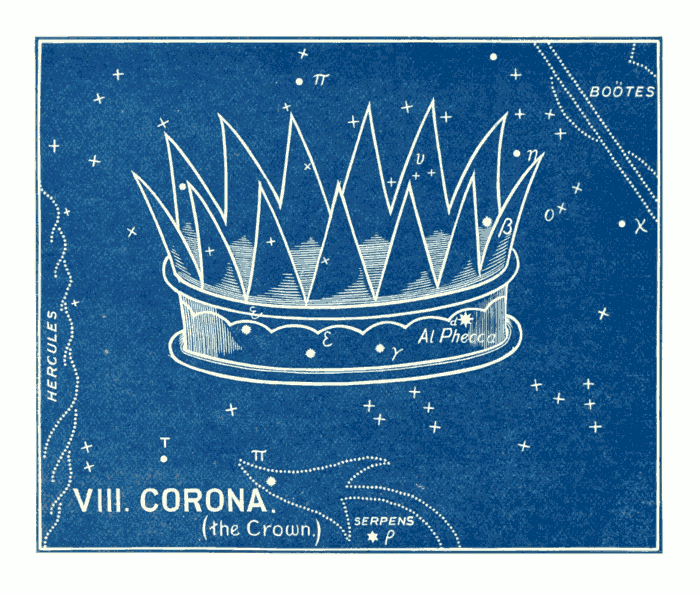
CORONA (The Crown)

The Crown Bestowed

“Wherefore God also hath highly exalted Him, and given Him a name which is above every name, that at the name of Jesus every knee should bow.”

This is what is foreshown by this concluding section of the second chapter. Each chapter ends with glory. As in the written Word of God, we frequently have the glory of the Second Coming mentioned without any allusions to the sufferings of the First Coming, but we never have the First Coming in humiliation mentioned without an immediate reference to the glory of the Second Coming.

So here, the Cross is closely followed by the Crown! True, “we see not yet all things put under Him, but we see Jesus … for the suffering of death crowned with glory and honour” (Heb. ii. 9).

Yes, “the crowning day is coming,” and all heaven shall soon resound with the triumphant song, “Thou art worthy, … for Thou wast slain and hast redeemed us to God by Thy blood” (Rev. v. 9).

The shameful Cross will be followed by a glorious crown, and “every tongue shall confess that Jesus. Christ is Lord, to the glory of God the Father.”

“Mighty Victor, reign for ever,

Wear the crown so dearly won;

Never shall Thy people, never

Cease to sing what Thou hast done.

Thou hast fought Thy people’s foes;

Thou wilt heal Thy people’s woes!”

The Hebrew name for the constellation is Ataraha royal crown, and its stars are known to-day in the East by the plural, Ataroth!

Its Arabic name is Al Iclilan ornament, or jewel.

Plate 8: CORONA (the Crown)

It has 21 stars: one of the 2nd magnitude and six of the 4th. It is easily known by the stars θ, β, α, γ, δ, and ε, which form a crescent.

Its brightest star, α, has the Arabic name of Al Pheccathe shining.

Thus ends this solemn chapter of Libra, which describes the great work of Redemption, beginning with the Cross and ending with the Crown. The Redeemer’s work of Atonement is most blessedly set forth, and He alone is seen as the substitute for lost sinners.

“What wondrous love, what mysteries

In this appointment shine!

My breaches of the law are His,

And His obedience mine.”

The Gospel Train

The Gospel Train (Old Spiritual)

Git on board, little children,
Dere’s room for many a mo’.

De Gospel train’s a-comin’,
I hear it jus’ at han’,
I hear de car wheels rumblin’,
An’ rollin’ thro’ de lan’.

Git on board, little children,
Dere’s room for many a mo’.

De fare is cheap an’ all can go,
De rich an’ poor are dere,
No second class aboard dis train,
No diff’rence in de fare. 

Git on board, little children,
Dere’s room for many a mo’.

Understanding Deuteronomy 16:21-22: A Message for Worship

Thou shalt not plant thee a grove of any trees near unto the altar of the Lord thy God, which thou shalt make thee. Neither shalt thou set thee up any image, which the Lord thy God hateth.

Deuteronomy 16:21-22

Context

Author: Moses
Audience: Children of Israel
When:1400 B.C.
Style: Teaching
Purpose: To teach God’s People

Other Translations

Amplified Holy Bible: Deuteronomy 16:21-22 “You shall not plant for yourself an Asherah of any kind of tree or wood beside the altar of the Lord your God, which you shall make. You shall not set up for yourself a sacred pillar which the Lord your God hates.

Holman Christian Standard Bible: Deuteronomy 16:21-22
 “Do not set up an Asherah of any kind of wood next to the altar you will build for the Lord your God, and do not set up a sacred pillar; the Lord your God hates them.

Other Verses

  • Exodus 20:1-5
    • And God spake all these words, saying,
    • I am the Lord thy God, which have brought thee out of the land of Egypt, out of the house of bondage.
    • Thou shalt have no other gods before me.
    • Thou shalt not make unto thee any graven image, or any likeness of any thing that is in heaven above, or that is in the earth beneath, or that is in the water under the earth.
    • Thou shalt not bow down thyself to them, nor serve them: for I the Lord thy God am a jealous God, visiting the iniquity of the fathers upon the children unto the third and fourth generation of them that hate me;
  • Exodus 20:23
    • Ye shall not make with me gods of silver, neither shall ye make unto you gods of gold.
  • Exodus 34:14
    • For thou shalt worship no other god: for the Lord, whose name is Jealous, is a jealous God:
  • Leviticus 26:1
    • Ye shall make you no idols nor graven image, neither rear you up a standing image, neither shall ye set up any image of stone in your land, to bow down unto it: for I am the Lord your God.
  • Deuteronomy 5:7-9
    • Thou shalt have none other gods before me.
    • Thou shalt not make thee any graven image, or any likeness of any thing that is in heaven above, or that is in the earth beneath, or that is in the waters beneath the earth:
    • Thou shalt not bow down thyself unto them, nor serve them: for I the Lord thy God am a jealous God, visiting the iniquity of the fathers upon the children unto the third and fourth generation of them that hate me,
  • 1 John 5:21
    • Little children, keep yourselves from idols. Amen.
  • Galatians 5:19-21
    • Now the works of the flesh are manifest, which are these; Adultery, fornication, uncleanness, lasciviousness,
    • Idolatry, witchcraft, hatred, variance, emulations, wrath, strife, seditions, heresies,
    • Envyings, murders, drunkenness, revellings, and such like: of the which I tell you before, as I have also told you in time past, that they which do such things shall not inherit the kingdom of God.
      • Idolatry is the worship of idols
  • Revelations 9:20
    • And the rest of the men which were not killed by these plagues yet repented not of the works of their hands, that they should not worship devils, and idols of gold, and silver, and brass, and stone, and of wood: which neither can see, nor hear, nor walk:

Where was it written
It was probably written in the wilderness, aka, in the Middle of nowhere.

What does it say ?

It says that God doesn’t Want a grove of any trees near his altar. It says that God hates it. It also says that God doesn’t like us Worship any other images [gods].

Word Meanings

  • Plant= H5193
    • נָטַע nâṭaʻ, naw-tah’; a primitive root; properly, to strike in, i.e. fix; specifically, to plant (literally or figuratively):—fastened, plant(-er).
  • Grove =H842
    • אֲשֵׁרָה ʼăshêrâh, ash-ay-raw’; or אֲשֵׁירָה ʼăshêyrâh; from H833; happy; Asherah (or Astarte) a Phoenician goddess; also an image of the same:—grove. Compare H6253.
  • Image = H4676
    • מַצֵּבָה matstsêbâh, mats-tsay-baw’; feminine (causatively) participle of H5324; something stationed, i.e. a column or (memorial stone); by analogy, an idol:—garrison, (standing) image, pillar.
  • Hateth =H8130
    • שָׂנֵא sânêʼ, saw-nay’; a primitive root; to hate (personally):—enemy, foe, (be) hate(-ful, -r), odious, × utterly.
  • Alter = H4196
    • מִזְבֵּחַ mizbêach, miz-bay’-akh; from H2076; an altar:—altar.
  • Alter= H2076
    • זָבַח zâbach, zaw-bakh’; a primitive root; to slaughter an animal (usually in sacrifice):—kill, offer, (do) sacrifice, slay.

What does it mean to me?

It means that we should not put up any Kind of tree near the God of heaven & Earth’s altar. It means the church Should not put up Christmas trees. The verse says any grove of trees, a Christmas tree is a tree, real or not real Christmas trees are trees.

How this verse  makes me feel

This verse makes me feel sad because the churches are not obeying it. God told Moses to write it down, he wrote it down, but we are not listening to it.

Devil/Satan
Devil, accuser, Slanderer, the main title for the fallen angelic being who wanted to be God the supreme, the Maker of all. The term devil comes from a Greek word that means, a false Witness” or malicious accuser. The Devil does not want people to fellow God; The Devil doesn’t care who you Worship. He just doesn’t want you to worship God.

Thought Provoking Questions:

  • What do you do when you Worship?
    • You Sing, dance, and bow down.
    • God said not to Worship any other gods, See Exodus 34:14, Leviticus 26:1, Exodus 20:15 & 23, Deuteronomy 5:7-9.
  • What is going on in the churches near Christmas time?
    • They are putting up tree near the altar but Deuteronomy 16:21-22, Said No! that is what they are doing near Christmas time.
  • Do you think the Song, “Oh Christmas Tree” is Worshiping the Christmas tree?
    • I know what I think but What do you think?

Gideon’s Battle

GIDEON’S THREE HUNDRED-A PREVIEW OF THE BATTLE OF ARMAGEDDON (Judges Chapters 6-8)
The Biblical narrative of Gideon and his three hundred men encodes numerous prophetic parallels that apply to the battle of all battles, the battle of Armageddon, alluded to in Revelation 16:16. The English translation reads, “He (God) gathered them together…”

Recorded in Judges chapters 6 through 8, the Midianites were invading Israel and there were no judges to prevent their invasion. God raised up Gideon and his small army to deliver the Israelites from their captors.

GideonArmageddon
Gideon’s battle occurred during the time of the threshing of the wheat (Judges 6:11)
Christ alludes to the time of the end as the time of “harvest” calling his final harvest of souls for the kingdom the “end of the world” or as some translations say, “the end of an age” (Matthew 13:39, 49)
In ancient times, the wheat harvest was gathered and separated on a threshing floor.In Roman times, rocks or other rough objects were embedded into large wooden boards used to separate the stem and shell from the hard wheat. In Latin this board is called tribulem. The final harvest before the return of the Messiah will occur in the time of the Tribulation.
In Judges 6:25, God instructed Gideon to offer a bullock of seven years.
In Judges 6:27 that 10 men accompanied Gideon at night.
These two numbers are significant in the future Tribulation, as the Tribulation will be seven yours in length
(Dan. 9:27) and there will be ten kings at the end of days when the Messiah returns (see Dan 7:24 & Rev. 17:12)
In Judges 6:33, the children of the east” are mentioned.A similar phrase is sound in Revelation 16:12, John records that the “kings of the east” cross the Euphrates River to join in the battle of Armageddon.
In Judges 6:33 it says, “The Children of the east were gathered together.”.The word “gather” is also used in Zechariah 14:2, when the prophet saw the time of the end and how all nations would be gathered together against Jerusalem for the final battle.
These “Children of the east” “pitched in the valley of Jezeel” This is the same valley where the future nations will gather. In Revelation 16:12, “these kings of the east” are gathering to battle at Armageddon. The area of Armageddon is actually the valley of Jezreel, which today is a two-hundred-square-mile area of open farmland in central Israel.
Prior to Gideon’s war he blew a trumpet (Judges 6:34) to gather his people together.there will be the sound of trumpets at the gathering together of the believers (see 1 Thess 4:16-17)
Gideon began with 32000 men, and the army was reduced to a final group of a “remnant” of three hundred men.The Bible predicts that the Lord will blow
a trumpet (Hebrew shofar) and bring together a remnant (see 1 Thess 4:16 & Isa. 10:20-22)
In the battle, Gideon and his army slew two princes.
1. Ored: name means raven
2. Zeeb, meaning “wolf” (see Judges 7:25)
These two princes were the leaders of the battle.
At the conclusion of the seven-year Tribulation there will be two men identified.
1. the first beast or Antichrist (see Rev13:1-2)
2. the second beast, the false prophet (a wolf in lamb’s clothing so to speak)
Both will be defeated at the battle of Armageddon (see Rev. 19:20)
We read in Judges 7:25 that the leaders Oreb and Zeeb were slain at the winepress of Zeeb.The word winepress is also used in the book of Revelation it refers to God pouring out his wrath during the Tribulation. John uses the image of the crushing of grapes when he calls this the winepress of the wrath of God” (Rev. 14:19-20)
Gideon’s battle was concluded at a winepress.This battle will be identified with a winepress.
After crossing the Jordan, the men met at Succoth (see Judges 8:15) Sukkot (Succoth) is the Hebrew word for Tabernacles, the seventh and final festival. The Feast of Tabernacles is a prophetic picture of the future kingdom of Christ in which he will reign on earth for one thousand years (see Rev. 20:4)
An interesting phrase in the Gideon
narrative indicates that they “taught” the enemy with thorns and briars (see Judges 8:7, 16)
The prophetic parallel is that when Christ returns, he will tread down his enemies. (Psalm 60:11-12)
Gideon’s three hundred soldiers blew trumpets and broke clay pitchers to create confusion in the camp of the Midianites (see Judges 7:20-22). In Revelation 2:27 we read “And he shall rule them with a rod of iron; as the vessels of a potter shall they be broken to shivers: even as I received of my Father.”
The Ishmaelites brought Gideon an offering after the battle concluded (see Judges 8:24-26). These son of Ishmael were Arab descendants from Abraham’s son Ishmael who lived in the area.At the return of Christ, the nations surrounding Israel will be the sons of Esau and Ishmael. The sons of Ishmael will join the other nations in worshipping the Messiah when he returns, as the Bible says: “All nations shall come and worship before thee”
(Zech. 14:16)
In Judges 8:21, Gideon removed the ornaments around the camels’ necks. The Hebrew word for ornaments means “a round disk like the moon.” Ornaments were moon-like emblems placed around the necks of the camelsA common symbol of Islam is the crescent moon, often seen atop mosques worldwide. Today, Israel is surrounded by Islamic nations, and some believe the future Antichrist may come from an Islamic background.
Two statements that summarize Gideon’s leadership are: “The Lord shall rule over you” (Judges 8:23) and the “Country was in quietness” (Judges 8:28).These statements describe the state of the earth at the end of the Tribulation when the Messiah returns. Christ will reign over the nations for a thousand years (see Rev. 20:4), bringing peace throughout this entire period.