A place to grow your relationship with God

Posts tagged ‘Jesus’

The Brass Serpent: A Precursor to Christ’s Redemption

THE BRASS SERPENT ON THE POLE Numbers chapter 21

The fiery serpents were venomous snakes that lived in the desert and wilderness. Some wonder why God told Moses to place a serpent on a pole, since the serpent is often seen as a symbol of evil and Satan (see Gen. 3:1; Isa. 27:1; Rev. 20:2), and had caused death to many who were bitten. Christ speaks of the brass serpent when He says, “As Moses lifted up the serpent in the wilderness, even so must the Son of man be lifted up: That whosoever believeth in him should not perish, but have eternal life” (John 3:14-15). Though He was perfect and without sin in His birth, life, and ministry, the sins of all humanity were placed on Him, much like the scapegoat bearing Israel’s sins on the Day of Atonement. The serpent’s image thus became a symbol of the ultimate sin offering being lifted up. Just as the fiery serpents brought death, unrepentant sin brings death to the soul. Only the cross can undo the serpent’s bite and restore life to those who look to Christ.
Two questions arise in this comparison:

  1. If gold symbolizes divinity, and the brass serpent represented Christ, why was it made of brass instead of gold?
    • First, brass symbolizes humanity, and Christ became flesh, taking on humanity to redeem mankind (see John 1:14)—hence the use of brass.
  2. If the lamb is Christ’s symbol of redemption, why was a serpent placed on the pole instead of a lamb?
    • Secondly, the serpent symbolizes sin, and Christ took on the sins of all humanity before His crucifixion. He served as a substitute, carrying our sins to the cross. “For he hath made him to be sin for us, who knew no sin; that we might be made the righteousness of God in him” (2 Cor. 5:21). We read, “Blotting out the handwriting of ordinances that was against us, which was contrary to us, and took it out of the way, nailing it to his cross…” (Col. 2:14).

Since brass symbolizes humanity and the serpent symbolizes sin, the serpent on the pole represents the sin of humanity, which Christ overcame and redeemed once and for all at the cross. Refer to the chart below.

The Brass SerpentThe Power of Jesus’ death on the cross
The people complained against God. (Num. 21:5) And the people spake against God, and against Moses, Wherefore have ye brought us up out of Egypt to die in the wilderness? for there is no bread, neither is there any water; and our soul loatheth this light bread.The world was under sin and death (Rom 5:12) Wherefore, as by one man sin entered into the world, and death by sin; and so death passed upon all men, for that all have sinned:
Fiery serpents bit the people (Num. 21:6) And the Lord sent fiery serpents among the people, and they bit the people; and much people of Israel died.The serpent introduced sin (Gen. 3:1-13)
Those bitten died (Num. 21:6) And the Lord sent fiery serpents among the people, and they bit the people; and much people of Israel died.Sin brought death (Rom. 3:23) For all have sinned, and come short of the glory of God;
Moses made a brass serpent (Num. 21:8-9) And the Lord said unto Moses, Make thee a fiery serpent, and set it upon a pole: and it shall come to pass, that every one that is bitten, when he looketh upon it, shall live. And Moses made a serpent of brass, and put it upon a pole, and it came to pass, that if a serpent had bitten any man, when he beheld the serpent of brass, he lived.Christ in human form bore our sins (1 Pet. 2:24) Who his own self bare our sins in his own body on the tree, that we, being dead to sins, should live unto righteousness: by whose stripes ye were healed.
Moses used a pole (Num. 21:8-9) And the Lord said unto Moses, Make thee a fiery serpent, and set it upon a pole: and it shall come to pass, that every one that is bitten, when he looketh upon it, shall live. And Moses made a serpent of brass, and put it upon a pole, and it came to pass, that if a serpent had bitten any man, when he beheld the serpent of brass, he lived.Christ died on a tree (1 Pet. 2:24) Who his own self bare our sins in his own body on the tree, that we, being dead to sins, should live unto righteousness: by whose stripes ye were healed.
Those looking to the brass serpent were healed (Num. 21:9) And Moses made a serpent of brass, and put it upon a pole, and it came to pass, that if a serpent had bitten any man, when he beheld the serpent of brass, he lived.Those who believe in Christ are saved (Mark 16:16) He that believeth and is baptized shall be saved; but he that believeth not shall be damned.

The Children’s Six Minutes: The First Month

THE FIRST MONTH

What month is this? December. It is the first month in the year. “No, no,” you say, “December is the last month.” I cannot entirely agree with you. December is last on the calendar but first in importance. Now you agree with me, do you not?

How many days has December? One day. “No, no,” I again hear you say, “December has thirty-one days.” I think we can reach an agreement on this point too. There is one day in December of unexcelled importance and loveliness; that day is the twenty-fifth. Yes, we all say there is but one day in December. How readily we agree when we understand one another!

What is the twenty-fifth? It is the pivotal day in the history of the world. It is the day upon which the King of Kings and the Lord of Lords was born. Jesus, son of man and son of God, came into the world as we all come, as a tiny babe. It brings him much nearer to us, does it not, to think that our Saviour was once as we are? He grew up as a child, a boy, a youth, a man. It is the birthday of Christ the Saviour we celebrate on the twenty-fifth of each December.

To whom did Jesus come? He came to a lowly people. He was revealed first of all to the shepherds. The shepherd’s task was not an enviable one. He was out in the open, subject to storms and winds and wild beasts. His business was to shepherd the sheep, to lead them to good pasture, to protect them from all harm and danger. The shepherd’s task was lonely as well as lowly. His days and nights were passed in solitude. Occasionally a group of shepherds would come together, but for the most part they were alone with their flocks. God chose these people, whose minds were clear, whose lives were pure, to be the first messengers of the glad tidings of great joy.

MEMORY VERSE, Luke 2: 8

“And there were in the same country shepherds abiding in the field, keeping watch over their flocks by night.”

MEMORY HYMN

“While shepherds watched their flocks.”

Weekly Recap of Articles for Christians for Nov 30th to Dec 6th

Peter and the Tribue Money

PETER AND THE TRIBUTE-MONEY

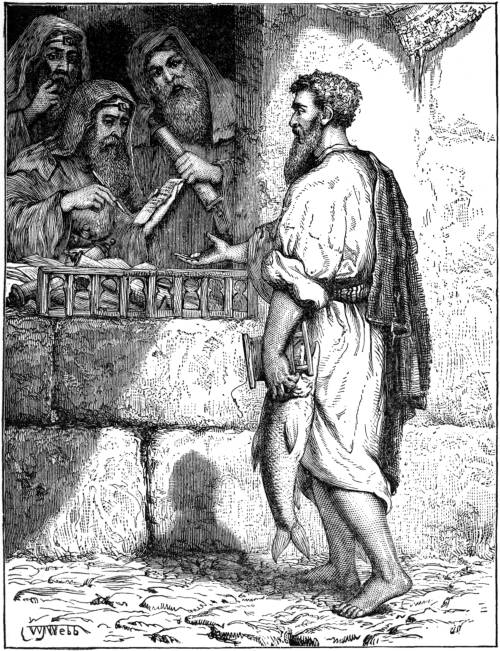
It was a part of the Jewish law that all strangers passing among the Jews should pay to the priests of the Temple an offering to the Lord, or tribute-money as it was called.

Soon after our Lord’s Transfiguration He came to Capernaum, together with His disciples. When they had entered the city, there came to them the priests who usually collected this tribute-money, and they said unto Peter, “Doth not thy Master pay tribute?” And he answered, “Yes.” But when they had come to the house, Jesus said to Peter, “What thinkest thou, Simon? Of whom do they take tribute; of their own people or of strangers?” And Peter answered Him, “Of strangers.”

Jesus saith unto him, “Then their own people are free; but lest we should offend them by not paying, go thou down to the sea, and cast in thy hook and line, and take up the first fish that taketh the hook into his mouth. And when thou hast opened his mouth, thou shalt find a piece of money there. Take it and give it unto the priests as tribute for Me and for thee.” And Peter went down to the sea and cast in his line, and took a big fish. And when he had opened its mouth he found the piece of silver, and took it to the men in payment of the tribute.

This tribute was collected to pay the expenses of the Temple worship. Jesus sought to show that, as He himself was the Son of God, the King for whose service the tribute was paid, He might justly be exempted from paying it; yet to save giving offence He miraculously provided the piece of money to pay tribute for Himself and Peter.

La poderosa predicación de Pedro en Pentecostés

Pedro predica sobre Cristo y el plan de Dios para nosotros
EL DÍA DE PENTECOSTÉS

  • La fiesta de Pentecostés era un día santo en Israel, cincuenta días después de la Pascua. Judíos de todo el Imperio Romano se reunieron en Jerusalén.
  • La noticia de lo que sucedió en el aposento alto se extendió rápidamente.
  • Jesús les había prometido a los discípulos que llegaría el día en que sus corazones se llenarían de una alegría que nadie podría arrebatarles. El bautismo del Espíritu Santo era esa promesa.
    • Juan 16:22-24: «Ahora, pues, tenéis tristeza; pero os volveré a ver, y vuestro corazón se alegrará, y nadie os quitará vuestra alegría. Y en aquel día no me preguntaréis nada. De cierto, de cierto os digo: Todo lo que pidiereis al Padre en mi nombre, él os lo concederá. Hasta ahora nada habéis pedido en mi nombre; pedid, y recibiréis, para que vuestro gozo sea completo».
  • Más tarde, Peter lo describió como una alegría indescriptible.
    • 1 Pedro 1:8 A quien amáis sin haberle visto; en quien creéis, aunque ahora no le veis, os regocijáis con gozo inefable y lleno de gloria;
  • Mientras los discípulos seguían regocijándose, de repente un asombro se extendió entre la multitud como una ola.
  • La multitud de judíos extranjeros comenzó a oír a los discípulos alabar a Dios en sus propias lenguas. Sabían que los discípulos no tenían forma de conocerlas.
    • Algunos preguntaron: “¿Qué significa esto?”.
    • Otros restaron importancia al suceso, acusando a los discípulos de estar borrachos.nguages.

PEDRO PREDICA

  • Pedro escuchó sus falsas acusaciones de embriaguez e inmediatamente se levantó en defensa de los discípulos.
  • Pedro ya no era el mismo hombre temeroso que, cobardemente, había negado a su Señor mientras Jesús era llevado a la crucifixión.
  • Era un hombre que había recibido poder de lo alto mediante el bautismo del Espíritu Santo.
  • Fue Jesús quien previó esos acontecimientos cuando le dio a Pedro las llaves del Reino de los Cielos.
    • Pedro estaba listo para usar esas llaves.
    • Esta vez, sus palabras no fueron de derrota, sino de victoria.he keys of the Kingdom of Heaven.

PEDRO PREDICA CON PODER

  • Pedro predicó con el poder que solo la unción del Espíritu Santo puede dar.
  • Su mensaje comenzó con:
    • Hechos 2:14-15  Entonces Pedro, poniéndose en pie con los once, alzó la voz y les dijo: Varones judíos, y todos los que habitáis en Jerusalén, sabed esto y escuchad mis palabras: Estos no están borrachos, como vosotros suponéis, puesto que es apenas la hora tercera del día.
  • Esto fue el cumplimiento de la profecía de Joel.
    • profecía
      • Una declaración inspirada de un profeta, considerada una revelación de la voluntad divina.
      • Una predicción del futuro realizada bajo inspiración divina.
      • Dicho mensaje o predicción inspirada se transmite oralmente o por escrito.
    • Pedro declaró que el derramamiento del Espíritu Santo era el cumplimiento de la maravillosa profecía de Joel de que en los últimos días Dios derramaría su Espíritu sobre toda carne.
      • Joel 2:28 Y después de esto, derramaré mi Espíritu sobre toda carne; y vuestros hijos y vuestras hijas profetizarán, vuestros ancianos soñarán sueños, vuestros jóvenes verán visiones.
  • El Cristo Exaltado
    • Pedro culminó su sermón declarando que Dios había hecho Señor y Cristo a ese mismo Jesús, a quien ellos habían crucificado.
    • La convicción se apoderó de los corazones de la gente mientras Pedro predicaba.
    • Desesperados y con sincera convicción, clamaron a Pedro y a los demás apóstoles.
      • Hechos 2:37 Al oír esto, se sintieron profundamente conmovidos y les dijeron a Pedro y a los demás apóstoles: «Hermanos, ¿qué debemos hacer?».
  • EL PLAN DE DIOS PARA LA SALVACIÓN
    • «¿Qué haremos?» era lo más importante para ellos. Querían saber cómo ser salvos.
    • La responsabilidad de entregar el plan de salvación del Nuevo Testamento recaía sobre Pedro.
    • A Pedro se le dieron las llaves del Reino; ahora estaba listo para usarlas y, sin dudarlo, proclamó con voz potente lo siguiente:
      • Hechos 2:38 Entonces Pedro les dijo: «Arrepentíos y bautícese cada uno de vosotros en el nombre de Jesucristo para perdón de los pecados, y recibiréis el don del Espíritu Santo».
    • Al obedecer el mandato de Dios de arrepentirse de sus pecados y bautizarse en el nombre de Jesucristo, se les prometió el mismo bautismo del Espíritu Santo que los 120 habían recibido ese mismo día.
    • En el siguiente versículo, Pedro extendió la promesa del Espíritu Santo a todos los creyentes durante toda la era de la iglesia hasta la segunda venida de Jesús.
      • Hechos 2:39 Porque para vosotros es la promesa, y para vuestros hijos, y para todos los que están lejos; para cuantos el Señor nuestro Dios llame.
    • Pedro pronunció muchas otras palabras, exhortando a la multitud a salvarse sin demora.
    • Cuando Pedro terminó, tres mil personas se presentaron para ser bautizadas en el nombre de Jesús.
      • Hechos 2:40-41 Con muchas otras palabras testificó y exhortó, diciendo: «Sálvense de esta perversa generación». Entonces los que recibieron su palabra fueron bautizados; y aquel día se añadieron a ellos como tres mil personas.

Seeking God’s Kingdom: What Matthew 6:33 Teaches Us

But see ye first the Kingdom of God, and his righteousness and all these things shall be added unto you Matthew 6:33

What Does it Say

It says we should seek God Kingdom.

WORD MEANINGS

  • Seek: G2212
    • ζητέω zētéō, dzay-teh’-o; of uncertain affinity; to seek (literally or figuratively); specially, (by Hebraism) to worship (God), or (in a bad sense) to plot (against life):—be (go) about, desire, endeavour, enquire (for), require, (X will) seek (after, for, means). Compare G4441.
  • Kingdom: G932
    • βασιλεία basileía, bas-il-i’-ah; from G935; properly, royalty, i.e. (abstractly) rule, or (concretely) a realm (literally or figuratively):—kingdom, + reign.
  • Righteousness: G1343
    • δικαιοσύνη dikaiosýnē, dik-ah-yos-oo’-nay; from G1342; equity (of character or act); specially (Christian) justification:—righteousness.

What does it mean?
When you do God, work he Will the give you things you need

Context

Author: Audience:When :Style: Purpose:
Matthew Jews70 ADTeaching To instruct

What happening in the verse

Jesus was teaching

OTHER TRANSLATIONS

  • Amplified
    •  But first and most importantly seek (aim at, strive after) His kingdom and His righteousness [His way of doing and being right—the attitude and character of God], and all these things will be given to you also. Matthew 6:33
  • Holman  Christian  Standard
    •  But seek first the kingdom of God and His righteousness, and all these things will be provided for you. Matthew 6:33

RELATED VERSES

  • Matthew 5:6
    • Blessed are they which do hunger and thirst after righteousness: for they shall be filled.
  • Luke 12:31
    • But rather seek ye the kingdom of God; and all these things shall be added unto you.
  • Matthew 3:2
    •  “Repent, for the kingdom of heaven is at hand.”
  • Romans 1:17
    • For therein is the righteousness of God revealed from faith to faith: as it is written, The just shall live by faith.

What should we do?

We should seek God’s Kingdom and his righteousness. When we do this God will provide for ours needs.

THE WOMAN OF CANAAN

THE WOMAN OF CANAAN

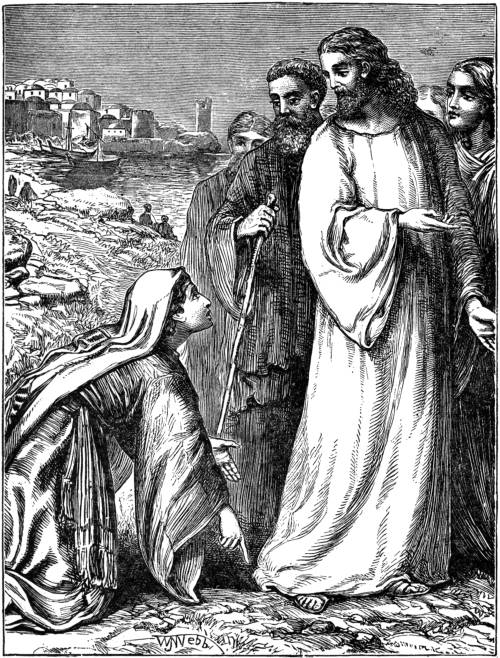
Jesus came unto the borders of Tyre and Sidon, where the people were not Jews, but Gentiles. And there came to Him a woman of Canaan, who cried out to Him, saying, “Have mercy on me, O Lord, Thou son of David; my daughter is grievously vexed with a devil.” She besought Him to cast out this evil spirit from her daughter. But He answered not a word, and His disciples counselled Him to send her away. Then He told her He was not sent unto the Gentiles, but unto the lost sheep of Israel; meaning the Jews. This was said to try her faith. Then she came and worshipped Him, saying, “Lord, help me.” But He said, “It is not meet to take the children’s food and to cast it to dogs;” meaning that His help was due rather to the Jews than to the Gentiles. And she said, “Truth, Lord, yet the dogs sometimes eat of the crumbs which fall from their masters’ table;” meaning that, though she was a Gentile, she believed in Him as the Son of God.

Then Jesus answered, and said unto her, “O woman, great is thy faith; be it unto thee even as thou desirest. Go thy way; the devil has gone out of thy daughter.” And when she was come to her house she found her daughter made whole and laid upon the bed.

Jesus, with His knowledge of our hearts, knew the faith this poor woman had, and tried it so that it might shine the brighter. Then He granted her the blessing she had asked Him for; and how she must have rejoiced when she reached home and found her daughter quite well and restored to her right mind.

El Espíritu Santo: El nacimiento de la Iglesia explicado

El nacimiento de la Iglesia
1. LA PROMESA DEL ESPÍRITU SANTO

Antes de la ascensión de Jesús, Él les dijo a sus discípulos que no comenzaran todavía su ministerio, sino que esperaran en la ciudad de Jerusalén hasta que fueran revestidos de poder desde lo alto.

  • Lucas 24:49 Y he aquí, yo enviaré sobre vosotros la promesa de mi Padre; pero quedaos vosotros en la ciudad de Jerusalén, hasta que seáis investidos de poder desde lo alto.
  • Isaías 28:11-12 Porque con labios tartamudos y en lengua extranjera hablará a este pueblo. A quienes dijo: «Este es el reposo con que podéis dar descanso al cansado; este es el refrigerio»; mas no quisieron escuchar.
  • La predicación del evangelio debía realizarse bajo la inspiración del Espíritu Santo.
    • Hechos 1:8 Pero recibiréis poder cuando haya venido sobre vosotros el Espíritu Santo; y me seréis testigos en Jerusalén, en toda Judea, en Samaria y hasta los confines de la tierra.

Debía comenzar en Jerusalén el día de Pentecostés. Para obtener más información sobre el Día de Pentecostés, consulte Entendiendo Pentecostés: Significado y Celebraciones.


2. LA HABITACIÓN SUPERIOR

  • Ciento veinte personas se encontraban en el aposento alto.
  • Entre ellas estaban María, la madre de Jesús, los hermanos de Jesús y los doce discípulos.
  • Durante aproximadamente siete a diez días permanecieron allí en constante oración y súplica. Entonces,
  • llegó la fiesta judía de Pentecostés.
    • Suplicar (verbo). Suplicado. Suplicando. Suplica – 1. Pedir con humildad o carnosamente, como al orar. 2. Hacer una súplica humilde; implorar. Hacer una petición humilde y ferviente; rogar.
  • Hechos 1:14 Todos ellos perseveraban unánimes en la oración y la súplica, junto con las mujeres, María la madre de Jesús y sus hermanos.
  • Hechos 2 narra el derramamiento del Espíritu Santo.
    • Hechos 2:1-3 Cuando llegó el día de Pentecostés, estaban todos reunidos en un mismo lugar. De repente vino del cielo un estruendo como de un viento recio que soplaba, el cual llenó toda la casa donde estaban sentados; y se les aparecieron lenguas repartidas, como de fuego, asentándose sobre cada uno de ellos.
  • Uno de los milagros que tuvieron lugar en el aposento alto fue cuando todos fueron llenos del Espíritu Santo y comenzaron a hablar en otras lenguas, según el Espíritu les daba que hablasen.
    • Hechos 2:4 Y fueron todos llenos del Espíritu Santo, y comenzaron a hablar en otras lenguas, según el Espíritu les daba que hablasen.
  • Esta fue la señal inicial del bautismo del Espíritu Santo. Los discípulos comenzaron a hablar en lenguas, glorificando a Dios en
    • Marcos 16:17 Y estas señales acompañarán a los que creen: En mi nombre expulsarán demonios; hablarán en nuevas lenguas;

Prophecies of Balaam Concerning Israel

THE FOUR PROPHECIES OF BALAAM (Numbers 23:9-17)
Balaam makes some major predictions called “parables” which are actually prophecy concerning Israel.

  • Numbers 23:5-7 And the Lord put a word in Balaam’s mouth, and said, Return unto Balak, and thus thou shalt speak. And he returned unto him, and, lo, he stood by his burnt sacrifice, he, and all the princes of Moab. And he took up his parable, and said, Balak the king of Moab hath brought me from Aram, out of the mountains of the east, saying, Come, curse me Jacob, and come, defy Israel.
  • Numbers 23:18 And he took up his parable, and said, Rise up, Balak, and hear; hearken unto me, thou son of Zippor:
  • Numbers 24:2-3 And Balaam lifted up his eyes, and he saw Israel abiding in his tents according to their tribes; and the spirit of God came upon him. And he took up his parable, and said, Balaam the son of Beor hath said, and the man whose eyes are open hath said:

The First Prophecy (Numbers 23:9-10)

  • Numbers 23:9-10 For from the top of the rocks I see him, and from the hills I behold him: lo, the people shall dwell alone, and shall not be reckoned among the nations. Who can count the dust of Jacob, and the number of the fourth part of Israel? Let me die the death of the righteous, and let my last end be like his!
    • Balaam’s first prophecy predicts that Jacob (Israel) will become a countless multitude as plentiful as dust.
      • God gave Abram (Abraham) a similar prediction when He said Abram’s seed would be numerous as dust. (see Gen. 13:16)
    • Balaam says Israel will “dwell alone” and not be “reckoned among the nations.”
      • From AD 70 to 1948, Israel did not exsis as a nation; thus, other nations did not recognize her.
      • Since 1948, the Jewish state has often stood alone as enemies have risen from within and without. Israel has conducted six major wars.
      • The “fourth part of Israel” may allude to the division of the camps into four sections around the tabernacle. From the mountain, Balaam could not even count one-fourth of the number of people in one section of the camp

The Second Prophecy (Numbers 23:21-24)

  •  Numbers 23:21-24 He hath not beheld iniquity in Jacob, neither hath he seen perverseness in Israel: the Lord his God is with him, and the shout of a king is among them. God brought them out of Egypt; he hath as it were the strength of an unicorn. Surely there is no enchantment against Jacob, neither is there any divination against Israel: according to this time it shall be said of Jacob and of Israel, What hath God wrought! Behold, the people shall rise up as a great lion, and lift up himself as a young lion: he shall not lie down until he eat of the prey, and drink the blood of the slain.
    • Balaam says that Israel has kept its spiritual integrity, steered clear of perverseness, and is destined to become a ruling nation. He speaks of a great lion and a young lion, echoing Jacob’s final blessing to his son Judah. Jacob foretold that Judah would be like a lion and that a ruler would come from him.
      • Genesis 49:9-10 Judah is a lion’s whelp: from the prey, my son, thou art gone up: he stooped down, he couched as a lion, and as an old lion; who shall rouse him up? The sceptre shall not depart from Judah, nor a lawgiver from between his feet, until Shiloh come; and unto him shall the gathering of the people be.
    • Shiloh is referring to the Messiah.


The Third Prophecy (24:5-9)

  • Numbers 24:5-9 How goodly are thy tents, O Jacob, and thy tabernacles, O Israel! As the valleys are they spread forth, as gardens by the river’s side, as the trees of lign aloes which the Lord hath planted, and as cedar trees beside the waters. He shall pour the water out of his buckets, and his seed shall be in many waters, and his king shall be higher than Agag, and his kingdom shall be exalted. God brought him forth out of Egypt; he hath as it were the strength of an unicorn: he shall eat up the nations his enemies, and shall break their bones, and pierce them through with his arrows. He couched, he lay down as a lion, and as a great lion: who shall stir him up? Blessed is he that blesseth thee, and cursed is he that curseth thee.
    • The promise of blessing on those who bless and cursing on those who curse Israel is the same promise given Abram (Abraham) at the beginning of the Abrahamic covenant.
      • Gen. 12:1-3 Now the Lord had said unto Abram, Get thee out of thy country, and from thy kindred, and from thy father’s house, unto a land that I will shew thee: And I will make of thee a great nation, and I will bless thee, and make thy name great; and thou shalt be a blessing: And I will bless them that bless thee, and curse him that curseth thee: and in thee shall all families of the earth be blessed.
    • The phrase his seed shall be in many waters may allude to the Jewish people who will eventually dwell throughout the world.
    • As in the second prophecy, the lion emblem represents Judah, the tribe of David, and Jesus Christ.
    • “his king shall be higher than Agag”
      • 1 Samual 15:7-8 And Saul smote the Amalekites from Havilah until thou comest to Shur, that is over against Egypt. And he took Agag the king of the Amalekites alive, and utterly destroyed all the people with the edge of the sword.
    • “God brought him forth out of Egypt”
      •  Matthew 2:15 And was there until the death of Herod: that it might be fulfilled which was spoken of the Lord by the prophet, saying, Out of Egypt have I called my son.

The Fourth Prophecy Numbers 24:17

  • Numbers 24:17-19 I shall see him, but not now: I shall behold him, but not nigh: there shall come a Star out of Jacob, and a Sceptre shall rise out of Israel, and shall smite the corners of Moab, and destroy all the children of Sheth. And Edom shall be a possession, Seir also shall be a possession for his enemies; and Israel shall do valiantly. Out of Jacob shall come he that shall have dominion, and shall destroy him that remaineth of the city.
    • The prophecy “a Star out of Jacob” is believed to be what the wise men allude to when they search for the infant Christ Child and reported, “We have seen his star in the east” (Matt. 2:2).
      • Christ’s birth, accompanied by a unique cosmic sign, occurred in Bethlehem of Judea (see Matt. 2:1).
    • The word Scepter used in Numbers 24:17 relates to rulership; Jacob used the word when he predicted that the sceptre would not depart from Judah until Shiloh (a name used to identify the Messiah) comes (see Gen. 49:10).
    • The phrase “Out of Jacob shall come he that shall have dominion” is about Jesus. He came out of Jacob (Israel).
      • Matthew 28:18 And Jesus came and spake unto them, saying, All power is given unto me in heaven and in earth.

CHRIST WALKING ON THE SEA

CHRIST WALKING ON THE SEA

When the people had seen the miracle that Christ did in feeding so many with so few loaves, they felt sure that He was one of the old prophets that had come again, and they would have taken Him by force to make Him king. So, He sent His disciples by boat towards Capernaum, and He went, alone, up into a mountain to pray.

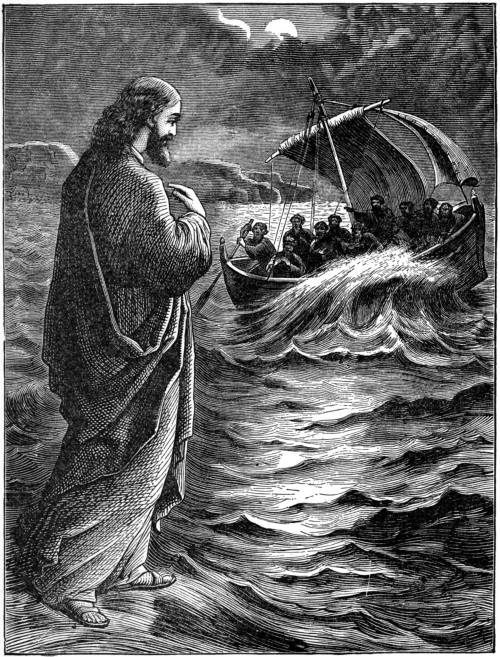
When it was dark, the disciples found themselves alone upon the sea, opposed to strong winds, which tossed the boat upon high waves. Then Jesus went out to them, walking upon the waves; but when the disciples saw Him they thought it was a spirit, and cried out with fear. But Jesus said, “Be of good cheer: it is I; be not afraid.” Peter answered Him, saying, “Lord, if it be Thou, bid me come unto Thee on the water.” And He said, “Come,” and Peter stepped over the boat’s side and walked on the water towards Christ. But when he saw the angry waves around him and heard the roaring of the winds, Peter was afraid and began to sink. He cried out, “Lord, save me.” And Jesus, stretching out His hand, caught him, and said, “O thou of little faith, why didst thou fear?”

When Jesus and Peter had got into the boat, the wind dropped, the sea became calm and the waves still, and immediately they were at the place where they wanted to land. Then they worshipped him, saying, “Truly Thou art the Son of God.” And they came into the land of Gennesaret, where the people knew Him and brought to Him all that were sick, or blind, or lame, that they might touch His garment and be made well.