Israel is Twelve groups of families in Israel who were descendants of the twelve tribes of Israel’s sons of Jacob. Jacob’s name was changed to Israel. His twelve sons and their descendants made up the nation of Israel, sometimes called “the children of Israel.” The family of Jacob began when Jacob stayed at Haran with his uncle Laban. Because his brother Esau was mad that he got the birth right that he was to get and not his brother Jacob.
The birth of the sons came through Jacob’s wives, Leah and Rachel, and their maids, Zilpah and Bilhah. The sons were Reuben, Simeon, Levi, Judah, Dan, Naphtali, Gad, Asher, Issachar, Zebulun, Joseph, and Benjamin.
Joseph’s sons were Ephraim and Manasseh. They were adopted by Jacob, and each one became the father of one of the tribes of Israel. Each tribe except Levi received a portion of the land in Canaan. The tribe of Levi was the priesthood, and in Bible time, priests led people to worship God through sacrifices.
Children of Leah (6 boys and 1 girl) with name meanings
Reuben
Behold, a son
Simeon
God has heard
Levi
Joined
Judah
Praise
Issachar
Reward
Zebulun
Honor
Dinah (she is only girl)
Justice or Judgement
Sons of Leah’s hand maid (Zilpah)
Gad
Good fortune
Asher
Happy
Sons of Rachel
Joseph
May He add
Benjamin (Rachel called his name Benoni but his father called him Benjamin)
Benoni
Son of my Sorrow
Benjamin
Son of my right hand
Son of Rachel’s hand maid (Bilhah)
Dan
Judge
Naphtali
My struggle
Jacob’s children in order of birth
Reuben [Leah]
Simeon[Leah]
Levi [Leah]
Judah [Leah]
Dan [Rachel hand maid Bilhah]
Naphtali [Rachel hand maid Bilhah]
Gad [Leah hand maid Zilpah]
Asher [Leah hand maid Zilpah]
Issachar [Leah]
Zebulun [Leah]
Dinah [Leah] she is a girl
Joseph [Rachel]
Benjamin [Rachel]
Reuben is Jacob’s oldest son the one that has the most power. Their symbol is the Mandrake Flower.
Simeon is a fighting tribe. Their symbol is the mighty sword.
Judah is brave and strong, so their symbol is the lion brave and strong.
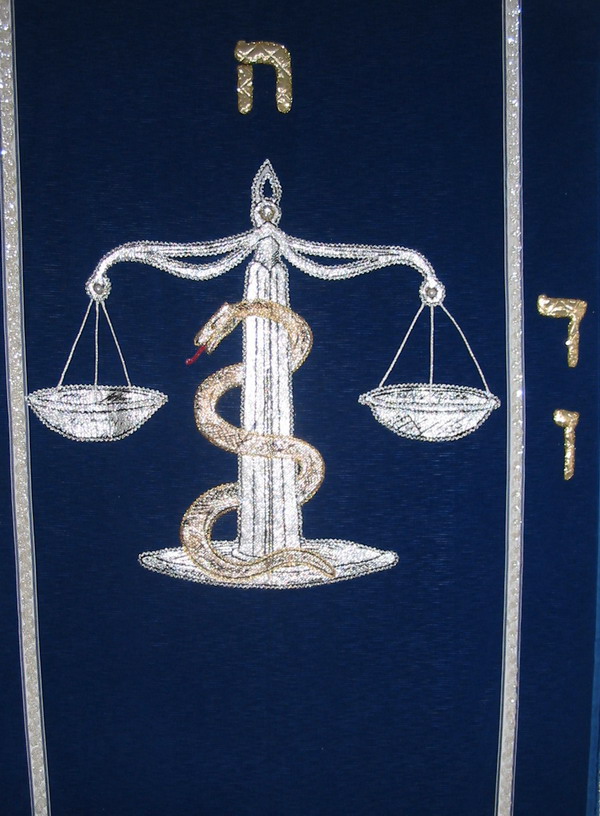
Dan’s name means God has judged me, so their symbol is the snake and the Justice scale.
Naphtali’s name means I have Wrestled. Their symbol is the deer.
Gad’s name means good fortune. Their symbol is the tent.
Asher’s name means happy. Their symbol is the olive tree.
Issachar’s name means God has Repaid me. Their Symbol is the Donkey.
Zebulun’s name means God will dwell with me. Their symbol is a sailing ship.
Manasseh’s name means God hath made me forget all my toil. Their symbol is the unicorn.
Ephraim’s name means God has Caused me to be Fruitful. Their symbol is the bull.
Bejamin’s name means son of my right hand. Their Symbol is the big brave wolf.
Levi’s name means Joined. Note: because Levi is of the priesthood, they do not have a tribal banner.
How wonderful is the way in which God works for those who fear Him! The history of Joseph teaches us this truth.
Joseph had one younger and ten elder brothers. The name of the younger brother was Benjamin. Jacob was the father of them all; and Rachel was the mother of Joseph and Benjamin. Jacob loved Joseph more than all his other sons, and made him a coat of many colours; but his elder brothers hated him, and one day, when far away from home, proposed to kill him. They cast him into a pit instead, and afterwards sold him as a slave to some merchants who were travelling from Gilead to Egypt. When they returned to their father, they took Joseph’s coat of many colours, which they had dipped in blood, and brought it to Jacob, saying: “This have we found: know now if it be thy son’s coat or no.” Jacob knew the coat; and thought Joseph had been killed by some wild beast, and mourned for him greatly.
The merchants carried Joseph into Egypt, and sold him to one of the king’s officers, named Potiphar. But, though a slave, he was not forsaken by God. No, God was with him, and made all that he did to prosper. His master placed him over all his house, but his mistress wanted him to commit a great sin. When he refused, she accused him unjustly to his master, and Potiphar had him cast into prison.
God was with Joseph in the prison, and gave him such favour with the keeper that he set him over all the other prisoners. Among them were two; one who had been the king’s butler, and the other his baker. Both had dreams which troubled them much, but Joseph was enabled by God to interpret their dreams for them. By-and-by Pharaoh, the king, dreamed a dream. He was standing on the banks of a river, and saw seven fat cows come up out of the water and feed in a meadow; afterwards seven very lean cows came up and devoured the fat ones. Then Pharaoh awoke; but he dreamed again, and saw that seven very poor ears of corn devoured seven that were full and good. In the morning he was greatly troubled. What could the dreams mean? He called for the magicians and the wise men, but they could not tell. At last it was told him how Joseph had interpreted the dreams in the prison; so he sent for Joseph, who came from the prison, and stood before the king.
Pharaoh said, “I have dreamed a dream, and there is none that can interpret it; and I have heard say of thee, that thou canst understand a dream to interpret it.” Joseph answered, “It is not in me: God shall give Pharaoh an answer of peace.” Then Joseph told Pharaoh that the dreams had been sent by God, to show him that after seven years of great plenty had passed there would come seven years of famine. He also advised Pharaoh to lay up corn in cities during the years of plenty, so that the people might be fed during the years of famine. Pharaoh saw what great wisdom God had given Joseph, and made him ruler over all the land of Egypt. The corn was stored up; and after the years of plenty the famine came.
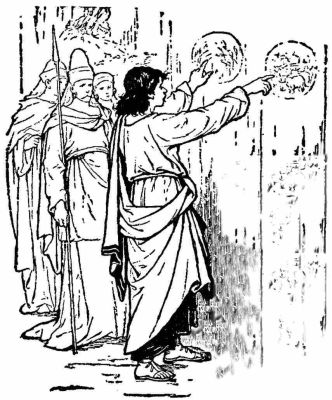
JOSEPH BEFORE THE PHAROAH
During all this time Jacob and his sons had been dwelling in Canaan; where, through the famine, they were now in want of food. So Jacob sent his sons to Egypt to buy corn. The Bible tells us, in the book of Genesis, how they came to Egypt, and all that befell them there; and how at last Joseph, the ruler of the mighty kingdom, made himself known to them as the brother they had cruelly sold for a slave. But he forgave them, and sent to fetch his father Jacob, saying that all were to come into Egypt, where he would provide for them.
Jacob could not at first believe the good news his sons brought; but when he saw the waggons which Joseph had sent to carry him and the little ones, he said, “It is enough; Joseph my son is yet alive; I will go and see him before I die.” So he journeyed to Egypt, with his sons, and all that he had; and as he drew near Joseph went to meet him. When Joseph met his father, he fell on his neck, and wept there. And Jacob said, “Now let me die, since I have seen thy face, because thou art yet alive.” He was so full of joy that it seemed to him there was nothing else worth living for. Afterwards Joseph presented his father to Pharaoh; and Jacob blessed Pharaoh; who allowed him and his family to dwell in the land of Goshen.
When Joseph was made ruler over the land of Egypt, he did just as he had always done. It was not Joseph’s way to sit down, to rest and enjoy himself, and make others wait on him. He found his work at once, and began to do it faithfully and thoroughly. He went out over all the land of Egypt, and saw how rich and abundant were the fields of grain, giving much more than the people could use for their own needs. He told the people not to waste it, but to save it for the coming time of need.
And he called upon the people to give him for the king one bushel of grain out of every five, to be stored up. The people brought their grain, after taking for themselves as much as they needed, and Joseph stored it up in great storehouses in the cities; so much at last that no one could keep account of it.
The king of Egypt gave a wife to Joseph from the noble young women of his kingdom. Her name was Asenath; and to Joseph and his wife God gave two sons. The oldest son he named Manasseh, a word which means “Making to Forget.”
“For,” said Joseph, “God has made me to forget all my troubles and my toil as a slave.”
The second son he named Ephraim, a word that means “Fruitful.” “Because,” said Joseph, “God has not only made the land fruitful; but he has made me fruitful in the land of my troubles.”
The seven years of plenty soon passed by, and then came the years of need. In all the lands around people were hungry, and there was no food for them to eat; but in the land of Egypt everybody had enough. Most of the people soon used up the grain that they had saved; many had saved none at all, and they all cried to the king to help them.
“Go to Joseph!” said king Pharaoh, “and do whatever he tells you to do.”
Then the people came to Joseph, and Joseph opened the storehouses, and sold to the people all the grain that they wished to buy. And not only the people of Egypt came to buy grain, but people of all the lands around as well, for there was great need and famine everywhere. And the need was as great in the land of Canaan, where Jacob lived, as in other lands. Jacob was rich in flocks and cattle, and gold and silver, but his fields gave no grain, and there was danger that his family and his people would starve. And Jacob—who was now called Israel also—heard that there was food in Egypt and he said to his sons: “Why do you look at each other, asking what to do to find food? I have been told that there is grain in Egypt. Go down to that land, and take money with you, and bring grain, so that we may have bread, and may live.”
Then the ten older brothers of Joseph went down to the land of Egypt. They rode upon asses, for horses were not much used in those times, and they brought money with them. But Jacob would not let Benjamin, Joseph’s younger brother, go with them, for he was all the more dear to his father, now that Joseph was no longer with him; and Jacob feared that harm might come to him.
Then Joseph’s brothers came to Joseph to buy food. They did not know him, grown up to be a man, dressed as a prince, and seated on a throne. Joseph was now nearly forty years old, and it had been almost twenty-three years since they had sold him. But Joseph knew them all, as soon as he saw them. He wished to be sharp and stern with them, not because he hated them; but because he wished to see what their spirit was, and whether they were as selfish, and cruel, and wicked as they had been in other days.
They came before him, and bowed, with their faces to the ground. Then, no doubt, Joseph thought of the dream that had come to him while he was a boy, of his brothers’ sheaves bending down around his sheaf. He spoke to them as a stranger, as if he did not understand their language, and he had their words explained to him in the language of Egypt.
“Who are you? And from what place do you come?” said Joseph, in a harsh, stern manner.
They answered him very meekly: “We have come from the land of Canaan to buy food.”
“No,” said Joseph, “I know what you have come for. You have come as spies, to see how helpless the land is, so that you can bring an army against us, and make war on us.”
“No, no,” said Joseph’s ten brothers. “We are no spies. We are the sons of one man, who lives in the land of Canaan; and we have come for food, because we have none at home.”
“You say that you are the sons of one man, who is your father? Is he living? Have you any more brothers? Tell me all about yourselves.”
And they said: “Our father is an old man in Canaan. We did have a younger brother, but he was lost; and we have one brother still, who is the youngest of all, but his father could not spare him to come with us.”
“No,” said Joseph. “You are not good, honest men. You are spies. I shall put you all in prison, except one of you; and he shall go and bring that youngest brother of yours; and when I see him, then I will believe that you tell the truth.”
So Joseph put all the ten men in prison, and kept them under guard for three days; then he sent for them again. They did not know that he could understand their language, and they said to each other, while Joseph heard, but pretended not to hear: “This has come upon us because of the wrong that we did to our brother Joseph, more than twenty years ago. We heard him cry, and plead with us, when we threw him into the pit, and we would not have mercy on him. God is giving us only what we have deserved.”
And Reuben, who had tried to save Joseph, said: “Did I not tell you not to harm the boy? and you would not listen to me. God is bringing our brother’s blood upon us all.”
When Joseph heard this, his heart was touched, for he saw that his brothers were really sorry for the wrong that they had done to him. He turned away from them, so that they could not see his face, and he wept. Then he turned again to them and spoke roughly as before, and said:
“This I will do, for I serve God. I will let you all go home, except one man. One of you I will shut up in prison; but the rest of you can go home and take food for your people. And you must come back and bring your youngest brother with you, and I shall know then that you have spoken the truth.”
Then Joseph gave orders, and his servants seized one of his brothers, whose name was Simeon, and bound him in their sight and took him away to prison. And he ordered his servants to fill the men’s sacks with grain, and to put every man’s money back into the sack before it was tied up, so that they would find the money as soon as they opened the sack. Then the men loaded their asses with the sacks of grain, and started to go home, leaving their brother Simeon a prisoner.
When they stopped on the way to feed their asses, one of the brothers opened his sack, and there he found his money lying on the top of the grain. He called out to his brothers: “See, here is my money given again to me!” And they were frightened, but they did not dare to go back to Egypt and meet the stern ruler of the land. They went home and told their old father all that had happened to them, and how their brother Simeon was in prison, and must stay there until they should return, bringing Benjamin with them.
When they opened their sacks of grain, there in the mouth of each sack was the money that they had given; and they were filled with fear. Then they spoke of going again to Egypt and taking Benjamin, but Jacob said to them:
“You are taking my sons away from me. Joseph is gone, and Simeon is gone, and now you would take Benjamin away. All these things are against me!” Reuben said: “Here are my own two boys. You may kill them, if you wish, in case I do not bring Benjamin back to you.” But Jacob said: “My youngest son shall not go with you. His brother is dead, and he alone is left to me. If harm should come to him, it would bring down my gray hairs with sorrow to the grave.”
The men who bought Joseph from his brothers were called Ishmaelites, because they belonged to the family of Ishmael, who, you remember, was the son of Hagar, the servant of Sarah. These men carried Joseph southward over the plain which lies beside the great sea on the west of Canaan; and after many days they brought Joseph to Egypt. How strange it must have seemed to the boy who had lived in tents to see the great river Nile, and the cities thronged with people, and the temples, and the mighty pyramids!
The Ishmaelites sold Joseph as a slave to a man named Potiphar, who was an officer in the army of Pharaoh, the king of Egypt. Joseph was a beautiful boy, and cheerful and willing in his spirit, and able in all that he undertook; so that his master Potiphar became very friendly to him, and after a time, he placed Joseph in charge of his house, and everything in it. For some years Joseph continued in the house of Potiphar, a slave in name, but in reality the master of all his affairs, and ruler over his fellow-servants.
But Potiphar’s wife, who at first was very friendly to Joseph, afterward became his enemy, because Joseph would not do wrong to please her. She told her husband falsely, that Joseph had done a wicked deed. Her husband believed her, and was very angry at Joseph, and put him in the prison with those who had been sent to that place for breaking the laws of the land. How hard it was for Joseph to be charged with a crime, when he had done no wrong, and to be thrust into a dark prison among wicked people!
But Joseph had faith in God, that at some time all would come out right; and in the prison he was cheerful, and kind, and helpful, as he had always been. The keeper of the prison saw that Joseph was not like the other men around him, and he was kind to Joseph. In a very little while, Joseph was placed in charge of all his fellow-prisoners, and took care of them, just as he had taken care of everything in Potiphar’s house. The keeper of the prison scarcely looked into the prison at all; for he had confidence in Joseph, that he would be faithful and wise in doing the work given to him. Joseph did right, and served God, and God blessed Joseph in everything.
While Joseph was in the prison, two men were sent there by the king of Egypt, because he was displeased with them. One was the king’s chief butler, who served the king with wine; the other was the chief baker, who served him with bread. These two men were under Joseph’s care; and Joseph waited on them, for they were men of rank.
One morning, when Joseph came into the room where the butler and the baker were kept, he found them looking quite sad. Joseph said to them:
“Why do you look so sad today?” Joseph was cheerful and happy in his spirit; and he wished others to be happy also, even in prison.
And one of them said, “Each one of us dreamed last night a very strange dream, and there is no one to tell us what our dreams mean.”
For in those times, before God gave the Bible to men, he often spoke to men in dreams; and there were wise men who could sometimes tell what the dreams meant.
“Tell me,” said Joseph, “what your dreams are. Perhaps my God will help me to understand them.”
Then the chief butler told his dream. He said, “In my dream I saw a grape-vine with three branches; and as I looked, the branches shot out buds; and the buds became blossoms; and the blossoms turned into clusters of ripe grapes. And I picked the grapes, and squeezed their juice into king Pharaoh’s cup, and it became wine; and I gave it to king Pharaoh to drink, just as I used to do when I was beside his table.”
Then Joseph said, “This is what your dream means. The three branches mean three days. In three days, king Pharaoh shall call you out of prison and shall put you back in your place; and you shall stand at his table, and shall give him his wine, as you have given it before. But when you go out of prison, please to remember me, and try to find some way to get me, too, out of this prison. For I was stolen out of the land of Canaan, and sold as a slave; and I have done nothing wrong to deserve being put in this prison. Do speak to the king for me, that I may be set free.”
Of course, the chief butler felt very happy to hear that his dream had so pleasant a meaning. And the chief baker spoke, hoping to have an answer as good:
“In my dream,” said the baker, “there were three baskets of white bread on my head, one above another, and on the topmost basket were all kinds of roasted meat and food for Pharaoh; and the birds came, and ate the food from the baskets on my head.”
And Joseph said to the baker:
“This is the meaning of your dream, and I am sorry to tell it to you. The three baskets are three days. In three days, by order of the king you shall be lifted up, and hanged upon a tree; and the birds shall eat your flesh from your bones as you are hanging in the air.”
And it came to pass just as Joseph had said. Three days after that, king Pharaoh sent his officers to the prison. They came and took out both the chief butler and the chief baker. The baker they hung up by his neck to die, and left his body for the birds to pick in pieces. The chief butler they brought back to his old place, where he waited at the king’s table, and handed him his wine to drink.
You would have supposed that the butler would remember Joseph, who had given him the promise of freedom, and had shown such wisdom. But in his gladness, he forgot all about Joseph. And two full years passed by, while Joseph was still in prison, until he was a man thirty years old.
But one night, king Pharaoh himself dreamed a dream—in fact, two dreams in one. And in the morning he sent for all the wise men of Egypt, and told to them his dreams; but there was not a man who could give the meaning of them. And the king was troubled, for he felt that the dreams had some meaning which it was important for him to know.
Then suddenly the chief butler who was by the king’s table remembered his own dream in the prison two years before, and remembered, too, the young man who had told its meaning so exactly. And he said:
“I do remember my faults this day. Two years ago king Pharaoh was angry with his servants, with me and the chief baker; and he sent us to the prison. While we were in the prison, one night each of us dreamed a dream; and the next day a young man in the prison, a Hebrew from the land of Canaan, told us what our dreams meant; and in three days they came true, just as the young Hebrew had said. I think that if this young man is in the prison still, he could tell the king the meaning of his dreams.”
You notice that the butler spoke of Joseph as “a Hebrew.” The people of Israel, to whom Joseph belonged, were called Hebrews as well as Israelites. The word Hebrew means, “One who crossed over,” and it was given to the Israelites because Abraham, their father, had come from a land on the other side of the great river Euphrates, and had crossed over the river on his way to Canaan.
Then king Pharaoh sent in haste to the prison for Joseph; and Joseph was taken out, and he was dressed in new garments, and was led in to Pharaoh in the palace. And Pharaoh said:
“I have dreamed a dream; and there is no one who can tell what it means. And I have been told that you have power to understand dreams and what they mean.”
And Joseph answered Pharaoh:
“The power is not in me; but God will give Pharaoh a good answer. What is the dream that the king has dreamed?”
“In my first dream,” said Pharaoh, “I was standing by the river: and I saw seven fat and handsome cows come up from the river to feed in the grass. And while they were feeding, seven other cows followed them up from the river, very thin, and poor, and lean—such miserable creatures as I had never seen before. And the seven lean cows ate up the seven fat cows; and after they had eaten them up, they were as lean and miserable as before. Then I awoke.
“And I fell asleep again, and dreamed again. In my second dream, I saw seven heads of grain growing up on one stalk, large, and strong, and good. And then seven heads came up after them, that were thin, and poor, and withered. And the seven thin heads swallowed up the seven good heads; and afterward were as poor and withered as before.
“And I told these two dreams to all the wise men, and there is no one who can explain them. Can you tell me what these dreams mean?”
And Joseph said to the king:
“The two dreams have the same meaning. God has been showing to king Pharaoh what he will do in this land. The seven good cows mean seven years, and the seven good heads of grain mean the same seven years. The seven lean cows and the seven thin heads of grain also mean seven years. The good cows and the good grain mean seven years of plenty, and the seven thin cows and thin heads of grain mean seven poor years. There are coming upon the land of Egypt seven years of such plenty as have never been seen; when the fields shall bring greater crops than ever before; and after those years shall come seven years when the fields shall bring no crops at all. And then for seven years there shall be such need, that the years of plenty will be forgotten, for the people will have nothing to eat.
The two dreams have the same meaning
“Now, let king Pharaoh find some man who is able and wise, and let him set this man to rule over the land. And during the seven years of plenty, let a part of the crops be put away for the years of need. If this shall be done, then when the years of need come, there will be plenty of food for all the people, and no one will suffer, for all will have enough.”
And king Pharaoh said to Joseph: “Since God has shown you all this, there is no other man as wise as you. I will appoint you to do this work, and to rule over the land of Egypt. All the people shall be under you; only on the throne of Egypt I will be above you.”
And Pharaoh took from his own hand the ring which held his seal, and put on Joseph’s hand, so that he could sign for the king, and seal in the king’s place. And he dressed Joseph in robes of fine linen, and put around his neck a gold chain. And he made Joseph ride in a chariot which was next in rank to his own. And they cried out before Joseph, “Bow the knee.” And thus Joseph was ruler over all the land of Egypt.
Joseph God reaffirmed His covenant with Jacob (Israel), and Jacob fathered twelve sons (Genesis 35:22-26). One of Jacob’s sons, Joseph, was chosen by God to be a preserver of the family of Jacob (Genesis 45:5).
Joseph Sold into Egypt
Joseph was sensitive to the Lord and a person of high moral character. His brothers became jealous of him when they saw that their father loved him above the other sons. Later, Joseph had some dreams which suggested that his brothers and mother and father would bow down to him. Predictably, their hatred for him increased.
One day, when Jacob sent Joseph to check on his brothers, they saw an opportunity to rid themselves of him forever. After casting him into a pit, they sold him to some Midianite merchants for twenty pieces of silver. The Midianites took him into Egypt, where they sold him to Potiphar, who was one of Pharaoh’s officers and a captain of the guard.
Jacob Deceived
After having disposed of Joseph, his brothers took a goat and killed it, dipping Joseph’s coat in the blood. They brought the coat to their father and asked, “Is this thy son’s coat?” “It is my son’s coat,” Jacob declared. “An evil beast hath devoured him. Joseph is without doubt rent in pieces. In his despair, Jacob refused to be comforted and mourned with tears for Joseph (Genesis 37:31-35).
Meanwhile, Joseph, being the conscientious, godly man that he was did his very best as a servant to Potiphar. He had every reason for bitterness and an excuse to be sullen. Instead he served his master diligently. Potiphar saw that God was with him and that everything Joseph did prospered. Finally, Potiphar made Joseph the overseer of all that he had. Potiphar concerned himself only with the food that was set before him to eat Joseph took care of everything.
Joseph’s Temptation
Joseph’s trials were not over, however. Potiphar’s wife became infatuated with Joseph and daily tempted him to commit immorality with her. He steadfastly refused her advances, until one day, as he fled from her presence. she grasped part of his clothing. Seeing that she was rebuffed, she contrived to blame Joseph with trying to assault her, using his clothing as proof. Potiphar, his wrath kindled, put Joseph in the prison where the king’s prisoners were kept.
Joseph in Prison
Even in the prison, Joseph kept the right attitude. He refused to be bitter and looked for opportunities to serve God. The keeper of the prison committed to Joseph’s hand all the prisoners and the complete management of the prison. Even in prison, God blessed Joseph and prepared the way for the fulfillment of His plan.
In the prison were two men who had served Pharaoh as the chief of the butlers and the chief of the bakers. They both had dreams, which Joseph Interpreted. True to Joseph’s interpretation, the butler was restored to his office, while the baker was hanged.
Joseph’s Elevation under Pharaoh
At the end of two years, Pharaoh had a dream that which none of his men could interpret. Then the butler remembered Joseph and suggested to Pharaoh that Joseph might be able to interpret Pharaoh’s dream. Pharaoh called for Joseph, who told him the significance of his dream: Egypt would experience seven years of plenty followed by seven years of famine.
Pharaoh promoted Joseph to the position of second most powerful ruler in all of Egypt and gave to this thirty-year-old Hebrew the responsibility of storing up food during the seven years of plenty in preparation for the drastic famine that was to follow (Genesis 41:46).
Joseph’s Brothers Come to Egypt
When the famine came to Egypt, it also affected the land of Canaan, where Joseph’s family still lived. When Jacob heard that Egypt had grain, he sent his sons-all except the youngest son, Benjamin-to buy some. The person in charge of selling grain was Joseph, and just as he had dreamed many years previously, his brothers came before him bowing down to the earth!
Recognizing them, Joseph disguised himself and spoke roughly, trying to find out if his father was still alive and attempting to devise a plan to bring his father to Egypt. He accused his brothers of being spies. When they denied the charges and said that they were all the sons of one man, Joseph took one of them, Simeon, and bound him until the others could return with their youngest brother, Benjamin, as proof of their innocence.
Jacob was greatly troubled and refused to send Benjamin for fear that he too would never return. But when the famine grew worse, the family had no choice but to comply with Joseph’s instructions. Judah took personal responsibility for Benjamin, and the brothers traveled to Egypt once again.
This time, Joseph devised a plan to keep Benjamin, which involved secretly returning the brothers’ money in the mouth of their sacks and putting his personal silver cup in the sack of Benjamin. When the brothers were stopped by Joseph’s servant and returned to him, Joseph could no longer refrain from revealing to them exactly who he was. He wept aloud, and said, “I am Joseph; doth my father yet live?”
Joseph Forgives His Brothers
His brothers, troubled and surprised, could not answer. Then Joseph, who had every reason to be bitter, harsh, and unforgiving, said, “Now therefore be not grieved, nor angry with yourselves, that ye sold me hither: for God did send me before you to preserve life” (Genesis 45:5).
Long before the New Testament was ever written, Joseph had learned one of the most valuable lessons that we can ever learn: “And we know that all things work together for good to them that love God, to them who are the called according to his purpose’ (Romans 8:28). As he was to say later, “Ye thought evil against me; but God meant it unto good, to bring to pass, as it is this day, to save much people alive’ (Genesis 50:20).
Jacob and His Family Settle in Goshen
Joseph supplied his brothers with wagons and equipment. They returned to Canaan and brought their father, Jacob, back to Egypt to settle in the land of Goshen, the choice land of all Egypt. Here they enjoyed many years of blessings, peace, and plenty while Joseph was alive.
Israel in Egyptian Bondage
After Joseph’s death, a new king arose in Egypt who did not know Joseph. This pharaoh began to be fearful of the Israelites, for they were numerous and strong. He was afraid that they would side with his enemies to help them overthrow Egypt in war. In his fear, the new pharaoh set taskmasters over the Israelites and made slaves of them. But the more the Egyptians afflicted the Israelites (Hebrews), the more the Israelites multiplied and grew. God was preparing them for the great exodus from Egypt back to their promised land of Canaan.








 articlesforchristians