A place to grow your relationship with God

Posts tagged ‘McGuffey’s Third Eclectic Reader’

McGuffey’s Third Eclectic Reader Lesson 36: Finding the Owner

Words:

  • possession
  • torment
  • suggested
  • observed
  • satisfaction
  • thief
  • anxiety
  • finally
  • burying
  • conscious
  • critical
  • breathless
  • experienced
  • response
  • evident
  • interfered

Lesson:

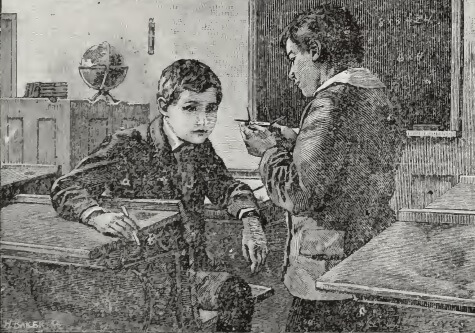
  1. ‘It’s mine,’ said Fred, showing a white handled pocketknife, with every blade perfect and shining. ‘Just what I’ve always wanted.’ And he turned the prize over and over with evident satisfaction.
  2. ‘I guess I know who owns it,’ said Tom, looking at it with a critical eye.
  3. ‘I guess you don’t,’ was the quick response. ‘It isn’t Mr. Raymond’s,’ said Fred, shooting wide of the mark.
  4. ‘I know that; Mr. Raymond’s is twice as large,’ observed Tom, going on with his drawing lesson.
  5. Do you suppose Fred took any comfort in that knife? Not a bit of comfort did he take. He was conscious all the time of having something in his possession that did not belong to him; and Tom’s suspicion interfered sadly with his enjoyment.
  6. Finally, it became such a torment to him, that he had serious thoughts of burning it, or burying it, or giving it away; but a better plan suggested itself.
  7. ‘Tom,’ said he, one day at recess, ‘didn’t you say you thought you knew who owned that knife I found?’
  8. ‘Yes, I did; it looked like Doctor Perry’s.’ And Tom ran off to his play, without giving the knife another thought.
  9. Dr. Perry’s! Why, Fred would have time to go to the doctor’s office before recess closed: so he started in haste, and found the old gentleman getting ready to visit a patient. ‘Is this yours?’ cried Fred, in breathless haste, holding up the cause of a week’s anxiety.
  10. ‘It was,’ said the doctor; ‘but I lost it the other day.’
  11. ‘I found it,’ said Fred, ‘and have felt like a thief ever since. Here, take it; I’ve got to run.’
  12. ‘Hold on!’ said the doctor. ‘I’ve got a new one, and you are quite welcome to this.’
  13. ‘Am I? May I? Oh! thank you!’ And with what a different feeling he kept it from that which he had experienced for a week!

McGuffey’s Third Eclectic Reader Lesson 41: Ray and His Kite

Lesson:

  1. Ray was thought to be an odd boy. You will think him so, too, when you have read this story.
  2. Ray liked well enough to play with the boys at school; yet he liked better to be alone under the shade of some tree, reading a fairy tale or dreaming daydreams. But there was one sport that he liked as well as his companions; that was kite flying.
  3. One day when he was flying his kite, he said to himself, ‘I wonder if anybody ever tried to fly a kite at night. It seems to me it would be nice. But then, if it were very dark, the kite could not be seen. What if I should fasten a light to it, though? That would make it show. I’ll try it this very night.’
  4. As soon as it was dark, without saying a word to anybody, he took his kite and lantern, and went to a large, open lot, about a quarter of a mile from his home. ‘Well,’ thought he, ‘this is queer. How lonely and still it seems without any other boys around! But I am going to fly my kite, anyway.’
  5. So he tied the lantern, which was made of tin punched full of small holes, to the tail of his kite. Then he pitched the kite, and, after several attempts, succeeded in making it rise. Up it went, higher and higher, as Ray let out the string. When the string was all unwound, he tied it to a fence; and then he stood and gazed at his kite as it floated high up in the air.
  6. While Ray was enjoying his sport, some people who were out on the street in the village, saw a strange light in the sky. They gathered in groups to watch it. Now it was still for a few seconds, then it seemed to be jumping up and down; then it made long sweeps back and forth through the air.
  7. ‘What can it be?’ said one person. ‘How strange!’ said another. ‘It cannot be a comet; for comets have tails,’ said a third. ‘Perhaps it’s a big firefly,’ said another.
  8. At last some of the men determined to find out what this strange light was—whether it was a hobgoblin dancing in the air, or something dropped from the sky. So off they started to get as near it as they could.
  9. While this was taking place, Ray, who had got tired of standing, was seated in a fence corner, behind a tree. He could see the men as they approached; but they did not see him.
  10. When they were directly under the light, and saw what it was, they looked at each other, laughing, and said, ‘This is some boy’s trick; and it has fooled us nicely. Let us keep the secret, and have our share of the joke.’
  11. Then they laughed again, and went back to the village; and some of the simple people there have not yet found out what that strange light was.
  12. When the men had gone, Ray thought it was time for him to go; so he wound up his string, picked up his kite and lantern, and went home. His mother had been wondering what had become of him.
  13. When she heard what he had been doing, she hardly knew whether to laugh or scold; but I think she laughed, and told him that it was time for him to go to bed.

DEFINITIONS

  1. Daydreams: Vain fancies.
  2. Companions: Playmates, friends.
  3. Attempts: Trials, efforts.

McGuffey’s Third Eclectic Reader Lesson 33: The Echo

Words:

  • thicket
  • harshly
  • wrath
  • whence
  • rambling
  • proving
  • toward
  • echo
  • mocking
  • angrily
  • foolish
  • abroad
  • cross
  • Bible
  • instantly

Lesson:

  1. As Robert was one day rambling about, he happened to cry out, ‘Ho, ho!’ He instantly heard coming back from a hill nearby, the same words, ‘Ho, ho!’
  2. In great surprise, he said with a loud voice, ‘Who are you?’ Upon this, the same words came back, ‘Who are you?’
  3. Robert now cried out harshly, ‘You must be a very foolish fellow.’ ‘Foolish fellow!’ came back from the hill.
  4. Robert became angry, and with loud and fierce words went toward the spot whence the sounds came. The words all came back to him in the same angry tone.
  5. He then went into the thicket, and looked for the boy who, as he thought, was mocking him; but he could find nobody anywhere.
  6. When he went home, he told his mother that some boy had hid himself in the wood, for the purpose of mocking him.
  7. ‘Robert,’ said his mother, ‘you are angry with yourself alone. You heard nothing but your own words.’
  8. ‘Why, mother, how can that be?’ said Robert. ‘Did you never hear an echo?’ asked his mother. ‘An echo, dear mother? No, ma’am. What is it?’
  9. ‘I will tell you,’ said his mother. ‘You know, when you play with your ball, and throw it against the side of a house, it bounds back to you.’ ‘Yes, mother,’ said he, ‘and I catch it again.’
  10. ‘Well,’ said his mother, ‘if I were in the open air, by the side of a hill or a large barn, and should speak very loud, my voice would be sent back, so that I could hear again the very words which I spoke.
  11. ‘That, my son, is an echo. When you thought someone was mocking you, it was only the hill before you, echoing, or sending back, your own voice.
  12. ‘The bad boy, as you thought it was, spoke no more angrily than yourself. If you had spoken kindly, you would have heard a kind reply.
  13. ‘Had you spoken in a low, sweet, gentle tone, the voice that came back would have been as low, sweet, and gentle as your own.
  14. ‘The Bible says, ‘A soft answer turneth away wrath.’ Remember this when you are at play with your school mates.
  15. ‘If any of them should be offended, and speak in a loud, angry tone, remember the echo, and let your words be soft and kind.’
  16. ‘When you come home from school, and find your little brother cross and peevish, speak mildly to him. You will soon see a smile on his lips, and find that his tones will become mild and sweet.
  17. ‘Whether you are in the fields or in the woods, at school or at play, at home or abroad, remember, The good and the kind, By kindness their love ever proving, Will dwell with the pure and the loving.’

McGuffey’s Third Eclectic Reader Lesson 32: The Soldier

Words:

  • ranks
  • glory
  • arrayed
  • weapon
  • living
  • clad
  • armor
  • victory
  • contest
  • battle
  • blood
  • enlist
  • mustered
  • longing
  • warrior

Lesson:

  1. A soldier! a soldier! I’m longing to be:

The name and the life of a soldier for me!

I would not be living at ease and at play;

True honor and glory I’d win in my day.

  1. A soldier! a soldier! in armor arrayed;

My weapon in hand, of no contest afraid;

I’d ever be ready to strike the first blow,

And to fight my way through the ranks of the foe.

  1. But then, let me tell you, no blood would I shed,

No victory seek o’er the dying and dead;

A far braver soldier than this would I be;

A warrior of Truth, in the ranks of the free.

  1. A soldier! a soldier! Oh, then, let me be!

My friends, I invite you, enlist now with me.

Truth’s bands shall be mustered, love’s foes shall give way!

Let’s up, and be clad in our battle array!

J. G. Adams.

McGuffey’s Third Eclectic Reader Lesson 40: Charlie and Rob

Lesson:

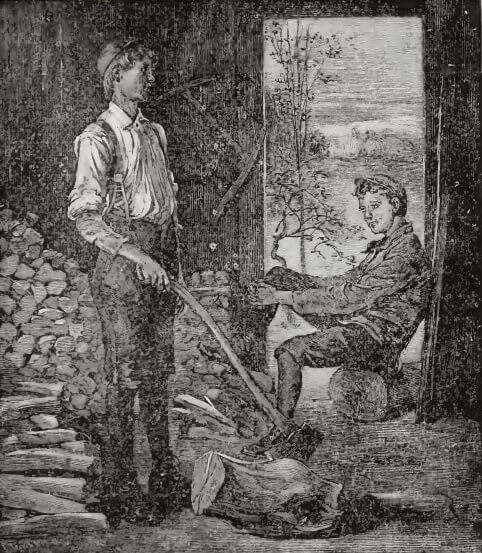
  1. ‘Don’t you hate splitting wood?’ asked Charlie, as he sat down on a log to hinder Rob for a while.
  2. ‘No, I rather like it. When I get hold of a tough old fellow, I say, ‘See here, now, you think you’re the stronger, and are going to beat me; so I’ll split you up into kindling wood.’
  3. ‘Pshaw!’ said Charlie, laughing; ‘and it’s only a stick of wood.’
  4. ‘Yes; but you see I pretend it’s a lesson, or a tough job of any kind, and it’s nice to conquer it.’
  5. ‘I don’t want to conquer such things; I don’t care what becomes of them. I wish I were a man, and a rich one.’
  6. ‘Well, Charlie, if you live long enough you’ll be a man, without wishing for it; and as for the rich part, I mean to be that myself.’
  7. ‘You do. How do you expect to get your money? By sawing wood?’
  8. ‘May be—some of it; that’s as good a way as any, so long as it lasts. I don’t care how I get rich, you know, so that it’s in an honest and useful way.’
  9. ‘I’d like to sleep over the next ten years, and wake up to find myself a young man with a splendid education and plenty of money.’
  10. ‘Humph! I am not sleepy—a night at a time is enough for me. I mean to work the next ten years. You see there are things that you’ve got to work out—you can’t sleep them out.’
  11. ‘I hate work,’ said Charlie, ‘that is, such work as sawing and splitting wood, and doing chores. I’d like to do some big work, like being a clerk in a bank or something of that sort.’
  12. ‘Wood has to be sawed and split before it can be burned,’ said Rob. ‘I don’t know but I’ll be a clerk in a bank some time; I’m working towards it. I’m keeping father’s accounts for him.’
  13. How Charlie laughed! ‘I should think that was a long way from being a bank clerk. I suppose your father sells two tables and six chairs, some days, doesn’t he?’
  14. ‘Sometimes more than that, and sometimes not so much,’ said Rob, in perfect good humor.
  15. ‘I didn’t say I was a bank clerk now. I said I was working towards it. Am I not nearer it by keeping a little bit of a book than I should be if I didn’t keep any book at all?’
  16. ‘Not a whit—such things happen,’ said Charlie, as he started to go.
  17. Now, which of these boys, do you think, grew up to be a rich and useful man, and which of them joined a party of tramps before he was thirty years old?

DEFINITIONS

  1. Hinder: Interrupt, prevent from working.
  2. Conquer: Overcome, master.
  3. Splendid: Very fine, complete.
  4. Education: Acquired knowledge.
  5. Chores: The light work about a house or yard.

McGuffey’s Third Eclectic Reader Lesson 39: I Will Think of It

Words:

  • chandelier
  • Pisa
  • London
  • Ferguson
  • portraits
  • Isaac
  • invention
  • Galileo
  • pendulum
  • engine
  • whalebone
  • lectures
  • locomotive
  • motto
  • England
  • teakettle
  • discovered
  • swaying
  • discouraged
  • improved

Lesson:

  1. ‘I will think of it.’ It is easy to say this; but do you know what great things have come from thinking?
  2. We cannot see our thoughts, or hear, or taste, or feel them; and yet what mighty power they have!
  3. Sir Isaac Newton was seated in his garden on a summer’s evening, when he saw an apple fall from a tree. He began to think, and, in trying to find out why the apple fell, discovered how the earth, sun, moon, and stars are kept in their places.
  4. A boy named James Watt sat quietly by the fireside, watching the lid of the tea kettle as it moved up and down. He began to think; he wanted to find out why the steam in the kettle moved the heavy lid.
  5. From that time he went on thinking and thinking; and when he became a man, he improved the steam engine so much that it could, with the greatest ease, do the work of many horses.
  6. When you see a steamboat, a steam mill, or a locomotive, remember that it would never have been built if it had not been for the hard thinking of someone.
  7. A man named Galileo was once standing in the cathedral of Pisa, when he saw a chandelier swaying to and fro.
  8. This set him thinking, and it led to the invention of the pendulum.
  9. James Ferguson was a poor Scotch shepherd boy. Once, seeing the inside of a watch, he was filled with wonder. ‘Why should I not make a watch?’ thought he.
  10. But how was he to get the materials out of which to make the wheels and the mainspring? He soon found how to get them: he made the mainspring out of a piece of whalebone. He then made a wooden clock which kept good time.
  11. He began, also, to copy pictures with a pen, and portraits with oil colors. In a few years, while still a small boy, he earned money enough to support his father.
  12. When he became a man, he went to London to live. Some of the wisest men in England, and the king himself, used to attend his lectures. His motto was, ‘I will think of it;’ and he made his thoughts useful to himself and the world.
  13. Children, when you have a difficult lesson to learn, don’t feel discouraged, and ask someone to help you before helping yourselves. Think, and by thinking you will learn how to think to some purpose.

McGuffey’s Third Eclectic Reader Lesson 31: Weighing an Elephant

Words:

  • eastern
  • deliverance
  • weight
  • favorite
  • clever
  • sailor
  • enormous
  • court
  • quantity
  • subject
  • expense
  • elephant
  • stroked
  • machine
  • opening
  • difficulty
  • risen
  • relieved
  • empty

Lesson:

  1. ‘An eastern king,’ said Teddy’s mother, ‘had been saved from some great danger. To show his gratitude for deliverance, he vowed he would give to the poor the weight of his favorite elephant in silver.’
  2. ‘Oh! what a great quantity that would be,’ cried Lily, opening her eyes very wide. ‘But how could you weigh an elephant?’ asked Teddy, who was a quiet, thoughtful boy.
  3. ‘There was the difficulty,’ said his mother. ‘The wise and learned men of the court stroked their long beards, and talked the matter over, but no one found out how to weigh the elephant.
  4. ‘At last, a poor old sailor found safe and simple means by which to weigh the enormous beast. The thousands and thousands of pieces of silver were counted out to the people; and crowds of the poor were relieved by the clever thought of the sailor.’
  5. ‘O mamma,’ said Lily, ‘do tell us what it was!’
  6. ‘Stop, stop!’ said Teddy. ‘I want to think for myself— think hard—and find out how an elephant’s weight could be known, with little trouble and expense.’
  7. ‘I am well pleased,’ said his mother, ‘that my little boy should set his mind to work on the subject. If he can find out the sailor’s secret before night, he shall have that orange for his pains.’
  8. The boy thought hard and long. Lily laughed at her brother’s grave looks, as he sat leaning his head on his hands. Often she teased him with the question, ‘Can you weigh an elephant, Teddy?’
  9. At last, while eating his supper, Teddy suddenly cried out, ‘I have it now!’
  10. ‘Do you think so?’ asked his mother.
  11. ‘How would you do it,’ asked Lily.
  12. ‘First, I would have a big boat brought very close to the shore, and would have planks laid across, so that the elephant could walk right into it.’
  13. ‘Oh, such a great, heavy beast would make it sink low in the water,’ said Lily.
  14. ‘Of course it would,’ said her brother. Then I would mark on the outside of the boat the exact height to which the water had risen all around it while the elephant was inside. Then he should march on shore, leaving the boat quite empty.’
  15. ‘But I don’t see the use of all this,’ said Lily.
  16. ‘Don’t you?’ cried Teddy, in surprise. ‘Why, I should then bring the heaps of silver, and throw them into the boat till their weight would sink it to the mark made by the elephant. That would show that the weight of each was the same.’
  17. ‘How funny!’ cried Lily; ‘you would make a weighing machine of the boat?’
  18. ‘That is my plan,’ said Teddy.
  19. ‘That was the sailor’s plan,’ said his mother. ‘You have earned the orange, my boy;’ and she gave it to him with a smile.

Adapted from A. L. O. E. 3,6.

McGuffey’s Third Eclectic Reader Lesson 30: Courage and Cowardice

Words:

  • deal
  • straight
  • courage
  • reproach
  • cowardice
  • depth
  • effort
  • coward
  • deserved
  • schoolmates

Lesson:

  1. Robert and Henry were going home from school, when, on turning a corner, Robert cried out, ‘A fight! let us go and see!’
  2. ‘No,’ said Henry; ‘let us go quietly home and not meddle with this quarrel. We have nothing to do with it, and may get into mischief.’
  3. ‘You are a coward, and afraid to go,’ said Robert, and off he ran. Henry went straight home, and in the afternoon went to school, as usual.
  4. But Robert had told all the boys that Henry was a coward, and they laughed at him a great deal.
  5. Henry had learned, however, that true courage is shown most in bearing reproach when not deserved, and that he ought to be afraid of nothing but doing wrong.
  6. A few days after, Robert was bathing with some schoolmates, and got out of his depth. He struggled, and screamed for help, but all in vain.
  7. The boys who had called Henry a coward, got out of the water as fast as they could, but they did not even try to help him.
  8. Robert was fast sinking, when Henry threw off his clothes, and sprang into the water. He reached Robert just as he was sinking the last time.
  9. By great effort, and with much danger to himself, he brought Robert to the shore, and thus saved his life.
  10. Robert and his schoolmates were ashamed at having called Henry a coward. They owned that he had more courage than any of them.
  11. Never be afraid to do good, but always fear to do evil.

McGuffey’s Third Eclectic Reader Lesson 29: Remember

Words:

  • punish
  • actions
  • wicked
  • falsehood
  • wakeful

Lesson:

  1. Remember, child, remember,

That God is in the sky;

That He looks down on all we do,

With an ever-wakeful eye.

  1. Remember, oh remember,

That, all the day and night,

He sees our thoughts and actions

With an ever-watchful sight.

  1. Remember, child, remember,

That God is good and true;

That He wishes us to always be

Like Him in all we do.

  1. Remember that He ever hates

A falsehood or a lie;

Remember He will punish, too,

The wicked, by and by.

  1. Remember, oh remember,

That He is like a friend,

And wishes us to holy be,

And happy, in the end.

  1. Remember, child, remember,

To pray to Him in heaven;

And if you have been doing wrong,

Oh, ask to be forgiven.

  1. Be sorry, in your little prayer,

And whisper in his ear;

Ask his forgiveness and his love.

And He will surely hear.

  1. Remember, child, remember,

That you love, with all your might,

The God who watches o’er us,

And gives us each delight;

Who guards us ever through the day,

And saves us in the night.

McGuffey’s Third Eclectic Reader Lesson 28: The Clock and the Sundial. A Fable.

Words:

  • stock
  • spirit
  • humble
  • gloomy
  • sundial
  • folly
  • steeple
  • stupid
  • boasting
  • modesty

Lesson:

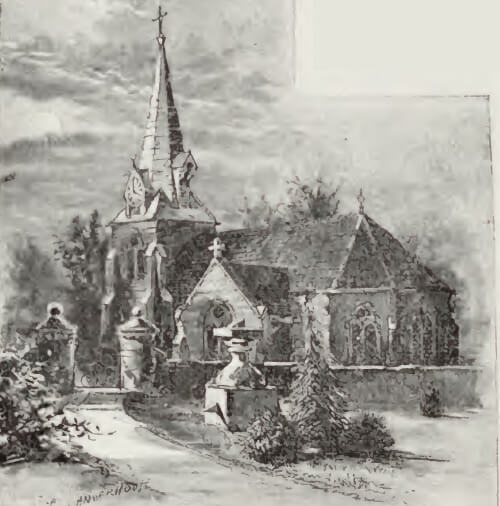
  1. One gloomy day, the clock on a church steeple, looking down on a sundial, said, ‘How stupid it is in you to stand there all the while like a stock!
  2. ‘You never tell the hour till a bright sun looks forth from the sky, and gives you leave. I go merrily round, day and night, in summer and winter the same, without asking his leave.
  3. ‘I tell the people the time to rise, to go to dinner, and to come to church.
  4. ‘Hark! I am going to strike now; one, two, three, four. There it is for you. How silly you look! You can say nothing.’
  5. The sun, at that moment, broke forth from behind a cloud, and showed, by the sundial, that the clock was half an hour behind the right time.
  6. The boasting clock now held his tongue, and the dial only smiled at his folly.
  7. MORAL.—Humble modesty is more often right than a proud and boasting spirit.