Ancient Mexican Pyramids facts for kids
Similar to the Egyptians, the Maya were famous for their pyramids, which differed in shape based on their location. The Mayan pyramids stand as enduring monuments to the remarkable achievements of the ancient Mayan civilization. With their stepped-pyramid design and precise alignments with celestial events, the Mayan pyramids served as centers of worship, and astronomical observatories. The Maya inhabited the Yucatán Peninsula in Mexico.

The civilization dates back to around 1500 BC. Between AD 300 and 900, major ceremonial centers such as Palenque, Tikal, and Copán were mysteriously deserted.
The Mayan religion revolved around the worship of numerous nature gods. Their incredible architecture still stands today as impressive ruins at sites once used for religious ceremonies, such as Palenque, Uxmal, Copán, Tikal, and Chichén Itzá.
Mayan Pyramids Facts
1. Built for religious and ceremonial purposes
Mayan pyramids were central to the religious and cultural life of the Mayan civilization. These sacred structures served as the focal point for religious rituals, ceremonies, and significant community events.
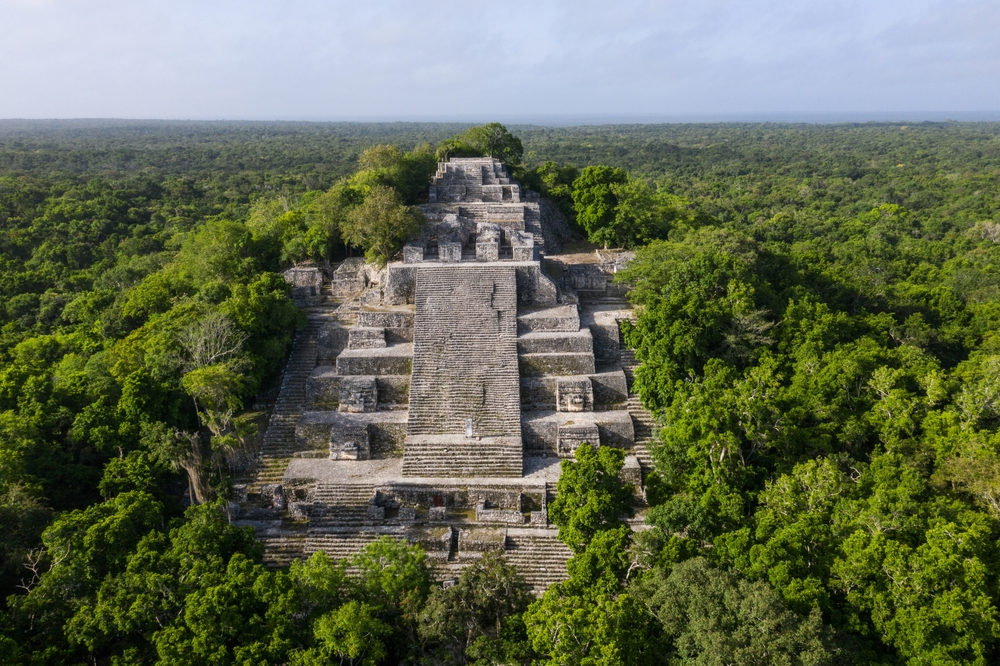
2. Stepped-pyramid design with temples on top
The Mayan pyramids were most commonly built in the stepped-pyramid style, often referred to as “pyramid-temples.” These impressive structures featured multiple levels, each serving a unique function.
A wide staircase ascended to the top platform, where a temple or shrine was built to house sacred artifacts or symbolize a particular deity. The number of steps often varied, reflecting significant numerical values in Mayan cosmology.
3. Aligned with celestial events and the Mayan calendar
The Mayans were talented astronomers and mathematicians with a profound knowledge of celestial cycles. Their pyramids were deliberately designed to align with key astronomical events, including solstices, equinoxes, and the positions of celestial bodies like the sun, moon, and Venus.
These alignments not only played a role in religious and ceremonial practices but also assisted the Mayans in agricultural planning, tracking key calendar dates, and strengthening their bond with the cosmos and their gods.
The accuracy of these alignments showcases the Mayans’ incredible knowledge of astronomy and their talent for creating structures that harmonized perfectly with the natural environment.
4. Constructed with limestone blocks
The Mayan pyramids were mainly constructed with limestone, a sedimentary rock found in abundance throughout the Yucatan Peninsula and other areas where the Mayan civilization thrived. It was a practical choice due to its availability and the ease with which it could be worked.
The Mayans gathered stone from local quarries and carved it into uniform blocks for their buildings. They used lime-based mortar to hold the stones together, ensuring the pyramids stayed stable and lasted through the years.
The Mayans added to the beauty of their structures by plastering the exteriors and painting them in bright, vibrant colors, transforming the pyramids into striking landmarks within their cities.
5. Vary in size based on the city’s importance
The size and design of Mayan pyramids varied based on the significance of the city or site. Bigger and more elaborate pyramids were typically located in major cities with strong political and religious influence.
The grand pyramids represented the city’s power and status, often becoming central hubs for social and religious events.
Smaller settlements or less prominent sites, on the other hand, often had simpler and less grand pyramids, but these structures still held deep religious significance for the local communities.

 articlesforchristians