Frost is a lovely white layer of ice that appears on surfaces, looking like a soft, powdery covering. It forms when water vapor in the air changes directly into ice on cold surfaces, usually when the temperature drops below freezing.
Frost forms pretty patterns of ice crystals.
Frost can develop fractal patterns.
If frost comes too early or too late in the season, it can damage plants and reduce the number of crops that are grown.
How Frost Forms
Frost forms when a solid surface gets colder than the air around it. This surface also needs to be colder than the freezing point of water. If the air is humid (has lots of water vapor), ice will start to form on the cold surface.
Imagine this: the air contains tiny bits of water vapor. When that vapor hits a very cold surface, it skips turning into liquid water and goes straight to forming ice crystals. This is called desublimation. For it to occur, the surface needs to be colder than the air’s “frost point,” which is the temperature where water vapor becomes ice.
The size of ice crystals depends on a few factors, like the temperature, the amount of water vapor in the air, and how long they’ve been growing undisturbed.
Frost often forms when a surface is colder than the surrounding air. For instance, you might notice it near cracks in chilly sidewalks, where warm, moist air from the ground escapes and meets the cold surface. Things that lose heat quickly, like rusty nails, are also common spots for frost to appear.
Sometimes frost forms in one spot but not in another nearby. This can happen due to small differences in elevation, as lower areas tend to get colder on calm nights. The type of ground also plays a role in how cold the air above it becomes.
Types of Frost
There are many different kinds of frost. Here is a list of them
Hoar Frost
Hoar frost is made up of white ice crystals that appear on the ground or on surfaces like wires and leaves. It typically forms on cold, clear nights when heat escapes into the sky faster than it can be replaced, causing objects to cool below the freezing point of water.
Sometimes, hoar frost forms in “frost pockets.” These are low areas like valleys where cold air settles. Hoar frost can even form in these pockets when the air a few feet above the ground is warmer.
The word “hoar” comes from an old English word meaning “showing signs of old age.” It describes how the frost makes trees and bushes look like they have white hair.
Hoar frost has different names depending on where it grows:
Air hoar forms on things above the ground, like tree branches or plant stems.
Surface hoar forms directly on snow, ice, or already frozen surfaces.
Crevasse hoar grows inside cracks in glaciers where water vapor collects.
Depth hoar forms as large crystals deep within dry snowbanks. These crystals grow bigger by taking water from smaller nearby crystals.
Advection Frost
Advection frost, also known as wind frost, forms as tiny ice spikes when a very cold wind sweeps over objects like tree branches or poles. It often appears as a delicate rim of ice along the edges of flowers and leaves. This frost typically develops facing into the wind and can occur at any time, day or night.
Window Frost
Window frost, also called fern frost or ice flowers, appears on window panes when it’s freezing outside and warmer, slightly humid inside. If the window isn’t well insulated, the water vapor condenses and freezes into beautiful frost patterns on the glass.
White Frost
White frost is a thin, solid coating of ice that forms when water vapor in the air freezes directly onto surfaces.
Rime
Rime is a type of ice that forms quickly, often when the air is moist and windy. It’s different from frost because it usually involves supercooled water droplets—water that stays liquid even below freezing. Ships in Arctic waters can end up with thick layers of rime on their ropes and gear. Unlike the delicate, feathery look of hoar frost, rime tends to appear solid and icy.
Black Frost
Black frost isn’t really frost at all! It happens when the air is too dry for frost to form, but temperatures drop so low that plants freeze and die. The frozen plant tissues turn black, giving it the name “black frost.” It’s often called a “killing frost” because it’s usually much colder than white frost. Interestingly, white frost can actually help keep things slightly warmer due to the heat released when water freezes.
A boiling spring (hot spring) is ‘a spring of naturally hot water, typically heated by underground volcanic activity.
Facts about hot springs:
The water is warmed by heat from under the Earth.
Some are pleasantly warm and used by people for bathing and relaxing.
Hot springs have been used by people for thousands of years for relaxation and enjoyment. Ancient civilizations often built bathhouses around hot springs.
Some are so hot, going into them would hurt or kill a person.
Hot springs can vary in temperature from just a few degrees above the average air temperature to over 200 degrees Fahrenheit (93 degrees Celsius).
Hot springs can be so hot that they can actually cook food! People have been known to boil eggs in certain hot springs.
The water in hot springs can be rich in minerals such as sulfur, calcium, magnesium, and silica.
The minerals in hot springs can create colorful rock formations and terraces, making them look like otherworldly landscapes.
The term “hot spring” is often used interchangeably with “thermal spring” or “thermal water.”
Hot springs are formed when water is heated by volcanic activity or by geothermal heat from deep within the Earth’s crust.
Hot springs have been used for geothermal energy production to generate electricity in some areas.
Some hot springs have vibrant colors, like the Grand Prismatic Spring in Yellowstone National Park, which looks like a giant rainbow!
The colors seen in some hot springs are caused by the presence of thermophilic (heat-loving) bacteria and algae.
Did you know that some animals, like monkeys and snow monkeys in Japan, love to take baths in hot springs too? They use them to keep warm during cold weather.
Some hot springs have unique names, like “Devil’s Bathtub” or “Fairy Hot Spring,” which make them sound even more exciting to visit.
Hot springs are not just found on land! There are also underwater hot springs called hydrothermal vents, where hot water and minerals are released from the ocean floor.
Did you know the center of the Earth is blazingly hot? The deeper under the Earth’s surface, the hotter it gets. The center of the Earth is a solid ball of hot metal, surrounded by a liquid sea of melted metal (see the picture below). This energy is what warms the water of boiling springs.
Facts about Trees for Kids: Trees are perennial plants with a central trunk, branches, and leaves. They generate oxygen, support diverse ecosystems, reproduce through seeds, and come in numerous species. There are over three trillion trees globally. Click on the link for more facts.
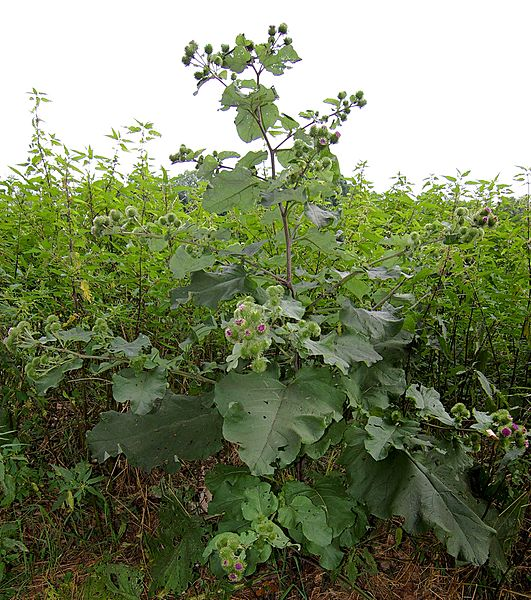
Burdock Facts for Kids: Burdock, a two-year plant from the Asteraceae family, thrives worldwide and aids bee survival with its blooms, while its sticky seeds facilitate dispersal.
Gravity is a force which pulls us back toward the Earth as we jump.
If you trip and fall and scrape your knees, you can blame gravity!
If there was no gravity and you didn’t encounter any forces (friction, resistance of the air), you could jump and move upward forever.
Astronauts on the space station in outer space can float through the air. There is less gravity because the astronauts are far away from the Earth.
The more matter something has, the greater the force of its gravity.
Who discovered gravity?
For a long time, scientists knew that there was some mysterious force that keeps us on the surface of the Earth.
In 1666, Isaac Newton mathematically described the force of gravity, laying the foundation for his laws of universal gravitation. Legend has it that his inspiration came from watching an apple fall from a tree. He began to wonder what force caused the apple to fall downward instead of floating away.
Another renowned scientist, Albert Einstein, expanded on Newton’s ideas about gravity with his groundbreaking theory of relativity.
Weight depends on gravity, as it measures the force of gravity acting on an object. For instance, your weight on Earth represents how strongly gravity pulls you toward the planet’s surface.
Facts about Gravity
In outer space, there is no gravity, which means you would experience weightlessness while floating around!
In physics, weight is defined as a force and is measured in Newtons. And do you know who this unit is named after? That’s correct—Isaac Newton, the brilliant scientist who uncovered the laws of gravity.
Objects are slightly heavier at sea level compared to the top of a mountain.
According to Scientists, earth’s gravity holds in the mixture of gasses we call air forming the atmosphere.
They are warm-blooded. They stay warm even when their surroundings are cold.
They have a backbone (unlike worms).
They breathe with lungs (not with gills like a fish or through skin like worms).
They have hair or fur (not feathers like birds or scales like snakes).
Females usually give birth to live babies (not born from eggs like turtles).
Females feed babies their milk (unlike birds that feed babies food such as insects, worms, berries, and seeds).
Did you know humans are mammals? Feel your forehead. Unless it is an extremely hot day outside, your forehead is warmer than the air around you, because you are warm-blooded. Feel your back and find your backbone. Feel the hair on your head. When human babies are born, they are born alive and often crying and wiggling. Many human mothers nurse their babies with their milk.
Arctium, better known as burdock, is a group of plants that live for two years and are part of the Asteraceae family, which also includes daisies. Originally native to Europe and Asia, burdock has spread across the globe and can now be found in various regions worldwide.
One fascinating thing about burdock is how its seeds cling to surfaces. This impressive sticking ability helps the plant disperse its seeds and even inspired the creation of hook-and-loop fasteners, like Velcro!
About Burdock Plants
Burdock plants have dark green leaves that can grow up to 70 centimeters (about 27 inches) long. The leaves are usually big, rough, and oval-shaped. The ones closer to the ground are often heart-shaped and feel fuzzy on the underside. The stems that hold the leaves are usually hollow.
Burdock plants typically bloom from July to October. Their flowers are very important for honeybees. In August, when other flowers like clover start to fade, burdock flowers provide lots of pollen and nectar for bees. This helps bees get ready for winter before other plants like goldenrod start to bloom.
Burdock’s sticky burrs are great for spreading its seeds. They easily attach to animal fur or people’s clothes, helping the seeds travel to new places.
Squirrels are tree-dwelling rodents with bushy tails that typically eat nuts and seeds.
Facts about squirrels:
Squirrels are animals, mammals, and vertebrates (they have backbones).
Whether you live in the country or in a downtown apartment, you probably have squirrels living near you. Squirrels can live almost anywhere. There are 200 species of squirrels worldwide. They live in almost every country but Australia.
Squirrels are ‘omnivorous’ which means they eat both plants and animals. They eat plants such as nuts, seeds, and fruits. Some squirrels also eat insects, eggs, small birds, snakes, and small rodents.
Squirrels gather food year-round and bury food for winter.
Some squirrels hibernate (sleep during winter), waking every few weeks to feed. Other squirrels, such as gray squirrels, stay awake all winter.
Squirrels have litters of three to nine babies. The babies are born blind. They stay in a burrow or nest until they are three months old.
Squirrels are in the rodent family.
Types of squirrels in the US include gray squirrels, red squirrels, fox squirrels, ground squirrels, and flying squirrels.
Gray squirrels bury nuts all over the place and sometimes forget where they buried them. This helps new trees grow.
These squirrels are not gray in color; they are actually a mixture of black, browns and whites. They are actually banded with whitish ends, due to which they assume a grayish look.
Red squirrels store a big pile of nuts in one place.
The American Red Squirrel is the smallest tree squirrel in North America, known for its feisty nature, bright reddish coat, and impressive ability to thrive in coniferous forests. Unlike the bigger Eastern Gray Squirrel, Western Gray Squirrel, or Fox Squirrel, Red Squirrels are fiercely territorial and have adapted perfectly to life in the tough northern forests and mountain regions of Canada and the northern United States.
Most people call this species the “American red squirrel.”
The other red squirrels are small, tree-climbing rodents native to Eurasia. These squirrels have long bushy tails and pointed tufts of fur over their ears.
Fox Squirrels are the largest tree squirrel found in North America, admired for its reddish-gray fur and bushy tail.
Native to North America, fox squirrels are commonly found in the eastern and central United States, extending into Canada and parts of Mexico. They prefer open woodlands and forests but have adapted well to suburban and urban areas, often spotted in parks and neighborhoods.
Flying squirrels
Did you know that flying squirrels don’t actually fly? Instead, they soar from tree to tree with the help of a built-in parachute. Their ‘parachute’ is a thin flap of skin stretching between their wrists and ankles.
Ground squirrels
Have you ever noticed those busy little critters scurrying along hiking trails or popping out of burrows in open grasslands? Ground squirrels are a fascinating example of nature’s brilliance in adapting to life underground, though they’re often mistaken for their tree-dwelling relatives or written off as mere “prairie dogs.”




 articlesforchristians