A place to grow your relationship with God

Posts tagged ‘teaching’

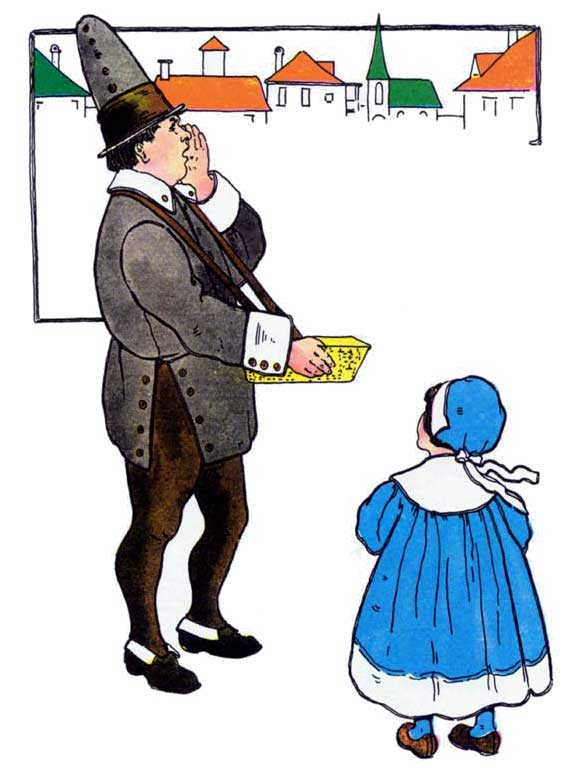
Mother Goose: Buttons

BUTTONS


  Buttons, a farthing a pair!
Come, who will buy them of me?
They’re round and sound and pretty,
And fit for girls of the city.
Come, who will buy them of me?
  Buttons, a farthing a pair!
Fun Plant Facts: Explore Roots, Leaves, and Flowers

A plant is a living organism, typically with roots, stems, and leaves. Examples include trees, shrubs, herbs, grasses, ferns, and mosses.

External anatomy of plants:

  1. Plant roots are the tough, sometimes woody shoots that grow into the ground. Roots take in water and nutrients from the soil.
  2. Leaves are often the flat, green growths on the upper part of the plant. Leaves are green because of a substance called chlorophyll.
  3. Stems are the main stalk of the plant. They are usually above ground, but sometime also go underground.
  4. Flowers are the seed-bearing part of the plant and often have brightly colored petals.
  5. Plants grow seeds. Seeds are small plants in a protective covering. A seed is capable of growing into another plant.

Here is a list of links about various plants for children.

  • Pumpkin Facts for kids
  • Facts about Trees for Kids: Trees are perennial plants with a central trunk, branches, and leaves. They generate oxygen, support diverse ecosystems, reproduce through seeds, and come in numerous species. There are over three trillion trees globally. Click on the link for more facts.
  • Burdock Facts for Kids: Burdock, a two-year plant from the Asteraceae family, thrives worldwide and aids bee survival with its blooms, while its sticky seeds facilitate dispersal.
  • Pictures of Vegetables: Vegetables grow on plants
  • Understanding Nuts: Nature’s Unique Fruits for Kids

Facts about Gravity for Kids

Gravity is a force which pulls us back toward the Earth as we jump.

If you trip and fall and scrape your knees, you can blame gravity!

  1. If there was no gravity and you didn’t encounter any forces (friction, resistance of the air), you could jump and move upward forever.
  2. Astronauts on the space station in outer space can float through the air. There is less gravity because the astronauts are far away from the Earth.
  3. The more matter something has, the greater the force of its gravity.
  4. Who discovered gravity?
    • For a long time, scientists knew that there was some mysterious force that keeps us on the surface of the Earth.
      • In 1666, Isaac Newton mathematically described the force of gravity, laying the foundation for his laws of universal gravitation. Legend has it that his inspiration came from watching an apple fall from a tree. He began to wonder what force caused the apple to fall downward instead of floating away.
      • Another renowned scientist, Albert Einstein, expanded on Newton’s ideas about gravity with his groundbreaking theory of relativity.
  5. Weight depends on gravity, as it measures the force of gravity acting on an object. For instance, your weight on Earth represents how strongly gravity pulls you toward the planet’s surface.
  6. Facts about Gravity
    • In outer space, there is no gravity, which means you would experience weightlessness while floating around!
    • In physics, weight is defined as a force and is measured in Newtons. And do you know who this unit is named after? That’s correct—Isaac Newton, the brilliant scientist who uncovered the laws of gravity.
    • Objects are slightly heavier at sea level compared to the top of a mountain.
    • According to Scientists, earth’s gravity holds in the mixture of gasses we call air forming the atmosphere.

Source: Cool Facts

1st grade week 4 out of 36

Subscribe to continue reading

Subscribe to get access to the rest of this post and other subscriber-only content.

Understanding Mammals: Key Features Explained

Facts about mammals:

  1. They are warm-blooded. They stay warm even when their surroundings are cold.
  2. They have a backbone (unlike worms).
  3. They breathe with lungs (not with gills like a fish or through skin like worms).
  4. They have hair or fur (not feathers like birds or scales like snakes).
  5. Females usually give birth to live babies (not born from eggs like turtles).
  6. Females feed babies their milk (unlike birds that feed babies food such as insects, worms, berries, and seeds).

Did you know humans are mammals? Feel your forehead. Unless it is an extremely hot day outside, your forehead is warmer than the air around you, because you are warm-blooded. Feel your back and find your backbone. Feel the hair on your head. When human babies are born, they are born alive and often crying and wiggling. Many human mothers nurse their babies with their milk.

Facts about Humans

Links to more facts about various mammals (animals).

Burdock Facts for Kids

Arctium, better known as burdock, is a group of plants that live for two years and are part of the Asteraceae family, which also includes daisies. Originally native to Europe and Asia, burdock has spread across the globe and can now be found in various regions worldwide.

One fascinating thing about burdock is how its seeds cling to surfaces. This impressive sticking ability helps the plant disperse its seeds and even inspired the creation of hook-and-loop fasteners, like Velcro!

About Burdock Plants

Burdock plants have dark green leaves that can grow up to 70 centimeters (about 27 inches) long. The leaves are usually big, rough, and oval-shaped. The ones closer to the ground are often heart-shaped and feel fuzzy on the underside. The stems that hold the leaves are usually hollow.

Burdock plants typically bloom from July to October. Their flowers are very important for honeybees. In August, when other flowers like clover start to fade, burdock flowers provide lots of pollen and nectar for bees. This helps bees get ready for winter before other plants like goldenrod start to bloom.

Burdock’s sticky burrs are great for spreading its seeds. They easily attach to animal fur or people’s clothes, helping the seeds travel to new places.
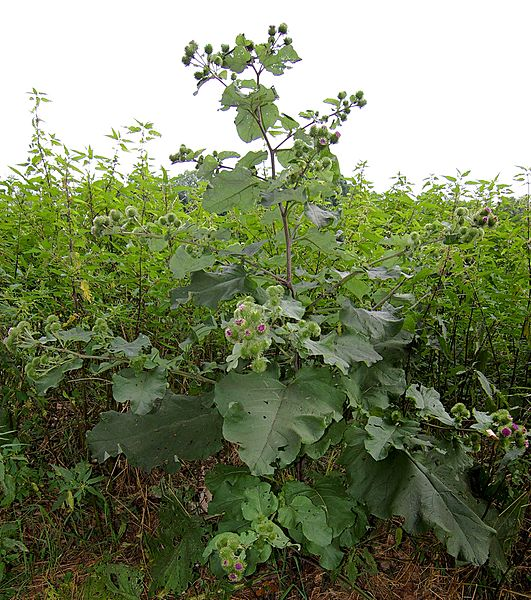
Arctium lappa (greater burdock)
A man holding a Burdock
Close up of burdock burrs
A very close picture of a bur, showing its sharp hooks

source: Burdock facts for kids Kids Encyclopedia Facts

1st grade week 3 out of 36

Subscribe to continue reading

Subscribe to get access to the rest of this post and other subscriber-only content.

Facts about Squirrels for Kids

Squirrels are tree-dwelling rodents with bushy tails that typically eat nuts and seeds.

Facts about squirrels:

  1. Squirrels are animals, mammals, and vertebrates (they have backbones).
  2. Whether you live in the country or in a downtown apartment, you probably have squirrels living near you. Squirrels can live almost anywhere. There are 200 species of squirrels worldwide. They live in almost every country but Australia.
  3. Squirrels are ‘omnivorous’ which means they eat both plants and animals. They eat plants such as nuts, seeds, and fruits. Some squirrels also eat insects, eggs, small birds, snakes, and small rodents.
  4. Squirrels gather food year-round and bury food for winter.
  5. Some squirrels hibernate (sleep during winter), waking every few weeks to feed. Other squirrels, such as gray squirrels, stay awake all winter.
  6. Squirrels have litters of three to nine babies. The babies are born blind. They stay in a burrow or nest until they are three months old.
  7. Squirrels are in the rodent family.

Types of squirrels in the US include gray squirrels, red squirrels, fox squirrels, ground squirrels, and flying squirrels.

  1. Gray squirrels bury nuts all over the place and sometimes forget where they buried them. This helps new trees grow.
    • These squirrels are not gray in color; they are actually a mixture of black, browns and whites. They are actually banded with whitish ends, due to which they assume a grayish look.
  2. Red squirrels store a big pile of nuts in one place.
    • The American Red Squirrel is the smallest tree squirrel in North America, known for its feisty nature, bright reddish coat, and impressive ability to thrive in coniferous forests. Unlike the bigger Eastern Gray Squirrel, Western Gray Squirrel, or Fox Squirrel, Red Squirrels are fiercely territorial and have adapted perfectly to life in the tough northern forests and mountain regions of Canada and the northern United States.
    • Most people call this species the “American red squirrel.” 
    • The other red squirrels are small, tree-climbing rodents native to Eurasia. These squirrels have long bushy tails and pointed tufts of fur over their ears.
  3. Fox Squirrels are the largest tree squirrel found in North America, admired for its reddish-gray fur and bushy tail. 
    • Native to North America, fox squirrels are commonly found in the eastern and central United States, extending into Canada and parts of Mexico. They prefer open woodlands and forests but have adapted well to suburban and urban areas, often spotted in parks and neighborhoods.
  4. Flying squirrels
    • Did you know that flying squirrels don’t actually fly? Instead, they soar from tree to tree with the help of a built-in parachute. Their ‘parachute’ is a thin flap of skin stretching between their wrists and ankles.
  5. Ground squirrels
    • Have you ever noticed those busy little critters scurrying along hiking trails or popping out of burrows in open grasslands? Ground squirrels are a fascinating example of nature’s brilliance in adapting to life underground, though they’re often mistaken for their tree-dwelling relatives or written off as mere “prairie dogs.”

1st grade week 2 out of 36

Subscribe to continue reading

Subscribe to get access to the rest of this post and other subscriber-only content.

Facts about Trees for Kids

Trees are plants. Trees often have a central wood trunk supporting branches and leaves

Facts about trees:
  1. Trees are some of the oldest living things on Earth.
    • God made plants on day third day. This was before animals and after the creation of light and the atmosphere. (Click here to read more about the week of Creation)
  2. All sorts of living things thrive in trees, including insects, lichens, birds, and squirrels.
  3. Trees are a Perennial plant (that means it is a plant that persists for several years, usually with new herbaceous growth from a part that survives from growing season to growing season)
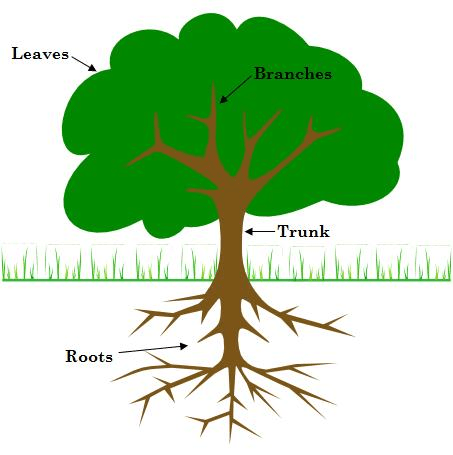
  4. There are several parts that make up a tree.
    • The main parts of a tree include roots, trunk, branches and leaves.
    • The roots of a tree are underground. They help support the tree and feed it nutrients, like water.
    • The trunk of the tree starts at the ground and rises upward. The trunk transport nutrients from the roots to the rest of the tree. It also helps the branches and leaves overtop other plants and get as much sunlight as possible.
    • The branches extend out from the trunk in all directions. Leaves and stems grow from the branches covering as much area as possible that contains sunlight.
      • The leaves are used to create energy from sunlight, a process known as photosynthesis.
  5. How trees reproduce (make a new tree).
    • Trees reproduce by pollination, which can occur through insects, wind, or animals.
    • Trees produce seeds that can grow into a separate adult tree if the conditions are right.
    • Trees have various ways to spread their seeds. Wind carries winged and plumed seeds, while animals help disperse seeds found in edible fruits. Some seeds rely on gravity, simply dropping to the ground.
  6. Trees are useful in many ways.
    • Trees generate oxygen, a vital resource for the survival of humans and animals. Take a moment to breathe deeply and be thankful for the oxygen produced by trees.
    • Trees are the primary source of lumber used by humans to build things, like a home or wooden boat. Trees are also used to create decorative art and furniture, like a table or statue.
    • The wood for trees can also be used as fuel for a fire, both for warmth and cooking.
    • Trees are also the source of food, like fruit and nuts. The sap from some trees is used to create syrups.
  7. Trees don’t belong to any official taxonomic group. The term “tree” is simply used to describe various plant species that share certain physical traits.
  8. Several popular species of trees include the red maple tree, the oak tree, the magnolia tree, the sugar maple tree, the sweetgum tree, the cherry blossom tree, the palm tree, the sequoia tree, the dogwood tree and the pine tree.
  9. Total Species: Between 60,000 and 100,000
  10. There are 3+ trillion trees in the world.
  11. Trees are found Worldwide (except Antartica).