One of the greatest of all the kings of the Ten Tribes was Jeroboam the second. Under him the kingdom of Israel grew rich and strong. He conquered nearly all Syria, and made Samaria the greatest city of all those lands.
But though Syria went down, another nation was now rising to power—Assyria, on the eastern side of the river Tigris. Its capital was Nineveh, a great city, so vast that it would take three days for a man to walk around its walls. The Assyrians were beginning to conquer all the lands near them, and Israel was in danger of falling under their power.
One of the kings who ruled over Israel was named Ahab. He provoked the anger of the Lord. His wife, Jezebel, who was a worshiper of Baal, persuaded him to build an altar to the false god.
Elijah, a prophet of the Lord, was sent to him and proposed a test. Two altars were built; one to Jehovah and one to Baal. The priests of Baal called upon their god to send down fire; but there was no answer. Then Elijah called upon the Lord God of Abraham, Isaac and Israel, and fire came down and burnt up the offering.
The people turned upon the priests of Baal and killed them all. Later the wicked queen, Jezebel, coveted a vineyard for Ahab, and she caused Naboth, the owner of the vineyard, to be placed in front of the battle. When he was slain Ahab took the vineyard.
Denounced Ahab and Jezebel
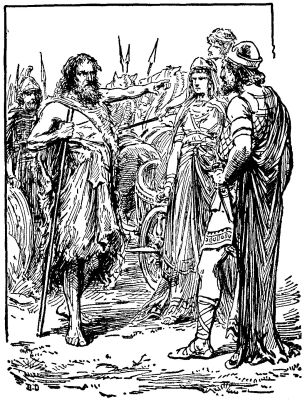
Once more Elijah came and denounced Ahab and Jezebel, telling them that they had done wickedly, and that the Lord would punish them.
Made king when he was only seven years old
In a little while the prophet’s words came true, for Ahab was slain in battle and Jezebel was put to death by order of King Jehu. Elijah was taken up to heaven in a chariot of fire.
There was another prophet, a companion of Elijah, whose name was Elisha, a brave and courageous man who did not fail to deliver God’s message.
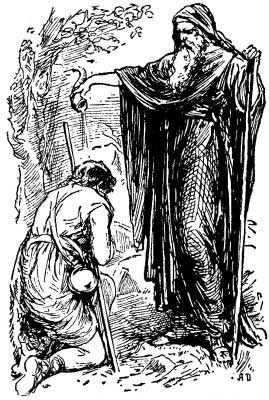
It happened that when Elisha was an old man there can to him King Joash, who had been made king when he was only seven years old. Joash was now a young man and was trying to do right in the sight of the Lord. But he felt the need of the prophet’s aid, and he came to Elisha and said:
“My father, my father, you are more to Israel than its chariots and horsemen.”
This is the arrow of victory
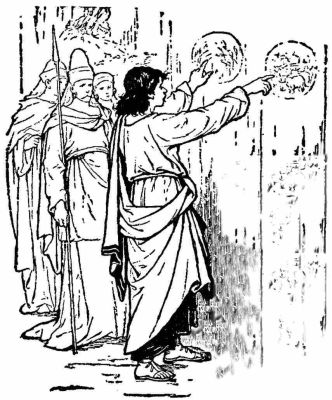
Elisha, though weak in body, was yet strong in soul. He told Joash to bring him a bow and arrows, and to open the window to the east, looking toward the land of Syria. Then Elisha caused the king to draw the bow; and he placed his hands on the king’s hands. And as the king shot an arrow, Elisha said:
“This is the arrow of victory; of victory over Syria; for you shall smite the Syrians in Aphek and shall destroy them.”
It happened as Elisha had foretold, and the Syrians were defeated and their cities taken.
THE STORY OF MOSES, THE CHILD WHO WAS FOUND IN THE RIVER
The children of Israel stayed in the land of Egypt much longer than they had expected to stay. They were in that land about four hundred years. And the going down to Egypt proved a great blessing to them. It saved their lives during the years of famine and need. After the years of need were over, they found the soil in the land of Goshen, that part of Egypt where they were living, very rich, so that they could gather three or four crops every year.
Then, too, the sons of Israel, before they came to Egypt, had begun to marry the women in the land of Canaan who worshipped idols, and not the Lord. If they had stayed there, their children would have grown up like the people around them and soon would have lost all knowledge of God.
But in Goshen they lived alone and apart from the people of Egypt. They worshipped the Lord God, and were kept away from the idols of Egypt. And in that land, as the years went on, from being seventy people, they grew in number until they became a great multitude. Each of the twelve sons of Jacob was the father of a tribe, and Joseph was the father of two tribes, named after his two sons, Ephraim and Manasseh.
As long as Joseph lived, and for some time after, the people of Israel were treated kindly by the Egyptians, out of their love for Joseph, who had saved Egypt from suffering by famine. But after a long time another king began to rule over Egypt, who cared nothing for Joseph or Joseph’s people. He saw that the Israelites (as the children of Israel were called) were very many, and he feared that they would soon become greater in number and in power than the Egyptians.
He said to his people: “Let us rule these Israelites more strictly. They are growing too strong.”
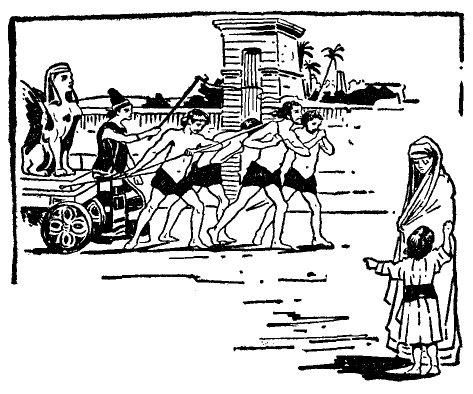
Then they set harsh rules over the Israelites, and laid heavy burdens on them. They made the Israelites work hard for the Egyptians, and build cities for them, and give to the Egyptians a large part of the crops from their fields. They set them at work in making brick and in building storehouses. They were so afraid that the Israelites would grow in number that they gave orders to kill all the little boys that were born to the Israelites; though their little girls might be allowed to live.
But in the face of all this hate, and wrong, and cruelty, the people of Israel were growing in number, and becoming greater and greater.
At this time, when the wrongs of the Israelites were the greatest, and when their little children were being killed, one little boy was born.
They made the Israelites work hard
He was such a lovely child that his mother kept him hid, so that the enemies did not find him. When she could no longer hide him, she formed a plan to save his life; believing that God would help her and save her beautiful little boy.
She made a little box like a boat and covered it with something that would not let the water into it. Such a boat as this covered over was called “an ark.” She knew that at certain times the daughter of king Pharaoh—all the kings of Egypt were called Pharaoh, for Pharaoh means a king—would come down to the river for a bath. She placed her baby boy in the ark, and let it float down the river where the princess, Pharaoh’s daughter, would see it. And she sent her own daughter, a little girl named Miriam, twelve years old, to watch close at hand. How anxious the mother and the sister were as they saw the little ark floating away from them on the river!
She placed her baby in the ark
Pharaoh’s daughter, with her maids, came down to the river, and they saw the ark floating on the water, among the reeds. She sent one of her maids to bring it to her so that she might see what was in the curious box. They opened it, and there was a beautiful little baby, who began to cry to be taken up.
The princess felt kind toward the little one, and loved it at once. She said: “This is one of the Hebrews’ children.” You have heard how the children of Israel came to be called Hebrews. Pharaoh’s daughter thought that it would be cruel to let such a lovely baby as this die out on the water. And just then a little girl came running up to her, as if by accident, and she looked at the baby also, and she said: “Shall I go and find some woman of the Hebrews to be a nurse to the child for you and take care of it?”
“Yes,” said the princess. “Go and find a nurse for me.”
The little girl—who was Miriam, the baby’s sister—ran as quickly as she could and brought the baby’s own mother to the princess. Miriam showed in this act that she was a wise and thoughtful little girl. The princess said to the little baby’s mother: “Take this child to your home and nurse it for me, and I will pay you wages for it.”
How glad the Hebrew mother was to take her child home! No one could harm her boy now, for he was protected by the princess of Egypt, the daughter of the king.
When the child was large enough to leave his mother Pharaoh’s daughter took him into her own house in the palace. She named him “Moses,” a word that means “drawn out,” because he was drawn out of the water.
So Moses, the Hebrew boy, lived in the palace among the nobles of the land, as the son of the princess. There he learned much more than he could have learned among his own people; for there were very wise teachers. Moses gained all the knowledge that the Egyptians had to give. There in the court of the cruel king who had made slaves of the Israelites, God’s people, was growing up our Israelite boy who should at some time set his people free!
Although Moses grew up among the Egyptians, and gained their learning, he loved his own people. They were poor and were hated, and were slaves, but he loved them, because they were the people who served the Lord God, while the Egyptians worshipped idols and animals. Strange it was that so wise a people as these should bow down and pray to an ox, or to a cat, or to a snake, as did the Egyptians.
When Moses became a man, he went among his own people, leaving the riches and ease that he might have enjoyed among the Egyptians. He felt a call from God to lift up the Israelites and set them free. But at that time he found that he could do nothing to help them. They would not let him lead them, and as the king of Egypt had now become his enemy, Moses went away from Egypt into a country in Arabia, called Midian.
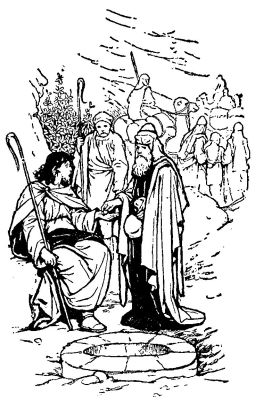
He was sitting by a well, in that land, tired from his long journey, when he saw some young women come to draw water for their flocks of sheep. But some rough men came, and drove the women away, and took the water for their own flocks. Moses saw it, and helped the women and drew the water for them.
These young women were sisters, the daughters of a man named Jethro, who was a priest in the land of Midian. He asked Moses to live with him, and to help him in the care of his flocks. Moses stayed with Jethro and married one of his daughters. So from being a prince in the king’s palace in Egypt, Moses became a shepherd in the wilderness of Midian.
Moses became a shepherd in the wilderness of Midian
But Moses did not remain a shepherd. While he was tending his sheep God appeared to him in a burning bush and told him that he should return to Egypt and become the leader of his people. The Lord told him that the wicked Egyptians would be punished for the ill-treatment they were giving the Israelites. In your Bible you will find in the book of Exodus how God wonderfully fulfilled his promise. The Egyptians were punished by many plagues, and finally allowed the Israelites to go. They crossed the Red Sea in a wonderful way, and traveled for a long time through a wilderness, where God fed them day by day with manna from heaven. God also gave them rules as a guide for their daily living; these rules we call the Ten Commandments; yet they forgot the Lord so far as to make images and worship them.
The food which Jacob’s sons had brought from Egypt did not last long, for Jacob’s family was large. Most of his sons were married and had children of their own; so that the children and grandchildren were sixty-six, besides the servants who waited on them, and the men who cared for Jacob’s flocks. So around the tent of Jacob was quite a camp of other tents and an army of people.
When the food that had come from Egypt was nearly eaten up, Jacob said to his sons:
“Go down to Egypt again, and buy some food for us.”
And Judah, Jacob’s son, the man who years before had urged his brothers to sell Joseph to the Ishmaelites, said to his father: “It is of no use for us to go to Egypt, unless we take Benjamin with us. The man who rules in that land said to us, ‘You shall not see my face, unless your youngest brother be with you’.”
And Israel said, “Why did you tell the man that you had a brother? You did me great harm when you told him.”
“Why,” said Jacob’s sons, “we could not help telling him. The man asked us all about our family, ‘Is your father yet living? Have you any more brothers?’ And we had to tell him, his questions were so close. How should we know that he would say, ‘Bring your brother here, for me to see him’?”
And Judah said, “Send Benjamin with me, and I will take care of him. I promise you that I will bring him safely home. If he does not come back, let me bear the blame forever. He must go, or we shall die for want of food; and we might have gone down to Egypt and come home again, if we had not been kept back.”
And Jacob said, “If he must go, then he must. But take a present to the man, some of the choicest fruits of the land, some spices, and perfumes, and nuts, and almonds. And take twice as much money, besides the money that was in your sacks. Perhaps that was a mistake, when the money was given back to you. And take your brother Benjamin, and may the Lord God make the man kind to you, so that he will set Simeon free, and let you bring Benjamin back. But if it is God’s will that I lose my children, I cannot help it.”
So ten brothers of Joseph went down a second time to Egypt, Benjamin going in place of Simeon. They came to Joseph’s office, the place where he sold grain to the people; and they stood before their brother, and bowed as before. Joseph saw that Benjamin was with them, and he said to his steward, the man who was over his house:
“Make ready a dinner, for all these men shall dine with me today.”
When Joseph’s brothers found that they were taken into Joseph’s house, they were filled with fear. They said to each other:
“We have been taken here on account of the money in our sacks. They will say that we have stolen it, and then they will sell us all for slaves.”
But Joseph’s steward, the man who was over his house, treated the men kindly; and when they spoke of the money in their sacks, he would not take it again, saying:
“Never fear; your God must have sent you this as a gift. I had your money.”
The stewards received the men into Joseph’s house, and washed their feet, according to the custom of the land. And at noon, Joseph came in to meet them. They brought him the present from their father, and again they bowed before him, with their faces on the ground.
And Joseph asked them if they were well, and said: “Is your father still living, the old man of whom you spoke? Is he well?”
And they said, “Our father is well and he is living.” And again they bowed to Joseph.
And Joseph looked at his younger brother Benjamin, the child of his own mother Rachel, and said:
“Is this your youngest brother, of whom you spoke to me? God be gracious unto you, my son.”
And Joseph’s heart was so full that he could not keep back the tears. He went in haste to his own room, and wept there. Then he washed his face, and came out again, and ordered the table to be set for dinner. They set Joseph’s table for himself, as the ruler, and another table for his Egyptian officers, and another for the eleven men from Canaan; for Joseph had brought Simeon out of the prison, and had given him a place with his brothers.
Joseph himself arranged the order of the seats for his brothers, the oldest at the head, and all in order of age down to the youngest. The men wondered at this, and could not see how the ruler of Egypt could know the order of their ages. And Joseph sent dishes from his table to his brothers, and he gave to Benjamin five times as much as to the others. Perhaps he wished to see whether they were as jealous of Benjamin as in other days they had been toward him.
After dinner, Joseph said to his steward: “Fill the men’s sacks with grain, as much as they can carry, and put each man’s money in his sack. And put my silver cup in the sack of the youngest, with his money.”
The steward did as Joseph had said; and early in the morning the brothers started to go home. A little while afterward, Joseph said to his steward:
“Hasten, follow after the men from Canaan, and say, ‘Why have you wronged me, after I had treated you kindly? You have stolen my master’s silver cup, out of which he drinks’.”
The steward followed the men, and overtook them, and charged them with stealing. And they said to him:
“Why should you talk to us in this manner? We have stolen nothing. Why, we brought back to you the money that we found in our sacks; and is it likely that we would steal from your lord his silver or gold? You may search us, and if you find your master’s cup on any of us, let him die, and the rest of us may be sold as slaves.”
Then they took down the sacks from the asses, and opened them; and in each man’s sack was his money, for the second time. And when they came to Benjamin’s sack, there was the ruler’s silver cup! Then, in the greatest sorrow, they tied up their bags again, and laid them on the asses, and came back to Joseph’s palace.
And Joseph said to them:
“What wicked thing is this that you have done? Did you not know that I would surely find out your deeds?”
Then Judah said, “O, my lord, what can we say? God has punished us for our sins; and now we must all be slaves, both we that are older, and the younger in whose sack the cup was found.”
“What wicked thing is this that you have done?”
“No,” said Joseph. “Only one of you is guilty; the one who has taken away my cup. I will hold him as a slave, and the rest of you can go home to your father.
Joseph wished to see whether his brothers were still selfish, and were willing to let Benjamin suffer, if they could escape.
Then Judah, the very man who had urged his brothers to sell Joseph as a slave, came forward, and fell at Joseph’s feet, and pleaded with him to let Benjamin go. He told again the whole story, how Benjamin was the one whom his father loved the most of all his children, now that his brother was lost. He said:
“I promised to bear the blame, if this boy was not brought home in safety. If he does not go back it will kill my poor old father, who has seen much trouble. Now let my youngest brother go home to his father, and I will stay here as a slave in his place!”
Joseph knew now, what he had longed to know, that his brothers were no longer cruel nor selfish, but one of them was willing to suffer, so that his brother might be spared. And Joseph could not any longer keep his secret, for his heart longed after his brothers; and he was ready to weep again, with tears of love and joy. He sent all of his Egyptian servants out of the room, so that he might be alone with his brothers, and then he said:
“Come near to me; I wish to speak with you.” And they came near, wondering. Then Joseph said:
“I am Joseph; is my father really alive?”
How frightened his brothers were, as they heard these words spoken in their own language by the ruler of Egypt and for the first time knew that this stern man, who had their lives in his hand, was their own brother whom they had wronged! Then Joseph said again:
“I am Joseph, your brother, whom you sold into Egypt. But do not feel troubled because of what you did. For God sent me before you to save your lives. There have been already two years of need and famine, and there are to be five years more, when there shall neither be plowing of the fields nor harvest. It was not you who sent me here, but God; and he sent me to save your lives. God has made me like a father to Pharaoh and ruler over all the land of Egypt. Now I wish you to go home, and to bring down to me my father and all his family.”
Then Joseph placed his arms around Benjamin’s neck, and kissed him, and wept upon him. And Benjamin wept on his neck. And Joseph kissed all his brothers, to show them that he had fully forgiven them; and after that his brothers began to lose their fear of Joseph and talked with him more freely.
Afterward Joseph sent his brothers home with good news, and rich gifts, and abundant food. He sent also wagons in which Jacob and his sons’ wives and the little ones of their families might ride from Canaan down to Egypt. And Joseph’s brothers went home happier than they had been for many years.
During the later years of David’s reign, he laid up great treasure of gold and silver, and brass, and iron, for the building of a house to the Lord on Mount Moriah. This house was to be called “The Temple”; and it was to be made very beautiful, the most beautiful building, and the richest in all the land. David had greatly desired to build this house while he was king of Israel, but God said to him:
“You have been a man of war, and have fought many battles, and shed much blood. My house shall be built by a man of peace. When you die, your son Solomon shall reign, and he shall have peace, and shall build my house.”
So David made ready great store of precious things for the temple; also stone and cedar to be used in the building. And David said to Solomon, his son: “God has promised that there shall be rest and peace to the land while you are king; and the Lord will be with you, and you shall build a house, where God shall live among His people.”
But David had other sons who were older than Solomon; and one of these sons, whose name was Adonijah, formed a plan to make himself king. David was now very old; and he was no longer able to go out of his palace, and to be seen among the people.
Adonijah gathered his friends; and among them were Joab, the general of the army, and Abiathar, one of the two high-priests. They met at a place outside the wall, and had a great feast, and were about to crown Adonijah as king, when word came to David in the palace. David, though old and feeble, was still wise. He said:
“Let us make Solomon king at once, and thus put an end to the plans of these men.”
So at David’s command they brought out the mule on which no one but the king was allowed to ride; and they placed Solomon upon it; and with the king’s guards, and the nobles, and the great men, they brought the young Solomon down to the valley of Gihon, south of the city.
And Zadok, the priest, took from the Tabernacle the horn filled with holy oil, that was used for anointing or pouring oil on the head of the priests when they were set apart for their work. He poured oil from this horn on the head of Solomon, and then the priests blew the trumpets, and all the people cried aloud, “God save King Solomon.”
All this time Adonijah and Joab, and their friends were not far away, almost in the same valley, feasting and making merry, intending to make Adonijah king. They heard the sound of the trumpets, and the shouting of the people. Joab said: “What is the cause of all this noise and uproar?”
A moment later, Jonathan, the son of Abiathar, came running in. Jonathan said to the men who were feasting:
“Our lord King David has made Solomon king, and he has just been anointed in Gihon; and all the princes, and the heads of the army, are with him, and the people are shouting, ‘God save King Solomon!’ And David has sent from his bed a message to Solomon, saying, ‘May the Lord make your name greater than mine has been! Blessed be the Lord, who has given me a son to sit this day on my throne!'”
When Adonijah and his friends heard this they were filled with fear. Every man went at once to his house, except Adonijah. He hastened to the altar of the Lord, and knelt before it, and took hold of the horns that were on its corners in front. This was a holy place, and he hoped that there Solomon might have mercy on him. And Solomon said:
“If Adonijah will do right, and be faithful to me as the king of Israel, no harm shall come to him; but if he does wrong, he shall die.”
Then Adonijah came and bowed down before King Solomon, and promised to obey him, and Solomon said, “Go to your own house.”
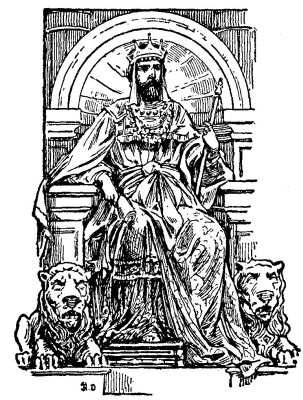
Solomon on his throne
Not long after this David sent for Solomon, and from his bed he gave his last advice to Solomon. And soon after that David died, an old man, having reigned in all forty years, seven years over the tribe of Judah, at Hebron, and thirty-three years over all Israel, in Jerusalem. He was buried in great honor on Mount Zion, and his tomb remained standing for many years.
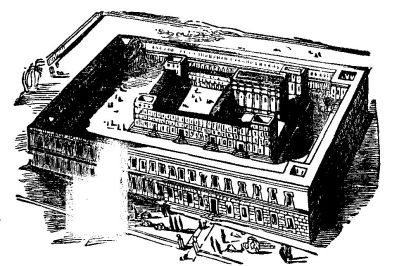
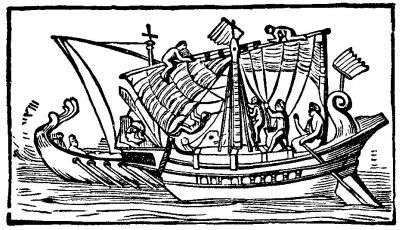
The great work of Solomon’s reign was the building of the House of God. It was generally called the Temple. It was built on Mount Moriah, one of the hills of Jerusalem. King David had prepared for it by gathering great stores of silver, stone and cedar-wood. The walls were made of stone and the roof of cedar. Solomon had great ships which visited other lands and brought precious stones and fine woods for the building. Seven years were spent in building the Temple, and it was set apart to the worship of God with beautiful ceremonies in which Solomon, in his robes of state, took part.
Supposed form of Solomon’s temple
Solomon was indeed a great king, and it was said that he was also the wisest man in all the world. He wrote many of the wise sayings in the Book of Proverbs, and many more that have been lost.
When Joseph was made ruler over the land of Egypt, he did just as he had always done. It was not Joseph’s way to sit down, to rest and enjoy himself, and make others wait on him. He found his work at once, and began to do it faithfully and thoroughly. He went out over all the land of Egypt, and saw how rich and abundant were the fields of grain, giving much more than the people could use for their own needs. He told the people not to waste it, but to save it for the coming time of need.
And he called upon the people to give him for the king one bushel of grain out of every five, to be stored up. The people brought their grain, after taking for themselves as much as they needed, and Joseph stored it up in great storehouses in the cities; so much at last that no one could keep account of it.
The king of Egypt gave a wife to Joseph from the noble young women of his kingdom. Her name was Asenath; and to Joseph and his wife God gave two sons. The oldest son he named Manasseh, a word which means “Making to Forget.”
“For,” said Joseph, “God has made me to forget all my troubles and my toil as a slave.”
The second son he named Ephraim, a word that means “Fruitful.” “Because,” said Joseph, “God has not only made the land fruitful; but he has made me fruitful in the land of my troubles.”
The seven years of plenty soon passed by, and then came the years of need. In all the lands around people were hungry, and there was no food for them to eat; but in the land of Egypt everybody had enough. Most of the people soon used up the grain that they had saved; many had saved none at all, and they all cried to the king to help them.
“Go to Joseph!” said king Pharaoh, “and do whatever he tells you to do.”
Then the people came to Joseph, and Joseph opened the storehouses, and sold to the people all the grain that they wished to buy. And not only the people of Egypt came to buy grain, but people of all the lands around as well, for there was great need and famine everywhere. And the need was as great in the land of Canaan, where Jacob lived, as in other lands. Jacob was rich in flocks and cattle, and gold and silver, but his fields gave no grain, and there was danger that his family and his people would starve. And Jacob—who was now called Israel also—heard that there was food in Egypt and he said to his sons: “Why do you look at each other, asking what to do to find food? I have been told that there is grain in Egypt. Go down to that land, and take money with you, and bring grain, so that we may have bread, and may live.”
Then the ten older brothers of Joseph went down to the land of Egypt. They rode upon asses, for horses were not much used in those times, and they brought money with them. But Jacob would not let Benjamin, Joseph’s younger brother, go with them, for he was all the more dear to his father, now that Joseph was no longer with him; and Jacob feared that harm might come to him.
Then Joseph’s brothers came to Joseph to buy food. They did not know him, grown up to be a man, dressed as a prince, and seated on a throne. Joseph was now nearly forty years old, and it had been almost twenty-three years since they had sold him. But Joseph knew them all, as soon as he saw them. He wished to be sharp and stern with them, not because he hated them; but because he wished to see what their spirit was, and whether they were as selfish, and cruel, and wicked as they had been in other days.
They came before him, and bowed, with their faces to the ground. Then, no doubt, Joseph thought of the dream that had come to him while he was a boy, of his brothers’ sheaves bending down around his sheaf. He spoke to them as a stranger, as if he did not understand their language, and he had their words explained to him in the language of Egypt.
“Who are you? And from what place do you come?” said Joseph, in a harsh, stern manner.
They answered him very meekly: “We have come from the land of Canaan to buy food.”
“No,” said Joseph, “I know what you have come for. You have come as spies, to see how helpless the land is, so that you can bring an army against us, and make war on us.”
“No, no,” said Joseph’s ten brothers. “We are no spies. We are the sons of one man, who lives in the land of Canaan; and we have come for food, because we have none at home.”
“You say that you are the sons of one man, who is your father? Is he living? Have you any more brothers? Tell me all about yourselves.”
And they said: “Our father is an old man in Canaan. We did have a younger brother, but he was lost; and we have one brother still, who is the youngest of all, but his father could not spare him to come with us.”
“No,” said Joseph. “You are not good, honest men. You are spies. I shall put you all in prison, except one of you; and he shall go and bring that youngest brother of yours; and when I see him, then I will believe that you tell the truth.”
So Joseph put all the ten men in prison, and kept them under guard for three days; then he sent for them again. They did not know that he could understand their language, and they said to each other, while Joseph heard, but pretended not to hear: “This has come upon us because of the wrong that we did to our brother Joseph, more than twenty years ago. We heard him cry, and plead with us, when we threw him into the pit, and we would not have mercy on him. God is giving us only what we have deserved.”
And Reuben, who had tried to save Joseph, said: “Did I not tell you not to harm the boy? and you would not listen to me. God is bringing our brother’s blood upon us all.”
When Joseph heard this, his heart was touched, for he saw that his brothers were really sorry for the wrong that they had done to him. He turned away from them, so that they could not see his face, and he wept. Then he turned again to them and spoke roughly as before, and said:
“This I will do, for I serve God. I will let you all go home, except one man. One of you I will shut up in prison; but the rest of you can go home and take food for your people. And you must come back and bring your youngest brother with you, and I shall know then that you have spoken the truth.”
Then Joseph gave orders, and his servants seized one of his brothers, whose name was Simeon, and bound him in their sight and took him away to prison. And he ordered his servants to fill the men’s sacks with grain, and to put every man’s money back into the sack before it was tied up, so that they would find the money as soon as they opened the sack. Then the men loaded their asses with the sacks of grain, and started to go home, leaving their brother Simeon a prisoner.
When they stopped on the way to feed their asses, one of the brothers opened his sack, and there he found his money lying on the top of the grain. He called out to his brothers: “See, here is my money given again to me!” And they were frightened, but they did not dare to go back to Egypt and meet the stern ruler of the land. They went home and told their old father all that had happened to them, and how their brother Simeon was in prison, and must stay there until they should return, bringing Benjamin with them.
When they opened their sacks of grain, there in the mouth of each sack was the money that they had given; and they were filled with fear. Then they spoke of going again to Egypt and taking Benjamin, but Jacob said to them:
“You are taking my sons away from me. Joseph is gone, and Simeon is gone, and now you would take Benjamin away. All these things are against me!” Reuben said: “Here are my own two boys. You may kill them, if you wish, in case I do not bring Benjamin back to you.” But Jacob said: “My youngest son shall not go with you. His brother is dead, and he alone is left to me. If harm should come to him, it would bring down my gray hairs with sorrow to the grave.”
Now Saul had a son, Jonathan, near David’s own age. He and David became fast friends and loved one another as brothers. Saul the king became very jealous of David because the people praised him after his fight with Goliath. He even threatened to take David’s life. He tried to catch him in his own house, but David’s wife let him down from a window by a rope and he escaped. He met his friend Jonathan, who told him that he should flee. They renewed their promises of friendship, which they kept ever afterward.
From his meeting with Jonathan, David went forth to be a wanderer, having no home as long as Saul lived. He found a great cave, called the cave of Adullam, and hid in it. Soon people heard where he was, and from all parts of the land, especially from his own tribe of Judah, men who were not satisfied with the rule of King Saul gathered around David.
Saul soon heard that David, with a band of men, was hiding among the mountains of Judah, and that among those who aided him were certain priests.
This enraged King Saul, and he ordered his guards to kill all the priests. The guards would not obey him, for they felt that it was a wicked thing to lay hands upon the priests of the Lord.
But he found one man whose name was Doeg, an Edomite, who was willing to obey the king. And Doeg, the Edomite, killed eighty-five men who wore the priestly garments.
All through the land went the news of Saul’s dreadful deed, and everywhere the people began to turn from Saul, and to look toward David as the only hope of the nation.
When Saul died he was followed by David, the shepherd boy, now grown to manhood and greatly loved by the people. He had many battles to fight with the Philistines and was nearly always victorious. He was a warrior king; but he was more than a warrior. He played on his harp and composed many beautiful hymns and songs, which are collected in the book of Psalms. He was a good king and tried to obey God’s command. He had a long reign and his people were happy and prosperous. He had many sons and daughters and beautiful palaces for them to live in.
The men who bought Joseph from his brothers were called Ishmaelites, because they belonged to the family of Ishmael, who, you remember, was the son of Hagar, the servant of Sarah. These men carried Joseph southward over the plain which lies beside the great sea on the west of Canaan; and after many days they brought Joseph to Egypt. How strange it must have seemed to the boy who had lived in tents to see the great river Nile, and the cities thronged with people, and the temples, and the mighty pyramids!
The Ishmaelites sold Joseph as a slave to a man named Potiphar, who was an officer in the army of Pharaoh, the king of Egypt. Joseph was a beautiful boy, and cheerful and willing in his spirit, and able in all that he undertook; so that his master Potiphar became very friendly to him, and after a time, he placed Joseph in charge of his house, and everything in it. For some years Joseph continued in the house of Potiphar, a slave in name, but in reality the master of all his affairs, and ruler over his fellow-servants.
But Potiphar’s wife, who at first was very friendly to Joseph, afterward became his enemy, because Joseph would not do wrong to please her. She told her husband falsely, that Joseph had done a wicked deed. Her husband believed her, and was very angry at Joseph, and put him in the prison with those who had been sent to that place for breaking the laws of the land. How hard it was for Joseph to be charged with a crime, when he had done no wrong, and to be thrust into a dark prison among wicked people!
But Joseph had faith in God, that at some time all would come out right; and in the prison he was cheerful, and kind, and helpful, as he had always been. The keeper of the prison saw that Joseph was not like the other men around him, and he was kind to Joseph. In a very little while, Joseph was placed in charge of all his fellow-prisoners, and took care of them, just as he had taken care of everything in Potiphar’s house. The keeper of the prison scarcely looked into the prison at all; for he had confidence in Joseph, that he would be faithful and wise in doing the work given to him. Joseph did right, and served God, and God blessed Joseph in everything.
While Joseph was in the prison, two men were sent there by the king of Egypt, because he was displeased with them. One was the king’s chief butler, who served the king with wine; the other was the chief baker, who served him with bread. These two men were under Joseph’s care; and Joseph waited on them, for they were men of rank.
One morning, when Joseph came into the room where the butler and the baker were kept, he found them looking quite sad. Joseph said to them:
“Why do you look so sad today?” Joseph was cheerful and happy in his spirit; and he wished others to be happy also, even in prison.
And one of them said, “Each one of us dreamed last night a very strange dream, and there is no one to tell us what our dreams mean.”
For in those times, before God gave the Bible to men, he often spoke to men in dreams; and there were wise men who could sometimes tell what the dreams meant.
“Tell me,” said Joseph, “what your dreams are. Perhaps my God will help me to understand them.”
Then the chief butler told his dream. He said, “In my dream I saw a grape-vine with three branches; and as I looked, the branches shot out buds; and the buds became blossoms; and the blossoms turned into clusters of ripe grapes. And I picked the grapes, and squeezed their juice into king Pharaoh’s cup, and it became wine; and I gave it to king Pharaoh to drink, just as I used to do when I was beside his table.”
Then Joseph said, “This is what your dream means. The three branches mean three days. In three days, king Pharaoh shall call you out of prison and shall put you back in your place; and you shall stand at his table, and shall give him his wine, as you have given it before. But when you go out of prison, please to remember me, and try to find some way to get me, too, out of this prison. For I was stolen out of the land of Canaan, and sold as a slave; and I have done nothing wrong to deserve being put in this prison. Do speak to the king for me, that I may be set free.”
Of course, the chief butler felt very happy to hear that his dream had so pleasant a meaning. And the chief baker spoke, hoping to have an answer as good:
“In my dream,” said the baker, “there were three baskets of white bread on my head, one above another, and on the topmost basket were all kinds of roasted meat and food for Pharaoh; and the birds came, and ate the food from the baskets on my head.”
And Joseph said to the baker:
“This is the meaning of your dream, and I am sorry to tell it to you. The three baskets are three days. In three days, by order of the king you shall be lifted up, and hanged upon a tree; and the birds shall eat your flesh from your bones as you are hanging in the air.”
And it came to pass just as Joseph had said. Three days after that, king Pharaoh sent his officers to the prison. They came and took out both the chief butler and the chief baker. The baker they hung up by his neck to die, and left his body for the birds to pick in pieces. The chief butler they brought back to his old place, where he waited at the king’s table, and handed him his wine to drink.
You would have supposed that the butler would remember Joseph, who had given him the promise of freedom, and had shown such wisdom. But in his gladness, he forgot all about Joseph. And two full years passed by, while Joseph was still in prison, until he was a man thirty years old.
But one night, king Pharaoh himself dreamed a dream—in fact, two dreams in one. And in the morning he sent for all the wise men of Egypt, and told to them his dreams; but there was not a man who could give the meaning of them. And the king was troubled, for he felt that the dreams had some meaning which it was important for him to know.
Then suddenly the chief butler who was by the king’s table remembered his own dream in the prison two years before, and remembered, too, the young man who had told its meaning so exactly. And he said:
“I do remember my faults this day. Two years ago king Pharaoh was angry with his servants, with me and the chief baker; and he sent us to the prison. While we were in the prison, one night each of us dreamed a dream; and the next day a young man in the prison, a Hebrew from the land of Canaan, told us what our dreams meant; and in three days they came true, just as the young Hebrew had said. I think that if this young man is in the prison still, he could tell the king the meaning of his dreams.”
You notice that the butler spoke of Joseph as “a Hebrew.” The people of Israel, to whom Joseph belonged, were called Hebrews as well as Israelites. The word Hebrew means, “One who crossed over,” and it was given to the Israelites because Abraham, their father, had come from a land on the other side of the great river Euphrates, and had crossed over the river on his way to Canaan.
Then king Pharaoh sent in haste to the prison for Joseph; and Joseph was taken out, and he was dressed in new garments, and was led in to Pharaoh in the palace. And Pharaoh said:
“I have dreamed a dream; and there is no one who can tell what it means. And I have been told that you have power to understand dreams and what they mean.”
And Joseph answered Pharaoh:
“The power is not in me; but God will give Pharaoh a good answer. What is the dream that the king has dreamed?”
“In my first dream,” said Pharaoh, “I was standing by the river: and I saw seven fat and handsome cows come up from the river to feed in the grass. And while they were feeding, seven other cows followed them up from the river, very thin, and poor, and lean—such miserable creatures as I had never seen before. And the seven lean cows ate up the seven fat cows; and after they had eaten them up, they were as lean and miserable as before. Then I awoke.
“And I fell asleep again, and dreamed again. In my second dream, I saw seven heads of grain growing up on one stalk, large, and strong, and good. And then seven heads came up after them, that were thin, and poor, and withered. And the seven thin heads swallowed up the seven good heads; and afterward were as poor and withered as before.
“And I told these two dreams to all the wise men, and there is no one who can explain them. Can you tell me what these dreams mean?”
And Joseph said to the king:
“The two dreams have the same meaning. God has been showing to king Pharaoh what he will do in this land. The seven good cows mean seven years, and the seven good heads of grain mean the same seven years. The seven lean cows and the seven thin heads of grain also mean seven years. The good cows and the good grain mean seven years of plenty, and the seven thin cows and thin heads of grain mean seven poor years. There are coming upon the land of Egypt seven years of such plenty as have never been seen; when the fields shall bring greater crops than ever before; and after those years shall come seven years when the fields shall bring no crops at all. And then for seven years there shall be such need, that the years of plenty will be forgotten, for the people will have nothing to eat.
The two dreams have the same meaning
“Now, let king Pharaoh find some man who is able and wise, and let him set this man to rule over the land. And during the seven years of plenty, let a part of the crops be put away for the years of need. If this shall be done, then when the years of need come, there will be plenty of food for all the people, and no one will suffer, for all will have enough.”
And king Pharaoh said to Joseph: “Since God has shown you all this, there is no other man as wise as you. I will appoint you to do this work, and to rule over the land of Egypt. All the people shall be under you; only on the throne of Egypt I will be above you.”
And Pharaoh took from his own hand the ring which held his seal, and put on Joseph’s hand, so that he could sign for the king, and seal in the king’s place. And he dressed Joseph in robes of fine linen, and put around his neck a gold chain. And he made Joseph ride in a chariot which was next in rank to his own. And they cried out before Joseph, “Bow the knee.” And thus Joseph was ruler over all the land of Egypt.
All through the reign of Saul, there was constant war with the Philistines, who lived upon the lowlands west of Israel. At one time, when David was still with his sheep, a few years after he had been anointed by Samuel, the camps of the Philistines and the Israelites were set against each other on opposite sides of the valley of Elah. In the army of Israel were the three oldest brothers of David.
Every day a giant came out of the camp of the Philistines, and dared some one to come from the Israelites’ camp and fight with him. The giant’s name was Goliath. He was nine feet high; and he wore armor from head to foot, and carried a spear twice as long and as heavy as any other man could hold; and his shield bearer walked before him. He came every day and called out across the little valley:
“I am a Philistine, and you are servants of Saul. Now choose one of your men, and let him come out and fight with me. If I kill him; then you shall submit to us; and if he kills me, then we will give up to you. Come, now, send out your man!”
But no man in the army, not even King Saul, dared to go out and fight with the giant. Forty days the camps stood against each other, and the Philistine giant continued his call.
One day, old Jesse, the father of David, sent David from Bethlehem to visit his three brothers in the army. David came, and spoke to his brothers; and while he was talking with them, Goliath the giant came out as before in front of the camp calling for some one to fight with him.
They said one to another:
“If any man will go out and kill this Philistine, the king will give him a great reward and a high rank; and the king’s daughter shall be his wife.”
And David said:
“Who is this man that speaks in this proud manner against the armies of the living God? Why does not some one go out and kill him?”
David’s brother Eliab said to him:
“What are you doing here, leaving your sheep in the field? I know that you have come down just to see the battle.”
But David did not care for his brother’s words. He thought he saw a way to kill this boasting giant; and he said:
“If no one else will go, I will go out and fight with this enemy of the Lord’s people.”
They brought David before King Saul. Some years had passed since Saul had met David, and he had grown from a boy to a man, so that Saul did not know him as the shepherd who had played on the harp before him in other days.
Saul said to David:
“You cannot fight with this great giant. You are very young; and he is a man of war, trained from his youth.”
And David answered King Saul:
“I am only a shepherd, but I have fought with lions and bears, when they have tried to steal my sheep. And I am not afraid to fight with this Philistine.”
Then Saul put his own armor on David—a helmet on his head, and a coat of mail on his body, and a sword at his waist. But Saul was almost a giant, and his armor was far too large for David. David said:
“I am not used to fighting with such weapons as these. Let me fight in my own way.”
So David took off Saul’s armor. While everybody in the army had been looking on the giant with fear, David had been thinking out the best way for fighting him; and God had given to David a plan. It was to throw the giant off his guard, by appearing weak and helpless; and while so far away that the giant could not reach him with sword or spear, to strike him down with a weapon which the giant would not expect and would not be prepared for.
David took his shepherd’s staff in his hand, as though that were to be his weapon. But out of sight, in a bag under his mantle, he had five smooth stones carefully chosen, and a sling,—the weapon that he knew how to use. Then he came out to meet the Philistine.
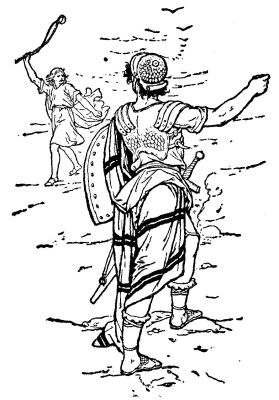
The giant looked down on the youth and despised him, and laughed.
The giant looked down on the youth and despised him
“Am I a dog?” he said, “that this boy comes to me with a staff? I will give his body to the birds of the air, and the beasts of the field.”
And the Philistine cursed David by the gods of his people. And David answered him:
“You come against me with a sword, and a spear, and a dart; but I come to you in the name of the Lord of hosts, the God of the armies of Israel. This day will the Lord give you into my hand. I will strike you down, and take off your head, and the host of the Philistines shall be dead bodies, to be eaten by the birds and the beasts; so that all may know that there is a God in Israel, and that He can save in other ways besides with sword and spear.”
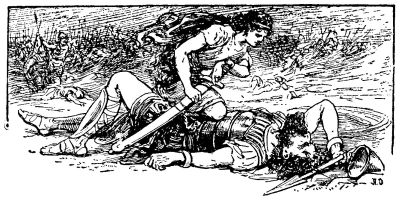
David drew out the giant’s own sword
And David ran toward the Philistine, as if to fight him with his shepherd’s staff. But when he was just near enough for a good aim, he took out his sling, and hurled a stone aimed at the giant’s forehead. David’s aim was good; the stone struck the Philistine in his forehead. It stunned him, and he fell to the ground.
While the two armies stood wondering, and scarcely knowing what had caused the giant to fall so suddenly, David ran forward, drew out the giant’s own sword, and cut off his head. Then the Philistines knew that their great warrior in whom they trusted was dead. They turned to flee to their own land; and the Israelites followed after them, and killed them by the hundred and the thousand, even to the gates of their own city of Gath.
So, in that day David won a great victory and stood before all the land as the one who had saved his people from their enemies.
Living at Ramah, in the mountains of Ephraim, there was a man whose name was Elkanah. He had two wives, as did many men in that time. One of these wives had children, but the other wife, whose name was Hannah, had no child.
Every year Elkanah and his family went up to worship at the house of the Lord in Shiloh, which was about fifteen miles from his home. And at one of these visits Hannah prayed to the Lord, saying:
“O Lord, if thou wilt look upon me, and give me a son, he shall be given to the Lord as long as he lives.”
The Lord heard Hannah’s prayer, and gave her a little boy, and she called his name Samuel, which means “Asked of God”; because he had been given in answer to her prayer.
Samuel grew up to be a good man and a wise Judge, and he made his sons Judges in Israel, to help him in the care of the people. But Samuel’s sons did not walk in his ways. They did not try always to do justly.
The elders of all the tribes of Israel came to Samuel at his home in Ramah; and they said to him: “You are growing old, and your sons do not rule as well as you ruled. All the lands around us have kings. Let us have a king also; and do you choose the king for us.”
This was not pleasing to Samuel. He tried to make the people change their minds, and showed them what trouble a king would bring them.
But they would not follow his advice. They said: “No; we will have a king to reign over us.”
So Samuel chose as their king a tall young man named Saul, who was a farmer’s son of the tribe of Benjamin. When Saul was brought before the people he stood head and shoulders above them all. And Samuel said:
“Look at the man whom the Lord has chosen! There is not another like him among all the people!”
And all the people shouted, “God save the king! Long live the king!”
Then Samuel told the people what should be the laws for the king and for the people to obey. He wrote them down in a book, and placed the book before the Lord. Then Samuel sent the people home; and Saul went back to his own house at a place called Gibeah; and with Saul went a company of men to whose hearts God had given a love for the king.
So after three hundred years under the fifteen Judges, Israel now had a king. But among the people there were some who were not pleased with the new king, because he was an unknown man from the farm. They said:
“Can such a man as this save us?”
They showed no respect to the king, and in their hearts looked down upon him. But Saul said nothing, and showed his wisdom by appearing not to notice them. But in another thing he was not so wise. He forgot to heed the old prophet’s advice and instructions about ruling wisely and doing as the Lord said. It was not long before Samuel told him that he had disobeyed God and would lose his kingdom.
When Samuel told Saul that the Lord would take away the kingdom from him, he did not mean that Saul should lose the kingdom at once. He was no longer God’s king; and as soon as the right man in God’s sight should be found, and should be trained for his duty as king, then God would take away Saul’s power, and would give it to the man whom God had chosen. But it was years before this came to pass.
The Lord said to Samuel: “Do not weep and mourn any longer over Saul, for I have refused him as king. Fill the horn with oil, and go to Bethlehem in Judah. There find a man named Jesse, for I have chosen a king among his sons.”
But Samuel knew that Saul would be very angry, if he should learn that Samuel had named any other man as king. He said to the Lord:
“How can I go? If Saul hears of it, he will kill me.”
The Lord said to Samuel: “Take a young cow with you; and tell the people that you have come to make an offering to the Lord. And call Jesse and his sons to the sacrifice. I will tell you what to do, and you shall anoint the one whom I name to you.”
Samuel went over the mountains southward from Ramah to Bethlehem, about ten miles, leading a cow. The rulers of the town were alarmed at his coming, for they feared that he had come to judge the people for some evil-doing. But Samuel said:
“I have come in peace to make an offering and to hold a feast to the Lord. Prepare yourselves and come to the sacrifice.”
And he invited Jesse and his sons to the service. When they came, he looked at the sons of Jesse very closely. The oldest was named Eliab, and he was so tall and noble-looking that Samuel thought:
“Surely this young man must be the one whom God has chosen.”
But the Lord said to Samuel:
“Do not look on his face, nor on the height of his body, for I have not chosen him. Man judges by the outward looks, but God looks at the heart.”
Then Jesse’s second son, named Abinadab, passed by. And the Lord said: “I have not chosen this one.” Seven young men came and Samuel said:
“None of these is the man whom God has chosen. Are these all your children?”
“There is one more,” said Jesse. “The youngest of all. He is a boy, in the field caring for the sheep.”
And Samuel said:
“Send for him; for we will not sit down until he comes.” So after a time the youngest son was brought in. His name was David, a word that means “darling,” and he was a beautiful boy, perhaps fifteen years old, with fresh cheeks and bright eyes.
As soon as the young David came, the Lord said to Samuel:
“Arise, anoint him, for this is the one whom I have chosen.”
Then Samuel poured oil on David’s head, in the presence of all his brothers. But no one knew at that time the anointing to mean that David was to be the king. Perhaps they thought that David was chosen to be a prophet like Samuel.
From that time the Spirit of God came upon David, and he began to show signs of coming greatness. He went back to his sheep on the hillsides around Bethlehem, but God was with him.
David grew up strong and brave, not afraid of the wild beasts which prowled around and tried to carry away his sheep. More than once he fought with lions, and bears, and killed them, when they seized the lambs of his flock. And David, alone all day, practiced throwing stones in a sling, until he could strike exactly the place for which he aimed. When he swung his sling, he knew that the stone would go to the very spot at which he was throwing it.
Then Samuel poured oil on David’s head
And young as he was, David thought of God, and talked with God, and God talked with David, and showed to David His will.
After Saul had disobeyed the voice of the Lord, the Spirit of the Lord left Saul, and no longer spoke to him. And Saul became very sad of heart. At times a madness would come upon him, and at all times he was very unhappy. The servants of Saul noticed that when some one played on the harp and sang, Saul’s spirit was made more cheerful; and the sadness of soul left him. At one time Saul said: “Find some one who can play well, and bring him to me. Let me listen to music; for it drives away my sadness.”
One of the young men said: “I have seen a young man, a son of Jesse in Bethlehem, who can play well. He is handsome in his looks, and agreeable in talking. I have also heard that he is a brave young man, who can fight as well as he can play, and the Lord is with him.”
Then Saul sent a message to Jesse, David’s father. He said: “Send me your son David, who is with the sheep. Let him come and play before me.”
Then David came to Saul, bringing with him a present for the king from Jesse. When Saul saw him, he loved him, as did everybody who saw the young David. And David played on the harp, and sang before Saul. And David’s music cheered Saul’s heart, and drove away his sad feelings.
Saul liked David so well that he made him his armorbearer; and David carried the shield and spear, and sword for Saul, when the king was before his army. But Saul did not know that David had been anointed by Samuel.
After a time, Saul seemed well; and David returned to Bethlehem and was once more among his sheep in the field. Perhaps it was at this time that David sang his shepherd song, or it may have been long afterward, when David looked back in thought to those days when he was leading his sheep. This is the song, which you have heard often:
“The Lord is my shepherd; I shall not want.
He maketh me to lie down in green pastures;
He leadeth me beside the still waters,
He restoreth my soul;
He leadeth me in the paths of righteousness for his name’s sake.
Yea, though I walk through the valley of the shadow of death,
I will fear no evil; for thou art with me;
Thy rod and thy staff, they comfort me.
Thou preparest a table before me in the presence of mine enemies;
Thou anointest my head with oil; my cup runneth over.
Surely goodness and mercy shall follow me all the days of my life:
And I will dwell in the house of the Lord forever.”
After Jacob came back to the land of Canaan with his eleven sons, another son was born to him, the second child of his wife Rachel, whom Jacob loved so well. But soon after the baby came, his mother Rachel died, and Jacob was filled with sorrow. Even to this day you can see the place where Rachel was buried, on the road between Jerusalem and Bethlehem. Jacob named the child whom Rachel left, Benjamin; and now Jacob had twelve sons. Most of them were grown-up men; but Joseph was a boy seventeen years old, and his brother Benjamin was almost a baby.
Back to the Land of Canaan
Of all his children, Jacob loved Joseph the best, because he was Rachel’s child; because he was so much younger than most of his brothers; and because he was good, and faithful, and thoughtful. Jacob gave to Joseph a robe or coat of bright colors, made somewhat like a long cloak with wide sleeves. This was a special mark of Jacob’s favor to Joseph, and it made his older brothers envious of him.
Then, too, Joseph did what was right, while his older brothers often did very wrong acts, of which Joseph sometimes told their father; and this made them very angry at Joseph. But they hated him still more because of two strange dreams he had, and of which he told them. He said one day: “Listen to this dream that I have dreamed. I dreamed that we were out in the field binding sheaves, when suddenly my sheaf stood up, and all your sheaves came around it and bowed down to my sheaf!”
And they said scornfully, “Do you suppose that the dream means that you will some time rule over us, and that we shall bow down to you?”
Then, a few days after, Joseph said, “I have dreamed again. This time, I saw in my dream the sun, and the moon, and eleven stars, all come and bow to me!”
And his father said to him, “I do not like you to dream such dreams. Shall I, and your mother, and your brothers, come and bow down before you as if you were a king?”
His brothers hated Joseph, and would not speak kindly to him; but his father thought much of what Joseph had said.
At one time, Joseph’s ten brothers were taking care of the flock in the fields near Shechem, which was nearly fifty miles from Hebron, where Jacob’s tents were spread. And Jacob wished to send a message to his sons, and he called Joseph, and said to him:
“Your brothers are near Shechem with the flock. I wish that you would go to them, and take a message, and find if they are well, and if the flocks are doing well; and bring me word from them.”
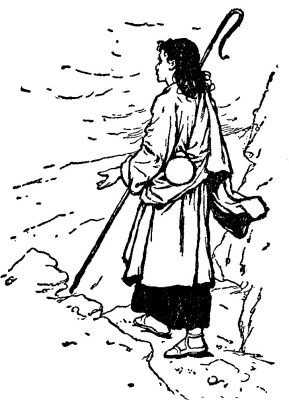
That was quite an errand, for a boy to go alone over the country, and find his way, for fifty miles, and then walk home again. But Joseph was a boy who could take care of himself, and could be trusted; so he went forth on his journey, walking northward over the mountains, past Bethlehem, and Jerusalem, and Bethel—though we are not sure those cities were then built, except Jerusalem, which was already a strong city.
When Joseph reached Shechem, he could not find his brothers, for they had taken their flocks to another place. A man met Joseph wandering in the field, and asked him, “Whom are you seeking?”
Joseph said, “I am looking for my brothers; the sons of Jacob. Can you tell me where I will find them?”
And the man said, “They are at Dothan; for I heard them say that they were going there.”
Then Joseph walked over the hills to Dothan, which was fifteen miles further. And his brothers saw him afar off coming toward them. They knew him by his bright garment; and one said to another: “Look, that dreamer is coming! Come, let us kill him, and throw his body into a pit, and tell his father that some wild beast has eaten him; and then we will see what becomes of his dreams.”
Walking northward over the mountains
One of his brothers, whose name was Reuben, felt more kindly toward Joseph than the others. He said:
“Let us not kill him, but let us throw him into this pit, in the wilderness, and leave him there to die.”
But Reuben intended, after they had gone away, to lift Joseph out of the pit, and take him home to his father. The brothers did as Reuben told them; they threw Joseph into the pit, which was empty. He cried, and begged them to save him; but they would not. They calmly sat down to eat their dinner on the grass, while their brother was calling to them from the pit.
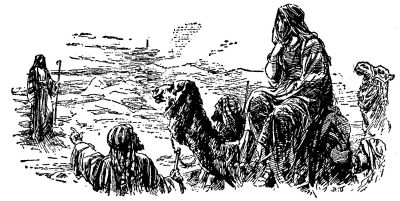
After the dinner, Reuben chanced to go to another part of the field; so that he was not at hand when a company of men passed by with their camels, going from Gilead, on the east of the river Jordan, to Egypt, to sell spices and fragrant gum from trees to the Egyptians.
Then Judah, another of Joseph’s brothers, said, “What good will it do us to kill our brother? Would it not be better for us to sell him to these men, and let them carry him away? After all, he is our brother, and we would better not kill him.”
His brothers agreed with him; so they stopped the men who were passing, and drew up Joseph from the pit, and for twenty pieces of silver they sold Joseph to these men; and they took him away with them down to Egypt.
After a while, Reuben came to the pit, where they had left Joseph, and looked into it; but Joseph was not there. Then Reuben was in great trouble; and he came back to his brothers, saying: “The boy is not there! What shall I do!”
Then his brothers told Reuben what they had done; and they all agreed together to deceive their father. They killed one of the goats, and dipped Joseph’s coat in its blood; and they brought it to their father, and they said to him: “We found this coat out in the wilderness. Look at it, father, and tell us if you think it was the coat of your son.”
For twenty pieces of silver they sold Joseph
And Jacob knew it at once. He said: “It is my son’s coat. Some wild beast has eaten him. There is no doubt that Joseph has been torn in pieces!”
And Jacob’s heart was broken over the loss of Joseph, all the more because he had sent Joseph alone on the journey through the wilderness. They tried to comfort him, but he would not be comforted. He said: “I will go down to the grave mourning for my poor lost son.”
So the old man sorrowed for his son Joseph; and all the time his wicked brothers knew that Joseph was not dead; but they would not tell their father the dreadful deed they had done to their brother, in selling him as a slave.




 articlesforchristians