A place to grow your relationship with God

Posts tagged ‘travel’

Swiss Family Robinson Chapter 32

Chapter 32

The trees which I had chosen for my farmhouse were about a foot in diameter in the trunk. They formed a long square; the long side facing the sea. The dimensions of the whole were about twenty-four feet by sixteen. I cut deep mortices in the trees, about ten feet distant from the ground, and again ten feet higher, to form a second story; I then placed in them strong poles: this was the skeleton of my house solid, if not elegant; I placed over this a rude roof of bark, cut in squares, and placed sloping, that the rain might run off. We fastened these with the thorn of the acacia, as our nails were too precious to be lavished.

We continued our work at the house, which occupied us several days. We formed the walls of thin laths interwoven with long pliant reeds for about six feet from the ground; the rest was merely a sort of light trellis-work, to admit light and air. The door opened on the front to the sea. The interior consisted simply of a series of compartments, proportioned to the guests they were to contain. One small apartment was for ourselves, when we chose to visit our colony. On the upper story was a sort of hayloft for the fodder. We projected plastering the walls with clay; but these finishing touches we deferred to a future time, contented that we had provided a shelter for our cattle and fowls. To accustom them to come to this shelter of themselves, we took care to fill their racks with the food they liked best, mingled with salt; and this we proposed to renew at intervals, till the habit of coming to their houses was fixed. We all laboured ardently, but the work proceeded slowly, from our inexperience; and the provisions we had brought were nearly exhausted. I did not wish to return to Falcon’s Nest till I had completed my new establishment, and therefore determined to send Fritz and Jack to look after the animals at home, and bring back a fresh stock of provisions. Our two young couriers set out, each on his favourite steed, Fritz leading the ass to bring back the load, and Jack urging the indolent animal forward with his whip.

During their absence, Ernest and I made a little excursion, to add to our provision if we could meet with them, some potatoes and cocoa-nuts. We ascended the stream for some time, which led us to a large marsh, beyond which we discovered a lake abounding with water-fowl. This lake was surrounded by tall, thick grass, with ears of a grain, which I found to be a very good, though small, sort of rice. As to the lake itself, it is only a Swiss, accustomed from his infancy to look on such smooth, tranquil waters, that can comprehend the happiness we felt on looking upon this. We fancied we were once more in Switzerland, our own dear land; but the majestic trees and luxuriant vegetation soon reminded us we were no longer in Europe, and that the ocean separated us from our native home.

We proceeded round the lake, which presented a different scene on every side. This was one of the most lovely and fertile parts we had yet seen of this country. Birds of all kinds abounded; but we were particularly struck with a pair of black swans, sailing majestically on the water. Their plumage was perfectly black and glossy, except the extremity of the wings, which was white. Ernest would have tried his skill again, but I forbade him to disturb the profound tranquillity of this charming region.

But Flora, who probably had not the same taste for the beauties of nature that I had, suddenly darted forward like an arrow, pounced upon a creature that was swimming quietly at the edge of the water, and brought it to us. It was a most curious animal. It resembled an otter in form, but was web-footed, had an erect bushy tail like the squirrel, small head, eyes and ears almost invisible. A long, flat bill, like that of a duck, completed its strange appearance. We were completely puzzled even Ernest, the naturalist, could not give its name. I boldly gave it the name of the beast with a bill. I told Ernest to take it, as I wished to stuff and preserve it.

“It will be,” said the little philosopher, “the first natural object for our museum.”

“Exactly,” replied I; “and, when the establishment is fully arranged, we will appoint you curator.”

But, thinking my wife would grow uneasy at our protracted absence, we returned by a direct road to the tent. Our two messengers arrived about the same time, and we all sat down together to a cheerful repast. Every one related his feats. Ernest dwelt on his discoveries, and was very pompous in his descriptions, and I was obliged to promise to take Fritz another time. I learnt, with pleasure, that all was going on well at Falcon’s Nest, and that the boys had had the forethought to leave the animals with provisions for ten days. This enabled me to complete my farmhouse. We remained four days longer, in which time I finished the interior, and my wife arranged in our own apartment the cotton mattresses, to be ready for our visits, and put into the houses the fodder and grain for their respective tenants. We then loaded our cart, and began our march. The animals wished to follow us, but Fritz, on Lightfoot, covered our retreat, and kept them at the farm till we were out of sight.

We did not proceed directly, but went towards the wood of monkeys. These mischievous creatures assaulted us with showers of the fir-apples; but a few shots dispersed our assailants.

Fritz collected some of these new fruits they had flung at us, and I recognized them as those of the stone Pine, the kernel of which is good to eat, and produces an excellent oil. We gathered a bag of these, and continued our journey till we reached the neighbourhood of Cape Disappointment. There we ascended a little hill, from the summit of which we looked upon rich plains, rivers, and woods clothed with verdure and brilliant flowers, and gay birds that fluttered among the bushes. “Here, my children,” cried I, “here we will build our summer house. This is truly Arcadia.” Here we placed our tent, and immediately began to erect a new building, formed in the same manner as the Farm House, but now executed more quickly. We raised the roof in the middle, and made four sloped sides. The interior was divided into eating and sleeping apartments, stables, and a store-room for provisions; the whole was completed and provisioned in ten days; and we had now another mansion for ourselves, and a shelter for new colonies of animals. This new erection received the name of Prospect Hill, to gratify Ernest, who thought it had an English appearance.

However, the end for which our expedition was planned was not yet fulfilled. I had not yet met with a tree likely to suit me for a boat. We returned then to inspect the trees, and I fixed on a sort of oak, the bark of which was closer than that of the European oak, resembling more that of the cork-tree. The trunk was at least five feet in diameter, and I fancied its coating, if I could obtain it whole, would perfectly answer my purpose. I traced a circle at the foot, and with a small saw cut the bark entirely through; Fritz, by means of the rope ladder we had brought with us, and attached to the lower branches of the tree, ascended, and cut a similar circle eighteen feet above mine. We then cut out, perpendicularly, a slip the whole length, and, removing it, we had room to insert the necessary tools, and, with wedges, we finally succeeded in loosening the whole. The first part was easy enough, but there was greater difficulty as we advanced. We sustained it as we proceeded with ropes, and then gently let it down on the grass. I immediately began to form my boat while the bark was fresh and flexible. My sons, in their impatience, thought it would do very well if we nailed a board at each end of the roll; but this would have been merely a heavy trough, inelegant and unserviceable; I wished to have one that would look well by the side of the pinnace; and this idea at once rendered my boys patient and obedient. We began by cutting out at each end of the roll of bark a triangular piece of about five feet long; then, placing the sloping parts one over the other, I united them with pegs and strong glue, and thus finished the ends of my boat in a pointed form. This operation having widened it too much in the middle, we passed strong ropes round it, and drew it into the form we required. We then exposed it to the sun, which dried and fixed it in the proper shape.

As many things were necessary to complete my work, I sent Fritz and Jack to Tent House for the sledge, to convey it there, that we might finish it more conveniently. I had the good fortune to meet with some very hard, crooked wood, the natural curve of which would be admirably suitable for supporting the sides of the boat. We found also a resinous tree, which distilled a sort of pitch, easy to manage, and which soon hardened in the sun. My wife and Francis collected sufficient of it for my work. It was almost night when our two messengers returned. We had only time to sup and retire to our rest.

We were all early at work next morning. We loaded the sledge, placing on it the canoe, the wood for the sides, the pitch, and some young trees, which I had transplanted for our plantation at Tent House, and which we put into the boat. But, before we set out, I wished to erect a sort of fortification at the pass of the rock, for the double purpose of securing us against the attacks of wild beasts or of natives, and for keeping enclosed, in the savannah beyond the rocks, some young pigs, that we wished to multiply there, out of the way of our fields and plantations.

The next morning we returned to Tent House, where we immediately set to work on our canoe with such diligence that it was soon completed. It was solid and elegant, lined through with wood, and furnished with a keel. We provided it with brass rings for the oars, and stays for the mast. Instead of ballast, I laid at the bottom a layer of stones covered with clay, and over this a flooring of boards. The benches for the rowers were laid across, and in the midst the bamboo mast rose majestically, with a triangular sail. Behind I fixed the rudder, worked by a tiller; and I could boast now of having built a capital canoe.

Our fleet was now in good condition. For distant excursions we could take the pinnace, but the canoe would be invaluable for the coasting service.

Our cow had, in the mean time, given us a young male calf, which I undertook to train for service, as I had done the buffalo, beginning by piercing its nostrils; and the calf promised to be docile and useful; and, as each of the other boys had his favourite animal to ride, I bestowed the bull on Francis, and intrusted him with its education, to encourage him to habits of boldness and activity. He was delighted with his new charger, and chose to give him the name of Valiant.

We had still two months before the rainy season, and this time we devoted to completing the comforts of our grotto. We made all the partitions of wood, except those which divided us from the stables, which we built of stone, to exclude any smell from the animals. We soon acquired skill in our works; we had a plentiful supply of beams and planks from the ship; and by practice we became very good plasterers. We covered the floors with a sort of well-beaten mud, smoothed it, and it dried perfectly hard. We then contrived a sort of felt carpet. We first covered the floor with sailcloth; we spread over this wool and goats’ hair mixed, and poured over it isinglass dissolved, rolling up the carpet, and beating it well. When this was dry, we repeated the process, and in the end had a felt carpet. We made one of these for each room, to guard against any damp that we might be subject to in the rainy season.

After dinner, our evening occupations commenced; our room was lighted up brilliantly; we did not spare our candles, which were so easily procured, and we enjoyed the reflection in the elegant crystals above us. We had partitioned off a little chapel in one corner of the grotto, which we had left untouched, and nothing could be more magnificent than this chapel lighted up, with its colonnades, portico, and altars. We had divine service here every Sunday. I had erected a sort of pulpit, from which I delivered a short sermon to my congregation, which I endeavoured to render as simple and as instructive as possible.

Jack and Francis had a natural taste for music. I made them instruments from reeds, on which they acquired considerable skill. They accompanied their mother, who had a very good voice; and this music in our lofty grotto had a charming effect.

We had thus made great steps towards civilization; and, though condemned, perhaps, to pass our lives alone on this unknown shore, we might yet be happy. We were placed in the midst of abundance. We were active, industrious, and content; blessed with health, and united by affection, our minds seemed to enlarge and improve every day. We saw around us on every side traces of the Divine wisdom and beneficence; and our hearts overflowed with love and veneration for that Almighty hand which had so miraculously saved, and continued to protect us. I humbly trusted in Him, either to restore us to the world, or send some beings to join us in this beloved island, where for two years we had seen no trace of man. To Him we committed our fate. We were happy and tranquil, looking with resignation to the future.

The story pauses here for a bit. Chapter 33 picks up some time later.

Swiss Family Robinson Chapter 3

Chapter 3

At break of day I was waked by the crowing of the cock. I summoned my wife to council, to consider on the business of the day. We agreed that our first duty was to seek for our shipmates, and to examine the country beyond the river before we came to any decisive resolution.

My wife saw we could not all go on this expedition, and courageously agreed to remain with her three youngest sons, while Fritz, as the eldest and boldest, should accompany me. I begged her to prepare breakfast immediately, which she warned me would be scanty, as no soup was provided.

We began our preparation; we each took a game-bag and a hatchet. I gave Fritz a pair of pistols in addition to his gun, equipped myself in the same way, and took care to carry biscuit and a flask of fresh water. The lobster proved so hard at breakfast, that the boys did not object to our carrying off the remainder; and, though the flesh is coarse, it is very nutritious.

I proposed before we departed, to have prayers, and my thoughtless Jack began to imitate the sound of church-bells “Ding, dong! to prayers! to prayers! ding, dong!” I was really angry, and reproved him severely for jesting about sacred things. Then, kneeling down, I prayed God’s blessing on our undertaking, and his pardon for us all, especially for him who had now so grievously sinned. Poor Jack came and kneeled by me, weeping and begging for forgiveness from me and from God. I embraced him, and enjoined him and his brothers to obey their mother. I then loaded the guns I left with them, and charged my wife to keep near the boat, their best refuge. We took leave of our friends with many tears, as we did not know what dangers might assail us in an unknown region. But the murmur of the river, which we were now approaching, drowned the sound of their sobs, and we bent our thoughts on our journey.

The bank of the river was so steep, that we could only reach the bed at one little opening, near the sea, where we had procured our water; but here the opposite side was guarded by a ridge of lofty perpendicular rocks. We were obliged to ascend the river to a place where it fell over some rocks, some fragments of which having fallen, made a sort of stepping-stones, which enabled us to cross with some hazard. We made our way, with difficulty, through the high grass, withered by the sun, directing our course towards the sea, in hopes of discovering some traces of the boats, or the crew. We had scarcely gone a hundred yards, when we heard a loud noise and rustling in the grass, which was as tall as we were. We imagined we were pursued by some wild beast, and I was gratified to observe the courage of Fritz, who, instead of running away, calmly turned round and presented his piece. What was our joy when we discovered that the formidable enemy was only our faithful Turk, whom we had forgotten in our distress, and our friends had doubtless dispatched him after us! I applauded my son’s presence of mind; a rash act might have deprived us of this valuable friend.

We proceeded, and entering a little wood that extended to the sea, we rested in the shade, near a clear stream, and took some refreshment. We were surrounded by unknown birds, more remarkable for brilliant plumage than for the charm of their voice. Fritz thought he saw some monkeys among the leaves, and Turk began to be restless, smelling about, and barking very loud. Fritz was gazing up into the trees,

sfr3

“We rested in the shade, near a clear stream,
and took some refreshment.”

when he fell over a large round substance, which he brought to me, observing that it might be a bird’s nest. I thought it more likely to be a cocoa-nut. The fibrous covering had reminded him of the description he had read of the nests of certain birds; but, on breaking the shell, we found it was indeed a cocoa-nut, but quite decayed and uneatable.

Fritz was astonished; where was the sweet milk that Ernest had talked of?

I told him the milk was only in the half-ripe nuts; that it thickened and hardened as the nut ripened, becoming a kernel. This nut had perished from remaining above ground. If it had been in the earth, it would have vegetated, and burst the shell. I advised my son to try if he could not find a perfect nut.

After some search, we found one, and sat down to eat it, keeping our own provision for dinner. The nut was somewhat rancid; but we enjoyed it, and then continued our journey. We were some time before we got through the wood, being frequently obliged to clear a road for ourselves, through the entangled brushwood, with our hatchets. At last we entered the open plain again, and had a clear view before us. The forest still extended about a stone’s throw to our right, and Fritz, who was always on the look-out for discoveries, observed a remarkable tree, here and there, which he approached to examine; and he soon called me to see this wonderful tree, with wens growing on the trunk.

On coming up, I was overjoyed to find this tree, of which there were a great number, was the gourd-tree, which bears fruit on the trunk. Fritz asked if these were sponges. I told him to bring me one, and I would explain the mystery.

“There is one,” said he, “very like a pumpkin, only harder outside.”

“Of this shell,” said I, “we can make plates, dishes, basins, and flasks. We call it the gourd-tree.”

Fritz leaped for joy. “Now my dear mother will be able to serve her soup properly.” I asked him if he knew why the tree bore the fruit on its trunk, or on the thick branches only. He immediately replied, that the smaller branches would not bear the weight of the fruit. He asked me if this fruit was eatable. “Harmless, I believe,” said I; “but by no means delicate. Its great value to savage nations consists in the shell, which they use to contain their food, and drink, and even cook in it.” Fritz could not comprehend how they could cook in the shell without burning it. I told him the shell was not placed on the fire; but, being filled with cold water, and the fish or meat placed in it, red-hot stones are, by degrees, introduced into the water, till it attains sufficient heat to cook the food, without injuring the vessel.

We then set about making our dishes and plates. I showed Fritz a better plan of dividing the gourd than with a knife. I tied a string tightly round the nut, struck it with the handle of my knife till an incision was made, then tightened it till the nut was separated into two equally-sized bowls. Fritz had spoiled his gourd by cutting it irregularly with his knife. I advised him to try and make spoons of it, as it would not do for basins now. I told him I had learnt my plan from books of travels. It is the practice of the savages, who have no knives, to use a sort of string, made from the bark of trees, for this purpose. “But how can they make bottles,” said he. “That requires some preparation,” replied I. “They tie a bandage round the young gourd near the stalk, so that the part at liberty expands in a round form, and the compressed part remains narrow. They then open the top, and extract the contents by putting in pebbles and shaking it. By this means they have a complete bottle.”

We worked on. Fritz completed a dish and some plates, to his great satisfaction, but we considered, that being so frail, we could not carry them with us. We therefore filled them with sand, that the sun might not warp them, and left them to dry, till we returned.

As we went on, Fritz amused himself with cutting spoons from the rind of the gourd, and I tried to do the same with the fragments of the cocoa-nut; but I must confess my performances were inferior to those I had seen in the museum in London, the work of the South Sea islanders. We laughed at our spoons, which would have required mouths from ear to ear to eat with them. Fritz declared that the curve of the rind was the cause of that defect: if the spoons had been smaller, they would have been flat; and you might as well eat soup with an oyster-shell as with a shovel.

We proceeded towards a pleasant wood of palm-trees; but before reaching it, had to pass through an immense number of reeds, which greatly obstructed our road. We were, moreover, fearful of treading on the deadly serpents who choose such retreats. We made Turk walk before us to give notice, and I cut a long, thick cane as a weapon of defence. I was surprised to see a glutinous juice oozing from the end of the cut cane; I tasted it, and was convinced that we had met with a plantation of sugar-canes. I sucked more of it, and found myself singularly refreshed. I said nothing to Fritz, that he might have the pleasure of making the discovery himself. He was walking a few paces before me, and I called to him to cut himself a cane like mine, which he did, and soon found out the riches it contained. He cried out in ecstasy, “Oh, papa! papa! syrup of sugar-cane! delicious! How delighted will dear mamma, and my brothers be, when I carry some to them!” He went on, sucking pieces of cane so greedily, that I checked him, recommending moderation. He was then content to take some pieces to regale himself as he walked home, loading himself with a huge burden for his mother and brothers.

We now entered the wood of palms to eat our dinner, when suddenly a number of monkeys, alarmed by our approach, and the barking of the dog, fled like lightning to the tops of the trees; and then grinned frightfully at us, with loud cries of defiance. As I saw the trees were cocoa-palms, I hoped to obtain, by means of the monkeys, a supply of the nuts in the half-ripe state, when filled with milk. I held Fritz’s arm, who was preparing to shoot at them, to his great vexation, as he was irritated against the poor monkeys for their derisive gestures; but I told him, that though no patron of monkeys myself, I could not allow it. We had no right to kill any animal except in defence, or as a means of supporting life. Besides, the monkeys would be of more use to us living than dead, as I would show him. I began to throw stones at the monkeys, not being able, of course, to reach the place of their retreat, and they, in their anger, and in the spirit of imitation, gathered the nuts and hurled them on us in such quantities, that we had some difficulty in escaping from them. We had soon a large stock of cocoa-nuts. Fritz enjoyed the success of the stratagem, and, when the shower subsided, he collected as many as he wished.

We then got up, I tied some nuts together by their stems, and threw them over my shoulder. Fritz took his bundle of canes, and we set out homewards.

The Mystery of Roanoke Colony

Learn the Mystery of Roanoke Colony

  • The Roanoke Colony was England’s first attempt at a permanent settlement in North America.
  • The people of the colony disappeared under mysterious circumstances, leaving behind an empty fort.
  • The colonists and their bodies were never found.
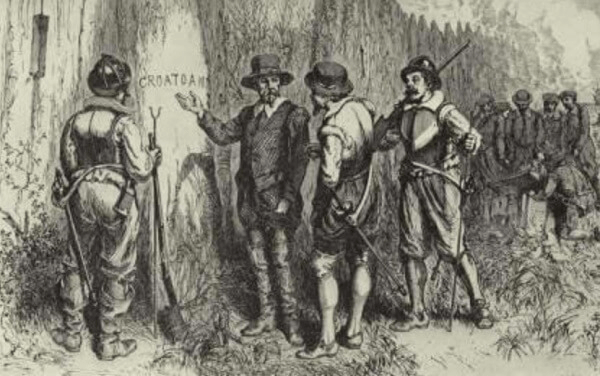
  • The only clue found was the word, ‘CROATOAN’ carved into Roanoke’s fort palisade.
  • Hypotheses include that the colonists were taken in or killed by the local Croatan Indians.
John White discovers the word “CROATOAN”
carved at Roanoke’s fort palisade
by unknown


Lost Colony of Roanoke
The Roanoke Colony was England’s first attempt to establish a settlement in the Americas. Sadly, the effort failed when the settlers vanished under mysterious conditions, earning it the nickname “The Lost Colony.”

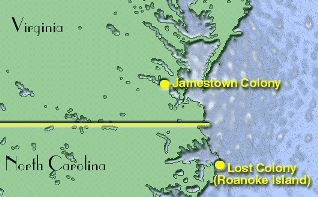
Map showing location of
Jamestown and Roanoke Island Colonies
by NOAA


Where was the colony located?

The Roanoke Colony was situated on Roanoke Island, just off the coast of what is now North Carolina. At the time, this area was considered part of Virginia.

Early Plans

In 1584, Queen Elizabeth I granted Sir Walter Raleigh the land of Virginia in North America. The British aimed to expand their empire by establishing a presence in the Americas. Raleigh sent Captain Philip Amadas and Captain Arthur Barlowe to explore the region. They came across Roanoke Island and encountered the local natives. Raleigh decided it was an ideal spot to set up a colony.

First Colony at Roanoke

The first expedition to Roanoke was led by Sir Richard Greenville. The expedition arrived at Roanoke in 1585. Greenville left 107 settlers, all men, at Roanoke under the charge of Ralph Lane. Greenville then returned to England in order to gather additional supplies for the settlement.

The settlers built a fort at Roanoke, but struggled to survive. It didn’t help matters that they were constantly fighting with the local Native Americans. When English explorer Sir Francis Drake passed by the settlement and offered to take them back to England, the colonists agreed. Not long after the colonists left, Captain Greenville finally returned with new supplies only to discover that the settlement had been abandoned. He left a small group of men on the island and then returned to England.

Second Colony at Roanoke

A second attempt at starting a colony at Roanoke occurred in 1587. This time 115 colonists travelled to Roanoke led by John White. They hoped to find the men that Greenville had left a year earlier. However, upon their arrival, all they found at the settlement was a human skeleton. Despite this setback, the colonists began to build their settlement on Roanoke. Not long after their arrival, a girl named Virginia Dare was born. She was the first child born in the Americas to English parents.

Unfortunately, the colonists continued to have disputes with the local tribes and some colonists were killed. They also discovered that they were ill-prepared to build a thriving colony. John White decided to return to England in order to gain supplies and reinforcements for the colony.


The Colony has Disappeared

After returning to England, White could find little help for the colony. England was in the middle of a large battle with Spain and the Spanish Armada. As a result, White was unable to return until three years later in 1590. When White arrived he found the colony completely abandoned. The only clues that White found included the word “Croatoan” carved into a fence post and “Cro” carved into a tree.

White found no sign of a struggle, however, and figured that the colonists had moved to Croatoan, which was what they called a nearby island (Hatteras Island). He also had reason to hope because he had told the colonists to carve a Maltese cross if they were being forced leave. Since he found no cross, he figured the colonists were okay. White was unable to search the nearby island for the colonists because of a bad storm and was forced to return to England.

The colonists were never heard from again and the colony gained the nickname the “Lost Colony.”

Facts about Ghana for Children

The Republic of Ghana (once known as the Gold Coast) is a country in West Africa. About 34.6 million people live there. Its capital city is Accra. Ghana is located in West Africa, next to the Gulf of Guinea, between Côte d’Ivoire and Togo.

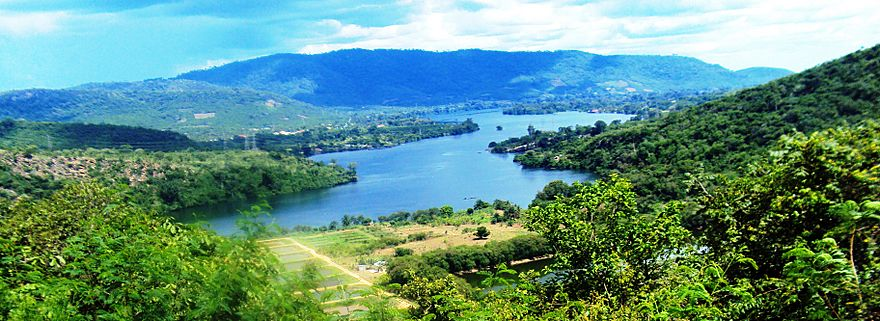
Because Ghana is close to the Equator, it has a very warm and tropical climate. The eastern coast is warm and quite dry. The southwest is hot and humid. The northern part of Ghana is hot and dry. Lake Volta, one of the world’s largest artificial lakes, stretches across eastern Ghana.

Most Ghanaians can go to primary and secondary school. Ghana has a 6-year primary school system. There are 6 public universities and 10 private universities.

Ghana has many natural resources. Its main exports include gold, timber, cocoa, and diamonds. Ghana has one of the strongest economies in Africa.

Ghana used “Cedi” as its money, but in July 2007, the “Ghana Cedi” became the new currency. One Ghana Cedi is worth 1000 old Cedi. Today, about 4 Ghana Cedi equals 1 US dollar.

Wildlife in Ghana


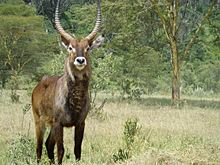
Ghana has a wide variety of animals. Some of these animals are now protected because their numbers are decreasing. Ghana’s land ecosystems have many different species. This includes 221 types of amphibians and reptiles. There are also 724 bird species and 225 mammal species. About 93 mammal species live in Ghana’s savanna areas.

A Waterbuck.


The high forest uplands in Ghana are especially rich in animal life. For example, 83% of all butterfly species found in Ghana live here. The different layers of the forest and small climate differences create many homes for specific animals.

A Yellow-casqued wattled hornbill.

Some animals are found only in Ghana. These include three species of frogs: Hyperolius baumanni, Hyperolius fusciventris, and Hyperolius sylvaticus. Also, the lizard Agama sylvanus is found only in Ghana’s Bia Forest Reserve and Atwema Range Forest Reserve. Ghana also has many unique butterflies, with over 20 species found only there.

Ghana is home to 84 known amphibian species. These include 78 frogs, 5 toads, and caecilians. Threatened species in Ghana include four types of marine turtles and three types of crocodiles. There are also seven threatened bird species, including four found only in the Upper Guinea forest.

Important birds like hornbills, parrots, and birds of prey (like eagles) are common in Ghana. Out of 728 bird species in Ghana, 498 live there all year. Another 176 are regular seasonal migrants, with 100 coming from the Palaearctic ecozone.

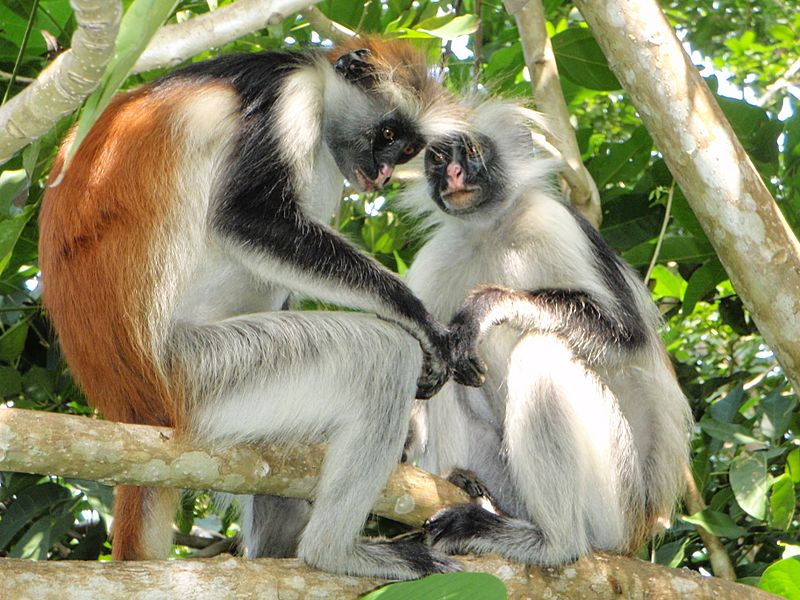
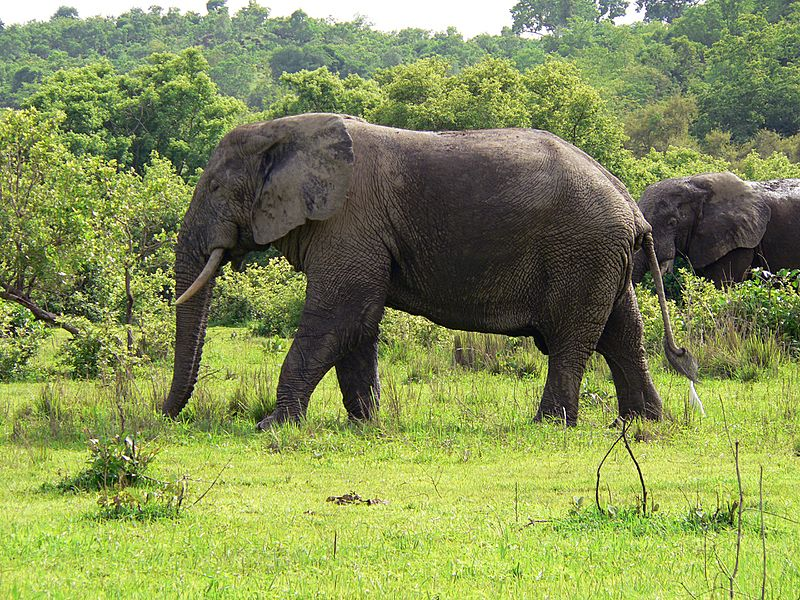
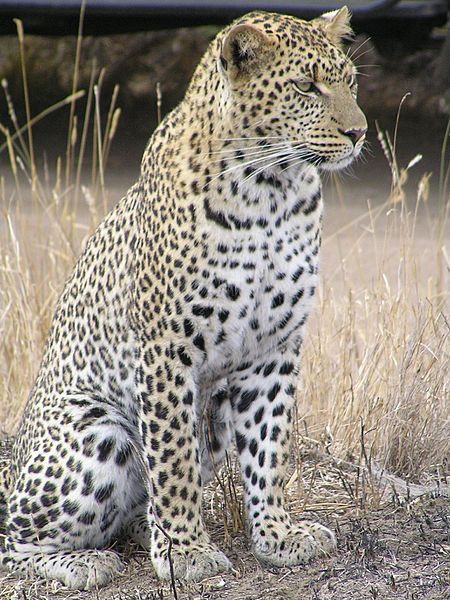
Ghana is important for many vulnerable, threatened, endangered, or near-extinct mammal species. These include primates like chimpanzees and red colobus monkeys. Also, big cats like lions and leopards, and elephants live here. Ghana is on the path of major bird migration routes. There are also rare land birds, such as the Yellow-Necked Picarthes.

Animals of Ghana

Zanzibar red colobus monkey.
An African bush elephant.
Lion.
Leopard.
Common chimpanzee.
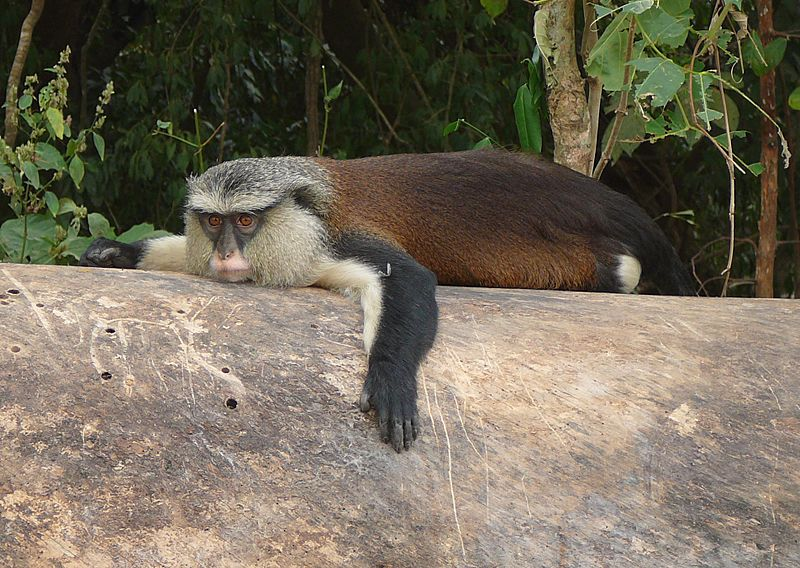
Mona monkey.

Main Industries in Ghana
Medium close up image of David Kebu Jnr holding cocoa beans drying in the sun. (10703178735)
Cocoa beans drying in the sun.
Ghana is rich in natural resources like minerals, oil, and precious metals. It has a growing digital economy and a mixed economy. Ghana is considered an emerging market with strong economic growth.

Ghana has an economic plan called “Ghana Vision 2020.” This plan aims for Ghana to become the first developed country in Africa between 2020 and 2029. It also hopes to be a newly industrialized country between 2030 and 2039.

The Bank of Ghana started using the Chinese Yuan Renminbi in 2013. It is used alongside the national Ghana cedi for trade. This is due to Ghana’s large gold reserves and economic ties with China.

The state-owned Volta River Authority and Ghana National Petroleum Corporation produce most of Ghana’s electricity. The Akosombo Dam, built in 1965 on the Volta River, along with Bui Dam and Kpong Dam, provide hydropower. The Government of Ghana also plans to build a second nuclear power plant in Africa.

Ghana produces high-quality cocoa. It is the second-largest producer of cocoa in the world. It was expected to become the largest producer in 2015.

Languages Spoken in Ghana

Ghana has eleven languages that are officially supported by the government. Four are Akan languages: Asante Twi, Akuapem Twi, Mfantse, and Nzema. Two are Mole-Dagbani languages: Dagaare and Dagbanli. The other languages are Ewe, Dangme, Ga, Gonja, and Kasem.

Akan greeting phrases: “akɔaba” (welcome) and “ɛte sɛn” (how are you) in Ashanti Twi.

English is the official language of the state. It is widely used for communication across different language groups.

National Symbols of Ghana

A Tawny eagle is shown on the coat of arms of Ghana.


The coat of arms shows two animals: the tawny eagle (a large bird living in savannas and deserts) and the lion (a big cat). It also features a ceremonial sword, a castle on a sea, a cocoa tree, and a mine shaft. These represent Ghana’s mineral wealth. A five-pointed black star with a gold rim stands for Ghana’s gold and the guiding star of the Ghanaian people. The motto “Freedom and Justice” is also on the coat of arms.

The flag of Ghana has three horizontal bands (strips) of red (top), gold (middle), and green (bottom).

All three bands are the same height and width. The middle gold band has a five-pointed black star in its center. The red band stands for the blood shed to gain independence. The gold represents Ghana’s mineral wealth. The green symbolizes Ghana’s rich tropical rainforests and natural resources.

Source: Ghana facts for kids Kids Encyclopedia Facts

The Adventures of Old Mr. Toad Chapter 8: Old Mr. Toad’s Babies

Old Mr. Toad’s Babies

The Smiling Pool’s a nursery
Where all the sunny day
A thousand funny babies
Are taught while at their play.

Really the Smiling Pool is a sort of kindergarten, one of the most interesting kindergartens in the world.  Little Joe Otter’s children learn to swim there.  So do Jerry Muskrat’s babies and those of Billy Mink, the Trout and Minnow babies, and a lot more.  And there you will find the children and grandchildren of Grandfather Frog and Old Mr. Toad.

Peter Rabbit had known for a long time about the Frog babies, but though he knew that Old Mr. Toad was own cousin to Grandfather Frog, he hadn’t known anything about Toad babies, except that at a certain time in the year he was forever running across tiny Toads, especially on rainy days, and each little Toad was just like Old Mr. Toad, except for his size.  Peter had heard it said that Toads rain down from the sky, and sometimes it seems as if this must be so.  Of course he knew it couldn’t be, but it puzzled him a great deal.  There wouldn’t be a Toad in sight.  Then it would begin to rain, and right away there would be so many tiny Toads that it was hard work to jump without stepping on some.

He remembered this as he went to pay his daily call on Old Mr. Toad in the Smiling Pool and listen to his sweet song.  He hadn’t seen any little Toads this year, but he remembered his experiences with them in other years, and he meant to ask about them.

Old Mr. Toad was sitting in his usual place, but he wasn’t singing.  He was staring at something in the water.  When Peter said “Good morning,” Old Mr. Toad didn’t seem to hear him.  He was too much interested in what he was watching.  Peter stared down into the water to see what was interesting Old Mr. Toad so much, but he saw nothing but a lot of wriggling tadpoles.

“What are you staring at so, Mr. Sobersides?” asked Peter, speaking a little louder than before.

Old Mr. Toad turned and looked at Peter, and there was a look of great pride in his face.  “I’m just watching my babies.  Aren’t they lovely?” said he.

Peter stared harder than ever, but he couldn’t see anything that looked like a baby Toad.

“Where are they?” asked he.  “I don’t see any babies but those of Grandfather Frog, and if you ask me, I always did think tadpoles about the homeliest things in th’ world.”

Old Mr. Toad grew indignant.  “Those are not Grandfather Frog’s children; they’re mine!” he sputtered.  “And I’ll have you know that they are the most beautiful babies in th’ world!”

Peter drew a hand across his mouth to hide a smile.  “I beg your pardon, Mr. Toad,” said he.  “I- ­I thought all tadpoles were Frog babies.  They all look alike to me.”

“Well, they’re not,” declared Old Mr. Toad.  “How any one can mistake my babies for their cousins I cannot understand.  Now mine are beautiful, while ”

“Chug-arum!” interrupted the great deep voice of Grandfather Frog.  “What are you talking about?  Why, your babies are no more to be compared with my babies for real beauty than nothing at all!  I’ll leave it to Peter if they are.”

But Peter wisely held his tongue.  To tell the truth, he couldn’t see beauty in any of them.  To him they were all just wriggling pollywogs.  They were more interesting now, because he had found out that some of them were Toads and some were Frogs, and he hadn’t known before that baby Toads begin life as tadpoles, but he had no intention of being drawn into the dispute now waxing furious between Grandfather Frog and Old Mr. Toad.

The Tale of Jolly Robin chapter 16 JEALOUS JASPER JAY

 JEALOUS JASPER JAY

The feathered folk in Pleasant Valley were all aflutter. They had heard a strange tale–the oddest tale, almost, that had ever been told in their neighborhood.

It was Jolly Robin who had started the story. And since he was not in the habit of playing jokes on people, everybody believed what he said–at least, everybody except Jasper Jay. He declared from the first that Jolly Robin’s tale was a hoax.

“I claim that there’s not a word of truth in it!” Jasper Jay said.

Now, there was a reason why Jasper spoke in that disagreeable way. He didn’t want the story to be true. And, somehow, he felt that if he said it was a hoax, it would really prove to be one.

“I know well enough,” said Jasper, “that there’s no golden bird in Pleasant Valley–and nowhere else, either!”

You see, Jolly Robin had hurried to the woods one day and told everyone he met that a wonderful golden bird had come to Pleasant Valley.

“He’s not just yellow, like a goldfinch. He’s solid gold all over, from the tip of his bill to the tip of his tail. Even his feet are golden. And he glistens in the sunshine as if he were afire!” That was the way Jolly Robin described the marvellous newcomer. “He’s the handsomest bird that ever was seen,” he added.

Perhaps Jasper Jay was jealous. You know he was a great dandy, being very proud of his blue suit, which was really quite beautiful. Anyhow, Jasper Jay began to sulk as soon as he heard the news.

“Where is this magnificent person?” he asked Jolly Robin with a sneer. “Do let me see him! And if he wants to fight, I’ll soon spoil his finery for him. He won’t look so elegant after I’ve pulled out his tail-feathers.”

But Jolly Robin wouldn’t tell anybody where he had seen the wonderful bird. He said the golden bird was three times as big as Jasper Jay. And he didn’t want Jasper to get hurt, even if he was so disagreeable.

Anyone can see, just from that, that Jolly Robin was very kind.

“You’d better be careful, or I’ll fight you, too!” Jasper warned him.

But Jolly was not afraid. He knew that Jasper was something of a braggart and a bully. He had chased Jasper once. And he thought he could do it again, if he had to.

“My cousin will tell me where to find this yellow fellow,” said Jasper Jay at last. “There’s not much that happens in Pleasant Valley that my cousin doesn’t know about.” So he flew off to find old Mr. Crow—for he was the cousin of whom Jasper was speaking.

Jasper found Mr. Crow in his favorite tree in the pine woods. And sure enough! the old gentleman seemed to know all about the golden bird. But like Jolly Robin, he refused to say where he had seen him. To tell the truth, Mr. Crow had never set eyes on the strange bird. But he did not like to admit it. “He’s a great credit to the neighborhood,” said old Mr. Crow. “And you’d better let him alone, if you should happen to find him, because he’s solid gold, you know. And if you flew at him and tried to peck him, just as likely as not you’d break your bill on him, he’s so hard.” Old Mr. Crow’s warning, however, had no effect at all upon Jasper Jay.

“I’m going to search every corner in the valley until I find this fop. And I’ll teach him that he’d better get out of our neighborhood with his fine airs.”

When he heard that, old Mr. Crow shook his head.

“You’re going to have trouble!” he told Jasper. And then he hurried away to tell Jolly Robin that he ought to advise the golden bird to leave Pleasant Valley.

But Jolly Robin said he had not spoken with the stranger. And never having talked with a golden bird, he felt a bit shy about saying anything to him.

“Then there’ll be a terrible fight, I’m afraid,” said Mr. Crow.

“I’m afraid so,” Jolly Robin agreed. And strange as it may seem, they both said that if there was going to be a fight they didn’t want to miss seeing it.

Pilgrim Stories chapter: Chapters 9 and 10

ON THE CANAL

audio

NEXT morning, the pretty blue and white dishes washed, the kettles scoured, and fresh white sand sprinkled on the kitchen floor, Patience took baby Love and went out on the doorstep to watch the boats on the canal.

There were many of these boats passing to and fro. Some carried fuel or grain. Some carried fish, and others were loaded with boxes of goods from the mills. Some were passenger boats and carried people from one town to another.

Soon Jonathan came out with a large stone jar, which he set upon the wall of the canal. On the next doorstep sat Mary and Remember Allerton, and they, too, had a large jar. There was one at Mistress Chilton’s door, and all up and down the street might be seen these brown jars.

What were they for? Water, to be sure! These children were waiting for the water barge to come along and fill their jars. This seems strange in a land where there is more water than anything else. But the water in the canals is not fit to drink, so the people must buy fresh water every day. This is brought from the river far beyond the city.

While the children waited for the water barge, they saw a large boat coming down the canal. There was no wind, so the sail was down. At first they could not see what made it glide along so easily. As it came nearer they saw that there was a long rope tied to the bow, and the boat was being drawn by a large dog and a boy, who walked along the bank of the canal.

When the boat was in front of Elder Brewster’s house, it stopped. The father came ashore and tied his boat to a strong post, and then went back to his breakfast.

This was not served in the neat little cabin with the white curtains at the windows. The breakfast table was spread on the deck of the boat. There was no cloth, but the table was scoured as white as Katrina’s strong little arms could make it.

While Katrina and her mother were washing the dishes, the water barge was seen coming slowly down the canal, stopping at each house. The mother saw the little barge, and, calling her son, said something to him which the little Pilgrims could not understand.

But Jan understood. He took up a large, shining can and came over where Jonathan and Patience were.

“Good morning,” said Jonathan, “Are you waiting for the water barge, too?” But Jan only smiled and said nothing. He had not understood one word.

When Mevrow Vedder came up in her flat little boat, with its rows of shining brass water cans, Jan talked fast enough. He seemed to know Mevrow Vedder, and Karl and Hans, who had come with their mother to help steer the boat.

9

“Mevrow Vedder . . . in her flat little boat, with . . .shining brass water cans”

How fast they all talked, and how strange the language sounded to the English children! The Dutch language was so different from their own. The little pilgrims thought they could never learn to speak or understand this strange tongue.

But they did, and Jan and Katrina were their first teachers. After a few days, when Jan called in Dutch, “Can you come up on the boat to play?” the English children would answer, “Yes,” or “No,” in his language.

They soon learned the Dutch names for the games they played, for the different parts of the boat, and for many things in their own homes. Little by little they grew to understand what their neighbors said to them. The children learned the language much easier than their parents did.

Jan and Katrina lived on the canal boat winter and summer. They had no other home, and they did not wish for one. They thought a canal boat much better than a house, which must always stay in one place.

Many families lived in their boats all of the year. In winter they had to live in the little cabin, but in summer the kitchen, dining room, and sitting room were all on deck.

All Hollanders are fond of flowers and you are sure to see them somewhere about each home. Of course Katrina had her little flower garden. It was in one corner of the deck, and her mother had a long box of plants in the cabin window.

All fall and winter this canal boat stayed in the same place. While their father worked in the mill, Jan and Katrina went to school. Katrina often knitted as she walked to and from school. Little Dutch girls often knit on the street. They can knit and walk as easily as we can talk and walk.

THE WEEKLY SCRUBBING DAY

EARLY one morning soon after the Pilgrims came to Holland they heard strange sounds in the street. Such a splashing and dashing of water! Swish! swish! trickle! trickle!

Could it be the dike was leaking? Mary Chilton ran to the door to see what was the matter.

There she saw Mevrow van Zant and her daughter with jars, and pails, and kettles of water. With her strong white arms the girl dashed the water upon the sides of the house. With long-handled brushes she and her mother scrubbed the windows and walls. Then Hilda dashed on more water and they scrubbed again.

Splash! dash! swish! drip!

How the windows shine! Just find a spot of dust on that house, if you can!

Then out came more pails and kettles of water, and more plump Hollanders in their white caps, short skirts, and wooden shoes. All up and down the street, on both sides of the canal, it was, splash! dash! swish! drip!

Even the canal boats were having a wonderful scrubbing, both inside and outside. Their brass trimmings were polished like gold.

While Mary Chilton looked on with wonder in her round eyes, her father came out of the house.

“Why so sober, little one?” he asked. “I think they will not dash water over you.”

“I was wondering if our houses are the only ones on the street left dirty, or if we had the only clean ones before. I do not see any dust.”

10

“On scrubbing day Holland scrubs”

“Oh, that makes no difference,” laughed her father. “On scrubbing day Holland scrubs. It comes so often things never have time to get very dusty.”

The Boy’s Life of Edison: Chapter 27

Audio

EDISON’S WORK DURING THE WAR


With the shattering of the world’s peace by the great conflict which commenced on July 28, 1914, there came a universal disturbance of industrial conditions. The Edison industries were not exempt.

Edison’s activities during the years of the war were of the same intensely vigorous and energetic nature so characteristic of him throughout his busy life. His work during this period is divisible into two distinct sections: first, the working out of processes and the design and construction of nine chemical and two benzol plants to supply chemicals and materials greatly needed by our country; and, second, his war work for the United States government. We will discuss these in the above order.

For many years before the war America had been a large importer of raw materials and manufactured products from England, Germany, and other European countries. Among these may be mentioned potash, dyes, carbolic acid, aniline oil, and other coal-tar products. After hostilities began the activities of the Allied fleets prevented all exportations by Germany and the Central Powers. On the other hand, England and her allies placed embargoes on the exportation from their countries of all materials and products which could be used for food or munitions of war.

Thus there suddenly came a great embarrassment to numerous American industries. By reason of our continued importation for many years our country had become dependent upon Europe for supplies of various products and had made practically no provision for the manufacture of these products within our own borders.

Inasmuch as our narrative concerns Edison and his work, we shall not attempt to name all the industries thus affected, but will confine ourselves to a mention of the items relating to his own needs and of those which he promptly took steps to produce for the relief of many industries and for the general good of the country. These items were carbolic acid, aniline oil, myrbane, aniline salts, acetanilid, para-nitro-acetanilid, paraphenylenediamine, para-amidophenol, benzidine, benzol, toluol, xylol, solvent naphtha, and naphthaline flakes.

Edison’s principal requirements were potash for his storage battery and carbolic acid and paraphenylenediamine for use in the manufacture of disc phonograph records. After a great deal of experimenting he found that caustic soda could be used in his storage battery and therefore employed it until new supplies of potash were obtainable.

Carbolic acid and paraphenylenediamine had been previously imported from England and Germany and as there was practically none produced in the United States and no possibility of substituting other products Edison realized that he would be compelled to manufacture them himself, as the source of supply was cut off. He, therefore, as usual, gathered together all available literature and plunged into a study of manufacturing processes and quickly set his chemists to work on various lines of experiment.

Having decided through these experiments on the process by which he would manufacture carbolic acid synthetically, Edison designed his first plant, gathered the building material and apparatus together and instructed his engineers to rush the construction as fast as possible. By working gangs of men twenty-four hours a day the plant was rapidly completed and on the eighteenth day after the work of construction was begun it commenced turning out carbolic acid. Within a month this plant was making more than a ton a day and gradually increased its capacity until, a few months afterward, it reached its maximum of six tons a day.

It soon became publicly known that Edison was manufacturing carbolic acid, and he was overwhelmed with offers to purchase the excess over his own requirements. The demand for carbolic acid became so great that he decided to erect a second plant. This was quickly constructed and its capacity, which was also six tons per day, was contracted for before the plant was fully completed. It is interesting to note that the army and navy departments of the United States were among the first to make long contracts with Edison for his carbolic acid, from which they made explosives that were badly needed.

We must digress here to show an emergency that had arisen during the early days of the first carbolicacid plant. There had come about a serious shortage of benzol, which is a basic material in the manufacture of synthetic carbolic acid. Benzol is a product derived from the gases arising from the destructive distillation of coal in coke ovens. At the time of which we are writing (beginning of 1915) there was only a comparatively small quantity of benzol produced in the United States.

Mr. Edison realized that without a continuous and liberal supply of benzol he would be unable to carry out his project of producing carbolic acid in large quantities. He had also been approached by various textile manufacturers to make aniline oil, which was essential to their continuance in business, and of which there was practically no supply in the country. Without it he could not make paraphenylenediamine. Benzol is also a basic material in making aniline oil.

Therefore, it became doubly important to arrange for an adequate and continuous supply of benzol. Edison made a study of the methods and processes of producing benzol and then made proposals to various steel companies to the effect that he would, with their permission, erect a benzol plant at their coke ovens, operate the same at his own expense, and pay them a royalty for every gallon of benzol, toluol, xylol, or solvent naphtha taken from their gases. Such arrangement would not only meet his requirements, but at the same time would give the steel companies an income from something which they had been allowing to pass away into the air. He succeeded in making arrangements with two of the companies—namely, the Cambria Steel Company at Johnstown, Pennsylvania, and the Woodward Iron Company, Woodward, Alabama.

Ordinarily, it requires from nine to ten months to erect a benzol plant, but before making his proposal to the steel companies Edison had worked out a plan for erecting a practical plant within sixty days, and had laid it out on paper. He was sure of his grounds, because from his vast experience he knew where to pick up the different pieces of apparatus in various parts of the country.

The contract for his first benzol plant at Johnstown, Pennsylvania, was signed on January 18, 1915, and the actual work was begun an hour after the contract was signed, with the final result that in forty-five days afterward the benzol plant was completed and commenced working successfully. The second plant, at Woodward, Alabama, was completed within sixty days after breaking ground, the two weeks difference in time being accounted for by the fact that Woodward was farther away from the base of supplies and there were delays in railroad transportation of materials.

Being sure, through these contracts, of a continuous supply of benzol, Edison designed a plant for making aniline oil. By working gangs of men day and night, the erection of this plant was completed in forty-five days. The capacity of the plant, four thousand pounds per day, was fully contracted for by anxious manufacturers long before the machinery was in place.

Let us now consider Edison’s work on paraphenylenediamine. This is a chemical product which is largely used in dyeing furs black. America had imported all her requirements from Germany, but within a few months after the beginning of hostilities the visible supply was exhausted and no more could be expected during war-times. Fur-dyers were in despair. This product being also absolutely essential in the manufacture of phonograph records, Edison worked out a process for making it, and as his requirements were very moderate he established a small manufacturing plant at the Orange laboratory and soon began to produce about twenty-five pounds a day. In some way the news reached the ears of many desperate fur-dyers, and Edison was quickly besieged with most urgent requests for such portion of his output as could be spared. Fortunately, a small proportion of the output was available and was distributed daily in accordance with the necessities of those concerned. This small quantity being merely a drop in the bucket, the fur-dyers earnestly besought Edison to establish a larger plant and supply them with greater quantities of paraphenylenediamine, as their business had come almost to a standstill for lack of it. He, therefore, designed and constructed rapidly a larger plant, which, when put into operation, was soon producing two hundred to three hundred pounds a day, thus saving the situation for the fur-dyers. The capacity of this plant was gradualy increased until it turned out upward of a thousand pounds a day, of which a goodly proportion was exported to Europe and Japan.

Lack of space has prevented the narration of more than a mere general outline of some of Edison’s important achievements during part of the war years along chemical and engineering lines and in furnishing many of the industries of the country with greatly needed products that, for a time at least, were otherwise unobtainable. Much could be written about his work on producing myrbane, aniline salts, acetanilid, para-nitro-acetanilid, para-amido-phenol, benzidine, toluol, xylol, solvent naphtha, and naphthaline flakes—how his investigations and experiments on them ran along with the others, team fashion, so to speak, how he brought the same resourcefulness and energy to bear on many problems, and how he eventually surmounted numerous difficulties—but limitations of space forbid. Nor can we make more than a mere passing mention of the assistance he gave to the governments in the quick production of toluol and in furnishing plans and help to construct and operate two toluol plants in Canada. Suffice it to say that his achievements during this episode in his career were fully in accord with the notable successes he had already scored. It may be noted that in the three years following 1914 others went into the business of manufacturing the above chemicals, and as they installed and operated plants and furnished supplies needed in the industries Edison withdrew and shut down his special plants one after another.

Let us now take a brief glance at the patriot-inventor at work for his government in war-times and especially during the last two years of the Great War.

In the late summer of 1915 the Secretary of the Navy, Hon. Josephus Daniels, communicated to Mr. Edison an idea he had conceived of gathering together a body of men preeminent in inventive research to form an advisory board which should come to the aid of our country in an inventive and advisory capacity in relation to war measures. In this communication Secretary Daniels made an appeal to Edison’s patriotism and asked him to devote some of his effort in the service of the country and also to act as chairman of the board. Although he was already working about eighteen hours a day, Edison signified his consent. In the fall of 1915 the board was organized and subsequently became known as the Naval Consulting Board of the United States. Mr. Edison was at first chairman and subsequently became president of the board.

The history of the work and activities of the board is too extensive to be related here in detail and can only be hinted at. Indeed, it is the subject of a separate volume which is being published by the Navy Department. We shall, therefore, confine our narrative to the story of Edison’s work.

In December, 1916, Secretary Daniels expressed a desire that Mr. Edison visit him in Washington for an important conference. At that time it seemed almost inevitable that the United States would be drawn into the conflict with Germany sooner or later, and at the conference Secretary Daniels asked Edison to devote more of his time to the country by undertaking experiments on a series of problems, a list of which was handed to him.

Edison signified his assent, agreeing to give his whole time to the government without charge, and returned to his laboratory. He immediately put everything else aside, and with characteristic enthusiasm and energy delved into the work he had undertaken. The problems referred to covered a wide range of the sciences and arts, and time being an essential element, he added to his laboratory staff by gathering together from various sources a number of young men, experts in various lines, to assist him in his investigations.

Inasmuch as Edison’s war work for the government occupied his entire time for upward of two years, it is manifestly out of the question to narrate the details within the limits of a chapter. We must, therefore, be content to itemize the principal problems upon which he occupied himself and assistants and as to which he reported definite results to Washington. The items are as follows:

  1. Locating position of guns by sound-ranging.
  2. Detecting submarines by sound from moving vessels.
  3. Detecting on moving vessels the discharge of torpedoes by submarines.
  4. Quick turning of ships.
  5. Strategic plans for saving cargo boats from submarines.
  6. Collision mats.
  7. Taking merchant-ships out of mined harbors.
  8. Oleum cloud shells.
  9. Camouflaging ships and burning anthracite.
  10. More power for torpedoes.
  11. Coast patrol by submarine buoys.
  12. Destroying periscopes with machine-guns.
  13. Cartridge for taking soundings.
  14. Sailing-lights for convoys.
  15. Smudging sky-line.
  16. Obstructing torpedoes with nets.
  17. Under-water search-light.
  18. High-speed signaling with search-lights.
  19. Water-penetrating projectile.
  20. Airplane detection.
  21. Observing periscopes in silhouette.
  22. Steamship decoys.
  23. Zigzagging.
  24. Reducing rolling of warships.
  25. Obtaining nitrogen from the air.
  26. Stability of submerged submarines.
  27. Hydrogen detector for submarines.
  28. Induction balance for submarine detection.
  29. Turbine head for projectile.
  30. Protecting observers from smoke-stack gas.
  31. Mining Zeebrugge harbor.
  32. Blinding submarines and periscopes.
  33. Mirror-reflection system for warships.
  34. Device for look-out men.
  35. Extinguishing fires in coal bunkers.
  36. Telephone system on ships.
  37. Extension ladder for spotting-top.
  38. Preserving submarine and other guns from rust.
  39. Freeing range-finder from spray.
  40. Smudging periscopes.
  41. Night glass.
  42. Re-acting shell.

It will be seen that Mr. Edison’s inventive imagination was permitted a wide scope. He fairly reveled in the opportunity of attacking so many difficult problems and worked through the days and nights writh unflagging enthusiasm. He committed his business interests to the care of his associates, and during the two years of his work for the government kept in touch with his great business interests only by means of reports which were condensed to the utmost. In addition, for two successive winters, he gave up his regular winter vacation on his Florida estate, usually a source of great enjoyment to him. But it was all done willingly and without a word of regret or dissatisfaction so far as the writer’s knowledge goes.

Although we cannot take space to discuss the above items in detail, the reader will probably have a desire to know something of Edison’s work in regard to the submarines.

In view of the vast destruction of shipping, perhaps it is not an overstatement to say that the most vital problem of the late war was to overcome the menace of the submarine. Undoubtedly there was more universal study and experiment on means and devices for locating and destroying submarines than on any other single problem.

The class of apparatus most favored by investigators comprised various forms of listening devices by means of which it was hoped to detect and locate by sound the movement of an entirely submerged submarine. The difficulties in obtaining accurate results were very great even when the observing vessel was motionless, but were enormously enhanced on using listening devices on a vessel under way, on account of the noises of the vessel itself, the rushing of the water, and so on.

Edison’s earliest efforts were confined to the induction balance, but after two months of intensive experimenting on that line he gave it up and entered upon a long series of experiments with listening devices, employing telephones, audions, towing devices, resonators, etc. The Secretary of the Navy provided Edison with a 200-foot vessel for his experiments, and in the summer and fall of 1917 they had progressed sufficiently to enable him to detect sounds of moving vessels as far distant as five thousand yards. This, however, was when the observing vessel was at anchor. The results with the vessel under way, at full speed, were not poor.

Having pushed the possibilities along this line to their reasonable limit, Edison was of the opinion that this plan would not be practical and he turned his thoughts to another solution of the problem—namely, to circumvent the destructive operation of the submarine and avoid the loss of ships. He had discovered in his experimenting that the noise made by a torpedo in its swift passage through the water was very marked and easily distinguishable from any other sound.

With this fact as a basis, Edison, therefore, evolved a new plan, which had two parts: first, to provide merchant-ships with a listening apparatus that would enable them, while going at full speed, to hear the sound of a torpedo as soon as it was launched from a submarine; and, second, to provide the merchant-ships with means for quickly changing their course to another course at right angles. Thus, the torpedo would miss its mark and the merchantship would be saved. If another torpedo should be launched, the same tactics could be repeated.

His further investigations were conducted along this line. After much experimenting he developed a listening device in the form of an outrigger suspended from the bowsprit. This device was so arranged that it hung partly in the water and would always be from 10 to 20 feet ahead of the vessel, but could be swung inboard at any time. The device was about 20 feet long and about 16 inches in width and was made of brass and rubber. It contained brass tubes, with a phonograph diaphragm at the end which hung in the water. The listening apparatus was placed in a small room in the bow of the vessel. There were no batteries used. With this listening apparatus, and while the vessel was going full speed, moving boats 1,000 yards away could be easily heard in rough seas. This meant that torpedoes could be heard 3,000 yards away, as they are by far the noisiest craft that “sail” the ocean.

The second step in Edison’s plan—namely, the quick changing of a ship’s course, was accomplished with the “sea anchor.” This device consists of a strong canvas bag which is attached to a ship by long ropes. When thrown overboard the bag opens, fills with water, and acts as a drag on a ship under way. Edison’s plan was to use four or more sea anchors simultaneously. In a trial made with a steamship 325 feet long, draught 19 feet 6 inches, laden with 4,200 tons of coal, by the use of four sea anchors, the vessel going at full speed, was turned at right angles to her previous course with an advance of only 200 feet, or less than her own length. This means that if an enemy submarine had launched a torpedo against the ship while she was on her original course it would have passed by without harming her, thus making submarine torpedo attack of no avail. It may be noted parenthetically that this apparatus has its uses in the merchant-marine in peacetimes. For instance, should the look-out on a steamship running at full speed sight an iceberg 300 or 400 feet ahead this device could be instantly put into use and the ship could be turned quickly enough to avoid a collision.


EDISON AT WORK ON RUBBER EXPERIMENTS. FROM A MOVING PICTURE TAKEN DECEMBER, 1928


There is only space for a passing mention of the immense amount of data which Edison gathered, tabulated, and charted in his study and evolution of strategical plans suggested by him to the government in the line of lessening the destruction by submarines. He spent day and night for several months with a number of assistants working out these plans. It is not possible to make more specific mention of them here, as they are too voluminous for these pages.

With this tremendous amount of work pressing on him he retained his accustomed good health and buoyancy, due, undoubtedly, to his cheerful spirit, philosophical nature, and abstemious living. Soon after the armistice was signed his experimental work for the government came to an end, and he then switched back to the general supervision of his business interests and to his ceaseless experiments through which he is continually making improvements and refinements in the products of the large industries which he established and in which he is so greatly interested.

Mention should also be made of another extensive project he has undertaken, and that is the production of rubber from plants, weeds, bushes, shrubs, etc., grown in the United States. This he speaks of as “emergency” rubber, to be resorted to in case our country should ever be embarrassed in obtaining a supply of rubber from present sources. This is a tremendous problem, but he is applying to its solution the same resourceful powers that have characterized his previous endeavors.

Herein, and in the development of new ideas, lies Edison’s daily work and pleasure, and although he is in his eighties at this writing, with still boundless energy, it may be said of him

“Age cannot wither him, nor custom stale
His infinite variety.”

CHAPTER 6: WHAT COLUMBUS DISCOVERED

A little over three hundred years ago there was a Pope of Rome whose name was Gregory XIII. He was greatly interested in learning and science, and when the scholars and wise men of his day showed him that a mistake in reckoning time had long before been made he set about to make it right. At that time the Pope of Rome had great influence with the kings and queens of Europe, and whatever he wished them to do they generally did.

So they all agreed to his plan of renumbering the days of the year, and a new reckoning of time was made upon the rule that most of you know by heart in the old rhyme:

Thirty days hath September, April, June and November; All the rest have thirty-one, Excepting February which alone Hath twenty-eight—and this, in fine, One year in four hath twenty-nine.

And the order of the days of the months and the year is what is called, after Pope Gregory, the Gregorian Calendar.

This change in reckoning time made, of course, all past dates wrong. The old dates, which were called Old Style, had to be made to correspond with the new dates which were called New Style.

Now, according to the Old Style, Columbus discovered the islands he thought to be the Indies (and which have ever since been called the West Indies) on the twelfth of October, 1492. But, according to the New Style, adopted nearly one hundred years after his discovery, the right date would be the twenty-first of October. And this is why, in the Columbian memorial year of 1892, the world celebrated the four hundredth anniversary of the discovery of America on the twenty-first of October; which, as you see, is the same as the twelfth under the Old Style of reckoning time.

But did Columbus discover America? What was this land that greeted his eyes as the daylight came on that Friday morning, and he saw the low green shores that lay ahead of his caravels.

As far as Columbus was concerned he was sure that he had found some one of the outermost islands of Cipango or Japan. So he dropped his anchors, ordered out his rowboat, and prepared to take possession of the land in the name of the queen of Spain, who had helped him in his enterprise.

Just why or by what right a man from one country could sail up to the land belonging to another country and, planting in the ground the flag of his king, could say, “This land belongs to my king!” is a hard question to answer. But there is an old saying that tells us, Might makes right; and the servants of the kings and queens—the adventurers and explorers of old—used to go sailing about the world with this idea in their heads, and as soon as they came to a land they, had never seen before, up would go their flag, and they would say, This land is mine and my king’s! They would not of course do this in any of the well-known or “Christian lands” of Europe; but they believed that all “pagan lands” belonged by right to the first European king whose sailors should discover and claim them.

So Columbus lowered a boat from the Santa Maria, and with two of his chief men and some sailors for rowers he pulled off toward the island.

But before he did so, he had to listen to the cheers and congratulations of the very sailors who, only a few days before, were ready to kill him. But, you see, this man whom they thought crazy had really brought them to the beautiful land, just as he had promised. It does make such a difference, you know, in what people say whether a thing turns out right or not.

Columbus, as I say, got into his rowboat with his chief inspector and his lawyer. He wore a crimson cloak over his armor, and in his hand he held the royal banner of Spain. Following him came Captain Alonso Pinzon in a rowboat from the Pinta, and in a rowboat from the Nina Captain Vincent Pinzon. Each of these captains carried the “banner of the green cross” on which were to be seen the initials of the king and queen of Spain.

As they rowed toward the land they saw some people on the shore. They were not dressed in the splendid clothes the Spaniards expected to find the people of Cathay wearing. In fact, they did not have on much of anything but grease and paint. And the land showed no signs of the marble temples and gold-roofed palaces the sailors expected to find. It was a little, low, flat green island, partly covered with trees and with what looked like a lake in the center.

This land was, in fact, one of the three thousand keys or coral islands that stretch from the capes of Florida to the island of Hayti, and are known as the Bahama Islands. The one upon which Columbus landed was called by the natives Guanahani, and was either the little island now marked on the map as Cat Island or else the one called Watling’s Island. Just which of these it was has been discussed over and over again, but careful scholars have now but little doubt that it was the one known to-day as Watling’s Island. To see no sign of glittering palaces and gayly dressed people was quite a disappointment to Columbus. But then, he said, this, is probably the island farthest out to sea, and the people who live here are not the real Cathay folks. We shall see them very soon.

So with the royal banner and the green-cross standards floating above him, with his captains and chief officers and some of the sailors gathered about him, while all the others watched him from the decks of his fleet, Columbus stepped upon the shore. Then he took off his hat, and holding the royal banner in one hand and his sword in the other he said aloud: I take possession of this island, which I name San Salvador,(*) and of all the islands and lands about it in the name of my patron and sovereign lady, Isabella, and her kingdom of Castile. This, or something like it, he said, for the exact words are not known to us.

     (*) The island of San Salvador means the island of the Holy
     Saviour. Columbus and the Spanish explorers who followed him
     gave Bible or religious names to very much of the land they
     discovered.

And when he had done this the captains and sailors fell at his feet in wonder and admiration, begging him to forgive them for all the hard things they had said about him. For you have found Cathay, they cried. You are our leader. You will make us rich and powerful. Hurrah for the great Admiral!

And when the naked and astonished people of the island saw all this—the canoes with wings, as they called the ships, the richly-dressed men with white and bearded faces, the flags and swords, and the people kneeling about this grand-looking old man in the crimson cloak—they said to one another: These men are gods; they have come from Heaven to see us. And then, they, too, fell on the ground and worshiped these men from Heaven, as they supposed Columbus and his sailors to be.

And when they found that the men from Heaven did not offer to hurt them, they came nearer; and the man in the crimson cloak gave them beads and pieces of bright cloth and other beautiful things they had never seen before. And this made them feel all the more certain that these men who had come to see them in the canoes with wings must really be from Heaven. So they brought them fruits and flowers and feathers and birds as presents; and both parties, the men with clothes and the men without clothes, got on very well together.

But Columbus, as we know, had come across the water for one especial reason. He was to find Cathay, and he was to find it so that he could carry back to Spain the gold and jewels and spices of Cathay. The first thing, therefore, that he tried to find out from the people of the island—whom he called “Indians,” because he thought he had come to a part of the coast of India was where Cathay might be.

Of course they did not understand him. Even Louis, the interpreter, who knew a dozen languages and who tried them all, could not make out what these “Indians” said. But from their signs and actions and from the sound of the words they spoke, Columbus understood that Cathay was off somewhere to the southwest, and that the gold he was bound to find came from there. The “Indians” had little bits of gold hanging in their ears and noses. So Columbus supposed that among the finer people he hoped soon to meet in the southwest, he should find great quantities of the yellow metal. He was delighted. Success, he felt, was not far off. Japan was near, China was near, India was near. Of this he was certain; and even until he died Columbus did not have any idea that he had found a new world—such as America really was. He was sure that he had simply landed upon the eastern coasts of Asia and that he had found what he set out to discover—the nearest route to the Indies.

The next day Columbus pulled up his anchors, and having seized and carried off to his ships some of the poor natives who had welcomed him so gladly, he commenced a cruise among the islands of the group he had discovered.

Day after day he sailed among these beautiful tropic islands, and of them and of the people who lived upon them he wrote to the king and queen of Spain: “This country excels all others as far as the day surpasses the night in splendor. The natives love their neighbors as themselves; their conversation is the sweetest imaginable; their faces smiling; and so gentle and so affectionate are they, that I swear to Your Highness there is not a better people in the world.”

Does it not seem a pity that so great a man should have acted so meanly toward these innocent people who loved and trusted him so? For it was Columbus who first stole them away from their island homes and who first thought of making them slaves to the white men.

Chistopher Columbus: CHAPTER 4: HOW THE ADMIRAL SAILED AWAY.

The agreement made between Columbus and the king and queen of Spain was signed on the seventeenth of April, 1492. But it was four months before he was quite ready to sail away.

He selected the town of Palos as the place to sail from, because there, as you know, Captain Pinzon lived; there, too, he had other acquaintances, so that he supposed it would be easy to get the sailors he needed for his ships. But in this he was greatly mistaken.

As soon as the papers had been signed that held the queen to her promise, Columbus set off for Palos. He stopped at the Convent of Rabida to tell the Friar Juan Perez how thankful he was to him for the help the good priest had given him, and how everything now looked promising and successful.

The town of Palos, as you can see from your map of Spain, is situated at the mouth of the river Tinto on a little bay in the southwestern part of Spain, not far from the borders of Portugal. To-day the sea has gone away from it so much that it is nearly high and dry; but four hundred years ago it was quite a seaport, when Spain did not have a great many sea towns on the Atlantic coast.

At the time of Columbus’s voyage the king and queen of Spain were angry with the port of Palos for something its people had done that was wrong—just what this was we do not know. But to punish the town, and because Columbus wished to sail from there, the king and queen ordered that Palos should pay them a fine for their wrong-doing. And this fine was to lend the king and queen of Spain, for one year, without pay, two sailing vessels of the kind called caravel’s, armed and equipped “for the service of the crown”—that is, for the use of the king and queen of Spain, in the western voyage that Columbus was to make.

When Columbus called together the leading people of Palos to meet him in the church of St. George and hear the royal commands, they came; but at first they did not understand just what they must do. But when they knew that they must send two of their ships and some of their sailing men on this dreadful voyage far out upon the terrible Sea of Darkness, they were terribly distressed. Nobody was willing to go. They would obey the commands of the king and queen and furnish the two ships, but as for sailing off with this crazy sea captain—that they would not do.

Then the king’s officers went to work. They seized some sailors (impressed is the word for this), and made them go; they took some from the jails, and gave them their freedom as a reward for going; they begged and threatened and paid in advance, and still it was hard to get enough men for the two ships. Then Captain Pinzon, who had promised Columbus that he would join him, tried his hand. He added a third ship to the Admiral’s “fleet.” He made big promises to the sailors, and worked for weeks, until at last he was able to do what even the royal commands could not do, and a crew of ninety men was got together to man the three vessels. The names of these three vessels were the Capitana (changed before it sailed to the Santa Maria), the Pinta and the Nina or Baby. Captain de la Cosa commanded the Santa Maria, Captain Martin Alonso Pinzon the Pinta and his brother, Captain Vincent Pinzon, the Nina. The Santa Maria was the largest of the three vessels; it was therefore selected as the leader of the fleet—the flag-ship, as it is called—and upon it sailed the commander of the expedition, the Admiral Don Christopher Columbus.

When we think of a voyage across the Atlantic nowadays, we think of vessels as large as the big three-masted ships or the great ocean steamers—vessels over six hundred feet long and fifty feet wide. But these “ships” of Columbus were not really ships. They were hardly larger than the “fishing smacks” that sail up and down our coast to-day. Some of them were not so large. The Santa Maria was, as I have told you, the largest of the three, and she was only sixty-three feet long, twenty feet wide and ten and a half feet deep. Just measure this out on the ground and see how small, after all, the Admiral’s “flag-ship” really was. The Pinta was even smaller than this, while the little Nina was hardly anything more than a good-sized sail boat. Do you wonder that the poor people of Palos and the towns round about were frightened when they thought of their fathers and brothers and sons putting out to sea, on the great ocean they had learned to dread so much, in such shaky little boats as these?

But finally the vessels were ready. The crews were selected. The time had come to go. Most of the sailors were Spanish men from the towns near to the sea, but somehow a few who were not Spaniards joined the crew.

One of the first men to land in America from one of the ships of Columbus was an Irishman named William, from the County Galway. And another was an Englishman named either Arthur Laws or Arthur Larkins. The Spanish names for both these men look very queer, and only a wise scholar who digs among names and words could have found out what they really were. But such a one did find it out, and it increases our interest in the discovery of America to know that some of our own northern blood—the Irishman and the Englishman—were in the crews of Columbus.

The Admiral Columbus was so sure he was going to find a rich and civilized country, such as India and Cathay were said to be, that he took along on his ships the men he would need in such places as he expected to visit and among such splendid people as he was sure he should meet. He took along a lawyer to make out all the forms and proclamations and papers that would have to be sent by the Admiral to the kings and princes he expected to visit; he had a secretary and historian to write out the story of what he should find and what he should do. There was a learned Jew, named Louis, who could speak almost a dozen languages, and who could, of course, tell him what the people of Cathay and Cipango and the Indies were talking about. There was a jeweler and silversmith who knew all about the gold and silver and precious stones that Columbus was going to load the ships with; there was a doctor and a surgeon; there were cooks and pilots, and even a little fellow, who sailed in the Santa Maria as the Admiral’s cabin boy, and whose name was Pedro de Acevedo.

Some scholars have said that it cost about two hundred and thirty thousand dollars to fit out this expedition. I do not think it cost nearly so much. We do know that Queen Isabella gave sixty-seven thousand dollars to help pay for it. Some people, however, reckoning the old Spanish money in a different way, say that what Queen Isabella gave toward the expedition was not over three or four thousand dollars of our money. Perhaps as much more was borrowed from King Ferdinand, although he was to have no share in the enterprise in which Queen Isabella and Columbus were partners.

It was just an hour before sunrise on Friday, the third of August, 1492, that the three little ships hoisted their anchors and sailed away from the port of Palos. I suppose it was a very sorry and a very exciting morning in Palos. The people probably crowded down on the docks, some of them sad and sorrowful, some of them restless and curious. Their fathers and brothers and sons and acquaintances were going—no one knew where, dragged off to sea by a crazy old Italian sailor who thought there was land to be found somewhere beyond the Jumping-off place. They all knew he was wrong. They were certain that nothing but dreadful goblins and horrible monsters lived off there to the West, just waiting to devour or destroy the poor sailors when these three little ships should tumble over the edge.

But how different Columbus must have felt as he stepped, into the rowboat that took him off to his “flag-ship,” the Santa Maria. His dreams had come true. He had ships and sailors under his command, and was about to sail away to discover great and wonderful things. He who had been so poor that he could hardly buy his own dinner, was now called Don and Admiral. He had a queen for his friend and helper. He was given a power that only the richest and noblest could hope for. But more than all, he was to have the chance he had wished and worked for so long. He was to find the Indies; he was to see Cathay; he was to have his share in all the wealth he should discover and bring away. The son of the poor wool-weaver of Genoa was to be the friend of kings and princes; the cabin boy of a pirate was now Admiral of the Seas and Governor of the Colonies of Spain! Do you wonder that he felt proud?

So, as I have told you, just before sunrise on a Friday morning in August, he boarded the Santa Maria and gave orders to his captains “to get under way.” The sailors with a “yo heave ho!” (or whatever the Spanish for that is) tugged at the anchors, the sails filled with the morning breeze, and while the people of Palos watched them from the shore, while the good friar, Juan Perez, raised his hands to Heaven calling down a blessing on the enterprise, while the children waved a last good-by from the water-stairs, the three vessels steered out from Palos Harbor, and before that day’s sun had set, Columbus and his fleet were full fifty miles on their way across the Sea of Darkness. The westward voyage to those wonderful lands, the Indies and Cathay, had at last begun.